Habit Tracker for Mental Health: Free Printable Guide
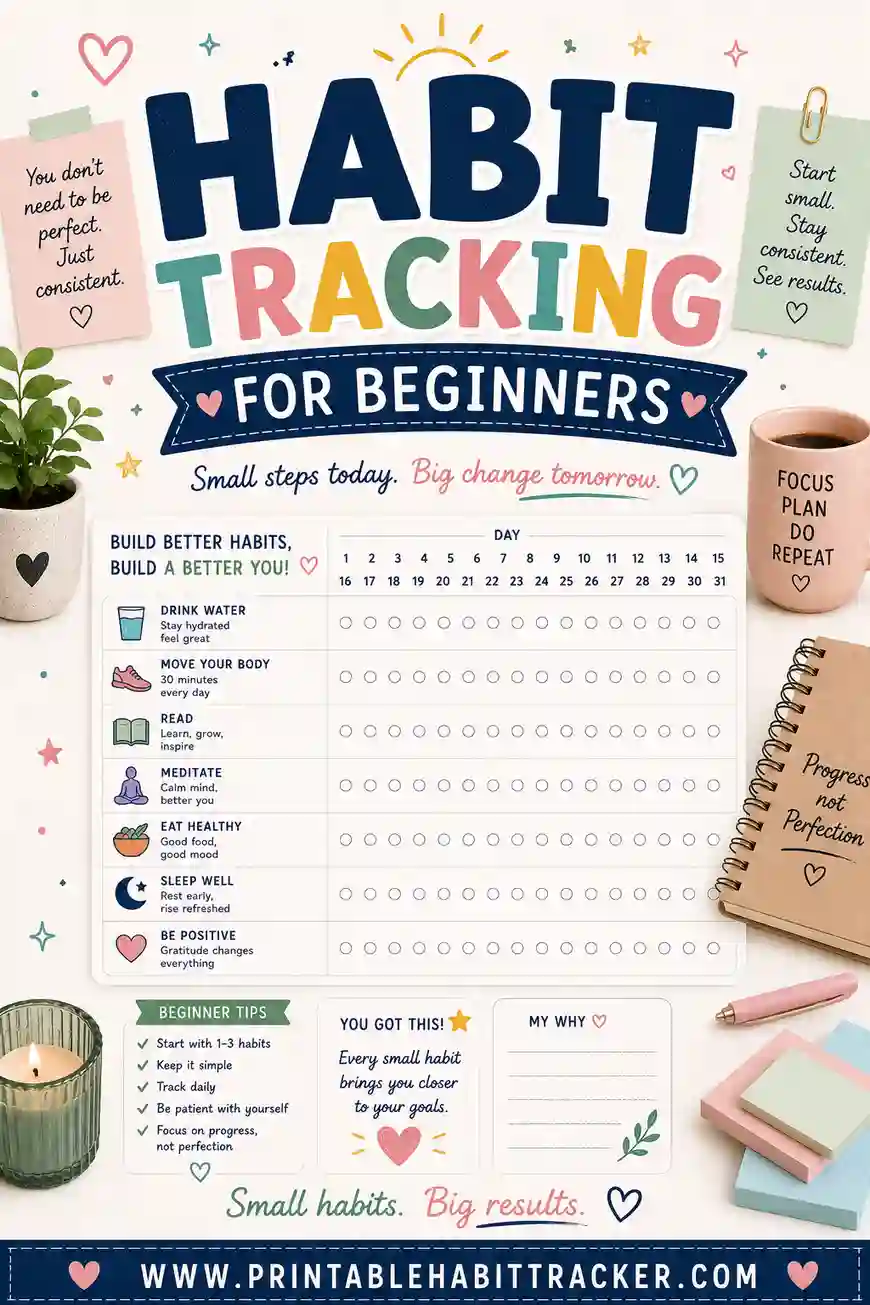
A habit tracker for mental health is a simple grid where you check off small, mood-supporting habits each day, things like drinking water, getting outside, sleeping enough, or texting a friend. Checking a box gives you a tiny win, and over a few weeks the page shows you which habits actually lift your mood and which days tend to dip. The fastest way to start is to use a free printable habit tracker, pick five or six gentle habits, and print a clean monthly grid you can hang on the fridge.
Want to skip ahead? Open the free tracker, choose a daily or monthly layout, add your own habits (there's a ready-made list below), and print as many copies as you need. No app, no login, no pressure.
Why Track Mental-Health Habits at All?
Your mood feels random until you write it down. Then patterns show up. Maybe you notice that you sleep badly whenever you scroll your phone past midnight, or that a short walk almost always softens a rough afternoon. A tracker turns vague feelings into something you can actually see and adjust.
It also lowers the bar. On a hard day, "I can't fix everything" becomes "I can at least check the water box." Those tiny wins add up, and they remind you that you're still showing up for yourself even when things feel heavy.
One thing to be clear about: a habit tracker is a support tool, not a treatment. It works beautifully alongside therapy, medication, or whatever your care looks like. It's not a replacement for any of that, and a few missed boxes are never a reason to be hard on yourself.
Which Habits Actually Support Mental Health?
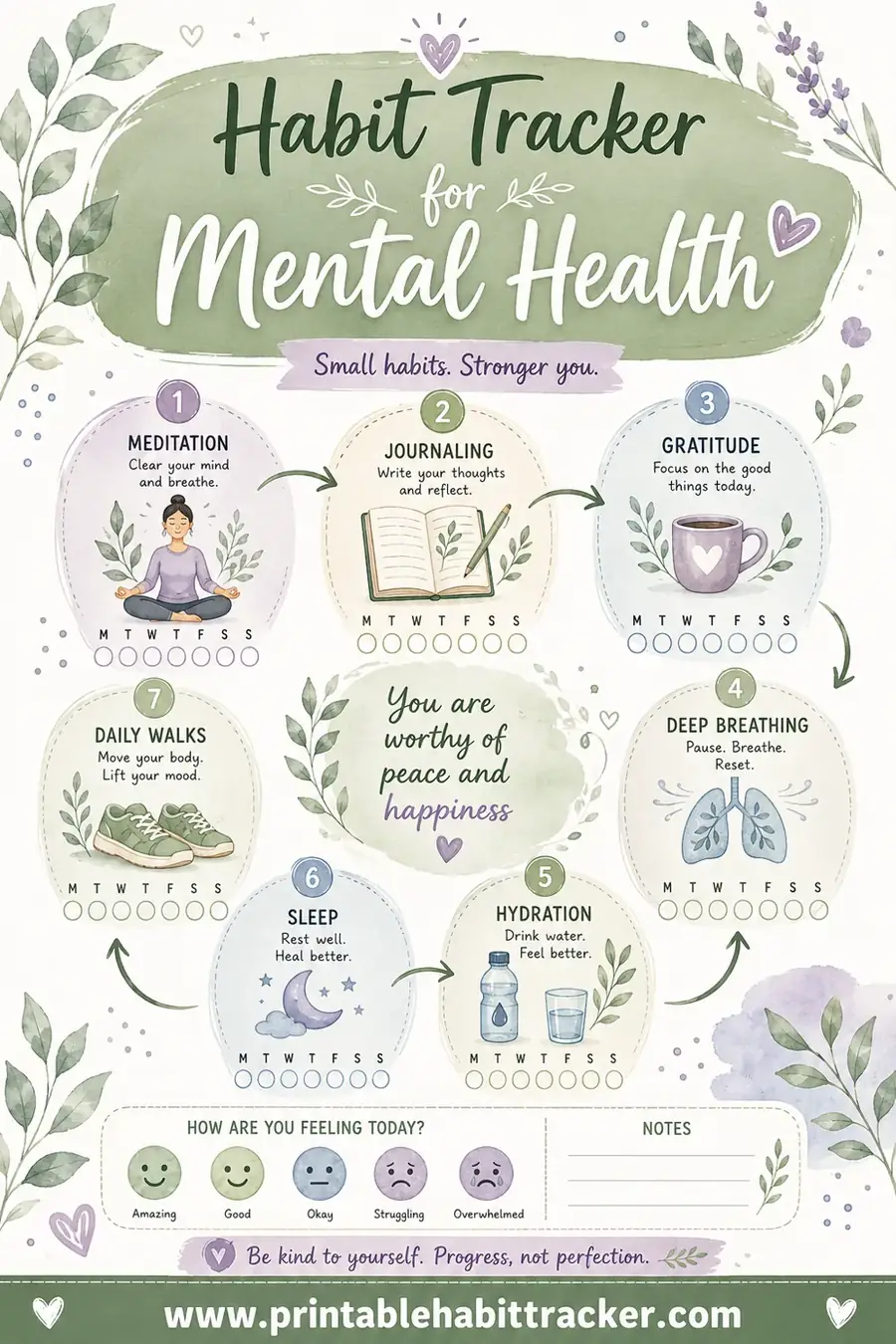
The best habits are small, concrete, and easy to picture. "Be less stressed" is too vague to check off. "Five slow breaths before breakfast" is something you can clearly do or not do. Here's a starter list you can copy straight into the tracker.
| Habit | Why it helps | How to track |
|---|---|---|
| Drink water | Dehydration worsens fatigue and low mood | One box per glass, or one a day |
| Step outside | Daylight and movement lift mood fast | Check once you've been out |
| Sleep by a set time | Steady sleep steadies emotions | Check if you were in bed on time |
| Move your body | Even 10 minutes eases anxiety | Walk, stretch, dance, anything counts |
| Note one good thing | Trains your brain toward the positive | Jot it in the margin, then check |
| Screen-free hour | Less scrolling, less comparison | Check if you unplugged before bed |
| Reach out to someone | Connection buffers stress | A text counts; you don't need a call |
Pick five or six to start. A page crammed with fifteen habits is a fast way to feel like you're failing. You can always add more once a few of these feel automatic.
Keep the habits kind, not punishing
Notice that none of these are "lose weight" or "be productive." A mental-health tracker should feel like a friend checking in, not a boss with a clipboard. If a habit starts to feel like one more way to judge yourself, swap it out. The goal is gentle consistency, not a perfect grid.
How to Set Up Your Mental-Health Habit Tracker
You don't need anything fancy. Here's the whole setup in four steps.
- Choose your layout. A monthly grid gives you the big picture; a daily or weekly page leaves room for notes. If you're new to this, start with one month so you can see real patterns form.
- Add your habits. Type in five or six from the list above, or your own. Keep each one short enough to fit on a single row.
- Add a mood spot. Leave a small column or corner to scribble your mood, even just a number from 1 to 5. This is the secret ingredient, more on that below.
- Print and place it. Put it somewhere you'll see it daily: the fridge, your desk, a bathroom mirror. Out of sight is out of mind.
The whole thing takes about five minutes with the free tracker. Print on regular paper to start; you'll learn what works after a week or two and can reprint with tweaks.
Add a Mood Column (This Changes Everything)
Habits are only half the story. The other half is how you actually feel. When you pair the two, your tracker becomes a quiet little detective.
Each evening, mark your mood with a quick number or a simple face. Then, at the end of the week, glance across the page. Did the good-mood days line up with the days you slept on time and got outside? That connection is gold. It tells you which habits are genuinely worth protecting.
You don't need to over-analyze it. Even a loose sense of "I feel better when I move in the morning" is enough to start shaping better days on purpose.
A Sample Week to Copy
Not sure how it looks filled in? Here's a realistic week. Notice it's not perfect, and that's the point.
| Habit | Mon | Tue | Wed | Thu | Fri | Sat | Sun |
|---|---|---|---|---|---|---|---|
| Drink water | ✓ | ✓ | ✓ | ✓ | ✓ | ✓ | |
| Step outside | ✓ | ✓ | ✓ | ✓ | ✓ | ||
| Sleep by 11 | ✓ | ✓ | ✓ | ✓ | ✓ | ||
| Move 10 min | ✓ | ✓ | ✓ | ✓ | ✓ | ||
| One good thing | ✓ | ✓ | ✓ | ✓ | ✓ | ✓ | ✓ |
| Mood (1–5) | 4 | 3 | 2 | 3 | 4 | 5 | 4 |
See Wednesday? Less sleep, no real movement, mood dips to a 2. By the weekend, more movement and rest, and the mood climbs. One messy week already tells a story you can use.
Tips to Keep the Streak Going (Without Guilt)
Streaks are motivating, but they can also turn toxic if a single miss makes you want to quit. Here's how to keep momentum while staying kind to yourself.
- Use the two-day rule. Missing one day is normal life. Just don't miss twice in a row. That single rule protects your streak without demanding perfection.
- Aim for "most days," not "every day." Hitting a habit five days out of seven is a real win. Color those days and let the rest go.
- Make the boxes satisfying. A bold checkmark or a colored-in square feels good. Tiny rewards keep your brain coming back.
- Track the comeback, not the slip. Missed a few days? The important box is the one you check when you start again. Restarting is the actual skill.
What to do on the hard days
Some days, checking even one box feels like too much. On those days, shrink the goal. Drinking a single glass of water counts. Stepping onto the porch for thirty seconds counts. The tracker isn't there to grade you. It's there to remind you that small care still counts as care.
Daily, Weekly, or Monthly: Which Layout Fits You?
Different layouts suit different brains and different goals. Here's a quick way to choose.
- Daily page. Best if you like detail and want room for journaling next to each habit. Great during stressful stretches when you want to check in often.
- Weekly page. A nice middle ground. You see seven days at a glance, with a little space for notes. Many people find this the easiest to actually keep up.
- Monthly grid. Best for spotting long patterns and protecting streaks. The wall of checkmarks is hugely motivating once it fills in.
You can also print more than one. A monthly grid on the fridge for the big picture, plus a daily page in a journal for the rough weeks. The tracker makes every layout free, so try a couple and keep whatever sticks.
Make It Yours
The trackers that last are the ones that feel personal. A few easy ways to make yours feel like home:
- Theme it gently. Soft colors, a calm font, a little doodle in the corner. It should feel inviting, not clinical.
- Add a "one line a day" spot. A single sentence about your day pairs beautifully with the boxes and builds a tiny journal over time.
- Keep a "wins" box. A small space at the bottom for anything that went right, no matter how minor. Re-reading it on a low day helps.
- Print a few spares. Having next month's page ready makes it easy to keep going without a gap.
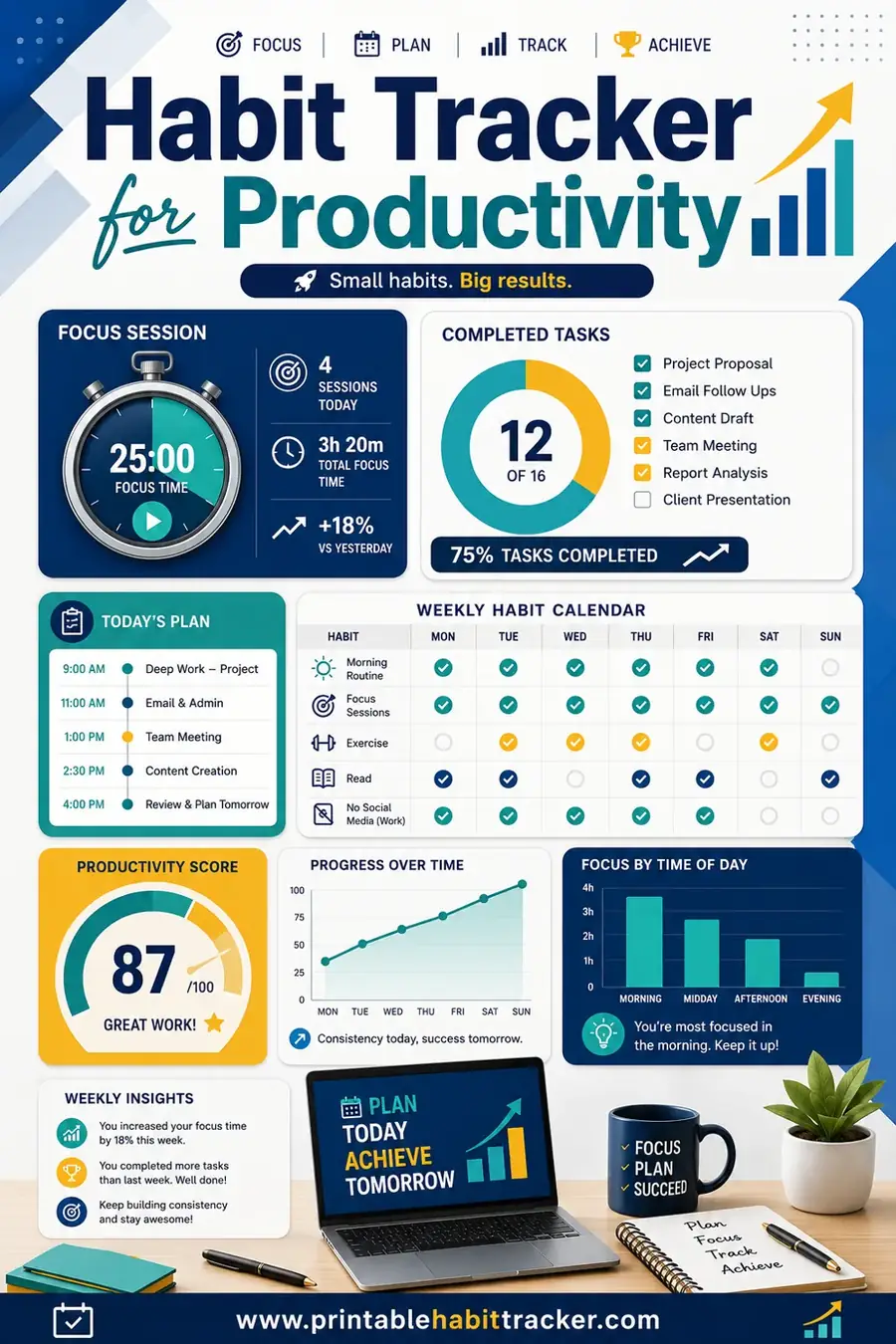
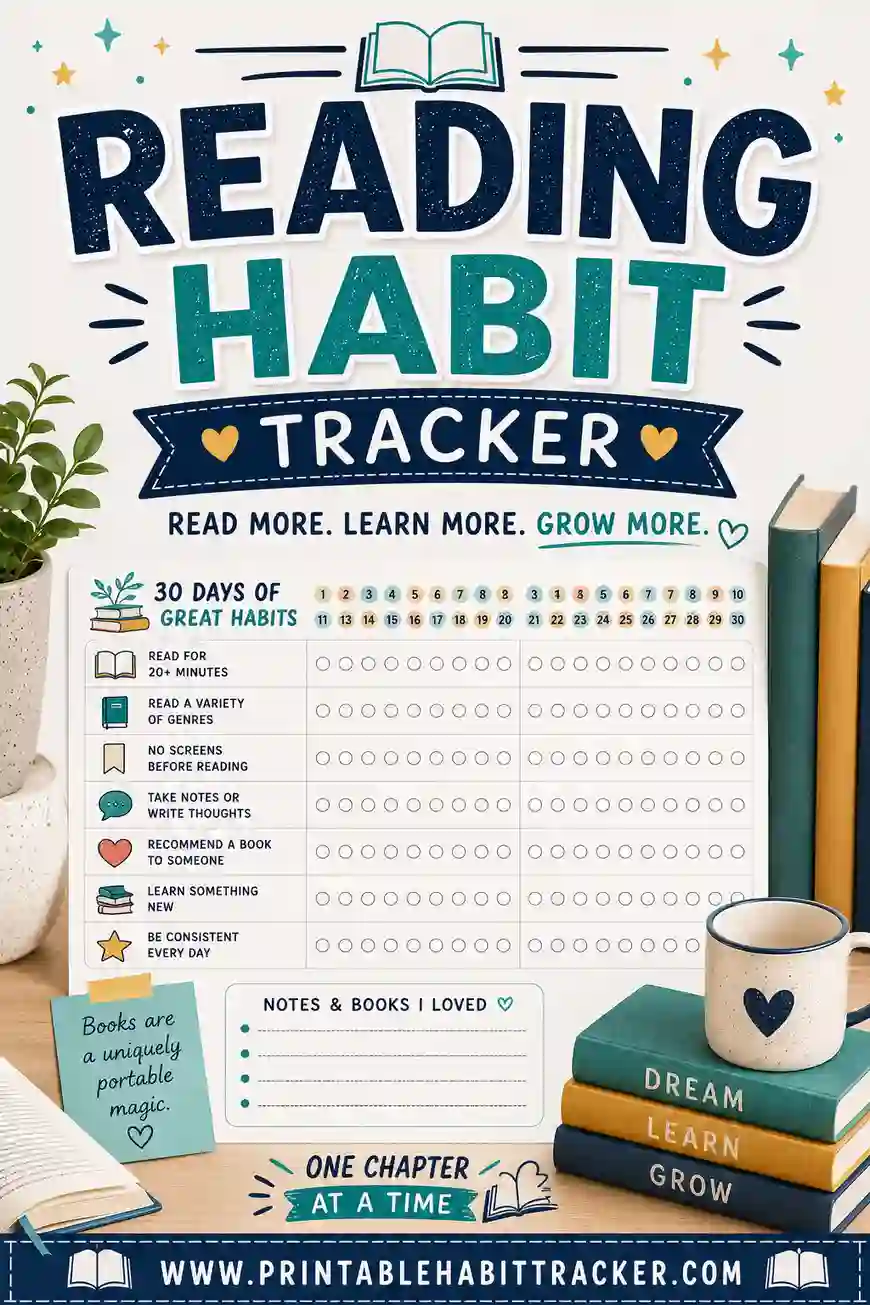
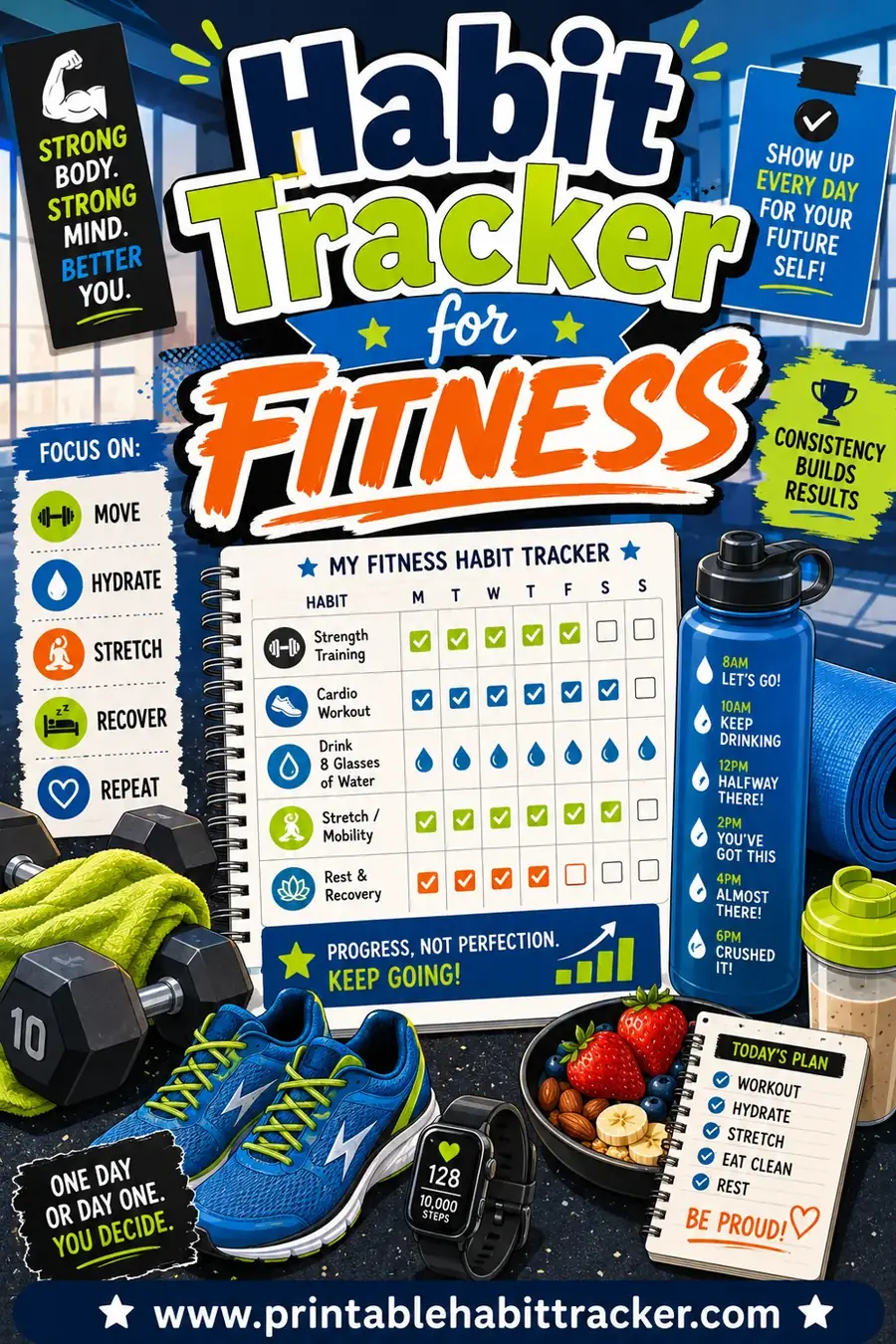
If this clicks for you, the same approach works for other goals too. Try a habit tracker for productivity to steady your work days, a reading habit tracker to build a calming nightly routine, or a fitness habit tracker to pair movement with mood.
Frequently Asked Questions
What habits should I put on a mental-health tracker?
Start with small, concrete supports: drink water, get outside, sleep on time, move your body, note one good thing, and reach out to someone. Pick five or six so the page feels doable. The habit list above gives you ready-to-copy ideas.
How is a mental-health tracker different from a regular one?
It focuses on mood-supporting habits and usually adds a mood column, so you can see how your habits and feelings connect. The tone is gentler too, the goal is consistency and self-kindness, not pushing yourself harder.
Can a habit tracker replace therapy or medication?
No. A tracker is a helpful support tool that works alongside professional care, but it doesn't replace it. If you're struggling, please reach out to a doctor or therapist. The tracker is there to back up your care, not stand in for it.
What if I keep missing days?
That's completely normal, and it doesn't mean you've failed. Use the two-day rule: don't miss twice in a row if you can help it. The most important box is the one you check when you start again. Aim for most days, not every day.
How often should I look at my tracker?
Check off boxes daily, then review the whole week once on Sunday or any quiet evening. That weekly glance is where you spot the patterns, like which habits line up with your best-mood days.
Is the printable habit tracker really free?
Yes. You build it and print it yourself at no cost, with no sign-up and no watermark. Print as many copies as you need, for as many months as you like.
Start Your Mental-Health Habit Tracker Today
Pick five or six gentle habits, add a mood column, and you've got a simple page that helps you feel a little more steady. Open the free habit tracker, choose your layout, and print it in minutes. Be patient with yourself, celebrate the small checkmarks, and let the page show you what helps. You've got this, one small box at a time.