Habit Tracking for Beginners: A Simple Start
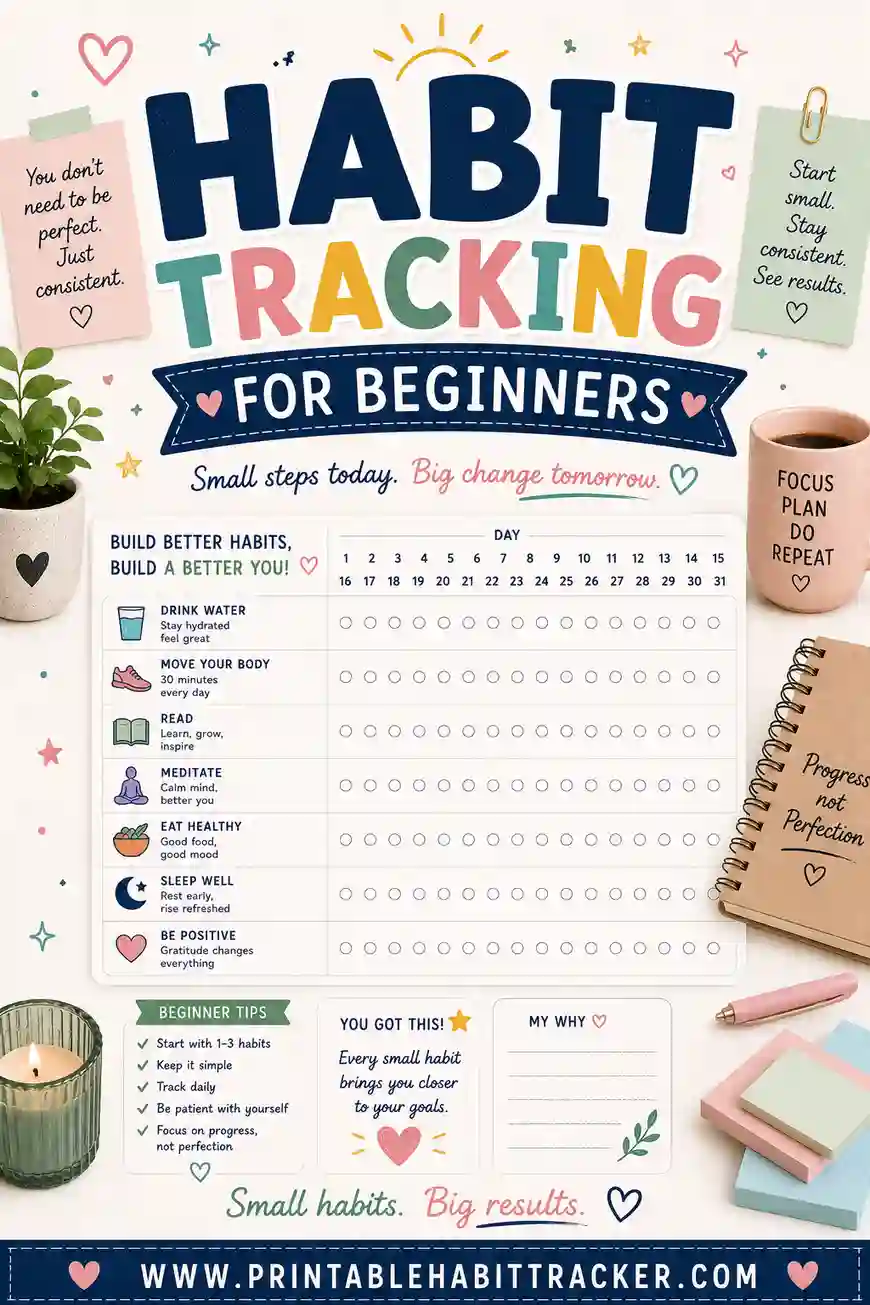
Habit tracking for beginners is just marking off a habit each day on a simple chart so you can see your streak grow. You pick one or two small habits, give yourself a box for each day, and check the box when you do the thing. That visible record is what keeps you going, and the fastest way to start is to print a clean tracker with a free habit tracker maker and stick it where you'll see it.
Want to skip the theory and just begin? Open the free tracker tool, pick a daily or weekly layout, type in one habit, and print it. No app to download, no account, no fuss. You can have a tracker taped to your fridge in under five minutes.
What Is Habit Tracking, Really?
At its core, habit tracking is keeping a simple record of whether you did a habit or not. That's it. No app, no streak app notifications, no guilt spiral. Each day you either check the box or you don't.
The magic is in seeing the record. When you've got a row of five checkmarks in a row, you really don't want to break the chain. That little tug is called the "don't break the chain" effect, and it's one of the most reliable motivation tricks there is.
A paper tracker beats a phone for one big reason: it lives in the real world. You walk past it. It nags you gently without a screen full of distractions. For a beginner, that visibility is everything.
Why Start With a Tracker Instead of Willpower
Willpower runs out. It's a tank that empties as the day goes on, which is why your best intentions fall apart by 9 p.m. A tracker takes the pressure off your memory and your motivation and turns the habit into a simple yes/no question: did I do it today?
Here's what a tracker gives a beginner that willpower alone can't:
- A visual streak that makes you proud and a little stubborn about keeping it going.
- An honest record so you can't fool yourself about how often you actually did the thing.
- A low bar to clear. Checking a box is easy. That ease is what builds momentum.
- A pattern you can read. After two weeks you'll spot exactly which days you slip.
You don't need to be disciplined to use a tracker. The tracker carries the discipline for you.
Pick One Habit (Yes, Just One)
The single biggest beginner mistake is starting ten habits at once. You feel motivated on day one, build a giant chart, and by Thursday the whole thing collapses. Pick one habit. Maybe two if you're feeling bold.
A good starter habit is small, daily, and concrete. "Get healthy" is a wish, not a habit. "Drink one glass of water after breakfast" is a habit you can check off.
Here are beginner-friendly habits that are easy to track and easy to actually do.
| Habit | Why it helps | How to track |
|---|---|---|
| Drink a glass of water in the morning | Easy win, sets a healthy tone | One box per day |
| Walk for 10 minutes | Builds movement without a gym | Check when done |
| Make your bed | Quick win that boosts your whole day | Daily checkbox |
| Read 2 pages | Starts a reading habit painlessly | One box per day |
| Stretch for 5 minutes | Eases stiffness, needs no gear | Daily checkbox |
| Write one sentence in a journal | Builds a writing habit gently | Check or skip |
| Take your vitamins | Health win that's easy to forget | Daily box |
| No phone for the first 10 minutes awake | Calmer mornings | Yes/no each day |
Notice the pattern: every one of these takes a couple of minutes. Start absurdly small. You can always grow the habit once it sticks.
How to Set Up Your First Tracker
You don't need a fancy bullet journal or a planner with a hundred spreads. A clean, printed tracker does the job. Here's the whole setup in four steps.
- Choose a layout. A weekly tracker (one habit, seven boxes) is the friendliest starting point. A monthly grid works too if you like seeing the bigger picture.
- Write your habit in plain words. Be specific. "Walk 10 minutes after lunch" beats "exercise more."
- Pick where it lives. Tape it to your bathroom mirror, fridge, or laptop. Somewhere you can't miss it.
- Print and start today. Don't wait for Monday. The best day to start is the day you decide to.
The free habit tracker tool gives you daily, weekly, monthly, and yearly layouts, plus a few ready-made presets so you don't have to design anything. Pick a style, type your habit, print.
Weekly vs. monthly: which to pick first
Both work. The difference is how much you want to see at once.
| Layout | Best for | Feels like |
|---|---|---|
| Weekly | Total beginners, one or two habits | Low pressure, easy reset each week |
| Monthly | People who like seeing a streak grow | Big satisfying grid of checkmarks |
| Daily | Multiple habits checked through the day | A simple to-do feeling |
| Yearly | Long-term habits, big-picture view | A wall of progress over months |
If you're not sure, start weekly. You can always switch once you know what you like.
Make It Stupidly Easy to Win
Beginners quit when the habit feels hard or the tracking feels like a chore. So stack the deck in your favor.
- Shrink the habit. Can't commit to a workout? Commit to putting on your shoes. Showing up is the habit.
- Attach it to something you already do. "After I pour my coffee, I take my vitamins." Pairing a new habit to an old one is called habit stacking, and it works.
- Keep the tracker visible. Out of sight, out of mind. A tracker in a drawer is a tracker you'll forget.
- Check the box right away. Don't wait until bedtime to update it. Mark it the moment you finish.
The goal isn't a perfect month. The goal is to make the habit so easy that doing it is less effort than skipping it.
What to Do When You Miss a Day
You will miss a day. Everyone does. The beginners who succeed aren't the ones who never slip, they're the ones who don't spiral after a slip.
The rule is simple: never miss twice. One missed day is a blip. Two missed days in a row is the start of a new (bad) pattern. So if you skip Tuesday, make Wednesday non-negotiable.
Don't erase the miss or fudge the chart. The honest record is the point. An empty box on Tuesday just means you're human. Mark Wednesday and keep going. Your streak isn't ruined; it just has a gap.
Reading Your Tracker After Two Weeks
After about two weeks, your tracker starts telling you things. Take a minute to look at it like a detective.
- Lots of checkmarks? Great. Consider adding a second habit, or making the first one a little bigger.
- Gaps on the same day every week? Saturdays keep slipping? That's a clue your weekend routine needs a different plan, not more willpower.
- A long empty stretch? The habit might be too big or in the wrong spot. Shrink it or move it to a different time of day.
A tracker isn't a report card. It's feedback. Use what it shows you to adjust, then keep going.
Common Beginner Mistakes (and Easy Fixes)
A few traps catch almost everyone starting out. Here's how to dodge them.
- Starting too many habits. Fix: pick one. Add more only after the first one sticks.
- Tracking vague goals. Fix: make the habit concrete and small.
- Hiding the tracker. Fix: put it somewhere you physically can't avoid.
- Quitting after one miss. Fix: never miss twice. A gap isn't failure.
- Tracking forever with no reward. Fix: celebrate a 7-day or 30-day streak. A small treat keeps it fun.
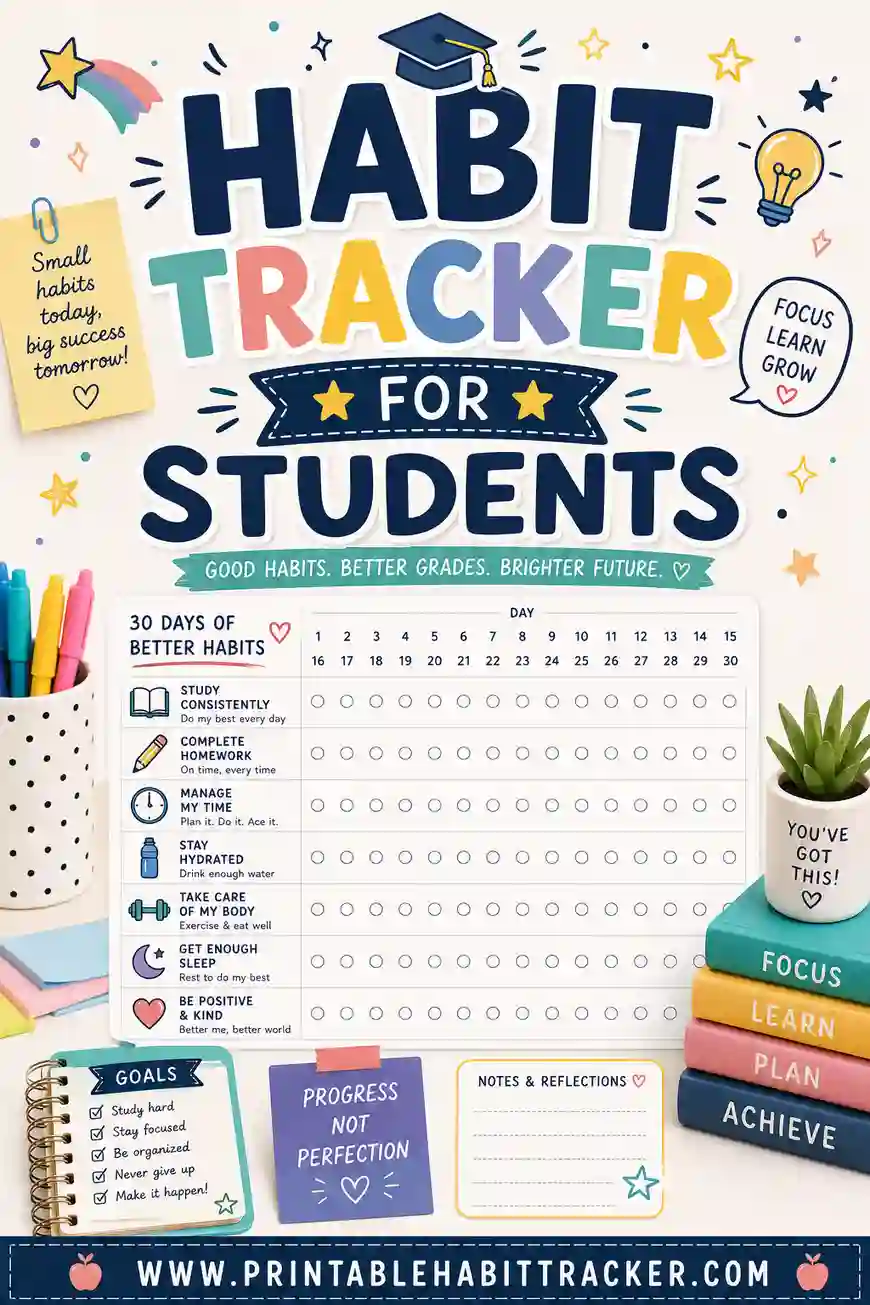
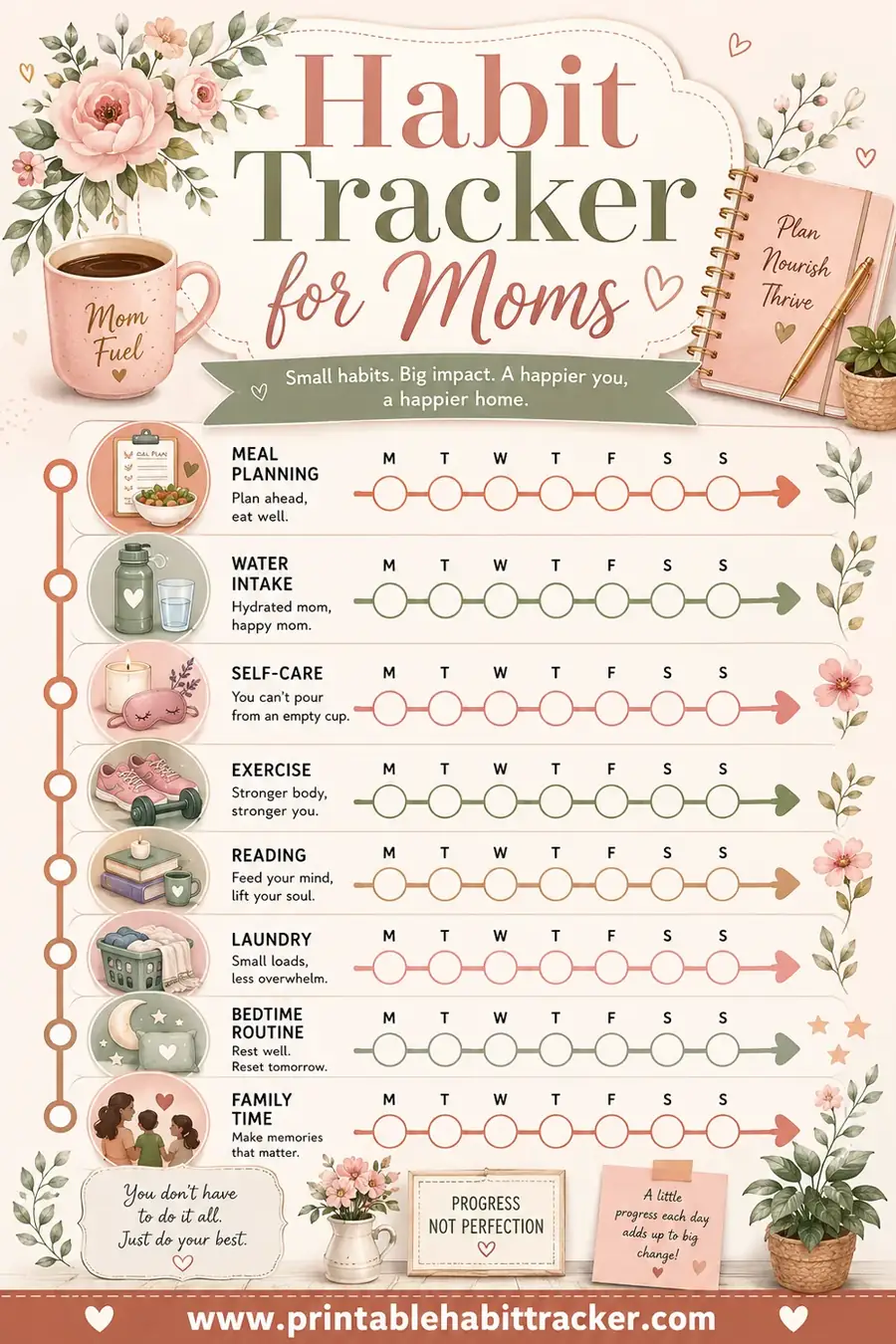
If you're building habits alongside a busy schedule, you might like our guides for students and busy moms, which tackle the same problem with specific routines in mind.
Frequently Asked Questions
How do I start habit tracking as a complete beginner?
Pick one small daily habit, print a simple weekly or monthly tracker, and put it somewhere you'll see it. Check the box each day you do the habit. Start today, not Monday, and keep the habit tiny so it's easy to win. The free tracker tool lets you set this up in a couple of minutes.
How many habits should a beginner track at once?
Just one, or two at the very most. Starting too many habits is the number-one reason beginners quit. Get one habit sticking reliably for a few weeks, then add another. Slow and steady wins here.
How long does it take to build a habit?
It varies, but most habits feel automatic somewhere between three weeks and a couple of months, depending on the habit and the person. Don't chase a magic number. Just keep checking the box and let the routine settle in over time.
What if I miss a day on my tracker?
Don't panic and don't quit. One missed day is normal. The rule is to never miss twice in a row, so make the next day non-negotiable. Leave the empty box as an honest record and carry on.
Is a paper habit tracker better than an app?
For most beginners, yes. A printed tracker lives in the real world where you can't ignore it, and it has no notifications or distractions to pull you off track. Many people start on paper and never feel the need for an app.
What habits are easiest to track for beginners?
Small, daily, concrete ones: drink a glass of water, walk 10 minutes, make your bed, read two pages, stretch for five minutes. Anything you can do in a couple of minutes and mark with a single checkbox is a great starter.
Ready to Start Your First Tracker?
You don't need motivation, an app, or a perfect plan. You need one small habit and a place to mark it off. Open the free habit tracker maker, pick a layout, type in your habit, and print it today. Tape it somewhere you'll see it, check that first box, and let the streak do the rest. Your future self will thank you for starting small.