Habit Tracking for ADHD Adults: A Kinder System
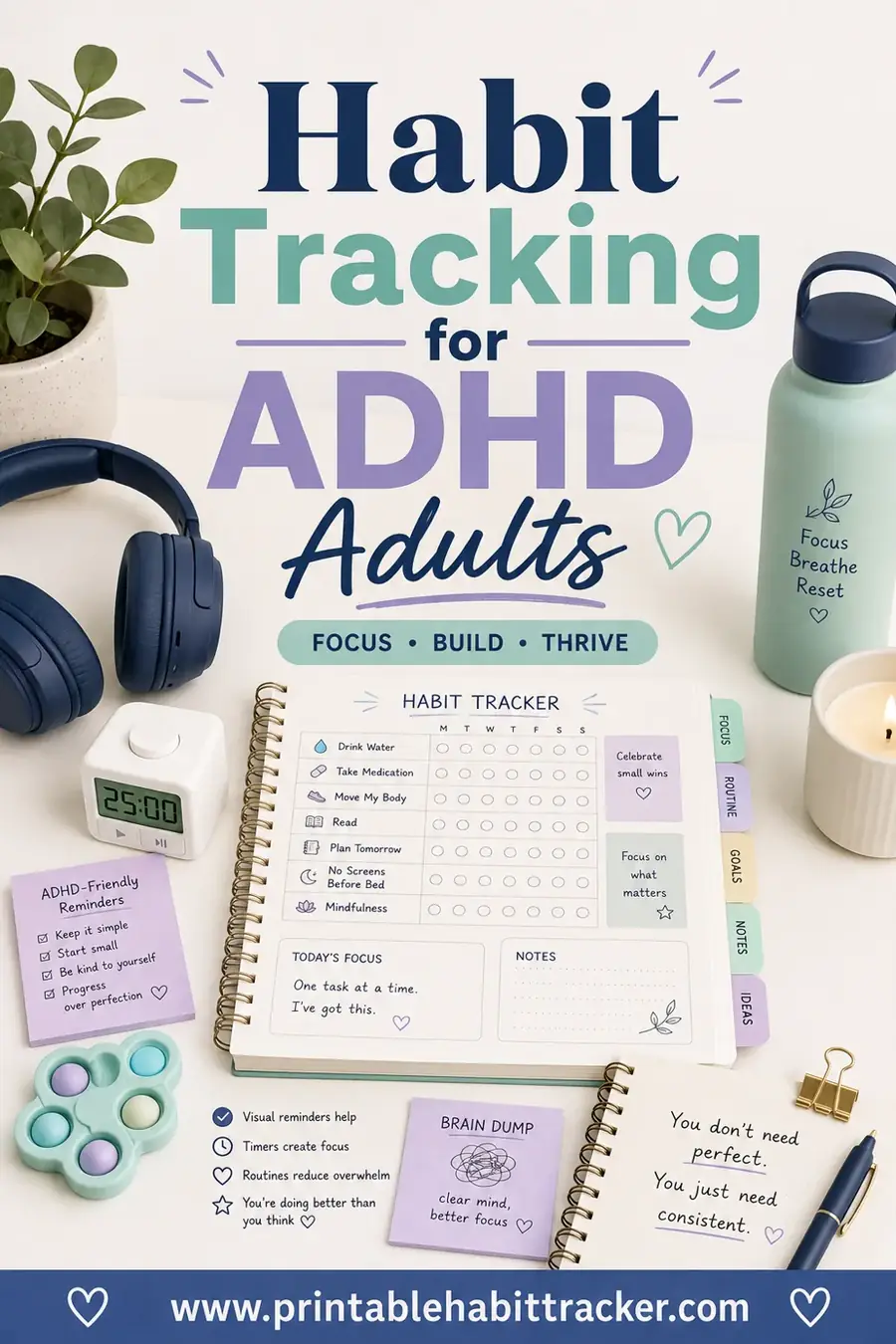
Habit tracking for ADHD adults works best when it's visual, dead simple, and forgiving of missed days. Instead of fighting your brain, you give habits an external home: a printed chart you can see, check off, and feel a little hit of satisfaction from. The visible streak and the physical act of marking a box give an ADHD brain the immediate feedback it craves, and you can print a tracker built for exactly this with the free habit tracker maker in a couple of minutes.
Want to start before the motivation fades? Open the free tracker tool, pick a simple weekly layout, add one or two habits, and print it. No app, no login, no overwhelm. Get it on the wall while you're feeling it.
Why Habit Tracking Is Tricky With ADHD
If you've got ADHD, you already know the pattern. You start a new system with huge enthusiasm, go hard for four days, then forget it exists. The tracker app gets buried. The bullet journal gathers dust. It's not a willpower problem, it's how an ADHD brain handles routine, memory, and motivation.
ADHD makes a few things genuinely harder: remembering to do the habit, remembering to log it, and staying interested once the novelty wears off. Out of sight really is out of mind. And one missed day can spiral into "well, I blew it, might as well quit."
The good news: a habit tracker, done the ADHD-friendly way, plays to your strengths. It makes habits visible, gives instant feedback, and turns a vague goal into a satisfying box to fill. The trick is building the system around your brain instead of pretending your brain works like everyone else's.
What Makes a Tracker ADHD-Friendly
Not every tracker works for an ADHD brain. The ones that stick share a few features.
- Visible, always. On the wall, the fridge, the bathroom mirror. If you can't see it, you'll forget it. A printed tracker beats an app you have to remember to open.
- Short. One to three habits, not fifteen. A huge list is overwhelming and gets abandoned by Wednesday.
- Big, satisfying boxes. The physical act of checking a box gives a little dopamine hit. Make the boxes worth checking.
- Forgiving. Missed days are expected, not failures. A tracker that punishes you for one blank is a tracker you'll throw away.
- Novel enough to stay interesting. Color, stickers, a fun layout. Whatever keeps your brain engaged.
A paper tracker checks most of these boxes by default, which is why so many ADHD adults swear by going analog after years of abandoned apps.
The Best Habits for ADHD Adults to Track
Start with the habits that genuinely move the needle for an ADHD life, the ones that quietly make everything else easier. Keep the list short.
| Habit | Why it helps | How to track |
|---|---|---|
| Take meds | Easy to forget, big impact when missed | One box per day |
| Drink water | Focus tanks when dehydrated | Daily box |
| Eat something in the morning | Stops the all-day energy crash | Daily checkbox |
| Move for 10 minutes | Burns restless energy, lifts focus | Daily check |
| Brain dump / write the to-do list | Gets the swirl out of your head | Daily box |
| One small tidy | Beats the doom pile forming | Yes/no each day |
| Wind-down before bed | Protects the sleep ADHD brains need | Nightly check |
| Take meds at the same time | Consistency makes them work better | Time-based box |
Pick one to three of these. Seriously. The urge to track everything is strong, but a short list is the whole secret. Master one or two, then maybe add a third.
Start with a "keystone" habit
Some habits make the others easier without any extra effort. For a lot of ADHD adults, taking medication on time or doing a daily brain dump is a keystone: do it, and the rest of the day goes smoother. If you only track one thing, make it the one that lifts everything else.
Choosing a Layout That Won't Overwhelm You
The right layout keeps things simple and visible. The free tool has several; here's how ADHD adults tend to use them.
| Layout | Best for | Why it suits ADHD |
|---|---|---|
| Weekly | One to three habits | Short, resets often, low pressure |
| Daily | A simple daily checklist | Clear, one-day-at-a-time focus |
| Monthly | Seeing a streak build | The growing chain is motivating |
| Yearly | One keystone habit | A big visual of long-term progress |
For most people, a weekly tracker is the sweet spot. It's short enough not to overwhelm, it resets every seven days so a bad patch doesn't feel permanent, and the fresh start each week is genuinely motivating for a brain that loves novelty. A monthly grid works well too if the growing streak excites rather than stresses you.
Setting Up Your ADHD-Friendly Tracker
Keep the setup as short as the tracker. Do it now, while you're motivated, because that window can be small.
- Pick one to three habits. Resist the urge to add more. You can grow it later.
- Choose a simple weekly layout in the tracker tool.
- Print it big and bold. Bigger boxes, fewer rows. Easy to check at a glance.
- Hang it where you literally cannot miss it. Mirror, fridge, beside the coffee maker.
- Put a pen on a string right next to it. Hunting for a pen is exactly the friction that kills the habit.
That last tip matters more than it sounds. With ADHD, every bit of friction between you and the habit is a place to fall off. Remove the friction and the habit has a fighting chance.
ADHD-Friendly Tricks to Make Habits Stick
Here's where the system really earns its keep. These tactics are built for how an ADHD brain actually works.
- Habit stacking. Bolt a new habit onto something you already do without thinking. "After I start the coffee, I take my meds." The existing habit becomes the reminder.
- Body doubling. Do the habit alongside someone else, in person or on a video call. The presence of another person makes it weirdly easier to start.
- Make it visual and fun. Use color, stickers, a highlighter. A boring tracker gets ignored; a fun one gets used.
- Reward fast. ADHD brains respond to immediate rewards, not far-off ones. A full week of checks earns a small treat now, not "better health someday."
- Shrink the habit until it's silly. Can't do a workout? Track "put on workout clothes." Starting is the hard part; the box rewards the start.
You don't need all of these. Pick the one or two that click for you and lean in.
The Most Important Rule: Be Forgiving
This is the rule that makes or breaks habit tracking for ADHD adults. A missed day is not failure. Everyone with ADHD will have blank boxes. That's not a flaw in you; it's just how it goes.
The trap is the all-or-nothing spiral: you miss one day, decide you've "ruined" the streak, and abandon the whole tracker. Fight that. One blank box means nothing. The only goal is to not let a single miss turn into a permanent stop.
Try the "never miss twice" rule. Skip a day? Fine. Just don't skip the next one. And if you skip a whole week, that's fine too. Just start again. There's no streak to "ruin," only the long game of doing the habit more often than not. A tracker that's worked 70% of the time for six months has changed your life, blanks and all.
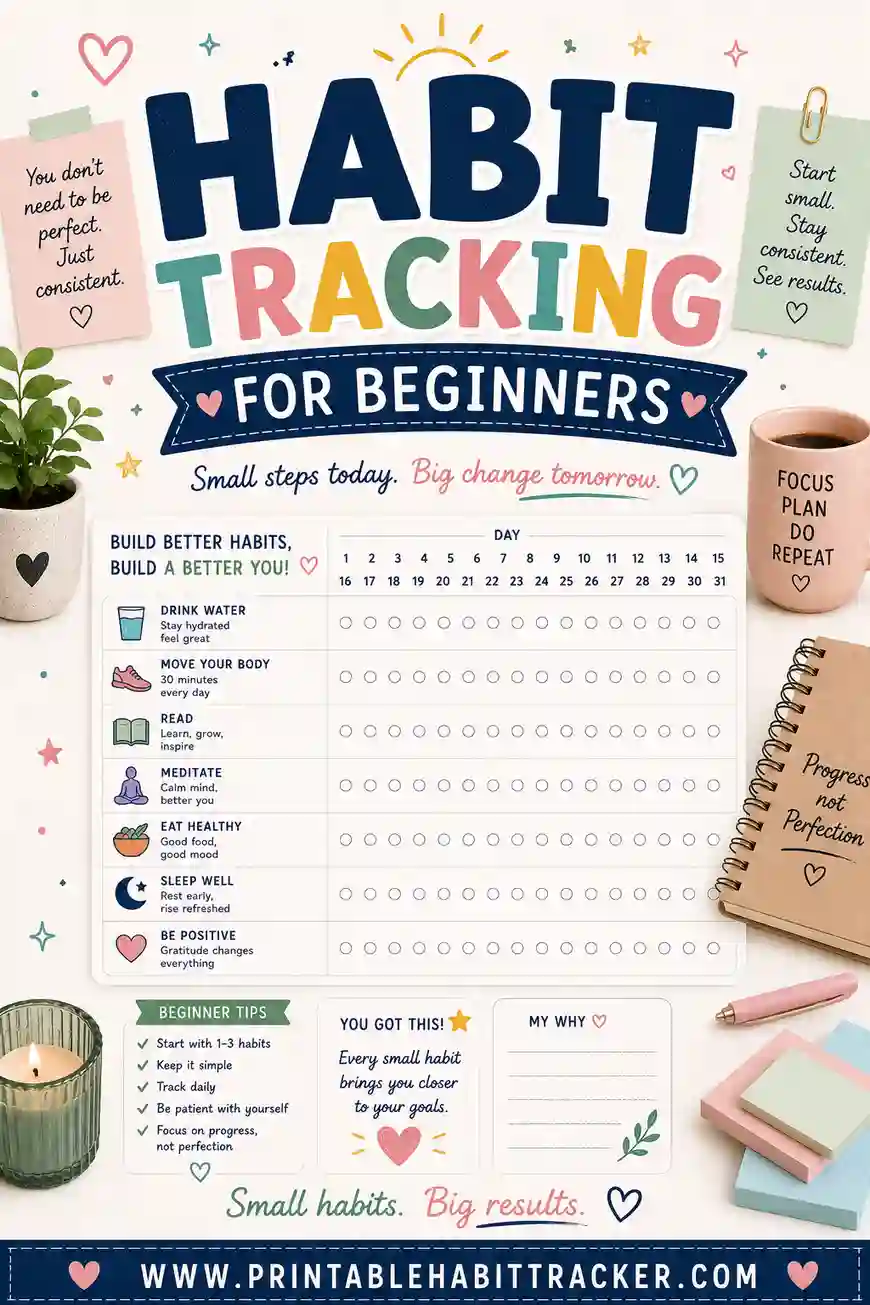
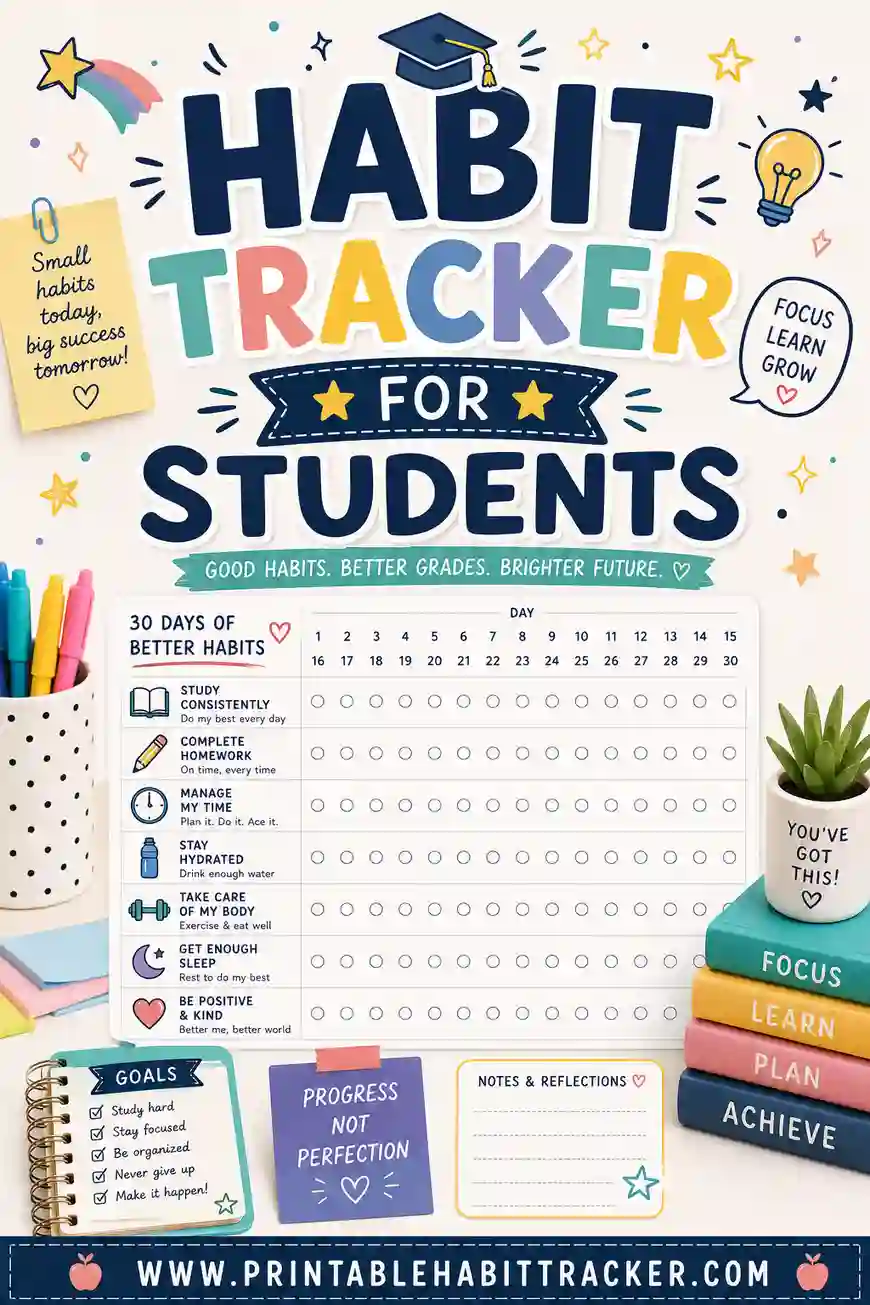
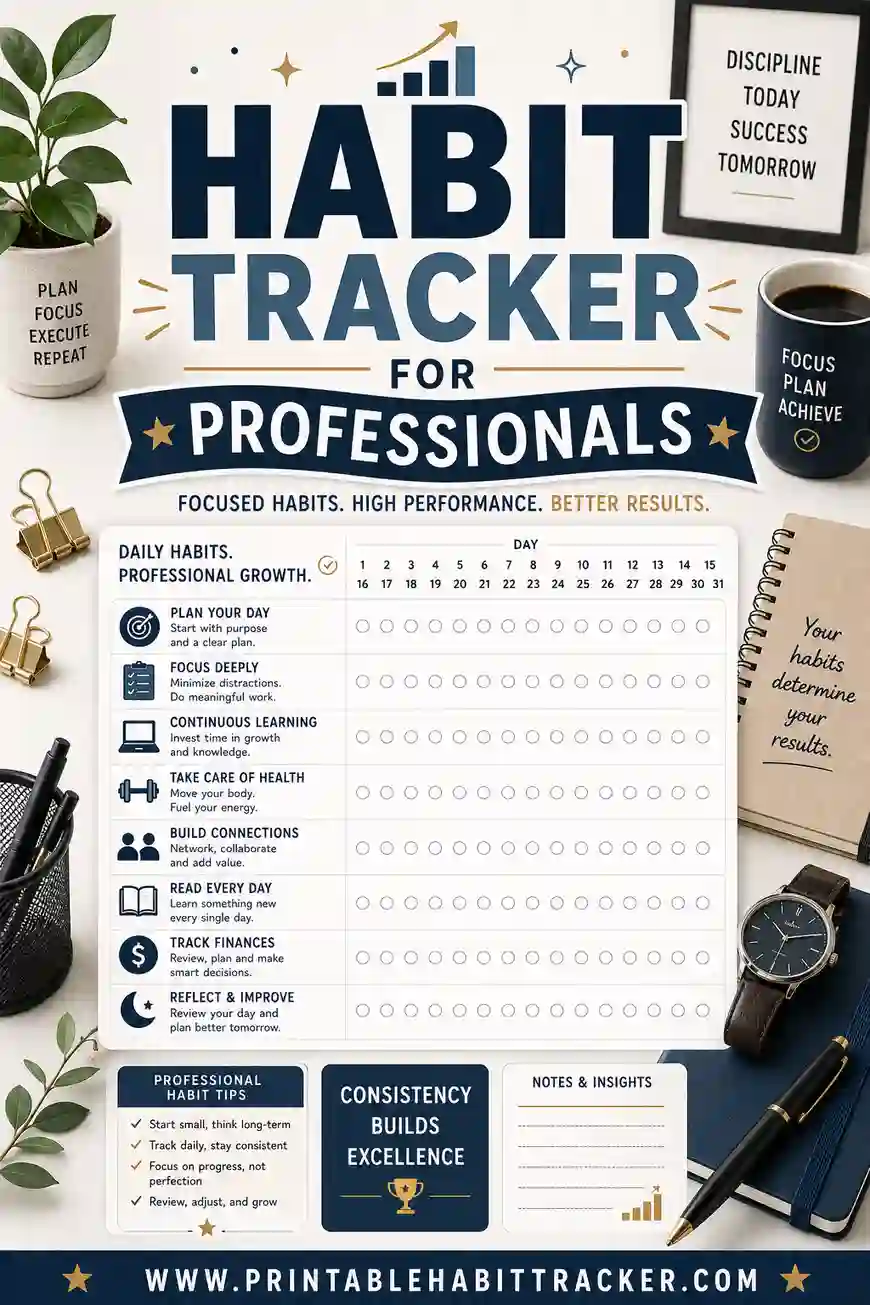
If you're just getting started with any of this, our habit tracking for beginners guide keeps things gentle. Students with ADHD will find extra ideas in our habit tracker for students guide, and working adults can borrow tactics from the habit tracker for professionals guide.
A Realistic ADHD Tracker Week
Here's what a successful week actually looks like. Not flawless. Real, with blanks, and absolutely a win.
| Habit | Mon | Tue | Wed | Thu | Fri |
|---|---|---|---|---|---|
| Take meds | ✓ | ✓ | — | ✓ | ✓ |
| Drink water | ✓ | ✓ | ✓ | — | ✓ |
| Brain dump | ✓ | — | ✓ | ✓ | — |
Look at those blanks. That's not failure, that's a normal, human, ADHD week. The checks far outweigh the gaps, and that's the whole point. Chase progress, not a perfect chain.
Frequently Asked Questions
Why is habit tracking hard with ADHD?
ADHD makes it harder to remember the habit, remember to log it, and stay interested once the novelty fades. Apps get buried and forgotten. The fix is a visible, super-short, forgiving tracker that lives where you can't miss it and gives instant satisfaction when you check a box.
What makes a habit tracker ADHD-friendly?
Keep it visible (on the wall or fridge), short (one to three habits), and forgiving of missed days. Big satisfying boxes, a pen right beside it, and a bit of color or fun all help. A printed tracker beats an app you have to remember to open.
How many habits should an ADHD adult track?
One to three. The urge to track everything is strong, but a long list overwhelms and gets abandoned fast. Master one or two habits first, then add another only once they feel automatic. Short is the whole secret.
What should I do when I miss days?
Don't spiral. A missed day is normal with ADHD and absolutely not failure. Use the "never miss twice" rule: skip a day, fine, just don't skip the next one. If you miss a whole week, just start again. There's no streak to ruin.
What habits are best to track with ADHD?
Start with high-impact ones: taking meds on time, drinking water, eating in the morning, moving for ten minutes, and a daily brain dump. Pick a keystone habit that makes the rest of your day easier, and keep the list short.
Does a paper tracker really work better than an app for ADHD?
For many ADHD adults, yes. A printed tracker is always visible, needs no reminder to open, and the physical act of checking a box gives an immediate dopamine hit. Plenty of people switch to paper after years of abandoned tracking apps.
Ready to Build Your ADHD-Friendly Tracker?
Your brain isn't broken; it just needs a system built for how it actually works. Visible, short, fun, and forgiving. Open the free habit tracker maker, pick a simple weekly layout, and add one to three habits that genuinely make your days easier. Print it big, hang it where you can't miss it, and put a pen right beside it. Check that first box today, forgive the blanks, and let the small wins add up. You've got this.