Habit Tracker for Professionals: Stay Sharp at Work
A habit tracker for professionals is a simple chart that keeps your work habits, focus rituals, and health routines from slipping while your calendar fills up. You list the habits that drive your performance and wellbeing, check a box each day you do them, and let the visible streak hold you accountable. It takes a couple of minutes to print one with this free habit tracker maker, and it works whether you're at a desk, on the road, or running between meetings.
Short on time, as usual? Open the free tracker tool, pick a weekly or daily layout, add a few key habits, and print it for your desk or notebook. No app, no signup, no subscription. It's ready before your next meeting.
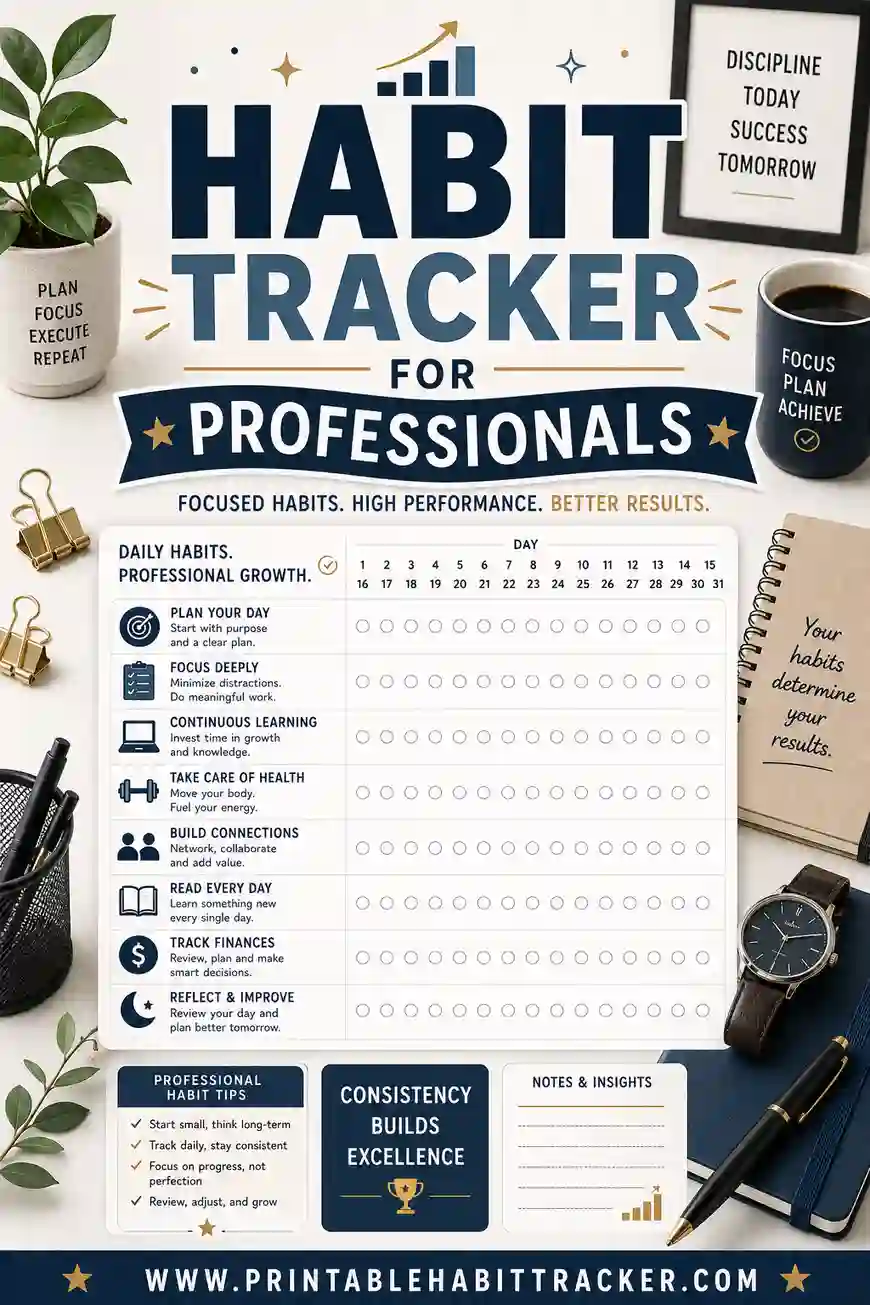
Why Professionals Benefit From a Habit Tracker
When you're busy, the habits that matter most are the first to vanish. You skip the workout to answer email. You eat lunch at your desk. You mean to learn that new skill but the day eats you alive. None of these slips feel like a big deal in the moment, and that's exactly the problem.
A habit tracker keeps the important-but-not-urgent stuff on your radar. The work fires get put out either way. A tracker makes sure you also show up for the deep work, the exercise, and the rest that keep you effective over the long haul.
There's a mindset piece too. Professionals who track habits report feeling more in control of their days. Instead of being dragged around by a calendar, you've got a short list of things you decide to do, no matter what the inbox throws at you.
High-Value Habits for Professionals to Track
The best habits to track are the ones with outsized payoff: they sharpen your focus, protect your energy, or compound over time. Here's a strong starting set.
| Habit | Why it helps | How to track |
|---|---|---|
| One deep work block | Real progress on what matters most | One box per day |
| Plan tomorrow before logging off | Calmer mornings, clearer priorities | Evening check |
| Inbox to zero once a day | Stops email from running your day | Daily box |
| 30 minutes of exercise | Energy, mood, and long-term health | Daily checkbox |
| Read or learn 20 minutes | Compounds into real expertise | Check when done |
| Step away for a real lunch break | Prevents afternoon burnout | Yes/no each day |
| No screens 30 min before bed | Better sleep, sharper next day | Nightly check |
| Drink water through the day | Focus and energy depend on it | Daily box |
Pick four or five to start. The point isn't to track everything, it's to track the few habits that quietly determine whether you thrive or just survive your week.
The keystone habit idea
Some habits pull others up with them. Exercise is a classic example: people who keep exercising tend to eat better, sleep better, and focus better without even trying. If you only track one thing, track a keystone habit and watch the ripple effects.
Picking a Layout That Fits Your Workflow
Your tracker should match how you actually work. The free tool offers several layouts; here's how professionals tend to use them.
| Layout | Best for | Why it fits work life |
|---|---|---|
| Daily | Several habits checked through the day | Works like a daily ritual checklist |
| Weekly | A handful of core habits | Matches a normal work week, easy reset |
| Monthly | Watching streaks build | Great for quarterly goals and reviews |
| Yearly | One big professional goal | A year-long view of a learning or fitness habit |
Many professionals keep a daily layout on their desk for the must-do rituals and a weekly one for the bigger habits. Both fit on a single sheet, and a printed tracker has a real advantage at work: it sits next to your keyboard with no app to bury it under tabs.
Setting Up Your Professional Tracker
This takes about five minutes, and it'll serve you for months.
- Choose your habits. Pick four or five that mix performance and wellbeing. All hustle and no rest is a fast track to burnout.
- Pick a layout in the tracker tool that matches your week.
- Print a copy for your workspace. Desk, notebook, or a wall where you'll see it.
- Decide on your check-in moment. Many pros update the tracker during a five-minute end-of-day shutdown.
- Review weekly. Spend two minutes each Friday reading your week and adjusting.
That last step is where the real value lives. A tracker you never review is just decoration. A tracker you read once a week becomes a feedback loop.
Building a Shutdown Ritual Around Your Tracker
One of the most useful things a professional can do is end the workday on purpose instead of just trailing off. A short shutdown ritual, anchored to your tracker, draws a clean line between work and the rest of your life.
Here's a simple version:
- Update your tracker. Check off today's habits while they're fresh.
- Plan tomorrow. Write down the one or two things that must get done.
- Clear the obvious noise. A quick inbox pass so nothing urgent is hiding.
- Say you're done. Out loud or just to yourself. Then close the laptop.
Tracking that shutdown ritual as its own habit makes it stick. After a few weeks it becomes automatic, and you'll find you actually disconnect in the evening instead of half-working until bedtime.
Avoiding Burnout With Your Tracker
A habit tracker isn't just for cranking out more work. Used well, it's one of your best defenses against burnout, because it forces the recovery habits onto the page alongside the productivity ones.
- Track rest like you track output. A "took a real lunch" or "logged off by 6" box keeps recovery visible.
- Watch for all-work weeks. If your exercise and break rows are empty for a week, that's a warning, not a badge of honor.
- Protect sleep. A sleep or "no screens before bed" habit pays off in every other part of your day.
- Use the data honestly. The tracker's job is to show you the truth, not to make you feel guilty. Read it, adjust, move on.
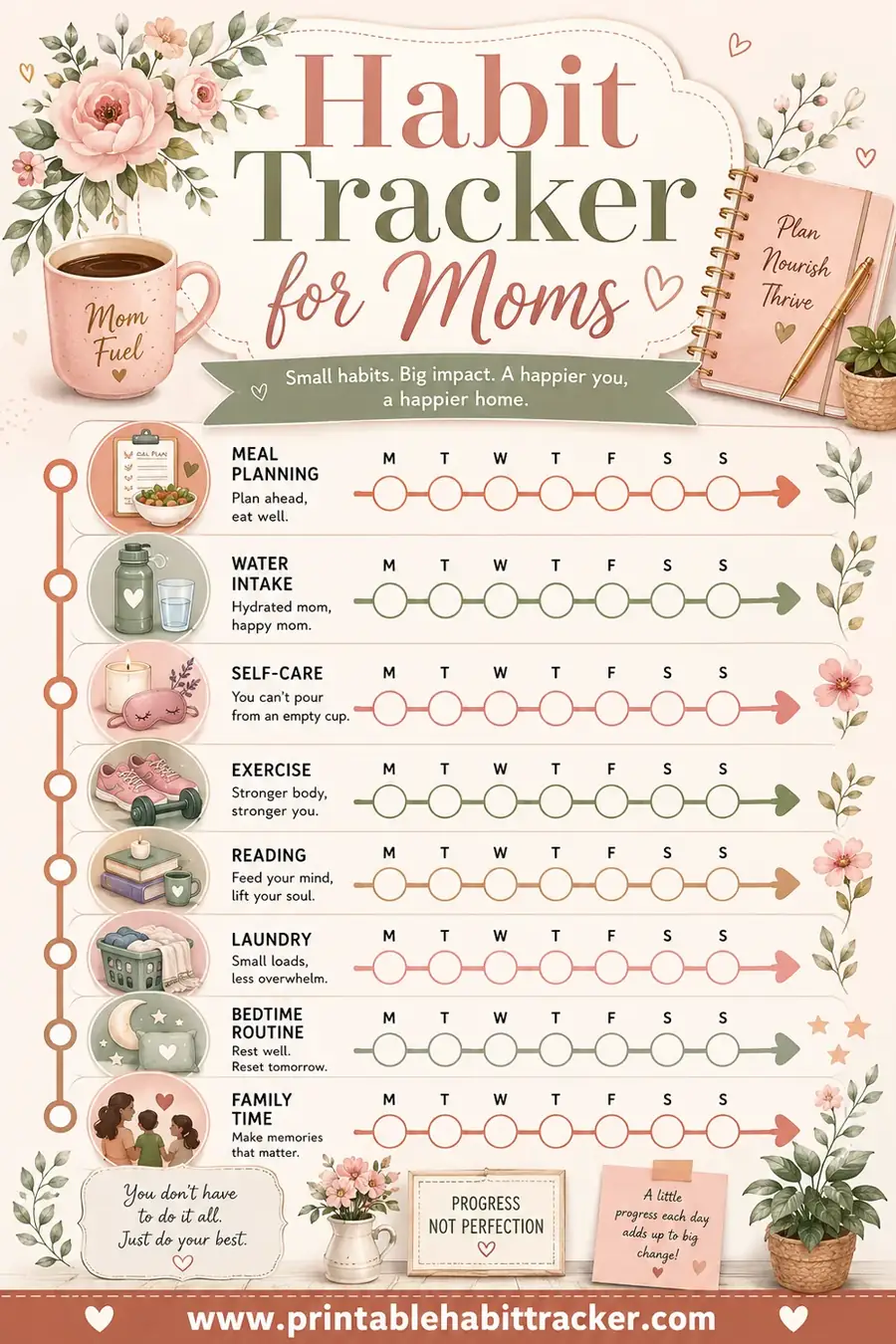
If you're managing work alongside a packed home life, our habit tracker for moms guide tackles the juggle from another angle. And if routines have never come naturally to you, habit tracking for ADHD adults has tactics worth borrowing.
Tracking Habits That Compound Over a Career
The habits that make the biggest difference rarely pay off the same day. They compound. A tracker is how you stay loyal to them long enough to see the returns, because the daily check gives you a small win while the real payoff is still months away.
- Daily learning. Twenty minutes of reading or a course adds up to genuine expertise over a year. The tracker keeps you at it on the days you don't feel like it.
- Networking touches. One message to a contact a week is invisible day to day and powerful over years. Track it so it doesn't fall off.
- Writing or documenting. Capturing what you learn, in notes or a few sentences, builds a body of work and sharpens your thinking. A daily row keeps it alive.
- Exercise and sleep. The least glamorous habits protect the energy and focus everything else depends on. Tracking them keeps them from being the first thing you sacrifice.
The point of tracking these isn't a perfect streak. It's to do them often enough, for long enough, that the compounding kicks in. A tracker that's kept a learning habit going 80% of the time for a year has quietly reshaped your career.
Avoiding the "Productivity Theater" Trap
A word of caution: a tracker can become a way to feel productive without actually moving anything important. Checking lots of boxes feels good, but boxes aren't the goal, results are. Keep your tracker honest.
- Track outcomes, not just activity where you can. "One deep work block" beats "opened my laptop." Aim the habit at real progress.
- Cull habits that don't earn their spot. If a row has been on the tracker for a month and nothing improved, drop it. A tracker should evolve.
- Don't game your own streak. Doing a habit in name only to keep a chain alive defeats the purpose. The honest record is what makes the tool worth anything.
- Let the tracker serve the work, not the other way around. If maintaining it becomes a chore that eats time, simplify it. Fewer, better habits beat a sprawling chart.
Used with a clear head, a tracker keeps you honest about whether your days actually move you forward, which is exactly what you want it to do.
Staying Consistent When Work Gets Crazy
Some weeks blow up. Travel, a launch, a crisis. Your tracker should bend, not break.
- Shrink habits on chaos days. No time for a full workout? A 10-minute walk still counts. Keep the streak alive.
- Stack habits onto fixed anchors. "After my morning coffee, I plan the day." Tying habits to things that always happen makes them survive busy weeks.
- Never miss twice. One skipped day is nothing. Two in a row is how a habit quietly dies. Make the next day count.
- Forgive the off week. A rough week with lots of blanks isn't failure. Reset and pick it back up. The long-term streak is what matters.
Consistency over months beats intensity over days. A tracker that's helped you keep a habit 80% of the time for a year has done its job beautifully.
Frequently Asked Questions
What habits should a professional track?
Focus on high-leverage habits: one deep work block, daily exercise, planning tomorrow, a learning habit, and recovery habits like a real lunch break and good sleep. Pick four or five that balance performance with wellbeing, and build them in the free tracker tool.
How does a habit tracker improve work performance?
It keeps the important-but-not-urgent habits visible so they don't get crowded out by daily fires. Tracking a deep work block, planning, and learning means you make steady progress on what matters instead of just reacting to your inbox all day.
Should I use a paper tracker or an app at work?
A printed tracker works well because it sits on your desk with no app to bury under tabs or notifications. Many professionals prefer paper precisely because it's a calm, screen-free nudge in a workday that's already full of screens.
How do I keep habits going during a busy work week?
Shrink habits on hectic days rather than skipping them, anchor each habit to a fixed part of your routine, and never miss twice in a row. Keep recovery habits on the tracker too, since they're what make the busy weeks sustainable.
Can a habit tracker help prevent burnout?
Yes, if you track recovery habits alongside productivity ones. Putting rest, exercise, breaks, and sleep on the page makes them visible and accountable. An empty week in those rows becomes an early warning sign that you're heading for burnout.
How often should I review my tracker?
A quick daily check-in to mark boxes, plus a two-minute weekly review, works well. The weekly review is where you spot patterns, see which habits are slipping, and adjust for the week ahead.
Ready to Build Your Professional Tracker?
The professionals who stay sharp over years aren't the ones who grind hardest, they're the ones with steady habits that compound. Open the free habit tracker maker, pick a layout that fits your week, and add the few habits that drive your performance and protect your energy. Print it, put it where you'll see it, and start checking boxes today. A great career is built one consistent day at a time.