Habit Tracker for Students: Free Printable for School Success
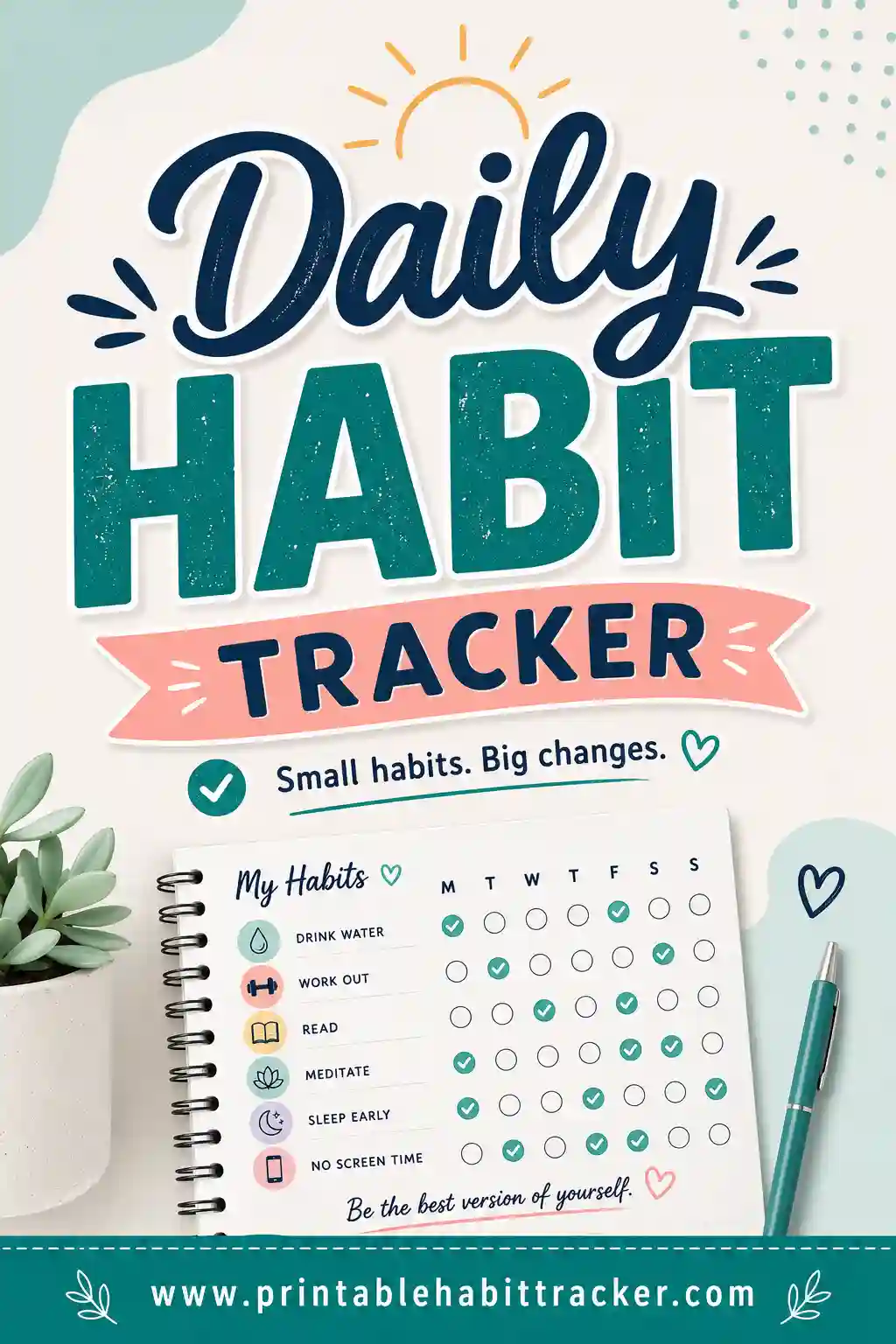
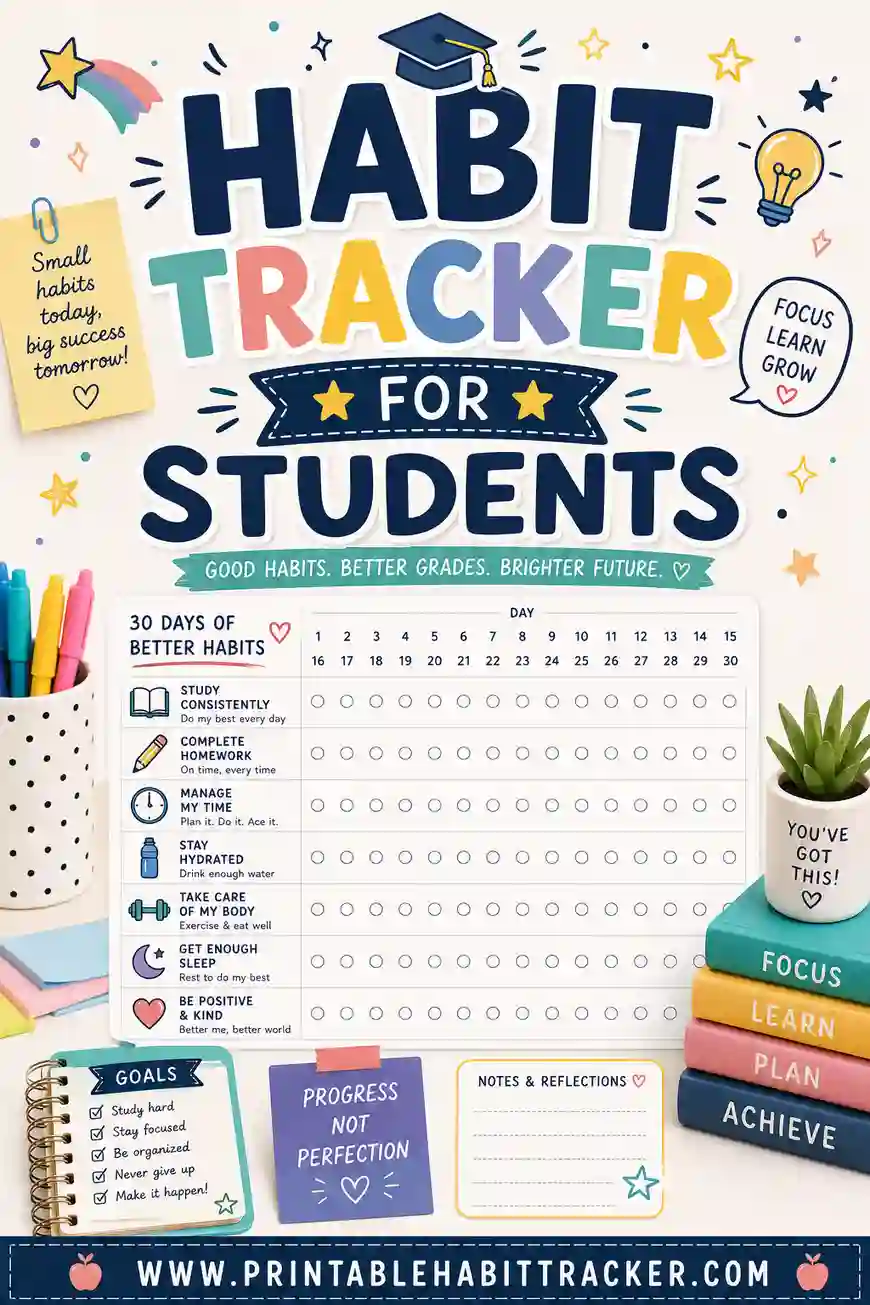
A habit tracker for students is a simple printable grid where you list the daily habits that lead to better grades and a calmer school life — things like studying, sleeping enough, and turning in work on time — then check off each one as you do it. Watching the boxes fill in keeps you consistent during busy weeks and turns "I should study more" into a streak you can actually see. The fastest way to start is to grab a free printable habit tracker, add your school habits, and print a clean page for your binder or wall.
Short on time? Open the free tracker, pick a weekly layout, type in your study and self-care habits, and print. No account, no app, no cost.
Why Students Need a Habit Tracker
School is one deadline after another, and it's easy to let the boring-but-important stuff slide — until midterms hit and you're scrambling. A habit tracker fixes that by making your routines visible. Instead of relying on willpower or memory, you let a sheet of paper do the remembering.
The payoff is bigger than just grades. Students who track habits tend to sleep better, cram less, and feel less stressed, because the work is spread out instead of crammed into one panicked night. The tracker doesn't make you study for hours. It just nudges you to do a little, every day, which adds up to a lot by exam week.
It also builds a skill that outlasts school. Learning to set a small habit and stick to it is exactly what you'll need in college, a job, and the rest of your life. Starting now means it's second nature later.
What to Track: Habits That Actually Help in School
Good student habits aren't just about studying. They're a mix of academics, body, and mind. Here are habits worth tracking, why each one matters, and an easy way to mark it off.
| Habit | Why it helps | How to track |
|---|---|---|
| Study 30 minutes | Spacing it out beats one giant cram session | Check after a focused 30-min block |
| Read for fun | Builds vocabulary and focus without feeling like work | Check after 15+ minutes of reading |
| Sleep 8 hours | Sleep is when your brain locks in what you learned | Check if you were in bed by your target time |
| Pack your bag tonight | Kills morning chaos and forgotten homework | Check when tomorrow's bag is ready |
| Review notes | A 5-minute review beats relearning later | Check after skimming the day's notes |
| Drink water | Dehydration makes focus and mood worse | One box per glass, or a daily check |
| Move your body | Exercise boosts memory and lowers stress | Check after a walk, sport, or workout |
| Phone away while studying | Your phone is the #1 study killer | Check if it stayed in another room |
You don't need all eight. Pick five that match what you're struggling with right now. If mornings are chaos, start with "pack your bag." If you're always tired, start with sleep.
Academic habits vs. wellness habits
A strong student tracker balances two kinds of habits. Academic habits push your grades: studying, reviewing notes, reading. Wellness habits protect the engine behind the grades: sleep, water, movement. Stack only academic habits and you'll burn out. Mix in wellness ones and you'll have the energy to actually do the schoolwork. Aim for roughly half and half.
Best Layouts for a Student Schedule
Your tracker should match how your week runs. The tracker tool offers daily, weekly, monthly, and yearly views, so you can pick the right fit.
| Layout | Best for | Example |
|---|---|---|
| Weekly | The everyday school routine | Study, sleep, read, pack bag — Mon to Sun |
| Daily | Habits you repeat all day | Water glasses, focus blocks, breaks |
| Monthly | Seeing your consistency at a glance | A dot grid of "studied today" for a month |
| Yearly | Long streaks across a whole term | One square per day for a reading habit |
For most students, a weekly sheet is the workhorse. Print one each Sunday, fill it in across the week, and you've built a habit system that fits in a binder pocket.
How to Make a Student Habit Tracker in 4 Steps
No planner or art skills required. Here's the whole thing.
- Pick your habits. Choose five from the table above, or write your own. Keep them small and clear.
- Choose a weekly layout. Open the generator and select it.
- Type your habits in. One per row. Short labels keep the page tidy.
- Print and stick it where you study. On your desk, inside your binder, or taped above your bed.
That's it. You'll go from idea to printed tracker in a few minutes — faster than scrolling through one study video.
Make it stick during busy weeks
The trick is putting the tracker where school already happens. Tape it inside your binder so you see it every class. Keep a pen clipped to it. Link a habit to something you already do, like checking "review notes" right after you sit down to do homework. The easier it is to log, the more you'll actually use it when life gets hectic.
A Sample School Week
Wondering what a real filled-in week looks like? Here's an example with five common student habits. A check means done.
| Habit | Mon | Tue | Wed | Thu | Fri |
|---|---|---|---|---|---|
| Study 30 min | ✓ | ✓ | — | ✓ | ✓ |
| Review notes | ✓ | ✓ | ✓ | ✓ | — |
| Sleep 8 hours | — | ✓ | ✓ | — | ✓ |
| Read for fun | ✓ | — | ✓ | ✓ | ✓ |
| Phone away | ✓ | ✓ | — | ✓ | ✓ |
It's not a perfect grid, and that's normal. A good week is mostly-full rows with a few honest gaps. The blanks are useful — they show Wednesday's study slipped and you stayed up too late twice. That's information you can act on next week.
Using Your Tracker to Study Smarter
Filling boxes is only half the win. The real value comes from reviewing your sheet at the end of each week. Take two minutes and ask:
- What's my longest streak? That habit has clicked. Keep protecting it.
- Where are the gaps? A row full of holes usually means the habit is too big or scheduled at the wrong time.
- What's one small tweak? Maybe "study 30 minutes" should move to right after dinner, when you actually have energy.
This weekly check turns the tracker into a coach. You're not just recording school habits — you're tuning them.
When you keep skipping a habit
If a row stays mostly empty, don't pile on guilt. Shrink the habit until it's almost too easy. "Study 30 minutes" becomes "open the book and read one page." "Sleep 8 hours" becomes "phone off by 10." Once the tiny version is automatic, you can grow it. A small habit you actually do beats a big one you keep failing — especially during a stressful term.
Habit Trackers for Different Student Ages
The same tool stretches from elementary to college if you adjust a few things.
- Elementary (grades K–5). Keep it to three or four picture-friendly habits like "read," "brush teeth," "pack bag." Let them color the boxes. A parent can help fill it in.
- Middle school. Five habits, mostly self-managed. Mix study, sleep, and one chore. This is a great age to build the tracking habit.
- High school. Five to seven habits with real academic ones — study blocks, note review, deadlines. Tie streaks to small rewards.
- College. A full weekly tracker plus a monthly page for big goals. Add habits like meal prep and budgeting alongside studying.
Match the number of habits to the age, and the tracker grows up right alongside the student.
Beating the Two Biggest Student Habit Killers
Two things sink student trackers more than anything else: cramming and the phone. A habit tracker is one of the few tools that fights both at once, but only if you set it up to.
Cramming feels productive but it isn't — your brain forgets most of a one-night marathon within days. The fix is a "study a little, daily" row instead of a "study three hours" row. The tracker rewards showing up every day, which is exactly the spaced practice that actually sticks information. By the time a test arrives, your tracker shows two weeks of small sessions, and you're reviewing instead of panicking.
The phone is the other one. It's the single biggest reason study time evaporates, because a "quick check" turns into forty minutes. A simple "phone in another room" row turns that vague intention into a daily yes-or-no you can see. When the box is empty, you know exactly why the study session felt scattered.
- Make the daily-study row tiny. "Open the book and do one problem" is impossible to skip, and it usually turns into more.
- Stack studying onto an anchor. "Right after dinner, I study" uses a routine you already have as the reminder.
- Track the phone, not the willpower. You can't measure focus, but you can measure whether the phone left the room.
Set those two rows up well and the tracker quietly solves the problems that wreck most students' grades.
Build the skill, not just the grades
The real prize isn't this term's report card — it's learning how to build a habit. A student who masters setting a small routine and sticking to it has a superpower that outlasts every class. That's the skill behind a healthy adult life, a steady job, and any big goal. The grades are just the first place it pays off.
Frequently Asked Questions
How many habits should a student track?
Five is a great starting number. It's enough to cover study, sleep, and a wellness habit without feeling overwhelming. Add more only after the first five have stuck for a couple of weeks, so the tracker stays something you look forward to, not a chore.
What habits help students get better grades?
The biggest ones are studying in short daily blocks, reviewing notes the same day, getting enough sleep, and keeping your phone away while you work. Spreading effort across the week beats cramming, and good sleep is when your brain actually locks in what you learned.
Is the student habit tracker free to print?
Yes. You build it and print it yourself at no cost — no account, no watermark, no subscription. The tracker tool lets you make as many pages as you need for the whole school year.
What's the best layout for a student?
A weekly layout works best for most students because it matches the school week. Print a fresh sheet every Sunday, fill it in through Friday, and keep it in your binder. Add a monthly page if you want to see longer streaks at a glance.
How do I get my kid to actually use a habit tracker?
Keep it short, make it visible, and let them own it. Three to five habits, taped somewhere they'll see it, with a pen nearby. Let younger kids color the boxes and tie a full week to a small reward. The more it feels like theirs, the more they'll stick with it.
Can I track chores and homework on the same tracker?
Yes, and many students do. Mixing a chore or two (make your bed, dishes) with school habits keeps everything on one page. Just keep the total to a manageable handful so the sheet stays clean and easy to fill in.
Ready to Build Your Student Habit Tracker?
Pick five habits that would make school easier — a study block, some sleep, a little reading — open the free tracker, and print a clean sheet in minutes. It's free, there's no sign-up, and you can choose the layout that fits your week. Tape it in your binder, grab a pen, and start building streaks that carry you straight through exam season.