Daily Habit Tracker: Free Printable & Customizable
A daily habit tracker is a simple grid where you list the habits you want to do every day and tick off each one as you finish it. You glance at it in the morning to see what's on deck, check boxes through the day, and end with a clear picture of how you did. The fastest way to get one is to use a free printable habit tracker that turns your list of habits into a clean sheet you can print at home.
Want to skip ahead and just make one? Open the free tool, type in the habits you care about, pick a daily layout, and print as many copies as you need. No sign-up, no fee, nothing to install.
What Is a Daily Habit Tracker?
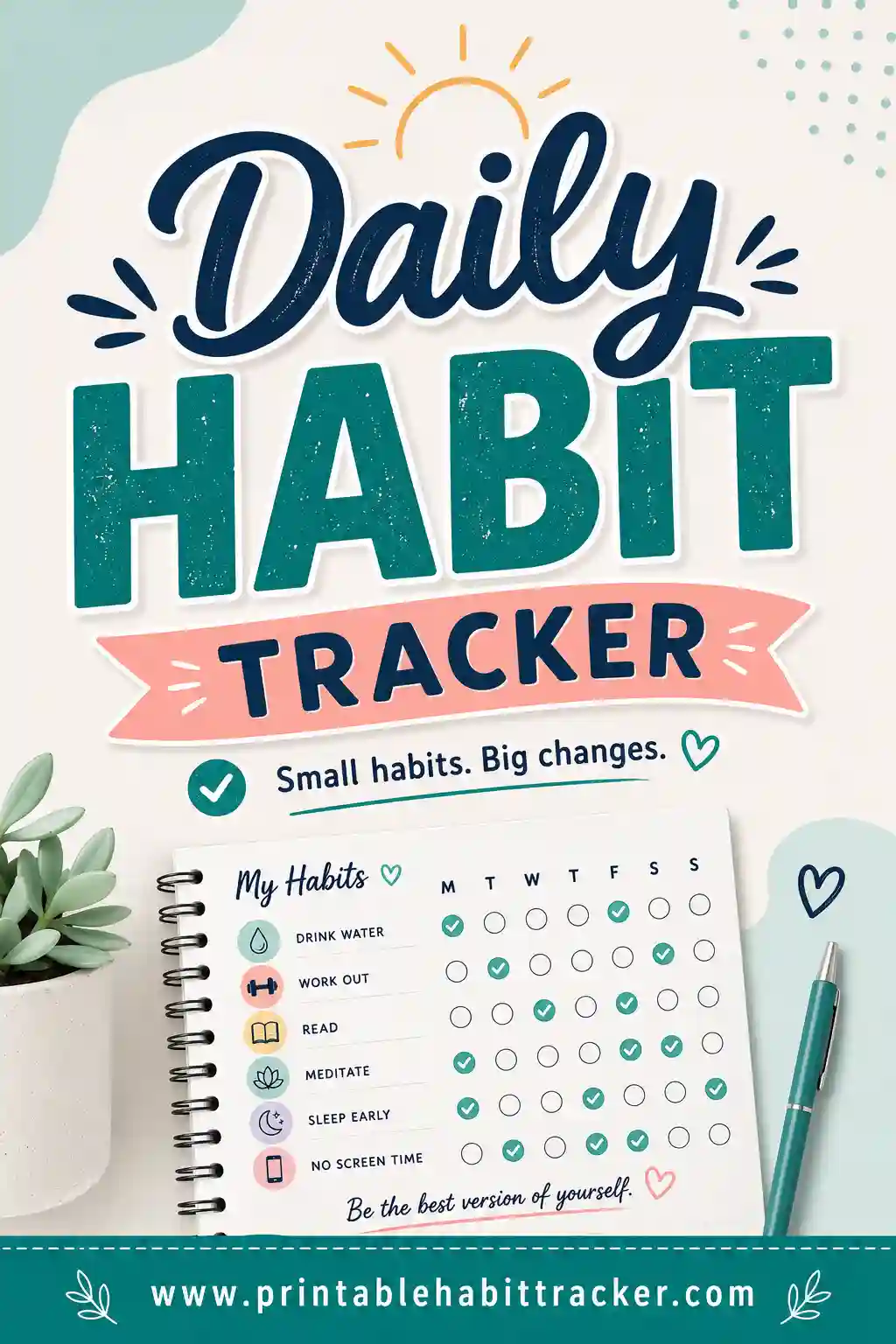
Picture a checklist that resets every morning. That's the heart of it. You write down the things you want to do each day, then mark each one off as it happens. Some people use a single column for one day at a time. Others lay out a whole week so they can see a row of boxes for each habit and fill them in one by one.
The point isn't the chart itself. It's the small jolt of satisfaction you get from coloring in a box. That tiny reward makes you want to keep the streak going, and a streak is what turns a habit you're forcing into one that runs on autopilot.
A daily tracker works best for habits you want to repeat every single day, like drinking water, taking a walk, or reading before bed. If a habit only happens a few times a week, a weekly or monthly view often fits better.
Why a Daily Tracker Actually Helps
You might wonder if checking boxes really changes anything. It does, and there's a simple reason: what gets measured gets done. When a habit lives only in your head, it's easy to skip and easy to forget you skipped. On paper, the gap is right there staring at you.
Here are the main reasons a daily habit tracker works:
- It makes progress visible. A row of filled boxes is proof you're showing up, even on days that felt unproductive.
- It protects your streak. Once you've got five days in a row, you don't want to break the chain. That pressure is the good kind.
- It lowers the mental load. You stop trying to remember everything. The sheet remembers for you.
- It surfaces patterns. After a couple weeks you can see which habits stick and which ones keep slipping, so you know what to adjust.
None of this needs willpower of steel. The tracker carries the weight, and you just follow it.
Habits That Work Well on a Daily Tracker
Not every goal belongs on a daily sheet. The best fits are small, repeatable actions you can do in a few minutes. Here's a starter list you can copy straight into the tool.
| Habit | Why it helps | How to track it |
|---|---|---|
| Drink water | Energy, focus, fewer headaches | One box per glass, aim for 6–8 |
| Walk or move | Mood and health, even 10 minutes | Check it once you've moved |
| Read | Calms the mind, builds knowledge | One box for any reading at all |
| Take vitamins | Easy to forget without a cue | Tick it right after breakfast |
| Make the bed | Quick win that sets the tone | One box, first thing |
| No phone in bed | Better sleep | Check it the next morning |
| Stretch | Loosens up a stiff body | One box, any stretch counts |
| Journal one line | Clears your head | A single sentence is enough |
The trick is to keep each habit so small it's almost silly to skip. "Read one page" beats "read for an hour" because you'll actually do it. Once the habit is locked in, you can stretch the goal.
Start with three, not thirteen
A common mistake is loading the tracker with every habit you've ever wanted. That's a fast road to a sheet full of empty boxes and a bruised ego. Pick three habits to start. When those feel automatic, add a couple more. A short tracker you finish beats a long one you abandon.
How to Make a Daily Habit Tracker in 4 Steps
You don't need any design skill. The whole thing takes a few minutes.
- List your habits. Write down the three to seven things you want to do each day. Keep them concrete: "walk 15 minutes," not "be healthier."
- Pick your layout. A single-day checklist, a seven-day grid, or a two-week strip. Most people like the week view so they can see momentum build.
- Choose how many to print. One sheet per week is plenty. Print a month's worth at once if you don't want to reprint.
- Print and pin it up. Stick it somewhere you'll see it daily, like the fridge or your desk. Out of sight means out of mind.
That's the whole process. The free tool handles the grid lines and spacing so your sheet comes out clean every time.
Daily Tracker Layouts to Try
There's no single right way to lay one out. The best layout is the one you'll actually look at. Here are the most popular formats.
Single-day checklist
Just today's habits in a column with one box each. Clean, focused, and great if a full grid feels like too much. Print one per day or reuse a laminated copy.
Seven-day grid
Each habit gets a row, and there are seven boxes across, one per day of the week. This is the classic. You see a whole week at a glance and your streaks build right in front of you.
Time-blocked daily sheet
This one pairs habits with parts of the day: morning, afternoon, evening. Handy if your habits are tied to a routine, like "stretch in the morning" and "no screens after 9."
Habit plus mood or notes
Add a small column for a quick note or a mood face. After a week you can spot links, like "I always skip my walk on the days I sleep badly." That insight is gold.
Where to Put Your Tracker So You Use It
A tracker you can't see is a tracker you'll forget. Placement matters more than people think.
- The fridge. You open it a dozen times a day, so it's hard to ignore.
- Your desk or laptop. Perfect for work-from-home habits and water reminders.
- The bathroom mirror. Great for morning and evening routines like vitamins and flossing.
- A daily planner. If you already use one, tuck the tracker on the same page you check each morning.
Pair the tracker with something you already do, like your morning coffee, and checking it becomes part of the routine instead of one more thing to remember.
Printing Tips for a Tracker You'll Keep Using
A few small choices make your sheet nicer to use and longer-lasting.
- Print on regular paper for weekly sheets. They're disposable by design, so don't overthink it.
- Use cardstock or laminate for a reusable copy. Then check boxes with a dry-erase marker and wipe clean each week.
- Go black and white to save ink. A habit tracker reads perfectly without color. You can always color in the boxes by hand.
- Print a test page first. Check that the grid isn't cut off before you run a month's worth.
- Bigger boxes for shaky hands or kids. More room per box makes checking off feel good instead of fiddly.
Make it fun, not a chore
Use a fun color to fill boxes, add a little reward for a full week, or pick a sheet design you actually like looking at. The more pleasant the tracker feels, the more likely you are to reach for it.
Common Mistakes to Avoid
A daily tracker is simple, but a few habits can trip you up.
- Tracking too many habits at once. Three to five is the sweet spot. More than that and you'll burn out.
- Vague habits. "Eat better" is impossible to check off. "Eat one piece of fruit" is easy.
- Aiming for perfect. Missing a day isn't failure. The goal is to come back the next day, not to never slip.
- Hiding the tracker in a drawer. If you can't see it, you won't use it. Keep it in plain sight.
- Quitting after one bad week. Habits take time. Give it at least three or four weeks before you judge it.
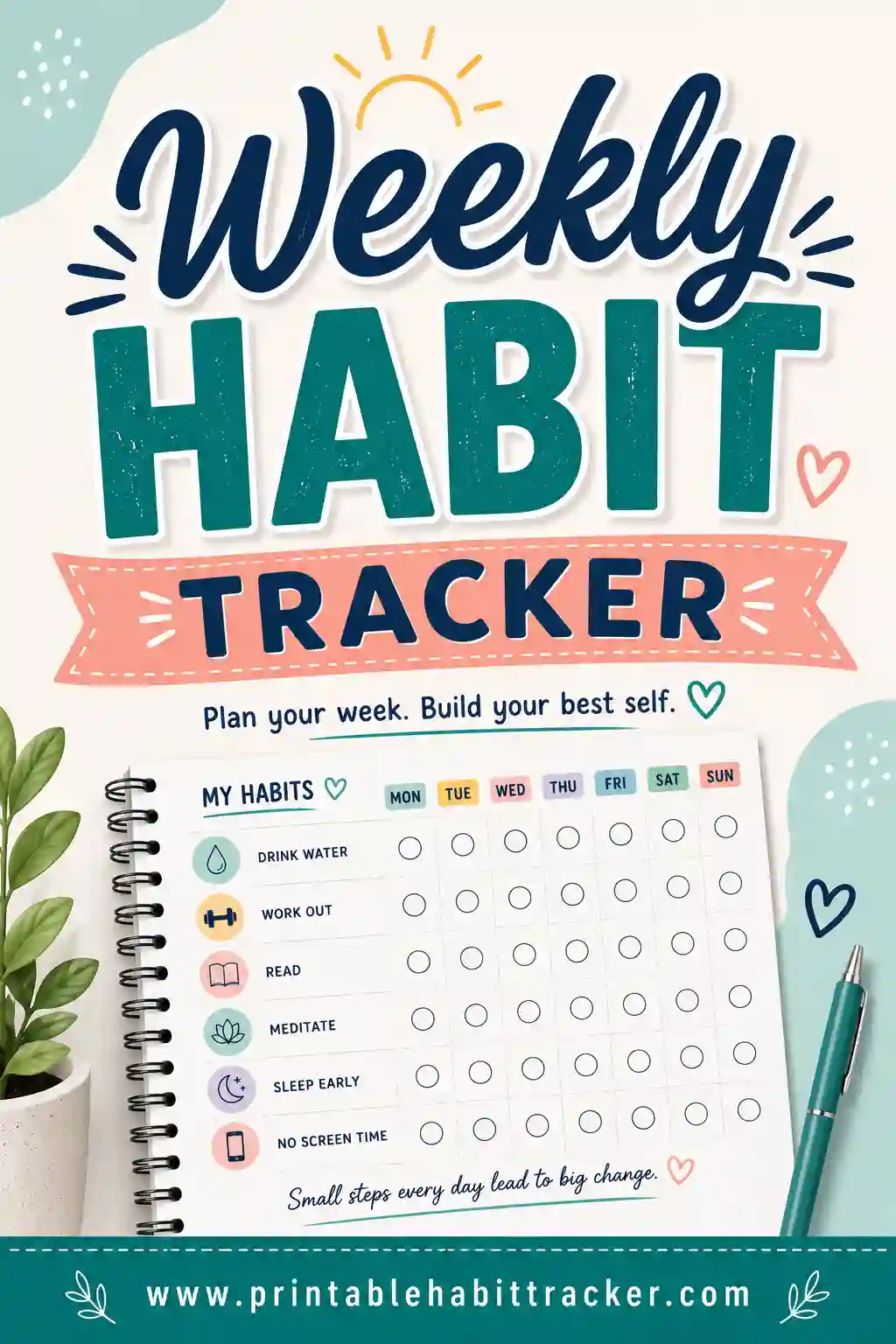
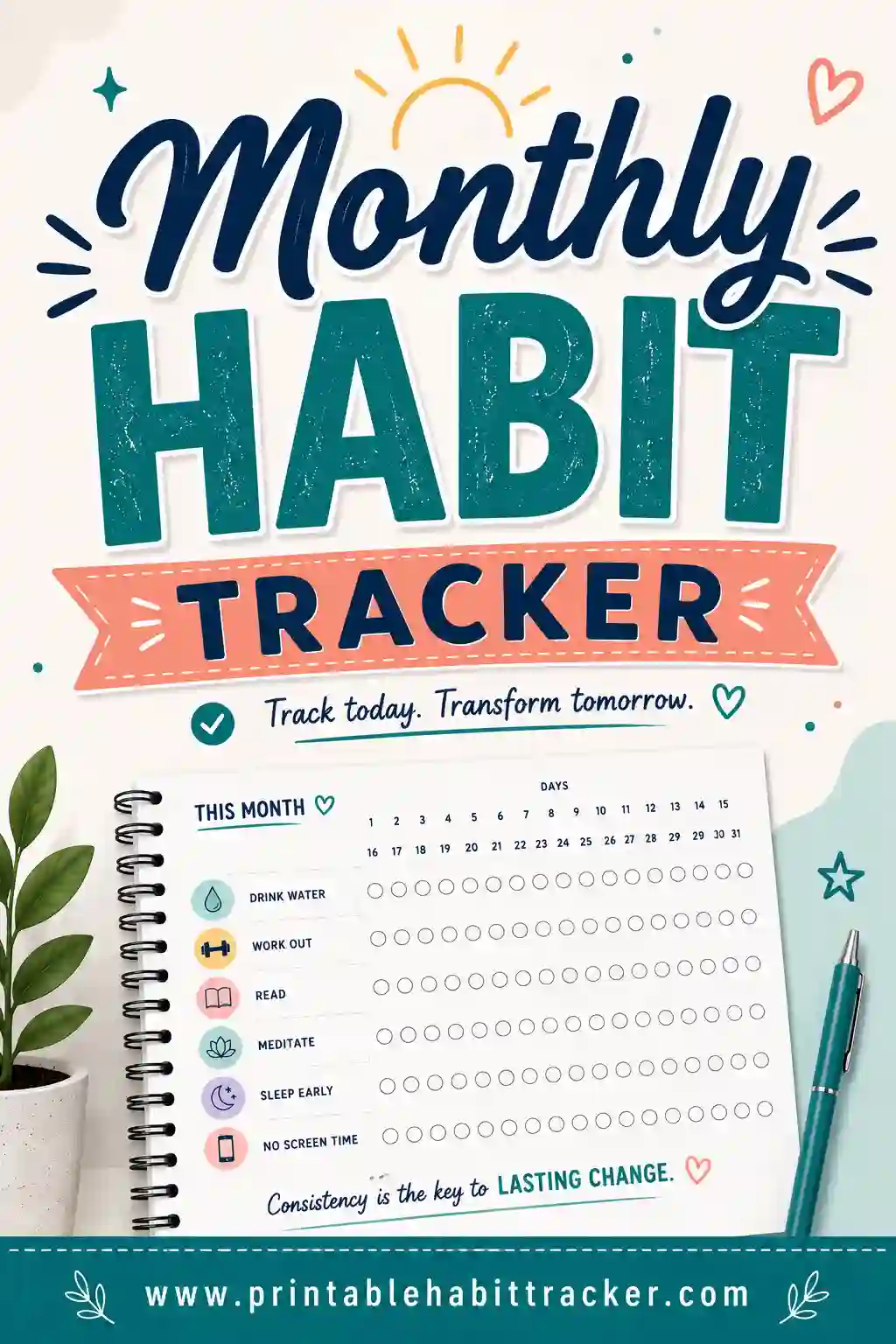
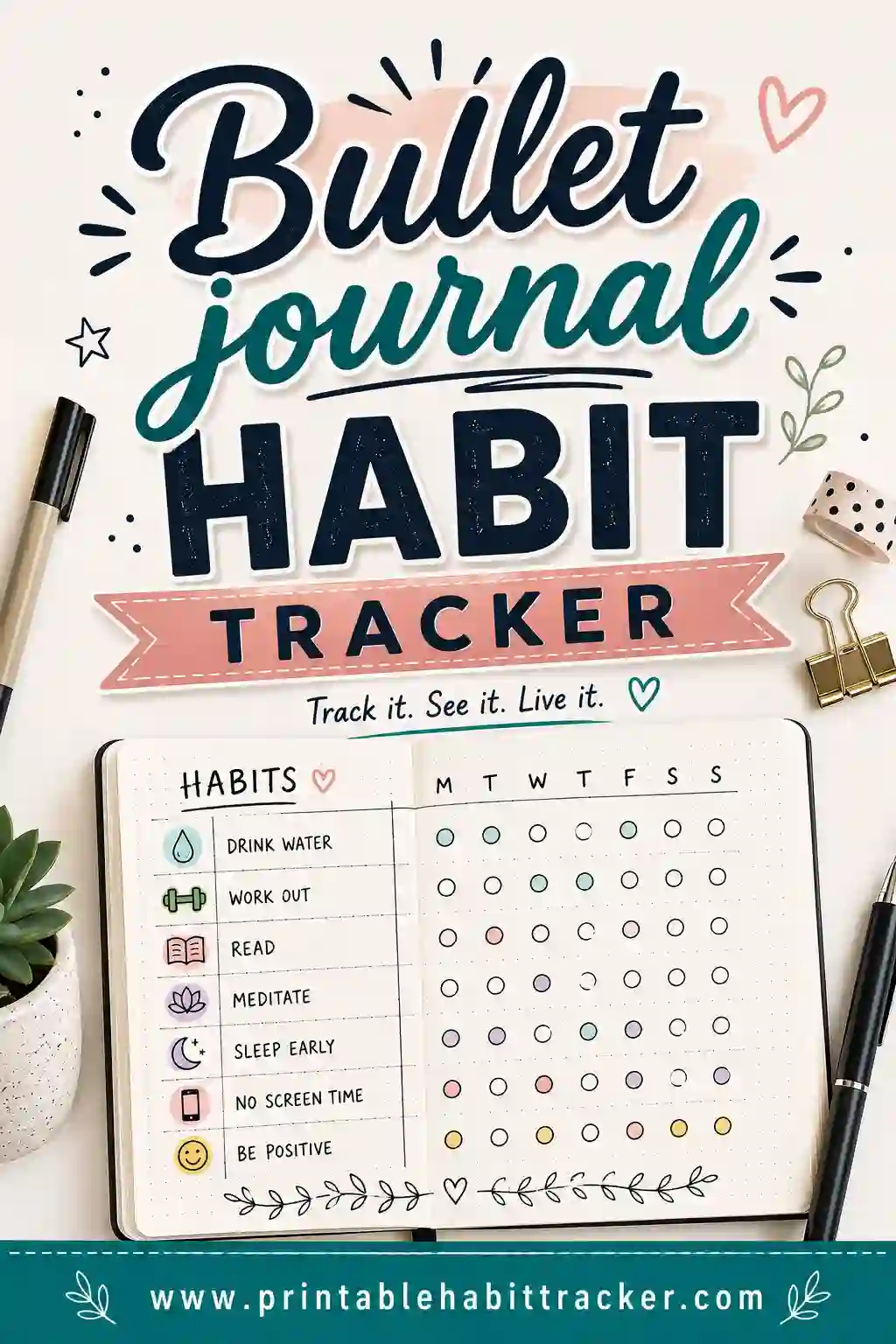
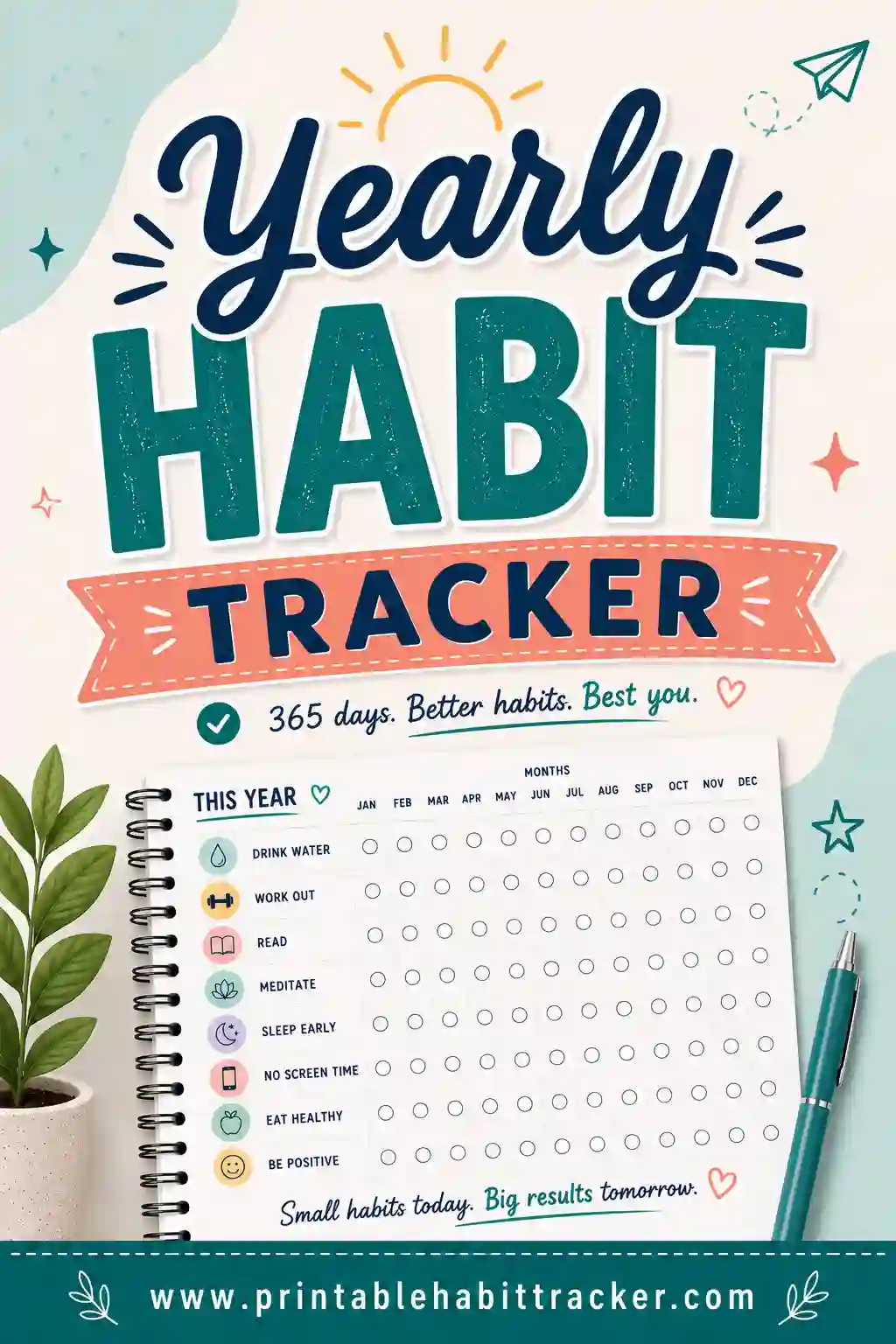
Want a longer view? You can pair this with a weekly habit tracker for the week ahead, a monthly habit tracker to spot bigger patterns, or a bullet journal habit tracker if you like to draw your own.
A Sample Daily Routine With a Tracker
To show how it fits together, here's what a simple day might look like with a tracker on the fridge.
| Time | Habit | Check |
|---|---|---|
| Morning | Make the bed | ☐ |
| Morning | Drink a glass of water | ☐ |
| Morning | Take vitamins | ☐ |
| Midday | Walk 15 minutes | ☐ |
| Afternoon | Drink water again | ☐ |
| Evening | Read one page | ☐ |
| Evening | No phone in bed | ☐ |
You won't hit every box every day, and that's fine. The aim is to fill most of them most days. Over a month, that adds up to real change.
Frequently Asked Questions
How many habits should I put on a daily tracker?
Start with three to five. That's enough to make a difference without overwhelming you. Once those habits feel automatic, add a couple more. A short tracker you complete beats a long one you ignore.
Is a daily habit tracker really free to print?
Yes. You make and print it yourself at no cost using the free tool. There's no sign-up and no watermark, so you can print a fresh sheet every week or a whole month at once.
What's the difference between a daily and a weekly tracker?
A daily tracker focuses on one day at a time, often with a row of boxes for each habit across the week. A weekly habit tracker zooms out to plan the week as a whole. Many people use both together.
What if I miss a day?
Just pick it back up the next day. One missed box doesn't erase your progress. The real goal is consistency over weeks, not a perfect, unbroken chain. Never miss twice in a row and you'll be fine.
Can I use a daily habit tracker for kids?
Absolutely. Use simple, picture-friendly habits like "brush teeth" and "tidy up," and bigger boxes so small hands can check them. Stickers instead of check marks make it even more fun for little ones.
Ready to Build Your Daily Habit Tracker?
Grab a few habits from the list above, open the free printable habit tracker, and you'll have a clean daily sheet ready to print in minutes. It's free, there's no sign-up, and you can customize it to fit exactly the habits you care about. Print it, pin it up, and start filling in those boxes today.