How to Start a Habit Tracker (Beginner's Step-by-Step)
To start a habit tracker, pick one to three small habits you actually care about, make a simple grid with the habits down the side and the days across the top, and commit to marking each box for at least a month. Keep it where you'll see it every day, mark it right after a habit you already do, and don't aim for perfect, aim for consistent. That's the entire on-ramp, and you can be tracking within five minutes.
Ready to go right now? Open the free habit tracker, enter your habits, and print a clean grid. No account, no cost, no software.
Why Starting Is the Hardest (and Easiest) Part
The blank page is the scary bit. You sit down ready to overhaul your life, list twenty habits, and then quit by the weekend because it's too much. Sound familiar? Almost everyone starts a habit tracker that way the first time.
The secret is that starting small isn't a consolation prize, it's the actual winning strategy. A tiny tracker you keep beats a giant tracker you abandon, every single time. Your goal in week one isn't transformation. It's simply to mark a box a few days in a row and prove to yourself you can.
So take the pressure off. You're not committing to a new life. You're committing to one little grid and a pen.
Step 1: Pick Your First Habits (Just a Few)
Choose one to three habits. If you're truly new to this, start with one. Yes, one. You can always add more once the routine clicks.
The best first habit is small, specific, and something you genuinely want. Skip the "should" habits you think you're supposed to do and pick something that fits your real life.
Here are beginner-friendly habits that are easy to start and easy to mark:
| Easy Wins | Health | Calm & Focus |
|---|---|---|
| Make the bed | Drink a glass of water | Take 5 deep breaths |
| Tidy for 5 min | Eat one vegetable | Write one line in a journal |
| Plan tomorrow | Walk after dinner | Read 2 pages |
| Put phone away by 10pm | Stretch for 2 min | Step outside |
Notice how small these are. "Read 2 pages," not "read a chapter." Tiny habits are easy to start, and starting is the whole game right now.
Step 2: Choose a Format That Fits Your Life
Now decide what your tracker looks like. There's no single right answer, just the one you'll actually use.
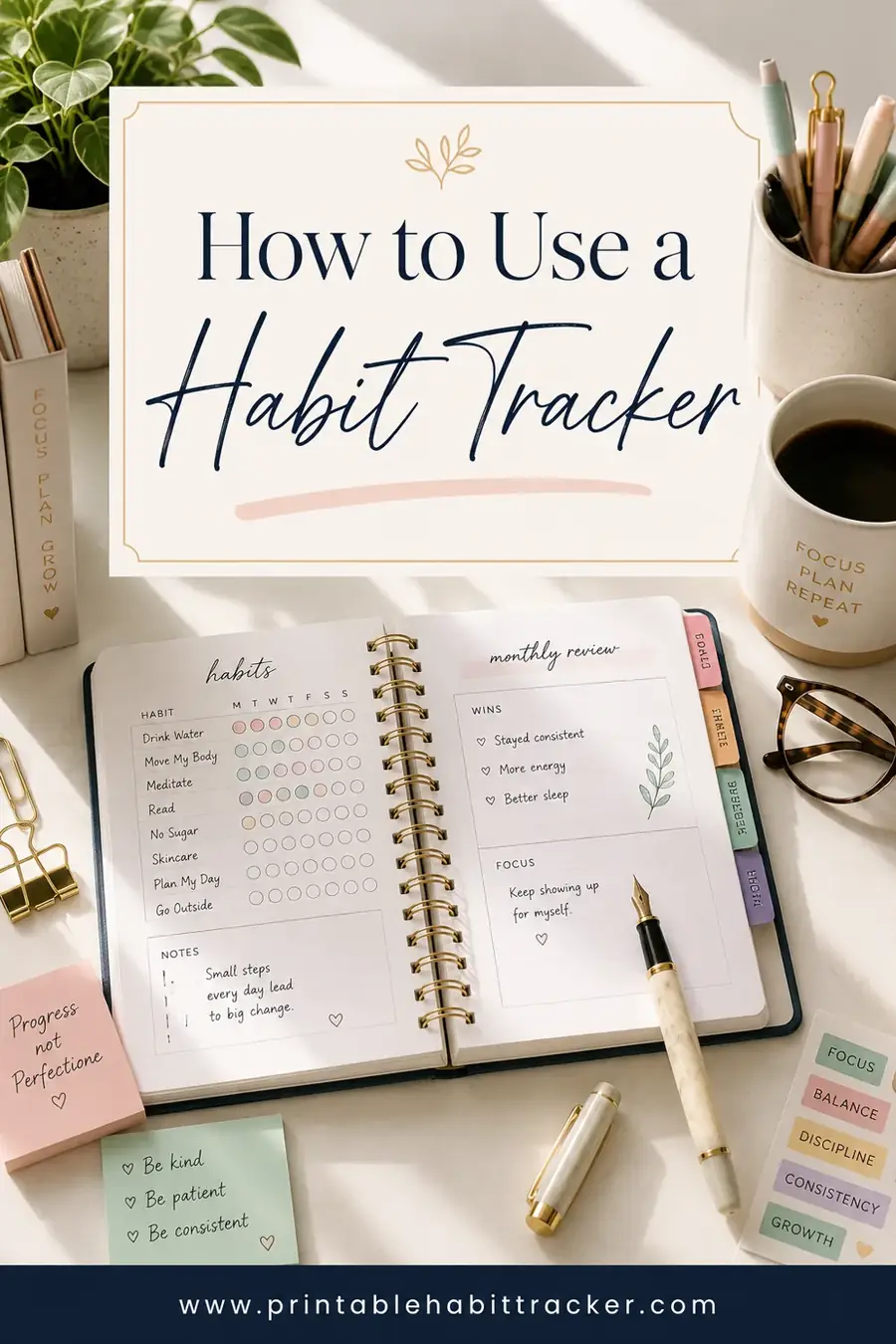
- Weekly tracker. Seven boxes per habit, refreshed each week. Friendly for beginners because a week feels manageable.
- Monthly tracker. A full month on one page. Great for watching a streak grow and spotting patterns.
- Daily checklist. A short list you re-check every morning. Best if you like a clean slate each day.
You can sketch any of these in a notebook, or save the hassle and use the free habit tracker to generate a printable grid. You type your habits, pick your time span, and print. The lines come out straight and you can reprint as many copies as you need.
Paper or digital?
Both work, but paper has real advantages for beginners. It's always visible, there are no notifications pulling you into your phone, and the physical act of marking a box feels satisfying. A printable tracker on the fridge is hard to ignore, which is exactly what you want when you're just starting.
Step 3: Build Your Grid
Time to actually make it. Whether you draw it or print it, your tracker needs three things:
- A column for your habits down the left side.
- A row of days across the top (numbers 1–31 for a month, or Mon–Sun for a week).
- An empty box at every habit-and-day intersection.
That's it. Don't add complicated scoring systems or rating scales when you're starting out. A simple "did it / didn't" box is perfect. You can get fancy later once the basic habit of tracking is solid.
If you want a clean version without the ruler work, the tool builds it for you. Add your one to three habits, choose a month or a week, and print.
Step 4: Decide When and Where You'll Mark It
A tracker you can't see is a tracker you'll forget. So before you mark a single box, decide on the spot it'll live and the moment you'll fill it in.
Pick a visible home. Good options:
- On the fridge
- Taped by the bathroom mirror
- Inside the cover of a notebook you open daily
- On your desk, propped where you'll see it
Pick a trigger moment. Attach marking to something you already do without fail:
- After brushing your teeth at night
- While your morning coffee brews
- Right before you get into bed
This is habit stacking, and it's the single best trick for not forgetting. The old habit reminds you to do the new one. "After I brush my teeth, I fill in my tracker" turns a fuzzy intention into an automatic action.
Step 5: Start Marking and Don't Break the Chain
Now you just begin. Do your habit, mark the box. Do it again tomorrow, mark another. Within a few days you'll have a little streak, and that streak is the magic.
There's a famous trick where you try to never break the chain of marked days. Each filled box adds to the run, and the longer the run, the more you want to protect it. It's a small thing that quietly becomes a strong pull.
The one rule to remember: don't miss two days in a row. Missing once happens to everyone. Missing twice is how a streak quietly dies. If you slip, just mark it the very next day and keep going. Your tracker should never make you feel guilty, only a little more accountable.
What Your First Two Weeks Might Look Like
To set realistic expectations, here's a typical beginner's run with two habits. Notice it's not flawless, and that's completely fine.
| Habit | W1 Mon | Tue | Wed | Thu | Fri | Sat | Sun |
|---|---|---|---|---|---|---|---|
| Make the bed | ✓ | ✓ | ✓ | ✓ | — | ✓ | ✓ |
| Walk 20 min | ✓ | ✓ | — | ✓ | ✓ | — | ✓ |
A couple of blanks, but the habits are clearly forming. That's a successful first week. By week two, marking the boxes already feels routine, and that's the real win, not the checkmarks themselves.
Three Beginner Setups That Work
If you're staring at a blank page and want a ready-made starting point, copy one of these. Each is built to be easy enough that you won't quit in week one.
- The "one tiny habit" setup. Pick a single habit, give it a full month grid, and just chase the longest streak you can. This is the gentlest possible start, and it's perfect if you've abandoned trackers before.
- The "morning routine" setup. Track three small morning habits, like make the bed, drink water, and plan the day. Because they all happen in the same window, you can mark them in one go right after breakfast.
- The "evening wind-down" setup. Track two or three calming habits, like read two pages, no phone in bed, and lights out by 11. Mark them as part of your bedtime routine, so your last action of the day is a satisfying check.
Pick whichever fits your life, then build it in the free tracker. The point isn't which setup is "best," it's choosing one and actually starting today instead of planning forever.
How to Keep Going Past Week One
Most people can start a tracker. Fewer make it to week three. The difference usually comes down to a few small habits around the habit itself.
First, keep your wins visible. Don't tuck the tracker away once the novelty wears off. The whole reason it works is that you see it constantly, so leave it on the fridge or the mirror where it stays in your face.
Second, celebrate the small streaks. Hit five days in a row? Notice it. That tiny bit of pride is fuel. A lot of beginners blow right past their early wins and only focus on what they missed, which drains motivation fast.
Third, lower the bar on hard days. On a rough day, do the smallest possible version of your habit just to keep the streak alive. Tired and skipping your walk? Walk to the end of the driveway and back. A check for a tiny effort beats a blank box and a broken streak.
Beginner Mistakes to Skip
Save yourself some frustration by dodging these common early errors:
- Starting with too many habits. One to three. Resist the urge to do more.
- Choosing vague habits. "Be productive" can't be checked. "Plan tomorrow" can.
- Hiding the tracker. Keep it where your eyes land every day.
- Quitting after one miss. A blank box is not failure. Two in a row is the only real risk.
- Over-designing it. A simple grid beats a beautiful one you're afraid to mess up.
Sidestep those and your first tracker has a real shot at becoming a lasting habit.
Frequently Asked Questions
How many habits should I start with?
One to three. Beginners almost always overestimate how much they can add at once. Start with a single habit if you're nervous, get a streak going, and only then add a second. The free tracker makes it easy to add more habits later.
How do I make a habit tracker from scratch?
Draw a grid with your habits down the left and the days across the top, leaving an empty box at each intersection. Then mark a box every time you complete a habit. If you'd rather skip the drawing, the tool builds and prints a clean grid for you in seconds.
When is the best time to mark my tracker?
Whenever you'll remember, but a consistent time works best. Many beginners mark in the evening as a review of the day, or in the morning to log the day before. Attach it to something you already do, like brushing your teeth, so you never forget.
What if I miss a day right after starting?
Totally normal, and not a reason to quit. Just mark the box the next day and keep your streak alive. The only rule worth following is to avoid missing two days back to back. One miss is an accident; two is the start of a new pattern.
Is a printable tracker better than an app for beginners?
For many people, yes. Paper trackers stay visible, don't bury you in notifications, and the act of marking a box feels rewarding. You can print one for free in seconds and stick it somewhere you'll see it all day.
How long before tracking feels automatic?
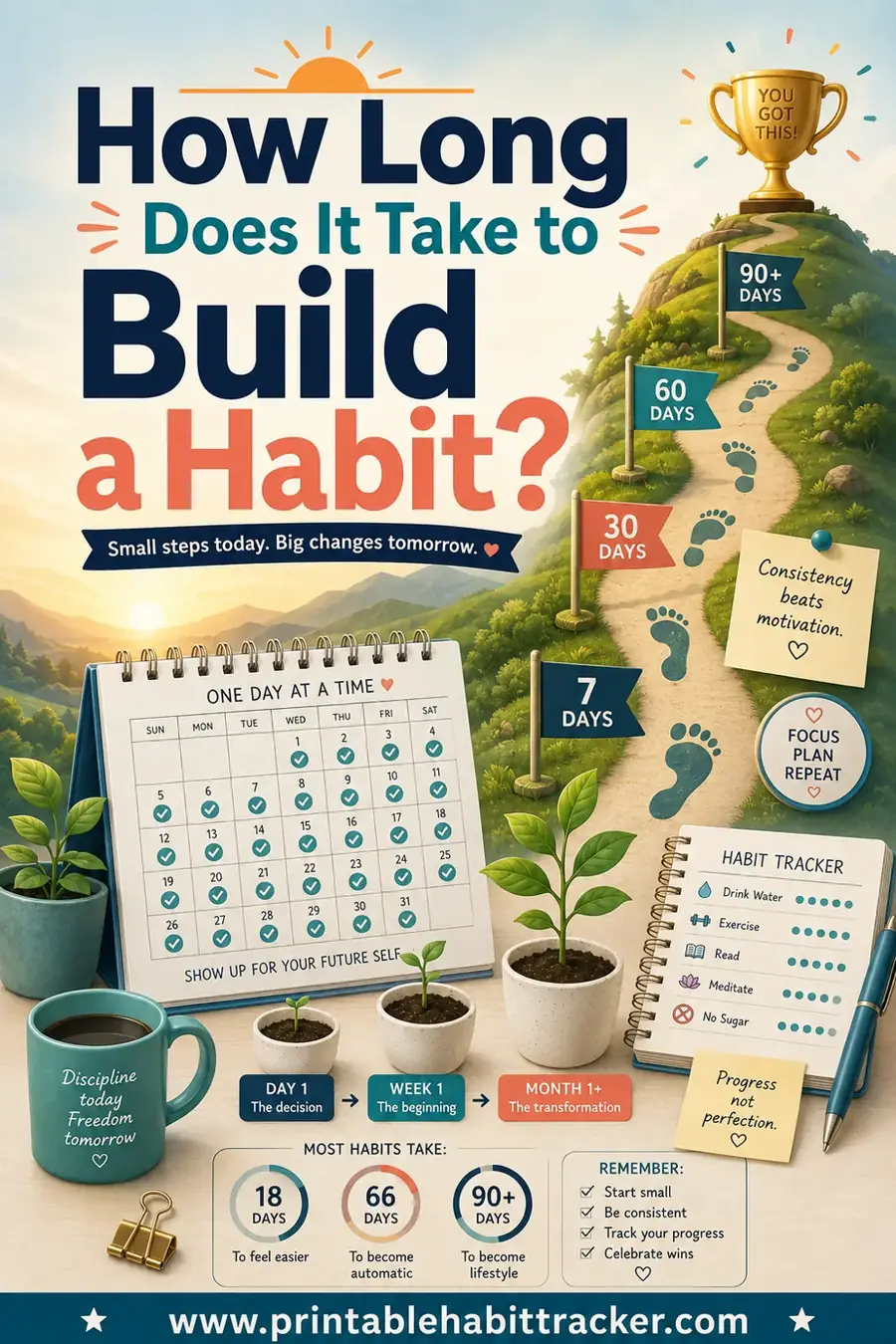
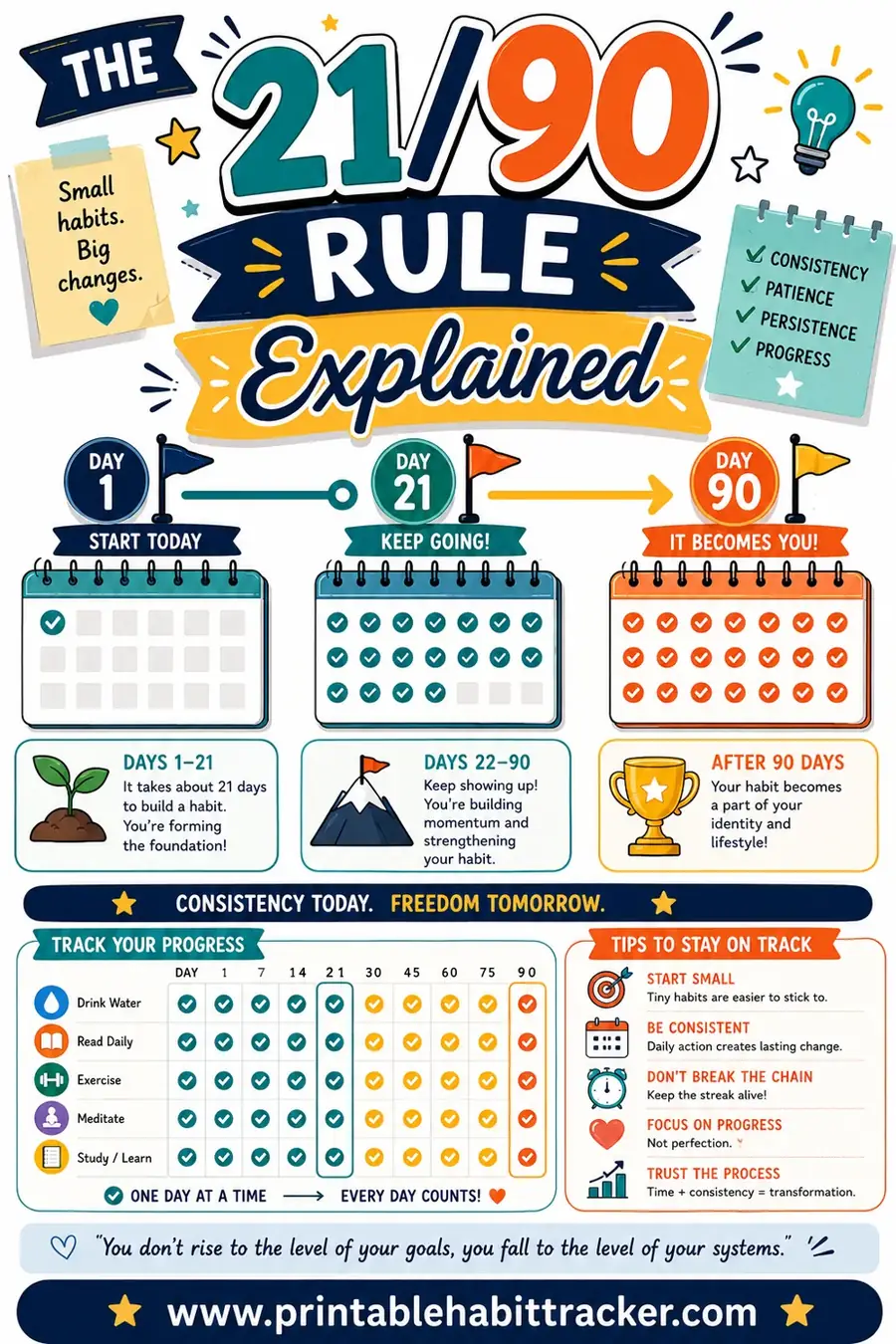
Usually a couple of weeks for the tracking itself to feel routine, even if the underlying habit takes longer. Once filling in boxes becomes second nature, you've cleared the hardest part of starting. After that, you can learn how long it takes to build a habit for the long game.
Ready to Start Your First Tracker?
You've got the full beginner's path: pick a few small habits, build a simple grid, give it a visible home, and start marking. Don't wait for the perfect Monday or the perfect plan. The best time to start a habit tracker is right now. Open the free habit tracker, add your first habit, and print it today. It's free, there's no sign-up, and you'll be tracking in minutes.
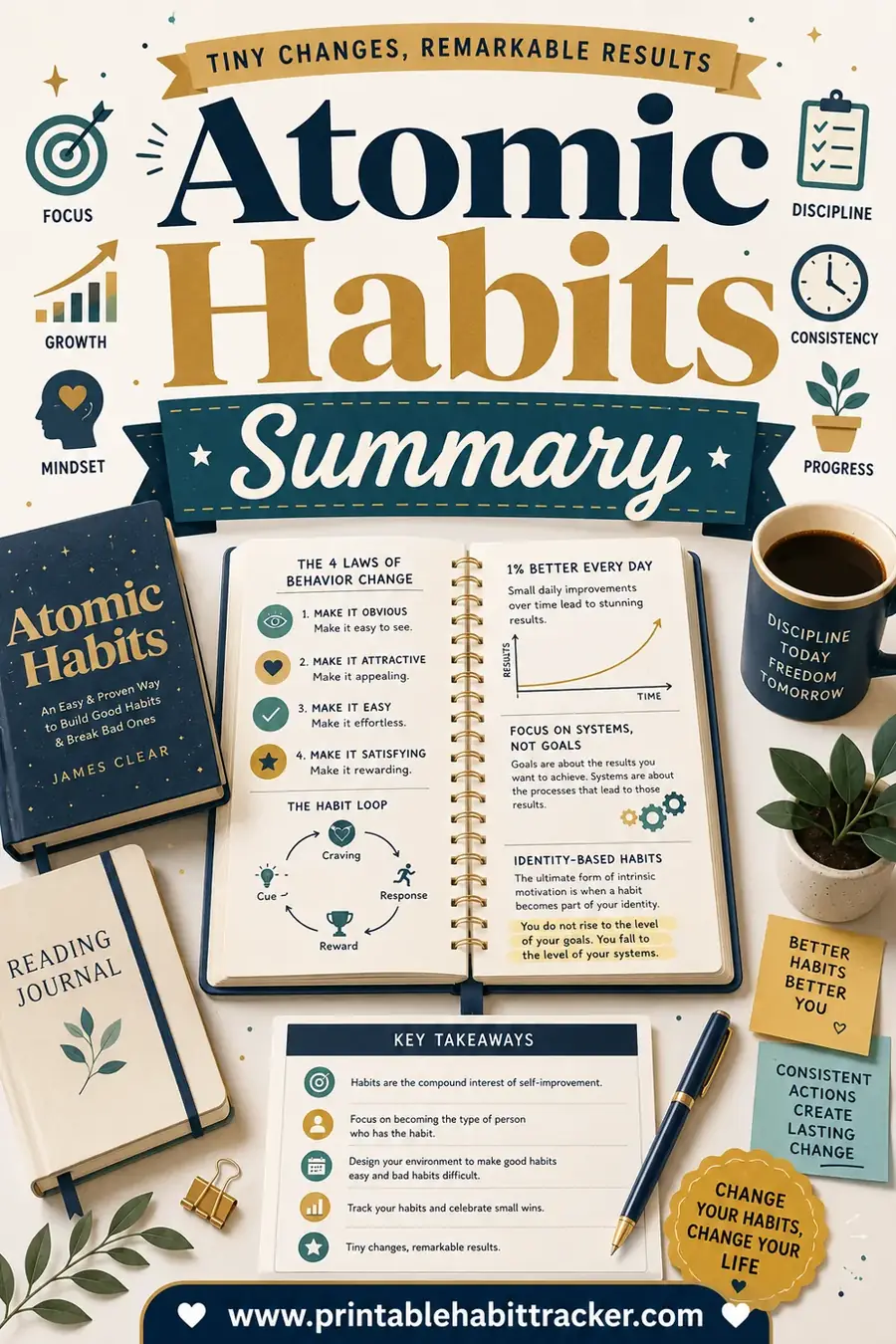
Keep going: see exactly how to use a habit tracker day to day, learn how long it takes to build a habit, or get the Atomic Habits summary for the science behind it all.