How Long Does It Take to Build a Habit? (The Real Answer)
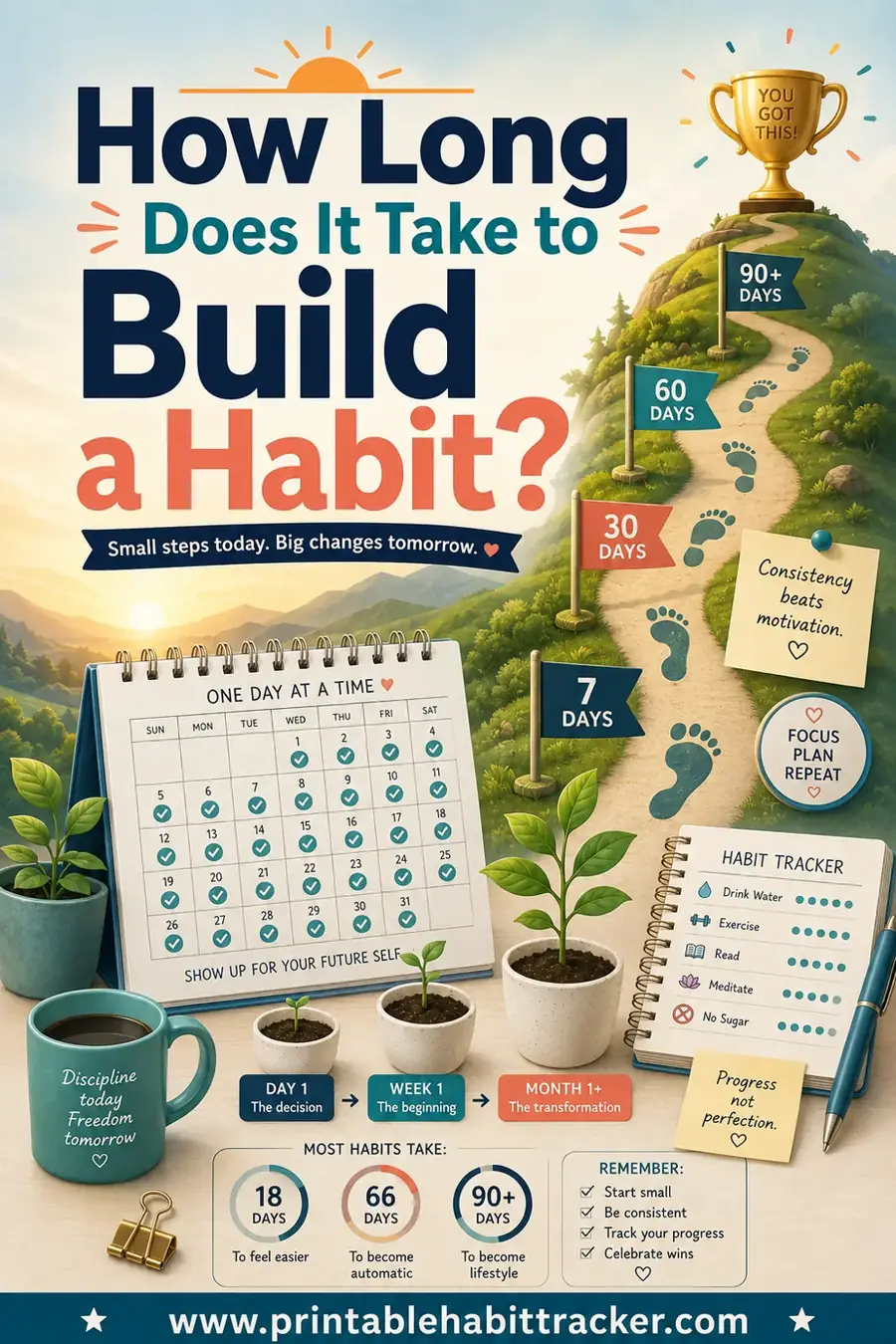
Building a habit takes about 66 days on average, not the popular "21 days" you've probably heard. That number comes from a well-known University College London study, which found that individual habits actually formed anywhere from 18 to 254 days depending on the person and the habit. In short: there's no magic deadline, but two to three months is a realistic target, and tracking your progress every day is one of the best ways to get there.
Want to watch your own habit form day by day? Open the free habit tracker, add your habit, and print a grid that runs as long as you need. No sign-up, no cost.
The Short Answer: Around 66 Days
If you want one number to aim for, use 66 days. That's the average from a 2009 study led by Phillippa Lally at University College London, where researchers followed 96 people as they tried to build everyday habits like drinking water or going for a walk.
But here's the important part everyone skips: 66 was an average, not a rule. Across the participants, habits became automatic anywhere from 18 days on the fast end to 254 days on the slow end. That's a huge range. Some habits clicked in under three weeks. Others took the better part of a year.
So when someone tells you "it takes exactly X days," they're oversimplifying. The honest answer is that it depends, and that's actually freeing, because it means a slow start doesn't mean you've failed.
Where Did the "21 Days" Myth Come From?
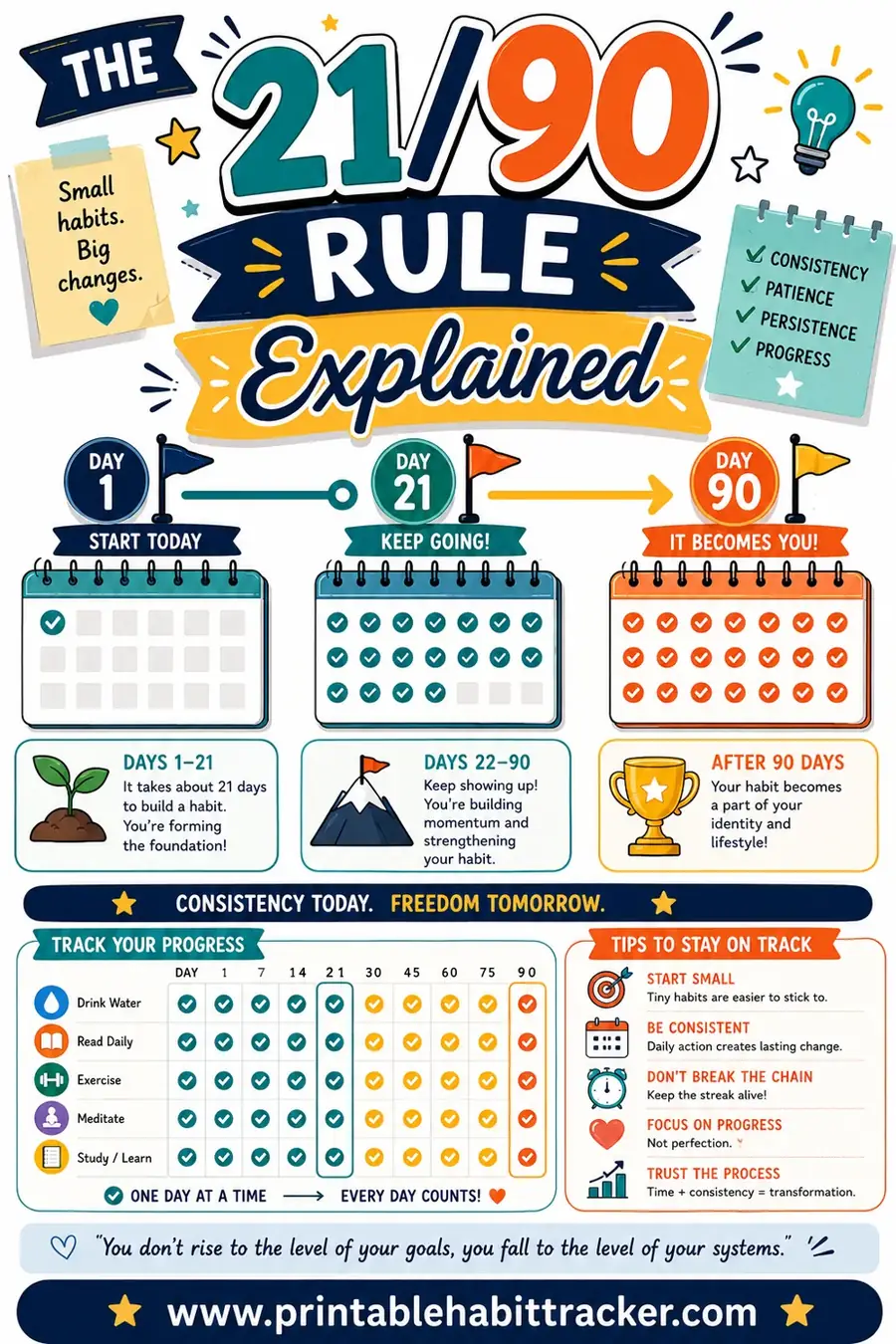
You've definitely heard that habits take 21 days. It's everywhere, on posters, in apps, in motivational speeches. The problem is it's not really true.
The idea traces back to a 1960s plastic surgeon named Maxwell Maltz. He noticed his patients took about 21 days to get used to a new face or a missing limb, and he wrote that it takes "a minimum of about 21 days" to adjust to a change. Over the decades, "a minimum of about 21 days" got flattened into "21 days," and a myth was born.
Maltz was talking about adjusting to physical changes, not building lasting habits like flossing or exercising. The 21-day figure stuck around because it's short and hopeful, but real research paints a longer, more realistic picture.
If you want the full breakdown of how the 21-day idea got bundled with a 90-day version, read our piece on the 21/90 rule.
What Actually Affects the Timeline
Why do some habits take 18 days and others take 254? A few factors make the difference.
| Factor | Faster to build | Slower to build |
|---|---|---|
| Habit size | Tiny ("drink one glass of water") | Big ("run 5 miles") |
| Difficulty | Easy, low effort | Hard, takes willpower |
| Consistency | Same time, same trigger daily | Random, scattered timing |
| Enjoyment | Something you like | Something you dread |
| Existing routine | Stacked onto an old habit | Floating with no anchor |
The pattern is clear: small, easy, enjoyable habits that you do at the same time every day form fastest. A complicated habit you dread and do at random times will drag on much longer, if it forms at all.
This is great news, because most of these factors are in your control. You can shrink a habit, attach it to a trigger, and make it more pleasant, all of which pull the timeline shorter.
Why Consistency Beats Streaks of Perfection
Here's a finding from that UCL study that surprises people: missing a single day didn't ruin anyone's progress. The research showed that one missed day had no real effect on whether a habit eventually formed.
So you don't need a flawless run. You need a mostly-consistent run. Showing up 9 days out of 10 still builds the habit. It's the long, repeated pattern that wires the behavior in, not an unbroken chain of perfect days.
That said, missing many days in a row does slow things down. The behavior to avoid isn't the occasional slip, it's the spiral where one miss becomes a week off. A good rule: never miss twice in a row. One blank day is fine. Two starts a different habit, the habit of skipping.
How a Habit Tracker Shortens the Journey
If it takes roughly two months to build a habit, you need a way to stay motivated across all those days. That's exactly what a tracker is for.
A tracker helps in three concrete ways:
- It makes progress visible. Watching boxes fill in over weeks shows you're getting somewhere, even on days you don't feel it.
- It creates a streak you'll protect. Once you've got 20 boxes marked, you really don't want to break the run. That pull carries you through the slow middle stretch.
- It gives daily proof of consistency. Since consistency is what builds the habit, a tracker is basically a record of the one thing that matters most.
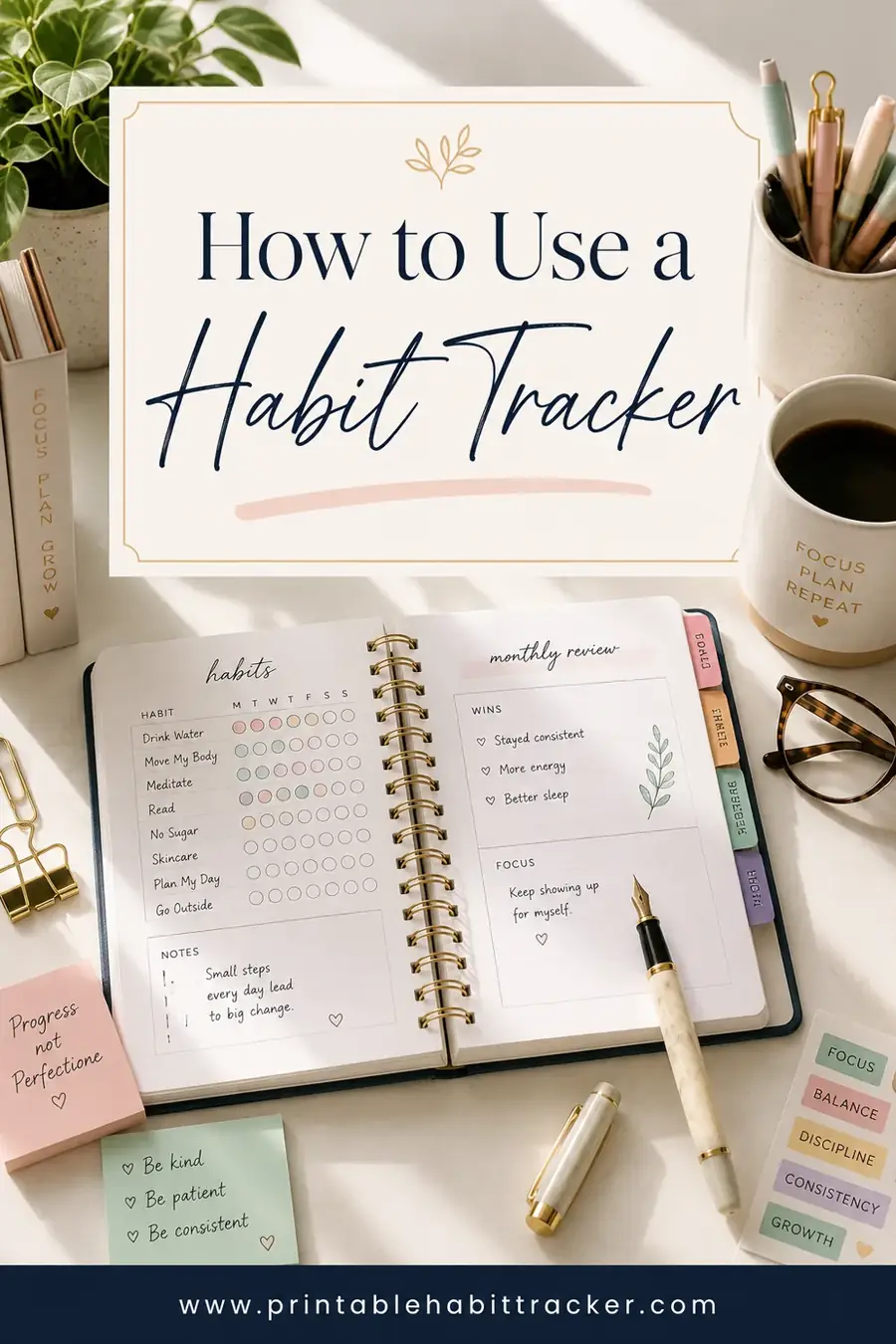
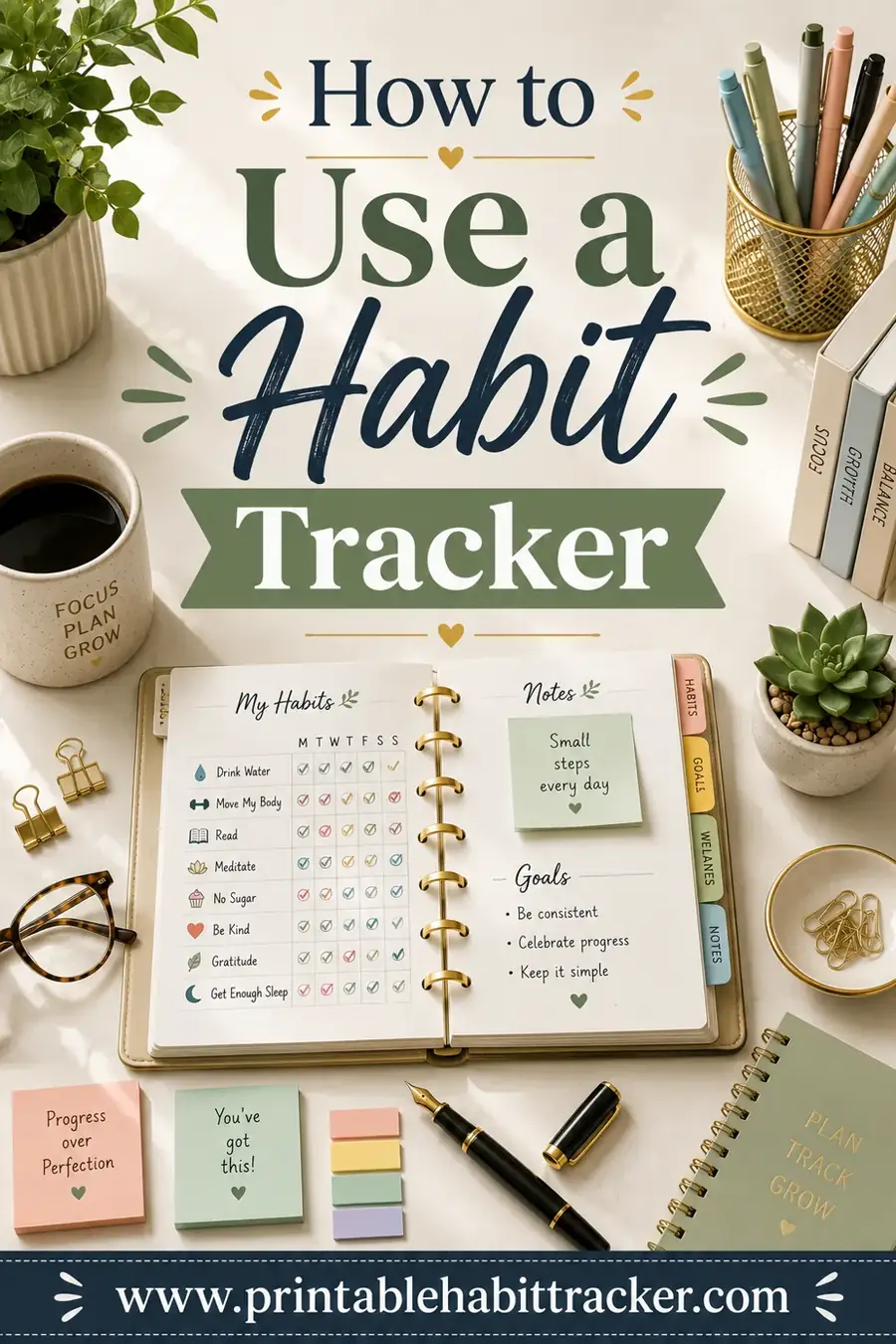
You don't need anything fancy. A printable grid you mark each day does the job perfectly. The free habit tracker lets you print a sheet long enough to cover the full 66-day window, so you can follow a single habit from day one to fully automatic.
A Realistic 66-Day Timeline
Building a habit isn't a straight line. Here's roughly how the two-month journey tends to feel.
| Stage | Days | What it feels like |
|---|---|---|
| The push | 1–14 | Takes real effort. You rely on reminders and willpower. |
| The dip | 15–30 | Novelty fades. This is where most people quit. Keep marking. |
| The groove | 31–50 | It's getting easier. You skip less and think about it less. |
| Automatic | 51–66+ | It feels normal, even weird to skip. The habit is forming. |
The middle dip is the danger zone. The new-and-exciting feeling wears off, but the habit isn't automatic yet, so it relies on grit. A tracker is especially valuable here, because the streak you've built gives you a reason to push through when motivation runs low.
Does the 66-Day Number Apply to Every Habit?
Not exactly, and it's worth understanding why. The UCL study tracked simple, daily, health-style habits. A bigger or more complex behavior, like building a serious exercise routine or learning a language daily, can sit at the longer end of the range or take even more time.
A rough guide:
- Simple daily habits (water, vitamins, making the bed): often 3–6 weeks.
- Moderate habits (a short walk, journaling, reading): around the 66-day average.
- Demanding habits (intense workouts, big diet changes): often 3 months or more.
The takeaway isn't to fear the bigger habits. It's to expect them to take longer and not panic when they do. If a habit isn't automatic at day 30, you're not failing, you're right on schedule.
What the Timeline Means for You
It's easy to read all this and feel a little daunted. Two months? A possible 254 days? But the timeline is actually good news once you reframe it.
The first lesson is patience. If you've quit habits before around the three-week mark, you weren't weak, you were probably just hitting the natural dip right when the "21 days" myth told you it should be easy. Knowing the real timeline lets you expect the hard middle and push through it instead of taking it as a sign of failure.
The second lesson is to judge yourself by consistency, not by the calendar. You can't force a habit to become automatic faster than your brain allows. What you can control is showing up most days. Do that, and automaticity arrives on its own schedule, whether that's day 30 or day 100.
The third lesson is that early effort is normal and temporary. Those first weeks feel hard for everyone. That difficulty isn't a verdict on your willpower, it's just the cost of the early stage, and it fades as the habit settles. Keep that in mind and you'll stop quitting good habits right before they would have stuck.
Tips to Build Habits Faster
While there's no shortcut around the basic timeline, these moves genuinely speed things up:
- Shrink the habit. Make it so small it's almost silly. "One push-up" beats "30-minute workout" for getting started.
- Anchor it to a trigger. "After I pour coffee, I take my vitamins." The old habit cues the new one.
- Do it at the same time daily. Consistent timing forms habits faster than scattered timing.
- Make it pleasant. Pair the habit with something you enjoy, like a good playlist on your walk.
- Track it visibly. Seeing your streak keeps you going through the slow middle.
- Never miss twice. One slip is harmless. Two in a row is the real threat.
Stack a few of these and you'll land near the faster end of the range instead of the slow one.
Frequently Asked Questions
Does it really take 21 days to build a habit?
No. The 21-day figure is a myth from a 1960s book about adjusting to physical changes, not building habits. Research from University College London found habits take about 66 days on average, ranging from 18 to 254 days depending on the habit and person.
How long is 66 days, really?
About two months and a week. It's the average time it took study participants for a new behavior to feel automatic. Treat it as a realistic target, not a hard deadline, since your own habit might form faster or slower.
Will missing one day ruin my progress?
No. The research found a single missed day had no meaningful effect on whether a habit formed. What slows you down is missing many days in a row, so just get back on track the next day. A tracker makes it easy to see your overall consistency.
Why do some habits take so much longer than others?
Habit speed depends on size, difficulty, enjoyment, and consistency. Small, easy, enjoyable habits done at the same time each day form fastest. Big, hard, or unpleasant habits done at random times take much longer.
How can I build a habit faster?
Shrink the habit, attach it to an existing routine, do it at the same time daily, make it enjoyable, and track it so your progress stays visible. These won't beat the basic timeline, but they'll push you toward the faster end of the range.
How does a habit tracker help with the timeline?
A tracker makes your two-month journey visible, builds a streak you'll want to protect, and records the daily consistency that actually forms the habit. It's especially helpful during the middle dip, around days 15 to 30, when motivation fades but the habit isn't automatic yet.
Ready to Build Your Habit?
The real answer is simple: plan for about 66 days, expect some variation, and focus on consistency over perfection. The single best thing you can do is track your progress so you stay motivated through the slow stretches. Open the free habit tracker, add your habit, and print a grid that carries you across the whole two-month window. It's free, there's no sign-up, and your first checked box is waiting.
Dig deeper: read the truth about the 21/90 rule, learn how to use a habit tracker day to day, or see how to start a habit tracker from scratch.