How to Use a Habit Tracker (A Simple, Real-Life Guide)
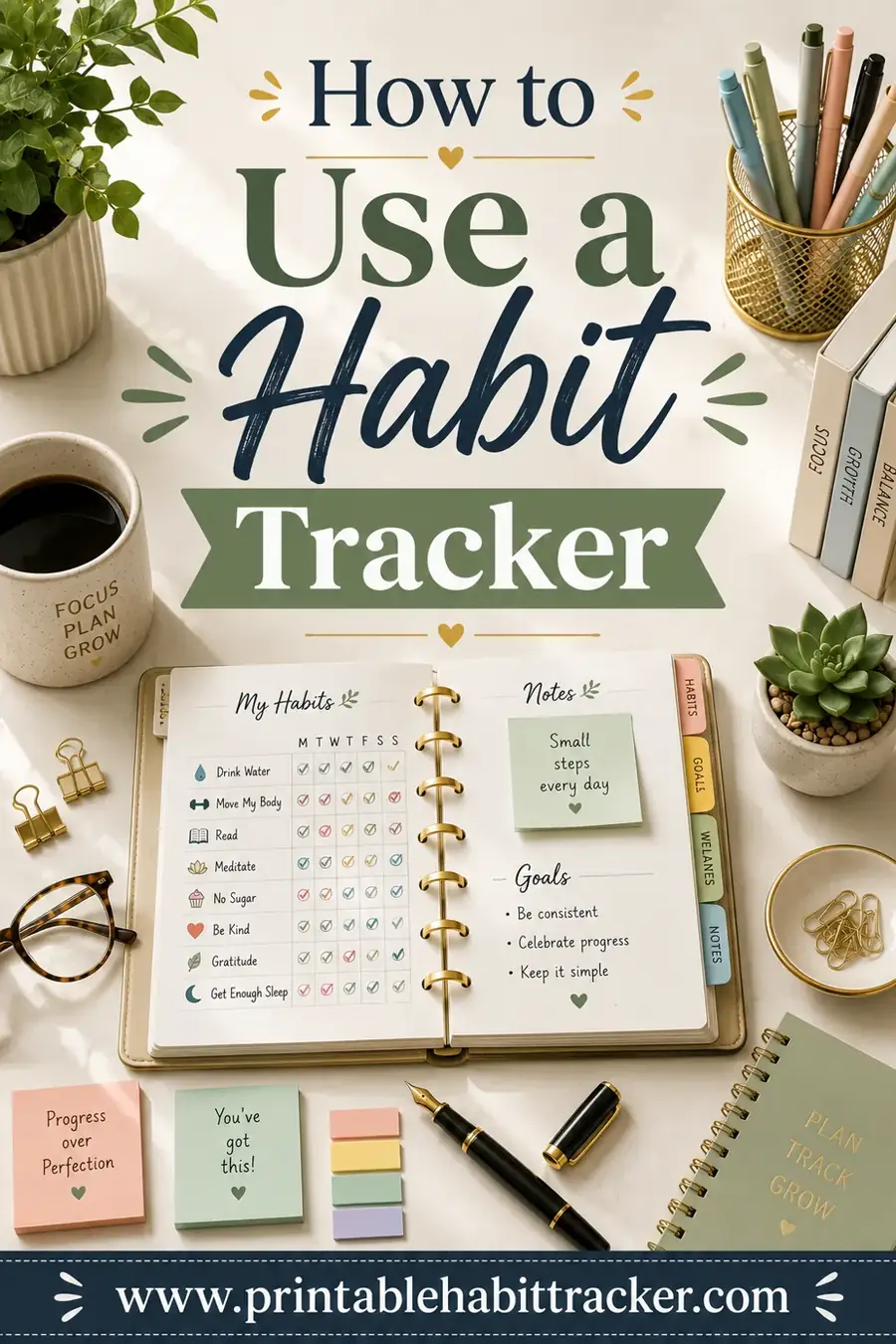
To use a habit tracker, you pick a few habits you want to do regularly, write them down in a grid with a box for each day, and mark the box every time you complete the habit. Over a week or a month, those marked boxes form a visible streak that shows your progress and keeps you motivated to not break the chain. That's the whole idea, and it works because seeing your wins makes you want more of them.
Want to skip the setup? Open the free habit tracker, type in your habits, and print a clean grid in seconds. No sign-up, no app to install, no fee.
What a Habit Tracker Actually Does
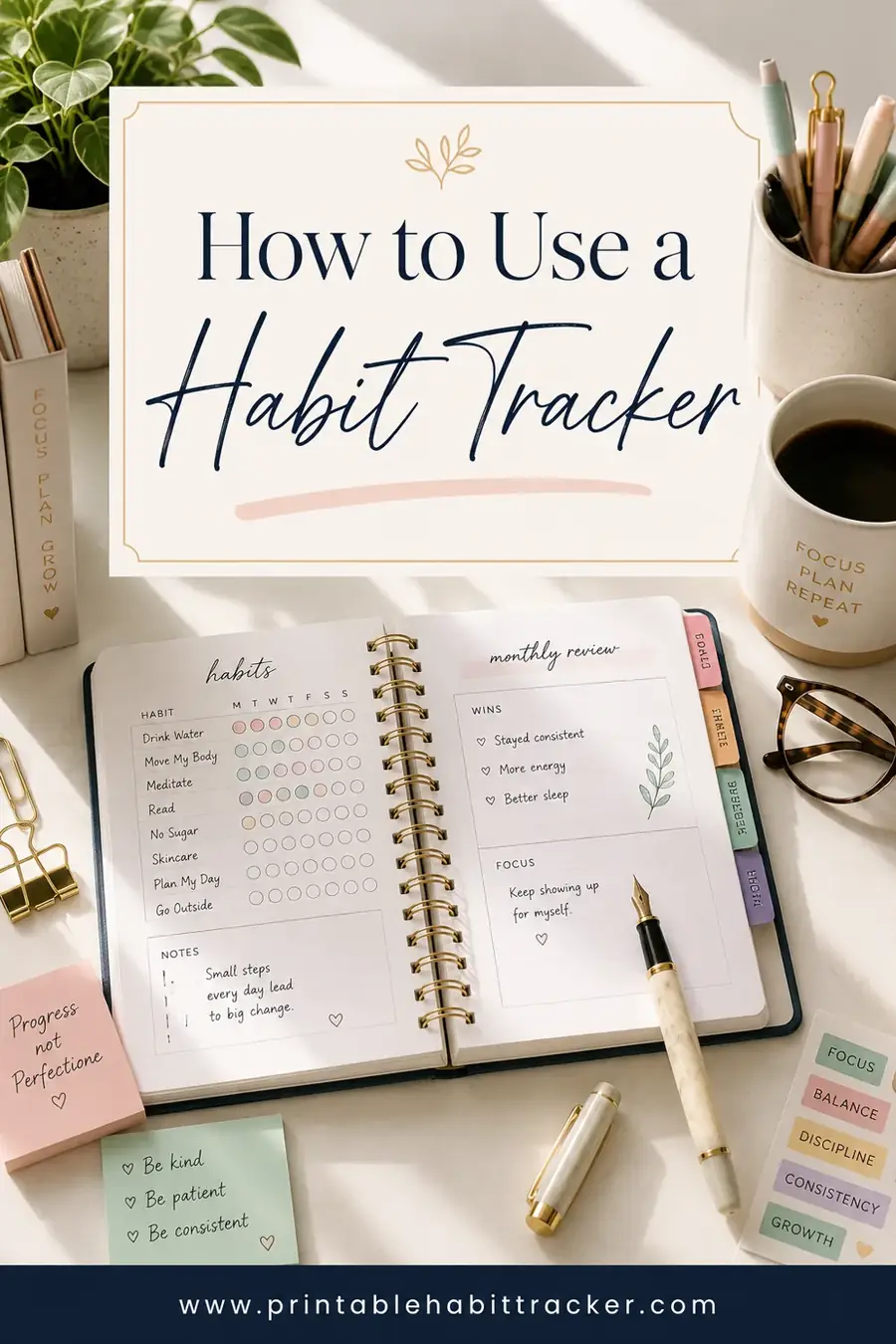
A habit tracker is a simple chart. Down one side you list the habits you want to build. Across the top you list the days. Every time you do a habit, you fill in that day's box. By the end of the week you can glance at the page and know exactly how you did, no guessing, no "I think I worked out twice."
Here's why that matters. Most of us are terrible at remembering our own behavior. We feel like we drank plenty of water this week when we actually skipped four days. A tracker turns a vague feeling into a clear record. And once you can see the truth, you can actually change it.
The tracker also does something sneaky and helpful: it gives you a tiny reward. Marking a box feels good. That little hit of satisfaction is what keeps people coming back, day after day, until the habit sticks on its own.
Step 1: Choose the Right Habits to Track
Start small. The biggest mistake people make is trying to track fifteen habits at once. You'll burn out by Thursday. Pick three to five habits, max, for your first round.
Good starter habits share a few traits:
- They're specific. "Walk 20 minutes" beats "exercise more."
- They're daily or near-daily. A tracker shines for things you want to do often.
- They're yes-or-no. You either did it or you didn't. Easy to mark.
Here are some popular habits people track, sorted by goal:
| Health | Mind & Mood | Productivity |
|---|---|---|
| Drink water | Meditate 5 min | Make the bed |
| Walk or exercise | Journal | Tidy for 10 min |
| 8 hours of sleep | Read 10 pages | No social media before noon |
| Take vitamins | Gratitude note | Plan tomorrow |
| Stretch | Deep breathing | Inbox to zero |
Pick from any column, or mix and match. Just keep the total small enough that filling in your tracker takes under a minute.
Step 2: Set Up Your Tracker
Now build the grid. You've got two easy paths.
Draw it by hand if you like the ritual of pen and paper. A simple table in a notebook works fine: habits down the left, day numbers across the top.
Or use the free habit tracker tool, which does the layout for you. You type in your habits, choose how many days you want (a week, a month, whatever), and it prints a clean grid. This is the faster route, and the lines actually stay straight.
Either way, your tracker should fit on one page you'll see every day. A page hidden in a drawer is a page you'll forget.
Daily, weekly, or monthly?
- Daily grids show one habit per day with checkboxes. Great detail, more marking.
- Weekly grids give you seven boxes per habit. The classic format, easy to scan.
- Monthly grids show a full month at once. Perfect for spotting patterns and long streaks.
If you're not sure, start with a monthly layout. Watching a streak grow across thirty days is genuinely motivating.
Step 3: Mark It Every Single Day
This is the part that makes or breaks the whole thing. The tracker only works if you actually fill it in. So tie the marking to something you already do.
The trick is called habit stacking: you attach the new action to an existing one. For example, "After I pour my morning coffee, I fill in yesterday's tracker." The old habit becomes the reminder for the new one.
A few tips that help:
- Put the tracker where you'll see it. On the fridge, by your toothbrush, taped inside a notebook you open daily.
- Mark at the same time each day. Most people like the evening (a review of the day) or the morning (logging the day before).
- Keep a pen with it. If you have to hunt for a pen, you'll skip it.
Don't overthink the marking itself. A checkmark, an X, a filled box, a little dot, whatever feels satisfying to you. Some people color in boxes for a more visual streak.
Step 4: Build and Protect Your Streak
Once you've got a few days marked in a row, something clicks. You don't want to break the chain. That run of filled boxes becomes a thing you're proud of, and the fear of ruining it is a surprisingly strong motivator.
This is sometimes called the "don't break the chain" method, and it's one of the oldest productivity tricks around. The longer your streak, the more it pulls you forward.
But here's the rule that keeps trackers from becoming a source of guilt: never miss twice. Missing one day is an accident. Missing two starts a new habit, the habit of skipping. So if you miss, just get back on it the very next day. One blank box won't undo your progress.
Step 5: Review and Adjust
At the end of each week or month, take two minutes to look back. Your tracker is full of useful information if you read it.
Ask yourself:
- Which habits are easy now? Those might be ready to "graduate" off the tracker, freeing space for new ones.
- Which habits keep getting skipped? Maybe they're too big, badly timed, or just not a real priority right now.
- What patterns show up? Lots of people notice weekends are their weak spot, or that one habit always slides when work gets busy.
Use what you learn. Shrink a habit that's too hard ("run 3 miles" becomes "put on running shoes"). Move a habit to a better time of day. Drop one that isn't serving you. The tracker is a tool, not a boss.
A Sample Week to Copy
Here's what a real week might look like for someone tracking four habits. Notice that it's not perfect, and that's normal.
| Habit | Mon | Tue | Wed | Thu | Fri | Sat | Sun |
|---|---|---|---|---|---|---|---|
| Drink water | ✓ | ✓ | ✓ | ✓ | ✓ | — | ✓ |
| Walk 20 min | ✓ | — | ✓ | ✓ | — | ✓ | ✓ |
| Read 10 pages | ✓ | ✓ | ✓ | — | ✓ | ✓ | ✓ |
| No phone in bed | — | ✓ | ✓ | ✓ | ✓ | — | — |
See the gaps? They didn't ruin the week. The point isn't a flawless row of checkmarks, it's showing up most days, noticing the trend, and getting right back on after a miss.
Ways to Get More Out of Your Tracker
Once the basics feel natural, a few small tweaks make a tracker even more useful. None of these are required, but they're worth trying.
- Add a notes column. A thin space at the side lets you jot why a habit got skipped. Over a month, those notes reveal your real obstacles, like "always miss my walk when it rains."
- Color-code by category. Use one color for health, another for work, another for mind. A quick glance shows whether you're neglecting a whole area of your life.
- Track a "keystone" habit. Some habits trigger others. Making your bed or a morning walk often sets a better tone for the whole day. If you find one, give it pride of place at the top.
- Pair it with a tiny reward. Hit a week-long streak and treat yourself to something small. It reinforces the behavior and keeps the momentum going.
The goal is always the same: make the tracker something you enjoy looking at, so checking it stays a pleasure rather than a chore.
Habit Tracking for Different Goals
A tracker bends to whatever you're trying to do. The setup changes a little depending on your goal.
- Building fitness? Track the action, not the result. "Worked out" is a clean yes-or-no box. "Lost weight" isn't something you can check off daily.
- Improving sleep? Track the behaviors that lead to good sleep, like "in bed by 11" and "no screens after 10," rather than the sleep itself.
- Cutting a bad habit? Flip the logic. Mark a box for each day you successfully avoided the thing, and watch that streak of "clean" days grow.
- Learning something? Track minutes or pages with a simple box. "Practiced 15 minutes" or "read 2 pages" keeps a learning habit alive even on busy days.
In every case, the rule is to track an action you fully control, not an outcome you only influence. Actions can be checked off cleanly; outcomes can't.
Common Mistakes to Avoid
A few traps catch almost everyone the first time:
- Tracking too many habits. Three to five is plenty. More than that and you'll quit.
- Vague habits. "Be healthier" can't be checked off. "Eat one vegetable at dinner" can.
- Hiding the tracker. Out of sight, out of mind. Keep it visible.
- Chasing perfection. A 90% month is a huge win. Don't trash the whole thing over a few blank boxes.
- Forgetting to review. Marking boxes is half the value. Reading them is the other half.
Avoid those and your tracker will quietly do its job for months.
Frequently Asked Questions
How often should I fill in my habit tracker?
Daily. The whole point is a same-day record, so mark each habit the moment you do it or once a day at a set time. Pick a consistent moment, like right after dinner, so it becomes automatic. The free tracker gives you a clean grid that makes daily marking quick.
What should I do if I miss a day?
Don't panic and don't quit. One blank box is fine. Just make sure you don't miss two days in a row, because that's when a streak really starts to slip. Get back on it the next day and keep going.
How many habits should I track at once?
Three to five is the sweet spot for most people. Tracking too many at once is the fastest way to feel overwhelmed and give up. Once a habit feels automatic, you can swap it out for a new one.
Do habit trackers actually work?
For most people, yes. They work because they make your behavior visible, give you a small reward for each win, and turn progress into a streak you don't want to break. The key is keeping it simple and looking at it every day.
Should I use a paper tracker or an app?
Whatever you'll actually use. Paper trackers are free, distraction-free, and always visible, which is why a lot of people prefer them. You can print one in seconds from the free habit tracker and stick it on your fridge.
How long should I keep tracking a habit?
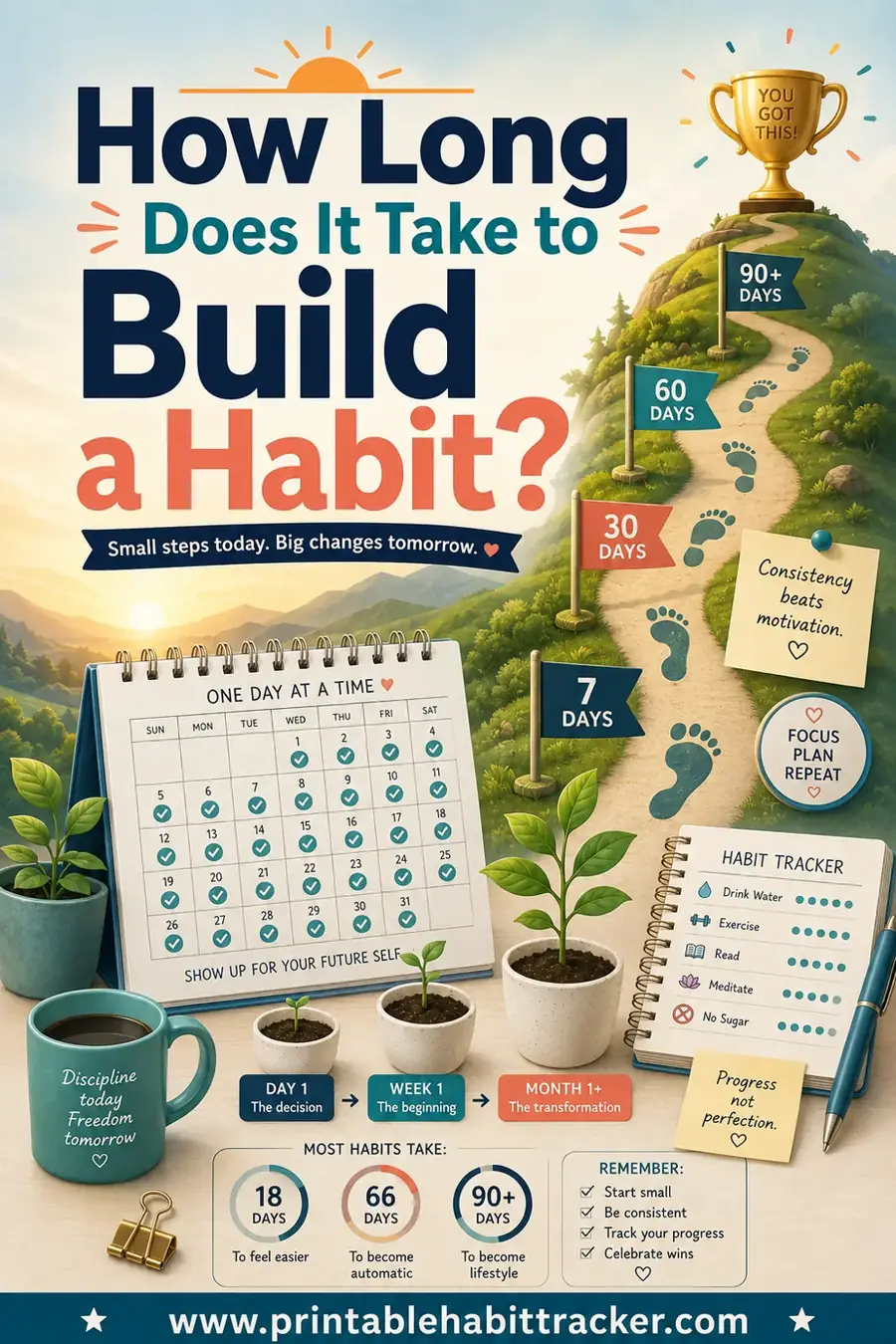
Keep tracking until the habit feels automatic, which for most habits takes a couple of months. Once you do it without thinking, you can retire it from the tracker and add a new goal in its place.
Ready to Start Tracking?
Now you know how to use a habit tracker: pick a few habits, mark each day, protect your streak, and review what you learn. The hardest part is just starting, so make it easy on yourself. Open the free habit tracker, add your habits, and print a clean grid right now. It's free, there's no sign-up, and you can stick it on the fridge in under five minutes.
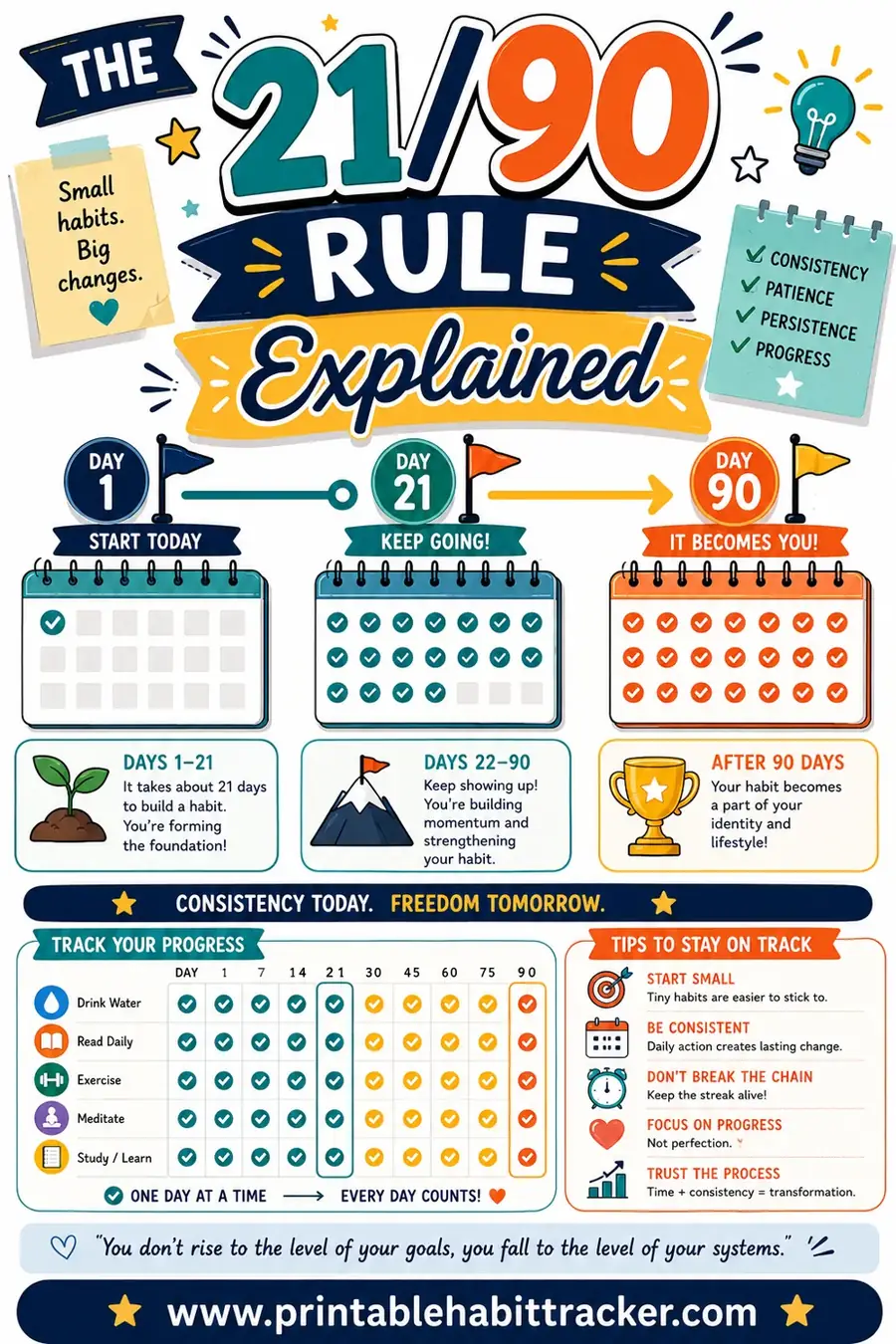
Want more? Learn how to start a habit tracker from scratch, find out how long it takes to build a habit, or read the truth behind the 21/90 rule.