Study Habit Tracker: Free Printable Study Log
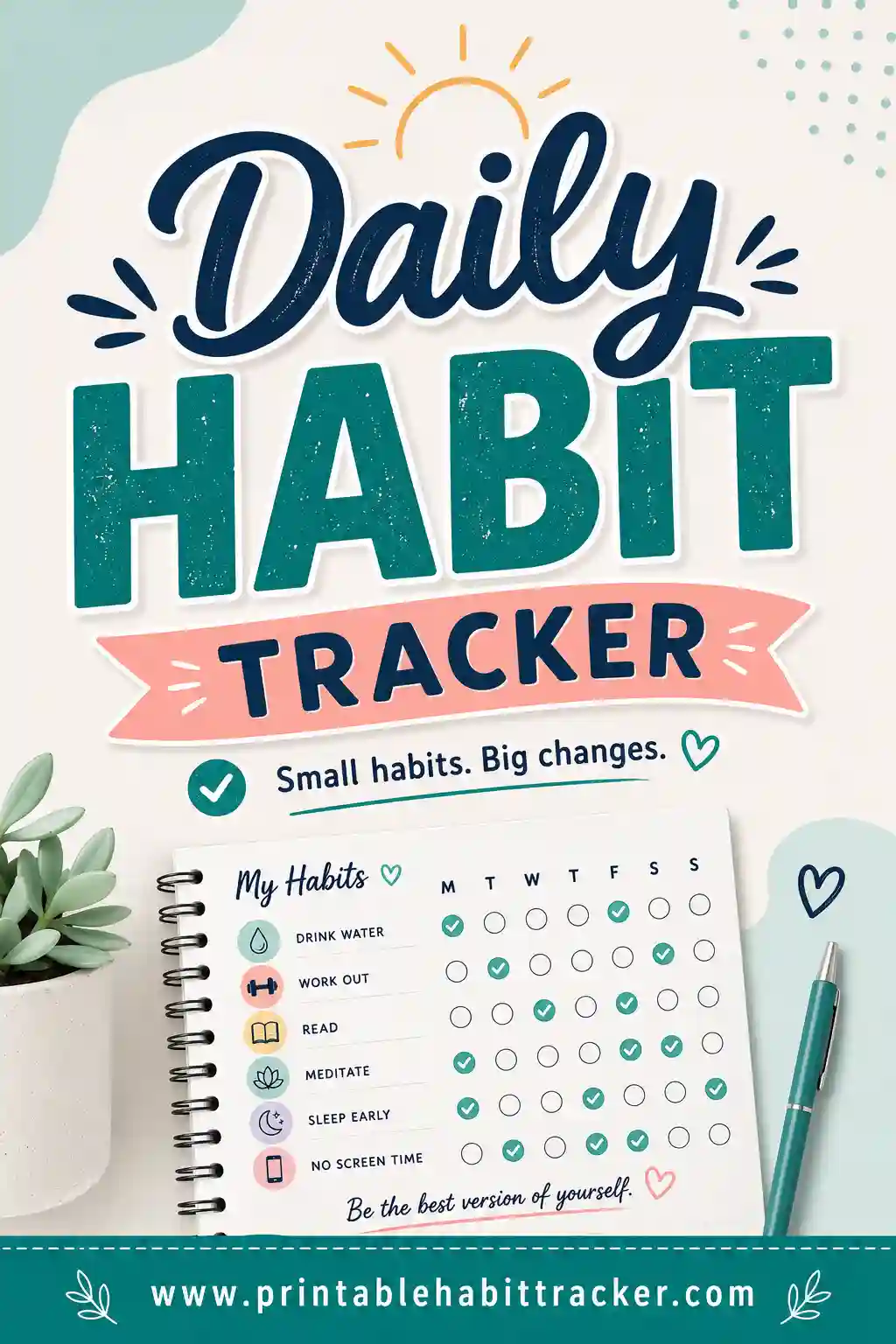
A study habit tracker is a printable sheet where you check off each study session you complete, so daily effort turns into a visible streak that keeps you on top of your work instead of cramming at the last minute. You list your subjects or goals down one side, the days across the top, and you fill a box every time you sit down and focus. The fastest way to set one up is with a free printable habit tracker that lets you pick your subjects, your layout, and your time frame, then print it in seconds.
Want to get organized right now? Open the free tracker, add your subjects, choose a daily or weekly layout, and print a clean study log for your desk or planner. No app, no login, no fees.
What Is a Study Habit Tracker?
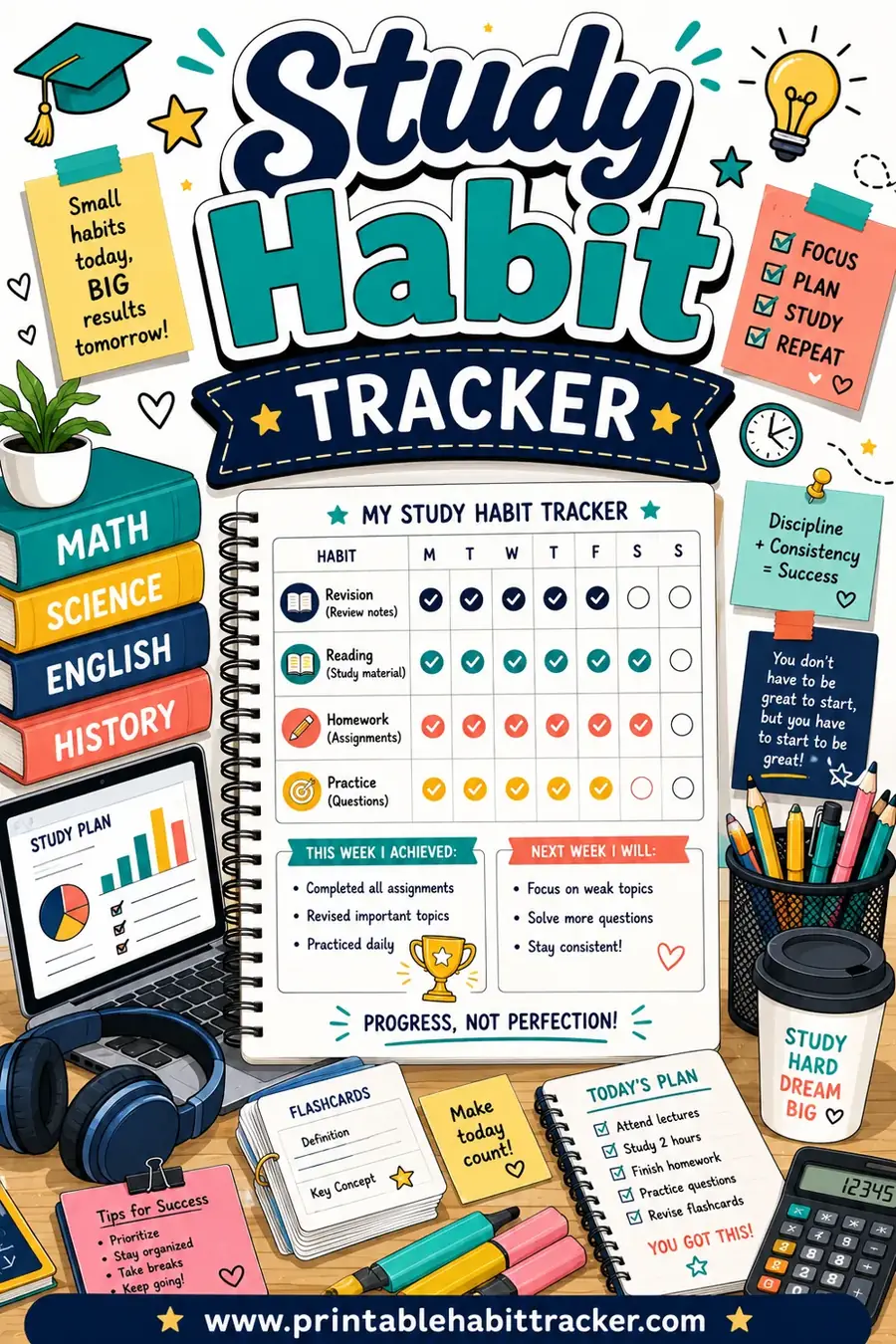
A study habit tracker is a simple chart that turns "I should study" into something you can actually see and measure. Each row is a subject or study goal, each column is a day, and every time you put in real focused time, you check the box. That's it. No complicated system, just a clear record of the days you showed up.
The power is in the streak. When you've studied four days running, that line of checked boxes becomes something you want to protect. Skipping feels like breaking a promise to yourself, so you open the book even when motivation is low. That small, steady pressure is what beats cramming. Instead of one panicked all-nighter before an exam, you build a habit of doing a little every day.
Trackers come in a few useful shapes you can mix:
- Daily habit tracker. One box per day for "did I study?" Simple and great for building the everyday habit.
- Subject grid. A row per subject so you can see whether you're neglecting one. Perfect for balancing several classes.
- Time log. Columns for minutes studied, so you can see where your hours actually go.
Why Track Your Study Habits?
Most students don't have a knowledge problem, they have a consistency problem. The plan is to study every day; the reality is a scramble the night before the test. A tracker closes that gap by making your effort visible and your streak worth protecting.
Here's what tracking your study habits does for you:
- It kills cramming. A daily streak spreads your effort out, which is how you actually remember things long term.
- It shows neglect early. A subject grid makes it obvious when one class has gone three days without a checked box.
- It builds momentum. Checked boxes are oddly motivating. You study to keep the chain going.
- It proves your effort. On a discouraging week, a row of filled boxes reminds you that you are putting in the work.
There's also a focus bonus. When you know you'll check a box for a real, focused session (not ten distracted minutes), you tend to study with more intention. The tracker quietly raises the quality of your study time, not just the quantity.
Study Habits Worth Tracking
The best habits to track are small, specific, and repeatable. Vague goals like "study harder" don't fit in a box. Here are study habits that work, why each helps, and an easy way to track them.
| Habit | Why it helps | How to track |
|---|---|---|
| 25-minute focus block | Short, doable, beats marathon sessions | One box per block |
| Review today's notes | Locks in learning while it's fresh | Daily box |
| Practice problems | Active recall beats rereading | Tick per set done |
| One subject per day | Spreads attention across classes | Box in each subject row |
| Flashcard review | Powerful for memorization | Daily box |
| Phone away while studying | Protects your focus | Daily box |
| Plan tomorrow's tasks | Keeps you ahead, not behind | Evening box |
See how concrete these are. "Do one 25-minute focus block" is a box you can honestly check or not. That clarity is what makes a tracker work. Start with one or two of these, not all seven, so the habit feels light enough to keep.
Use focus blocks, not marathons
A common trap is planning three-hour study sessions that never happen. Break study into short, focused blocks, around 25 minutes with a short break after, and track each one. Three blocks across a day is more than an hour of real focus, and each checked box gives you a little hit of progress that pulls you into the next one.
How to Build Your Study Habit Tracker in 4 Steps
You can have one ready before your next study session.
- List your subjects or goals. Keep them specific: "Math: practice set," not just "study."
- Pick a layout. A subject grid to balance classes, a daily habit row, or a time log for minutes studied.
- Choose your time frame. A weekly sheet works well during the term; a monthly grid is great for long exam prep.
- Print it. Open the free tracker, set it up, and print. Keep it on your desk or in your planner.
If exams are coming, print a dedicated monthly sheet just for revision, so your everyday studying and your exam prep don't blur together.
A Sample Study Week
Here's a balanced study week for someone juggling a few subjects. It spreads the load, includes lighter days, and builds in a planning session, so nothing piles up.
| Day | Study focus | Done? |
|---|---|---|
| Monday | Math: 2 focus blocks + review notes | ☐ |
| Tuesday | History: read + flashcards | ☐ |
| Wednesday | Science: practice problems | ☐ |
| Thursday | Math: practice set (weak spot) | ☐ |
| Friday | Light review of the week, screens off | ☐ |
| Saturday | One longer block on the hardest subject | ☐ |
| Sunday | Plan next week, prep flashcards | ☐ |
The lighter Friday and the Sunday planning session matter. Studying every single day at full intensity leads to burnout, which is the number-one reason study streaks collapse. Easy days and planning days still earn a checked box, and they keep you in the game.
Building a Study Routine That Sticks
Tracking is the start. The goal is a study routine you barely have to argue with yourself about. Your tracker is the feedback loop that makes it real.
Study at the same time and place
The easiest way to build a habit is to give it a fixed home. Same desk, same time, same first move (open the notes, start a focus block). When studying has a regular slot, the tracker box almost fills itself, because you're not deciding whether to study, just doing the thing you always do at that time.
Pair studying with a trigger
Habit stacking works wonders here. Study right after dinner, or as soon as you get home, or right after your afternoon snack. Tie the session to something you already do every day, and the habit gets a built-in reminder. Note the trigger on your tracker so the routine reinforces itself.
Tips to Study More Consistently
A few small moves, backed by your own tracker, do most of the heavy lifting.
- Use short focus blocks. Twenty-five focused minutes beats three distracted hours. Check a box per block.
- Put your phone away. A "phone away" box trains your sessions to be genuinely focused, not half-scrolling.
- Start absurdly small on hard days. Even one short block keeps the streak alive when you're swamped.
- Never miss twice. One skipped day is fine. Two in a row is how good intentions unravel, so always study the next day.
- Review your week. A Sunday glance shows which subjects you've neglected, so nothing sneaks up on you before an exam.
If you're building a full student routine, a study tracker pairs perfectly with our reading habit tracker for steady learning, plus a sleep tracker and fitness habit tracker, because rest and movement are what keep your brain sharp.
Frequently Asked Questions
What is a study habit tracker?
It's a printable chart where you check off each study session you complete, building a visible streak that keeps you consistent instead of cramming. Each row can be a subject or goal, and you fill a box every time you put in real, focused study time.
How do I use a study tracker to stop cramming?
Set a small daily goal, like one or two focus blocks, and check a box every day you hit it. The streak makes you want to study a little each day rather than all at once. Spreading effort out is also how you actually remember material long term.
Is the printable study habit tracker free?
Yes. You build and print it yourself for free, with no sign-up and no watermark. Use the free tracker to add your subjects and choose a layout, then print as many copies as you need.
How many subjects should I track?
Track all the subjects you're actively studying, but keep the daily goals small for each. A subject grid is great for spotting a class you've neglected. Just don't set a huge daily target for every subject at once, or the tracker becomes a chore you'll abandon.
Should I track study time or just sessions?
Both work. A simple "did I study?" box builds the habit and a streak, while a time log shows where your hours actually go. Many students use a subject grid for balance plus a minutes column when they want to see their real study load.
Can I reuse the same printed tracker?
Yes. Print on cardstock and slip it into a clear sleeve, then mark with a dry-erase marker. Wipe it clean each week or month and start fresh, or print a new sheet at the start of each term or exam-prep period.
Ready to Build Your Study Habit Tracker?
List your subjects, open the free printable habit tracker, and you'll have a clean study log ready in minutes. It's free, there's no sign-up, and you choose the subjects, layout, and time frame. Keep it on your desk, check a box after every focused session, and watch a little daily effort turn into the kind of streak that beats cramming every time.