Sleep Tracker: Free Printable Sleep Log Template
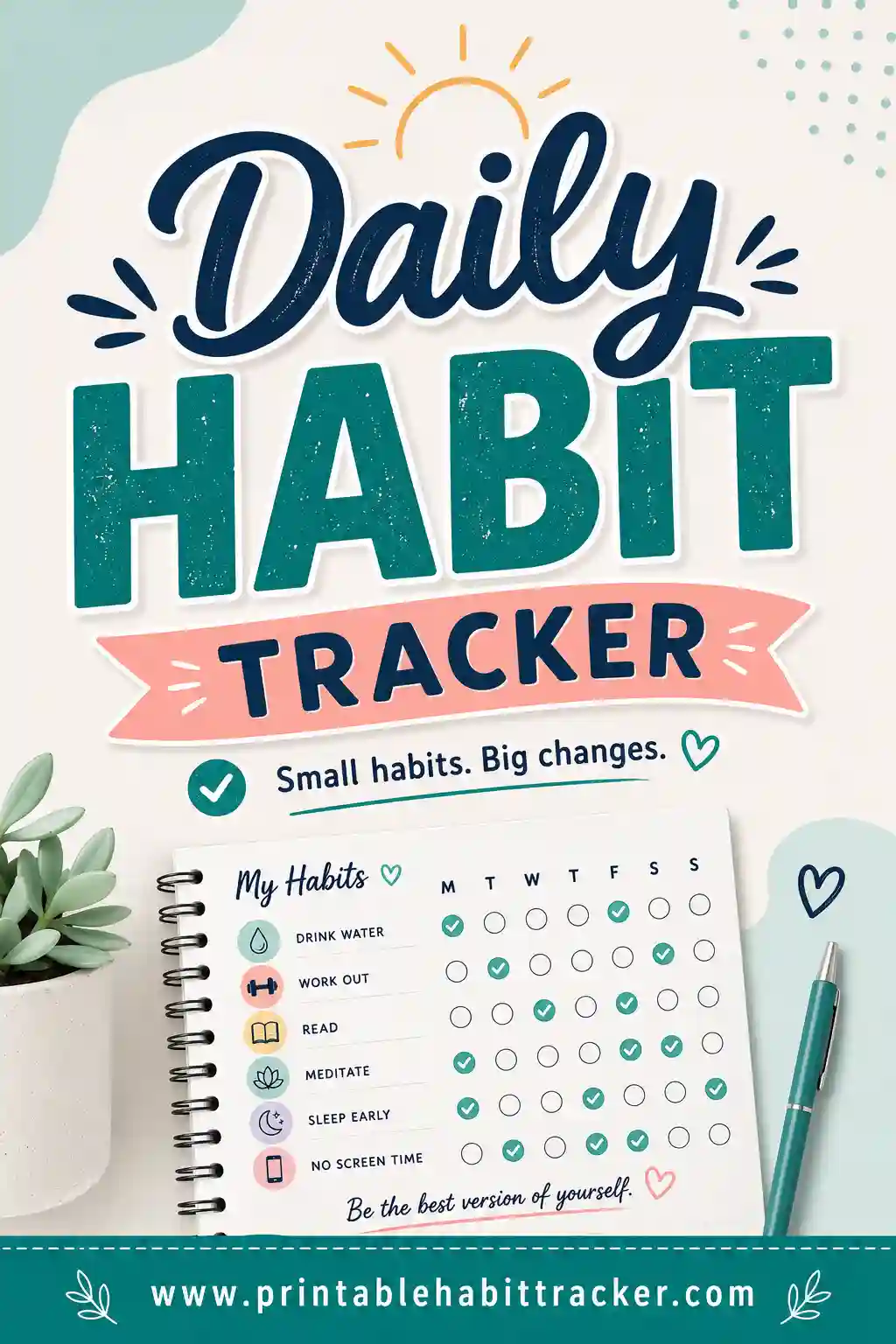
A sleep tracker is a printable log where you record when you went to bed, when you woke up, and how rested you felt, so you can spot the patterns behind your good and bad nights. Over a week or two, the page reveals what's really wrecking your rest, whether it's late screens, a wandering bedtime, or that afternoon coffee. The quickest way to make one is with a free printable habit tracker that lets you pick your fields, your layout, and your time frame, then print it in seconds.
Want to start tonight? Open the free tracker, set up a simple sleep log, choose a daily or weekly layout, and print a sheet for your nightstand. No app on your phone glowing at bedtime, no login, no fees.
What Is a Sleep Tracker?
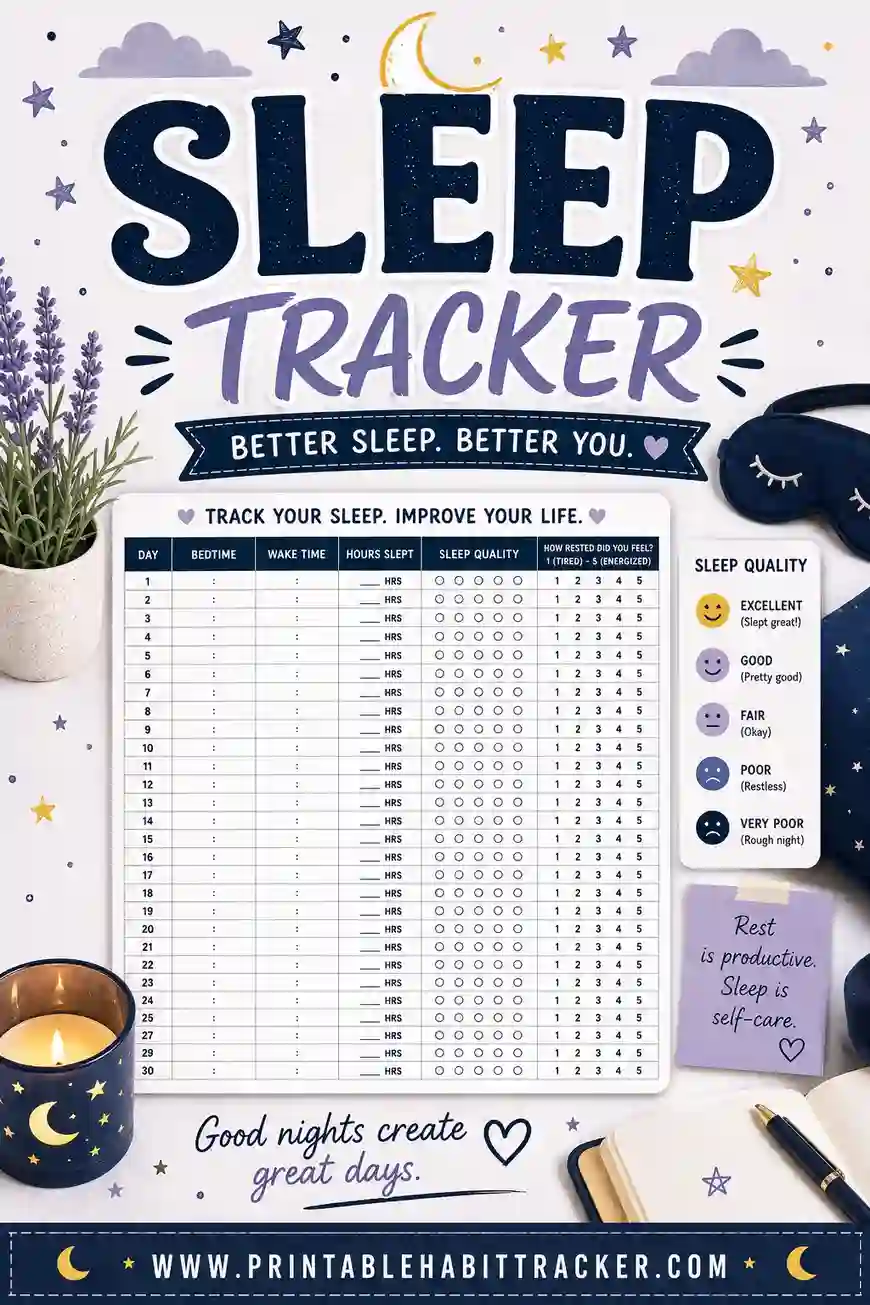
A sleep tracker is a paper log of your nights. Each row is one day, and the columns capture the basics: when you went to bed, when you got up, roughly how many hours you slept, and a quick rating of how you felt the next morning. Some people add notes, like caffeine, exercise, or screen time, to hunt for what's helping or hurting.
Why use paper instead of a wearable? Because a printed log makes you reflect. Filling it in by hand each morning is a 20-second check-in that keeps sleep on your radar. A watch buzzes you with a score and you forget it by lunch. A nightstand log sits there asking, "How'd you sleep, and why?" That little ritual is where the real insight comes from.
Sleep trackers usually take one of two shapes:
- Daily log. A row per night with a few columns. Simple, detailed, and great for spotting cause and effect.
- Habit-style tracker. A single "did I get good sleep?" box per night. Less detail, but it builds a streak and a bedtime habit fast.
Why Track Your Sleep?
Most of us have a vague sense of our sleep ("ugh, terrible") without any real picture of it. A tracker turns that fog into facts. After a week, you stop guessing and start seeing.
Here's what tracking your sleep actually gives you:
- Patterns you'd never notice. You might find every bad night follows a late coffee, or a screen-heavy evening, or a wildly different bedtime.
- A steadier schedule. Logging your bed and wake times nudges you toward consistency, which is one of the biggest levers for good sleep.
- A bedtime habit. When "good sleep" becomes a box you want to check, you start protecting your wind-down routine.
- Useful info to share. If you ever talk to a doctor about your sleep, a two-week log is far more helpful than "I don't sleep great."
The goal isn't to obsess over numbers. It's to gently steer your nights in a better direction by noticing what works.
What to Record on Your Sleep Log
You don't need to track everything. Start with the core fields, then add a couple of "clues" if you're trying to solve a specific problem. Here's a solid set.
| Field | Why it helps | How to record |
|---|---|---|
| Bedtime | Reveals if your schedule drifts | Time you turned off the light |
| Wake time | Shows your real sleep window | Time you actually got up |
| Hours slept | The headline number | Estimate, rounded to the half hour |
| How rested (1–5) | Captures quality, not just quantity | Quick morning gut rating |
| Caffeine after 2pm | Common sleep wrecker | Yes / no, or number of cups |
| Screens before bed | Light delays sleep | Yes / no, or minutes |
| Exercise today | Often improves sleep | Yes / no |
Fill it in first thing in the morning while the night's still fresh. Trying to remember at noon makes the data fuzzy and the habit harder to keep.
Keep it light
If seven columns feels like a lot, don't do all of them. Even just bedtime, wake time, and a 1-to-5 rating will reveal most of what you need. A tracker you'll actually fill in beats a perfect one you abandon after three days.
Add a "clue" column when you're solving a problem
When a stretch of bad nights has you stumped, add a single extra column for whatever you suspect: a late meal, a stressful day, alcohol, a warm bedroom, a nap. Track just that one variable alongside your rest rating for a week. Lining up the suspect against your worst nights usually points straight at the culprit, and you can drop the column once you've cracked it. The beauty of paper is that you can redesign your log on the fly, adding and removing columns as your questions change.
How to Build Your Sleep Tracker in 4 Steps
You can have one ready before tonight's bedtime.
- Choose your fields. Start with bedtime, wake time, hours, and a rest rating. Add clues if you're chasing a problem.
- Pick a layout. A weekly log with rows for each night, or a simple habit grid of "good sleep" boxes.
- Set your time frame. Two weeks is the sweet spot for spotting patterns. A monthly sheet works for the long game.
- Print it. Open the free tracker, set it up, and print. Keep it on your nightstand with a pen.
A pen by the bed is the secret. If you have to go find one each morning, you'll skip it. Park one right next to the log.
A Sample Sleep Week
Here's what a filled-in week might look like, and how patterns jump out once it's on paper.
| Night | Bedtime | Wake | Hours | Rested (1–5) | Note |
|---|---|---|---|---|---|
| Mon | 11:30 | 6:45 | 7.0 | 4 | — |
| Tue | 12:40 | 6:45 | 6.0 | 2 | Late screens |
| Wed | 11:00 | 6:45 | 7.5 | 5 | Walked at lunch |
| Thu | 11:15 | 6:45 | 7.5 | 4 | — |
| Fri | 1:10 | 8:30 | 7.0 | 3 | Coffee at 4pm |
| Sat | 11:45 | 8:00 | 8.0 | 5 | — |
| Sun | 11:00 | 6:45 | 7.5 | 5 | Screens off early |
See it? The two roughest nights line up with late screens and an afternoon coffee. You'd never connect those dots in your head, but on paper they're obvious. That's the power of a sleep tracker in one glance.
Turning Better Sleep Into a Habit
Tracking is step one. The point is to use what you learn to build a wind-down routine you'll repeat. Your tracker is the feedback loop that keeps you honest.
Build a consistent bedtime
The single biggest win from a sleep log is realizing how much your bedtime bounces around. Pick a target window and aim to hit it most nights. Use a habit-style box for "in bed by 11" and watch the streak pull you toward a steadier rhythm.
Attach a wind-down ritual
Once your log shows what helps (a book instead of a phone, lights down early, no late caffeine), turn those into a small routine. Stack them: brush teeth, screens off, read a few pages, lights out. Check a box for the ritual, and the good nights follow.
Tips for Better, Trackable Sleep
A few small moves, confirmed by your own log, do most of the work.
- Keep wake time steady. Even on weekends, a consistent wake time anchors your whole sleep schedule.
- Cut screens before bed. The bright light pushes sleep later. Your tracker will likely prove it within a week.
- Watch afternoon caffeine. Coffee lingers for hours. Log it and see if your worst nights follow your latest cups.
- Wind down on purpose. Dim the lights, read, stretch. A calm pre-bed routine shows up as better ratings fast.
- Review every week. A Sunday glance at your log turns scattered nights into a clear pattern you can act on.
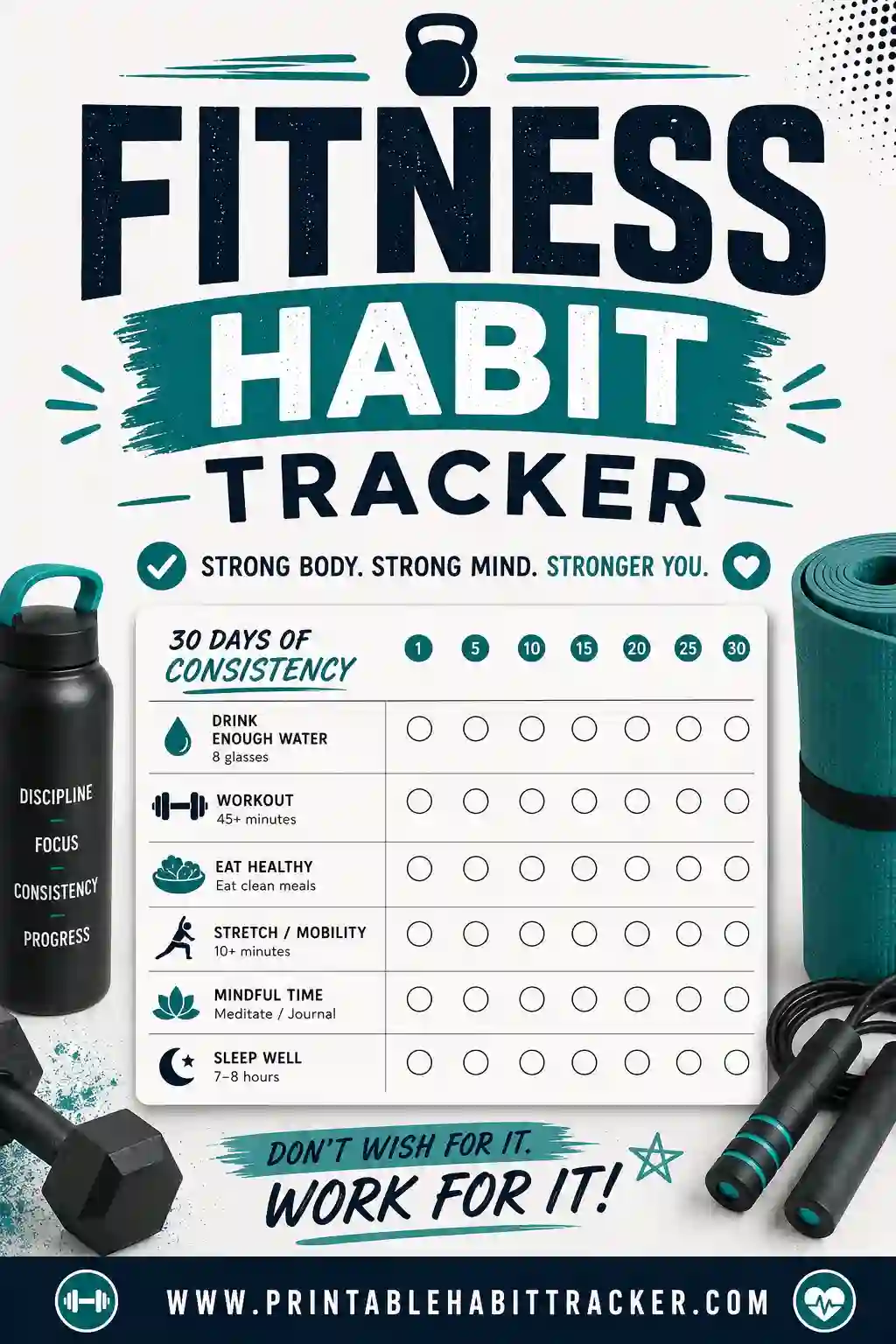
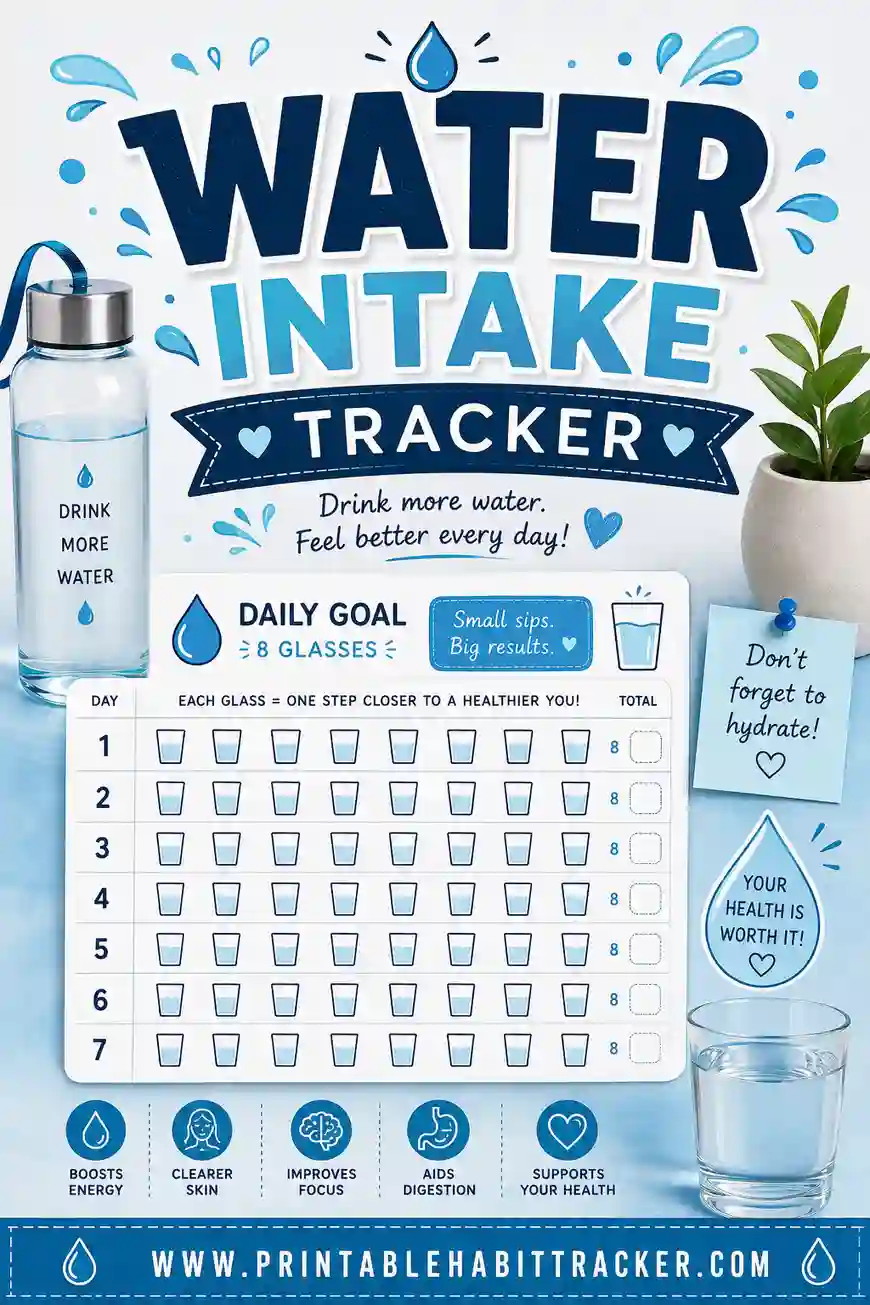
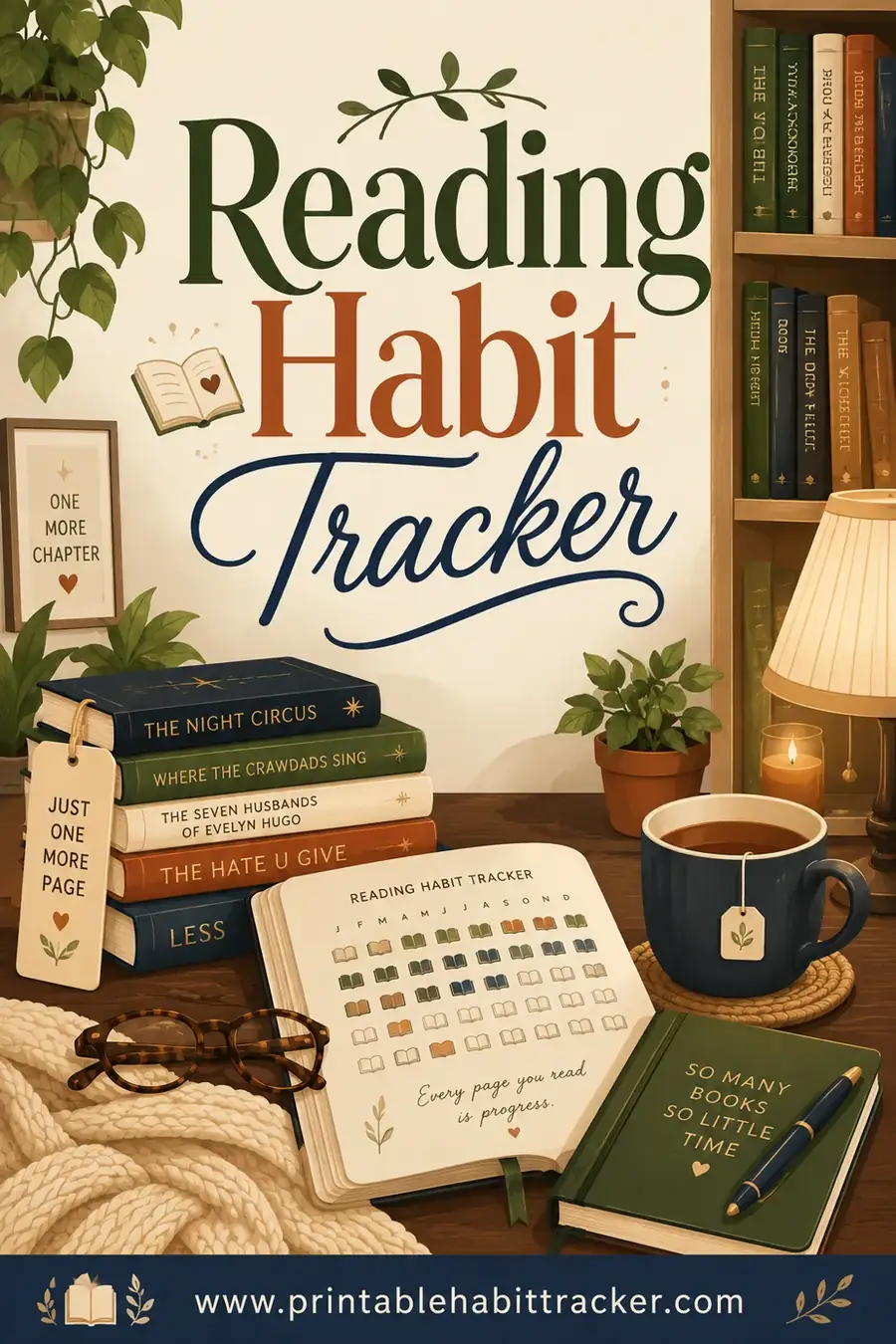
If you're building a full self-care routine, your sleep log pairs naturally with our fitness habit tracker, water intake tracker, and a calming reading habit tracker for a screen-free wind-down.
Frequently Asked Questions
What is a sleep tracker?
It's a printable log where you record your bedtime, wake time, hours slept, and how rested you felt, so you can spot the patterns behind good and bad nights. Some versions add notes like caffeine or screen time to help you find what's affecting your rest.
What should I record on a sleep log?
Start with bedtime, wake time, hours slept, and a quick 1-to-5 rating of how rested you felt. If you're chasing a specific problem, add clues like afternoon caffeine, screens before bed, or whether you exercised. Keep it light so you actually fill it in.
Is the printable sleep tracker really free?
Yes. You build and print it yourself for free, with no sign-up and no watermark. Use the free tracker to choose your fields and layout, then print as many copies as you need.
How long should I track my sleep?
Aim for at least two weeks. That's usually enough to reveal patterns, like bad nights following late screens or an inconsistent bedtime. A monthly sheet works well if you want to track the long-term trend.
When should I fill in my sleep tracker?
First thing in the morning, while the night is still fresh in your memory. Keep a pen right next to the log so it takes 20 seconds. Trying to remember later in the day makes the data fuzzy and the habit harder to keep.
Can I reuse the same printed tracker?
Yes. Print on cardstock and slip it into a clear sleeve, then mark with a dry-erase marker. Wipe it clean each week and start fresh, or just print a new sheet whenever you want a clean slate.
Ready to Build Your Sleep Tracker?
Grab a pen for your nightstand, open the free printable habit tracker, and you'll have a simple sleep log ready before bedtime. It's free, there's no sign-up, and you pick the fields, layout, and time frame. Log a couple of weeks, spot your patterns, and start turning better sleep into a habit one night at a time.