Bedtime Routine Chart Free Printable: Custom Charts for Calmer Nights
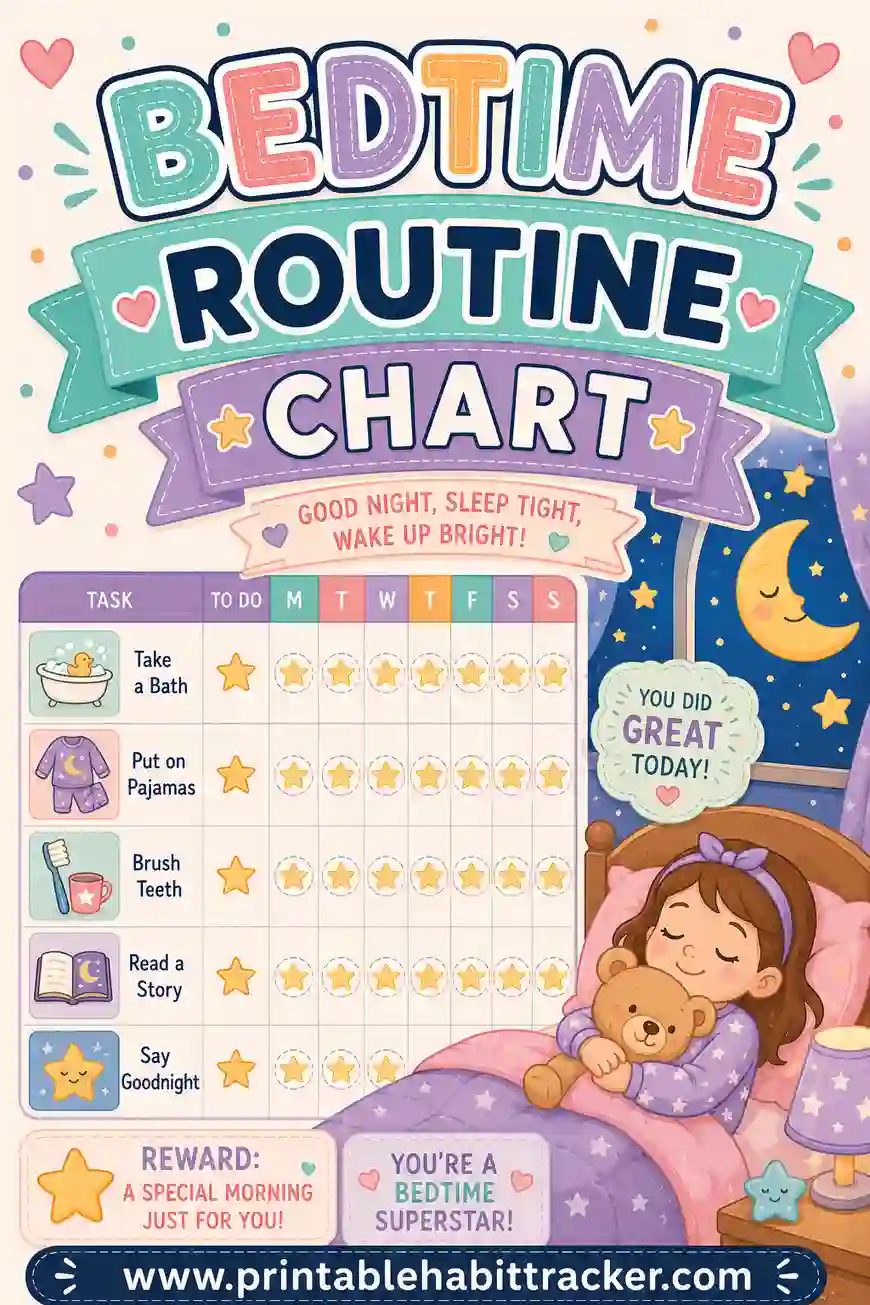
A bedtime routine chart free printable is a simple grid that turns the nightly chaos into a checklist: every step of your child's wind-down — bath, pajamas, teeth, story — listed in order down the side, the days of the week across the top, and a box to check or sticker as each step gets done. Instead of you announcing every step (again), the chart runs the show and your child follows it. The fastest way to get one is with a free printable habit tracker builder — type in your family's exact routine, pick a layout, and print a chart that fits your bedtime, not a template's.
Want one tonight? Open the free builder, type each bedtime step on its own line in order, choose the weekly layout with big color-in squares, and hit print. No sign-up, no watermark — and yes, genuinely free.
What Is a Bedtime Routine Chart?
It's the evening's script, printed. Each row is one step of the routine, written in the order it happens: toys away, bath, pajamas, teeth, potty, story, lights out. Each night, your child works down the list and checks (or stickers, or colors in) each box as they finish the step.
Two quiet things happen when the routine lives on paper. First, the chart becomes the authority — "what's next on your chart?" lands completely differently than "GO BRUSH YOUR TEETH" for the fourth time. Kids argue with parents; they rarely argue with checklists. Second, the week view builds pride: by Thursday your child can see four nights of finished routines behind them, and they want Friday's column to match.
Because you build it in the free tool, the steps are your bedtime — including the weird-but-essential ones like "find the special bunny" that no store-bought chart ever includes.
Why Bedtime Routines (and Charts) Actually Work
Pediatric sleep research keeps landing on the same finding: a consistent, predictable pre-bed sequence helps kids fall asleep faster, wake less, and fight bedtime less. The chart is how a routine becomes consistent in real life:
- Predictability lowers resistance. Kids fight surprises, not sequences. When teeth always follows pajamas, teeth stops being a negotiation.
- The chart holds the order. Tired parents skip steps and improvise; the paper never does. Same steps, same order, every night — that's the whole magic.
- Checking boxes gives wind-down structure. The physical act of working down a list is itself calming — a visible countdown to lights out.
- It hands over ownership. A four-year-old marching to their chart to sticker "pajamas ON!" is a four-year-old running their own bedtime. That autonomy defuses half the battles.
Bedtime Steps to Put on the Chart, by Age
Keep steps concrete and in true order. Copy a set into the builder and edit to match your house:
| Age | Bedtime routine rows | Steps |
|---|---|---|
| 2–3 | Toys in bin, bath, pajamas, teeth (with help), story, hug & lights out | 4–5 |
| 4–5 | Tidy up, bath, pajamas, brush teeth, potty, pick a story, lights out | 5–6 |
| 6–8 | Pajamas, teeth, lay out tomorrow's clothes, reading time, lights out by 8:30 | 5–6 |
| 9–12 | Shower, teeth, pack school bag, screens off, read in bed, lights out by 9 | 4–6 |
The screens-off row deserves special mention
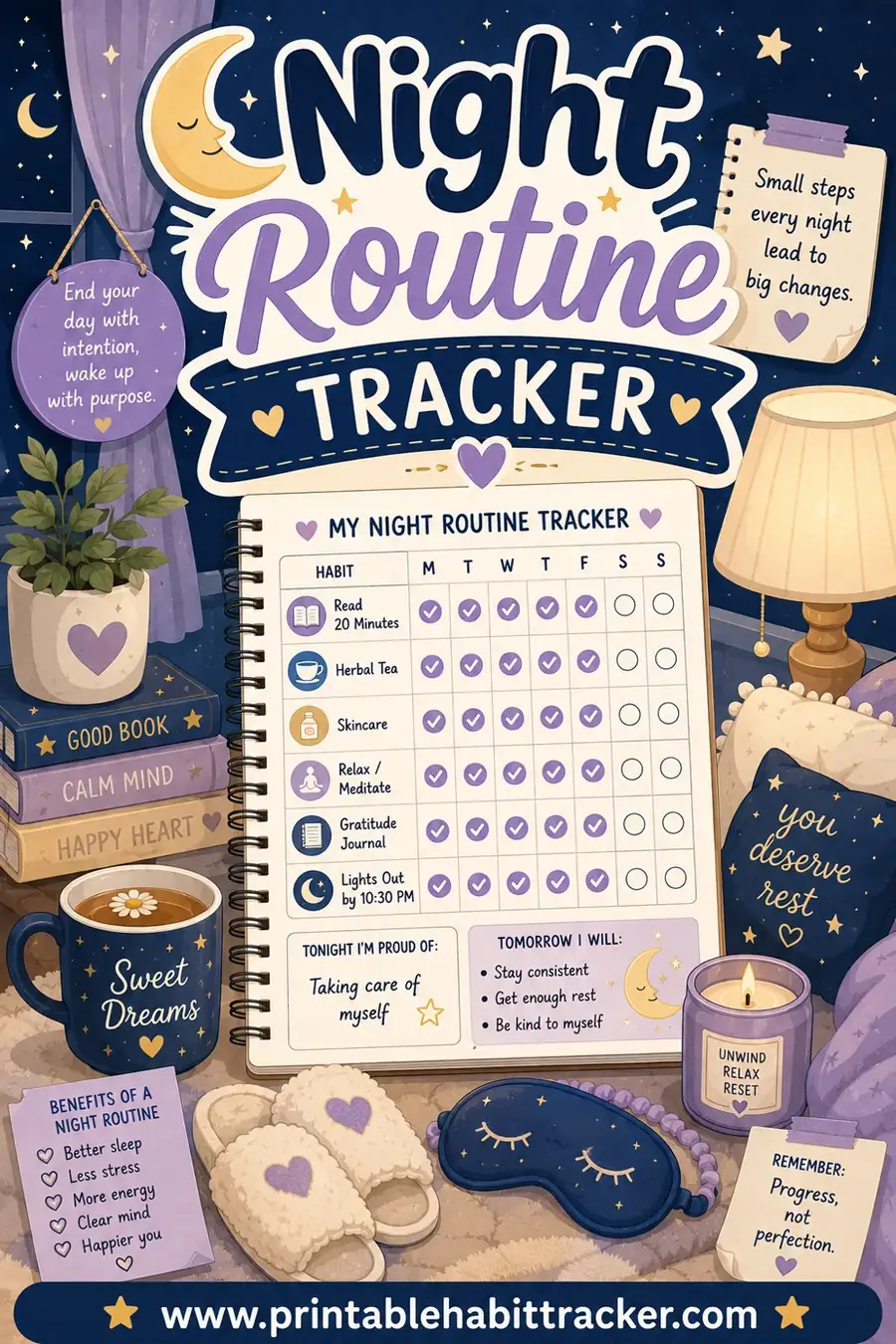
For older kids (and adults, honestly), "screens off" is the single highest-impact row on the chart. Give it a specific time — "screens off at 8" — so it's checkable, not arguable. If your own evenings need the same treatment, a night routine tracker is the grown-up version of this exact chart.
How to Make a Bedtime Routine Chart in 4 Steps
- Write the routine in order. In the free builder, type each step on its own line, top to bottom in the sequence it happens. Put your child's name in the title — "Maya's Bedtime Chart."
- Pick the weekly layout. Steps down the side, seven nights across. Your child sees the week build night by night.
- Choose big color-in squares. Little kids color the box in as each step finishes — it's more satisfying than a tick and fits stickers perfectly. Pick a calm theme, or Classic black-and-white to save ink.
- Add the reward box and print. Write in the weekly goal: "Full chart 5 nights = Saturday pancakes." Letter or A4, one page, done.
The chart saves in your browser, so when the routine changes — bath moves to mornings, reading time gets longer — you edit the rows and reprint in seconds.
Chart Versions That Work
The classic weekly chart
Seven columns, one per night. The default for good reason: streaks are visible and Sunday's review-and-reward has a natural rhythm.
The one-night checklist
The daily layout prints a single clean column — perfect for toddlers who only need tonight, or laminated with a dry-erase marker as a forever-chart.
The two-kid chart
One chart per child, side by side on the wall — or one shared chart with color-coded rows (each kid's steps in their own color with a printed key). Racing to finish columns first is the rare sibling competition that helps everyone.
The routine + sleep tracker combo
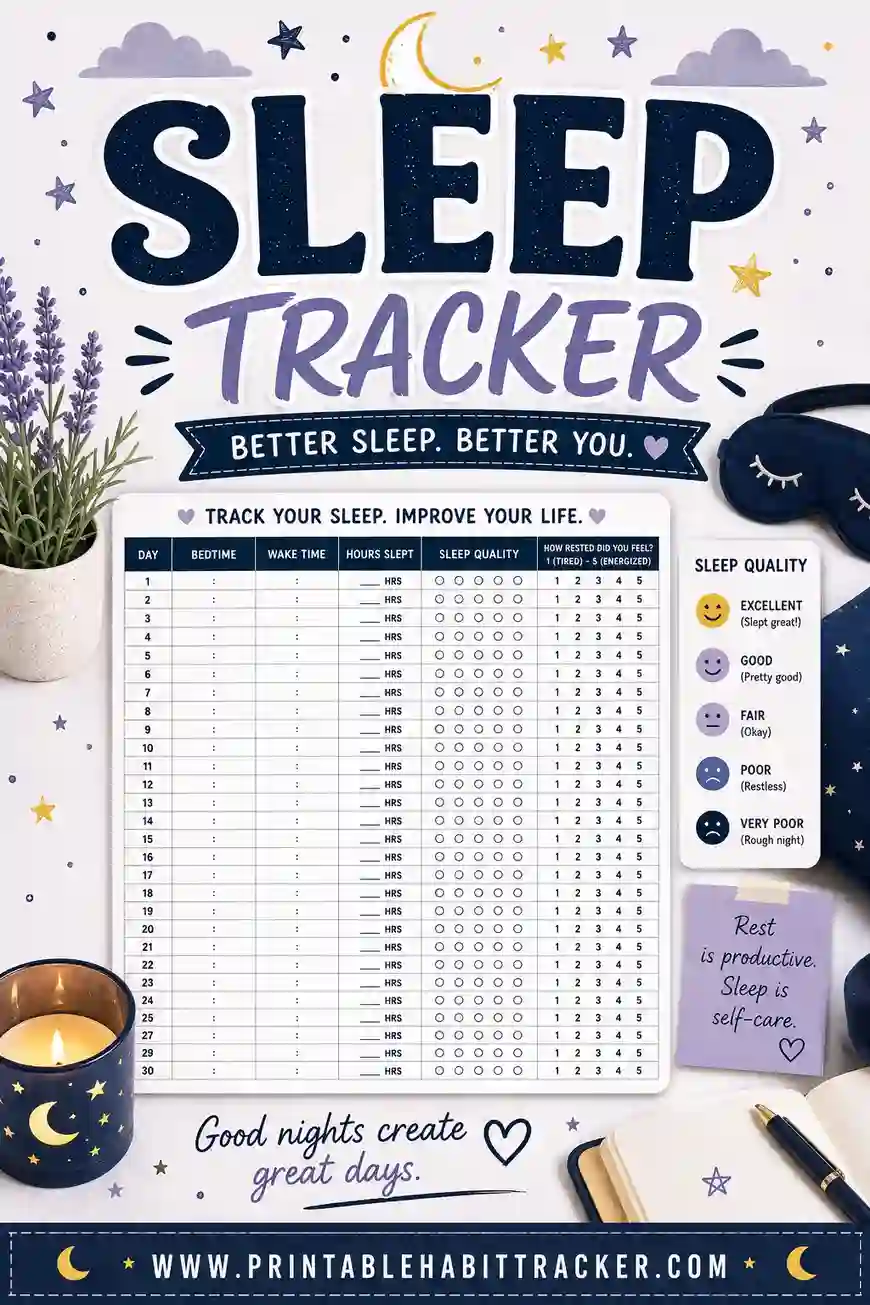
Add a "lights out on time" row and a mood row, and the chart quietly becomes sleep data. If your child's sleep needs a closer look, a proper sleep tracker pairs beautifully with this chart.
How to Run Bedtime With the Chart
- Introduce it in daylight. Explain the chart at breakfast, not at 7:55 p.m. Let your child decorate it — ownership starts before night one.
- They check the boxes, not you. The marking is the motivator. Your job is narrating: "Pajamas done — go get that box!"
- Same start time nightly. The chart holds the sequence; you hold the schedule. A routine that starts at 7 on Monday and 8:40 on Tuesday isn't one routine — it's two arguments.
- Point at the chart, not the child. When things stall, "what does your chart say is next?" keeps you the ally and the chart the boss.
- Sunday review, small reward. Count the completed nights together, celebrate, and hang the fresh week's chart.
Weekends, travel, and other routine-breakers
Decide the weekend rule up front and write it in the notes box: either the routine runs seven nights (steadiest results, and what sleep researchers recommend), or Friday and Saturday get a marked "late night" pass with the steps still done in order — just later. For travel, bring the chart or snap a photo of it; a familiar sequence in an unfamiliar bed is exactly when the routine earns its keep. What kills charts isn't the exception — it's the undecided exception that turns into a nightly negotiation.
Printing Tips for a Chart That Survives Bedtime
- Hang it where the routine happens — bathroom door or bedroom wall at your child's eye level, not the kitchen.
- Laminate it if you'd rather wipe than reprint; dry-erase markers survive toothpaste-splash zones better than paper.
- Cardstock beats paper for anything a toddler will touch nightly.
- Big squares matter — small hands checking small boxes ends in frustration. The color-in style prints generously sized boxes.
- Print a spare. The night the chart tears is not the night to renegotiate bedtime.
Common Bedtime Chart Mistakes
- Too many steps. Six rows maximum. A ten-step bedtime chart is a chart about giving up.
- Steps out of order. The chart must match reality top to bottom. If the printed order says bath-then-teeth, do bath-then-teeth every night.
- Using it only on hard nights. Charts work through repetition. Every night, including the easy ones — especially the easy ones.
- Turning boxes into threats. "No checkmark for you!" makes the chart the enemy. Boxes get earned, never taken; a rough night just gets fewer checks and a fresh start tomorrow.
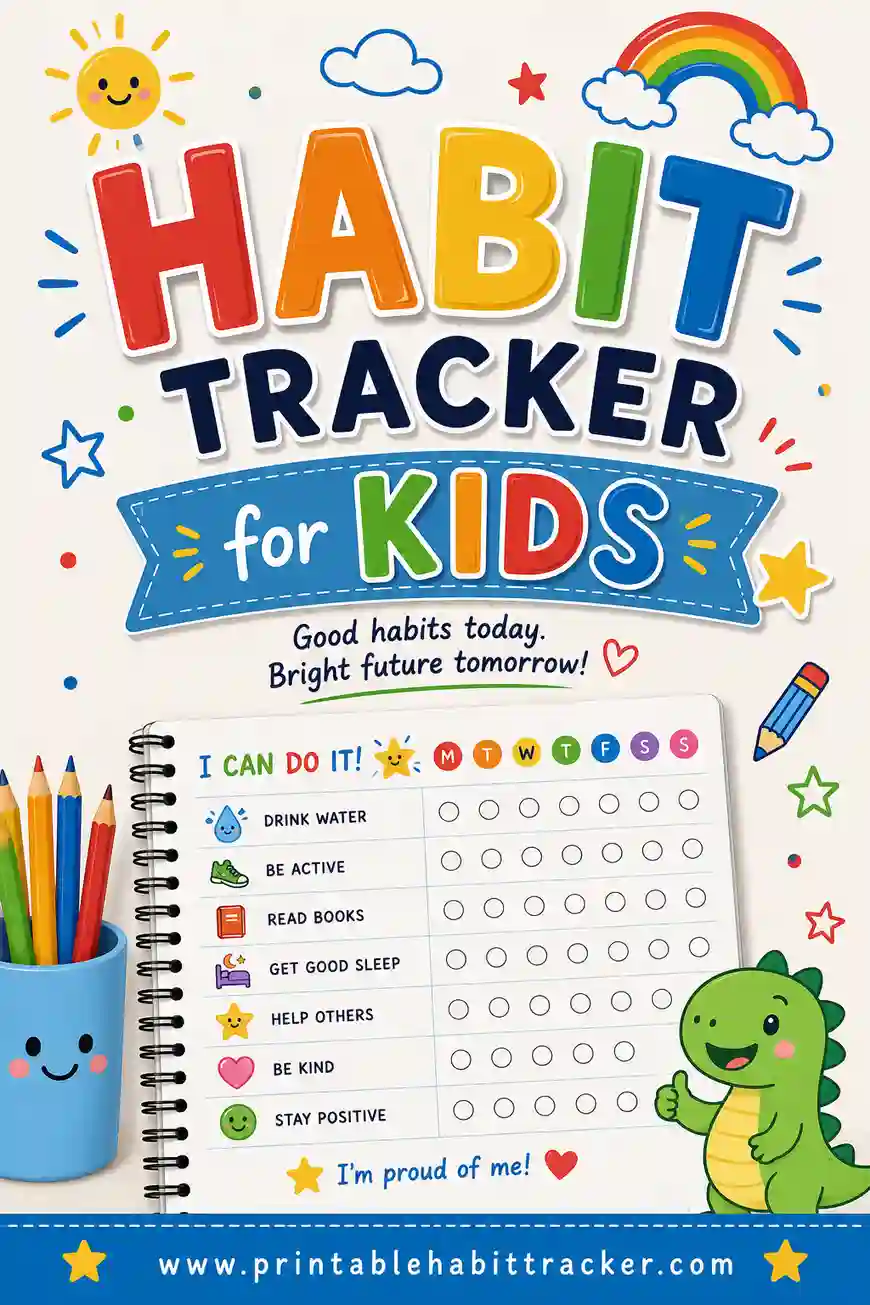
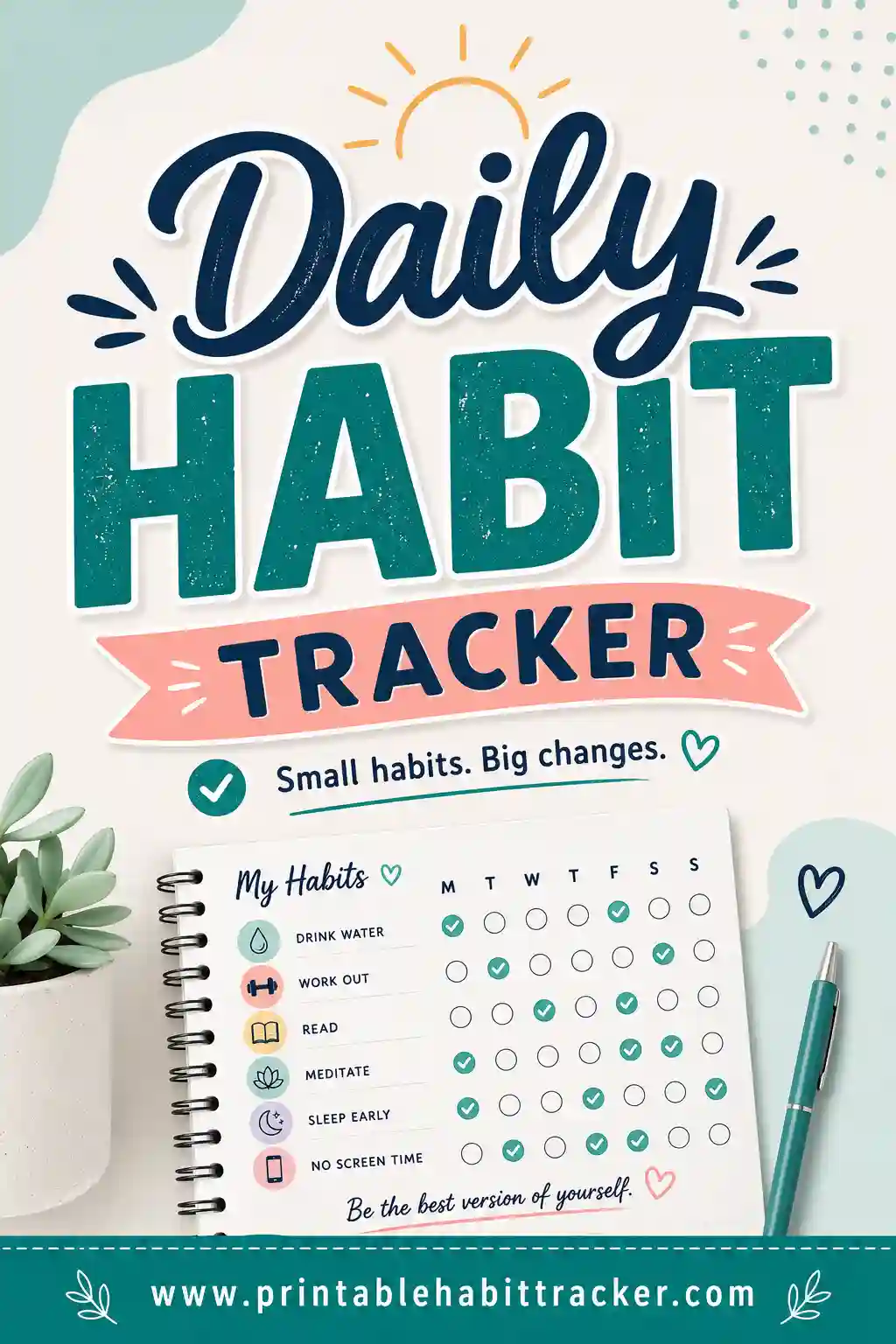
- Never retiring it. When the routine runs itself — usually a couple of months in — the chart has done its job. Fold it into a broader habit tracker for kids covering the whole day, and let bedtime be automatic.
A Sample Filled-In Bedtime Routine Chart
A week for a five-year-old, mid-Saturday:
| Step | Mon | Tue | Wed | Thu | Fri | Sat | Sun |
|---|---|---|---|---|---|---|---|
| Toys in the bin | ✔ | ✔ | ✔ | ✔ | |||
| Bath | ✔ | ✔ | ✔ | ✔ | |||
| Pajamas on | ✔ | ✔ | ✔ | ✔ | ✔ | ||
| Brush teeth | ✔ | ✔ | ✔ | ✔ | ✔ | ||
| Story time | ✔ | ✔ | ✔ | ✔ | |||
| Lights out by 7:30 | ✔ | ✔ | ✔ | ✔ |
Reward box: "25+ boxes = pancakes Sunday." Thursday skipped tidy-up and lights-out slipped — and nobody relitigated it, because Friday's clean column was already waiting. Currently at 27: pancakes are safe, and everyone knows it before the weekend.
Frequently Asked Questions
Is the bedtime routine chart really free to print?
Yes — the builder is completely free with no sign-up and no watermark. Build the chart, print or save as PDF, and reprint every week or whenever the routine changes.
What age should we start a bedtime chart?
Around age two and a half to three, with three or four picture-simple steps and stickers. Sweet spot is three to seven — old enough to follow a sequence, young enough to find checking boxes thrilling. Older kids do better with streaks and a later-bedtime privilege as the reward.
How long until bedtime gets easier?
Most families feel a difference within a week and a real shift by week three — the routine has to repeat enough times to become "just how nights work." The chart's job is making sure those repetitions actually happen identically.
What if my child refuses a step?
Don't force the box — just move on, leave it empty, and let the week's total tell the story at Sunday's review. Empty boxes are information, not ammunition. If one step gets refused nightly, the step (or its timing) probably needs adjusting, and the chart just showed you which one.
Can I make a printable bedtime routine chart for two kids at once?
Yes — either print one chart per child (each with their own name and steps) or build one shared chart with color-coded rows and a printed key. Separate charts usually work better past age four; nobody wants their brother's checkmarks in their column.
Ready for Calmer Bedtimes?
Write down tonight's routine in order, open the free bedtime routine chart builder, pick the weekly layout and big squares, and print. It's free, it takes five minutes, and tomorrow night — for the first time — "what's next on your chart?" can do the reminding while you just enjoy the story at the end.