Sticker Chart Printable: Free Custom Charts Kids Love
A sticker chart printable is a printed grid of boxes where your child earns a sticker for each win — brushing teeth, sharing with a sibling, using the potty, finishing homework. The stickers are the whole engine: kids will do a surprising amount of cooperating for the right to press a sparkly dinosaur into a box. The easiest way to get a chart with properly sticker-sized boxes is the free printable habit tracker builder: type your child's goals, pick the big color-in square style, and print.
Want one right now? Open the free builder, add two or three goals, choose big boxes and a bright theme, and print. No sign-up, no watermark — just add stickers.
What Is a Sticker Chart?
A sticker chart is positive reinforcement in its purest, most toddler-approved form. The chart lists what earns a sticker, provides boxes to put them in, and turns invisible good behavior into a colorful display your child can show off.
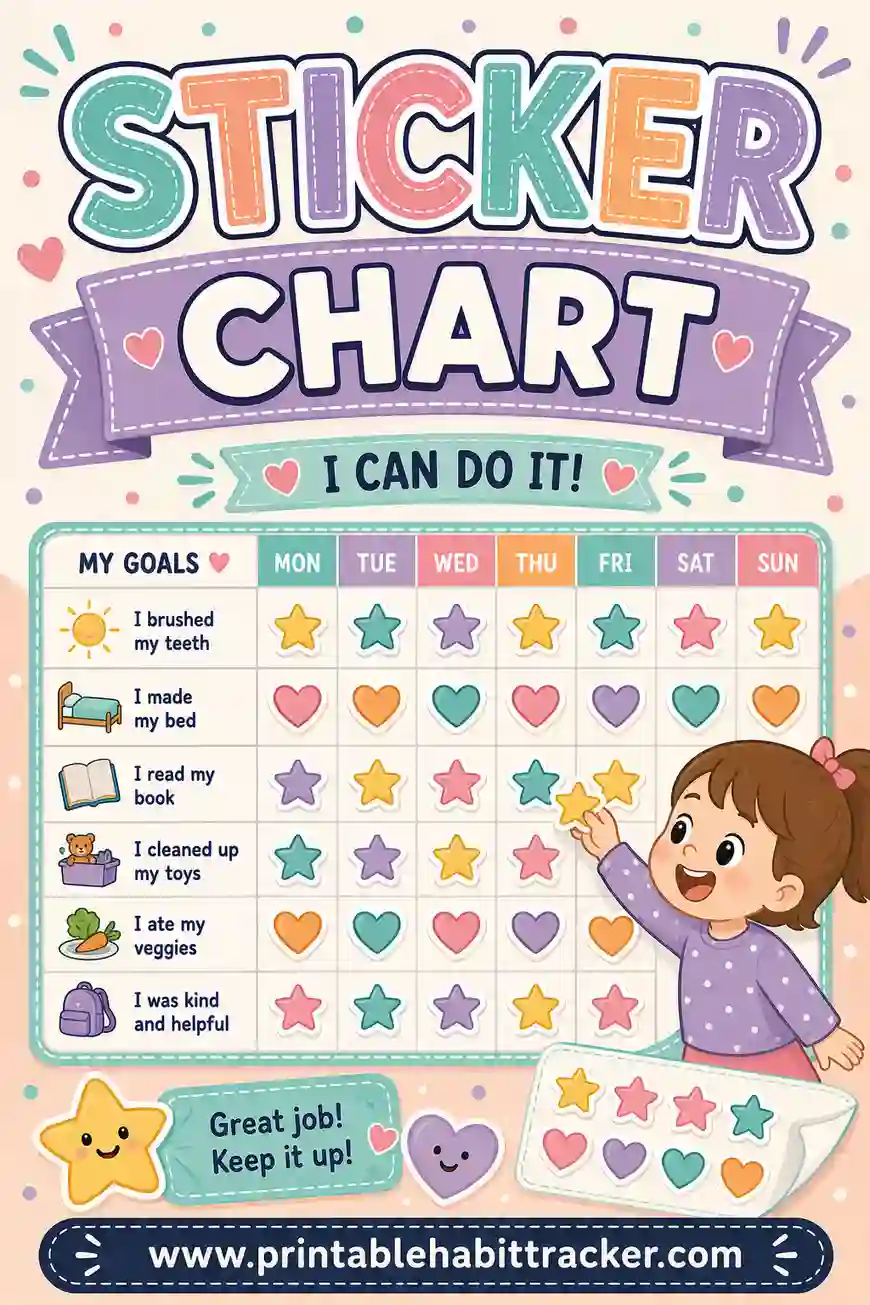
The format you'll build here is a row-and-column grid: each goal gets a row, each day gets a column, and every success gets a sticker in the matching box. Compared with the decorated poster charts you can download, the grid version has a practical edge — it holds a whole week of multiple goals on one page, and the filling rows show streaks, which even four-year-olds learn to protect ("I can't skip teeth tonight, I'll break my line!").
Whatever you're working on — morning routines, kindness, potty training, chores — the same grid adapts. You just change what the rows say in the free builder.
Why Sticker Charts Work So Well
There's real behavioral science under the glitter. Sticker charts succeed because they hit every requirement of how young kids learn.
- The reward is instant. The sticker arrives seconds after the behavior, which is exactly the feedback window a young brain connects.
- The reward is tangible. Points and promises are abstract; a sticker is a real shiny thing your child chose and placed.
- Progress accumulates visibly. Every past win stays on display. The chart becomes a growing trophy, not a fleeting treat.
- It redirects your attention too. With a chart on the wall, you start scanning for stickerable moments — and kids bloom under that kind of noticing.
One honest caveat: sticker charts motivate the start of a habit; they don't have to run forever. The goal is for the routine to become automatic and the chart to retire with honors. That's not the system failing — that's it finishing.
What to Put on a Sticker Chart
Two or three rows is plenty. Pick goals your child can win at least once a day, and phrase them so a sticker moment is unmistakable.
| Goal (row) | Great for ages | Sticker moment |
|---|---|---|
| Brushed teeth | 2+ | Morning and night |
| Put toys away | 2–6 | After tidy-up time |
| Used the potty | 2–4 | Every success |
| Got dressed by myself | 3–6 | Each morning |
| Was kind to my brother/sister | 3–10 | Each caught moment |
| Tried a new food | 3–10 | One brave bite counts |
| Read (or was read to) | 4–12 | After story time |
| Homework done before play | 6–12 | Each school day |
One chart, one mission (for beginners)
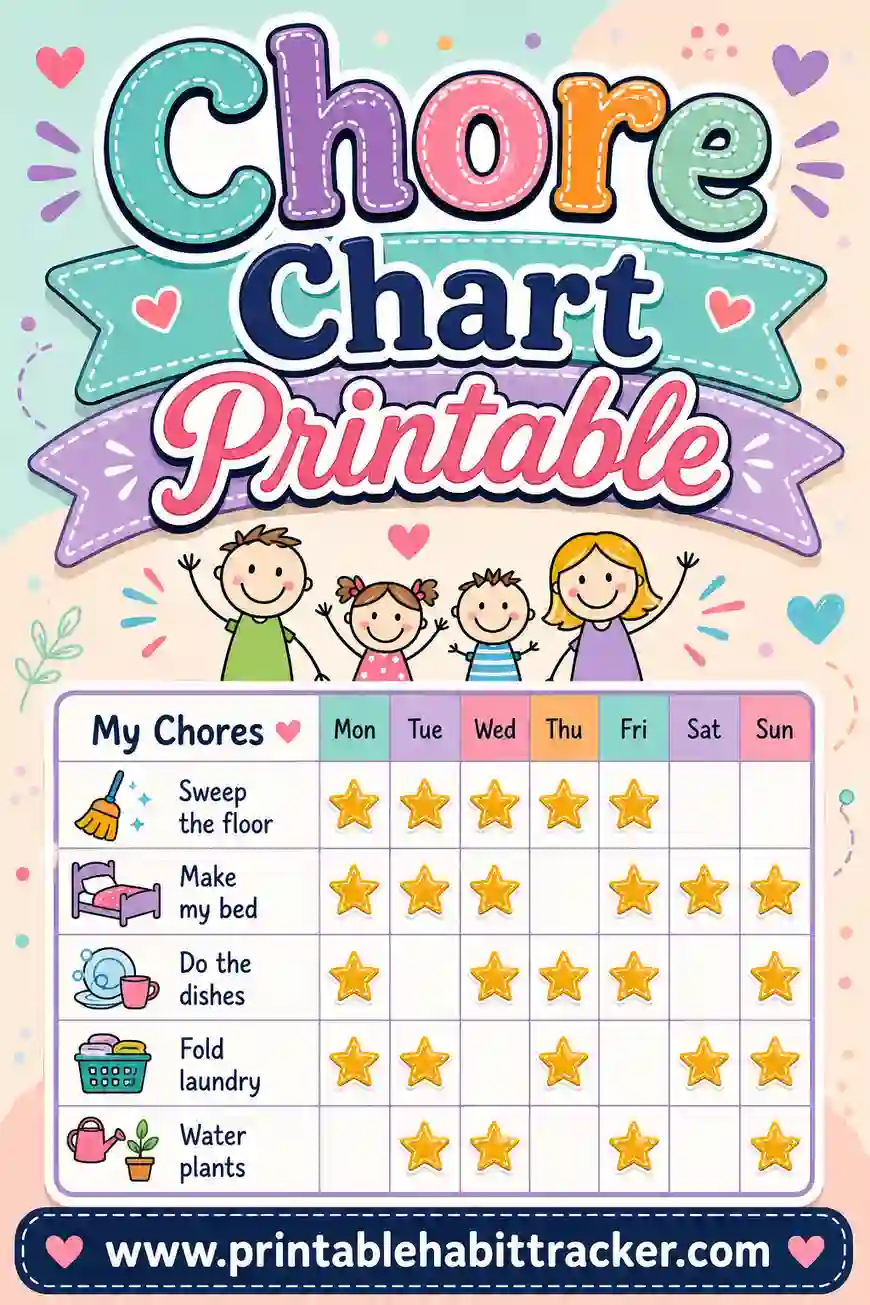
If this is your child's first chart, consider a single row — one goal, big boxes, quick wins. A focused chart teaches the sticker game itself. Once your child runs to the chart after each success, you can graduate to a multi-row weekly grid, or a full chore chart for older kids.
How to Make a Sticker Chart in 4 Steps
- Pick the goals with your child. Two or three rows, phrased as wins. Put their name in the title — "Ava's Sticker Chart" is instantly theirs.
- Choose the weekly layout. Goals down the side, seven days across. A week fills fast enough to stay exciting.
- Pick the color-in square style. This prints the biggest boxes — sized right for standard reward stickers. Choose a bright theme, or Classic black-and-white if your stickers bring the color.
- Print and hang it low. Child height, high-traffic wall, sticker sheet stored in reach (or in your pocket, if your child is a "decorate everything" type).
Add the reward box extra if a full chart earns something — write "Full chart = zoo trip!" right on the sheet so the goal is always visible.
Sticker Chart Ideas by Situation
The routine chart
Morning or bedtime steps as rows: dressed, teeth, shoes, backpack. The chart walks your child through the sequence, and the stickers pay them for it. Most families' best first chart.
The potty chart
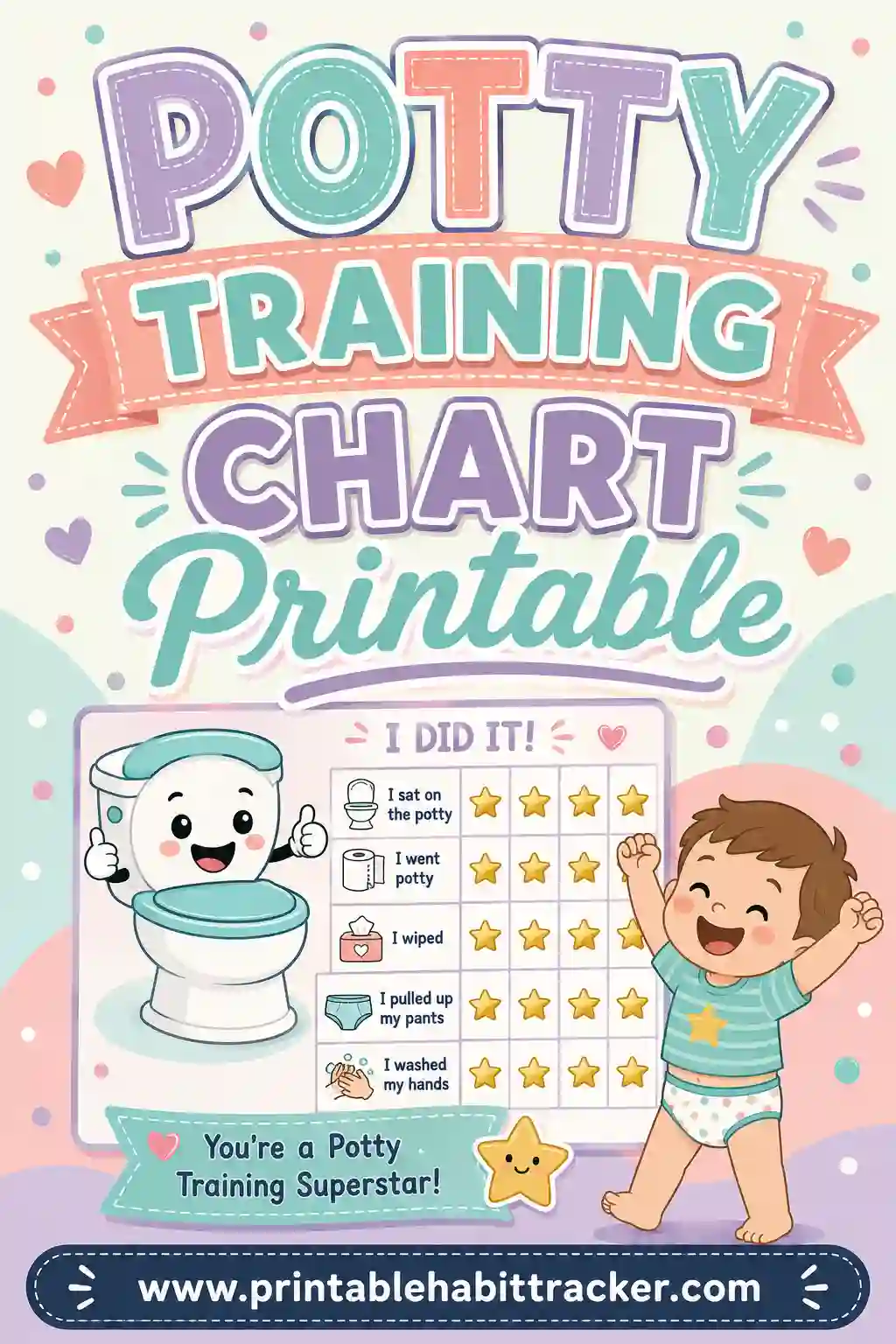
One or two rows, maximum-size boxes, stickers within arm's reach of the potty. The complete playbook is in the potty training chart guide.
The kindness chart
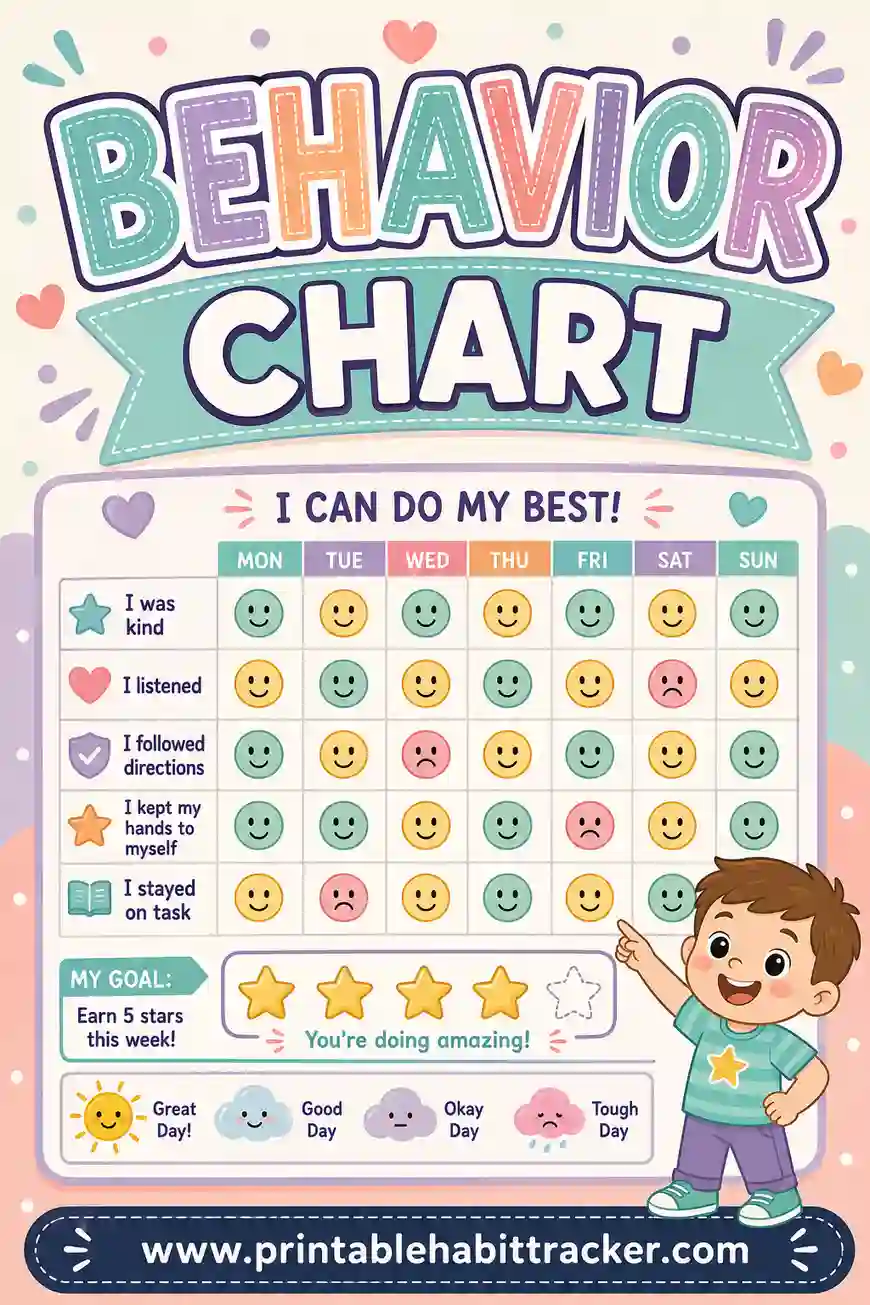
Rows like "used kind words" and "helped someone without being asked." Sticker moments are caught, not scheduled — which trains the adults to watch for good behavior. Wonderful for sibling-conflict seasons; for tougher patterns, see the full behavior chart guide.
The team chart
One shared row for the whole family: "everyone ready by 8:00." A sticker only lands when the team wins. Kids become enthusiastic (and loud) enforcers of the group goal.
The sticker reward chart
Ten boxes, one sticker each time the goal happens, prize when the row is full. This countdown format is really a sticker reward chart — the stickers become currency toward a payoff. Turn on the reward box in the builder and write the prize right on the sheet, so the goal stays in view all week.
Sticker Strategy: Small Details That Matter
- Let them choose the stickers. The sticker aisle is your motivation store. A sheet they picked beats a nicer sheet you picked.
- Keep chart stickers exclusive. If the same stickers show up in party bags all week, chart stickers lose their magic.
- They place it, always. Crooked and overlapping is fine. Placement is half the payoff.
- Praise the behavior, not just the sticker. "You got dressed all by yourself — go grab your sticker!" keeps the words attached to the win.
- Never peel one off. A sticker chart only moves forward. Removing stickers as punishment kills the whole system in one move.
A Sample Sticker Chart Week
Here's a real-world example for a four-year-old — three rows, one of them nearly guaranteed, exactly as recommended. Copy it into the builder and make it yours.
| Goal | Mon | Tue | Wed | Thu | Fri | Sat | Sun |
|---|---|---|---|---|---|---|---|
| Brushed my teeth | ⭐⭐ | ⭐ | ⭐⭐ | ⭐⭐ | ⭐ | ⭐⭐ | ⭐⭐ |
| Toys away before dinner | ⭐ | ⭐ | ⭐ | ⭐ | ⭐ | ||
| Tried one bite of dinner | ⭐ | ⭐ | ⭐ | ⭐ | ⭐ | ⭐ |
Reward box: "Full teeth row = pick Saturday's playground." The teeth row can earn two stickers a day (morning and night), which keeps the chart lively even when the harder rows have gaps. And look at the gaps — Tuesday's toys and Wednesday's brave bite just didn't happen, and the week still ended in a win. That's what a healthy sticker chart looks like: mostly full, never perfect.
One practical tip from the trenches: fill the chart in at the moment of the win, not in a batch at bedtime. Batch-stickering turns the chart into accounting; instant stickering keeps it a celebration. If you're out of the house, a quick "that's a sticker when we get home!" holds the magic surprisingly well — just make sure you actually follow through.
Printing Tips for Sticker-Ready Charts
- Use the color-in square style — its boxes fit standard 1/2" to 3/4" reward stickers with room to spare. Landscape orientation makes them bigger still.
- Cardstock feels prize-like and stands up to enthusiastic sticker-pressing.
- Laminate for reusability only if your stickers peel off plastic cleanly — test one corner first. Otherwise, fresh paper weekly is the simpler path.
- Print a stack. A sticker chart printable costs nothing to reprint, so keep three or four blanks ready for Sunday resets.
- Save the PDF and the exact same chart is one click away forever, even from your phone.
Common Sticker Chart Mistakes
- Goals too hard to win daily. A sticker-less day is a chart-killing day, especially early. Include at least one near-guaranteed row.
- Sticker inflation. If one sticker becomes two becomes five per win, the currency collapses. One win, one sticker, hold the line.
- Backing every sticker with a prize. The sticker is the prize for littles. Save the extras for full rows or full charts, and keep them small.
- Using it for behavior you're angry about. Charts built in frustration become punishment logs. Build it on a calm day, aimed at wins.
- Running it forever. When the routine is automatic and stickers feel like paperwork, celebrate the final full chart and retire it. Habits should eventually pay in pride, not adhesive.
Frequently Asked Questions
Is the sticker chart printable free?
Yes — completely. The builder has no sign-up and no watermark. Make your chart, print it or save it as a free sticker chart printable PDF, and reprint fresh copies every week.
What size stickers fit the chart?
Standard reward stickers — roughly 1/2" to 3/4" — fit comfortably in the color-in square style boxes, especially on a landscape page. Giant 1.5" stickers work best on a one-row or two-row chart, which prints the tallest boxes.
What ages do sticker charts work for?
Prime years are about 2 to 8. Toddlers need instant stickers and one simple goal; school-age kids handle multi-row weekly grids. Past 8 or so, most kids prefer checkmarks and a points-style reward chart — same grid, but the marks buy privileges instead of being the prize — which feels less babyish.
How many stickers before a reward?
For ages 2–4, the sticker itself is usually enough, with maybe a tiny treat for a full row. For 5–8, a full week or a set count (ten stickers = prize) works well. Keep prizes small and quick — an inflated prize economy is the fastest way to break a chart.
My child lost interest in the sticker chart. Now what?
Totally normal. Refresh something: new sticker theme, new chart color, a new goal they choose, or a team chart with a sibling. If the routine you were building is now happening anyway — that's not lost interest, that's mission accomplished.
Ready to Print Your Sticker Chart?
Grab your child, pick two goals and a sticker sheet, and open the free sticker chart builder. Big boxes, bright theme, their name at the top — printed in under five minutes. It's free, there's no sign-up, and by bedtime tonight there could be a very proud kid pressing the first sticker into place.