Potty Training Chart Printable: Free Custom Charts That Work
A potty training chart printable is a simple chart you hang by the toilet: a few potty wins listed in rows ("sat on the potty," "went pee," "washed hands"), a box for each day, and a sticker or checkmark every time your toddler succeeds. It turns a stressful milestone into a game your child wants to win — and it gives them something to be proud of on day one, even before the first real success. You can make one that fits your child exactly with the free printable habit tracker builder: type in the potty steps you're working on, pick a cheerful style, and print.
Want it now? Open the free builder, add two or three potty steps, choose big color-in boxes (perfect for stickers), and print. No sign-up, no cost, and you can reprint a fresh potty training chart every week of the journey.
What Is a Potty Training Chart?
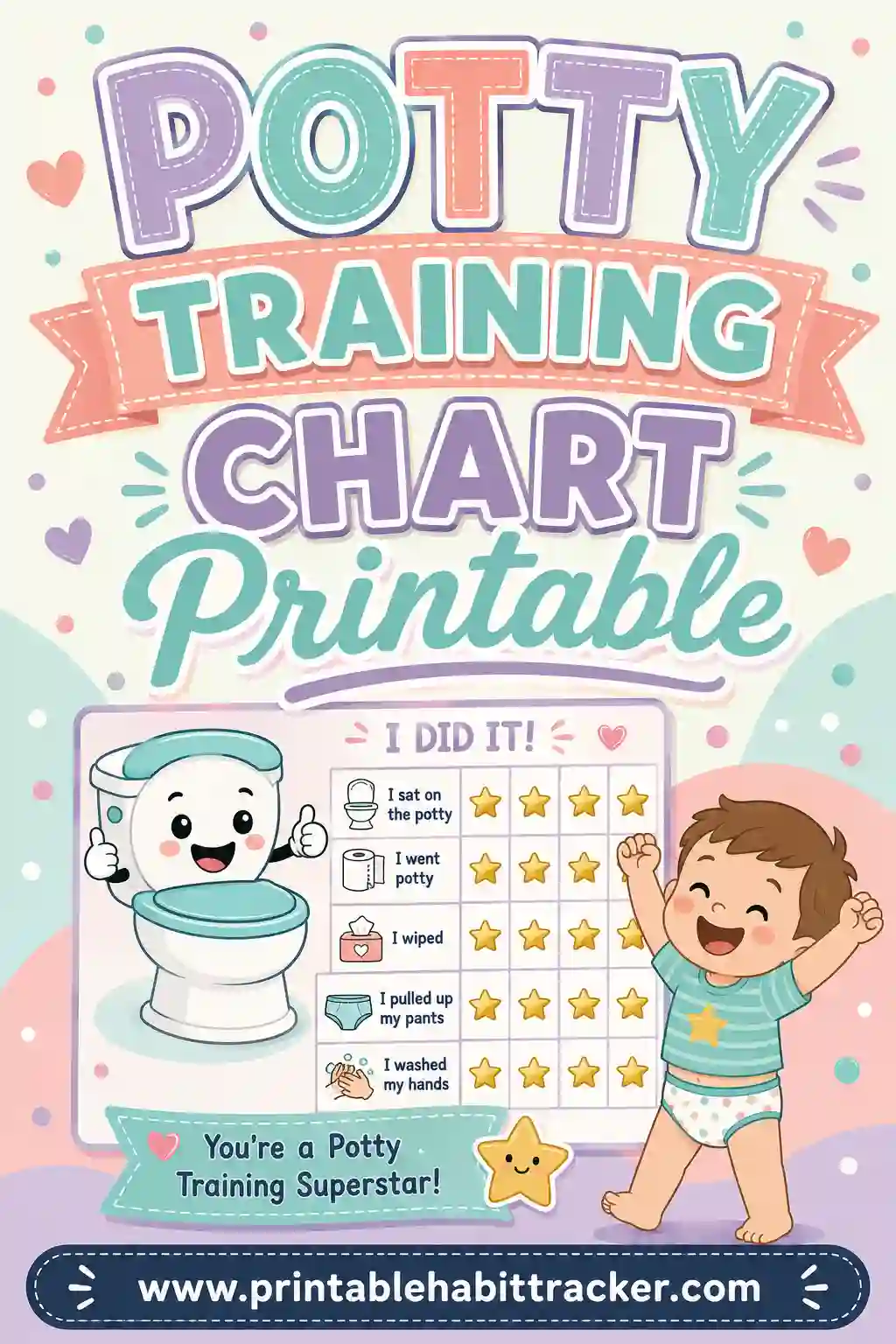
It's a visual record of potty wins, made for a person who can't read yet but understands stickers perfectly. The classic version you see online is a decorated poster with a path or a rainbow. The version you'll build here is a row-and-column chart — each potty step gets a row, each day gets a column of big boxes — and honestly, it has a real advantage: it tracks every step of the routine, not just the headline event.
That matters because early potty training is mostly near-misses. "Told mommy I need to go" and "sat on the potty for a minute" are huge wins for a two-year-old even when nothing happens. A chart with rows for those small steps means your child earns stickers from the very first day, and a child who's earning stickers is a child who wants to try again.
Because the builder is fully custom, the chart uses your child's name, your family's potty words, and exactly the steps you're working on this week.
Why a Chart Helps With Potty Training
Potty training runs on motivation, and toddlers are motivated by two things: doing it "all by myself" and getting something shiny right now. A potty training chart delivers both.
- Instant reward. The sticker happens seconds after the win, which is exactly the timescale a toddler brain needs.
- Visible progress. A row filling up with stickers tells your child a story: "I'm getting good at this." Confidence is half of potty training.
- A script for you. On hard days, the chart gives you something positive to point to instead of the accident on the floor.
- Consistency across caregivers. Grandma and daycare can see exactly what earns a sticker, so the rules stay the same everywhere.
One honest note: a chart doesn't potty train a child — readiness, routine, and your patience do. The chart is the cheering section. It makes the process happier, and happier almost always means faster.
What to Put on the Chart
Keep it to two or three rows for a beginner. Here are the classic potty steps, roughly in the order most kids master them.
| Row (potty step) | When to use it | How to mark it |
|---|---|---|
| Sat on the potty | Day one — trying counts | Sticker every sit |
| Told a grown-up I need to go | Building awareness | Sticker even if it's too late |
| Went pee in the potty | The core win | Sticker + big cheer |
| Went poop in the potty | Usually comes later | Sticker + extra praise |
| Washed hands | Wrap up the routine | Sticker after washing |
| Dry all morning / all day | Later stage | One proud sticker at check-in |
Start with "sat on the potty" no matter what. It guarantees stickers on day one, and day-one success sets the tone for the whole journey.
Graduate the chart as your child grows
Week one might be "sat on the potty" and "washed hands." A few weeks in, retire the easy rows and add "stayed dry all day." Because your chart is saved in the browser, editing a row and reprinting takes under a minute — the chart grows right alongside your child.
How to Make a Potty Training Chart in 4 Steps
- Type the potty steps. In the free builder, enter two or three steps, one per line. Put your child's name in the title — "Mia's Potty Chart" beats a generic header every time.
- Pick the weekly layout. Seven days across, potty steps down the side. A week is the right size chunk for potty training — long enough to see progress, short enough to feel fresh.
- Choose big color-in squares and a happy theme. The color-in style prints large boxes that fit standard reward stickers perfectly. Blush, Sunset, and Ocean are favorites with toddlers.
- Print and hang it low. Tape it to the bathroom wall at your child's eye level, next to the potty, with the sticker sheet close by.
Turn on the reward box extra and write the week's goal in it — "Full chart = trip to the park!" — so the bigger prize is always in view.
Potty Chart Ideas That Keep It Fun
The potty sticker chart
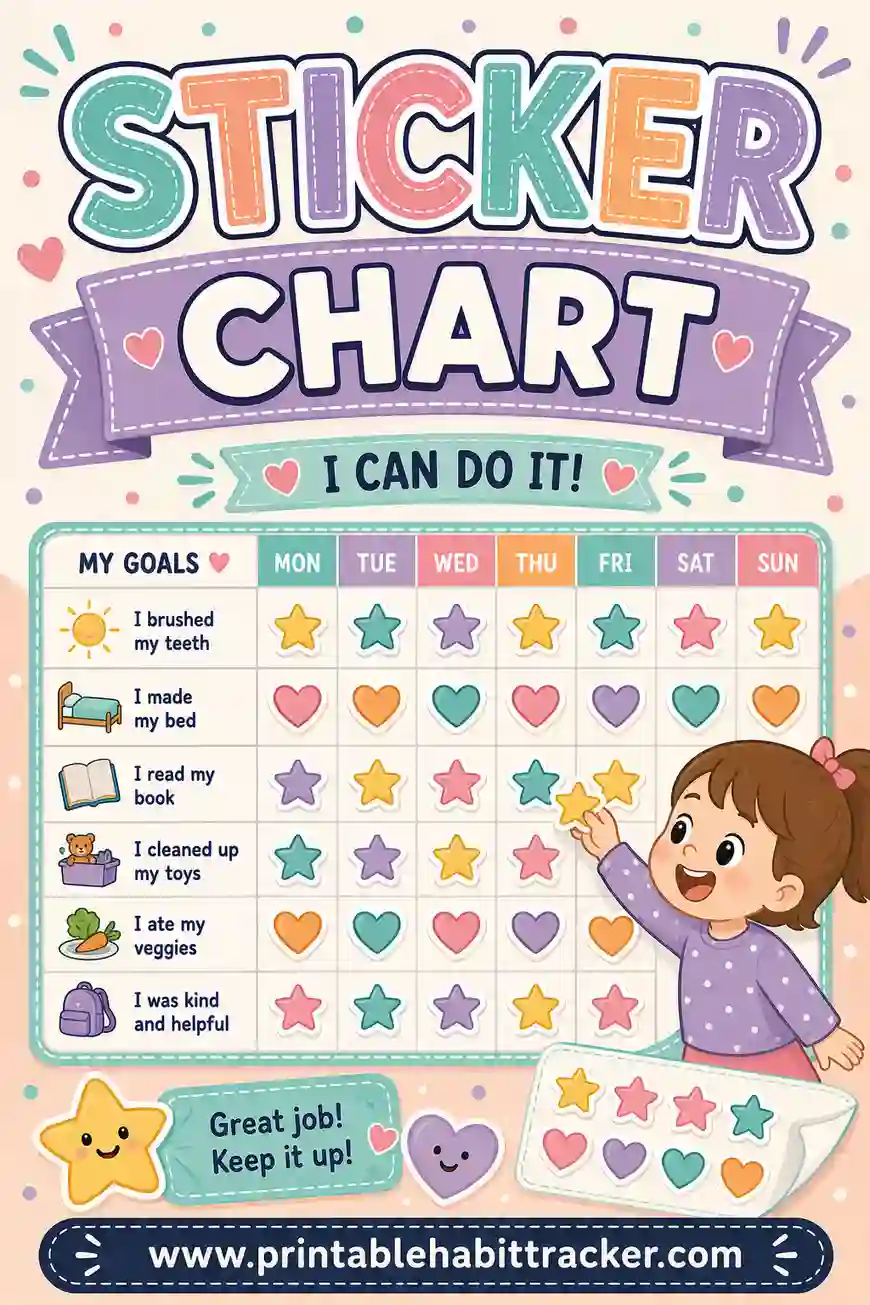
Every box is a sticker spot. Let your child choose the sticker sheet at the store — dinosaurs, sparkles, trucks — and the stickers themselves become the reward. A potty sticker chart is the most popular version by far; for more on running one well, see the sticker chart guide.
The color-in chart
No stickers on hand? Let your child color a box with a crayon after each win. Coloring is its own little celebration, and there's nothing to run out of.
The "big kid steps" chart
Rows for the whole routine: pants down, sit, go, wipe, flush, wash hands. Great for kids who love doing every step themselves — and it quietly teaches the full sequence.
The weekly reset
Print a fresh chart every Sunday. A new blank chart is exciting, and it wipes away any rough patches from last week. Every week starts undefeated.
Gentle Advice for the Hard Days
Every parent hits a wall during potty training — the regression week, the poop standoff, the day of five accidents. A few things that help:
- Never take stickers away. The chart only moves forward. An accident just means no sticker this time; the earned ones are safe forever.
- Shrink the step until success is easy. If "went pee in the potty" isn't earning stickers, add "sat on the potty" back. Success at anything rebuilds momentum.
- Stay boring about accidents. Clean up, "we'll try again next time," done. Big reactions (even frustrated ones) can make things worse. If the struggle is more about willfulness than potty skills, a positive behavior chart may be the better fit.
- Pause if you need to. If it's tears every time, shelve the chart for two weeks and try again. Readiness isn't a race, and starting over is not failing.
- Celebrate the trend, not the day. Point at the week: "Look how many stickers you got!" One bad afternoon disappears inside a good week.
A Sample First-Week Potty Chart
Here's what a beginner's chart might look like — simple enough to copy straight into the builder tonight.
| Potty step | Mon | Tue | Wed | Thu | Fri | Sat | Sun |
|---|---|---|---|---|---|---|---|
| Sat on the potty | ⭐ | ⭐⭐ | ⭐ | ⭐⭐⭐ | ⭐ | ⭐⭐ | ⭐⭐ |
| Went pee in the potty | ⭐ | ⭐ | ⭐ | ⭐⭐ | |||
| Washed my hands | ⭐ | ⭐⭐ | ⭐ | ⭐⭐ | ⭐ | ⭐⭐ | ⭐⭐ |
Reward box: "10 stickers = choose Friday's dessert." Notice what this chart shows a discouraged parent midweek: pee successes are spotty, but the sitting row is filling steadily — which means the routine is taking hold and the successes will follow. That's the quiet power of tracking the small steps, not just the headline.
Printing Tips for a Bathroom-Proof Chart
- Laminate it or slide it into a sheet protector — bathroom humidity and toddler splashes are real. Use a dry-erase marker, or stick the stickers right on the plastic.
- Print several copies at once so a fresh chart is always ready for Sunday.
- Letter or A4, portrait fits the wall space next to most toilets; landscape gives bigger boxes if you have room.
- Bold, bright themes print cleanly and look like a "real" prize chart to a toddler.
- Save the PDF so you can reprint from your phone or laptop without rebuilding.
Common Potty Training Chart Mistakes
- Starting with only the hardest row. If the only sticker is "pee in the potty," a beginner may go days without one. Always include a gimme row at first.
- Prizes that are too big. A toy for a perfect week creates pressure and heartbreak. Stickers now, small treat at week's end, keep it light.
- Comparing siblings. Every child trains on their own clock. Give each their own chart and never race them.
- Letting the chart go stale. If stickers stop being exciting, change the sticker theme or the chart colors. Novelty is fuel.
- Treating a bad week as proof it's not working. Regressions are a normal chapter of potty training, not the end of the story.
Frequently Asked Questions
Is the potty training chart printable free?
Yes. The builder is completely free with no sign-up and no watermark. Make your chart, print it or save it as a free potty training chart printable PDF, and reprint fresh copies every week for the whole journey.
What age do potty training charts work for?
Typically 18 months to about 4 years — whenever your child is showing readiness signs and understands cause and effect ("I go potty, I get a sticker"). Under two, keep it to one row and instant stickers. Threes and fours can handle multi-step charts and end-of-week rewards.
How many rows should a potty chart have?
Two or three to start. One easy row that guarantees early stickers ("sat on the potty"), one core row ("went pee"), and maybe "washed hands." Add harder rows as the easy ones become automatic.
Should I give a reward with every sticker?
The sticker usually is the reward — toddlers genuinely love them. Some families add a tiny extra (one chocolate chip, a stamp on the hand) for the tougher rows. Save anything bigger for a full row or full week, and keep it modest — a reward chart works best when the prizes stay small and quick.
What if my child has a bad week?
Print a fresh chart and shrink the steps so stickers come easily again. Never carry a bad week forward — every Sunday is a clean slate. If the resistance is constant, take a two-week break entirely; charts work best on a child who's ready.
Ready to Print Your Potty Training Chart?
Pick two or three potty steps, open the free builder, choose big sticker-friendly boxes and a color your child loves, and print. It's free, there's no sign-up, and tonight's first sticker might be the moment potty training turns from a battle into a game. Prefer something simpler? A one-row potty chart — just "used the potty" with big boxes — works beautifully too. And when training is done, the same grid graduates into a habit tracker for kids for teeth, tidying, and bedtime. Good luck — you've got this, and so do they.