Behavior Chart Printable: Free Custom Charts for Home & School
A behavior chart printable is a printed grid that tracks the specific behaviors you want to see more of — "used kind words," "listened the first time," "hands to myself" — with a box your child checks or stickers each time they succeed. Done right, it's not a punishment tool at all; it's a way to catch kids being good and make those wins impossible to miss. You can build one that fits your child in minutes with the free printable habit tracker builder: list the behaviors as rows, pick days across the top, and print.
Want one now? Open the free builder, type two or three target behaviors, choose a friendly style, and print. No sign-up, no watermark — and when a behavior improves, you can swap it out and reprint free.
What Is a Behavior Chart?
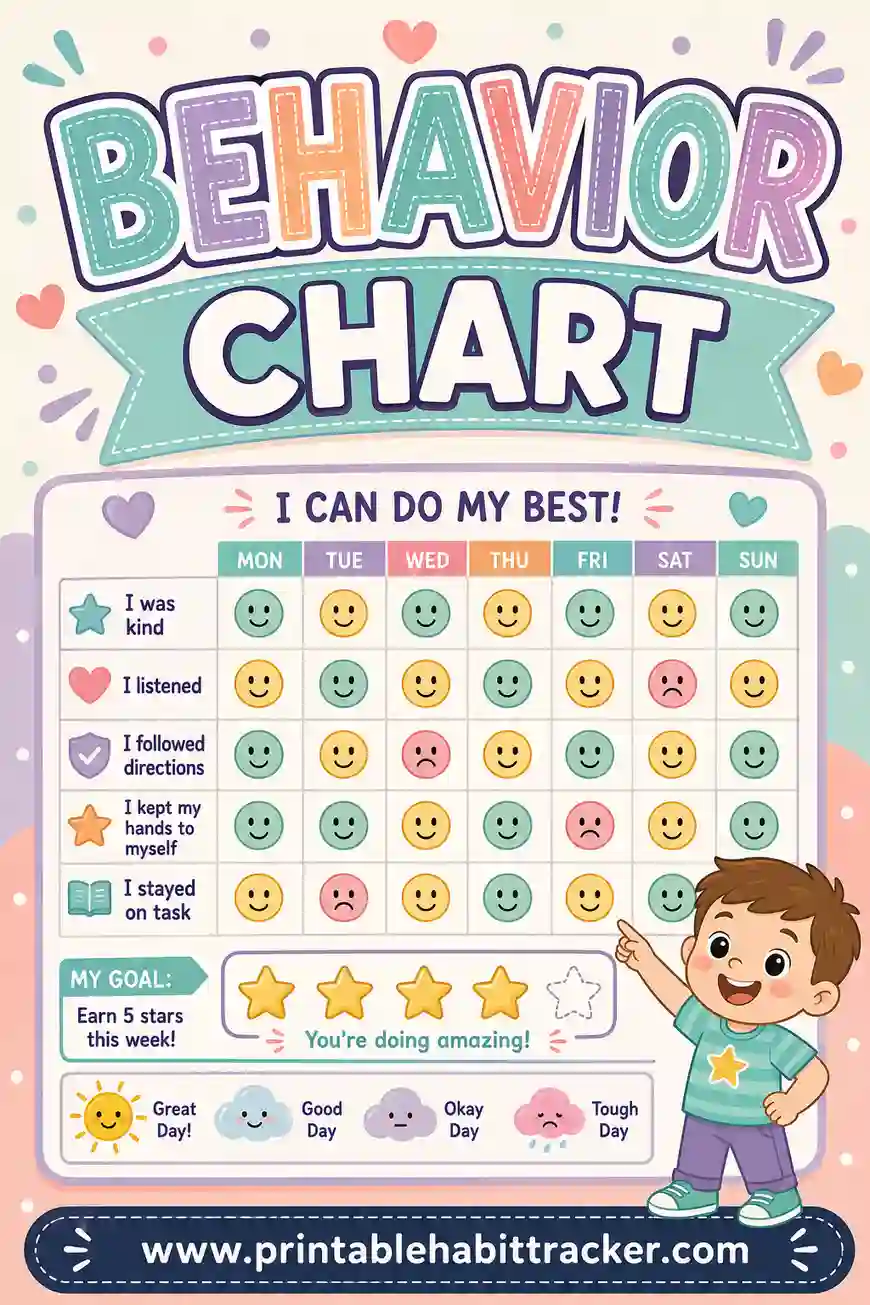
A behavior chart makes expectations visible and progress countable. Each row is one specific behavior you're working on; each column is a day (or a part of the day); each checked box is one concrete success. Over a week, the chart becomes a picture of how things are actually going — which is usually better than the hard moments make it feel.
You may know the classroom "clip chart" version, where a clothespin moves up and down a colored ladder all day. The row-and-column chart you'll build here works differently, and many parents and teachers now prefer it: it only moves forward. There's no public demotion, no red zone — a tough hour simply earns no check, while every success gets recorded and kept. Kids respond better to a scoreboard they can only climb.
Because you make it in the free builder, the chart targets your child's actual challenges instead of a generic list — that specificity is most of the battle.
Why Behavior Charts Work (When They're Positive)
Behavior charts have a mixed reputation, and the honest reason is that punishment-flavored charts backfire. Positive ones, though, work with the grain of how kids learn.
- Attention feeds behavior. Kids repeat what gets noticed. A chart forces the adults to notice the good stuff, which quietly starves the bad stuff.
- Vague requests become concrete. "Behave" is unfollowable. "Hands to myself at the store" is a specific, checkable event a five-year-old can win.
- Progress becomes visible. In a rough season it's easy for a child to feel like "the bad kid." A row of earned checks argues otherwise, in evidence they can see.
- **It cools you down.** Tracking wins changes what you scan for. Parents often report the chart changed their own behavior first — less nagging, more catching-them-being-good.
The core rule: the chart adds checks, never removes them. The moment a chart can take things away, it becomes a threat, and threats make behavior worse.
What Behaviors to Put on the Chart
Pick two or three, phrase them positively (what to do, not what to stop), and make them specific enough that both of you know instantly whether a box gets checked.
| Instead of... | Put this row | Why it works |
|---|---|---|
| No yelling | Used a calm voice | Names the skill to practice |
| Stop hitting | Kept hands to myself | Checkable, concrete |
| Don't ignore me | Listened the first time | Clear success moment |
| Quit whining | Asked in a big-kid voice | Gives the alternative |
| No fighting with sister | Was kind to my sister | Rewards the goal, not the ceasefire |
| Stop dawdling | Ready for school by 7:45 | Measurable, time-bound |
Match the chart to the age
Ages 3–5 do best with one or two picture-simple rows checked several times a day. Ages 6–9 can handle three or four rows reviewed at set times (after school, after dinner, bedtime). Tweens do better with fewer, bigger rows and a say in choosing them — a chart imposed on a ten-year-old fails; a chart negotiated with one often works.
How to Make a Behavior Chart in 4 Steps
- Choose 2–3 target behaviors together. Kids follow charts they helped write. Phrase each row as the positive action, and put your child's name in the title.
- Pick the weekly layout. Behaviors down the side, seven days across. For younger kids who need faster feedback, make the rows time-slots instead — "calm morning," "calm afternoon," "calm evening" — so each day offers several wins.
- Choose the style. Checkboxes feel grown-up for schoolkids; big color-in squares suit littles who'd rather sticker or scribble. Add the reward box extra and write the week's goal in it.
- Print and post it. Fridge or bedroom door, at child height. Review it at the same time every day — the daily 60-second check-in is where the chart actually does its work.
Behavior Chart Formats to Try
The classic weekly grid
Three behaviors, seven days. Reviewed each evening together: "Which boxes did you earn today?" Simple, calm, effective for most families.
The part-day chart
Rows like "green morning," "green afternoon," "green evening." Younger kids can't hold out for an end-of-day verdict; three chances a day keeps hope alive even after a rough start. A bad morning can still become a two-check day.
The single-behavior intensive
One behavior, big boxes, checked every single success — great for one stubborn issue like interrupting. Aim the whole spotlight at it for two weeks, then fold it back into a normal chart.
The school-home bridge
Teachers: the same grid works for one student (rows = class expectations) or as a take-home sheet the parent initials nightly. Print a stack of free printable behavior charts, one per week, and the paper trail for conferences writes itself.
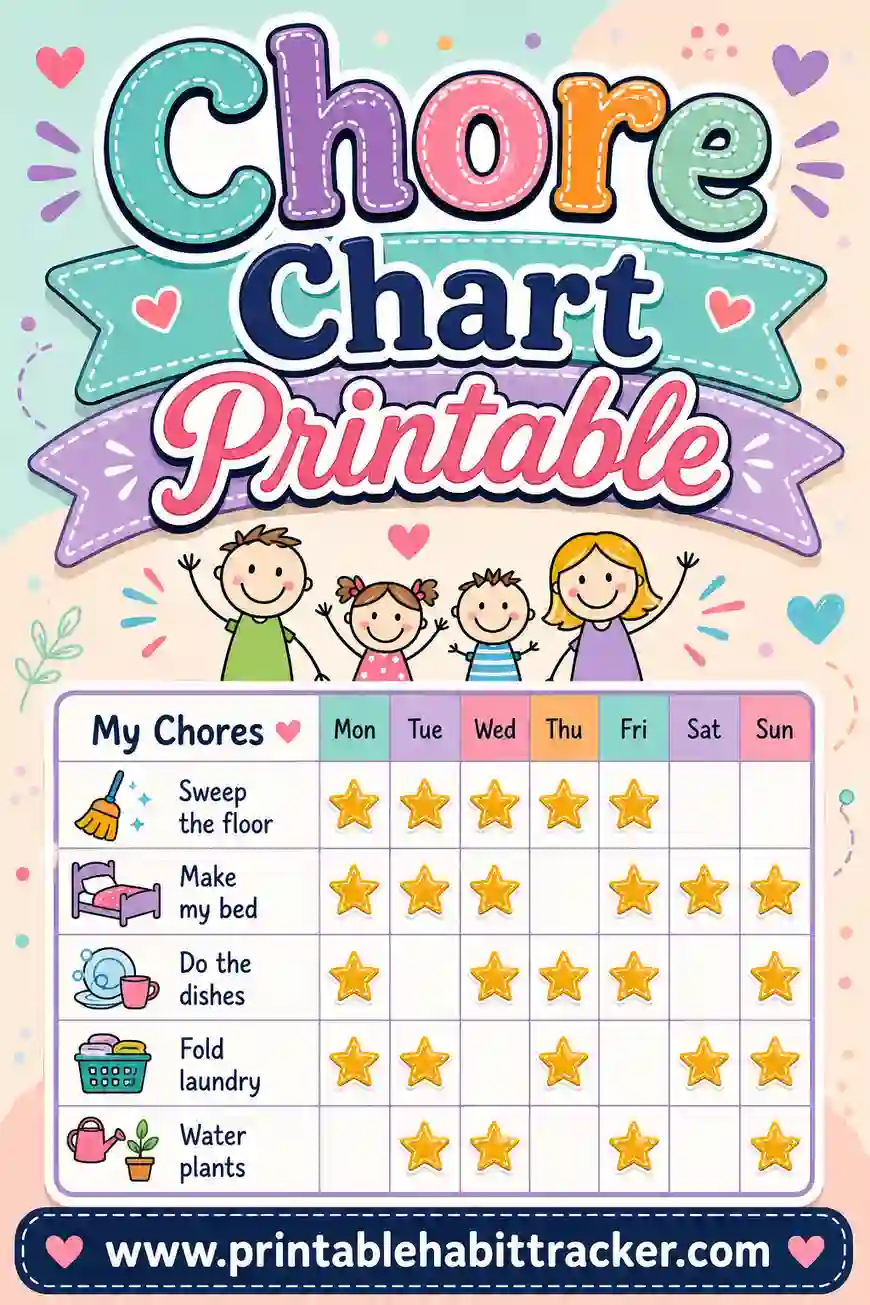
If the rows you're tracking are jobs rather than behaviors — feeding the pet, tidying up — that's really a chore chart, and it runs on the same grid.
Making It Stick Day to Day
- Same review time daily. After dinner works for most homes. Consistency matters more than the hour.
- The child does the checking. Handing over the marker turns surveillance into ownership.
- Narrate the catch. "That was 'listened the first time' — go check your box!" The behavior-to-box link needs saying out loud, especially early on.
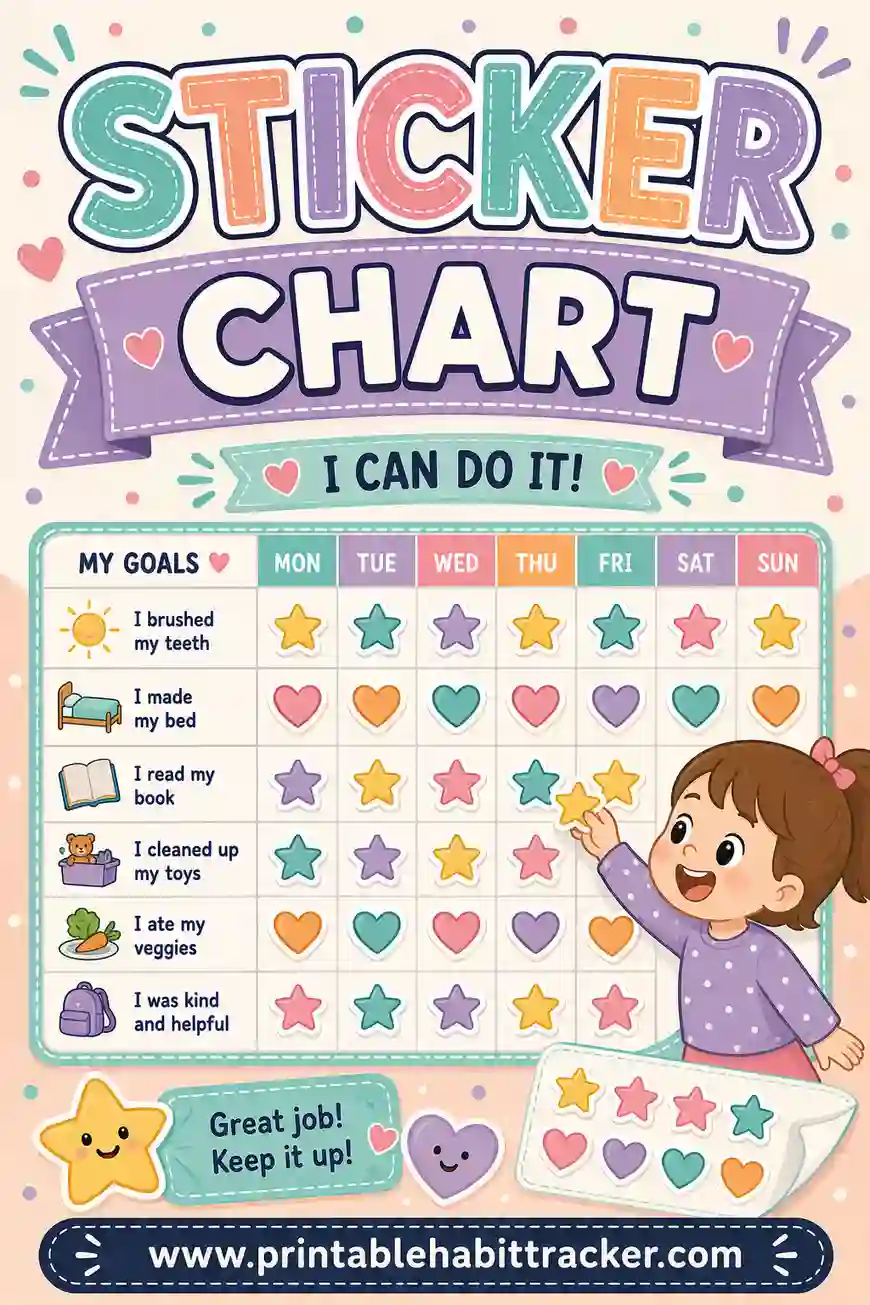
- Keep rewards small and near. A sticker now beats a toy someday. Full-week goals should be experiences (park trip, movie pick, extra story) more than stuff. The sticker chart guide covers this balance well.
- Expect a testing phase. Many kids get worse for a few days when a chart appears — they're checking whether the new system is real. Stay boring and consistent; it passes.
A Sample Behavior Chart Week
Here's what a real week might look like for a six-year-old working on morning cooperation and sibling peace — copy it into the builder and swap in your own rows.
| Behavior | Mon | Tue | Wed | Thu | Fri | Sat | Sun |
|---|---|---|---|---|---|---|---|
| Listened the first time | ✓ | ✓ | ✓ | ✓ | ✓ | ✓ | |
| Kind words with my brother | ✓ | ✓ | ✓ | ✓ | ✓ | ✓ | |
| Ready for school by 7:45 | ✓ | ✓ | ✓ | ✓ | — | — |
Reward box: "15 checks = park picnic Sunday." Look at Tuesday and Wednesday: neither day was perfect, and the week still succeeded comfortably. That's by design. A chart where one hard morning can sink the whole week teaches kids to give up by Wednesday; a chart with room for real life teaches them to bounce back — which is the actual skill you're after.
Note the dashes on the weekend school row: rows that don't apply every day just get crossed out after printing, or you simply agree they don't count. The chart bends to your family, not the other way around.
Printing Tips
- Print several weeks at once so the system never lapses waiting on a printer.
- Laminate one copy and use a dry-erase marker for an infinitely reusable chart.
- Classic black-and-white saves ink and lets your child color the header — instant buy-in.
- Landscape orientation fits longer behavior phrases without cramping.
- Save the PDF so school, grandma's house, and home can all print the identical chart.
Common Behavior Chart Mistakes
- Tracking too many behaviors. Five rows of struggle is a wall of failure. Two or three, and rotate as they improve.
- Phrasing rows as don'ts. "No hitting" keeps hitting on the mind. "Gentle hands" points at the skill.
- Taking checks away. The number one chart-killer. Earned is earned; bad moments simply earn nothing.
- Public shaming. A chart on the fridge celebrating wins is fine; a chart used to broadcast failures to siblings and visitors is not.
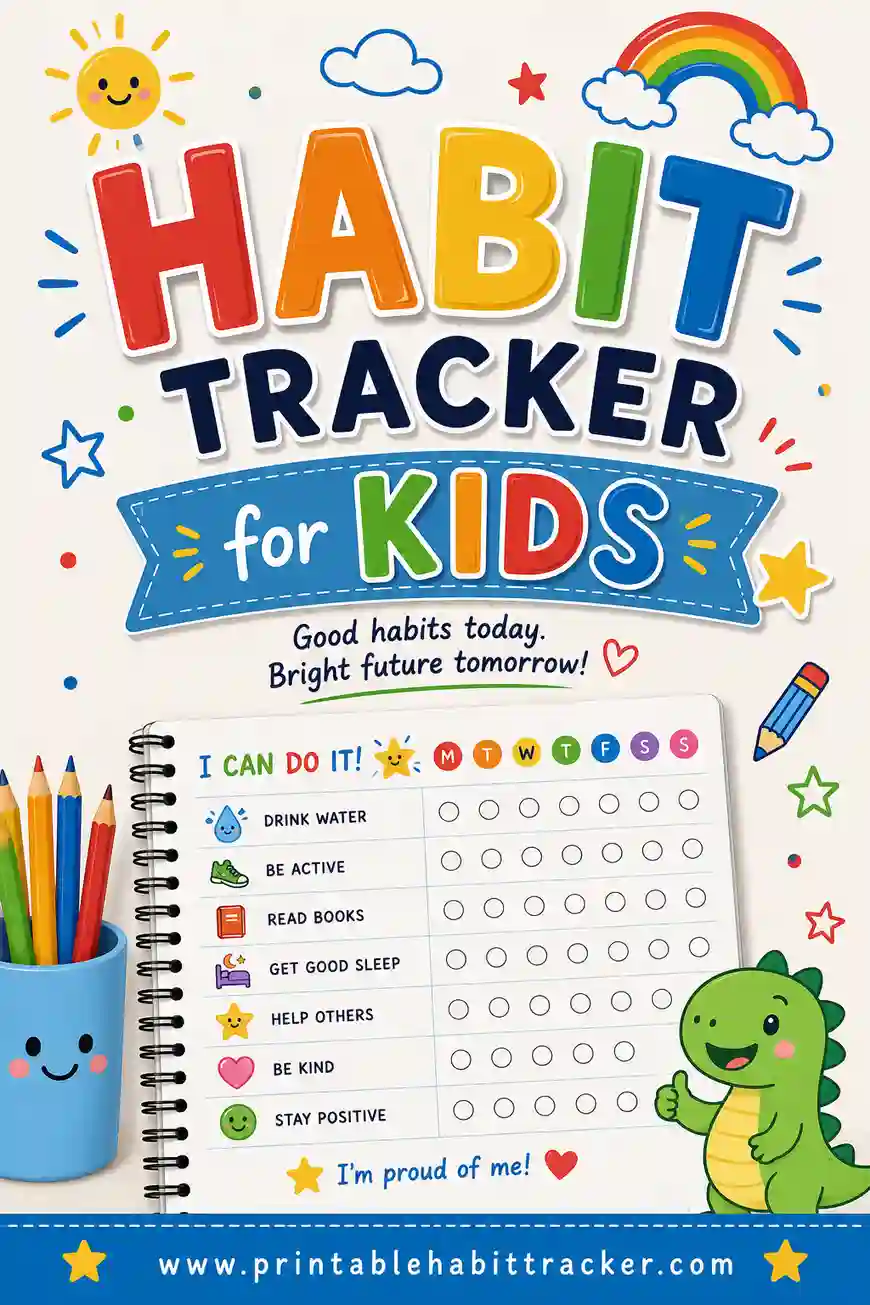
- Keeping it forever. A behavior chart is scaffolding. When a behavior holds for a few weeks, retire the row with some ceremony and move on. For everyday routines that stay tracked long-term, transition to a general habit tracker for kids.
Frequently Asked Questions
Is the behavior chart printable free?
Yes — the builder is completely free, with no sign-up and no watermark. Build the chart, print it or save it as a PDF, and reprint or edit it as often as behaviors change.
Do behavior charts actually work?
Positive ones do, for most kids, when the behaviors are specific, the wins are noticed quickly, and nothing is ever taken away. What doesn't work: vague rows, delayed rewards, and charts that double as punishment logs. The chart is a spotlight — point it at what you want more of.
What ages are behavior charts for?
Roughly 3 to 12. Preschoolers need one or two picture-simple rows and same-hour rewards. School-age kids handle weekly grids well. Past 10 or so, involve them in designing it — or shift to a more grown-up feeling tracker so it doesn't read as babyish.
Should a behavior chart have punishments for bad days?
No. Bad moments earn no check — that's consequence enough within the system. The chart's power comes from being the one place your child only ever wins. Handle discipline separately, off the chart.
How long should we use a behavior chart?
Weeks, not years, per behavior. Most targeted behaviors improve noticeably within two to four consistent weeks. When a row stays full for a couple of weeks, celebrate, retire it, and add a new one — or take a break from charts entirely.
Can teachers use this for a classroom?
Yes. Print one chart per student (rows = the class expectations) or one class chart with the color-code option so each student's row prints in their own color with a key. It's a calmer, private alternative to the public clip chart.
Ready to Print Your Behavior Chart?
Pick two behaviors worth catching, phrase them as wins, and open the free behavior chart builder. Choose the weekly grid, add a reward box, print, and start noticing the good stuff on purpose. It's free, takes five minutes, and a week of caught-being-good moments can change the weather in your whole house.