Chore Chart Printable: Free Custom Charts for Kids & Families
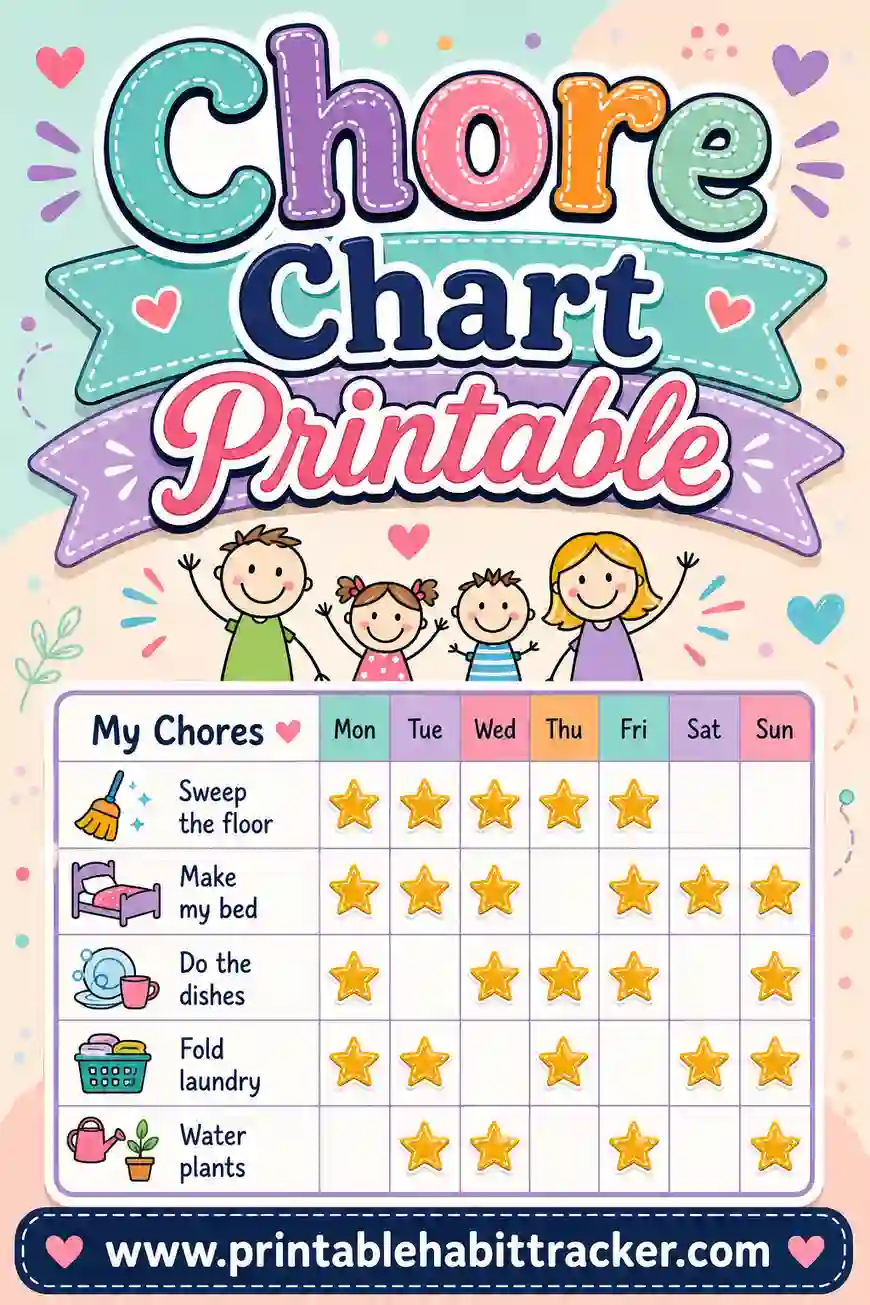
A chore chart printable is a simple grid you print at home: chores listed down the side, days of the week across the top, and a box to check (or sticker) every time a chore gets done. It's the classic fix for the daily "did you feed the dog?" routine, because the chart does the reminding instead of you. The fastest way to get one is with a free printable habit tracker builder — type in your family's chores, pick a layout and style, and print a chart that fits your household exactly.
Want one right now? Open the free builder, type each chore on its own line, choose the weekly layout, and hit print. No sign-up, no watermark, and you can reprint a fresh chore chart free every single week.
What Is a Printable Chore Chart?
Think of it as a scoreboard for housework. Each chore gets its own row, each day of the week gets its own column, and the box where they meet gets checked when the job is done. At a glance, everyone in the house can see what needs doing today and what already got done.
Some chore charts are decorated posters with pockets and magnets. Those are cute, but the row-and-column version has a quiet superpower: it tracks the whole week, not just today. Your child doesn't just see "empty the dishwasher" — they see a row of five checkmarks building across the week, and they want to keep the row going. That streak effect is the same trick adults use in habit trackers, and it works even better on kids.
Because you build it yourself in the free tool, the chart matches your actual household: your kids' names, your real chores, your week.
Why a Chore Chart Actually Works
A chore chart isn't magic, but it fixes the three things that make chores a daily battle.
- It ends the nagging loop. Instead of repeating yourself, you point at the chart: "What's left on your list?" The chart becomes the boss.
- It makes expectations clear. Kids genuinely forget what they're supposed to do. A printed list removes the "I didn't know" defense kindly and completely.
- It makes effort visible. A row of checked boxes is proof of showing up. Kids are proud of a full row the same way adults are proud of a streak.
- It's fair. When each person's chores are written down, nobody can claim they always get the worst jobs. You can rotate rows week to week.
The best part: once the routine locks in, the chart fades into the background. It's training wheels for responsibility.
Chores to Put on the Chart, by Age
The right chores are ones your child can actually finish without help. Here's a starter set you can copy straight into the builder.
| Age | Good chores | How many |
|---|---|---|
| 2–3 | Put toys in bin, put books on shelf, feed pet with help | 1–2 |
| 4–5 | Make bed, set napkins on table, water one plant | 2–3 |
| 6–8 | Empty small trash cans, fold towels, feed the pet, pack school bag | 3–5 |
| 9–12 | Dishes, vacuum a room, take out trash, laundry to hamper, walk the dog | 4–6 |
| Teens | Cook one meal, mow lawn, clean bathroom, own laundry start to finish | 4–6 |
For adults sharing a home, the same grid works for splitting housework — one chart per person, or one shared chart with initials in the boxes.
Keep each chore specific
"Clean your room" is a fight waiting to happen because it means something different to everyone. "Clothes in hamper, toys in bin, bed made" is three checkable rows with no gray area. Specific chores get done; vague ones get argued about.
How to Make a Chore Chart Printable in 4 Steps
The whole thing takes under five minutes.
- List the chores. In the free builder, type each chore on its own line — one row per job. Add the child's name to the chart title.
- Pick the weekly layout. Chores down the side, Mon–Sun across the top. It's the natural fit for a chore chart. For a month-long view, the monthly layout gives you a real date grid instead.
- Choose a style and theme. Checkboxes for older kids, big color-in squares for little ones who'd rather scribble than tick. Pick a bright theme like Sunset or Ocean, or Classic black-and-white to save ink.
- Print or save as PDF. One clean page, Letter or A4. Print one per kid and hang them side by side.
Making a chart for more than one child? Turn on the color-code option so each chore (or each kid's set of chores) gets its own color with a printed key — an instant family chore chart on one page.
Chore Chart Layouts to Try
There's no single right format. These are the ones families come back to.
The classic weekly grid
Seven columns, one per day. Best for daily-ish chores like feeding pets and making beds. Print a fresh free printable chore chart every Sunday night, or laminate one and reuse it with a dry-erase marker.
The monthly chart
Rows of chores, a real date grid across the top with the correct number of days for the month. Great for tracking longer patterns and for allowance math at month's end.
One chart per kid
Each child gets their own sheet with their name in the title. No squabbling over whose row is whose, and each kid owns their own progress.
The chart-plus-reward version
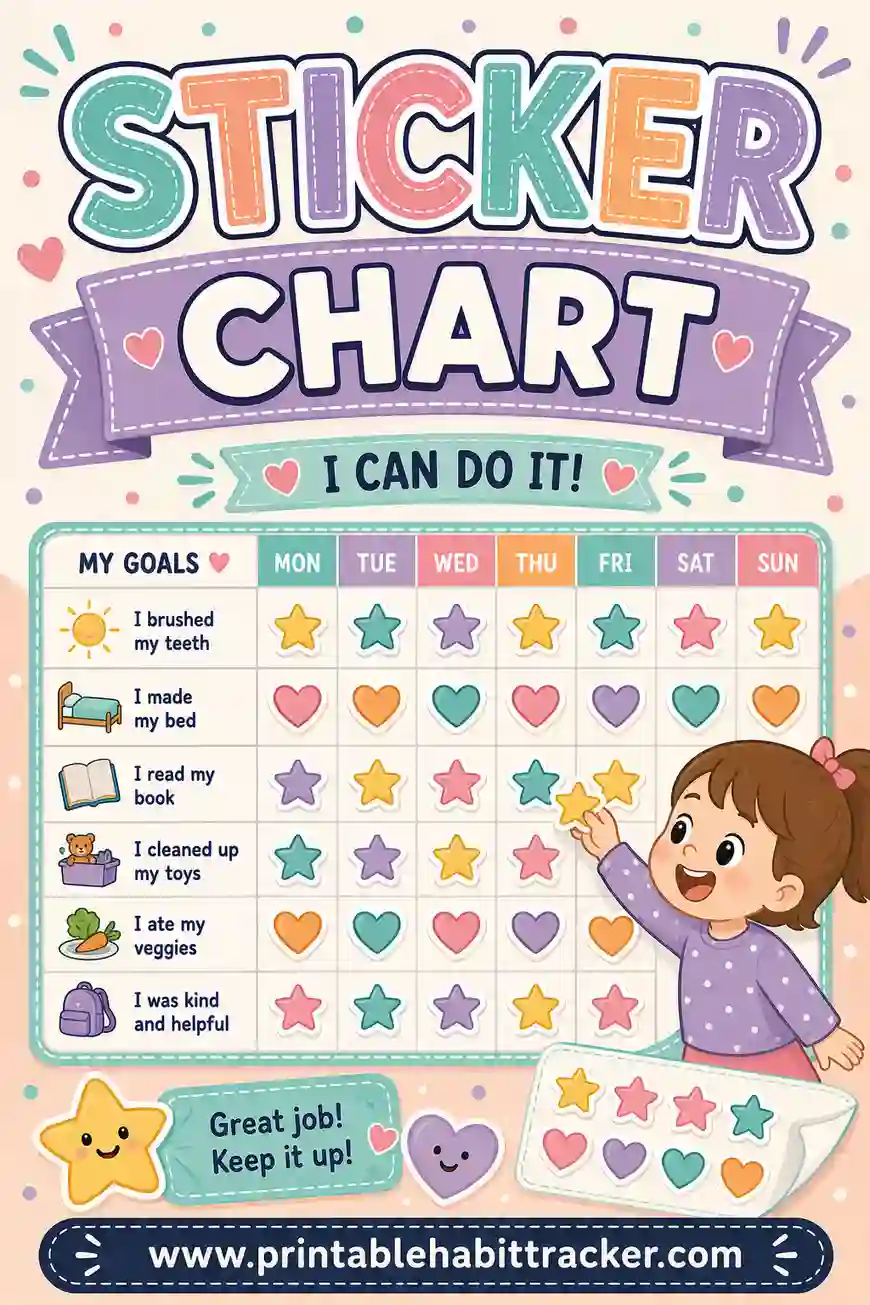
Add the reward box in the builder and write the week's goal in it: "All boxes = Friday movie pick." Pair it with the streak boxes extra to celebrate runs of consecutive days, and it doubles as a reward chart. For little kids who'd rather sticker than tick, see the sticker chart guide.
Where to Hang It (and How to Run It)
Placement decides whether the chart gets used or forgotten.
- The fridge is the default for a reason — everyone passes it daily.
- Kid's bedroom door, at their eye level, so checking it is their job, not yours.
- A command center by the backpacks, if you already have one.
Then set two habits of your own: a consistent check-in time (right after dinner works for most families) and a hands-off policy — kids mark their own boxes. The ownership is half the lesson. If your child is young, do the evening review together and let them do the physical checking or stickering.
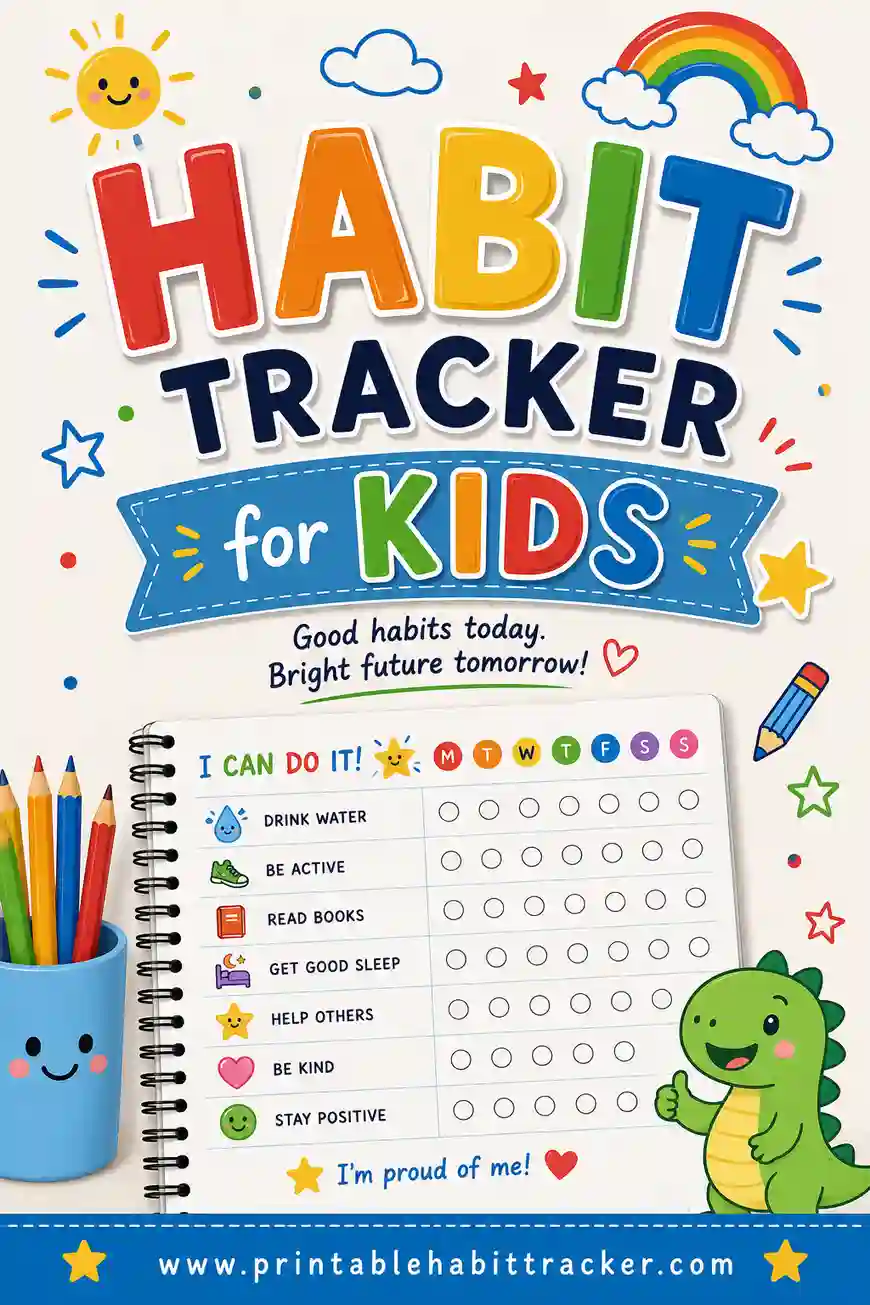
Chore charts also pair beautifully with a broader habit tracker for kids covering hygiene and bedtime routines — some families combine both on one sheet.
Printing Tips for a Chart That Survives the Week
- Regular paper is fine for a weekly chart you'll replace anyway.
- Laminate or use cardstock for a reusable chart — check boxes with a dry-erase marker and wipe it clean each Sunday.
- Landscape orientation gives wider rows if your chore names are long.
- Classic black-and-white theme saves color ink; kids can decorate the header themselves.
- Print a test page first and check the grid fits before printing one per kid.
- Stickers need room — the color-in square style prints larger boxes that fit standard small stickers nicely.
Everything prints from your browser as a clean one-page sheet — you can also save the chore chart printable as a PDF and keep it to reprint anytime.
Common Chore Chart Mistakes
- Too many chores at once. Start with three per kid. A full chart of empty boxes is demoralizing; a short chart that gets completed builds momentum.
- Chores that are too hard for the age. If they can't finish it alone, it's your chore with their name on it. Scale down.
- Inconsistent follow-through. A chart checked "whenever" dies in a week. Same time, every day, even just for thirty seconds.
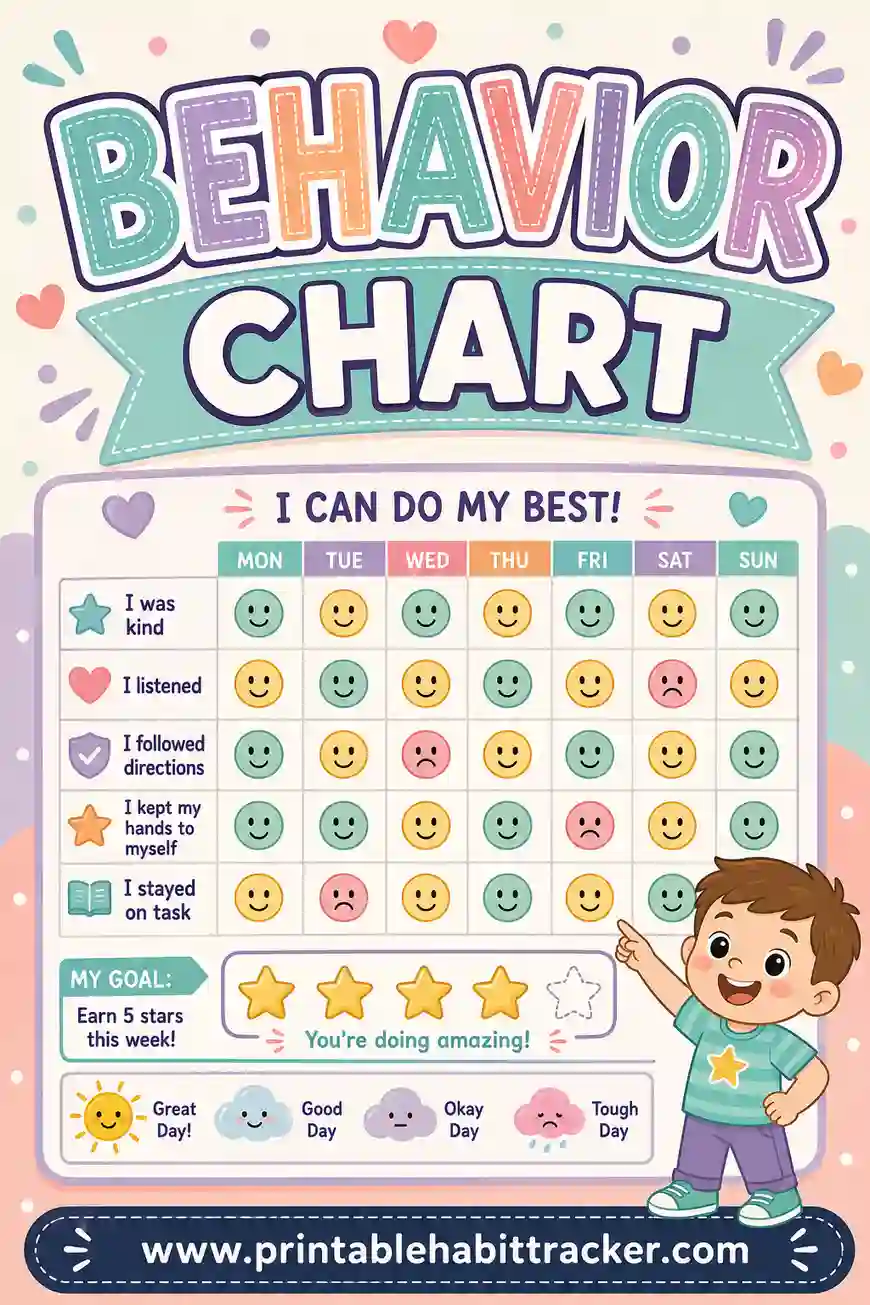
- Using the chart as punishment. The chart tracks wins. If it becomes the thing that gets kids in trouble, they'll hate it — and stop using it. (If behavior itself is the battle, a positive behavior chart is the better tool.)
- Never refreshing it. Kids outgrow chores. Swap rows every month or two so the chart grows with them. Because it's a fully editable chore chart saved in your browser, updating a row and reprinting takes seconds.
A Sample Weekly Chore Chart
To make this concrete, here's what a finished chart for a seven-year-old might look like — copy it into the builder and adjust to your house.
| Chore | Mon | Tue | Wed | Thu | Fri | Sat | Sun |
|---|---|---|---|---|---|---|---|
| Make my bed | ☐ | ☐ | ☐ | ☐ | ☐ | ☐ | ☐ |
| Feed the cat | ☐ | ☐ | ☐ | ☐ | ☐ | ☐ | ☐ |
| Clear my plate | ☐ | ☐ | ☐ | ☐ | ☐ | ☐ | ☐ |
| Toys in the bin | ☐ | ☐ | ☐ | ☐ | ☐ | ☐ | ☐ |
| Take out recycling | ☐ | ☐ |
Notice the last row: not every chore is daily. For twice-a-week jobs, just agree which days count and leave the others blank — or cross them out with a marker after printing. Reward box at the bottom: "25+ checks = Saturday pancakes." Realistic, not perfect: 25 out of 33 possible boxes leaves room for a rough Tuesday and still pays out.
Frequently Asked Questions
Is the chore chart printable really free?
Yes — completely. The builder has no sign-up, no account, and no watermark. Build the chart, print it or save it as a PDF, and reprint as many copies as you want, every week if you like.
What's the best chore chart for multiple kids?
One chart per child usually works best — each kid gets their own sheet, own name, own progress. If you want everything on one page, list all the chores and turn on color-coding so each child's chores print in their color with a key at the bottom.
At what age should kids start using a chore chart?
Around age two or three, with one or two picture-simple chores like "toys in the bin." The habit of helping matters more than the help itself at that age. Grade-schoolers can handle a real weekly chart with four to six chores.
Should chores be tied to allowance?
Families land on both sides. A common middle ground: some chores are unpaid "part of the family" jobs, and extra chores earn money. The monthly layout makes end-of-month allowance counting easy — just tally the checked boxes.
Can I edit my chore chart later?
Yes. Your chart is saved locally in your browser, so when you come back your chores and settings are right where you left them. Swap a chore, hit print, done. It works like a reusable chore chart template: set up the grid once, then tweak the rows as your kids grow.
Ready to Print Your Chore Chart?
Pick three chores per kid, open the free chore chart builder, choose the weekly layout and a style your kids will like, and print. It's free, there's no sign-up, and the first full row of checkmarks might just be the end of chore-time nagging at your house. Print one tonight and let the chart do the reminding tomorrow.