Printable Responsibility Chart: Free Charts That Grow Capable Kids
A printable responsibility chart is a one-page grid that tracks more than housework: personal responsibilities like homework, hygiene, and keeping track of your own stuff go down the side, days of the week go across the top, and every responsibility handled earns a check. Where a chore chart asks "did you help the house?", a responsibility chart asks something bigger — "did you take care of your own life today?" The fastest way to build one around your child's actual responsibilities is the free printable habit tracker builder: type the rows, pick a layout, and print.
Want one now? Open the free builder, type each responsibility on its own line, choose the weekly layout, and hit print. No sign-up, no watermark, and it grows with your child — edit a row, reprint, done.
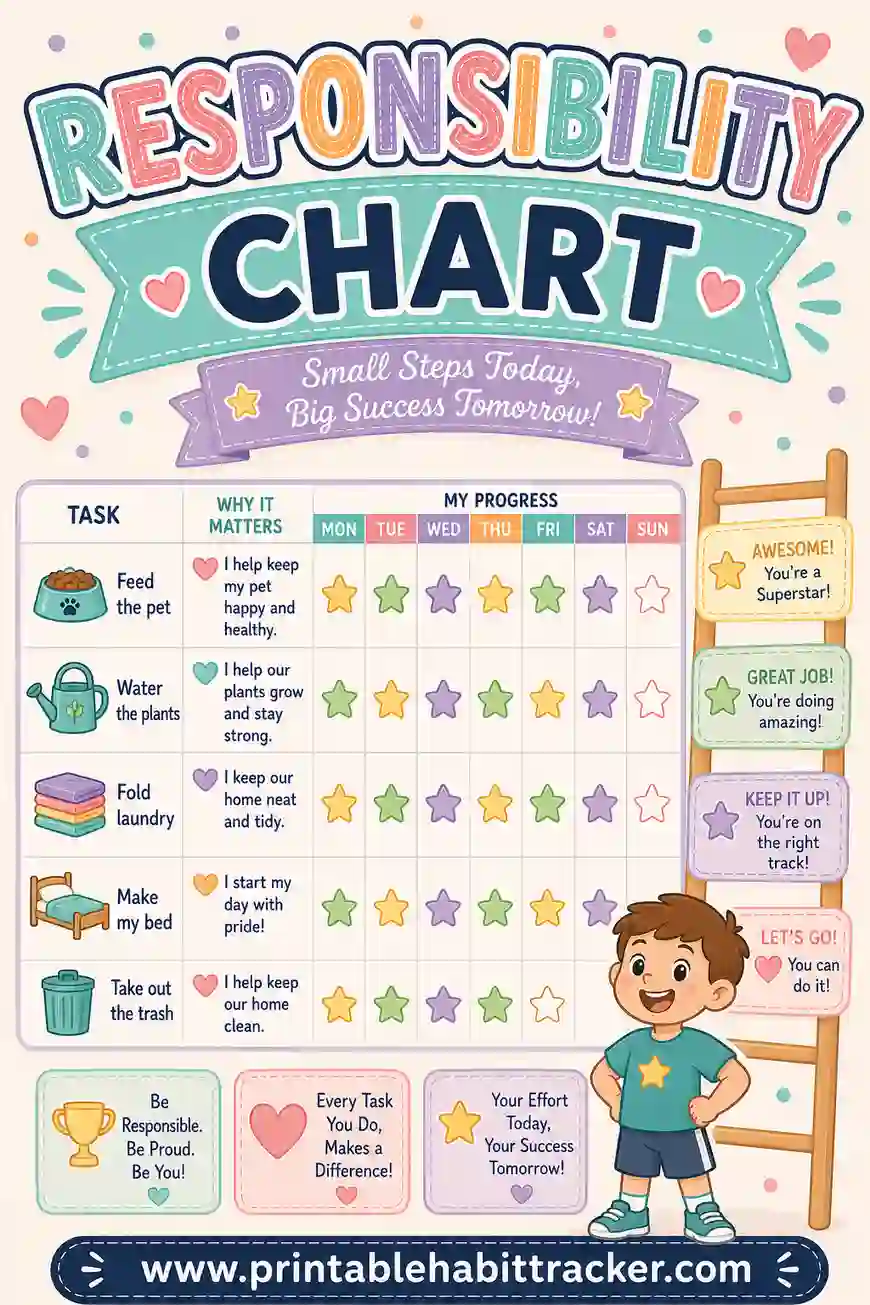
Responsibility Chart vs. Chore Chart: What's the Difference?
They look identical on paper — rows, day columns, checkboxes — but they're aimed at different targets.
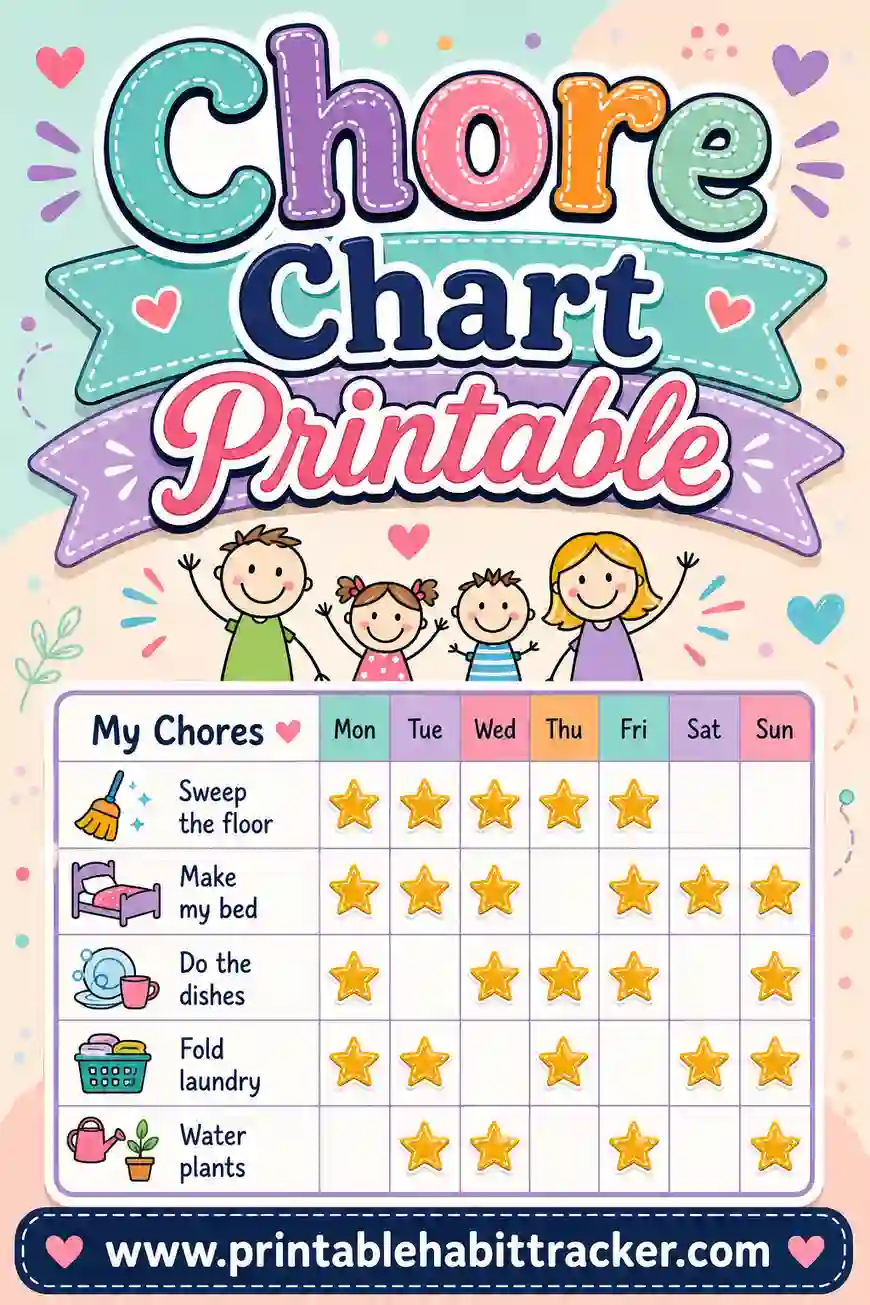
A chore chart tracks contributions to the household: dishes, trash, feeding the dog. The house benefits.
A responsibility chart tracks self-management: brushing teeth without reminders, packing your own bag, starting homework, remembering your water bottle. The child benefits — and the skill being built isn't cleaning, it's ownership. Nobody nags a 30-year-old to pack their laptop; the chart is where that internal checklist gets installed.
Most families blend both on one sheet, and the grid doesn't mind a bit. But the framing matters when you introduce it: "This is your chart for running your own day" lands differently than "here are your jobs." Kids — especially eight and up — respond to being trusted with their own operations.
What to Put on a Responsibility Chart, by Age
The right rows are things your child can do alone but currently does only when reminded. That reminder gap is exactly what the chart closes. Copy these into the builder and pick what fits.
| Age | Responsibilities that work | How many |
|---|---|---|
| 3–5 | Brush teeth, put on own clothes, tidy toys before bed, carry own cup to the sink | 2–3 |
| 6–8 | Pack school bag the night before, homework before play, brush teeth AM & PM, feed own pet, remember library book | 3–5 |
| 9–12 | Start homework without reminders, shower on schedule, keep track of own belongings, charge devices in the kitchen, get self up with alarm | 4–6 |
| Teens | Manage own laundry, keep own room functional, track assignments, be ready on time, manage allowance for the week | 4–6 |
The pattern across ages: from body care (little kids) to stuff management (middle years) to time and money management (teens). A responsibility chart free printable that you rebuild each birthday-ish is quietly one of the best parenting tools there is — and because the builder saves your chart in the browser, the rebuild is a two-minute edit.
Write rows as "I" statements
"Pack my own bag." "Get myself up." The pronoun does real work — the chart reads as the child's own checklist, not a parent's demand list. Older kids especially notice the difference.
How to Make a Responsibility Chart in 4 Steps
- Pick the rows together. Sit down with your child and choose three to six responsibilities from your shortlist in the free builder. Let them phrase the rows. Their name — or "Sam's Command Center," their call — goes in the title.
- Choose the weekly layout. Days across the top, responsibilities down the side. It's the natural rhythm for school-age life. The monthly layout works for longer-view tracking with older kids.
- Pick a style that matches their age. Color-in squares for the little ones, checkboxes for kids who'd find squares babyish. Themes matter here — a teen will actually use a Sage or Classic chart and ignore a cutesy one.
- Print and post it where the responsibility happens. Letter or A4. By the door for bag-packing, bathroom mirror for teeth, desk for homework. Or one master chart on the fridge — kid height, always.
Responsibility Chart Formats That Work
The morning-launch chart
Rows are everything needed to leave the house calmly: dressed, teeth, breakfast dish to sink, bag by the door, shoes on. Post it by the front door. When the chart runs the launch sequence, you stop being the countdown announcer.
The school-week chart
Homework started, assignments written down, bag packed the night before, library book remembered. This one saves actual grades. Pair it with an after-school anchor time — "chart check at 4pm" — so it doesn't drift.
The whole-day chart
Morning, after-school, and evening responsibilities on one sheet, in time order top to bottom. The child reads it like a script for their day. Turn on color-coding to band the day into colored sections with a printed key — morning rows in one color, evening in another.
The chores-plus-responsibilities combo
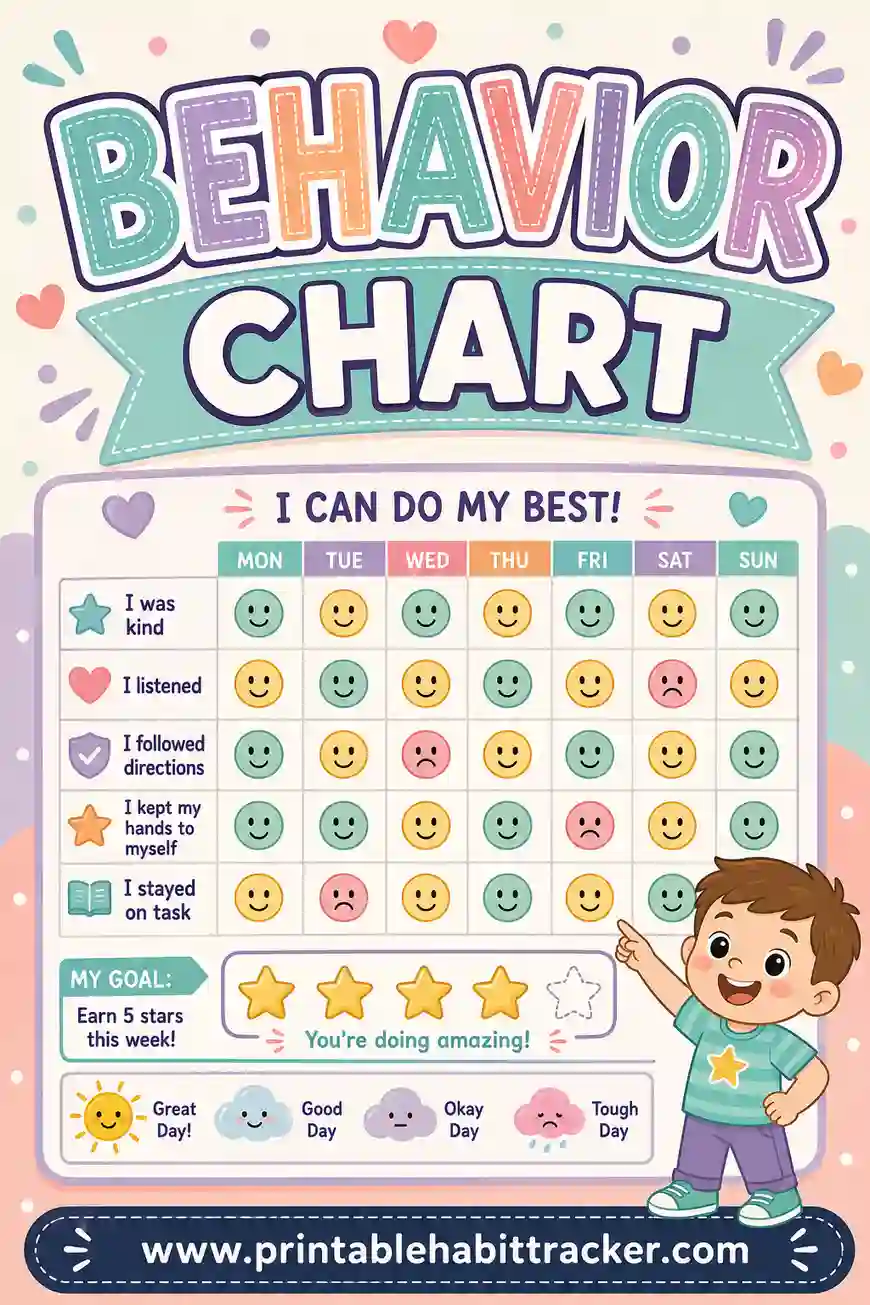
Household jobs and self-management on one grid, which is honestly how most families run it. If behavior itself — attitude, listening, gentle hands — is the real battleground, that's a different tool: the behavior chart targets conduct, while the responsibility chart targets ownership. They work fine side by side.
Making It Stick: Ownership Is the Whole Game
The chart teaches responsibility only if the child runs it. That means a few house rules for the grown-ups:
- They mark their own boxes. Every time. A parent-marked responsibility chart is a supervision chart wearing a costume.
- The chart does the reminding. Replace "did you pack your bag?" with "check your chart." Same information, but the authority moves from your voice to their paper — which is the entire point.
- Let natural consequences teach. If the library book row is empty and the book stays home, that's the lesson working, not the chart failing. Resist the rescue.
- Notice streaks out loud. "Five straight days of getting yourself up — you basically don't need an alarm clock manager anymore." Competence praised becomes identity.
- Retire mastered rows with ceremony. When teeth-brushing hasn't missed in a month, take it off the chart: "You own this one now." Rows leaving the chart is the success metric. Add the next challenge and reprint.
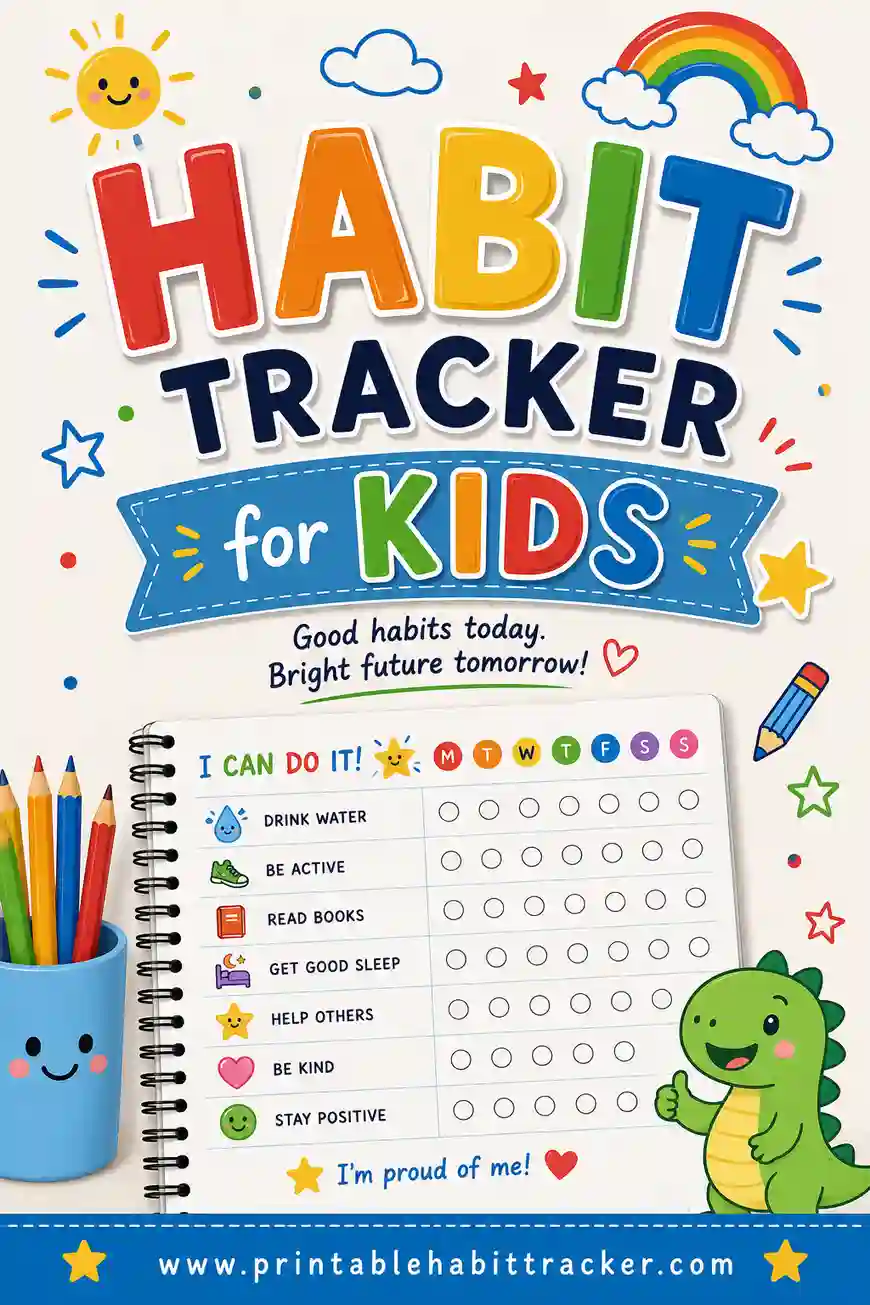
Families already using a habit tracker for kids will recognize the engine — a responsibility chart is a habit tracker where the habits happen to be growing up.
A Sample Responsibility Chart for an 8-Year-Old
Copy this into the builder and tune it to your child.
| Responsibility | Mon | Tue | Wed | Thu | Fri | Sat | Sun |
|---|---|---|---|---|---|---|---|
| Brush teeth AM & PM | ✓ | ✓ | ✓ | ✓ | ☐ | ☐ | ☐ |
| Pack bag night before | ✓ | ✓ | ☐ | ✓ | |||
| Homework before play | ✓ | ✓ | ✓ | ✓ | |||
| Feed my fish | ✓ | ✓ | ✓ | ✓ | ☐ | ☐ | ☐ |
| Water bottle to school | ✓ | ☐ | ✓ | ✓ |
Reward box: "20+ checks = pick Sunday's breakfast." Note the homework row is perfect and bag-packing missed once — Wednesday's forgotten gym kit made Thursday's check happen without a word from anyone. That's the chart teaching.
Printing Tips
- Print one per location if responsibilities cluster — a bathroom copy and a front-door copy beat one master chart nobody passes.
- Laminate for the long haul. Responsibilities change slower than chores, so a wipe-clean weekly copy with dry-erase markers earns its keep.
- Landscape orientation fits longer "I" statement rows comfortably.
- Classic black-and-white for teens, brighter themes for younger kids — matching the design to the child is cheap buy-in.
- Print a test page first, then run copies for the week or the month in one go.
Common Responsibility Chart Mistakes
- Rows the child can't actually do alone. If it still needs your help, it's training, not responsibility. Keep it off the chart until they can own it end to end.
- **Nagging and charting.** If you keep reminding, the chart never gets to do its job. Bite your tongue and point at the paper.
- Too many rows on day one. Three to five. The chart should feel like trust, not audit.
- Punishing empty boxes. Empty boxes plus natural consequences already teach. Adding punishment turns the child against the chart — and charts only work for kids who like using them.
- Never updating it. A ten-year-old's chart with "brush teeth" still on it says nobody's paying attention. Rotate mastered rows out and new challenges in every month or two.
Frequently Asked Questions
Is the printable responsibility chart really free?
Yes — completely. The builder has no sign-up, no account, and no watermark. Build the chart, print it or save it as a PDF, and reprint whenever a row changes.
What age should a responsibility chart start?
Around three, with two body-care rows like brushing teeth and tidying toys. The full "run your own day" version clicks around six to eight, when school creates real things to keep track of.
Should responsibilities earn money or rewards?
Most families pay for extra chores but not for personal responsibilities — brushing your teeth is its own reward, eventually. A small weekly perk from the reward box ("20 checks = pick the movie") keeps momentum without turning hygiene into a transaction.
How is this different from a behavior chart?
A responsibility chart tracks tasks the child owns; a behavior chart tracks how they act — listening, kind words, gentle hands. If the struggle is forgetting and depending on reminders, use this. If it's conduct, use that.
What if my child does the task but refuses to mark the chart?
Common, and usually a sign the marking feels like homework rather than a win. Move the marking to a pleasant anchor — right before dessert, or as part of the bedtime wind-down — and make it quick and social: they mark, you notice, done in twenty seconds. Style helps too; a kid who shrugs at checkboxes will often happily color squares, or vice versa. And check your own tone: if marking sessions have become mini performance reviews, lighten them. The chart should feel like keeping score in a game they're winning.
Can I use a printable responsibility chart template for multiple kids?
Yes — the builder works like a reusable printable responsibility chart template: set up the grid once, then swap names and rows for each child and print. For one shared family sheet, turn on color-coding so each child's rows print in their own color with a key.
Ready to Print Your Responsibility Chart?
Pick three things your child can own this month, open the free responsibility chart builder, let them word the rows and choose the theme, and print it tonight. It's free, it takes five minutes, and somewhere between the first checked box and the first retired row, "did you remember?" quietly leaves your vocabulary. That's the chart doing its real job — working itself out of one.