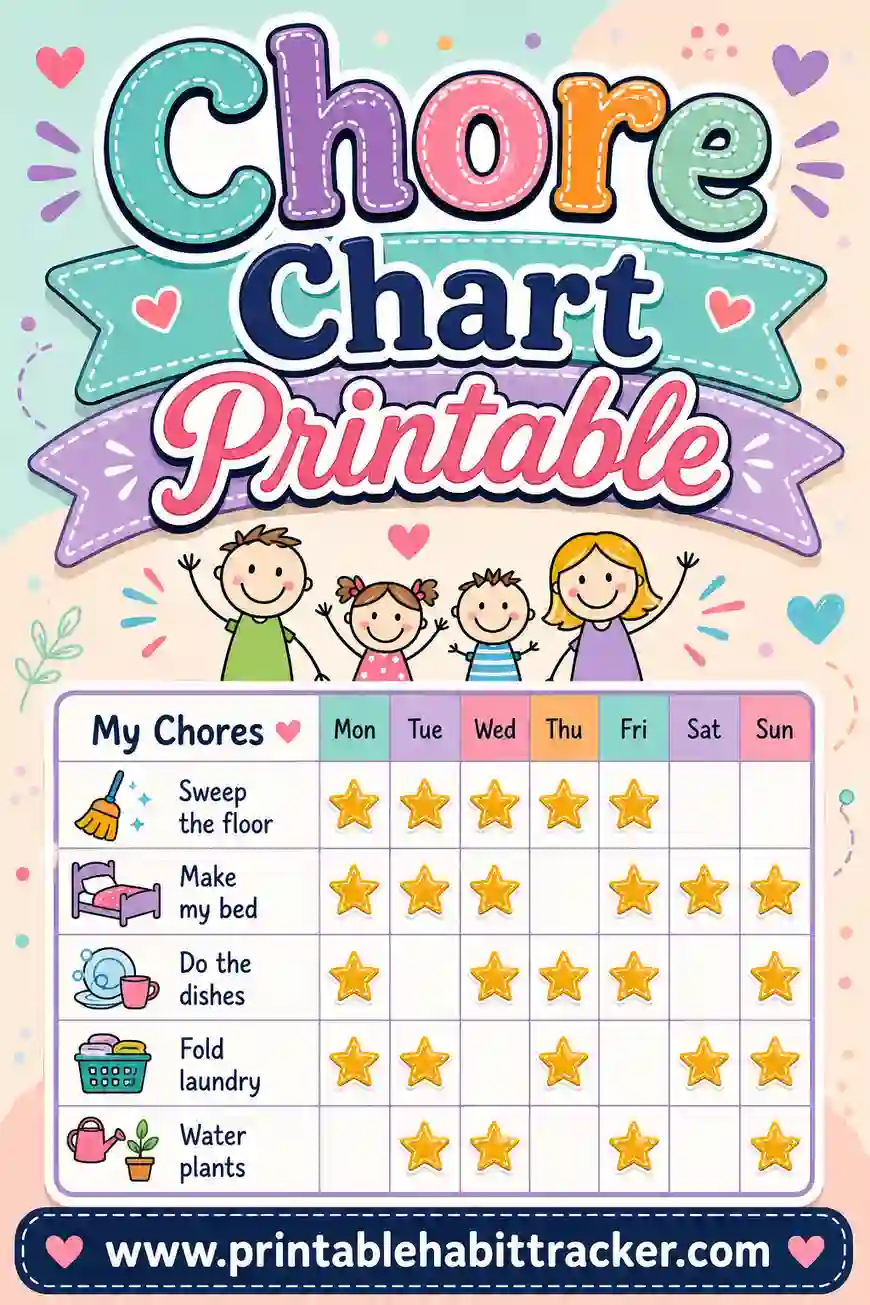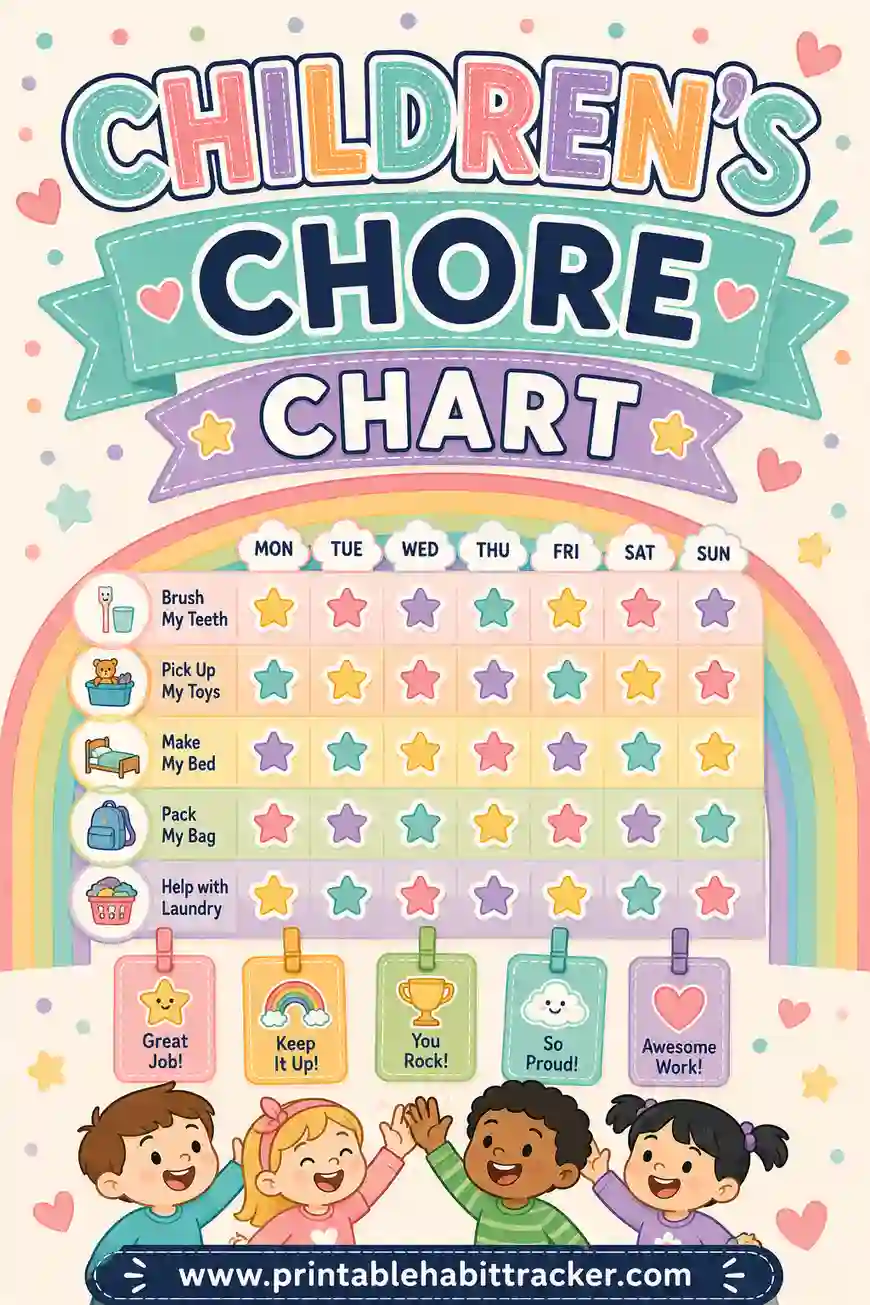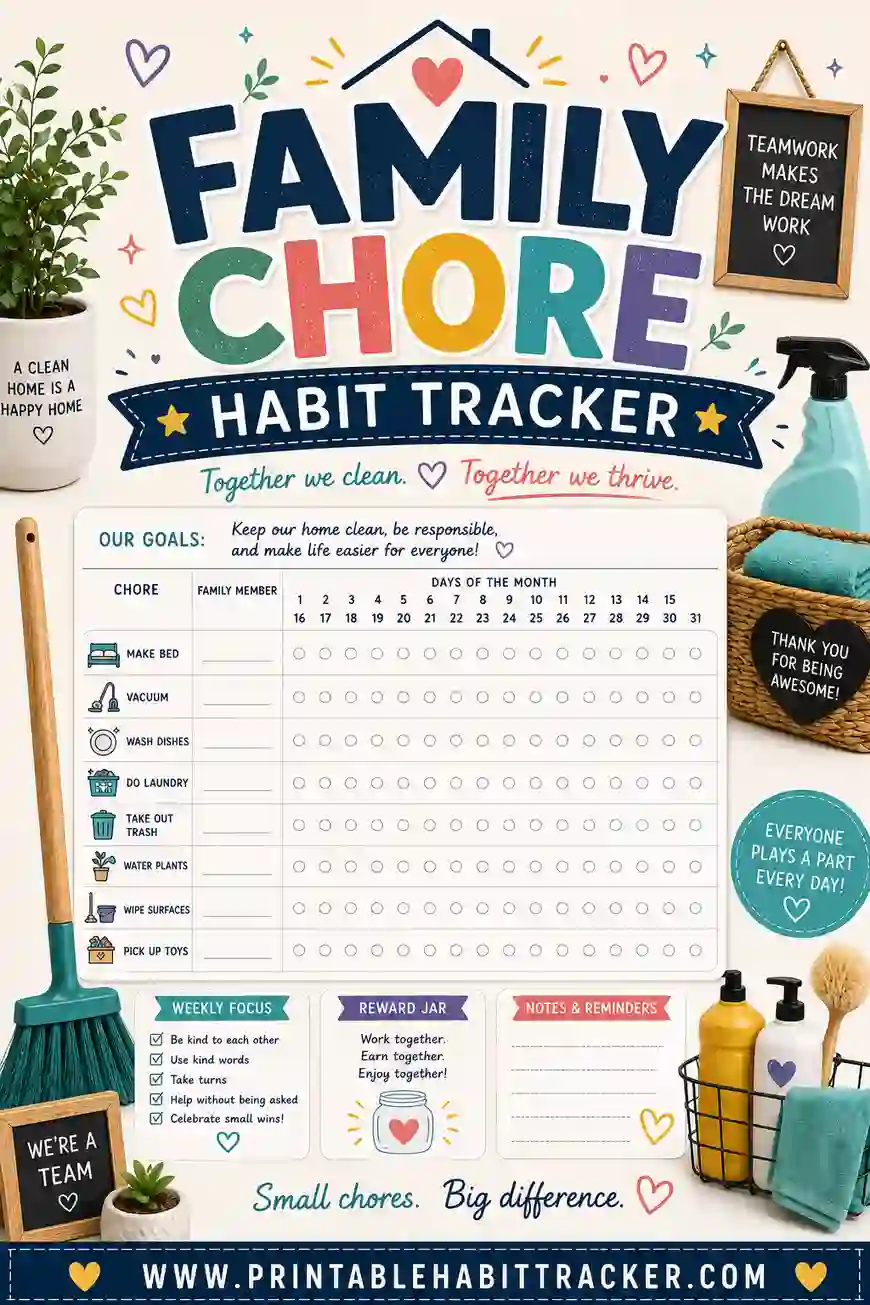
Kids Chore Chart Printable: Free Charts That Get Chores Done
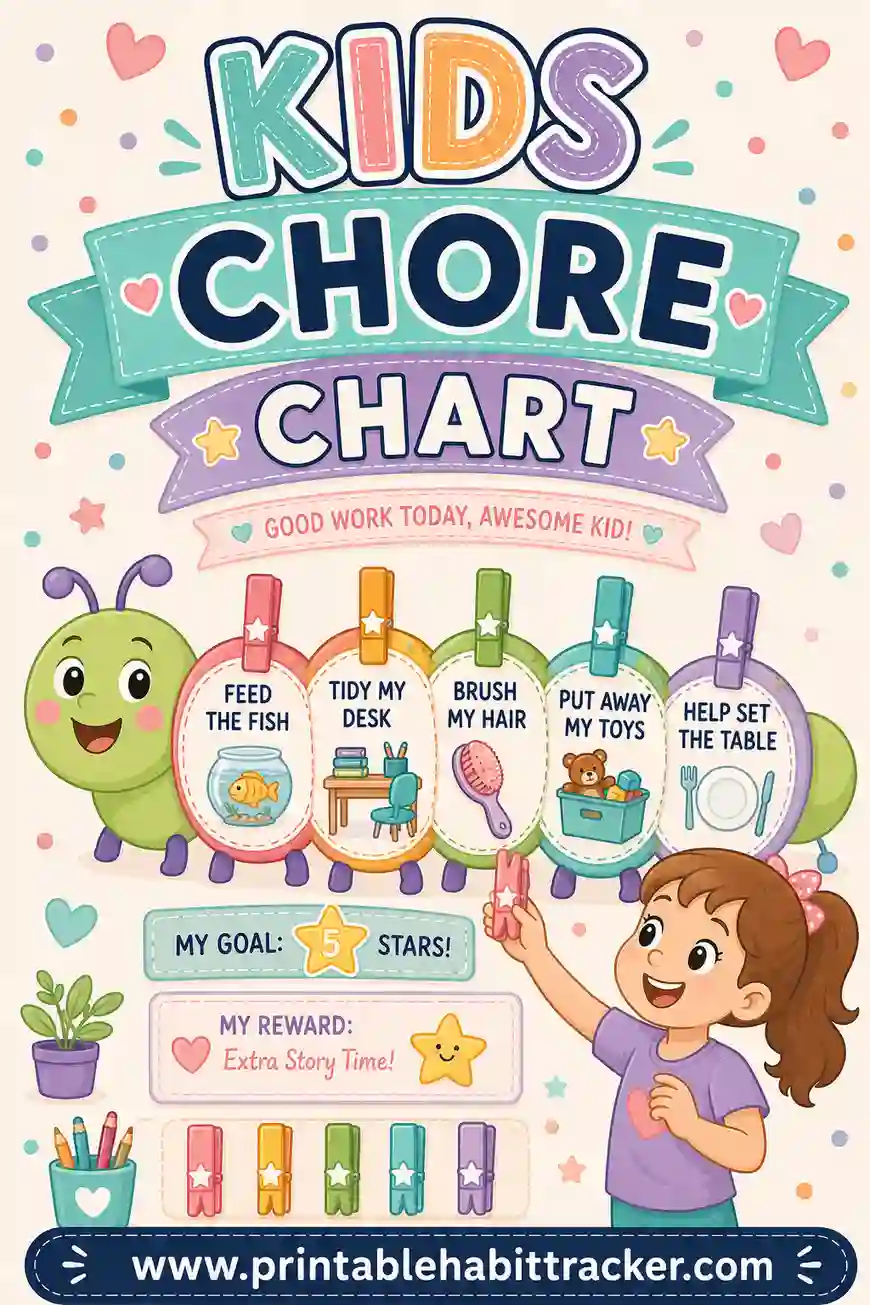
A kids chore chart printable is a one-page grid built for the six-to-twelve crowd: their chores listed down the side, days of the week across the top, and a box to check for every job done. At this age kids can genuinely run their own chart — read it, do the chores, mark the boxes — which means the chart can finally do what you've been doing by voice: remind, track, and keep score. The fastest way to get one that fits your kid is the free printable habit tracker builder: type the chores, pick a layout, print.
Want one before dinner? Open the free builder, type four or five chores your kid can own, put their name in the title, choose the weekly layout, and hit print. No sign-up, no watermark, and reprints are free forever.
Why Ages 6–12 Are the Chore Chart Sweet Spot
Toddlers need a parent driving the chart (that stage has its own playbook — see the children's chore chart guide), and teens mostly need a negotiated agreement. But school-age kids? They're built for this.
They can read the chart themselves, which means the paper — not you — delivers the reminder. They're old enough to do real chores that actually help (a nine-year-old's vacuuming genuinely counts). They're competitive enough that streaks and full rows light them up. And they're young enough that a checkmark still feels like a point scored, not a parental surveillance system.
This is also the age where the deeper lesson lands: chores stop being "helping Mommy" and become "how a household works, and you're part of it." A printable chore chart for kids makes that shift visible — their name on top, their rows, their record.
Chores That Fit This Age (and How Many)
The test for every row: can they do it start to finish without you in the room? Copy this set into the builder and trim to fit.
| Age | Solid chores | Rows to start |
|---|---|---|
| 6–7 | Feed the pet, set the table, make bed, sort clean socks, water plants, tidy shoes by the door | 3–4 |
| 8–9 | Empty dishwasher, take out trash, fold towels, pack own lunch bag, sweep the kitchen, rake leaves | 4–5 |
| 10–12 | Vacuum a room, load the dishwasher, walk the dog, clean own bathroom sink, start a laundry load, wheel bins to the curb | 4–6 |
Mix daily quick wins (feed the pet) with one or two bigger weekly jobs (vacuum Saturday). The daily rows keep the chart alive; the weekly rows teach real skills. Write scheduled jobs with their days in the row name — "Trash — Tue & Fri" — so the chart answers when, not just what.
Level up, visibly
Kids this age love rank. When a chore's been solid for a month, "promote" them: retire the easy row, add a bigger one, and say it out loud — "You've mastered table-setting; you're on dishwasher duty now." A chore chart that levels up like a game gets played like one. The builder makes the swap a ten-second edit, since your chart is saved in your browser.
How to Make a Kids Chore Chart in 4 Steps
- Draft the rows together. In the free builder, type each chore on its own line — and let your kid pick one chore themselves from your shortlist. Chosen chores get done at roughly double the rate of assigned ones. Their name goes in the title.
- Pick the weekly layout. Mon–Sun columns, chores in rows — the classic. For allowance tracking over a full month, the monthly layout gives you a real date grid.
- Let them choose the style and theme. Checkboxes read "big kid"; color-in squares suit kids who still love markers. Ocean, Sunset, Bold — their pick. A chart they styled is a chart they'll defend.
- Print and post at their height. Letter or A4, one page. Bedroom door or fridge — wherever they pass daily. Print one per kid; side-by-side charts create a friendly scoreboard.
Motivation Systems That Actually Work
The grid tracks; the system motivates. Pick one and run it consistently.
The streak game
The simplest: aim for unbroken runs in a row. Turn on the streak boxes extra and celebrate the longest streak each week. For kids who love beating their own record, this alone carries the chart for months.
The weekly goal (reward box)
Add the reward box and write a concrete deal in it: "22+ checks = Saturday sleepover" or "full pet row = pick Friday's dinner." Set the bar below perfection — about 85% — so one rough Tuesday doesn't sink the week and the kid keeps playing Wednesday through Sunday.
The allowance ledger
If you pay for chores, the chart is the timesheet: count checks at week's end, pay per check or per completed row. A common middle path — some chores are unpaid "part of the family" work, extra chores earn money. Since the grid doesn't do math, put rates in the row names ("Extra: wash car — $2") and tally in the notes box on payday.
The screen-time exchange
Checks convert to minutes: each checked box = 10 minutes of weekend game time, tallied in the notes box. Kids do the math themselves instantly — funny how that works.
Whichever system you pick, the deeper rule is the same: the chart records wins, never punishments. Don't erase earned checks for bad behavior — the moment checkmarks can be confiscated, the game feels rigged and they quit playing.
Running Charts for Two or More Kids
- One chart per kid, posted side by side. Own name, own rows, own streaks. Sibling comparison happens naturally; keep it friendly by praising each kid against their own last week, not each other.
- Or one family sheet with color-coding. List everyone's chores on one grid and turn on the color-code option — each kid's rows print in their color with a key at the bottom. Works well up to about ten rows; past that, split the sheets.
- Rotate the boring jobs. Nobody owns trash duty forever. Swap contested rows weekly — the saved chart makes Sunday-night trades a one-minute edit. The family chore habit tracker guide covers whole-household setups, parents included.
A Sample Kids Chore Chart, Filled In
A week for a ten-year-old, mid-Saturday — copy into the builder and adjust.
| Chore | Mon | Tue | Wed | Thu | Fri | Sat | Sun |
|---|---|---|---|---|---|---|---|
| Feed the dog | ✓ | ✓ | ✓ | ✓ | ✓ | ✓ | ☐ |
| Make my bed | ✓ | ✓ | ☐ | ✓ | ✓ | ✓ | ☐ |
| Empty dishwasher | ✓ | ☐ | ✓ | ✓ | ✓ | ☐ | ☐ |
| Trash — Tue & Fri | ✓ | ✓ | |||||
| Vacuum room — Sat | ✓ | ||||||
| Extra: wash car — $2 | ✓ |
Reward box: "20+ checks = Sunday bike park." Current count: 19 with a day to go — which is exactly the kind of cliffhanger that gets Sunday's boxes checked without a single parental word. Notes box: "Car wash $2 — paid. Dishwasher streak best yet: 4 days."
Printing Tips
- Regular paper, fresh sheet weekly — the reprint is the reset ritual.
- Laminate one per kid and hand out dry-erase markers if you'd rather wipe than reprint; Sunday wipe-down becomes its own little ceremony.
- Landscape orientation if chore names carry days and rates.
- Classic black-and-white saves ink across multiple kids' charts — and decorating their own header is a chore kids volunteer for.
- Print a test page before running four copies, and check the grid fits cleanly.
Common Mistakes With Kids' Chore Charts
- Too many rows too fast. Four or five is the ceiling to start. A wall of chores reads as punishment; a short list reads as a game.
- Parent marks the boxes. Their chart, their marker. If you're checking it for them, the ownership lesson is going to you.
- Re-doing their work in front of them. If the towel-folding is eight-year-old quality, that's the standard you asked for. Fix it later or teach it better — never redo it while they watch.
- Vague rows. "Clean your room" starts arguments; "clothes in hamper, floor clear, bed made" is three checkable rows with no lawyer loopholes.
- Letting the chart go stale. Same rows for six months means the chart has become wallpaper. Swap, promote, reprint — motion keeps it alive.
Frequently Asked Questions
Is the kids chore chart printable really free?
Yes — completely. The builder has no sign-up, no account, and no watermark. Build it, print it or save it as a PDF, and reprint a fresh chore chart for kids printable every week all year.
Should I tie the chart to allowance?
Either way works if you're consistent. Popular middle ground: baseline chores are unpaid family duty; extra chores earn money at rates written into the row names. Count checks on a fixed payday and tally in the notes box — the ritual matters more than the amounts.
What if my kid ignores the chart after week one?
Usually one of three fixes: the rows are too many (cut to four), the payoff is too distant (move the reward check-in to weekly), or you're still reminding by voice (stop — point at the chart instead). Novelty also helps: a new theme or a promoted chore reboots interest fast.
One chart for all my kids, or one each?
One each, side by side, for most families — own name, own streaks, no whose-row-is-whose disputes. Use a single color-coded family sheet when wall space or chore overlap makes one grid simpler. The general chore chart guide walks through both.
How do I handle chores when the kids are at two houses?
Print two copies of the same chart — one per household — and let the child carry the week's count between them, or just run each house's chart independently with the same rows. Because the builder saves your setup in the browser, both parents can build an identical chart in minutes from the same chore list. The consistency of the rows matters far more than a perfectly merged count; kids adapt quickly to "same chart, both houses."
What's a good starter chart for a 6-year-old?
Three rows: feed the pet, make the bed, set the table. Color-in squares, a bright theme, reward box with a small weekly goal. Nail that for a month, then promote them to a fourth row — they'll ask for it before you offer.
Ready to Print Your Kid's Chore Chart?
Pick four chores they can own, open the free kids chore chart builder, let them choose the theme and one chore of their own, and print it tonight. It's free, it takes five minutes, and by Friday you'll be watching a ten-year-old check their own boxes without being asked — which is the actual goal hiding inside every chore chart.