Family Chore Habit Tracker: Free Printable Chore Chart
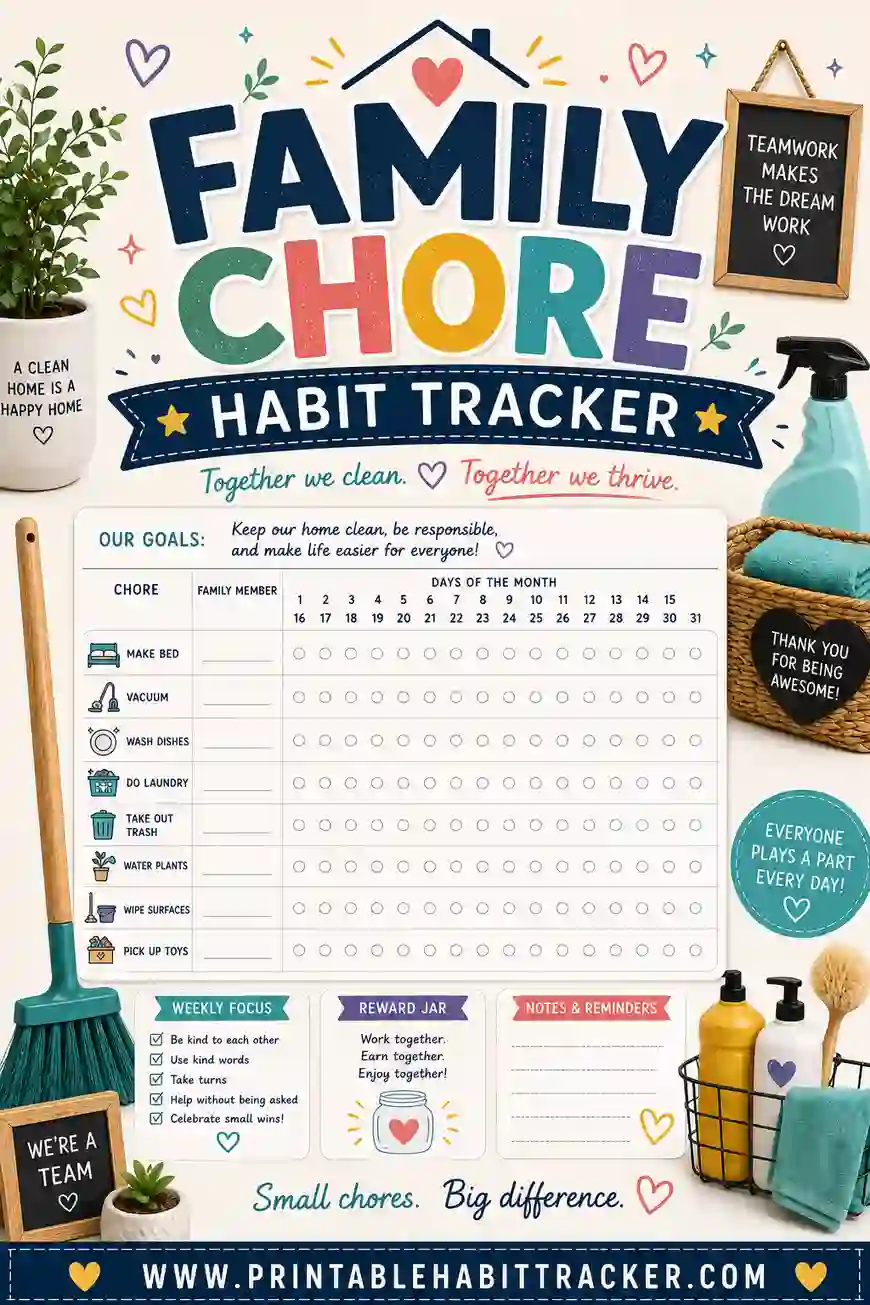
A family chore habit tracker is a printable chart that lists each person's chores and routines, with a box to check off every time a task gets done. It turns the endless "did you take out the trash?" nagging into a glance at the fridge, shares the household load fairly, and helps kids build chore habits that actually stick. The quickest way to set one up is to use a free printable habit tracker, add each family member's chores, and print a chart everyone can see.
Ready to go? Open the free tracker, choose a weekly layout, add your family's chores, and print. No sign-up, no app, no cost.
Why a Chore Tracker Beats Nagging
Every household runs on invisible work, and somebody usually ends up carrying more than their share. A chore tracker drags that work into the open. Once it's written on a chart everyone can see, you stop being the family manager who has to remember and remind. The chart does the reminding.
For kids, a visible chart works almost like magic. Children respond to clear expectations and the small thrill of checking a box. Instead of a parent hovering, the kid looks at the chart, sees the empty box next to "feed the dog," and fills it. The chore becomes theirs, not yours.
It's also fairer. When everyone's chores are listed side by side, it's obvious if one person is doing five things and another is doing one. That visibility alone tends to even things out, because nobody likes being the row with all the checkmarks while another row sits empty.
What to Track: Chores by Age
The trick to a chore tracker that lasts is matching chores to what each person can actually handle. Give a four-year-old dishes and you'll both be frustrated; give a teenager only "make your bed" and it's too easy to matter. Here's a starting guide.
| Age group | Good chores | Why it fits |
|---|---|---|
| Toddlers (2–4) | Put toys away, fill the pet bowl, wipe a table | Builds early routine with simple, picture-clear tasks |
| Kids (5–9) | Make bed, set the table, feed pets, tidy room | Old enough for daily responsibility and a sense of pride |
| Tweens (10–12) | Dishes, take out trash, fold laundry, vacuum | Ready for chores that genuinely help the household |
| Teens (13+) | Cook a meal, mow lawn, clean bathroom, do laundry | Building real-life skills they'll need on their own |
| Parents | Bills, groceries, deep clean, meal planning | Putting your own load on the chart models that everyone helps |
Notice the last row. Adding parents' tasks to the chart matters more than it sounds. It shows kids that chores aren't a punishment handed down from above — they're just how a household runs, and everyone pitches in.
Daily chores vs. weekly chores
Split your chart into two kinds of tasks. Daily chores are the small, repeating ones: make the bed, feed the pet, clear your plate. They suit a weekly grid with a box for each day. Weekly chores are the bigger jobs that happen once: mow the lawn, clean the bathroom, change the sheets. List these separately with a single box. Mixing both keeps the chart realistic — not everything needs doing every day.
Pick a Chart Layout That Fits Your Family
The right layout depends on your family's size and how you like to run things. The tracker tool gives you several options.
| Layout | Best for | Example |
|---|---|---|
| Weekly grid | The everyday chore routine | Each chore as a row, Mon to Sun columns |
| One sheet per child | Families who want kids to own their own chart | A personal tracker per kid, taped to their door |
| Combined family chart | Seeing the whole household at a glance | All names and chores on one big fridge sheet |
| Monthly | Tracking bigger rotating jobs | A grid for weekly deep-clean tasks |
A popular setup is one big weekly chart on the fridge for daily chores, plus a small monthly sheet for the bigger rotating jobs. Two pages cover the whole household.
How to Set Up Your Family Chore Tracker in 4 Steps
No laminating machine or craft skills needed. Here's the whole process.
- List the chores. Use the age guide above. Match each chore to who can handle it.
- Choose a weekly layout. Open the generator and pick it.
- Add names and chores. One chore per row, grouped by person. Keep labels short and clear.
- Print and post it. The fridge is the classic spot. Tape a pen right next to it so checking off is effortless.
That's it — a few minutes from idea to a chart on the fridge. Print on regular paper, or slip it in a sleeve so kids can mark with dry-erase markers and you wipe it clean each week.
Should you tie chores to an allowance?
This is up to your family, and both ways work. Some families pay a set allowance for completing the week's chores, using the tracker as proof. Others keep basic chores unpaid (they're just part of being in the family) and reserve pay for bigger optional jobs. Whichever you choose, the chart makes it fair and clear — there's no arguing about who did what when the boxes are right there.
A Sample Family Week
Here's what a filled-in week might look like for two kids and a shared task. A check means done.
| Chore (who) | Mon | Tue | Wed | Thu | Fri |
|---|---|---|---|---|---|
| Make bed (Mia) | ✓ | ✓ | — | ✓ | ✓ |
| Feed dog (Mia) | ✓ | ✓ | ✓ | ✓ | ✓ |
| Set table (Leo) | ✓ | — | ✓ | ✓ | ✓ |
| Take out trash (Leo) | — | — | ✓ | — | ✓ |
| Tidy living room (both) | ✓ | ✓ | — | ✓ | — |
It's not a flawless grid, and that's exactly right. The gaps are useful: trash is clearly the chore Leo forgets, so maybe it needs a set time (right after dinner) or a reminder. The chart turns "you never take out the trash" into a calm, factual conversation.
Making the Tracker Work Long-Term
Plenty of chore charts start strong and fade by week three. A few habits keep yours alive.
- Put it where the family lives. The fridge or kitchen wall, not a bedroom nobody enters. Visibility is everything.
- Keep a pen attached. If checking off means hunting for a marker, it won't happen.
- Review it together weekly. A two-minute family check-in on Sunday resets the week and keeps it fair.
- Rotate the boring jobs. Nobody should be stuck with trash duty forever. Swap chores monthly to keep it fresh.
- Celebrate a full week. A movie night or pizza for a fully checked chart gives everyone a reason to keep going.
When a kid stops checking boxes
If a child's row goes blank, resist the lecture. First, check the chore actually fits their age — too hard and they'll avoid it. Then shrink it or tie it to a routine they already do: "feed the dog right after you get home from school." Linking a chore to an existing habit is the single best way to make it automatic. A small chore that actually gets done beats a big one you have to fight over.
Turning Chores Into Real Habits, Not Just Tasks
There's a difference between getting a chore done once and turning it into a habit your kid does without being told. The tracker is the bridge between the two. Every checked box is a tiny rep, and after enough reps the behavior wires itself in. The goal isn't a perfectly clean house this week — it's a kid who, a year from now, clears their plate on autopilot.
A few things speed that wiring along:
- Same time, same place. Habits stick to anchors. "Set the table right before dinner" beats "set the table sometime today." The fixed cue does the remembering.
- Praise the streak, not just the task. "You've fed the dog five days straight" lands harder than "good job today." Kids love watching a streak grow, just like adults do.
- Let natural consequences teach. If the trash row stays empty, the bin overflows. A calm "looks like trash didn't happen" beats a lecture, because the chart already showed it.
- Keep the chore visible until it's automatic. Don't retire a chore from the chart the moment it's done once. Leave it on until checking it feels like second nature, then you can let it fade.
The chart is training wheels. Eventually the habit holds on its own, and that's the real win — you're not raising a kid who does chores because you're watching, but one who does them because that's just how they live.
Keep it fresh so it doesn't go stale
Even a great chart loses its spark after a few months. Refresh it before that happens. Swap in new chores as kids grow, rotate the jobs nobody likes, and reprint a clean sheet so it feels new again. Some families change up the colors or add a small monthly reward tier to keep the novelty alive. A chart that evolves with your family stays useful; a frozen one slowly gets ignored.
This kind of shared, visible system works beyond chores, too. You can build the same sort of tracker for your own daily productivity, one tuned for kids juggling schoolwork, or a couples habit tracker for goals you and your partner share.
Frequently Asked Questions
At what age can kids start using a chore tracker?
As young as two or three, with very simple picture-clear tasks like putting toys away or filling the pet bowl. Toddlers love checking a box, and starting early builds the routine habit. Just match the chores to what they can genuinely do, and grow the list as they grow.
Should chores be tied to allowance?
That's a family choice and both approaches work. Some families pay a set allowance for completing the week's chores; others keep basic chores unpaid as part of being in the family and pay only for bigger optional jobs. Either way, the tracker keeps it fair by showing exactly who did what.
Is the family chore tracker free to print?
Yes. You build it and print it yourself at no cost — no sign-up, no watermark, no subscription. The tracker tool lets you make as many charts as you need and reprint a fresh one every week or month.
Where's the best place to put a chore chart?
Somewhere central that the whole family passes daily — the fridge is the classic winner. A chart in a bedroom nobody enters gets forgotten. Keep a pen attached so checking off a chore takes one second, and the chart will actually get used.
How do I get my kids to stick with it?
Make it visible, keep it fair, and tie chores to routines they already have ("feed the dog right after school"). Review it together weekly, rotate the boring jobs so no one's stuck, and celebrate a fully checked week. Letting kids own their own row makes the difference.
How many chores should each child have?
Keep it age-appropriate and short — usually two to four daily chores for kids, a few more for teens. Too many and the chart becomes overwhelming and gets ignored. Start small, make sure those stick, then add as your child shows they can handle more.
Ready to Build Your Family Chore Tracker?
List the chores, match them to each person, open the free tracker, and print a clean chart in minutes. It's free, there's no sign-up, and you can choose the layout that fits your household. Stick it on the fridge, hang a pen beside it, and watch the nagging turn into a quiet glance — with everyone pitching in.