Habit Tracker for Couples: Free Printable to Grow Together
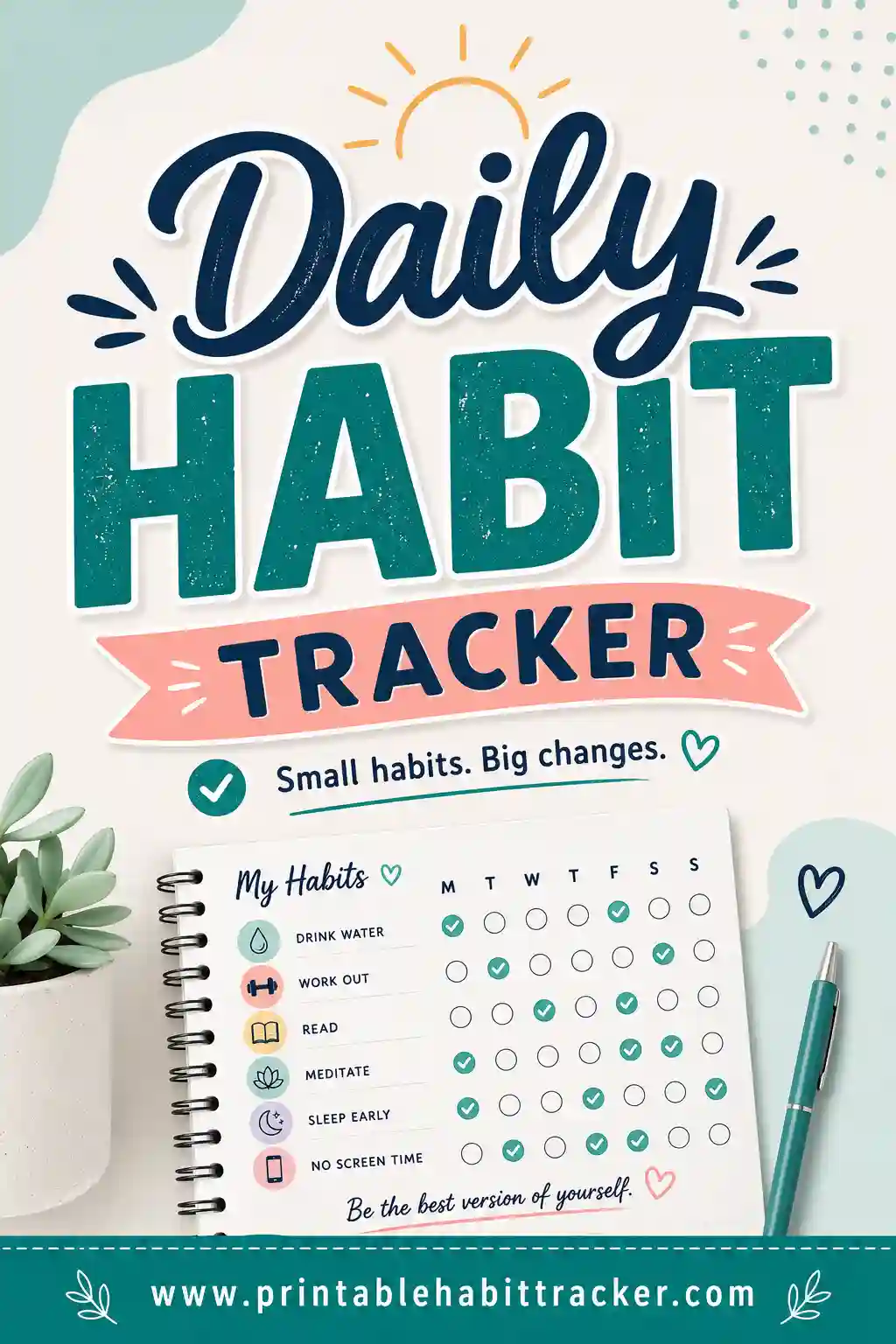
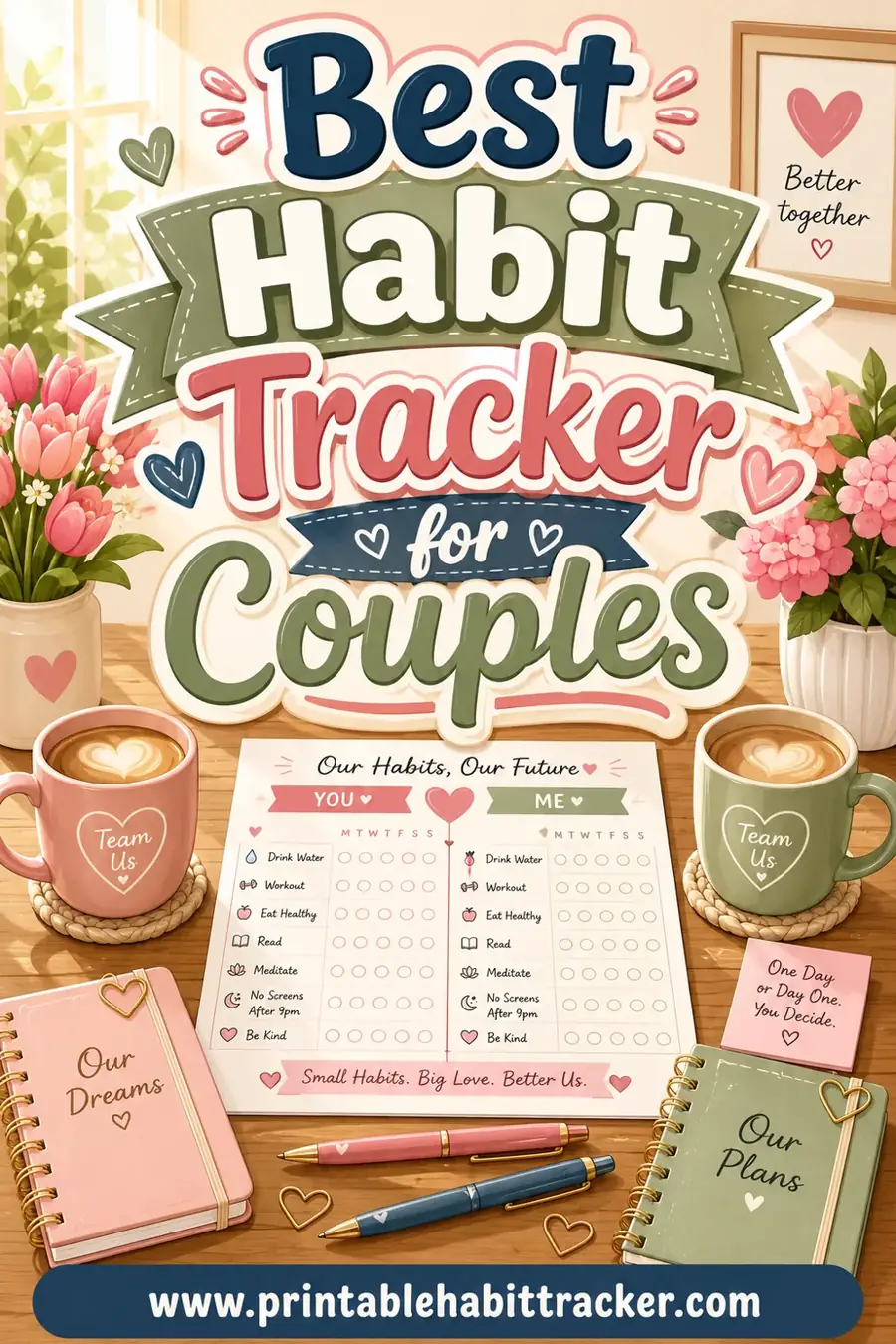
A habit tracker for couples is a shared printable chart where you and your partner list the habits you want to build together — date nights, saving money, working out, saying thanks — and check off a box each time you follow through. Doing it side by side turns solo goals into a team effort, adds gentle accountability, and gives you both something satisfying to look at on the fridge. The easiest way to start is with a free printable habit tracker: add your shared habits and print one chart for the two of you.
Want to dive in? Open the free tracker, pick a weekly layout, add the habits you both care about, and print. No sign-up, no app, no cost.
Why Track Habits as a Couple
Building a habit alone is hard. Building one with someone cheering you on is a lot easier. When you and your partner share a tracker, you get a built-in accountability buddy who actually cares whether you follow through — and so do you, for them.
There's also something quietly bonding about it. Working toward shared goals, even small ones like a phone-free dinner, reminds you that you're a team. You celebrate the streaks together and pick each other up after a slow week. The chart becomes a little ritual you do as a couple, not a chore.
And it cuts down on a sneaky source of friction. A lot of relationship tension comes from invisible imbalances — who's doing the saving, who's planning the dates, who's keeping things connected. Putting shared habits on a chart you both see makes that work visible and fair, so it stops being a silent resentment and starts being a shared win.
What to Track: Habits That Strengthen a Relationship
The best couples' habits are a mix — some are about your bond, some are personal goals you support each other on. Here are ideas worth tracking, why each helps, and an easy way to mark it.
| Habit | Why it helps | How to track |
|---|---|---|
| Phone-free dinner | Protects real connection from screen distraction | Check when you both eat without phones |
| Weekly date night | Keeps the relationship a priority, not an afterthought | Check once a week when you have your date |
| Say one thank-you | Daily appreciation keeps both of you feeling seen | Check after you each say one genuine thanks |
| Work out | Shared health goals are easier with a buddy | Each partner checks after their workout |
| Save toward a goal | Turns a fuzzy dream into a visible streak | Check on the day you move money to savings |
| 10-min check-in | A short daily talk catches problems early | Check after you actually sit and talk |
| Cook together | Teamwork plus quality time in one habit | Check when you make a meal as a pair |
| No-phone first hour | More presence in the morning, less doomscrolling | Each checks if they stayed off socials |
You don't need all of these. Pick five that fit where you are right now. If you've been ships passing in the night, start with date night and phone-free dinners. Saving for something big? Make that a shared row.
Shared habits vs. individual goals
A great couples' tracker holds two kinds of rows. Shared habits you do together — date night, cooking, the daily check-in. Individual goals you each pursue but support each other on — your partner's gym habit, your reading habit. Mixing both means you're a team on the joint stuff and each other's biggest cheerleaders on the personal stuff. Give each partner their own column or color so it's clear who's checking what.
Pick a Layout That Fits Your Relationship
The right layout depends on how you two like to operate. The tracker tool offers a few options that work well for couples.
| Layout | Best for | Example |
|---|---|---|
| Shared weekly grid | The everyday couple routine | Habits as rows, both partners' boxes per day |
| Two-column sheet | Side-by-side personal goals | His habits, her habits, on one page |
| Monthly | Seeing your consistency at a glance | A dot grid of "date nights done" per month |
| Yearly | Big long-term goals like saving | One square per week toward a savings target |
A favorite setup is a shared weekly grid for your joint habits, plus a yearly page for one big goal you're chasing together — a trip, a down payment, a fitness milestone. Watching that long row fill in keeps you both motivated.
How to Build Your Couples' Tracker in 4 Steps
No fancy supplies, no design skills. Here's the whole thing.
- Choose your habits together. Sit down for five minutes and pick five rows you both actually care about. Buy-in matters.
- Pick a layout. A shared weekly grid is the easiest start. Open the generator and select it.
- Add your habits. One per row. Give each partner a column or a color so it's clear who's done what.
- Print and post it. The fridge or a shared bathroom mirror works great. Keep a pen nearby.
That's it — a few minutes from idea to a chart you both can see. Print on regular paper, or use a sleeve so you can mark with dry-erase and wipe it fresh each week.
Choose the habits together, not for each other
One golden rule: don't assign your partner habits they didn't agree to. A tracker is a team tool, not a way to nudge someone into changing. Pick the rows together, make sure you're both genuinely on board, and keep it encouraging. The moment it feels like nagging-on-paper, it'll get ignored. The moment it feels like a shared project, it sticks.
A Sample Couple's Week
Curious what a filled-in week looks like? Here's an example with five shared habits. A check means done.
| Habit | Mon | Tue | Wed | Thu | Fri |
|---|---|---|---|---|---|
| Phone-free dinner | ✓ | ✓ | — | ✓ | ✓ |
| Say one thank-you | ✓ | ✓ | ✓ | ✓ | ✓ |
| 10-min check-in | ✓ | — | ✓ | ✓ | — |
| Work out | — | ✓ | ✓ | — | ✓ |
| Save toward goal | — | — | — | — | ✓ |
It's not a perfect grid, and it doesn't need to be. The saving habit only happened on Friday (payday), which is exactly right. The gaps are gentle prompts, not failures — Wednesday's dinner got skipped, so maybe Thursday's was extra phone-free to make up for it. The chart sparks a kind, useful conversation instead of a blame game.
Keeping It Fun, Not a Chore
The fastest way to kill a couples' tracker is to turn it into one more obligation. Keep it light.
- Make it a ritual. Check the boxes together over morning coffee. Two minutes, side by side.
- Celebrate streaks together. A full week of date nights earns a real reward — a nicer dinner, a lazy Sunday, whatever you both love.
- Be kind about gaps. One missed box is a normal week. Never miss twice, and never use the chart as ammunition in an argument.
- Refresh it regularly. Swap habits as your life changes. A newly-engaged couple tracks different things than new parents.
When one of you falls behind
If one partner's column goes blank, lead with curiosity, not criticism. Maybe the habit doesn't fit their schedule, or it's too big. Shrink it — "work out" becomes "a 10-minute walk together" — or move it to a time that actually works. The goal is to support each other, not keep score. A small habit you both manage beats an ambitious one that causes friction.
Turning a Tracker Into a Connection Ritual
The couples who get the most from a shared tracker treat it as less of a checklist and more of a small daily ritual. The two minutes you spend filling in boxes together becomes a built-in moment to connect — a chance to ask "how'd your week go?" without it feeling like a Big Relationship Talk. The chart gives you an easy, low-pressure reason to check in.
That ritual does quiet work behind the scenes. Couples drift apart not from one dramatic thing but from a thousand small disconnections — distracted dinners, skipped check-ins, gratitude that goes unsaid. A tracker makes those small connections visible and intentional. You're not just hoping you'll have a date night; you're watching the row and protecting it.
- Pick a regular time to review it. Morning coffee or Sunday night both work. The fixed moment is what makes it a ritual instead of a chore.
- Use it to plan, not just record. A blank "date night" box on Wednesday is a prompt to actually schedule one before the week slips away.
- Let it spark gratitude. Seeing your partner's full row of workouts or thank-yous is a natural cue to tell them you noticed.
Done this way, the tracker stops being about productivity and starts being about presence — two people deciding, on paper, to keep showing up for each other.
Grow the goals as you grow
The habits you track at the start of a relationship aren't the ones you'll track years later, and that's how it should be. A new couple might track date nights and daily check-ins. A couple saving for a home adds a money row. New parents swap in "trade off the night shift" or "fifteen minutes just us." Refresh the chart whenever life shifts. A tracker that evolves with your relationship stays meaningful; a frozen one gathers dust.
This kind of shared, visible system works for the rest of your home life too. You can build a family chore tracker for the whole household, a personal productivity tracker for your own goals, or a student version if there are kids in the house.
Frequently Asked Questions
What habits should couples track together?
A mix works best: shared bonding habits like phone-free dinners, weekly date nights, and a daily thank-you, plus individual goals you support each other on, like working out or saving money. Pick the five rows you both genuinely care about right now rather than trying to track everything.
How do we use one tracker for two people?
Give each partner their own column or color so it's clear who's checked what. Shared habits get one box you both fill; individual goals get a box per person. A single sheet on the fridge keeps it visible, and you can check it off together over morning coffee.
Is the couples' habit tracker really free?
Yes. You build it and print it yourself at no cost — no sign-up, no watermark, no subscription. The tracker tool lets you make as many charts as you want and reprint a fresh one every week or month.
What if my partner isn't into the idea?
Start small and keep it fun, not forced. Pick one or two shared habits you both already half-want to do, like a weekly date night, and frame it as a team project rather than a self-improvement plan. Never assign your partner habits they didn't agree to — buy-in is what makes it stick.
How do we stop the tracker from causing arguments?
Treat it as a shared win, never as ammunition. One missed box is a normal week, so be kind about gaps and follow the "never miss twice" rule. If one of you falls behind, get curious about why and shrink the habit rather than keeping score. The chart should bring you together, not divide you.
What's the best layout for a couple?
A shared weekly grid is the easiest starting point — habits as rows with a box for each partner per day. Add a yearly page if you're working toward one big shared goal like a trip or a down payment; watching that long row fill in keeps you both motivated.
Ready to Build Your Couples' Habit Tracker?
Sit down together, pick five habits you both care about, open the free tracker, and print a shared chart in minutes. It's free, there's no sign-up, and you can choose the layout that fits your relationship. Stick it on the fridge, check the boxes side by side, and turn your goals into something you grow toward as a team.