Children's Chore Chart Printable: Free Charts Little Kids Can Use
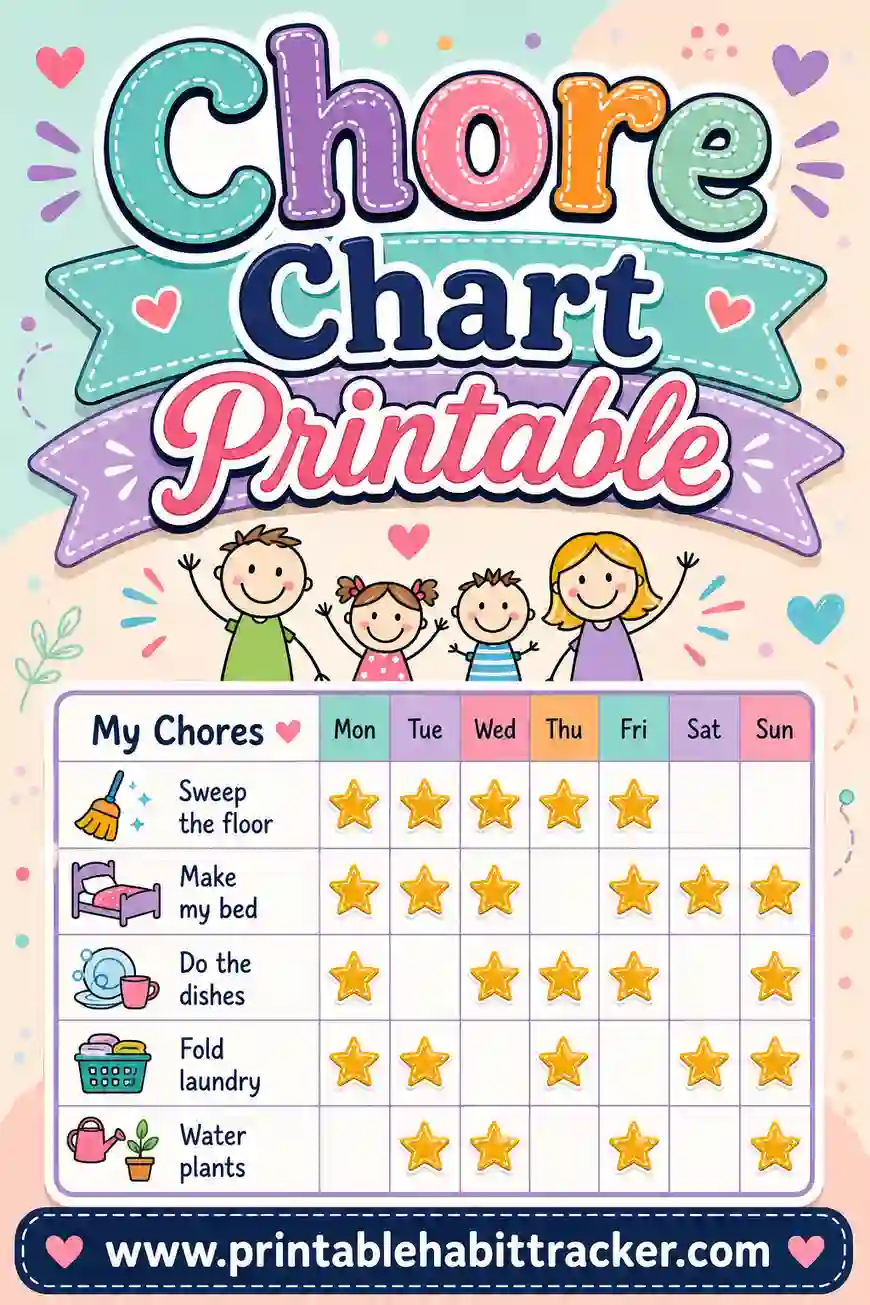
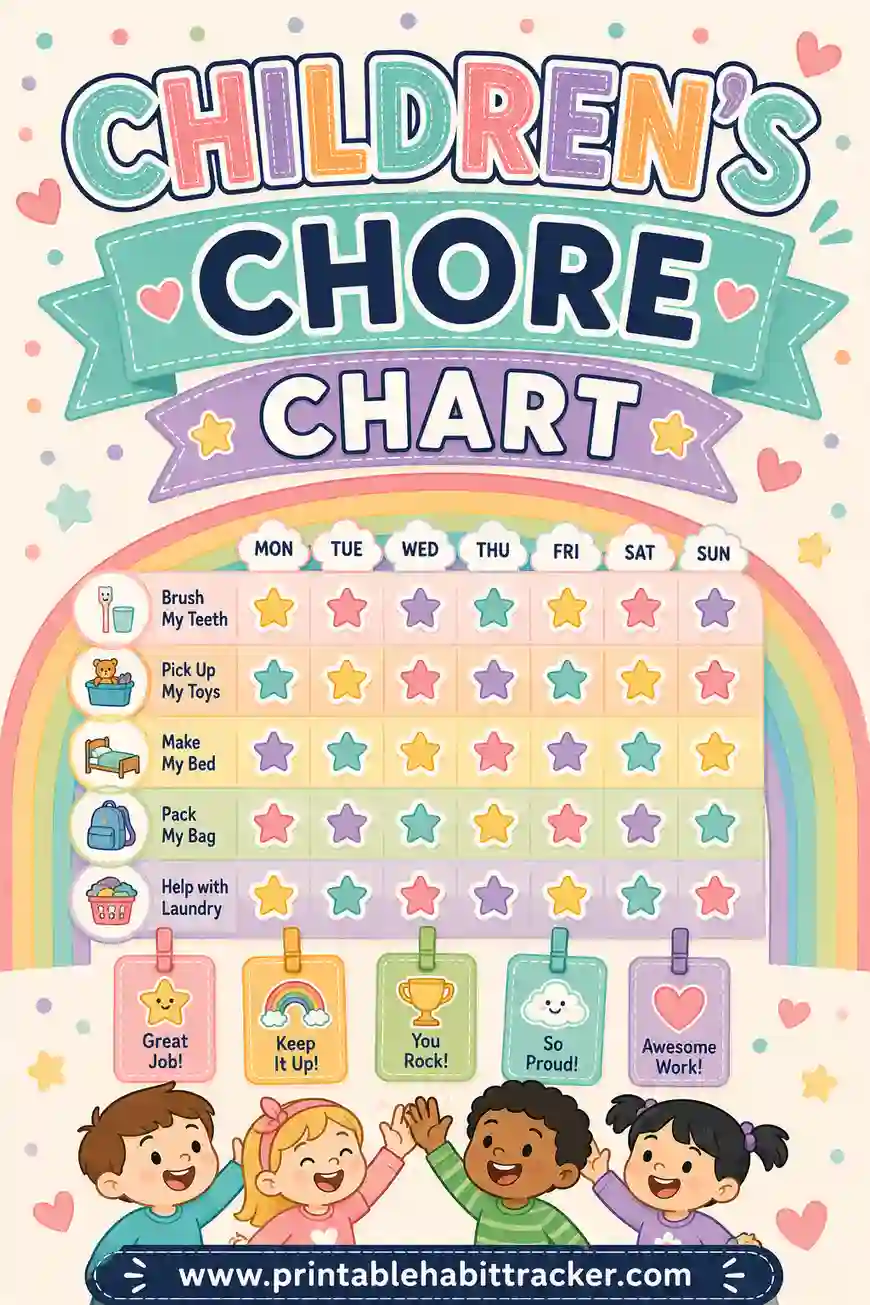
A children's chore chart printable is a simple grid made for small helpers: a few easy jobs listed down the side, the days of the week across the top, and a big box to check, color, or sticker every time a chore gets done. For kids roughly two to eight, it turns "go tidy up" from a battle into a game with a scoreboard. The fastest way to get one sized for your child is the free printable habit tracker builder — type in a few kid-sized chores, pick big color-in squares, and print.
Want one before bedtime? Open the free builder, type two or three chores your child can really do alone, choose the weekly layout with the color-in style, and hit print. No sign-up, no watermark, and you can reprint every week as your little one grows.
What Makes a Chore Chart Work for Young Children
A children's chart isn't just a regular chore chart with cuter fonts. Little kids interact with paper differently, and the chart has to meet them there.
They can't read fluently yet, so the chart needs few rows, short words, and a parent who reads it together with them at first. Two to four chores is plenty; the wall of rows that works for a ten-year-old just becomes wallpaper for a four-year-old.
Checking a tiny box isn't satisfying when your fine motor skills are still under construction. Big color-in squares are — filling one with a crayon scribble feels like a prize in itself. Stickers are even better, and the color-in style prints squares roomy enough for standard small stickers.
The reward is the doing, then the marking. For young children, the moment of coloring the square is the payoff. You don't need a toy economy; you need a chart at their eye level and a parent who makes a small ceremony of the marking. That's the whole engine.
The free builder handles all of this: your chores, big squares, a bright theme, one clean page.
Chores Children Can Actually Do, Age by Age
The golden rule: only put chores on the chart your child can finish without help. A chore they need you for is your chore wearing their name. Copy these straight into the builder and adjust for your kid.
| Age | Chores that work | How many rows |
|---|---|---|
| 2–3 | Toys in the bin, books on the shelf, dirty clothes in hamper | 1–2 |
| 4–5 | Make bed (kid-standard!), feed pet with supervision, set napkins, water one plant | 2–3 |
| 6–7 | Feed pet solo, clear own plate, pack school bag, match socks from laundry | 3–4 |
| 8 | Empty small trash cans, fold towels, wipe table after dinner, tidy shoes by the door | 4–5 |
Two things to notice. First, "make bed" at four means pulled roughly flat, not hospital corners — grade the job by their ability, not yours. Second, the jump from "with help" to "solo" is the whole developmental game. Feeding the pet with you at three becomes feeding the pet alone at six, and the chart row quietly documents that growth.
Keep chore names tiny and concrete
"Clean your room" means nothing to a five-year-old. "Toys in the bin" is one action with a clear finish line. If a job has three parts, it's three rows — short rows get done, vague ones get tears.
How to Make a Children's Chore Chart in 4 Steps
- Pick two to four chores together. Let your child help choose from your shortlist in the free builder — kids protect what they helped build. Put their name in the title: "Ellie's Helper Chart."
- Choose the weekly layout and color-in style. Seven days across, one big square per day. The color-in squares are the child-friendly move: crayon-sized, sticker-sized, satisfying.
- Pick a bright theme. Sunset, Ocean, or Blush make the chart feel like theirs; or print Classic black-and-white and let them decorate the header — instant ownership.
- Print and hang it low. Letter or A4, one page. Tape it to the fridge at your child's height, or on their bedroom door. If they can't reach it, they can't own it.
The chart saves in your browser, so when your three-year-old turns four and "napkins on the table" enters the rotation, updating is a ten-second edit and a reprint.
Chart Styles for Different Ages
The sticker chart (ages 2–4)
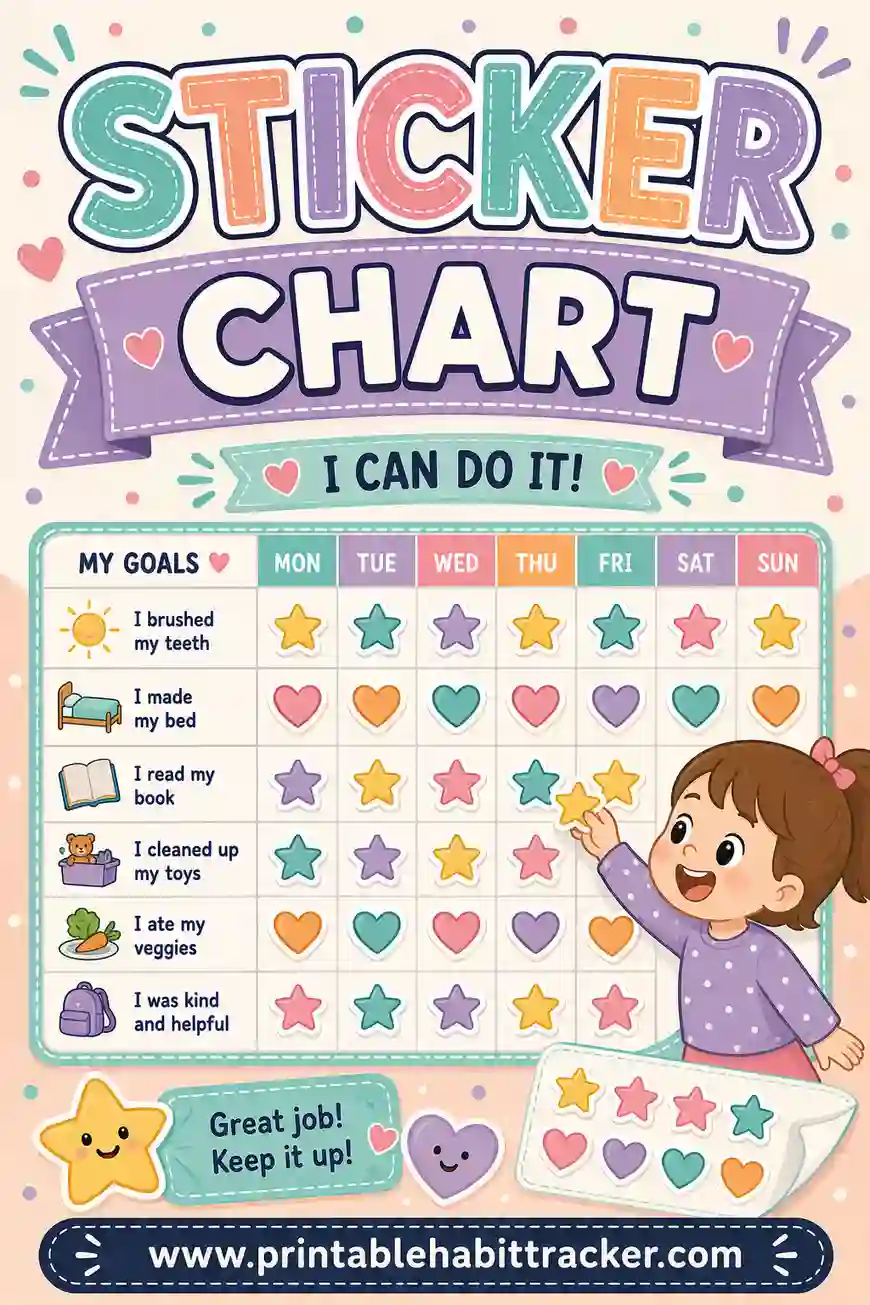
One or two rows, giant squares, and a sticker for every success. At this age the chart is really a celebration device — the chore matters less than the ritual of "you did it, go get your sticker." The sticker chart guide covers this stage in loving detail.
The color-in chart (ages 4–6)
Two to four rows, color-in squares, crayons stationed nearby. Let them pick a different color each day if they want — the chart ends the week looking like confetti, which is exactly right.
The checkmark chart (ages 6–8)
Once writing feels natural, checkboxes start feeling "grown-up," which is its own motivation. Four or five rows, maybe a reward box with a small weekly goal written in it. This is the bridge to the full family chore chart system.
The routine-and-chores combo
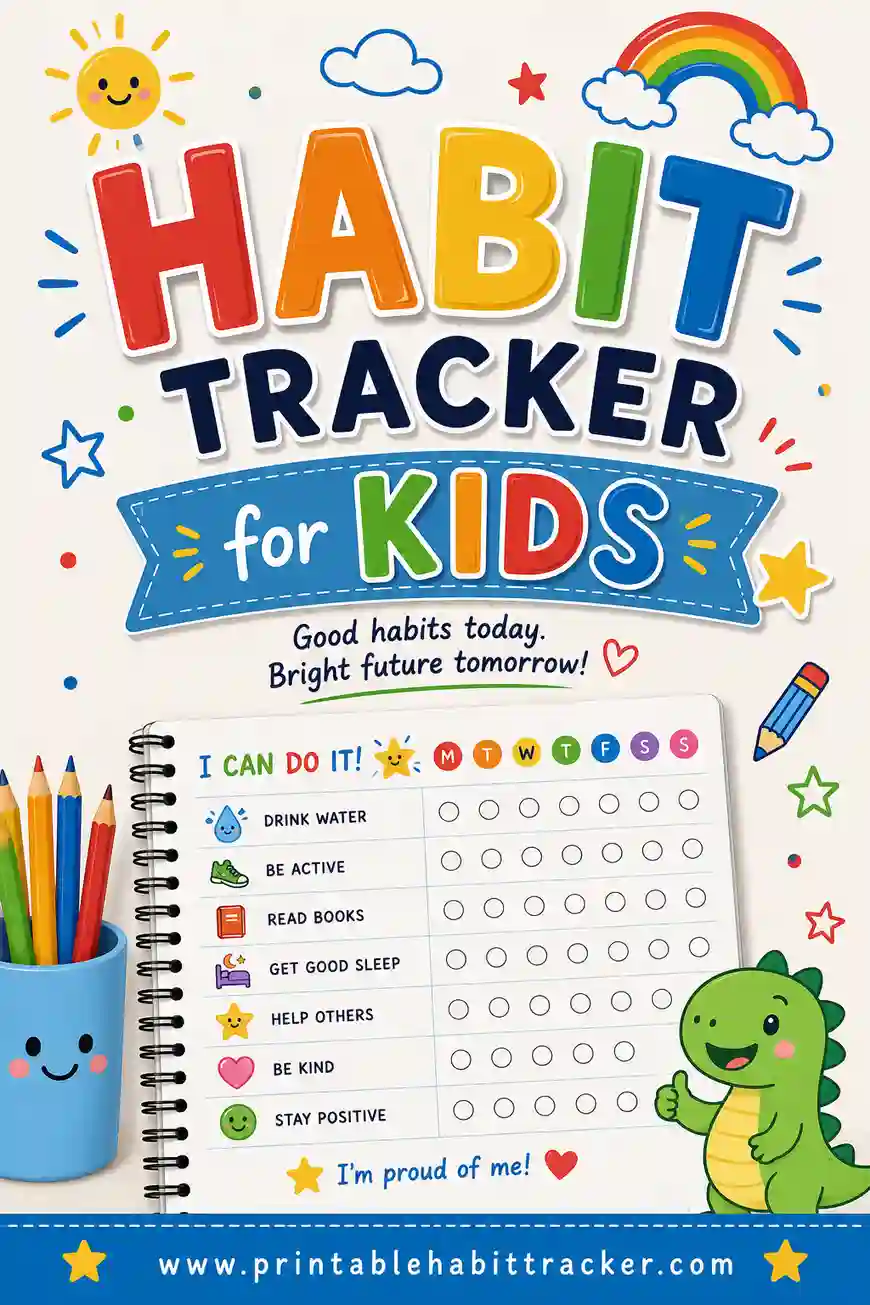
Many families fold morning and bedtime routines into the same sheet — "brush teeth," "pajamas on," "backpack by the door" alongside the chores. One chart at kid height beats three. For the routine-heavy version, see the habit tracker for kids.
Making It Stick: The Parent's Part
A children's chore chart printable lives or dies on about five minutes of parenting rhythm a day.
- Same time, every day. After dinner works for most families. The child does the marking — you're the audience, not the accountant.
- Praise the row, not just the day. "Look — four days in a row of feeding Biscuit!" Streaks are visible on paper in a way words aren't, and children genuinely feel proud of a filling row.
- Never un-mark a square. A colored box is earned and stays earned. If behavior needs addressing, address it separately — the chart only records wins.
- Let a missed day just be blank. No lectures over an empty square. Tomorrow's box is right there.
- Retire the chart's chores upward. When a chore becomes automatic — no reminders for two weeks straight — celebrate it, take it off the chart, and add the next one. That's the system working, not the chart failing.
A Sample Children's Chore Chart
Here's a filled-in week for a five-year-old — copy it into the builder and make it yours.
| Chore | Mon | Tue | Wed | Thu | Fri | Sat | Sun |
|---|---|---|---|---|---|---|---|
| Toys in the bin | 🟩 | 🟩 | 🟩 | ⬜ | 🟩 | 🟩 | 🟩 |
| Feed the fish | 🟩 | 🟩 | 🟩 | 🟩 | 🟩 | 🟩 | 🟩 |
| Clothes in hamper | 🟩 | ⬜ | 🟩 | 🟩 | ⬜ | 🟩 | 🟩 |
A full fish row (their favorite job), a couple of blanks elsewhere, and a chart that's mostly color. That's a great week for a five-year-old. Sunday ritual: count the squares together — "seventeen! Can we beat it next week?" — and print the fresh sheet.
Printing Tips for Small Hands
- Print the color-in style for squares big enough for crayons, dot markers, and stickers.
- Regular paper is fine — this sheet is supposed to get scribbled on and replaced weekly.
- Laminate one copy for a reusable version with dry-erase markers; little kids love the Sunday wipe-clean job (make it a chore!).
- Landscape orientation makes squares even bigger if you only have two or three rows.
- Black-and-white plus their crayons beats full color from your printer — decorating the chart is half the fun and saves your ink.
- Print two copies — one for the fridge, one spare for when a juice cup finds the first.
Common Mistakes With Children's Charts
- Too many chores, too young. A two-year-old with five rows has a parent with five reminders. One or two rows until the marking habit itself is solid.
- Chores above their ability. If it needs your help to finish, it can't be their row yet. Scale down and grow into it.
- Turning it into a punishment ledger. Removing stickers or scolding over blanks teaches kids to fear the chart. It records wins, full stop — behavior struggles belong in a different conversation.
- Big delayed rewards. "A toy at the end of the month" is geological time to a four-year-old. The marking itself, plus maybe a small weekly treat, matches how young kids experience time.
- Parent does the marking. The crayon belongs in the small hand. Ownership is the lesson underneath the chores.
Frequently Asked Questions
Is the children's chore chart printable really free?
Yes — completely free. The builder has no sign-up and no watermark. Build the chart, print it or save it as a PDF, and reprint fresh copies every week as your child grows.
What age should children start a chore chart?
Around two to three, with a single picture-simple chore like "toys in the bin." At that age it's really a helping-is-fun ritual, not a productivity system — and that ritual is exactly what grows into real responsibility later.
Stickers, crayons, or checkmarks — which is best?
Whatever your child reaches for. Rough guide: stickers at 2–4, coloring at 4–6, checkmarks from 6 up. The color-in square style prints boxes that work for all three, so you don't have to rebuild the chart as they change.
Should young children get rewards for chores?
Keep it small and immediate: the marking ritual, praise for streaks, maybe a weekly treat like choosing Friday's movie. Most families skip money at this age — the goal is "helping is what we do," and the chart makes the helping visible.
What if my child loses interest after the first week?
Totally normal — novelty fades around day six. Three reboots that work: print a fresh chart in a new theme and let them decorate the header; swap one chore for a new one they choose themselves; or move the marking moment to a more fun anchor, like right before the bedtime story. If none of that lands, the chart may simply have too many rows for their age — cut back to one or two and rebuild the winning streak first. Interest follows success, not the other way around.
Can I put two children on one chart?
You can — list both kids' chores and turn on color-coding so each child's rows print in their own color with a key. But under age six, one chart per child usually works better: their name on top, their squares, their crayon. The chore chart guide covers multi-kid setups.
Ready to Print Your Child's First Chore Chart?
Pick two chores they can nail, open the free children's chore chart builder, add their name to the title, choose big color-in squares and a bright theme, and print. It's free, it takes five minutes, and tonight's "toys in the bin" might end with a crayon ceremony instead of a standoff. Small squares, big deal.