Free Printable ADHD Routine Charts: Custom Charts That Carry the Load
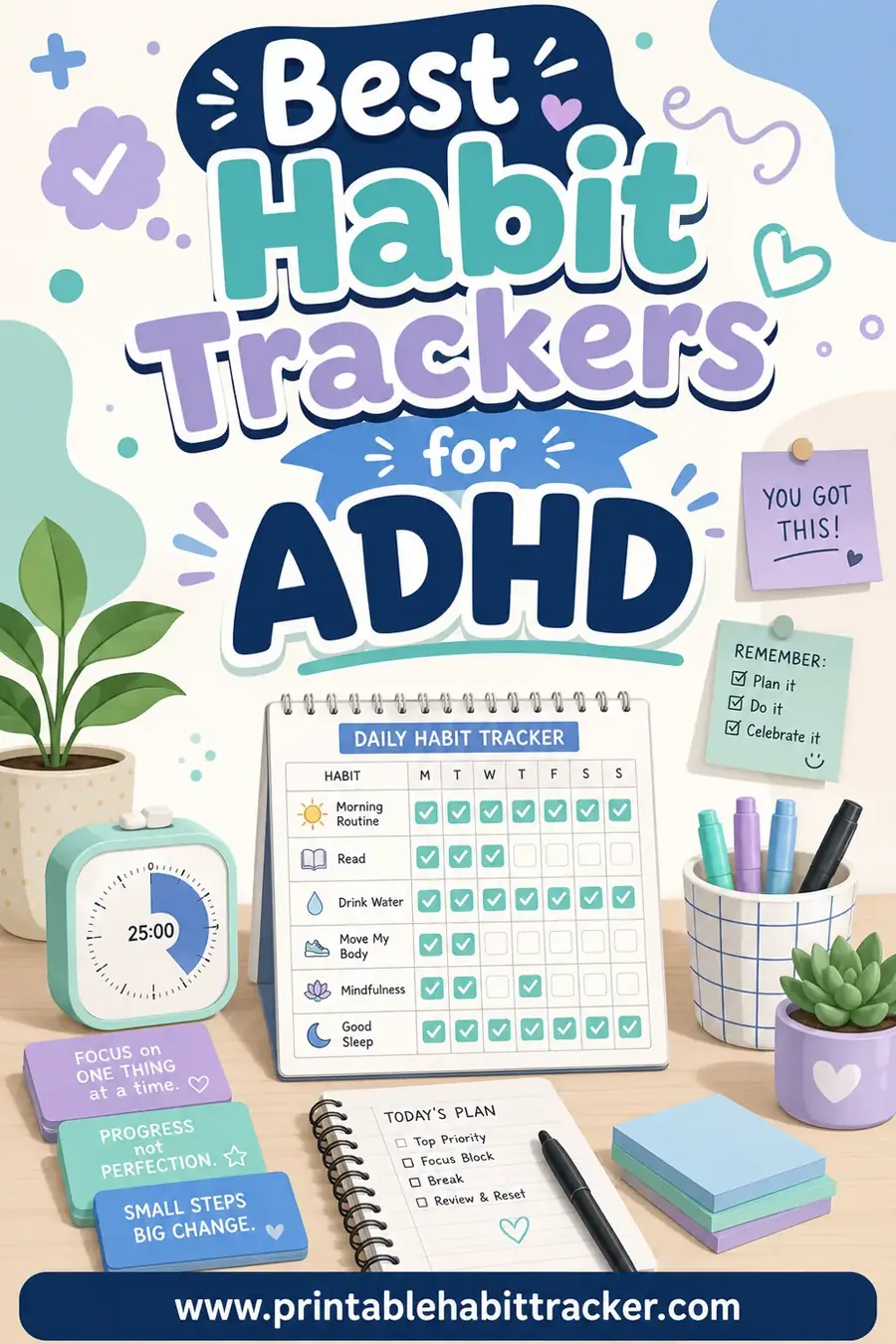
Free printable ADHD routine charts are simple paper grids that take a routine out of working memory and put it on the wall: every step of the morning, after-school, or bedtime sequence listed in order, with a box to check as each one gets done. For an ADHD brain — kid or adult — that external checklist isn't a nice-to-have; it's the difference between a routine that happens and one that evaporates by step two. The fastest way to get charts that fit your actual routines is a free printable habit tracker builder — type in your steps, pick a layout, and print as many charts as your day needs.
Want one right now? Open the free builder, type each routine step on its own line, choose the weekly layout with big color-in squares, and hit print. No sign-up, no watermark, and reprinting a tweaked version tomorrow costs nothing — which matters, because ADHD routines get tweaked a lot.
Why ADHD Brains Need Routines on Paper
ADHD isn't a knowledge problem — everyone knows the morning steps. It's a working-memory and activation problem: the plan that was crystal clear at 7:00 is gone by 7:04, replaced by an interesting sock. Executive-function researchers describe the fix in three words: externalize the routine. Get the sequence out of the head and into the environment, at the point where it's needed.
That's exactly what a printed routine chart does:
- It remembers so you don't have to. The next step is always answerable by looking up, not by reconstructing the plan mid-distraction.
- It survives the derailment. Distraction happens — the chart is still on the wall when you surface, showing exactly where you left off.
- Checking a box is a dopamine hit. Small, instant, physical. ADHD brains under-respond to distant rewards and respond strongly to immediate ones; a chart converts "get ready for school" into eight tiny wins.
- It ends the nagging spiral. For kids, "check your chart" replaces the parent-as-human-alarm-clock dynamic that erodes everyone by Thursday.
Apps promise the same thing, then hide behind a lock screen next to fourteen more interesting apps. Paper on the wall can't be swiped away.
One Chart Per Routine, Not One Chart for Everything
The single biggest ADHD-chart mistake is the mega-chart: one glorious page with the whole day on it, abandoned by Wednesday. ADHD-friendly means small and located. Build separate charts and hang each where the routine happens:
| Chart | Steps (rows) | Where it hangs |
|---|---|---|
| Morning | Meds, breakfast, teeth, dressed, bag by door, shoes | Bedroom or bathroom door |
| After school / work | Bag unpacked, snack, 10-min reset, homework or one task started | Kitchen or entryway |
| Bedtime | Screens off 9:00, tomorrow's clothes out, teeth, meds, lights out | Bedroom wall |
| Weekly reset (adults) | Laundry in, meds refilled, keys/wallet station, calendar checked | Wherever Sunday happens |
Three to six steps per chart. If a routine needs ten steps, it's two routines — split it.
Rows that earn their place on an ADHD chart
A few rows do outsized work for ADHD households: medication (the highest-stakes checkbox of the day), "launch pad" steps like bag-by-the-door and keys-on-the-hook that prevent tomorrow's crisis tonight, and transition steps like "10-minute reset" that bridge the brutal gap between arriving home and starting anything.
How to Make an ADHD Routine Chart in 4 Steps
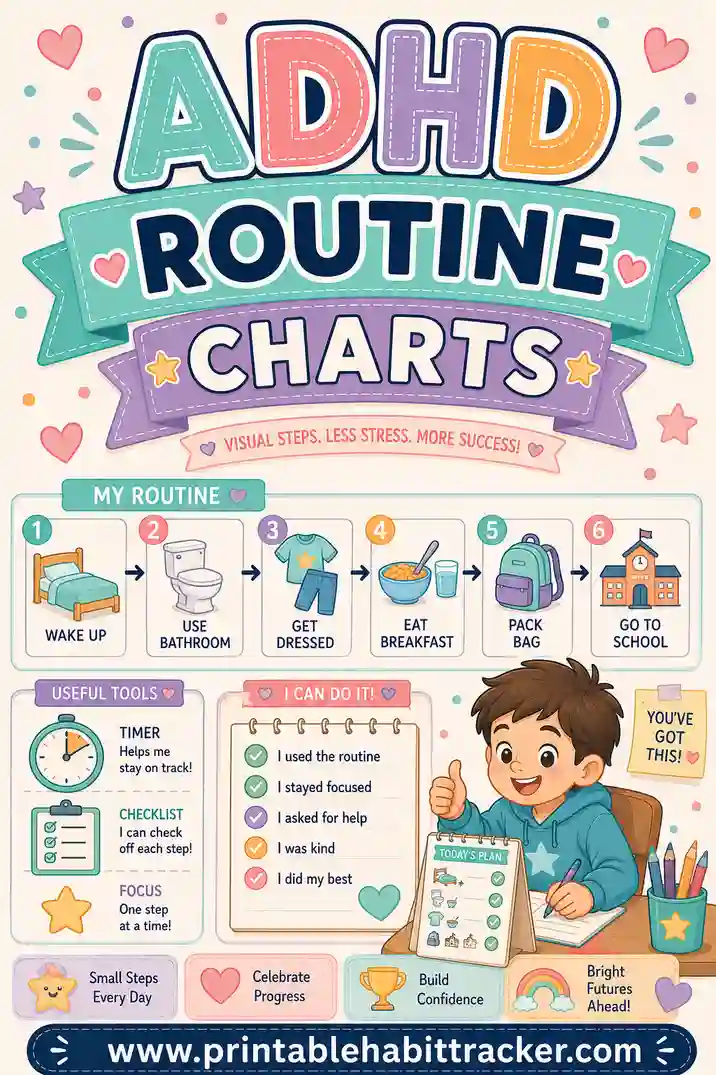
- Pick ONE routine — the one currently causing the most chaos. In the free builder, type each step on its own line, in the true order it happens. Concrete verbs: "meds with breakfast," not "get ready."
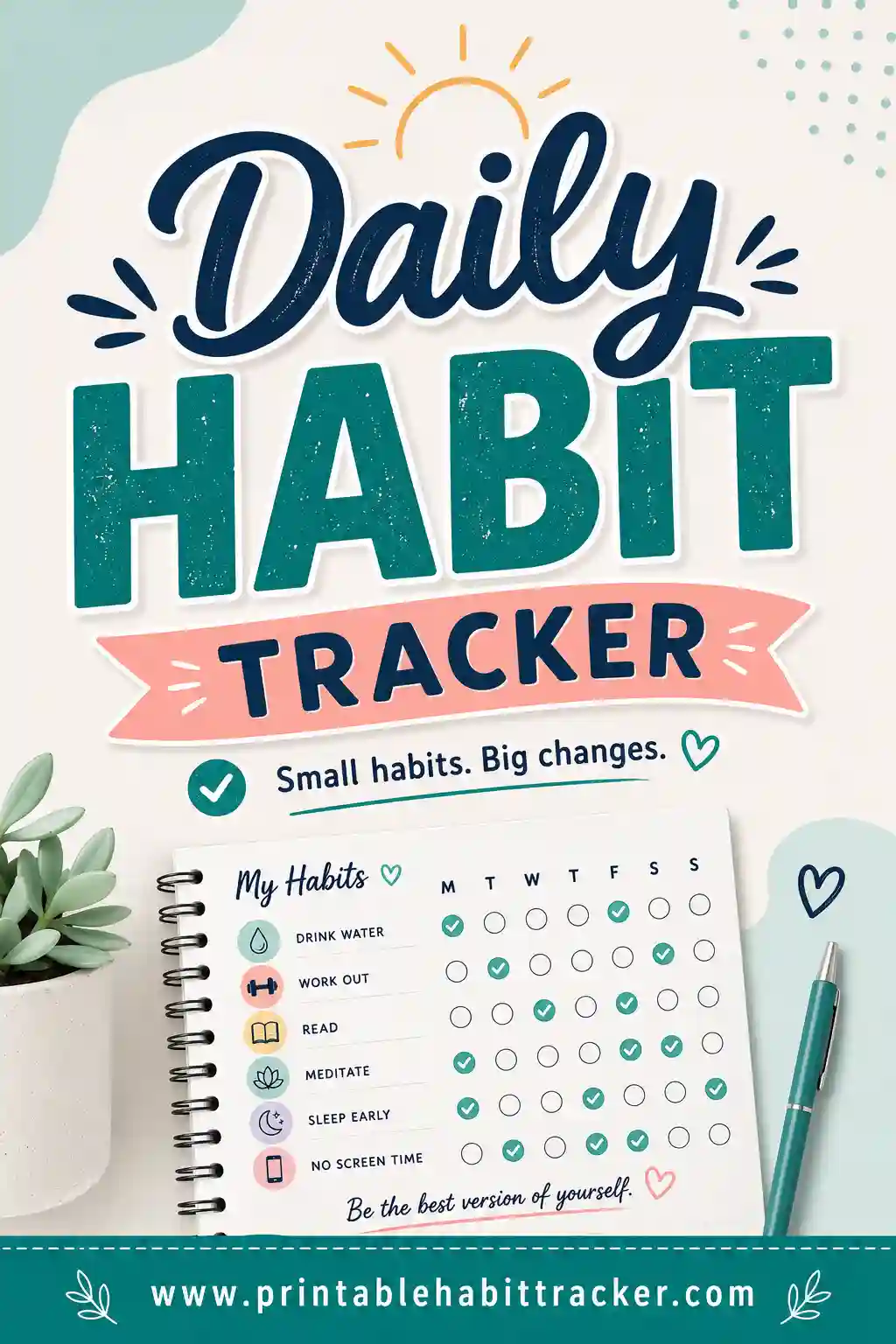
- Choose the weekly layout. Steps down the side, seven days across. The week view matters for ADHD: it shows the pattern ("Tuesdays fall apart") without any log-keeping effort.
- Go big and visual. Pick the color-in square style — large boxes, satisfying to fill, sticker-friendly for kids. Bright theme for a kid's wall; Classic black-and-white if visual noise is itself a distraction.
- Add streak boxes and a reward box, then print. Streaks gamify consistency; the reward box names a near reward — "4 smooth mornings = Friday doughnut," not something three weeks away. Print and hang it at the scene of the routine.
Your charts save locally in your browser. When a step stops working — and with ADHD, iteration is the method, not a failure — you edit and reprint in under a minute.
Making Charts Work for ADHD Kids vs. ADHD Adults
For kids
- They mark the boxes, always. The checking is the fun; do it for them and the chart dies.
- Narrate wins, ignore gaps in the moment. "Teeth done — box it!" beats any commentary on the empty boxes. Review gaps gently at week's end, not mid-meltdown.
- Race the routine, not the child. A timer plus a chart ("can you beat 7:45?") converts steps into a game without comparing them to siblings.
- Rebuild ownership at every age. A seven-year-old wants stickers; an eleven-year-old wants to design their own chart in the builder. Let them.
For adults
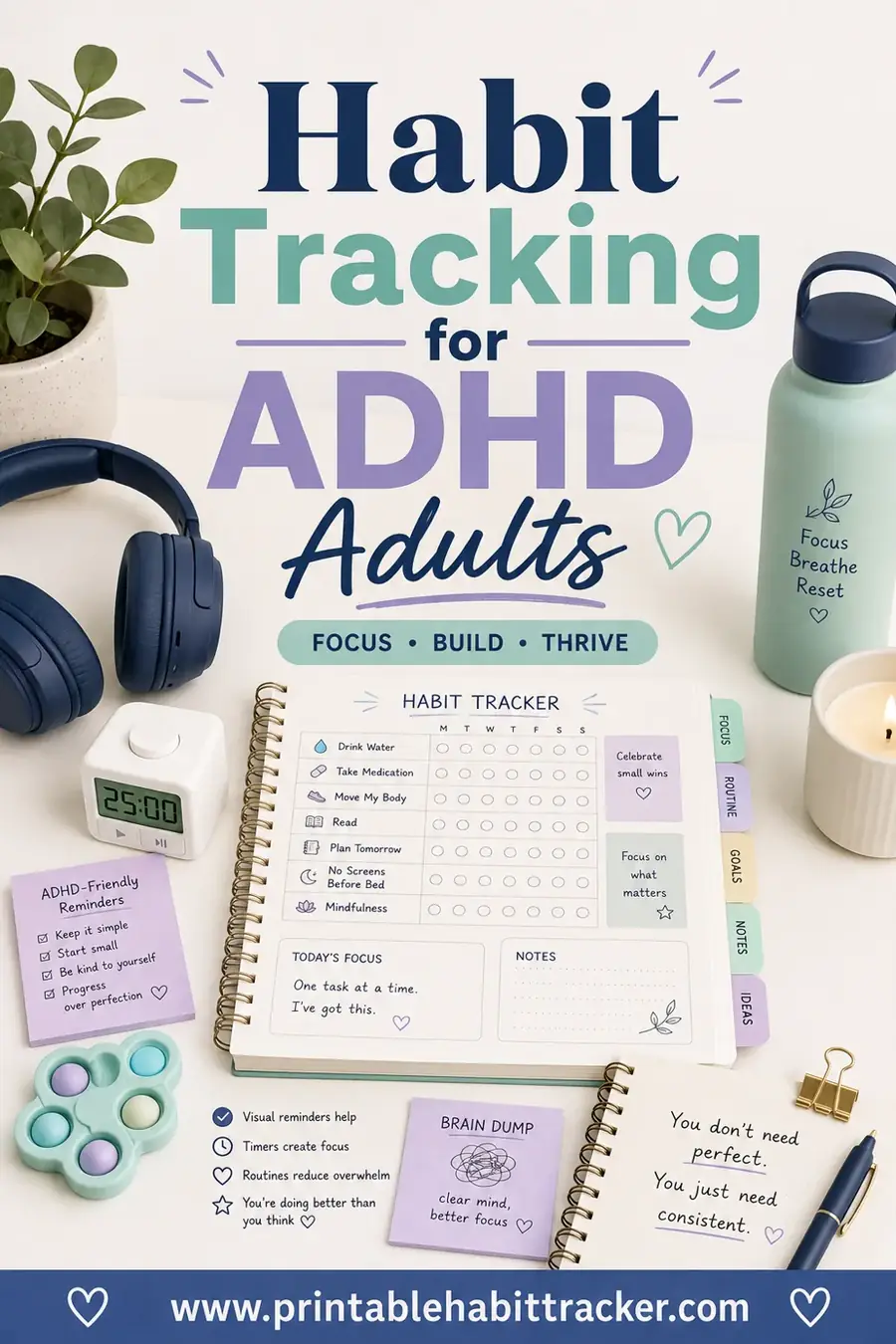
- Anchor charts to objects, not intentions. The chart lives on the bathroom mirror, the coffee maker, the front door — wherever the routine's first step already happens. See the full strategy in habit tracking for ADHD adults.
- Track showing up, not performing. "Opened the laundry app of life at all" is a checkable win. All-or-nothing rows are how ADHD trackers die.
- Expect the week-three fade — and plan the restart. Novelty wears off; that's neurology, not weakness. A fresh layout, new theme, or new reward from the builder restarts the novelty on demand. Reprinting is the system.
ADHD-Friendly Design Choices That Actually Matter
- Big boxes, few rows. Visual crowding is cognitive load. Five large rows beat ten small ones every time.
- Color-coding with the printed key. Color rows by routine phase or by person — ADHD eyes navigate color faster than text.
- The notes box as a "parking lot." Mid-routine thoughts ("need to email the school!") get parked in the notes area instead of derailing step four.
- Landscape + big print for wall reading. A chart must be readable from across the room, mid-motion, or it doesn't exist.
- The chain layout for one keystone habit. For a single make-or-break daily habit — meds is the classic — the full-year "don't break the chain" grid is the strongest visual pull the format offers. More options in the habit tracker for ADHD guide.
Pair the chart with a timer
Charts answer "what's next?"; timers answer "how long?" — and ADHD needs both, because time blindness is half the morning problem. Set a simple kitchen timer or phone alarm for each phase of the routine ("15 minutes for breakfast + meds"), and let the chart hold the steps while the timer holds the pace. For kids, "beat the timer, check the box" turns the whole routine into a game; for adults, the timer is the external clock your brain doesn't run natively. Two dumb tools on the wall beat one clever app in a pocket.
Common ADHD Routine Chart Mistakes
- The mega-chart. Whole-day charts collapse. Small chart, one routine, hung at the scene.
- Steps written as outcomes. "Be ready by 8" isn't a step; it's a wish. Steps are actions: shoes on, bag zipped, meds taken.
- Perfection scoring. A 60% week is a good ADHD week and deserves the reward. Set targets that survive a bad Tuesday.
- Punishing the empty box. The chart must stay emotionally safe or it becomes one more thing to avoid. Boxes are information; consequences live elsewhere.
- Quitting when it stops working instead of revising. Charts wear out like running shoes. When one goes stale, change the layout, the theme, the reward — thirty seconds in the builder — and momentum restarts.
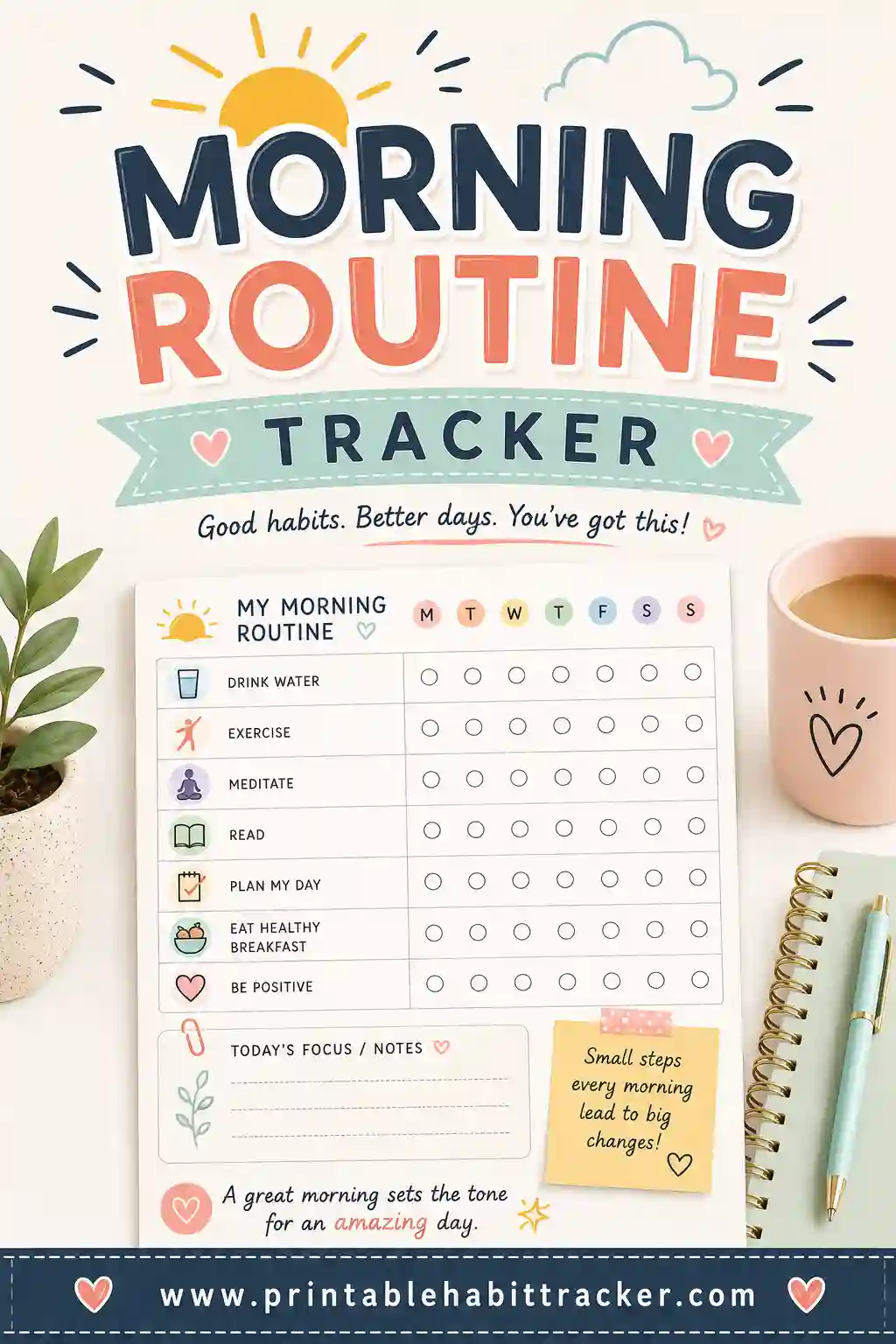
A Sample Filled-In Morning Routine Chart
A real-looking week for a nine-year-old's mornings:
| Step | Mon | Tue | Wed | Thu | Fri |
|---|---|---|---|---|---|
| Meds with breakfast | ✔ | ✔ | ✔ | ✔ | ✔ |
| Teeth brushed | ✔ | ✔ | ✔ | ✔ | |
| Dressed before 7:30 | ✔ | ✔ | ✔ | ||
| Bag packed & by door | ✔ | ✔ | ✔ | ✔ | ✔ |
| Shoes on by 7:45 | ✔ | ✔ | ✔ |
Reward box: "18+ boxes = Friday doughnut stop." Total: 20. Tuesday was a wreck and Thursday wobbled — and the week still cleared the bar, because the bar was set for a human with ADHD, not a robot. Meds and bag-by-door at five-for-five is the headline; those two rows were the whole point.
Frequently Asked Questions
Are the ADHD routine charts really free to print?
Yes — the builder is completely free, no sign-up, no watermark. Build each routine chart, print or save as PDF, and reprint endlessly as routines evolve. For ADHD use, that free reprinting is genuinely the killer feature.
What's the best routine chart format for ADHD?
Small and specific: one chart per routine, three to six steps, big color-in boxes, hung exactly where the routine happens. Weekly view for pattern-spotting, or the chain layout for one keystone habit like medication.
Do routine charts work for ADHD adults or just kids?
Both — the mechanism (externalizing working memory, instant visual reward) is the same at every age. Adults do best with charts anchored to physical locations and rows that reward showing up rather than perfection. The habit tracking for ADHD adults guide goes deeper.
My child ignores the chart after two weeks. Now what?
Completely normal — novelty is fuel for ADHD brains and it runs out. Refresh rather than abandon: new theme, new reward, let them rebuild it themselves in the builder, or shrink it to three steps for a week. A revived chart works as well as a new one.
Should the chart include consequences for missed steps?
No. The chart records wins and stays safe; consequences handled elsewhere keep the chart from becoming something to avoid. An empty box already carries its own information — "Tuesdays need an earlier alarm" — which is more useful than any punishment. A morning routine tracker approach with a gentle weekly review does more than any penalty column.
Ready to Put the Routine on the Wall?
Pick the routine that's causing the most 7:40 a.m. chaos, break it into five concrete steps, and open the free ADHD routine chart builder. Big squares, bright theme, streak boxes on, printed and taped up where the routine happens. It's free, it takes five minutes, and tomorrow morning the wall — not your working memory, and not your voice — gets to hold the plan.