Medication Tracker Printable: Free Daily Med Checklist to Print
A medication tracker printable is a one-page grid that answers the question every pill-taker knows too well: "wait — did I take it this morning?" Your medications go down the side, the days of the week or month go across the top, and every dose taken gets a checkmark the moment you take it. No more counting pills backward or taking a risky maybe-second dose. The fastest way to get a tracker that matches your exact meds and schedule is the free printable habit tracker builder: type each medication as a row, pick a layout, and print.
Want one before your next dose? Open the free builder, list each medication with its dose and time right in the name ("Metformin 500mg — 8am"), choose the weekly or monthly layout, and hit print. No sign-up, no watermark, nothing stored anywhere but your own browser.
What Is a Printable Medication Tracker?
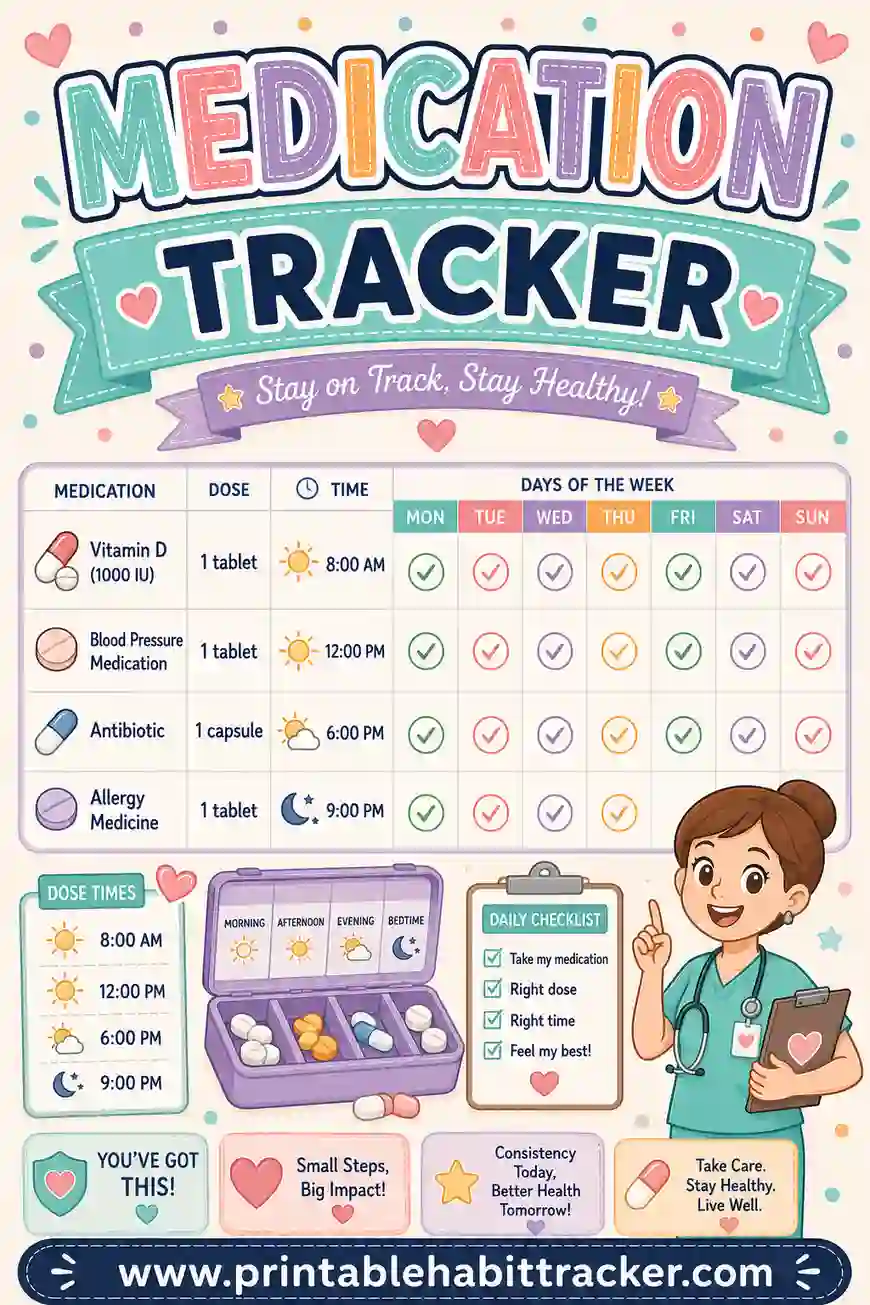
It's a simple check-grid for doses. Each medication (or each dose time) is a row; each day is a column; each taken dose is a mark in a box. The sheet lives where the pills live — next to the coffee maker, on the bathroom mirror, taped inside the medicine cabinet — and it turns "I think I took it" into "I can see I took it."
That certainty matters more than it sounds. Missed doses are one problem; double doses from not remembering are the scarier one, and both come from the same source — relying on a memory that was busy doing something else at 8am. Paper doesn't get distracted.
One honest note about what this sheet is: a reminder and record, not a medical device. It won't beep at you (pair it with a phone alarm for that) and it doesn't replace your pharmacist's instructions. What it does — reliably, for free, with no app account — is create a visible record of every dose, which is exactly the thing doctors ask about ("have you been taking it consistently?") and memory can't honestly answer. And because the free builder is fully custom, the tracker lists your meds at your times, not a template's guesses.
Who a Paper Med Tracker Really Helps
- Anyone starting a new medication. The first weeks are when routines haven't formed and misses are most common. A tracker bridges the gap until the habit locks in.
- People managing multiple medications. Three-plus meds at different times is genuinely hard to hold in your head. Rows and columns hold it instead.
- Caregivers. When two adults share dosing duty for a parent or child, the sheet is the single source of truth — no more "did you give Mom her evening pills?" texts.
- Parents managing kids' courses. A ten-day antibiotic, twice daily, is a classic double-dose risk. Ten columns, twenty boxes, zero ambiguity.
- Anyone whose doctor asked "are you taking it regularly?" Bring the filled sheet to the appointment. It's a better answer than "mostly, I think."
- People tracking as-needed meds. For pain relief or rescue inhalers, the marks show frequency — useful information your doctor actually wants.
What to Put on Your Medication Tracker
Put the details in the row names — the grid carries whatever you write. Here's a pattern to copy into the builder:
| Row example | Why written this way |
|---|---|
| Levothyroxine 50mcg — 7am, empty stomach | Time and condition right where you'll see them |
| Metformin 500mg — with breakfast | Meal-anchored beats clock-anchored for many meds |
| Metformin 500mg — with dinner | Same med, two doses = two rows, so each dose gets its own box |
| Vitamin D 1000 IU — morning | Supplements count; they're the most-forgotten of all |
| Ibuprofen — as needed (max 3/day) | Mark each use; the row becomes a frequency record |
| Eye drops — 9pm | The tiny ones vanish without a row |
| Refill check — Sundays | A weekly row that prevents the empty-bottle surprise |
Two rules worth stealing: one row per dose, not per medication (a twice-daily med gets a morning row and an evening row, so a glance shows exactly which dose is pending), and add a refill row — running out on a Friday night is the most preventable medication problem there is.
Grouping for simpler days
If you take five things every morning, you can also run one "Morning meds — 8am" row and list the contents in the notes box. Fewer rows, faster marking — best for stable routines that never vary. Split into individual rows whenever doses differ day to day.
How to Make a Medication Tracker in 4 Steps
- List your doses. In the free builder, type each medication — name, dose, time — one per line, in time order top to bottom so the sheet reads like your day.
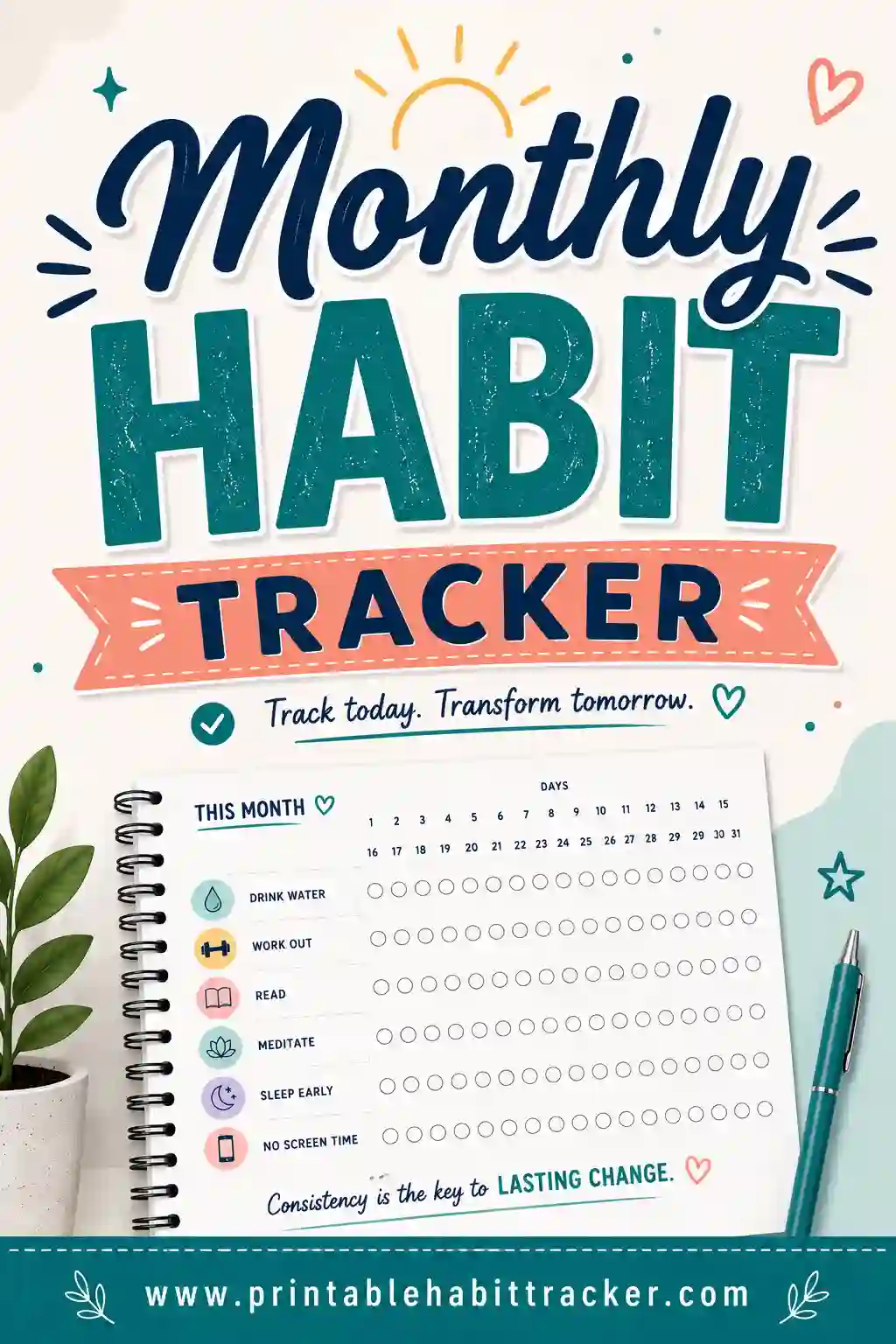
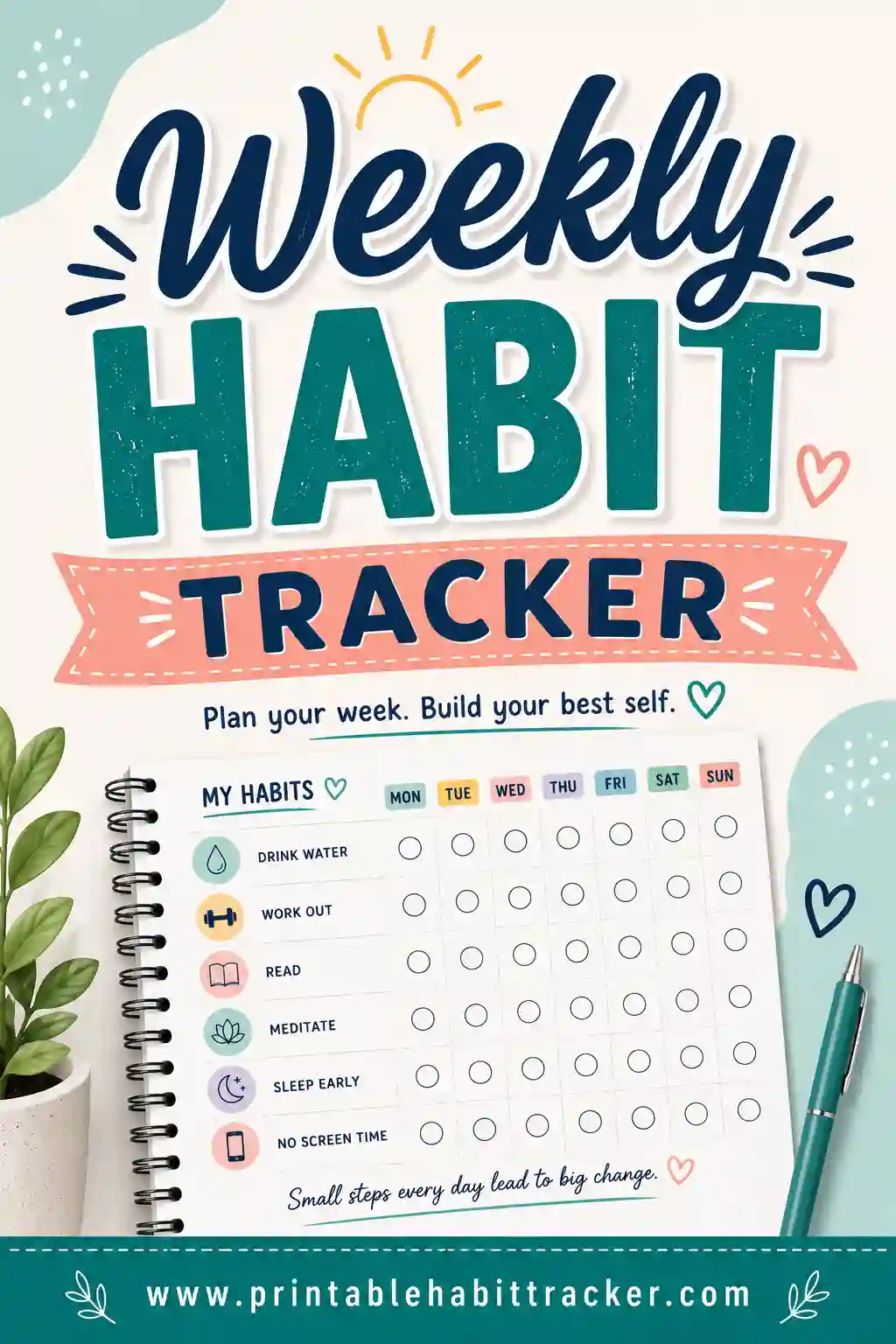
- Pick your layout. Weekly for a fresh sheet each week, or monthly with real dates for a full month per page — the monthly grid is the one to bring to appointments. A short antibiotic course fits neatly on a weekly sheet or two.
- Choose checkbox style and a calm theme. Checkboxes are quick and unambiguous. Sage or Classic print clean and clinical-but-friendly; Classic black-and-white photocopies well for caregivers who need spares.
- Print or save as PDF. Letter or A4. Tick "Print all 12 months" for a year's supply of dated monthly sheets in one print job — set up in January, done until next year.
Everything saves locally in your own browser — nothing about your medications is uploaded anywhere, which is exactly how information like this should be handled.
Medication Tracker Setups That Work
The weekly kitchen-counter sheet
Doses in rows, Mon–Sun across. Lives flat next to the pill organizer or coffee maker with a pen on a string. Marking becomes part of the swallow-glass-of-water motion within days.
The monthly appointment record
Real dates across the top, one page per month. This is the version that answers your doctor's adherence question with data. File finished months in a folder — a year of them tells a story no memory could.
The caregiver's double-check chart
For shared care, add initials in the boxes instead of plain checks. "✓ J" means Joan gave the 6pm dose. It's the simplest possible handoff system between spouses, siblings, or home aides — and it prevents both the missed dose and the doubled one.
The meds-plus-health combo
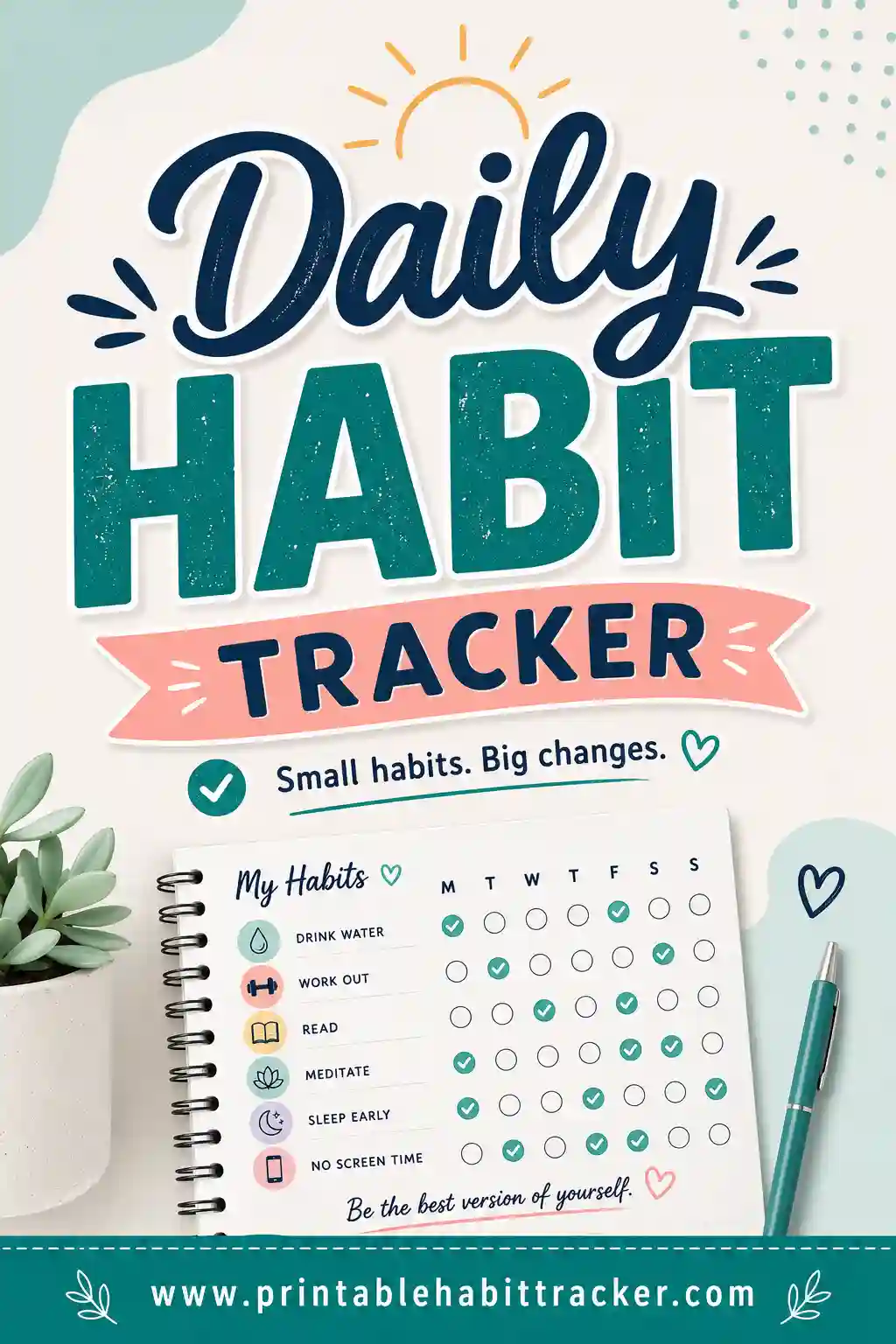
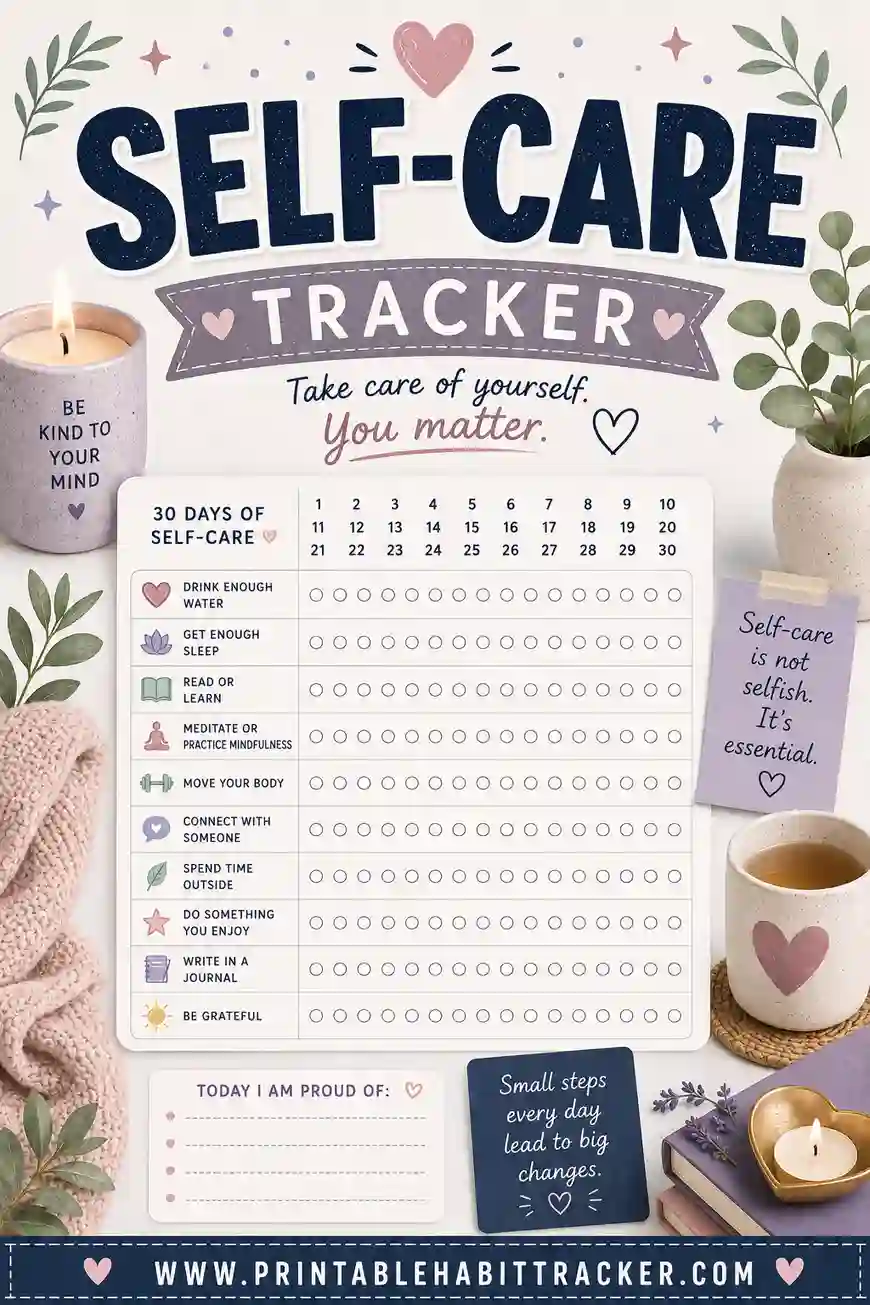
Add health habit rows under the meds: "drink water with pills," "blood pressure reading," "10-minute walk." Medication rarely works alone, and one sheet beats three. The daily habit tracker and self-care tracker guides cover that side of the sheet.
Tips for Never Missing a Dose
- Anchor to an existing habit. "With morning coffee" beats "at 8am" because coffee always happens. Meal-anchored doses survive weekends and holidays; clock-anchored ones don't.
- Mark it the moment you swallow. Not after breakfast, not "in a minute." The mark and the dose must be one motion, or the tracker inherits the same memory problem it was meant to fix.
- Keep the sheet with the pills. Separate locations means one of them gets forgotten. Tracker, pills, pen: one station.
- Use a phone alarm for the time, paper for the record. The alarm says "now"; the sheet says "done." They're teammates, not rivals.
- Missed one anyway? Leave the box empty and follow the pharmacist's guidance for that specific med (never guess on doubling up). An honest blank is information for your doctor, not a failure.
A Sample Filled-In Week
| Dose | Mon | Tue | Wed | Thu | Fri | Sat | Sun |
|---|---|---|---|---|---|---|---|
| Levothyroxine 50mcg — 7am | ✓ | ✓ | ✓ | ✓ | ✓ | ✓ | ✓ |
| Metformin 500mg — breakfast | ✓ | ✓ | ✓ | ✓ | ✓ | ☐ | ✓ |
| Metformin 500mg — dinner | ✓ | ✓ | ☐ | ✓ | ✓ | ✓ | ✓ |
| Vitamin D — morning | ✓ | ✓ | ✓ | ✓ | ✓ | ✓ | ✓ |
| Refill check — Sun | ✓ |
Notes box: "Wed dinner dose missed — late work event. Sat breakfast missed — slept in; took at 11 per pharmacist." Twenty-six of twenty-eight doses, both misses explained. That's a sheet worth bringing to your next appointment.
Printing Tips
- Classic black-and-white prints crisp, cheap, and photocopies cleanly for caregivers.
- Landscape orientation fits long medication names with doses and timing notes.
- Print all 12 months at once and staple by quarter — a year of med tracking ready before your coffee cools.
- Laminate a weekly copy with dry-erase markers if you'd rather wipe than reprint — but keep paper monthlies if you want a permanent record for appointments.
- Print spares. One for the kitchen, one for a travel bag. Trips are where routines — and doses — go missing.
Frequently Asked Questions
Is the medication tracker printable really free?
Yes — completely. The builder has no sign-up, no account, and no watermark. Build your free printable medication tracker, print it or save it as a PDF, and reprint every week or month all year.
Is my medication list private?
Yes. Everything you type is saved locally in your own browser and never uploaded to any server. Nothing is shared with anyone — the only copy that exists beyond your browser is the paper you print.
How do I track medications taken multiple times a day?
Give each dose its own row: "Metformin — breakfast" and "Metformin — dinner." Each dose gets its own box each day, so a glance tells you exactly which dose is done and which is pending — that's the double-dose protection.
Can I use it for vitamins and supplements too?
Absolutely — they're the most-forgotten pills of all. List them as rows alongside prescriptions, or give supplements their own printable medication tracker sheet if the list runs long.
What about medications with changing schedules, like tapering doses?
Handle it with dated rows and a fresh print per phase. For a prednisone-style taper, make each row a phase — "Prednisone 20mg — days 1–5," "Prednisone 10mg — days 6–10" — and mark only the days that phase covers. When the schedule changes, edit the rows and reprint; your saved setup makes that a one-minute job. The notes box is the place for the prescriber's exact instructions, so the sheet and the label always agree.
Does it remind me when a dose is due?
No — it's paper, so pair it with a phone alarm or an anchor habit like breakfast. The tracker's job is the record: proof of what's taken, a flag for what isn't, and an honest answer for your doctor. The alarm handles "now"; the sheet handles "done."
Ready to Print Your Medication Tracker?
Line up your pill bottles, open the free medication tracker builder, and give every dose a row with its name, strength, and time. Print the month, tape it where the pills live, and mark each dose as you take it. It's free, it takes five minutes, and "did I take it?" becomes a question you answer with your eyes instead of your nerves.