Self-Care Tracker: Free Printable to Build Better Habits
A self-care tracker is a simple printable grid where you list the things that keep you well, like drinking water, getting outside, or going to bed on time, and check off each one as you do it. It turns "I should take better care of myself" into a clear daily picture you can actually see. The fastest way to make one is to use a free printable habit tracker that lets you pick your own habits, choose a daily, weekly, or monthly layout, and print it at home.
Want to skip ahead and just build it? Open the free tracker maker, type in the self-care habits you want to keep up with (there's a ready-made list further down), pick a layout, and print. No sign-up, no app, no fee.
What Is a Self-Care Tracker?
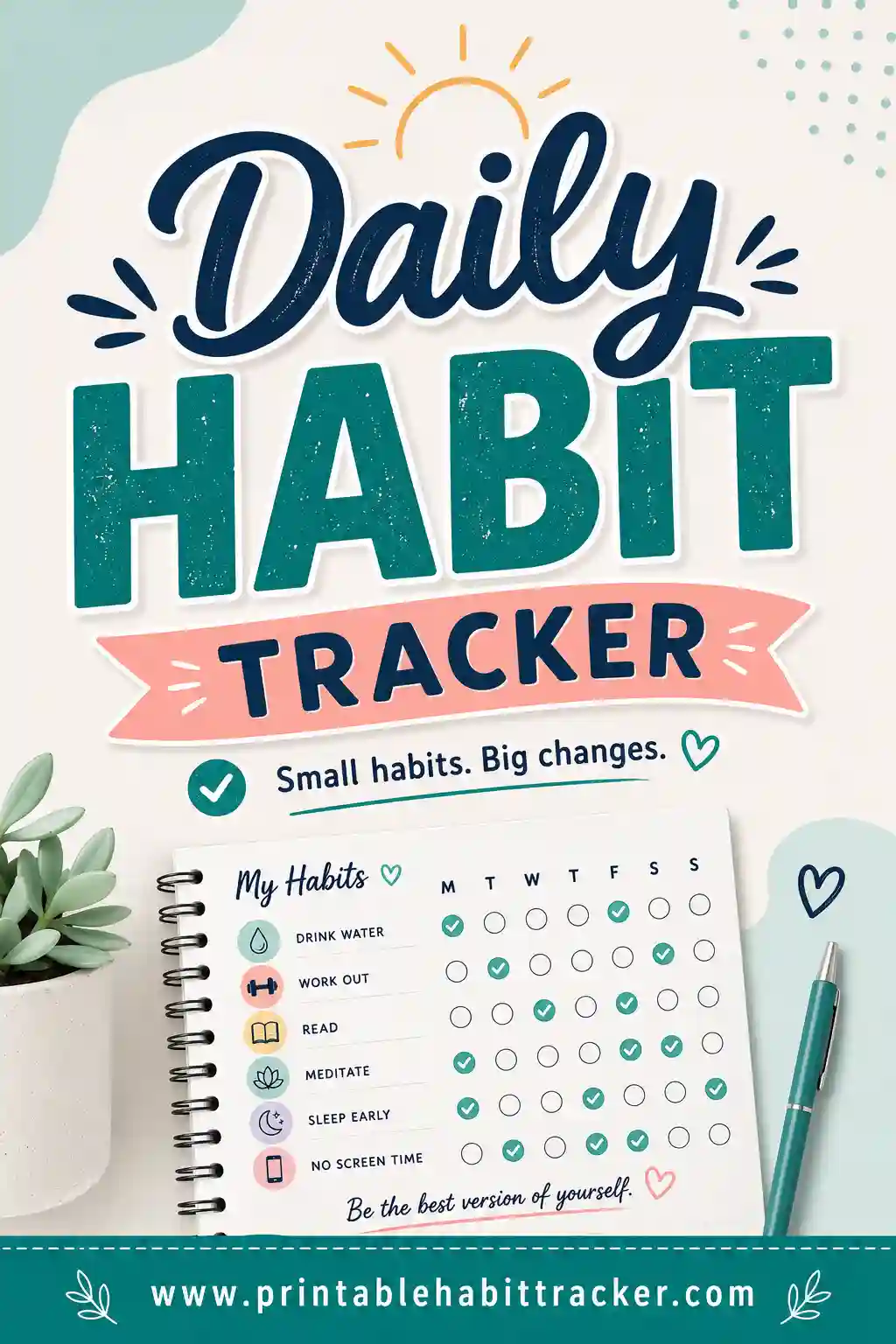
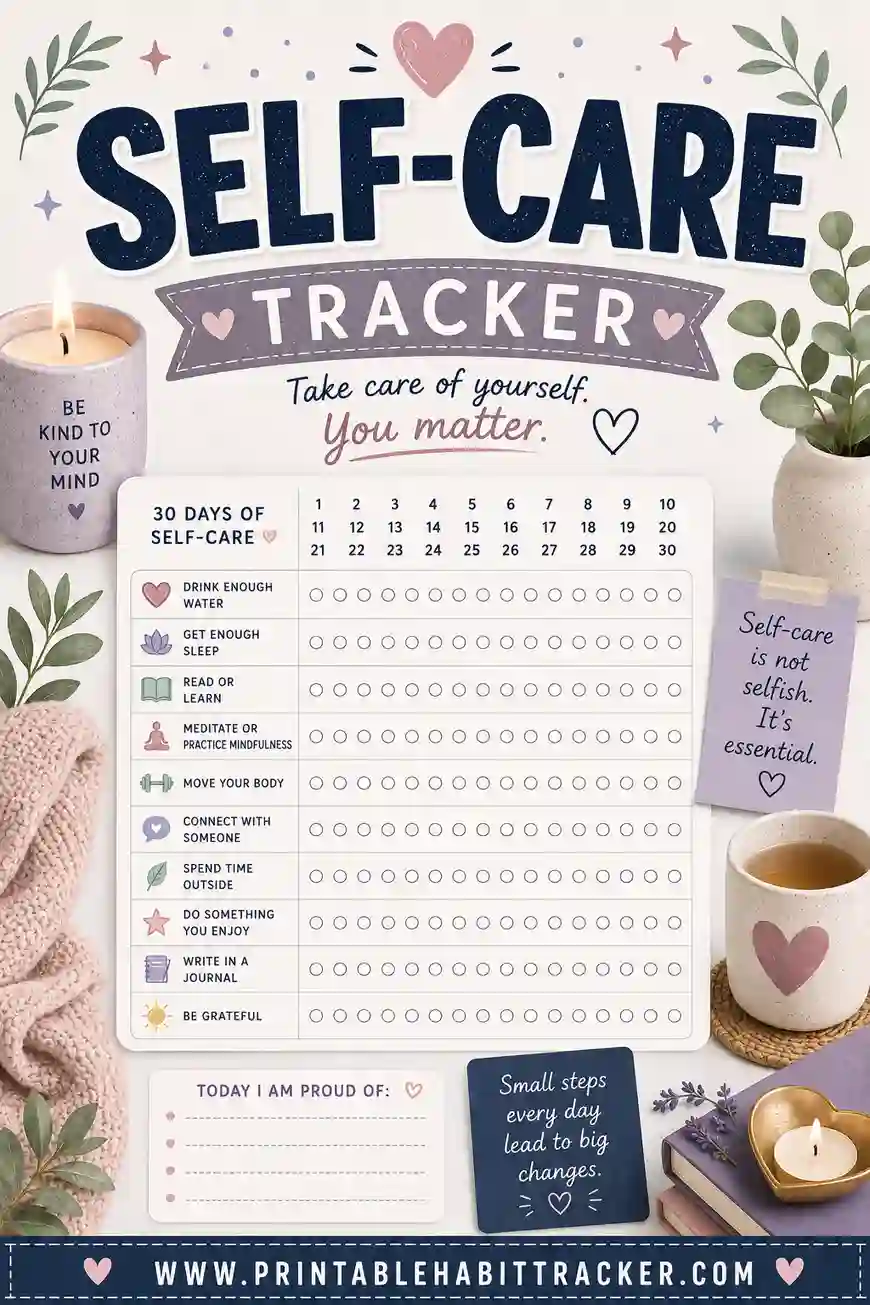
Picture a small chart with your habits down the left side and a row of empty boxes next to each one. Every time you do the thing, you fill in a box. That's the whole idea. It works because seeing a row of checked boxes feels good, and an empty row gently nudges you to fix it.
Self-care covers more than bubble baths. It's the basic stuff that keeps your body and mind steady: sleep, water, movement, food, rest, and a little time that's just yours. A tracker keeps all of it in one place so nothing quietly slips off your radar.
You can track self-care in a few ways:
- Daily. Best for habits you want every single day, like water or stretching.
- Weekly. Good for things you aim to do a few times a week, like a long walk or calling a friend.
- Monthly. A bird's-eye view that shows your streaks and patterns over four weeks.
Why a Self-Care Tracker Actually Works
Most of us mean well and then forget. Life gets loud, and the quiet stuff like rest and water is the first to go. A tracker fixes that in three ways.
- It makes habits visible. You can't improve what you can't see. A filled-in row tells you instantly how the week went.
- It builds streaks. Once you've checked a habit five days in a row, you don't want to break the chain. That little bit of momentum does real work.
- It removes the guilt spiral. Instead of vaguely feeling like you're "doing badly," you get honest data. Maybe you slept great but skipped every walk. Now you know exactly what to tweak.
The point isn't a perfect, fully-checked sheet. It's noticing your own patterns so you can take better care of yourself without overthinking it.
Free Self-Care Habit Ideas (Copy These)
Not sure what to track? Here's a ready-made list. Pick the 6 to 8 that fit your life right now. Trying to track twenty things at once is the fastest way to quit.
| Habit | Why it helps | How to track |
|---|---|---|
| Drink water | Energy, focus, fewer headaches | One box per glass, or a daily check |
| 7+ hours sleep | Mood, immunity, patience | Check the box if you hit your hours |
| Move your body | Stress relief, better sleep | Walk, stretch, dance — any movement counts |
| Step outside | Fresh air and light lift your mood | Daily check, even five minutes |
| Eat a real meal | Steady energy, no crashes | One check per balanced meal |
| Screen-free time | Calmer mind, better sleep | Check if you unplugged for 30+ min |
| Journal or reflect | Process feelings, lower stress | A daily or few-times-a-week check |
| Connect with someone | Belonging, less loneliness | Text, call, or visit — your choice |
| Rest without guilt | Prevents burnout | Check if you actually let yourself rest |
Mix and match. Your self-care doesn't have to look like anyone else's. If "make my bed" feels like care to you, put it on the list.
Keep it small at first
A common mistake is loading up the sheet with every good intention you've ever had. Start with five habits. Once those feel automatic, swap in new ones. A short tracker you actually use beats a long one you ignore.
How to Make a Self-Care Tracker in 4 Steps
You don't need to be crafty or own a planner. Here's the whole process.
- Choose your habits. Pull 6 to 8 from the list above, or write your own.
- Pick a layout. Daily for everyday habits, weekly for a Mon–Sun grid, monthly for a full overview. The tracker maker has all three.
- Add your habits. Type them in, and the tool builds the grid for you.
- Print. Hit print, stick it somewhere you'll see it, and start checking boxes.
That's it. Tape it to the fridge, the bathroom mirror, or the inside of your planner, anywhere you'll glance at it daily.
Where to Put Your Tracker So You Actually Use It
A tracker only works if you see it. The best spot is wherever you already look every day. A few favorites:
On the fridge
You open it constantly, so it's hard to forget. Great for water, meals, and snack habits.
On the bathroom mirror
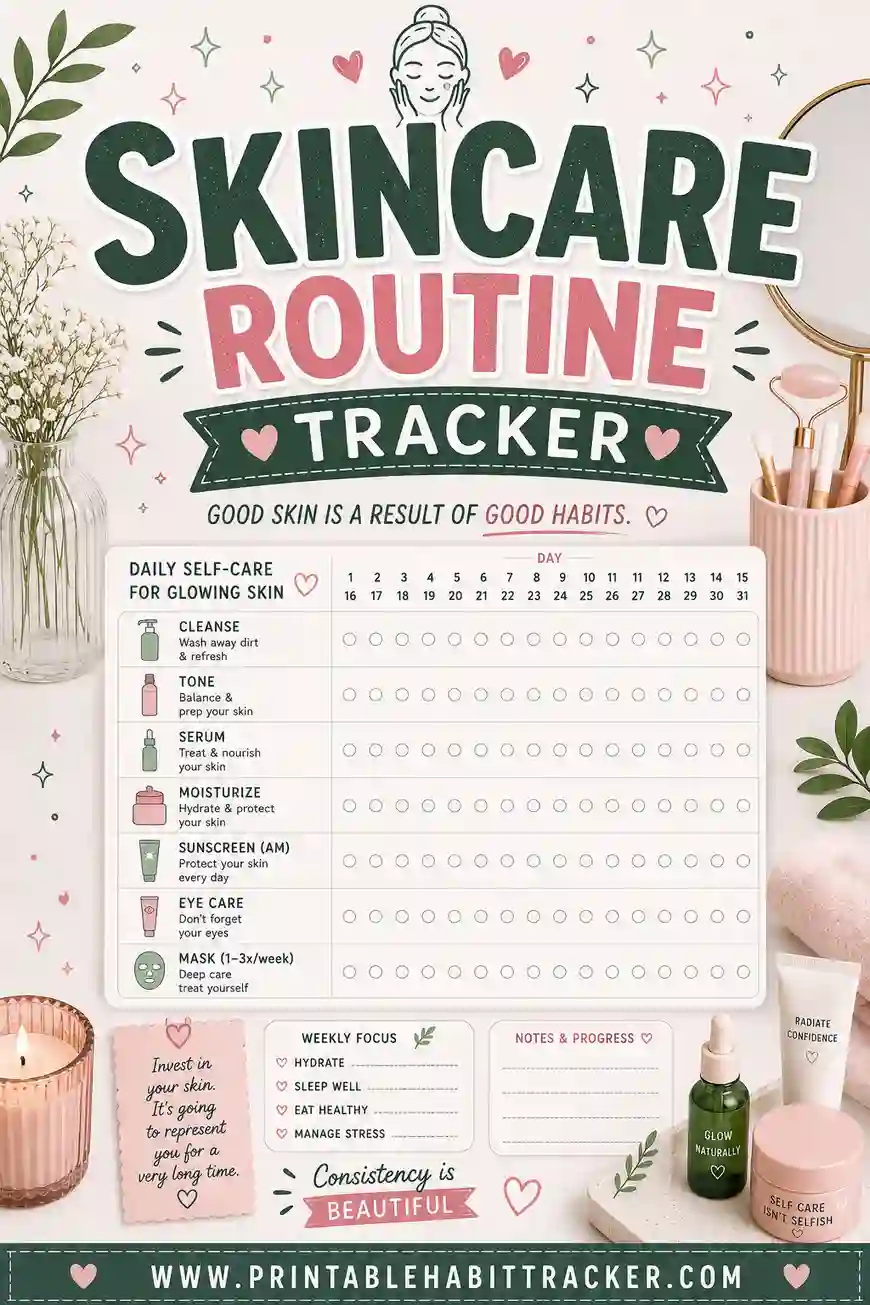
Perfect for morning and evening routines, like skincare, taking vitamins, or a moment of quiet before bed. Pair it with a skincare routine tracker if grooming habits are part of your self-care.
In your planner or journal
If you already journal, slip the tracker onto the facing page. Checking boxes becomes part of a routine you already keep.
By your bed
A nightstand tracker catches the easy-to-forget evening habits: lights out on time, no phone in bed, a few minutes of reading.
Daily vs. Weekly vs. Monthly: Which Layout to Pick
Different habits suit different views. Here's a quick guide so you don't have to guess.
| Layout | Best for | Example |
|---|---|---|
| Daily | Habits you want every day | Water, sleep, stretching |
| Weekly | A Mon–Sun snapshot | Long walks, journaling, calls |
| Monthly | Spotting streaks and patterns | A full month of "stepped outside" |
| Combined | A mix of all of the above | Daily water + weekly self-care check-in |
Plenty of people run two at once: a daily grid for the non-negotiables and a weekly one for the softer goals. The free tool lets you make as many as you like, so try a couple and keep what sticks.
A Sample Self-Care Week
Wondering what a real week looks like? Here's a gentle, realistic example. Notice it isn't perfect, and that's the point.
| Habit | Mon | Tue | Wed | Thu | Fri | Sat | Sun |
|---|---|---|---|---|---|---|---|
| Drink water | ✅ | ✅ | ✅ | ⬜ | ✅ | ✅ | ✅ |
| Step outside | ✅ | ⬜ | ✅ | ✅ | ⬜ | ✅ | ✅ |
| 7+ hours sleep | ⬜ | ✅ | ✅ | ✅ | ⬜ | ✅ | ✅ |
| Screen-free time | ✅ | ✅ | ⬜ | ✅ | ✅ | ⬜ | ✅ |
| Rest without guilt | ⬜ | ⬜ | ✅ | ⬜ | ✅ | ✅ | ✅ |
See the gaps? They're not failures. They're information. This person sleeps better midweek and rests more on weekends. That's useful to know, and it's exactly what a tracker is for.
Making Self-Care Stick
A printable tracker is the tool, but a few small habits make it work better.
- Check boxes at the same time daily. Right before bed is ideal. It becomes a calm little ritual.
- Don't break the chain. Once you've got a streak going, the pull to keep it alive is surprisingly strong.
- Be honest. A tracker full of fake checks helps no one. Real data, even messy data, is the goal.
- Reset gently. Missed a few days? Print a fresh sheet and start clean. No guilt, no catching up.
- Review weekly. Spend two minutes Sunday night looking back. What worked? What needs a smaller goal?
Pair it with mood tracking
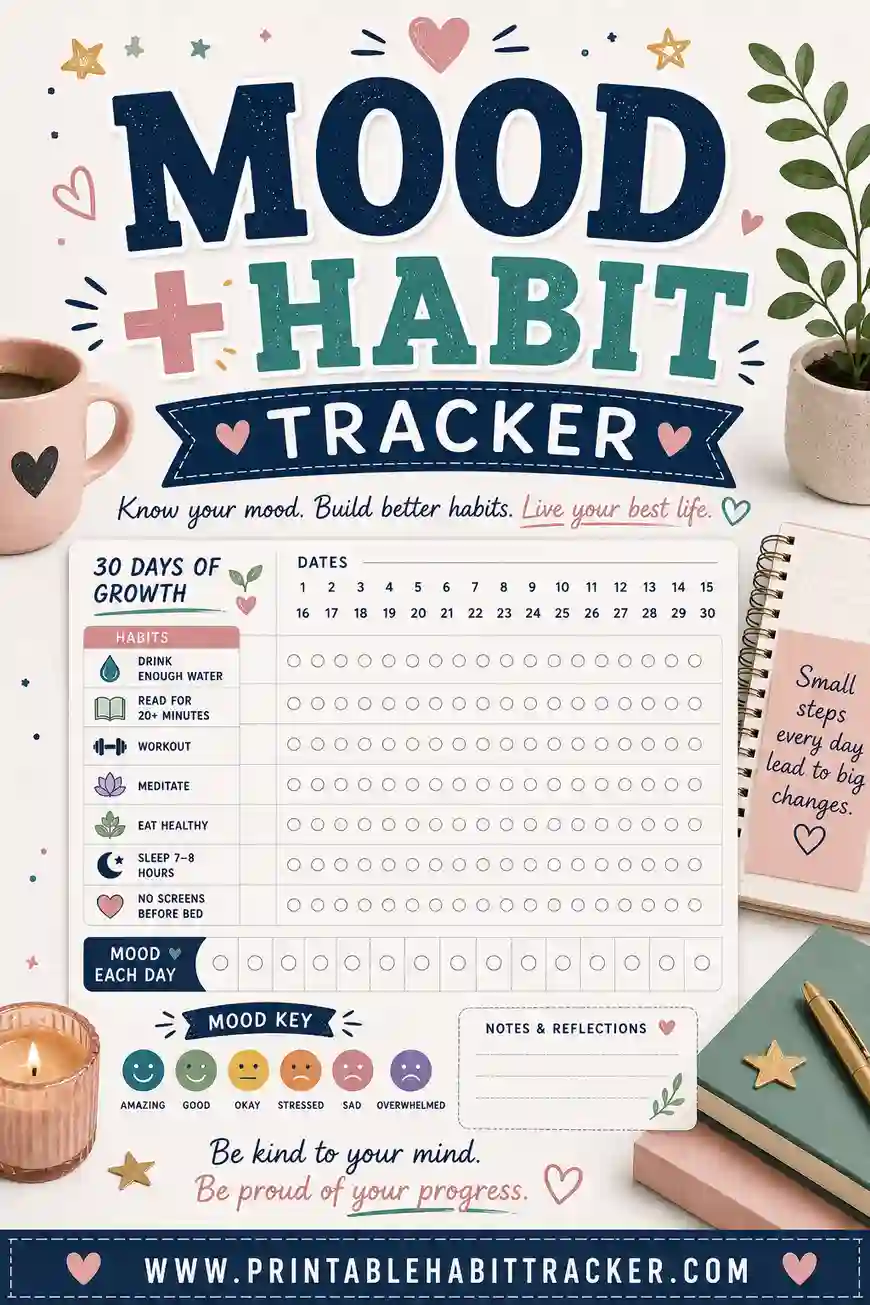
Self-care and mood go hand in hand. If you want to see how your habits affect how you feel, add a mood and habit tracker alongside this one. Spotting that you feel best on days you walked and slept well is a quiet but powerful nudge.
Common Self-Care Tracking Mistakes to Avoid
A few easy traps can derail a tracker before it helps. Steer clear of these and yours will stick.
- Tracking too many habits. Twenty rows is overwhelming and you'll quit by Wednesday. Stick to five to eight that genuinely matter right now.
- Aiming for a perfect sheet. A fully-checked tracker isn't the goal. The gaps are useful information, not failures to feel bad about.
- Hiding it in a drawer. Out of sight means out of mind. Keep it somewhere you physically look every day, or it does nothing.
- Faking the checks. Marking a box you didn't earn only fools yourself. Honest, messy data beats a tidy lie every time.
- Giving up after a bad week. Slipping for a few days is normal. Print a fresh sheet, start clean, and don't try to "catch up." Just keep going.
Avoid these and your tracker becomes a calm, helpful part of your day rather than one more thing to feel guilty about.
Frequently Asked Questions
What should I put on a self-care tracker?
Start with the basics: water, sleep, movement, fresh air, and a little rest. Then add anything that genuinely helps you feel good, like journaling, a hobby, or time with people you love. Pick 6 to 8 habits so the sheet stays doable.
How many habits should I track at once?
Five to eight is the sweet spot. More than that gets overwhelming and easy to abandon. Master a few first, then swap in new ones as the early habits become automatic.
Is this self-care tracker really free to print?
Yes. You build and print it yourself at no cost. There's no sign-up, no watermark, and no app to download. One free sheet can cover your whole week or month.
Daily or weekly, which is better for self-care?
It depends on the habit. Use a daily layout for things you want every day, like water and sleep, and a weekly layout for goals you aim for a few times a week, like a long walk or a deep clean. Many people run both.
What if I miss a few days?
Nothing bad happens. Tracking isn't about perfection. Just pick back up, or print a fresh sheet and start clean. The gaps actually help you spot which habits need a smaller, easier goal.
Can I make a self-care tracker for a whole month?
Absolutely. Choose the monthly layout and you'll get a full grid that shows your streaks across four weeks. It's a great way to see patterns you'd miss on a single week.
Ready to Build Your Self-Care Tracker?
Pick a few habits from the list above, open the free tracker maker, choose your layout, and print. You'll have a clean, custom self-care tracker in minutes, no app and no cost. Stick it somewhere you'll see it, start checking boxes, and let those little daily wins add up. You deserve the care.