Mood + Habit Tracker: Free Printable to See What Helps
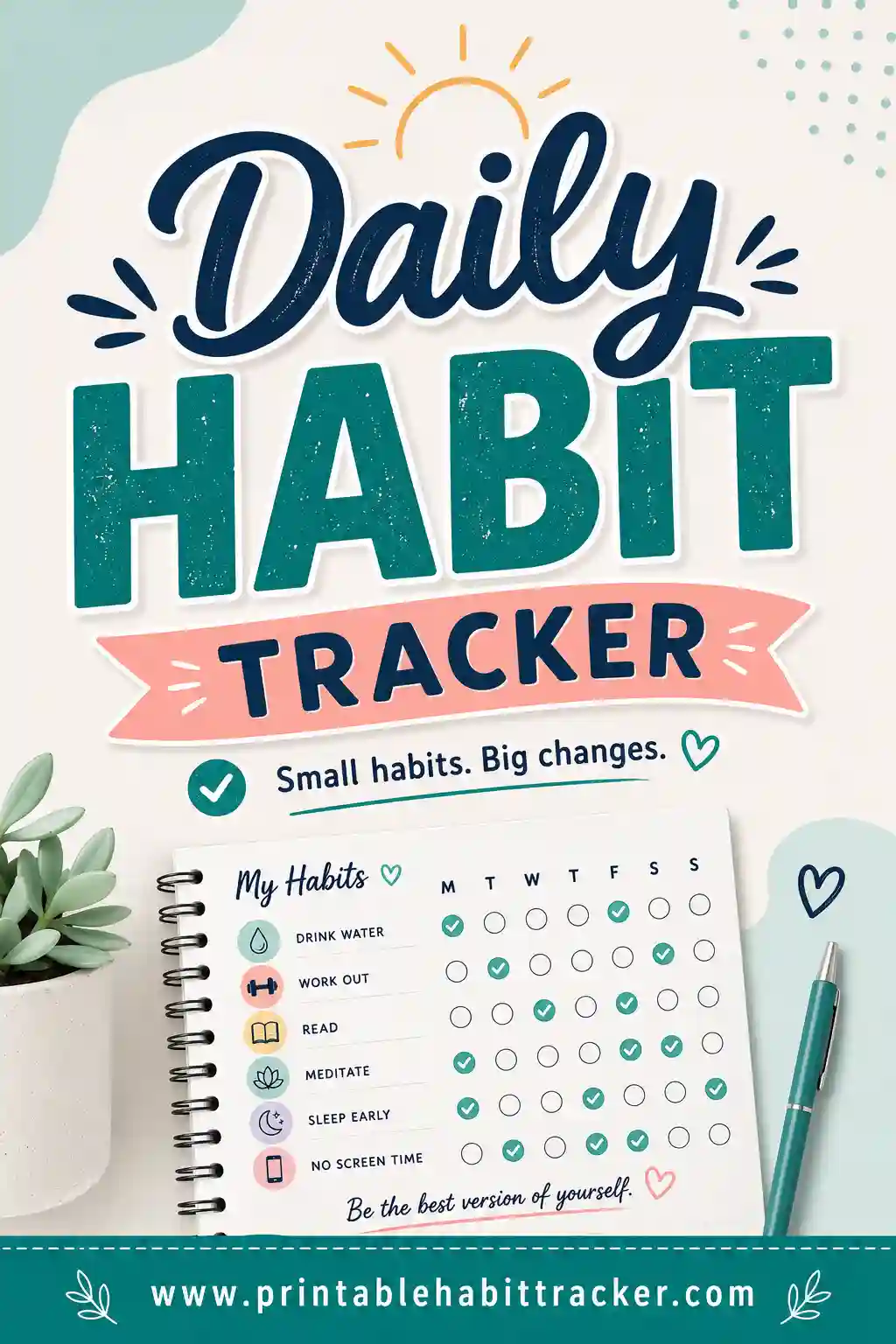
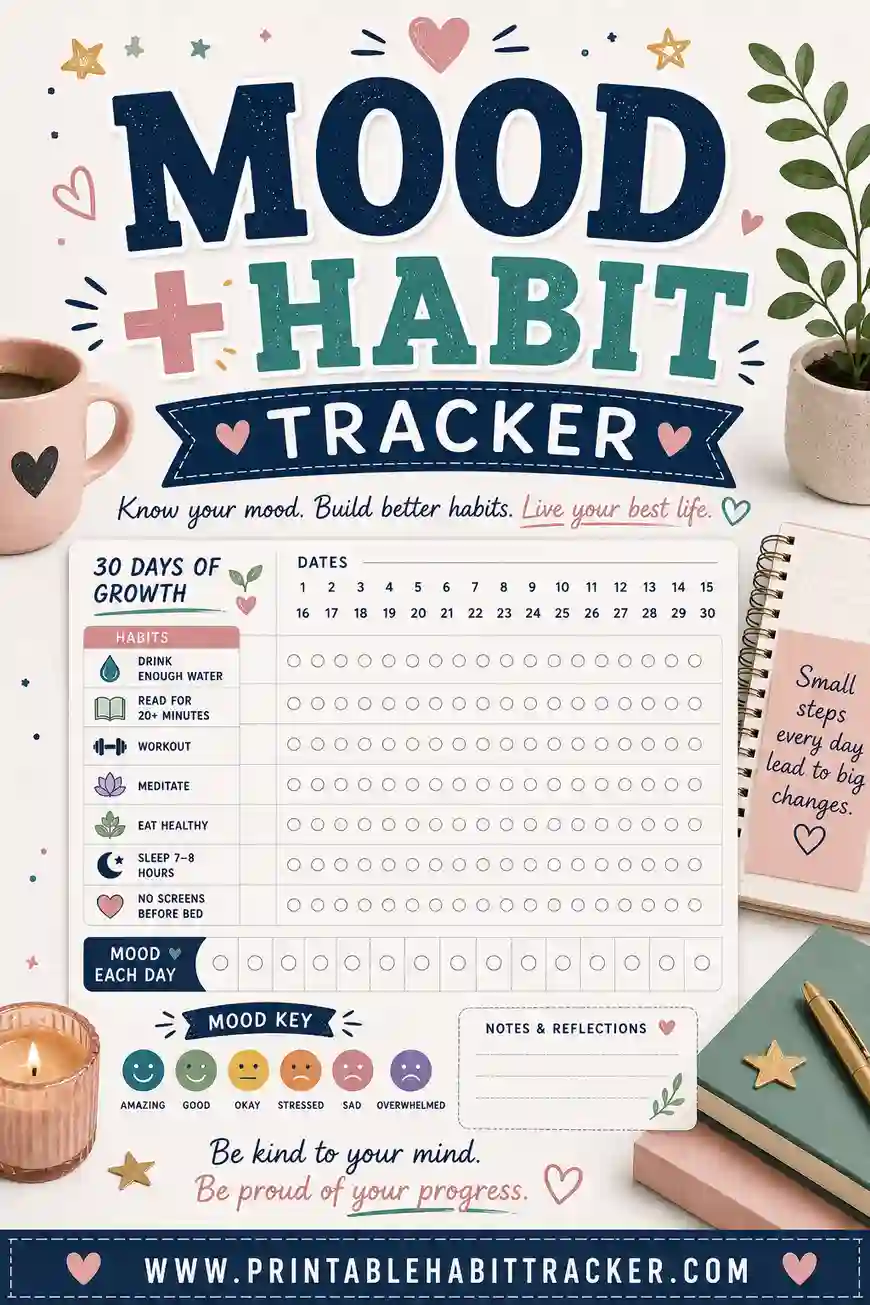
A mood + habit tracker is a printable sheet that pairs your daily habits with a quick mood rating, so you can finally see which habits lift you up and which ones drag you down. You check off habits like sleep, movement, and water, then mark how you felt that day. Over a couple of weeks, patterns jump out. The easiest way to make one is with a free printable habit tracker that lets you add your habits, drop in a mood row, pick a layout, and print at home.
Want to get straight to it? Open the free tracker maker, add the habits you want to watch plus a daily mood rating (there's a ready-made setup below), pick daily, weekly, or monthly, and print. No sign-up, no app, no fee.
What Is a Mood + Habit Tracker?
It's two trackers in one. The top part is a normal habit grid: rows of habits with a box to check each day. The bottom part is a mood row, where you mark how you felt, usually a simple 1-to-5 scale or a row of faces.
The magic is in lining them up. When your habits and your mood sit on the same sheet, side by side, you start to see cause and effect. The days you slept well and got outside? Often the good-mood days. The days you skipped meals and stayed up late? You can guess.
You can rate mood a few easy ways:
- A 1–5 scale. Quick and clear. 1 is rough, 5 is great.
- Color coding. Color the box: green for good, yellow for okay, red for low.
- Emoji faces. Draw a smiley, a straight face, or a frown. Works great for kids and visual people.
Why Track Mood and Habits Together
Tracking habits alone tells you what you did. Tracking mood alone tells you how you felt. Put them together and you learn why you felt that way. That's the whole point.
Here's what makes it powerful:
- You spot your real triggers. Maybe caffeine after 3pm wrecks your mood the next morning. You'd never notice that without writing it down.
- You find your boosters. A pattern of good days after morning walks is a strong reason to keep walking.
- You stop guessing. Instead of "I don't know why I feel off," you get a sheet full of honest clues.
A note: a mood + habit tracker is a self-awareness tool, not a medical one. It's wonderful for noticing patterns. If you're struggling with your mental health, please reach out to a doctor or counselor too.
What to Track (Habits + Mood Setup)
Here's a ready-made setup. Pick a handful of habits you suspect affect your mood, then add the mood row underneath. Don't track everything, track the things you actually want to test.
| Track this | Why it matters for mood | How to mark it |
|---|---|---|
| Hours of sleep | Sleep is the biggest mood lever for most people | Check if you hit your target |
| Movement | Exercise releases mood-boosting chemicals | Any walk, stretch, or workout counts |
| Time outside | Daylight steadies your body clock and mood | Daily check, even a few minutes |
| Water | Dehydration quietly drags energy down | One check per day you stayed hydrated |
| Real meals | Blood-sugar dips can tank your mood | One check per balanced meal |
| Screen time before bed | Late screens hurt sleep and next-day mood | Check if you unplugged early |
| Connection | Time with people lifts most of us up | Check if you connected with someone |
| Mood rating | The whole reason you're tracking | Mark 1–5, a color, or a face |
Keep the habit list short, around five to seven, so the sheet stays quick. The mood row is the star.
How to rate your mood honestly
Rate the day, not the moment. One bad hour doesn't make a 1. Think about the day overall and trust your gut. Do it at the same time each evening so your ratings stay consistent.
How to Make a Mood + Habit Tracker in 4 Steps
No design skills needed. Here's the whole thing.
- Choose your habits. Pick five to seven you think affect your mood.
- Add a mood row. Decide on your scale: numbers, colors, or faces.
- Pick a layout. Weekly is ideal for spotting patterns, but daily and monthly work too. The tracker maker has all three.
- Print and start. Each evening, check your habits and mark your mood.
Give it at least two weeks. One week is too short to see real patterns. Two to four weeks is where the insights start landing.
Reading Your Tracker: Spotting Patterns
After a couple of weeks, lay your sheet flat and look for connections. This is the fun part.
Look for repeated pairings
Scan for habits that show up next to good-mood days again and again. If "walked" and "slept 8 hours" keep lining up with your 4s and 5s, that's your formula. Lean into it.
Watch for the dips
Now find your low-mood days and look up. What's missing? Often it's the same culprit, like skipped meals or a late night. That's a habit worth protecting.
Don't over-read one bad day
A single low day might just be a hard day, nothing to fix. Patterns matter more than any one box. Look for things that repeat, not one-offs.
A Sample Week, Filled In
Here's what a real, imperfect week might look like. Mood is rated 1 (low) to 5 (great).
| Day | Slept 8h | Walked | Real meals | Screen-free PM | Mood (1–5) |
|---|---|---|---|---|---|
| Mon | ✅ | ✅ | ✅ | ⬜ | 4 |
| Tue | ⬜ | ⬜ | ⬜ | ⬜ | 2 |
| Wed | ✅ | ✅ | ✅ | ✅ | 5 |
| Thu | ✅ | ⬜ | ✅ | ✅ | 4 |
| Fri | ⬜ | ⬜ | ⬜ | ⬜ | 2 |
| Sat | ✅ | ✅ | ✅ | ⬜ | 4 |
| Sun | ✅ | ✅ | ⬜ | ✅ | 4 |
The story practically tells itself. Sleep and movement track closely with the good days. The two low days share the same gaps. That's the kind of insight you simply can't get from memory alone.
Layouts and Tips for Mood Tracking
A few choices make your mood tracker easier to keep and easier to read.
- Use weekly layouts for patterns. A Mon–Sun grid lets you compare a whole week at a glance, which is where the insights live.
- Color the mood row. A wash of green and red across the page tells the story faster than numbers.
- Track at the same time. Evening works best. You've got the full day to judge.
- Keep it by your bed. A nightstand spot makes the evening check-in automatic.
- Print a fresh sheet weekly. Clean pages keep it feeling fresh and easy.
Pair it with other trackers
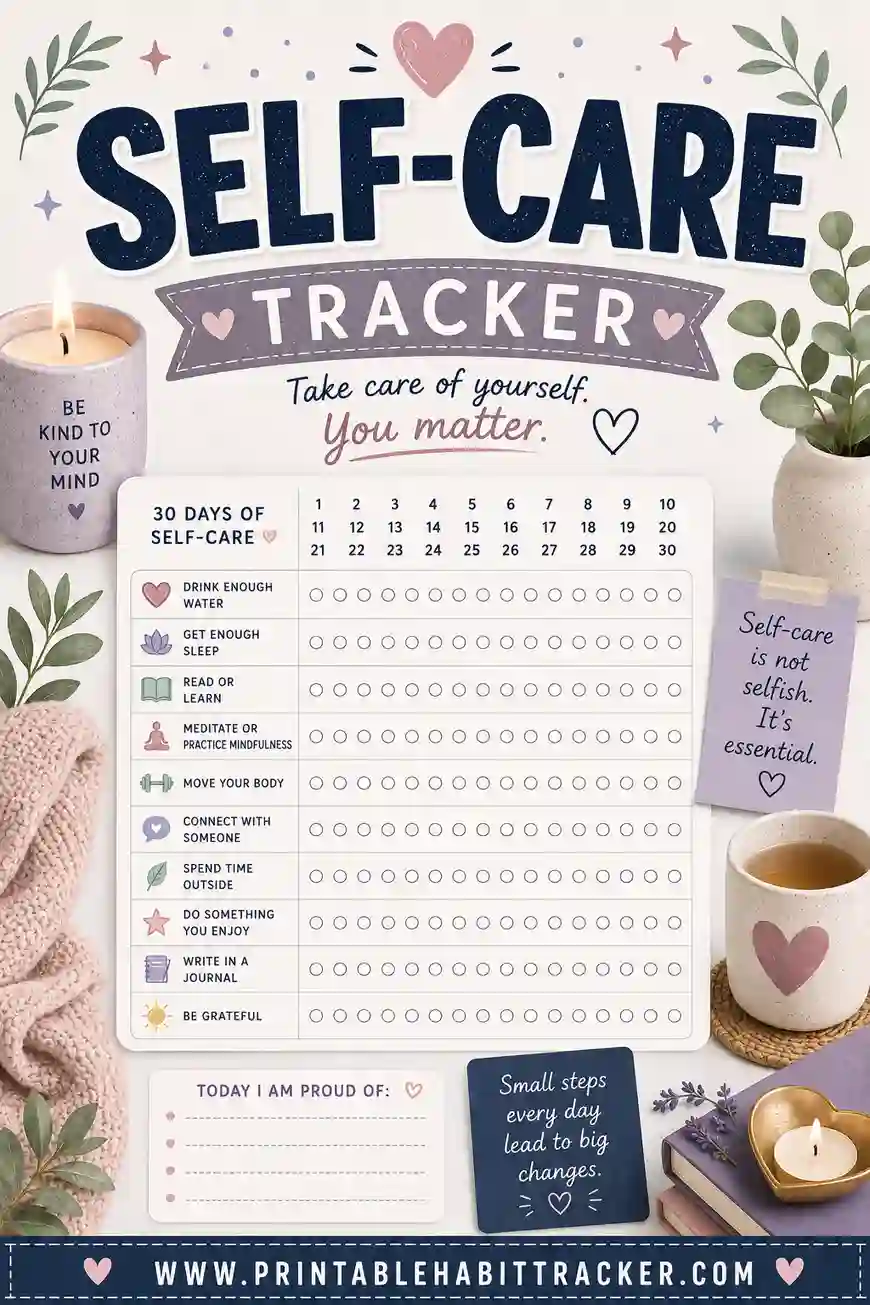
Mood ties into nearly everything. If food affects how you feel, add a meal and nutrition tracker. If general wellness is your focus, a broader self-care tracker pairs beautifully with mood tracking. The free tool lets you build as many as you want.
Who a Mood + Habit Tracker Is Great For
This kind of tracker flexes to almost anyone who wants to understand themselves a little better. A few people who get the most out of it:
People feeling "off" but not sure why
If you keep having flat or low days without an obvious cause, a tracker hands you clues. Often the answer is something simple and fixable, like a stretch of bad sleep or skipped walks, that you'd never connect on your own.
Anyone building new habits
Pairing habits with mood gives you instant feedback. When you can see that your good days follow your morning routine, sticking to that routine gets a whole lot easier. The mood data turns into motivation.
Teens and visual thinkers
For kids and teens, a row of colored faces is friendly and non-clinical. It opens up gentle conversations about feelings without putting anyone on the spot, and the visual format makes patterns obvious at a glance.
Busy people who run on autopilot
When life is hectic, it's easy to ignore how you actually feel until you hit a wall. A 30-second evening check-in keeps you tuned in, so you catch a downward slide early instead of after you've burned out.
Frequently Asked Questions
How do I rate my mood on a tracker?
Use a simple 1-to-5 scale, a color (green/yellow/red), or emoji faces. Rate the whole day, not a single moment, and do it at the same time each evening so your ratings stay consistent and comparable.
How long until I see patterns?
Give it at least two weeks. One week is usually too short. Over two to four weeks, the habits that line up with your good and bad days start to stand out clearly.
Is a mood + habit tracker the same as a mental health tool?
No. It's a self-awareness tool that helps you notice patterns in your daily life. It's great for that, but it isn't a substitute for professional help. If you're struggling, please talk to a doctor or counselor.
How many habits should I track with my mood?
Keep it to five to seven habits. The mood row is the main event, and a short habit list makes the daily check-in quick. Too many habits and you'll stop filling it in.
Is this mood + habit tracker free to print?
Yes. You build and print it yourself at no cost, with no sign-up and no watermark. One free sheet covers your whole week or month.
What layout works best for mood tracking?
Weekly. A Mon–Sun grid lets you compare habits and mood across a full week at a glance, which is exactly where the useful patterns show up. Daily and monthly views work too if you prefer them.
Ready to Build Your Mood + Habit Tracker?
Pick a few habits, add a mood row, open the free tracker maker, and print. In a couple of minutes you'll have a custom sheet that shows you, in your own handwriting, which habits make you feel good. Track it for two weeks and let the patterns surprise you. Your future self will thank you for the clues.