Free Printable Daily Behavior Charts: One-Day Charts That Reset Fresh
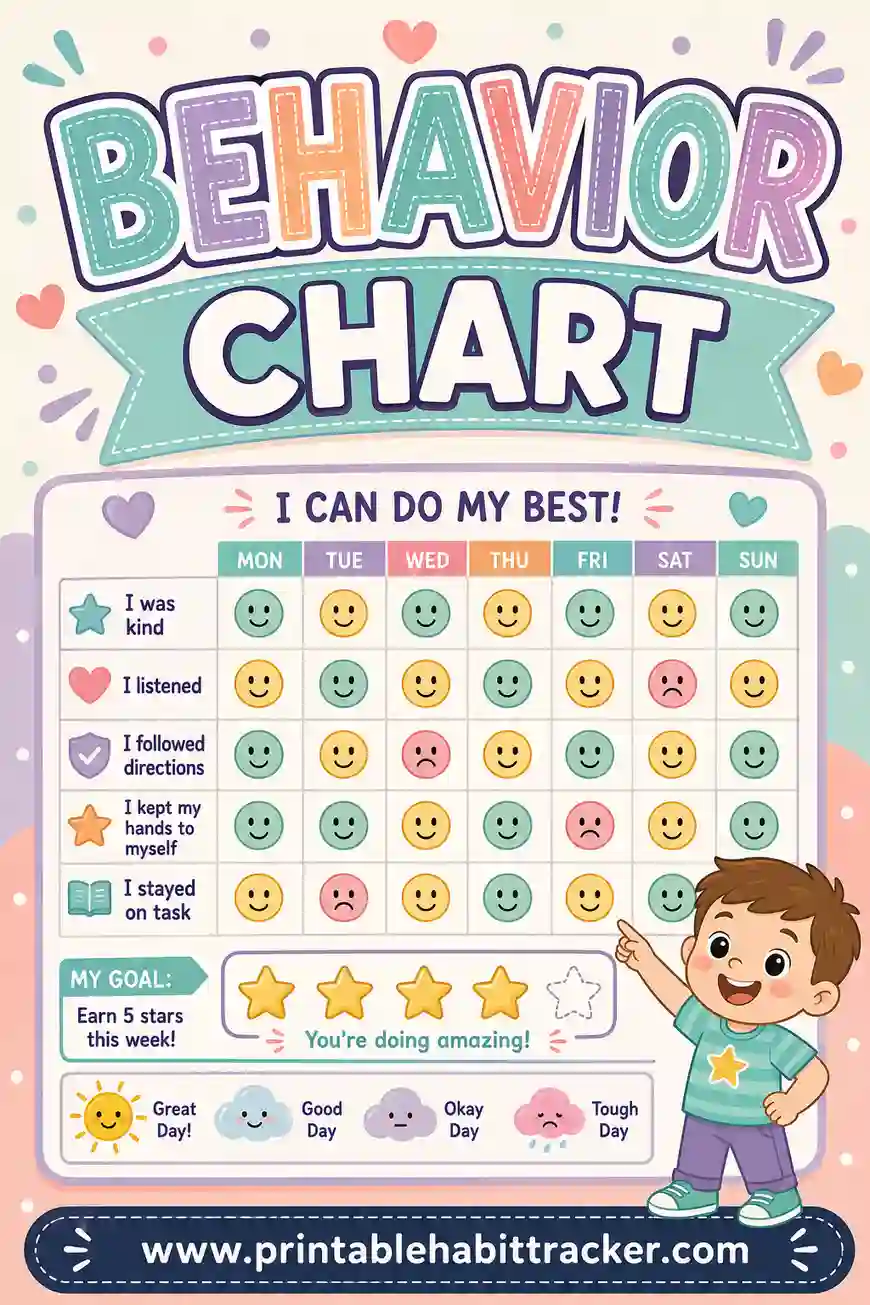
Free printable daily behavior charts are simple one-day grids that break a child's day into small, winnable pieces: a few positive behavior goals listed down the side, chunks of the day across the top, and a box to check or sticker for every chunk that goes well. The magic is in the reset — every morning starts at zero, so yesterday's meltdown doesn't follow anyone to breakfast. The fastest way to get a chart that fits your child's actual day is the free printable habit tracker builder: type the goals, pick a layout, and print a stack.
Want one for tomorrow morning? Open the free builder, type three or four positive goals ("Kind words," "Listen first time," "Hands to myself"), pick the daily layout, and print five copies — one per school day. No sign-up, no watermark.
What Is a Daily Behavior Chart?
It's a behavior chart shrunk down to a single day — and that shrinking is the whole point. A weekly behavior chart asks a child to hold a goal in mind for seven days, which is a long time when you're six. A daily behavior chart printable asks for one good morning. Then one good afternoon. Then one good evening. Each chunk is its own fresh chance.
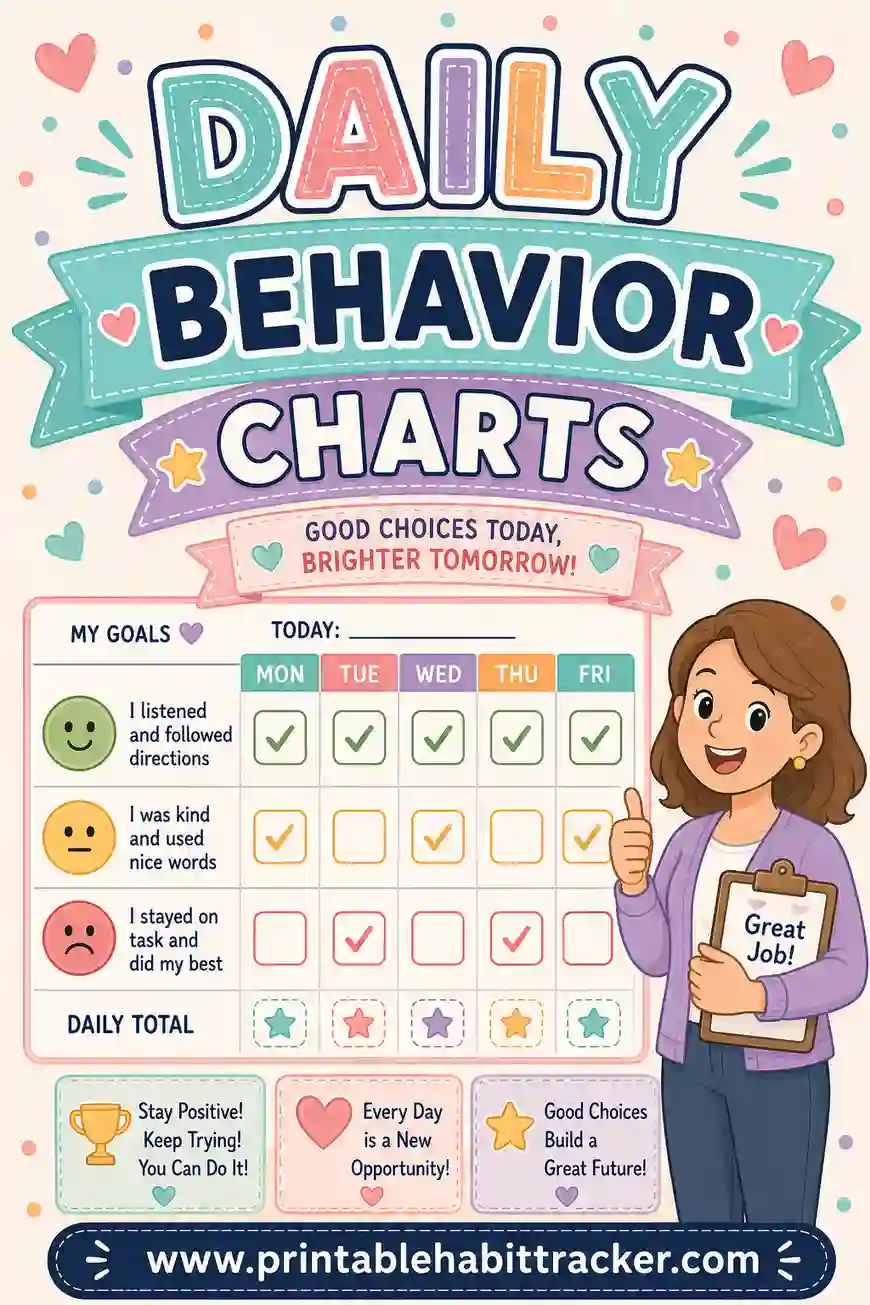
On paper it looks like this: three or four positive goals in rows, and the day split into columns — morning / afternoon / evening for younger kids, or school periods and transitions for a school-day chart. Each column that goes well earns a check, sticker, or colored square in each row. At bedtime you count the wins together, talk about one rough patch without drama, and the sheet retires. Tomorrow gets a new one.
Teachers know this format as the daily report card, and it's a staple for exactly the kids who struggle with long horizons — younger children, and many kids with ADHD, who genuinely do better when the target is "the next hour" rather than "this week."
Why Daily Beats Weekly for Behavior
- The reset protects motivation. On a weekly chart, a bad Monday can convince a child the week is already lost — so why try Tuesday? A daily chart makes every morning a clean slate. Hope is renewable.
- Small time blocks match small attention spans. "Be good today" is abstract. "Gentle hands until lunch" is concrete and close enough to actually aim at.
- Feedback lands fast. The check happens within hours of the behavior, not at the end of the week when nobody remembers what Tuesday was like. Fast feedback is what changes behavior.
- Rough patches stay small. A hard afternoon costs one box, not the chart. The evening column is still right there, waiting to be won.
- You see patterns quickly. Save a week of finished sheets and the shape jumps out — great mornings, hard after-school transitions. Now you know where the real work is (and it's usually hunger or tiredness, not defiance).
What to Put on a Daily Behavior Chart
Goals must be positive (say what to do), specific, and few — three or four rows, maximum. Copy these into the builder and pick what fits.
| Age | Goals that work | Day columns |
|---|---|---|
| 3–5 | Gentle hands, listen the first time, use words when upset | Morning / Afternoon / Evening |
| 6–8 | Kind words to my sister, follow directions first ask, stay at the table for dinner | Morning / School / After school / Evening |
| 9–12 | Speak respectfully, start homework without reminders, screens off when asked | Before school / School / Homework / Evening |
| School chart | Stay in my seat, raise my hand, finish my work | One column per class period |
Note what's not here: "be good," "don't be naughty," "no attitude." Vague goals can't be checked, and "don't" goals put the picture of the wrong behavior in the child's head. Flip every don't into a do — "don't hit" becomes "gentle hands."
One target behavior at a time
If mornings are the war zone, make the whole chart about mornings and keep it to two goals. A chart that tries to fix everything fixes nothing. Win one battle for a few weeks, let it become normal, then move the chart to the next front.
How to Make a Daily Behavior Chart in 4 Steps
- Choose three or four positive goals with your child. In the free builder, type each goal on its own line, in your child's words if possible — "listen the first time" beats "compliance." Their name goes in the title.
- Pick the daily layout. For time blocks, make each row-column crossing a chunk of the day. A weekly layout also works beautifully here: print it and treat each day-column as the day's chart — five school days on one page.
- Pick the style your child loves. Big color-in squares for sticker-and-crayon ages, checkboxes for older kids. A bright theme like Sunset makes it feel friendly, not clinical.
- Print a stack. Letter or A4. Print five or ten at once so a busy Tuesday never kills the system. The builder saves your setup in your browser, so adjusting a goal next month takes seconds.
Daily Behavior Chart Formats That Work
The three-block home chart
Morning / afternoon / evening columns. The gentlest format, perfect for ages three to seven. Three chances a day per goal, reviewed at bedtime with more attention on the wins than the gaps.
The school-day report card
One column per period or subject, carried between home and school. The teacher marks each block, you review it together after school, and home rewards connect to school behavior. If your child's teacher uses one, build the home version with matching goals so both charts speak the same language.
The transition chart
Columns for the day's friction points only: "getting dressed," "leaving the house," "homework start," "bedtime." Many kids behave fine inside activities and fall apart between them — this chart aims squarely at the seams.
The sticker-powered version
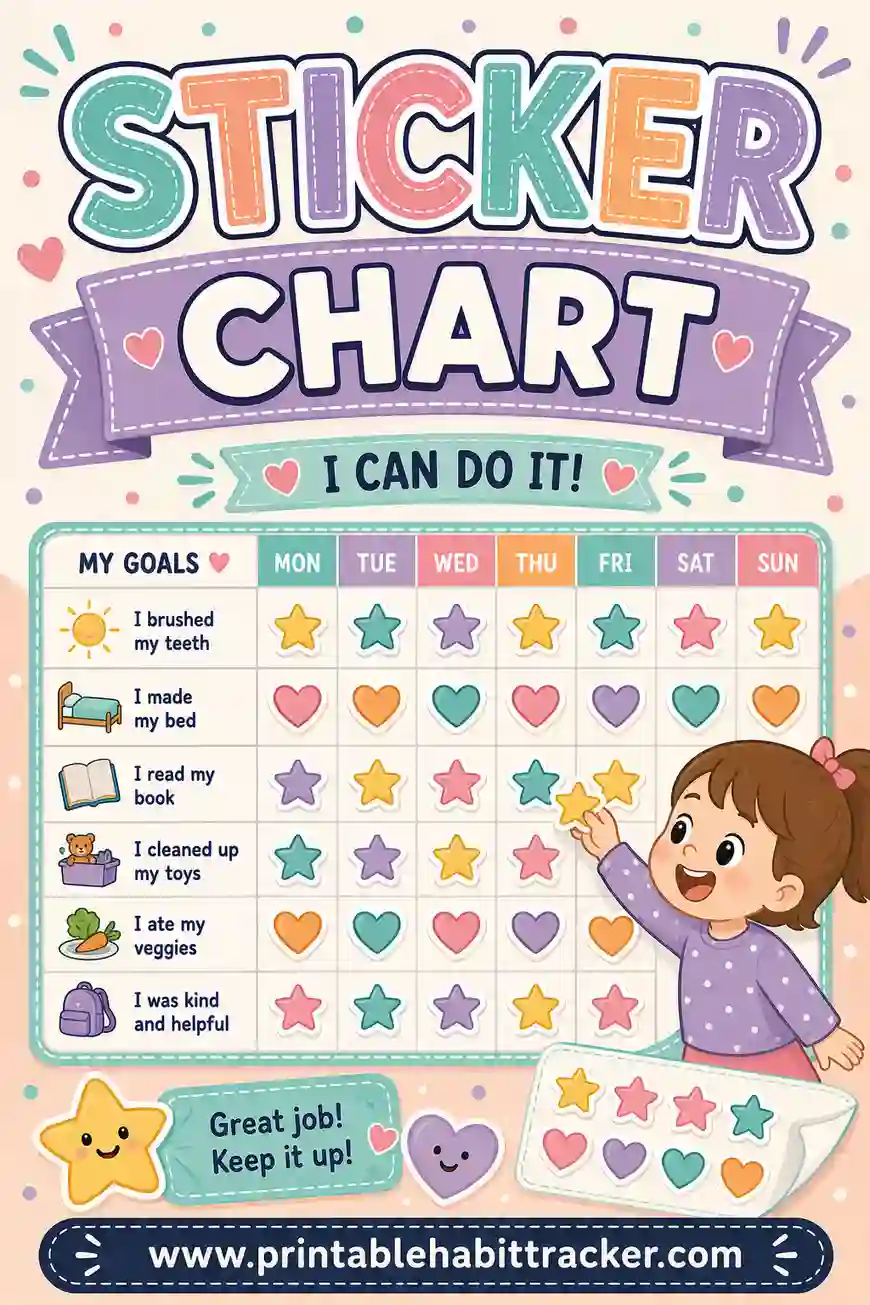
For little ones, every successful block earns a sticker on the chart, and a full row means a small celebration. It's the sticker chart engine pointed at behavior — cheap, cheerful, and shockingly effective under age seven.
Running the Chart Without Turning Into a Referee
- Catch them being good. The chart's real job is forcing you to notice the quiet wins you'd otherwise miss. Mark boxes with a little ceremony.
- Never un-check a box. An earned check stays earned, even if the next hour goes sideways. Losing earned rewards teaches kids the game is rigged, and they stop playing.
- Review at bedtime, gently. Count the wins first. Pick one empty box and ask what happened — curious, not cross. Then let it go; the chart resets at sunrise.
- Keep rewards small and same-day. A full-chart day might earn choosing the bedtime story or ten extra minutes of play. Daily effort needs daily payoff — save the big stuff for weekly patterns.
- Plan the exit. When a goal has been solid for a few weeks, retire it with fanfare and either add the next one or let the chart rest. A behavior chart is scaffolding, not furniture. Many families graduate to a routine-based habit tracker for kids once the storms pass.
A Sample Filled-In Daily Chart
Here's a six-year-old's Tuesday — three goals, three blocks:
| Goal | Morning | Afternoon | Evening |
|---|---|---|---|
| Listen the first time | ✓ | ✓ | ☐ |
| Kind words | ✓ | ✓ | ✓ |
| Toys away when done | ✓ | ☐ | ✓ |
Seven of nine — a genuinely good day. Bedtime conversation: "Kind words all day long — that's the whole row! What made cleanup hard this afternoon?" One minute, no lecture, lights out. The blank boxes did their job by starting a conversation, not a punishment.
Printing Tips
- Print in batches of five or ten. A daily chart you have to rebuild every morning dies by Thursday. Stack them on the fridge with a clip.
- The color-in style prints sticker-sized boxes — standard small stickers fit without spilling over.
- Classic black-and-white saves ink across a big stack; let your child color the header of each day's sheet as a morning ritual.
- Laminate one copy and use a dry-erase marker for an infinitely reusable version — wiping it clean each morning is the fresh start, made visible.
- Landscape orientation gives wider columns if you're doing a six-period school chart.
Frequently Asked Questions
Are the daily behavior charts really free to print?
Yes — completely. The builder has no sign-up, no account, and no watermark. Build the chart once, save it as a PDF, and print a month's stack of free printable daily behavior charts whenever you need them.
Daily or weekly — which should I start with?
Start daily if your child is under seven, if the behavior struggle is intense right now, or if weekly charts have flopped before. Move to a weekly behavior chart once most days are ending well — it's the natural graduation.
How many behavior goals should be on the chart?
Three or four, and only one of them hard. A chart should be mostly winnable on an ordinary day — early success is what buys the child's buy-in for the tough goal.
What if my child has a completely awful day?
Mark what was earned, skip the autopsy, and lean on the reset: "Tomorrow's chart is brand new." The empty boxes already said what needed saying. Consistency across weeks changes behavior; one bad Wednesday changes nothing.
How long should we keep using a daily behavior chart?
Think in seasons, not forever. Most families run one intensively for four to eight weeks — long enough for the target behavior to become the new normal — then either retire it with celebration or graduate to a weekly chart with looser check-ins. Two signs it's time to step down: the chart is nearly full every day, and your child stops needing the bedtime review to know how the day went. If the need returns during a rough patch (new school, new sibling, disrupted routine), reprint and run another season. That's the system flexing, not failing.
Can teachers use this for a classroom behavior chart?
Yes — build one chart with period columns and the class's three rules as rows, then print a copy per student or per day. Because the builder is fully custom, it matches your actual schedule instead of a generic template's.
Ready to Print Tomorrow's Chart?
Pick three positive goals, open the free daily behavior chart builder, put your child's name at the top, and print a week's stack tonight. It's free, it takes five minutes, and tomorrow starts with a clean sheet — for both of you. That daily fresh start is the whole trick, and it never stops working.