Best Habit Trackers for ADHD (Free Picks That Stick)
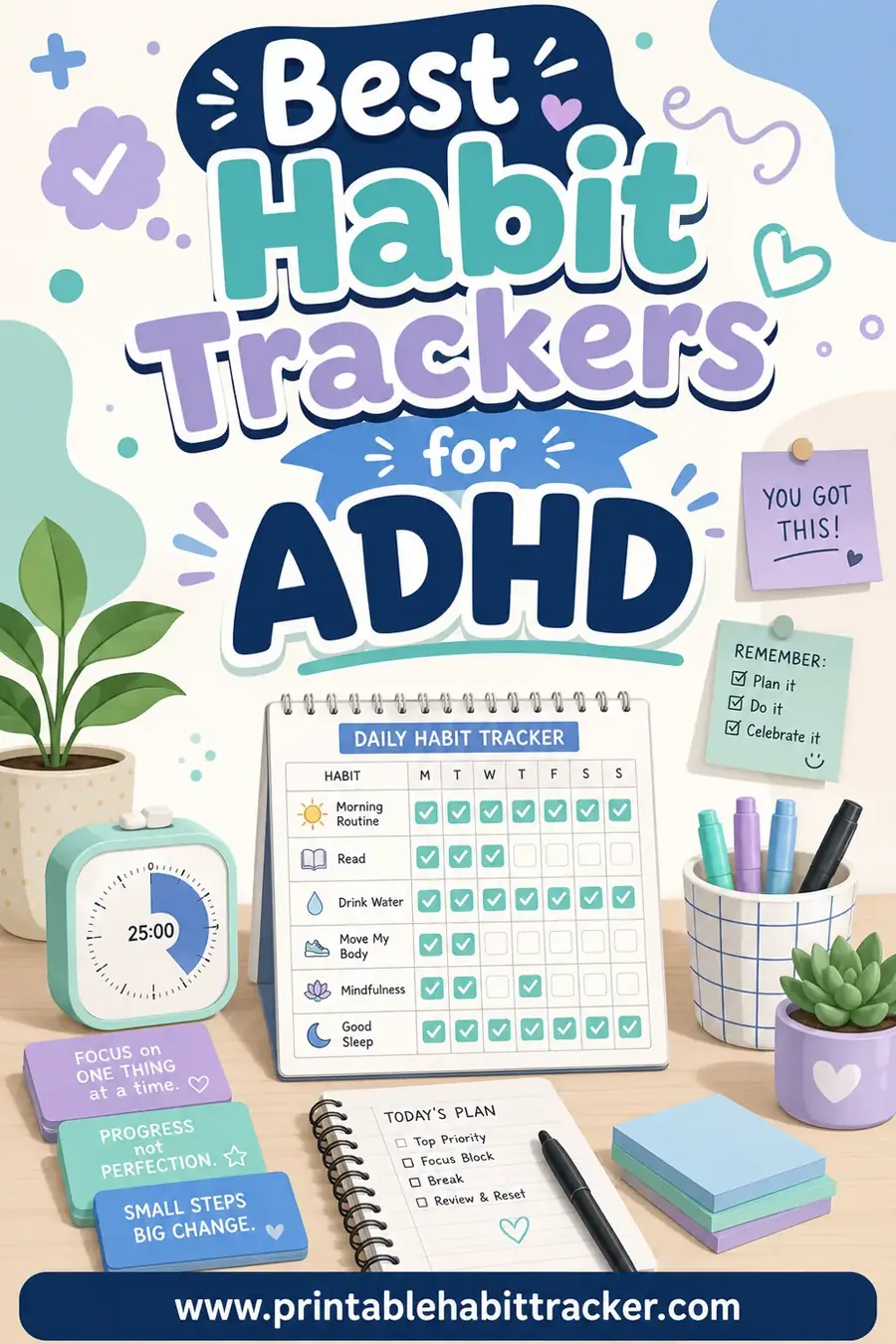
The best habit trackers for ADHD are short, visible, low-friction, and forgiving — which is why a free printable habit tracker on your wall often beats the busiest app. Strong picks include Loop Habit Tracker, Finch, and Tiimo for apps, but the real winner is whichever tool stays in front of your eyes and takes one second to use. For ADHD brains, design matters more than features. Here's an honest comparison so you can find the one you'll actually keep up.
Want the lowest-friction option right now? Open the free tracker, add just three habits, and print a clean sheet you can tape where you can't miss it. No login, no notifications, no cost.
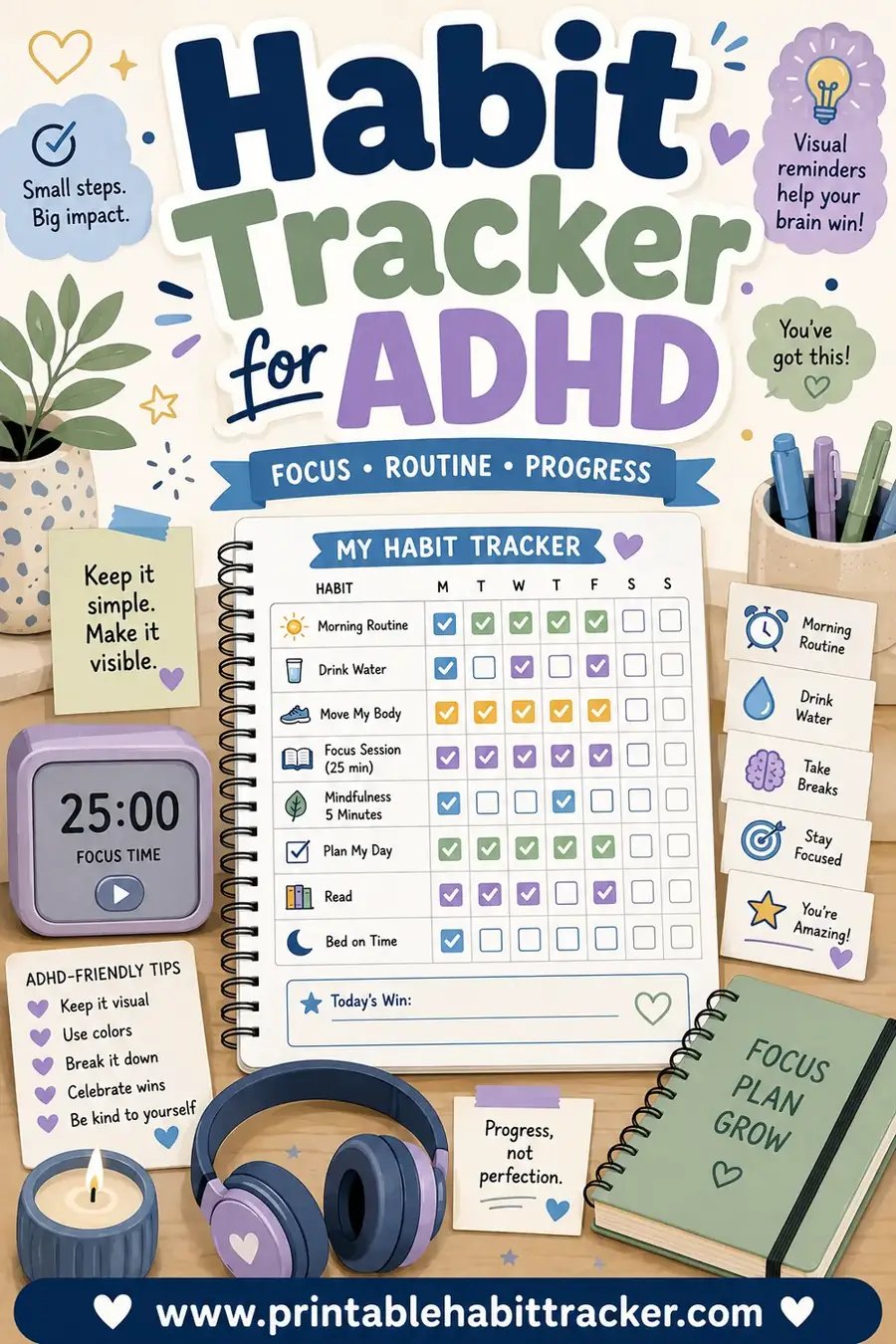
What Makes a Habit Tracker ADHD-Friendly
Most habit trackers are built for brains that find routine easy. ADHD brains need something different, and the gap explains why so many trackers get abandoned by day four. It's not a willpower problem — it's a design mismatch.
A genuinely ADHD-friendly tracker hits four marks:
- Short. Three to five habits, not twenty. A long list is overwhelming, and overwhelm leads to avoidance.
- Visible. Out of sight is out of mind, literally. The tracker has to live where you'll see it without trying.
- Low-friction. Logging should take one second. Every extra tap or login is a reason to skip it.
- Forgiving. One missed day can't feel like total failure, or the whole thing gets abandoned in a guilt spiral.
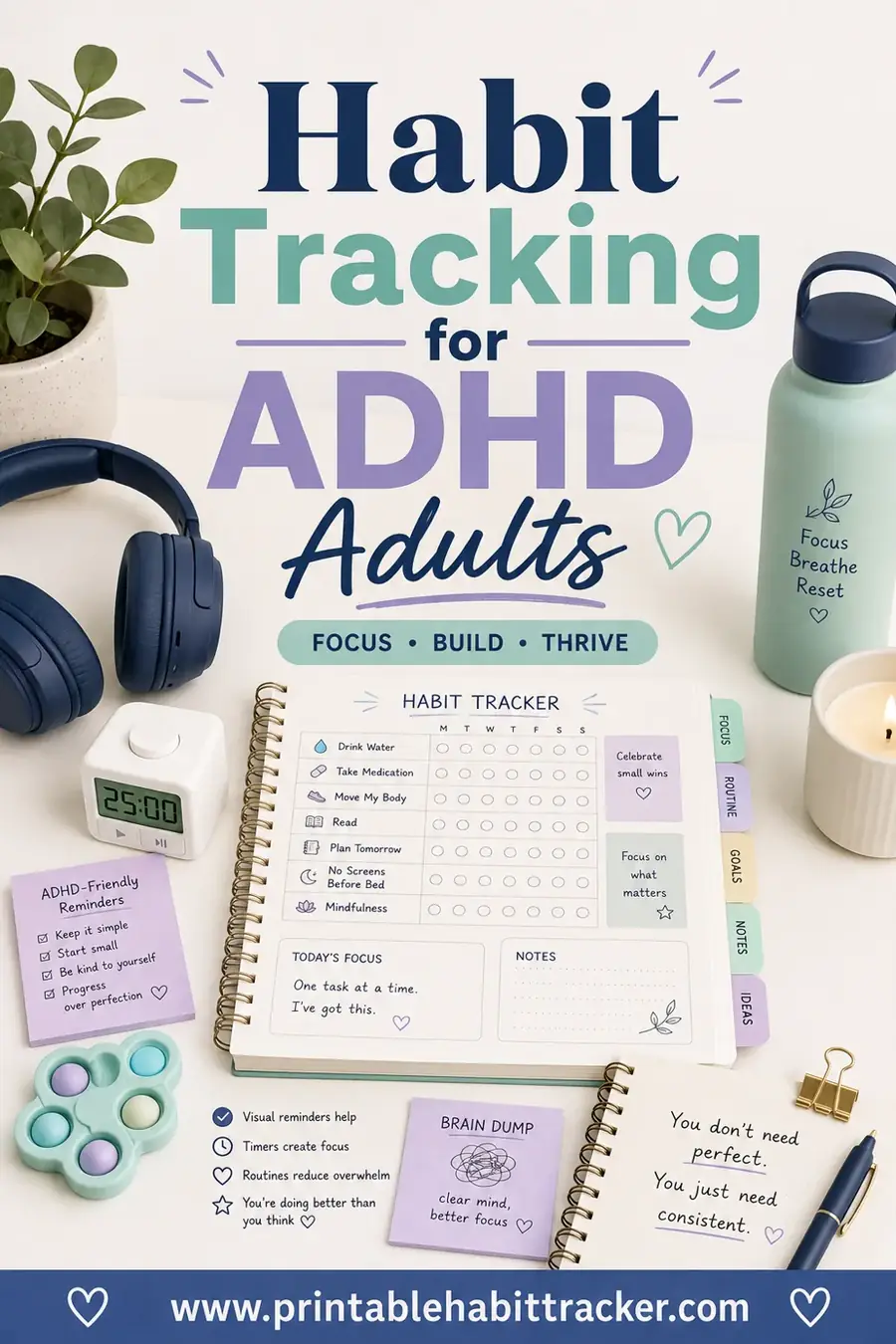
Score every tool below against those four, and the right pick becomes obvious. (For a deeper dive on building one, see our habit tracker for ADHD guide and our notes for habit tracking for ADHD adults.)
The Best Habit Trackers for ADHD
Here are the tools that respect how an ADHD brain actually works.
1. Printable habit tracker (best for visibility and low friction)
A printed sheet wins the ADHD test on every mark. It's short by design, impossible to ignore once it's taped to your mirror, takes one second to mark with a pen, and forgives a missed box without a single notification. Best of all, it can't be swiped away or buried under app alerts. The free printable habit tracker lets you keep the list tiny and print it in under a minute — exactly the kind of low-overhead start that ADHD brains need.
2. Loop Habit Tracker (best free app)
Loop is clean, free, ad-free, and open-source. No accounts, no upsells, no clutter — just a simple checkmark grid. The minimalism is a big plus for ADHD, since there's nothing extra to get distracted by. It's Android-only, and the main risk is the same as any app: if you forget to open it, it can't help.
3. Finch (best for gentle motivation)
Finch wraps habits in self-care — you care for a little pet that grows as you complete tasks. The tone is kind and supportive rather than punishing, which suits the rejection-sensitive side of ADHD. The gentle reward loop can make logging feel good instead of like a chore.
4. Tiimo (best for visual time blindness)
Tiimo is built for neurodivergent users, with visual schedules and timers that help with time blindness. It's more of a visual planner than a pure habit tracker, but for ADHD folks who struggle to sense time passing, it's a strong companion. Some features are paid.
5. Streaks-style minimal apps (best for a few core habits)
A bare row-of-dots streak app keeps the focus on just a handful of habits, which fits the "keep it short" rule. The simplicity helps; the habit cap on free tiers actually works in your favor here by forcing a short list.
6. Sticky notes and a whiteboard (best for zero setup)
Don't underestimate the lowest-tech option. A sticky note on your laptop or a small whiteboard by the door is instantly visible and takes no setup. It's not pretty, but for ADHD, visible-and-now beats perfect-and-later every time.
ADHD Habit Trackers Compared
| Tool | Type | Visibility | Friction | Best for |
|---|---|---|---|---|
| Printable habit tracker | Paper | Excellent (on your wall) | Very low | Staying consistent |
| Loop Habit Tracker | App (Android) | Behind lock screen | Low | Minimalists |
| Finch | App (iOS/Android) | Behind lock screen | Low | Gentle motivation |
| Tiimo | App (iOS/Android) | Behind lock screen | Medium | Time blindness |
| Streak apps | App (iOS/Android) | Behind lock screen | Low | A few core habits |
| Sticky notes / whiteboard | Paper | Excellent | Very low | Zero setup |
The pattern is hard to miss: the tools that win on visibility are the paper ones, and visibility is the single biggest factor for ADHD follow-through.
Why Paper Often Wins for ADHD
It feels counterintuitive — surely a smart app with reminders is better? But for ADHD specifically, paper has an edge that's tough to beat.
The core issue is "out of sight, out of mind." An app lives behind a lock screen and relies on you remembering it exists. ADHD makes exactly that kind of remembering unreliable. A printed sheet on your bathroom mirror can't be swiped away or silenced. It just sits there in your line of sight, doing the remembering for you.
Paper also wins on the other three ADHD marks:
- Low friction. A pen and a checkbox is the lowest-effort logging there is. No unlock, no app, no login.
- Forgiving. A missed box is just blank. There's no red streak-broken banner shaming you into quitting.
- Easy to keep short. It's natural to print a sheet with just three rows. No feature creep, no temptation to add twenty habits.
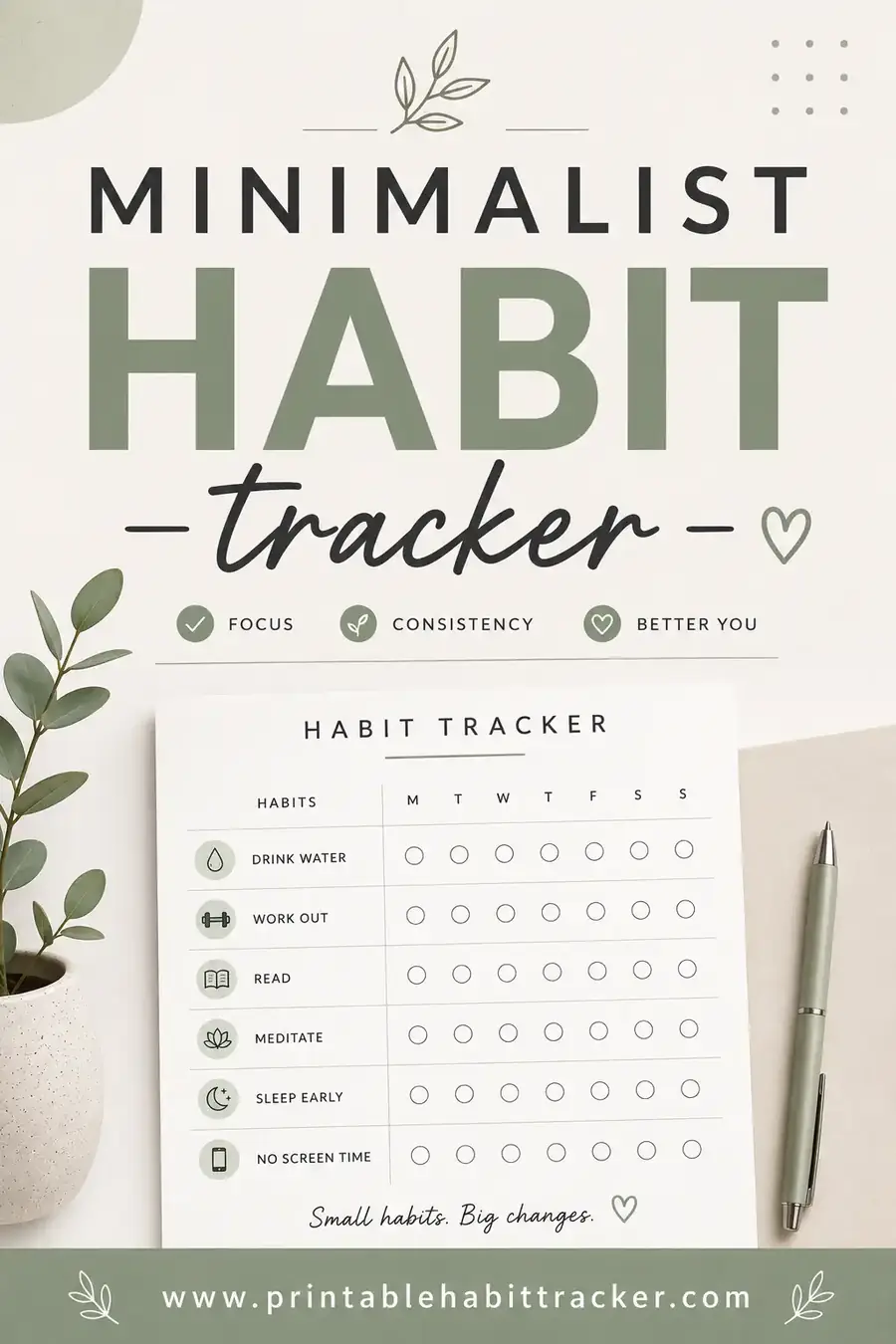
If you've quit every app you've tried, the fix usually isn't a better app — it's getting the tracker out of the phone and onto the wall. Our minimalist habit tracker page leans into exactly this less-is-more approach.
How to Set Up an ADHD Habit Tracker That Sticks
The tool matters less than how you use it. These steps make any tracker far more ADHD-proof.
- Pick three habits, max. Resist the urge to fix everything at once. Three is plenty. You can add more once they're automatic.
- Anchor each habit to something you already do. "After I brush my teeth, I take my meds." Stacking onto an existing routine beats relying on memory.
- Put it where you'll trip over it. The mirror, the fridge, beside your keys. Visibility is non-negotiable for ADHD.
- Make logging instant. A pen on a string next to a printed sheet. The faster the checkmark, the more likely you'll do it.
- Decide in advance that one miss is fine. Build the "missed day doesn't reset me" rule before you start, so a slip doesn't spiral into quitting.
Get those right and even a plain printed sheet outperforms the fanciest app.
ADHD-Friendly Habits to Start With
Choosing the right habits matters as much as choosing the right tracker. ADHD brains do best with habits that are concrete, quick, and tied to a moment that already happens in your day. Vague goals like "be more organized" never make it onto a tracker that sticks. Specific ones do.
Here's a short menu of ADHD-friendly habits, grouped so you can grab three to anchor your first sheet:
| Goal | Habit idea | Anchor it to |
|---|---|---|
| Health | Take meds | After brushing teeth |
| Health | Drink a glass of water | When you start your coffee |
| Focus | Plan top 3 tasks | Right after you sit down |
| Calm | 5 deep breaths | Before opening your laptop |
| Home | Set out tomorrow's clothes | Right after dinner |
| Sleep | Phone out of the bedroom | When you head to bed |
Notice that each habit is paired with something you already do. That "anchor" trick — sometimes called habit stacking — gives your ADHD brain a reliable cue instead of asking it to remember out of thin air. Pick three, write them on your sheet, and post it where the anchor happens.
A forgiving streak rule for ADHD
The fastest way to quit any tracker is to treat one missed day as total failure. ADHD makes that all-or-nothing spiral especially common. Beat it with a simple rule you decide on before you start: never miss twice in a row. One blank box is just a blank box. Two in a row is the only thing you actively avoid. This keeps a streak alive through the messy reality of an ADHD week, and it removes the guilt that usually ends the whole experiment by day five.
Frequently Asked Questions
What is the best habit tracker for ADHD?
The best one is short, visible, low-friction, and forgiving. A printable habit tracker on your wall scores highest because it's always in sight and takes one second to use. Among apps, Loop Habit Tracker (minimal) and Finch (gentle) are strong free picks.
Are habit tracker apps good for ADHD?
They can be, but they share one weakness: they live behind your lock screen, and ADHD makes it easy to forget to open them. The best ADHD apps are minimal and supportive — but for many people, a visible paper tracker sticks better.
Why do ADHD brains quit habit trackers?
Usually because the tracker is too long, too hidden, too high-friction, or too punishing. Twenty habits in an app you forget to open is a recipe for quitting. Keeping it short and visible fixes most of it.
Is a printable habit tracker good for ADHD?
Yes — it's often the best option. It stays visible on your wall, takes one second to mark, keeps the list short, and forgives missed days without any guilt-tripping notifications. It directly addresses the "out of sight, out of mind" challenge.
How many habits should someone with ADHD track?
Start with just three. A short list avoids overwhelm and makes the sheet feel doable instead of daunting. Once those three feel automatic, you can swap in a new one. Less is genuinely more here.
Are these ADHD habit trackers free?
Many are. Loop Habit Tracker is fully free, Finch is free with optional extras, and the printable habit tracker here is completely free with no sign-up or watermark. You can build a custom ADHD-friendly sheet and print it in under a minute.
Ready to Try the Most ADHD-Friendly Pick?
If every app you've tried ended up forgotten behind your lock screen, give the most visible option a shot. Open the free printable habit tracker, add just three habits, and print a clean sheet you can tape where you'll actually see it. It's free, takes one second to mark, and forgives a missed day — which is exactly what an ADHD brain needs. For more on building one your way, read our habit tracker for ADHD guide.