Habit Tracker for ADHD: Free Printable That Actually Works
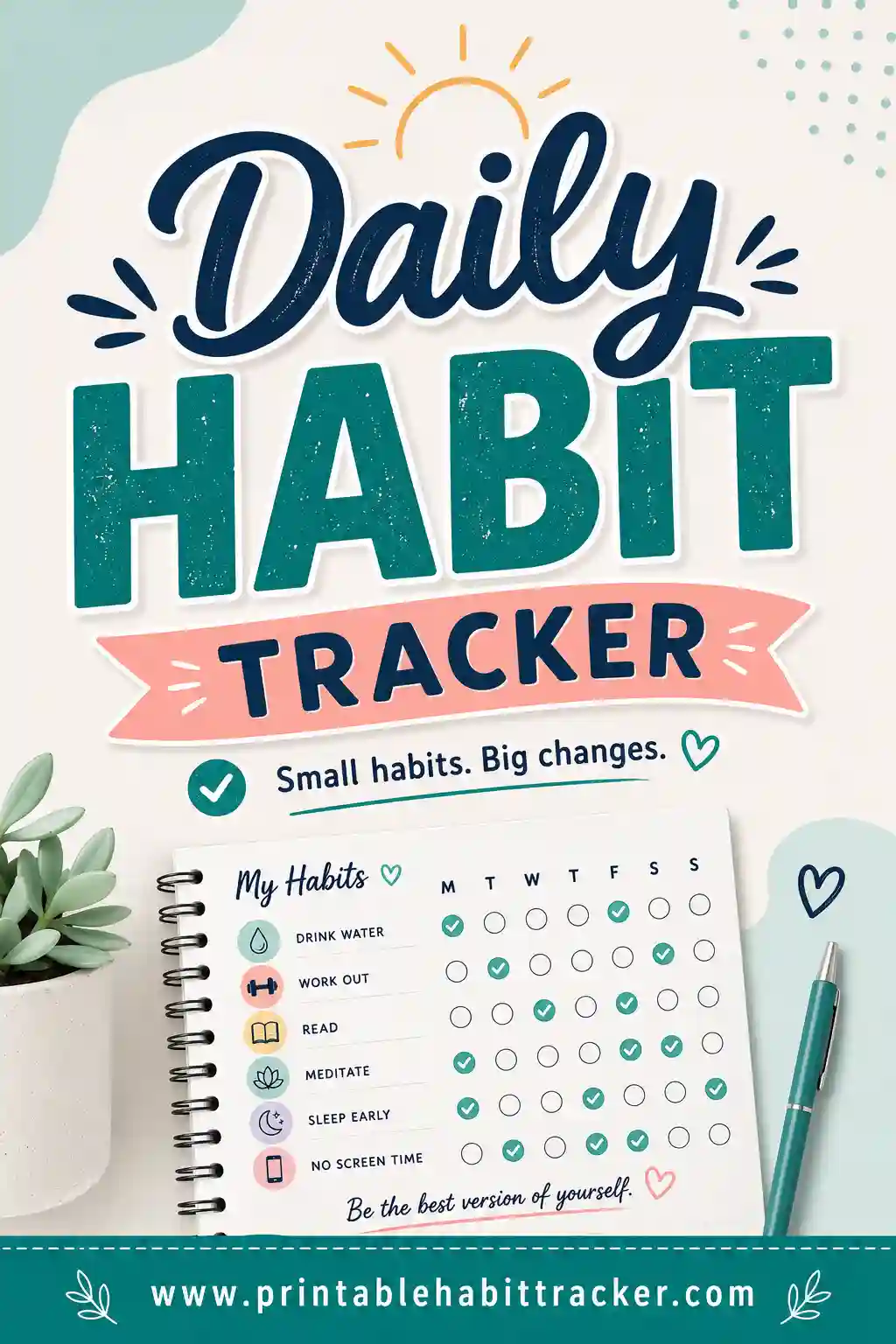
A habit tracker for ADHD is a printable grid that keeps your routines visible and out of your head, where they tend to vanish. You list a few key habits, then check off a box each time you do one — and because the page is right in front of you, it works with an ADHD brain instead of relying on the memory and willpower that ADHD makes unreliable. The fastest way to start is to grab a free printable habit tracker, keep it short, and put it somewhere you literally can't miss it.
Want to jump in? Open the free tracker, pick a simple layout, add three to five habits, and print. No account, no notifications, no cost.
Why Most Habit Trackers Fail ADHD Brains
If you've started a habit tracker before and abandoned it by day four, that's not a personal failing — it's a design mismatch. Most trackers are built for brains that find routine easy. They're packed with twenty habits, hidden in an app behind a login, and they punish you with a guilt spiral the moment you miss a day. For an ADHD brain, that's a recipe for quitting.
A tracker that works with ADHD does the opposite. It's short, so it's not overwhelming. It's visible, so it doesn't rely on you remembering it exists. It's low-friction, so logging takes one second. And it's forgiving, so one missed day doesn't end the whole streak in your head. Get those four things right and a paper tracker becomes one of the most ADHD-friendly tools there is.
The reason paper beats an app here is simple: out of sight is out of mind. A sheet taped to your bathroom mirror can't be swiped away or buried under notifications. It just sits there, doing the remembering for you.
The Four Rules of an ADHD-Friendly Tracker
Before you pick habits, set the tracker up to succeed. These four rules matter more than which habits you choose.
- Keep it to three to five habits. Seriously. A short list you finish beats a long list you avoid. You can always add more later.
- Put it where you can't ignore it. Bathroom mirror, fridge, beside your bed, on the front door. Visibility is everything.
- Make logging take one second. A pen on a string next to the sheet. No hunting for a marker, no opening an app.
- Build in forgiveness. Adopt the "never miss twice" rule. One blank box is fine. The goal is consistency over time, not a perfect grid.
If you only remember one thing, remember this: an ADHD tracker should be almost embarrassingly easy. Easy is what makes it stick.
What to Track: Habits That Anchor an ADHD Day
The best habits for an ADHD tracker are the ones that quietly hold your day together. Here are some that pull a lot of weight, why they help, and a low-effort way to mark each.
| Habit | Why it helps | How to track |
|---|---|---|
| Take meds / vitamins | Easy to forget, huge impact on the whole day | Check right after you take them |
| Drink water | Dehydration worsens focus and mood | One box per glass, or a daily check |
| Brain dump | Empties racing thoughts onto paper | Check after writing your to-dos down |
| One small win | Builds momentum and beats task paralysis | Check after finishing any single task |
| Move your body | Exercise is one of the best things for ADHD focus | Check after a walk or any movement |
| Eat a real meal | Skipped meals tank energy and regulation | Check after eating something proper |
| Lay out tomorrow | Removes morning decision overwhelm | Check when clothes/bag are ready |
| Wind-down ritual | Protects sleep, which protects everything | Check when screens are off before bed |
Don't track all of these. Pick the three to five that would change your day the most. If meds are a struggle, start there. If your brain won't quiet down, start with the brain dump.
Anchor habits vs. stretch habits
A smart ADHD tracker has two types of habits. Anchor habits are the non-negotiables that keep your day from falling apart — meds, food, water, sleep. Stretch habits are the ones you're trying to grow — exercise, tidying, a hobby. Start with mostly anchors. They're the foundation, and nailing them gives you the stability to add stretch habits later without overwhelm.
Layouts That Work With ADHD
The right layout reduces friction. The tracker tool offers several, and a couple are especially ADHD-friendly.
| Layout | Why it suits ADHD | Example |
|---|---|---|
| Daily, few rows | Less visual clutter, fewer choices | 3–5 big habits with large checkboxes |
| Weekly | One glance shows the whole week | Meds, water, movement, Mon to Sun |
| Monthly dot grid | Satisfying "don't break the chain" visual | One dot per day for a single habit |
| Single-habit page | Total focus on one habit at a time | A whole sheet for just "take meds" |
If you're easily overwhelmed by a busy page, go minimal: a few large rows with big boxes. The extra white space is calming and makes each check feel like a real win.
How to Build Your ADHD Tracker in 4 Steps
No planner, no design skills, no executive-function marathon required.
- Pick three to five habits. Choose from the table, leaning on anchors. Resist the urge to add more.
- Choose a simple layout. A weekly sheet or a daily few-row page. Open the generator and select it.
- Type your habits in. Short, concrete labels. "Meds" beats "take my morning medication routine."
- Print it and put it in your face. Mirror, fridge, door. Tape a pen right next to it.
That's the whole setup. Keep it under five minutes so you don't lose steam halfway through.
Habit stacking makes it automatic
One of the best ADHD tricks is to attach a new habit to one you already do without thinking. This is called habit stacking. "After I brush my teeth, I check my water box." "After I pour coffee, I take my meds." The existing habit becomes the reminder, so you're not relying on memory. Pick an anchor you never skip and stack the new habit right on top of it.
A Sample ADHD-Friendly Week
Here's what a realistic week looks like with five anchor habits. A check means done — and notice it's far from perfect.
| Habit | Mon | Tue | Wed | Thu | Fri |
|---|---|---|---|---|---|
| Take meds | ✓ | ✓ | ✓ | — | ✓ |
| Drink water | ✓ | ✓ | — | ✓ | ✓ |
| Brain dump | — | ✓ | ✓ | ✓ | — |
| One small win | ✓ | ✓ | ✓ | ✓ | ✓ |
| Move your body | ✓ | — | ✓ | — | ✓ |
This is a good week. Not because it's full, but because the rows are mostly checked and the gaps didn't cause a spiral. Thursday's meds got missed and Wednesday's water slipped — and the very next day got back on track. That's the whole game.
The Most Important Rule: Be Kind to the Gaps
ADHD brains are prone to the "I missed one, so I've ruined it, so why bother" trap. The single most important habit-tracking skill you can build is refusing to play that game.
- One blank box means nothing. It's a normal human week, not a failure.
- Never miss twice. If you skip a habit today, just make sure you do it tomorrow. That one rule prevents most relapses.
- Don't restart from zero. A messy, half-checked tracker is still working. A perfect tracker you quit is not.
- Celebrate small. A three-day streak is genuinely worth a tiny reward. Dopamine helps the habit stick.
The tracker is a tool to help you, not a test you can flunk. Treat the gaps as information, not evidence against yourself, and you'll keep going far longer.
When a habit just won't stick
If a row stays empty no matter what, shrink it until it's almost laughable. "Exercise" becomes "put on my shoes." "Clean the kitchen" becomes "put one dish away." The tiny version builds the neural groove, and momentum does the rest. A two-minute habit you actually do is infinitely more useful than the ideal habit you keep failing.
Once your ADHD tracker is humming, you can build matching ones for the rest of your life — a general productivity tracker, a student-focused version for school, or a shared family chore tracker so the load doesn't all land on you.
Frequently Asked Questions
How many habits should an ADHD habit tracker have?
Three to five, no more. A short list you finish beats a long list you avoid, and ADHD brains do far better with fewer choices. Nail a handful of anchor habits first, then add new ones slowly once those have stuck.
Why does a paper tracker work better than an app for ADHD?
Because out of sight is out of mind. An app can be swiped away or buried under notifications, but a sheet taped to your mirror is impossible to ignore. Paper is also one-second to use — pen, check, done — with no login or loading screen to derail you.
What should I do when I miss a day?
Nothing dramatic. One missed box is a normal week, not a failure. Just follow the "never miss twice" rule: skip today, but make sure you do the habit tomorrow. That single rule prevents most relapses and keeps the guilt spiral from taking over.
Is the ADHD habit tracker really free?
Yes. You build it and print it yourself at no cost — no account, no notifications, no subscription. The tracker tool lets you make as many pages as you want and reprint a fresh, clean sheet whenever you need a reset.
What's habit stacking and why does it help ADHD?
Habit stacking means attaching a new habit to one you already do automatically — "after I brush my teeth, I take my meds." The existing habit becomes the reminder, so you're not relying on memory or willpower, both of which ADHD makes unreliable. It's one of the most effective tricks for building routines.
What's the best layout for an ADHD brain?
A simple one. Either a weekly sheet with three to five habits, or a minimal daily page with a few big checkboxes and lots of white space. Less visual clutter means less overwhelm, and big boxes make each check feel like a satisfying win.
Ready to Build a Tracker That Works With Your Brain?
Pick three to five habits that would steady your days, open the free tracker, and print a clean, low-clutter sheet in minutes. It's free, there's no sign-up, and you can keep it as simple as you need. Tape it to your mirror, hang a pen beside it, and let the page do the remembering — because that's exactly what it's for.