Habit Tracker for College Students: Free Printable That Actually Sticks
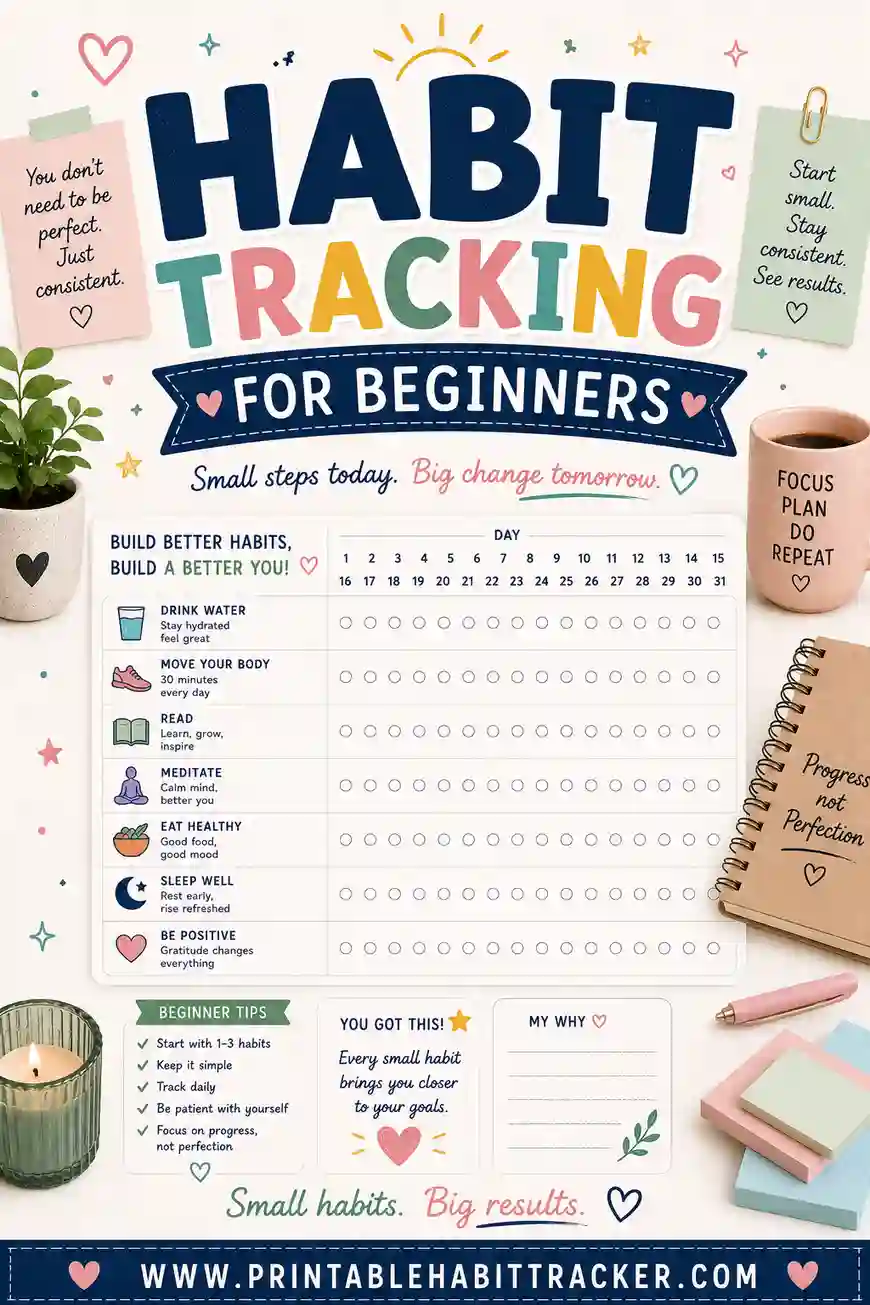
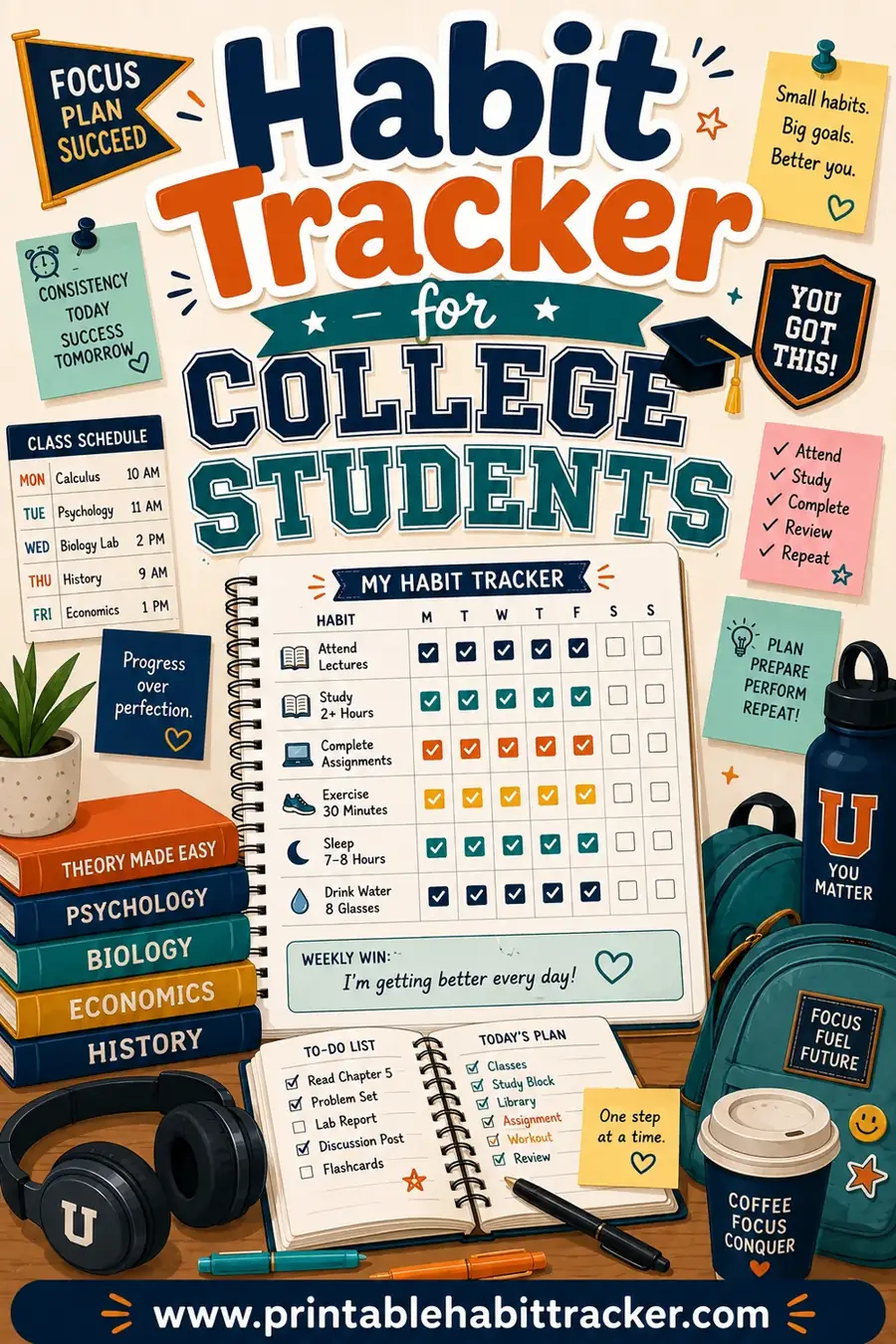
A habit tracker for college students is a simple grid where you check off the daily habits that keep your grades, sleep, and sanity in balance, like reviewing notes, working out, drinking water, or going to bed before 1 a.m. With no parents and no fixed schedule, the routines you build are completely up to you. The easiest way to start is to open the free habit tracker maker, choose the habits that matter this semester, and print a sheet for your desk, wall, or planner.
Want to jump in? Build your printable tracker now, pick a weekly or monthly layout, add your own habits, and print as many copies as you want. No sign-up, no app, no cost.
Why a Habit Tracker Works So Well in College
College is the first time a lot of people run their own schedule from scratch. Class might be at 8 a.m. one day and not until 2 p.m. the next. Nobody's checking that you ate, slept, or studied. That freedom is great, until the loose, easy-to-skip habits quietly disappear.
A habit tracker gives your week a backbone. When studying, sleep, and exercise are boxes on a sheet, they stop being vague intentions and become things you can see and check off. You're not relying on willpower or memory. You're just filling in a grid.
It also helps where college hits hardest: consistency. Anyone can study hard the night before a midterm. The students who do well over a whole semester are the ones who do small things every day. A tracker is built to reward exactly that kind of steady, unglamorous effort.
The Best Habits for College Students to Track
The right habits cover the four things that quietly run your semester: academics, health, money, and rest. Here's a starter menu.
| Habit | Why it helps | How to track |
|---|---|---|
| Review notes same day | Beats cramming, locks in learning | Daily checkbox |
| Read assigned pages | Keeps you ahead, not behind | Daily checkbox |
| Move your body 20+ min | Energy, focus, stress relief | Daily checkbox |
| Sleep 7+ hours | The real GPA cheat code | Daily checkbox |
| Drink water | Cheaper than another coffee | Daily checkbox |
| No spending today | Builds money awareness | Daily, count "no-spend" days |
| Check assignments / calendar | Nothing sneaks up on you | Daily checkbox |
Don't track all seven. Pick three or four that match where you struggle. If you always cram, track "review notes same day." If you run on four hours of sleep, track sleep. Aim the tracker at your actual weak spots.
Keep the list short
A tracker with twelve habits feels productive and gets abandoned by week two. Three solid habits you complete beat ten you ignore. You can always add more once tracking becomes second nature.
Weekly vs. Monthly Layouts for a Student Schedule
Your semester runs on two clocks: the weekly rhythm of classes and the monthly rhythm of exams and deadlines. Match the layout to the habit.
| Layout | Best for | Example habits |
|---|---|---|
| Weekly (7 days) | Everyday routines tied to your class week | Study, sleep, water, gym |
| Monthly | Habits and goals across the whole month | No-spend days, weekly meal prep, gym 3x/week |
| Yearly / semester | Big arcs and long goals | Books read, all-nighters avoided, GPA target check-ins |
A lot of students keep a weekly sheet taped above their desk and a monthly sheet in their planner. The habit tracker maker builds both, so you can print whatever fits your style.
How to Set Up Your Tracker in Minutes
You can go from idea to printed sheet before your next class. Here's the flow.
- Pick your layout. Weekly for daily habits, monthly for the bigger picture.
- Add 3–5 habits. Aim them at the things you actually want to fix this semester.
- Choose a style. A minimal grid for the wall, or a softer style for a planner page.
- Print a stack. Print the whole month at once so you're not running to the library printer every Monday.
Then put it where you'll see it. Above your desk, on the fridge, or as the first page of your planner. A tracker you can't see is a tracker you'll forget.
Make it dorm-proof
Slip the sheet into a clear sleeve and use a dry-erase marker, or print on cardstock so it survives backpack life. At the end of the week, snap a photo for your records and reuse the sheet. One print can cover a whole month.
Building Habits Around Study and Exams
Tracking shines during the parts of the semester that wreck most students: midterms and finals. Instead of one giant panicked study session, a tracker pushes you toward steady, daily prep.
- Track active recall, not "study hours." Check a box for actually testing yourself, not just rereading. Rereading feels productive and teaches you almost nothing.
- Use a countdown row. Make a row for "studied for [exam]" and check off each day you prep in the two weeks before. Watching the streak build is weirdly motivating.
- Track sleep during finals. This is when students cut sleep first, and it's exactly when sleep matters most for memory. Keep that box on the sheet.
- Log "left the room." A box for studying somewhere other than your bed. Small change, big focus boost.
The goal isn't to study every waking hour. It's to study a little every day so finals week is a continuation, not a crisis.
Habits That Protect Your Health and Money
Grades get all the attention, but the habits that make college sustainable are the boring ones. These are worth a permanent spot on your sheet.
- Sleep. Track hours, not bedtime. Seven-plus is the target. It does more for your GPA than another energy drink ever will.
- Movement. A walk, the gym, an intramural game. Twenty minutes counts. It's stress relief disguised as exercise.
- Real meals. A box for eating something that isn't from a vending machine.
- No-spend days. Track the days you don't buy anything. It quietly builds money awareness without a full budget app.
- One social thing. Isolation creeps up fast in college. Track that you actually saw a friend.
When these are checkboxes next to your study habits, they get equal weight. That balance is what keeps a hard semester from flattening you.
Building Habits That Last Past Graduation
Here's the part most students miss: the habits you build in college are the ones you carry into your career and adult life. The tracker isn't just about surviving this semester. It's quietly training the version of you that shows up after the degree.
The students who keep steady sleep, daily review, and regular movement aren't just earning better grades now. They're wiring in routines that make a first job, grad school, or building something of their own far more doable. Discipline is a transferable skill, and college is a cheap place to practice it.
- The habit of tracking itself. Once checking a sheet every day feels normal, you'll keep doing it with work goals, fitness, or finances long after class ends.
- Bouncing back from slips. Learning to recover from a missed day without spiraling is a skill that pays off for the rest of your life.
- Knowing your own patterns. A semester of data teaches you when you focus best and when you fall apart, knowledge you'll use for decades.
So treat the tracker as more than a grade tool. Every box you check is a small rep in becoming someone who follows through, and that person does well long after college is over.
Habit-stack with your class schedule
The easiest way to make habits stick is to anchor them to things you already do. Review notes right after each class, while the room is still fresh. Fill your water bottle every time you pass the fountain. Stretch the moment you get back to your room. Stacking a new habit onto an existing routine means you rarely have to remember it on its own.
Keeping the Streak Alive
You will miss days. A surprise project, a late night, a rough stretch. The tracker isn't there to guilt you over a blank box. It's there to help you spot patterns and recover quickly.
- Never miss twice. One blank box is a slip. Two in a row is a new habit forming, the wrong way. Bounce back the next day.
- Read the patterns. If "sleep 7 hours" is always blank on weekends, that's useful information, not a personal failing.
- Reset each month. Print a fresh sheet at the start of the month. A bad week doesn't have to haunt you.
- Notice the wins. A full week of checks is real progress. Let it count.
Frequently Asked Questions
What habits should a college student track first?
Start with the two that fix your biggest weak spots, usually sleep and same-day note review. Master those before adding more. Three habits you actually complete beat ten you abandon by week two.
Is this habit tracker free for students?
Yes, completely. You build and print it yourself with no sign-up, no watermark, and no limit on copies. Print a fresh sheet every week of the semester without paying anything.
Should I use a paper tracker or an app?
A printed sheet has one big advantage in a dorm: it's always visible and never buried under notifications. Tape it above your desk and you'll see it every day. The free maker lets you print as many as you need, and you can always photo-log them for your records.
How do I use a habit tracker during finals?
Make a countdown row for each exam and check off every day you do active recall in the two weeks before. Keep tracking sleep, too, since memory depends on it. Steady daily prep turns finals week into a continuation instead of a crisis.
What's the best layout for a college schedule?
A weekly seven-day grid fits everyday habits like study, sleep, and water. Add a monthly sheet for bigger goals like no-spend days or hitting the gym three times a week. You can build and print both from the free tracker maker.
Start Your College Habit Tracker Today
Pick three or four habits that would make this semester smoother, open the free habit tracker maker, and print a sheet for your desk or planner. It's free, there's no sign-up, and you can reprint a clean copy whenever you need a fresh start.
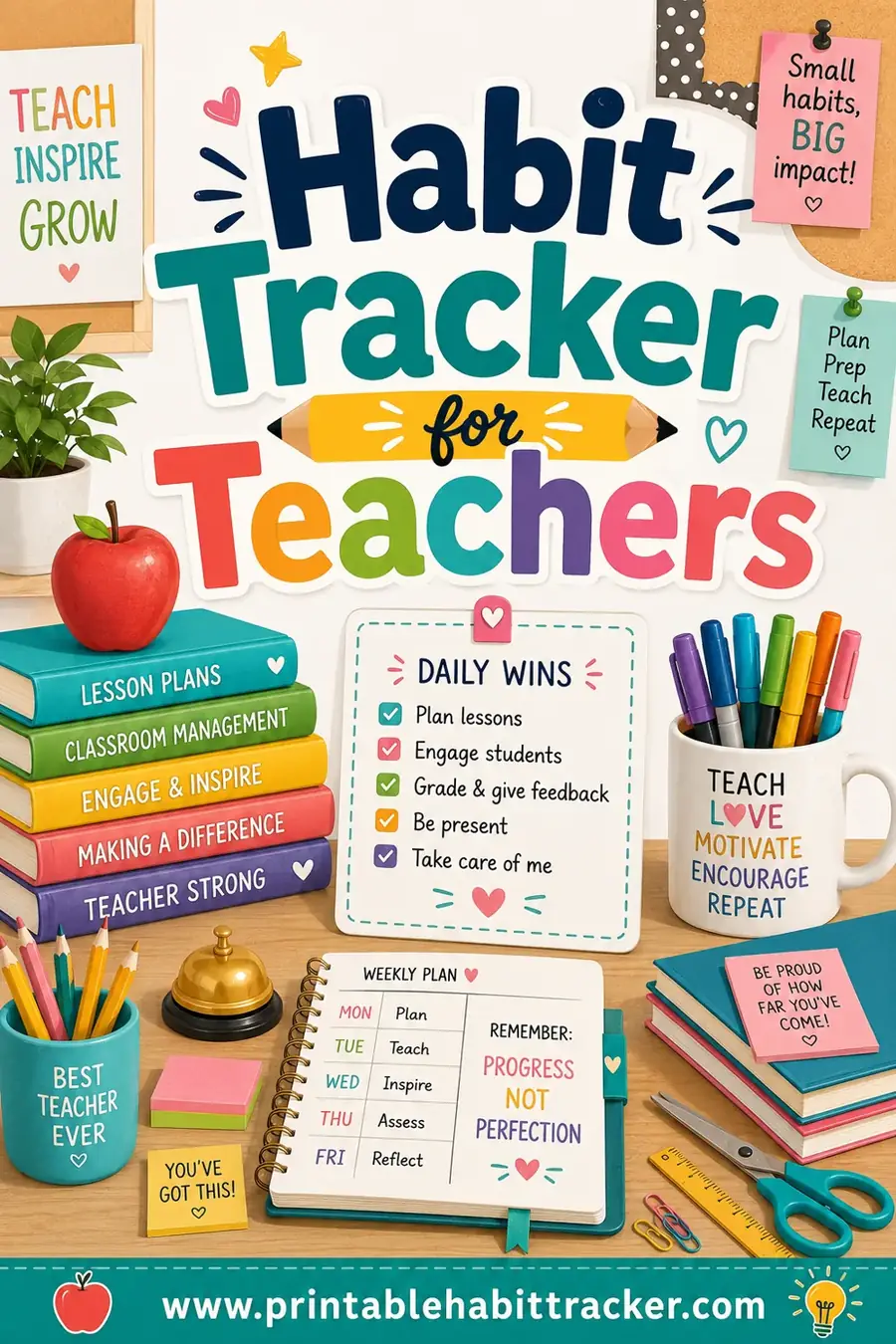
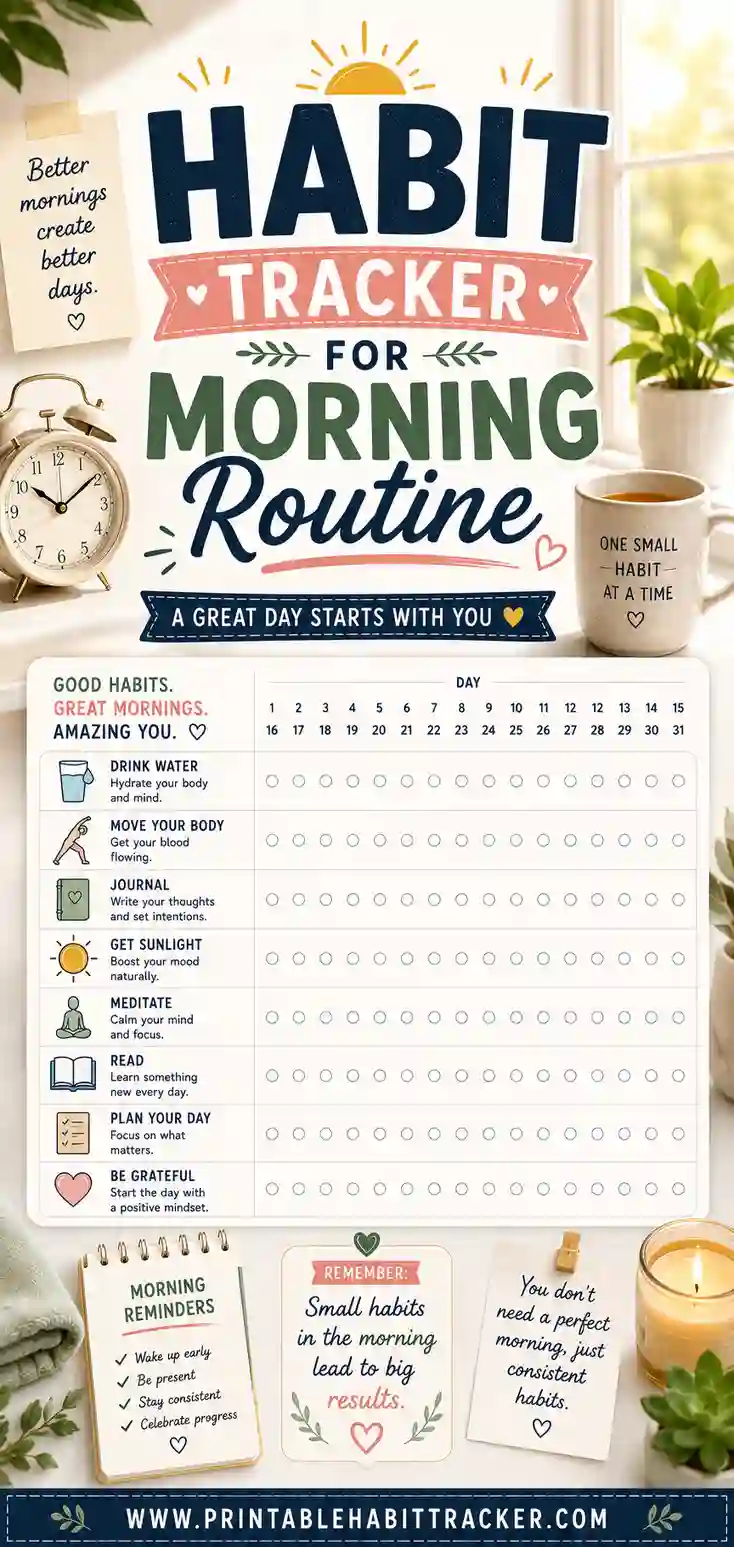
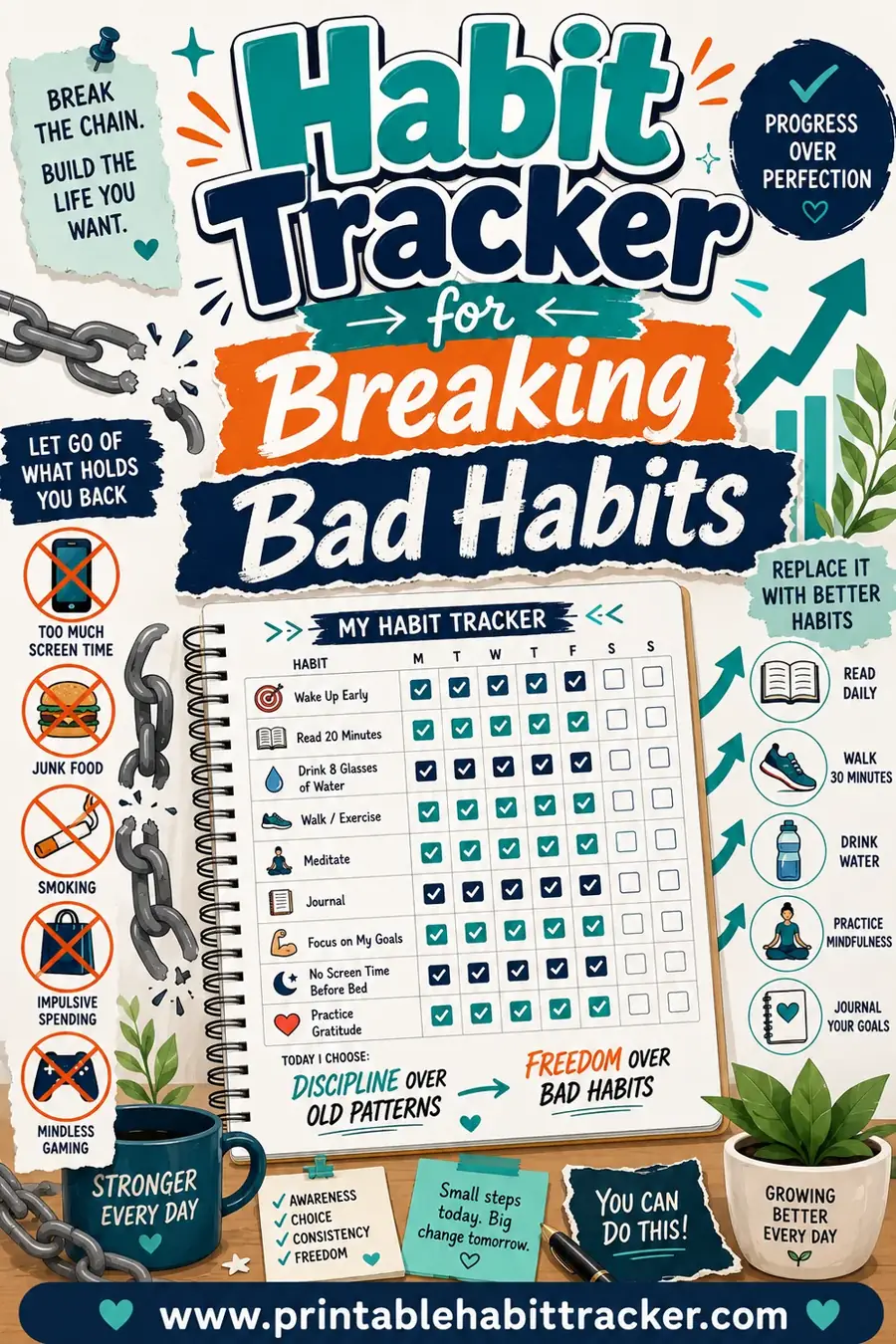
While you're at it, check out our tracker for building a solid morning routine, one for breaking a bad habit, or the teacher version if you're a grad student doing both. Small boxes, real momentum.