What to Do When You Miss a Day (And Save Your Streak)
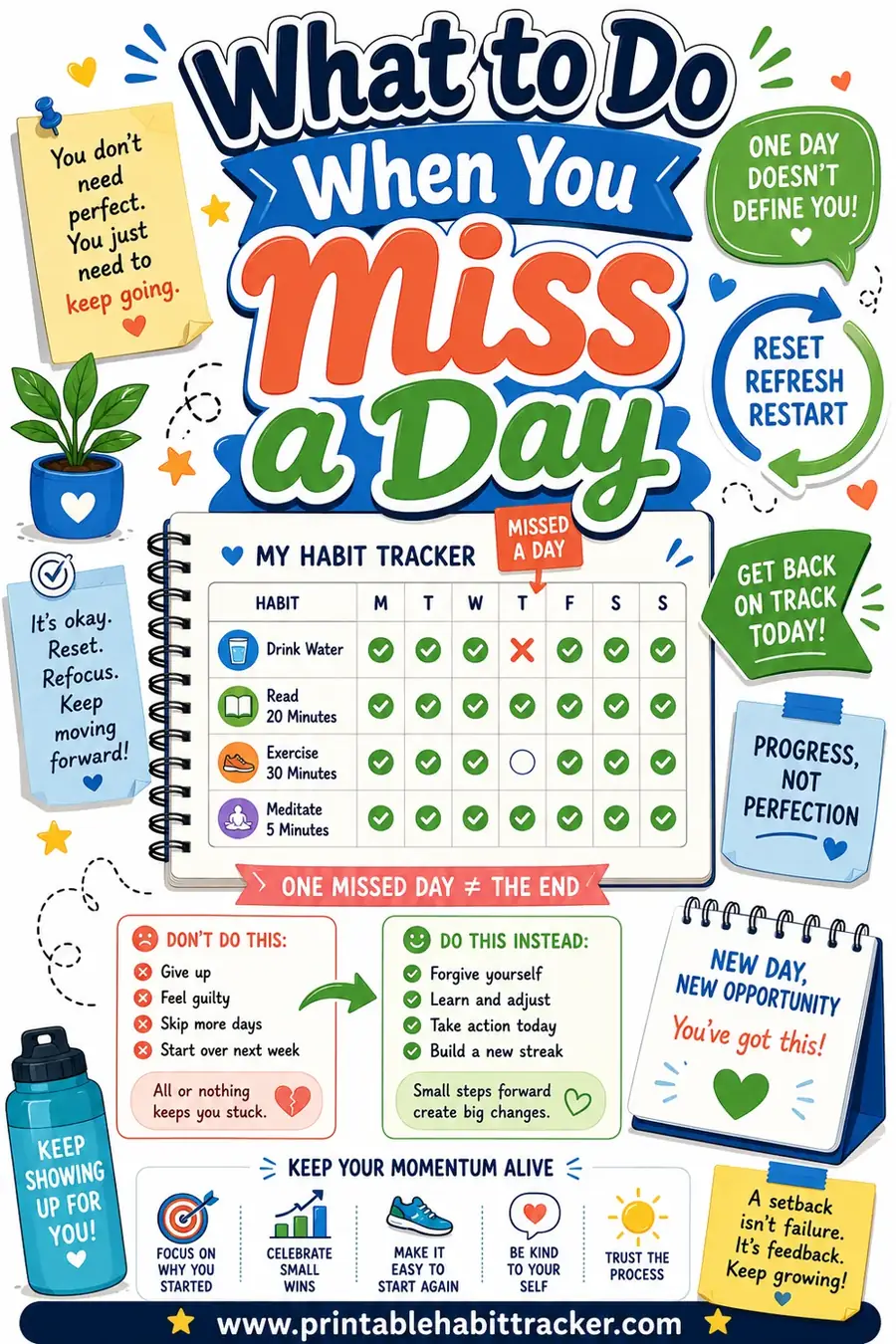
When you miss a day on a habit, do this: don't panic, don't quit, and just get back to it the very next day. One missed day means nothing. The thing that actually breaks habits isn't a single slip — it's letting that one miss turn into two, then a week, then "I'll start over Monday." The rule that saves you is simple: never miss twice in a row.
Getting back on track is easiest when you can see your record in front of you. A free printable habit tracker makes one blank day look like exactly what it is — a tiny gap in an otherwise solid row — instead of a total failure.
First: One Missed Day Is Not Failure
Let's get the most important thing straight. Missing a single day does not undo your progress. It doesn't erase the three weeks you nailed. It doesn't mean you "don't have discipline." It means you're a human being with a life, and life sometimes gets in the way.
The damage from a missed day is almost never the day itself. It's the story you tell about it. "I blew it, so what's the point" is the thought that kills habits, not the blank box. Catch that thought and you've already won.
So before anything else: breathe. You missed one day. That's normal, expected, and completely recoverable.
The One Rule That Matters: Never Miss Twice
If you remember nothing else from this article, remember this. Missing once is an accident. Missing twice is the beginning of a new habit — the habit of not doing it.
Here's why it works. The first miss is harmless. But the second miss is where momentum flips. Two days off feels like "I've stopped," and stopping is sticky. Three days and the habit is basically gone.
So the goal after a slip is dead simple: do the habit tomorrow, no matter how small. You don't need to make up for the missed day. You don't need a perfect comeback. You just need to not skip again.
| Scenario | What it means | What to do |
|---|---|---|
| Missed 1 day | Normal slip | Get right back tomorrow |
| Missed 2 days | Danger zone | Do the tiniest version today, no excuses |
| Missed a week | Habit stalled | Restart small, lower the bar, fix the cue |
Don't Try to "Make Up" for It
A trap people fall into: "I skipped my run yesterday, so today I'll do double." Don't.
Doubling up turns one miss into a punishment, and punishment makes habits feel awful. It also sets you up to fail — a double workout is harder, so you're more likely to skip that too, and now you've missed twice.
The streak isn't a debt you owe. You don't pay it back. You just pick up where you left off, at the normal (or smaller) size. Forward, not catch-up.
Restart Smaller Than You Think
Coming back after a miss is the perfect time to shrink the habit. If exercising felt too big to keep up, that's probably why you missed. So make the comeback version tiny.
- Missed your 30-minute workout? Tomorrow, do five minutes.
- Skipped your reading? Read one page.
- Blew off journaling? Write one sentence.
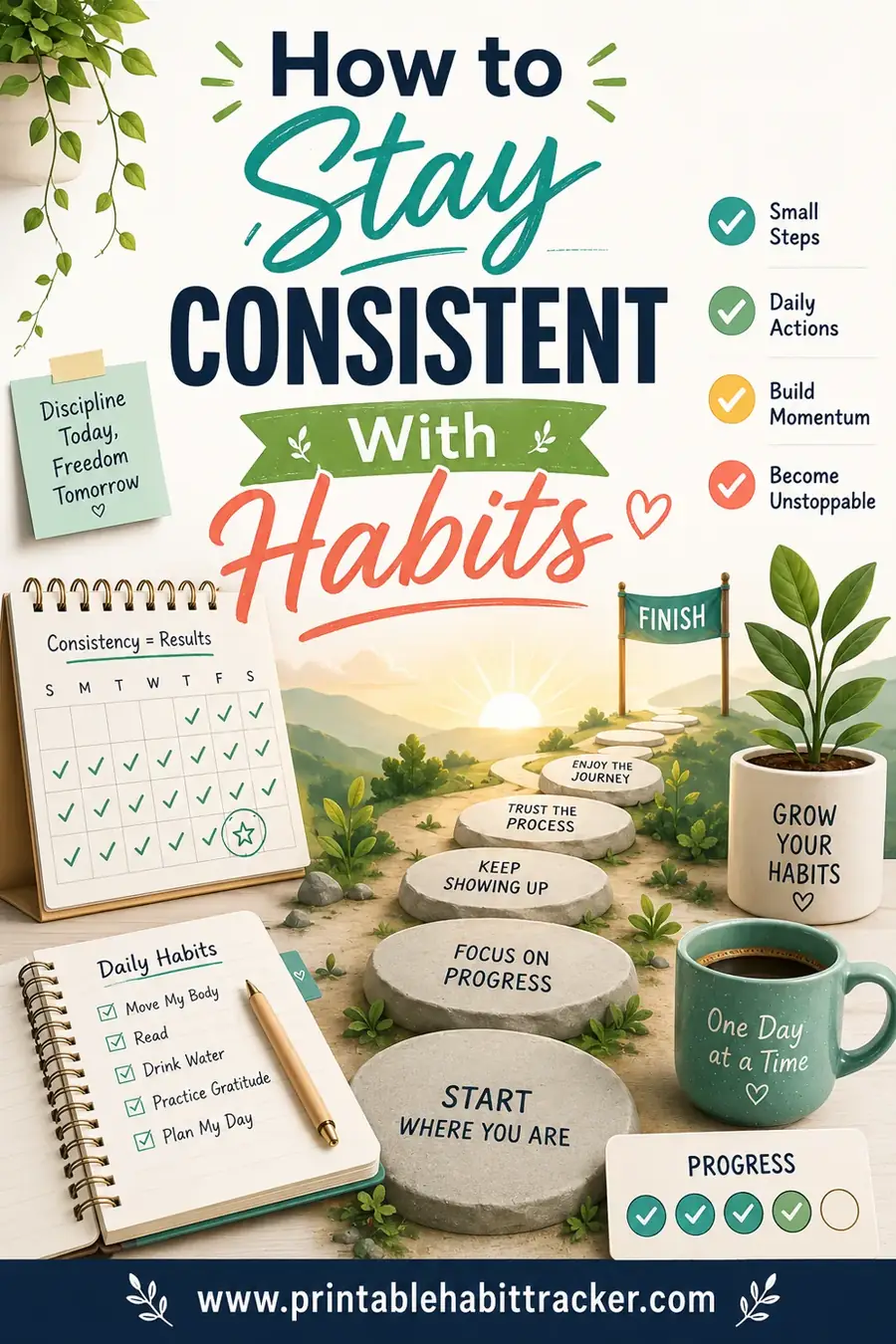
The point of the comeback isn't to be impressive. It's to re-prove that you show up. A tiny win rebuilds the chain, and the chain is what you're protecting. You can always grow it back once you're rolling again. For more on right-sizing habits, our guide on how to stay consistent with habits digs into exactly this.
Figure Out Why You Missed
A missed day is data, not just a setback. Treat it like a tiny investigation.
Ask yourself one quick question: what got in the way? Usually it's one of a handful of culprits.
- The habit was too big. Hard habits get skipped first. Shrink it.
- You forgot. The cue was weak. Make it more visible.
- Bad timing. You scheduled it for a slot that's always chaotic. Move it.
- No reward. It felt like a chore. Pair it with something you enjoy.
- Life happened. Travel, illness, a crisis. That's fine — just resume after.
Most misses point to a fixable setup problem, not a willpower problem. Fix the setup and the same miss is less likely next time.
Use Your Tracker to Stay Honest
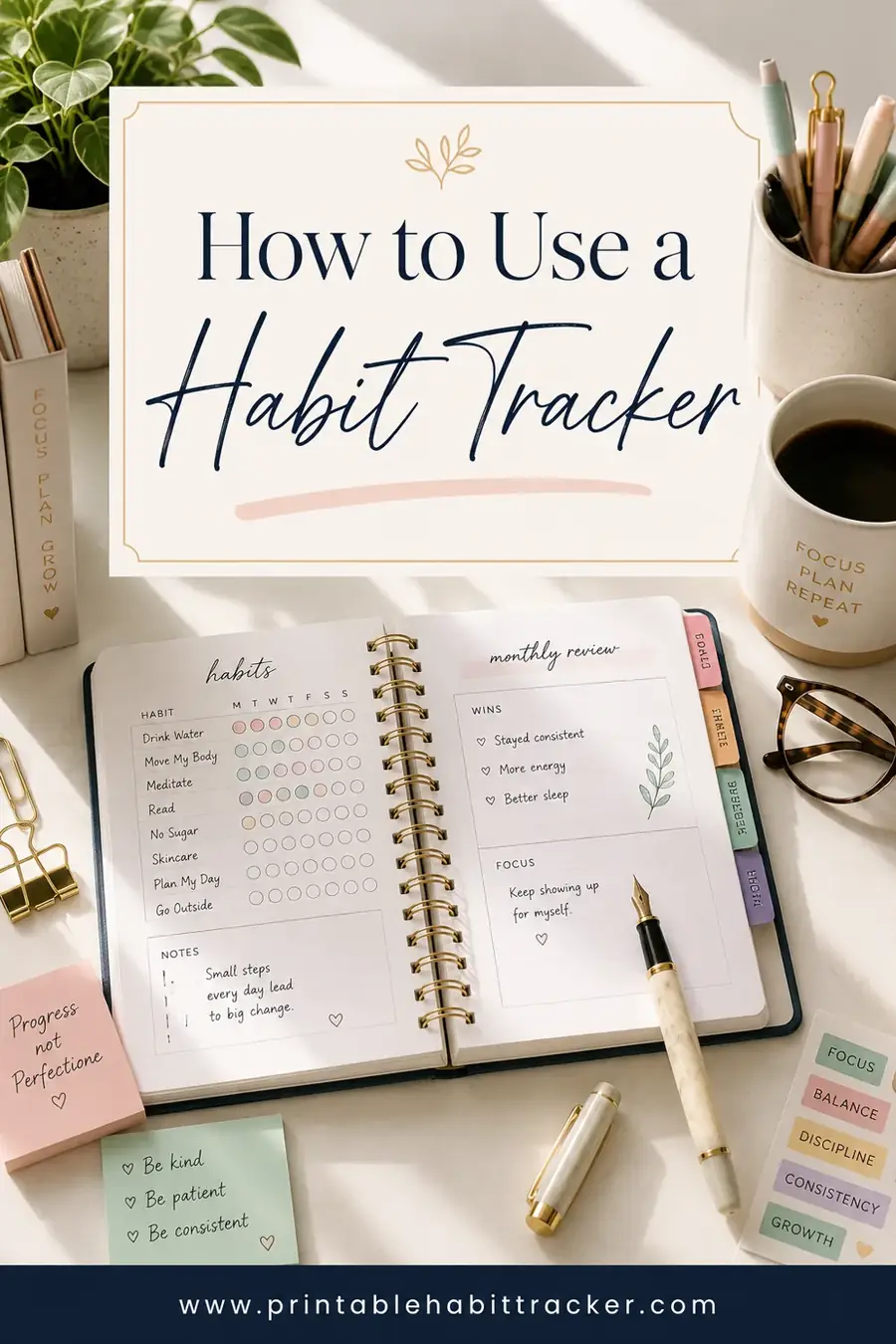
This is where a printable habit tracker earns its keep. When your whole month is laid out on one page, a single blank day looks tiny. You can literally see that one gap surrounded by checkmarks, and that picture tells the truth: you're still doing great.
Without a tracker, a missed day lives only in your head, where it grows. Your brain inflates it into "I always quit." The page disagrees. The page shows a strong streak with one little gap, and that visual is genuinely reassuring.
A tracker also helps you spot patterns. If every Saturday is blank, Saturday is your weak spot, and now you can plan for it. One blank box is a slip. A blank column is a clue.
A Simple Comeback Plan
Here's the whole recovery process in five quick steps. Pin it somewhere.
- Skip the guilt. One day is nothing. Move on.
- Commit to tomorrow. Decide right now you won't miss twice.
- Shrink the habit. Make the comeback version tiny and doable.
- Check the box. Mark it on your tracker the moment you do it.
- Find the cause. Note what tripped you up so you can adjust.
That's it. No grand restart, no Monday reset, no starting from zero. Just the next small step.
When You've Missed More Than a Few Days
Sometimes a miss stretches into a week or more. Don't write off the whole habit — restart it gently.
The mistake here is the "fresh start" fantasy: throwing out everything and relaunching at full intensity. That almost always crashes again. Instead, treat the comeback like a brand-new tiny habit. Pick the smallest possible version, attach it to something you already do daily, and rebuild the streak one box at a time.
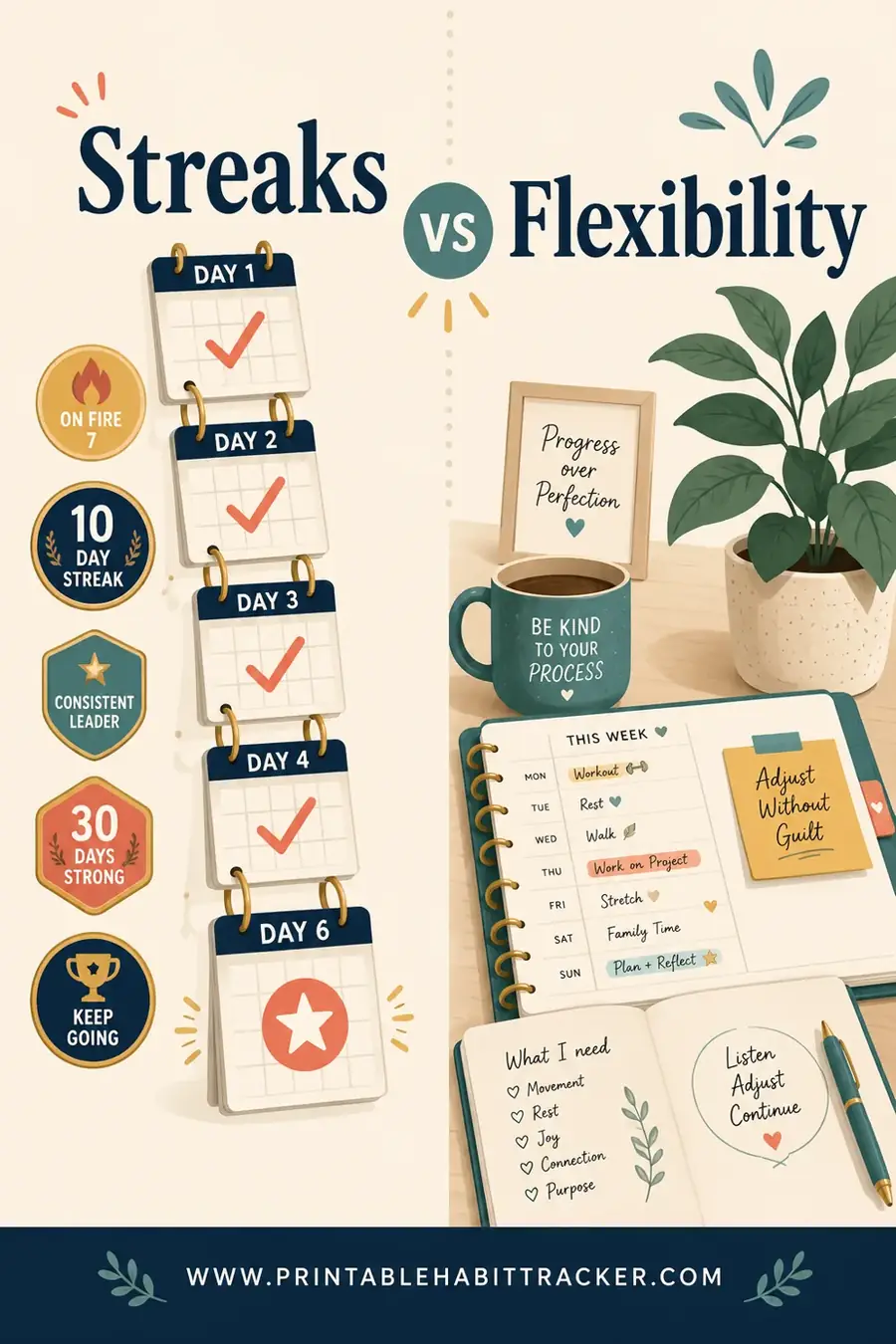
And drop the perfectionism. A habit you do 80% of the time is wildly successful. Demanding a flawless streak is what made the long gap feel like failure in the first place. If a rigid all-or-nothing streak keeps tripping you up, you might prefer a looser approach — see streaks vs flexibility.
Reframe the Streak Itself
A streak is a great motivator, but it has a dark side: it can make you feel like a single miss ruins everything. It doesn't.
Try thinking of your habit as a long-term average instead of a fragile chain. Did you do it 25 out of 30 days this month? That's an A. Nobody's keeping score on the five blanks. Your future self benefits from the 25, not from how unbroken they were.
This reframe takes the pressure off and, paradoxically, makes you more consistent. When a miss isn't a catastrophe, you bounce back faster, which means fewer double-misses, which means a stronger habit overall.
Plan for the Misses Before They Happen
Here's a pro move: don't wait until you've missed to figure out your response. Decide in advance what counts as a "good enough" day, so a hard day already has a plan instead of becoming a skip.
This is sometimes called a "minimum version" of the habit. You define the smallest action that still counts as showing up, and on rough days, that's all you have to do.
| Habit | Full version | Minimum version (counts on hard days) |
|---|---|---|
| Exercise | 30-minute workout | One push-up or a 2-minute walk |
| Reading | Read a chapter | Read one page |
| Journaling | Write a full entry | Write one sentence |
| Meditation | 10-minute session | Three slow breaths |
| Tidy up | Clean a whole room | Put away five things |
With a minimum version defined, you almost never have to miss at all. Too tired for the full workout? Do the one push-up. It keeps the chain alive, and the chain is what you're protecting. A missed day only happens when even the tiny version doesn't get done — and that's rare once you've pre-decided the small option exists.
This single trick prevents most misses in the first place. You're no longer choosing between "do it perfectly" and "skip it." There's always a middle option, and the middle option still counts.
Frequently Asked Questions
Does missing one day ruin a habit?
No. A single missed day has almost no effect on long-term habit formation. What hurts is missing repeatedly. The research and the practice agree: get right back the next day and one slip means nothing. Just never let it become two days in a row.
Should I restart my streak from zero after a miss?
You don't have to, and you shouldn't think of it that way. A streak isn't fragile — it's a record of your overall consistency. One blank box doesn't erase the rest. Pick up the next day and keep your existing tracker going rather than starting a whole new one.
How do I get back on track after missing several days?
Restart small. Don't relaunch at full intensity — that usually fails again. Pick the tiniest version of the habit, attach it to an existing daily routine, and rebuild the streak one box at a time on your printable tracker. Lower the bar until showing up is easy.
Should I double up to make up for a missed day?
No. Doubling up turns a miss into a punishment and makes the habit feel like a burden. It also makes you more likely to skip again because the catch-up version is harder. Just resume at your normal size and move forward.
How can I stop one missed day from becoming many?
Live by one rule: never miss twice in a row. The first miss is harmless; the second is where habits die. Commit in advance that no matter what, you'll do at least the tiny version the next day. A visible tracker helps by making the gap obvious so you don't drift.
Why does seeing my tracker help after a miss?
Because a missed day looks far smaller on paper than it does in your head. A printable habit tracker shows one blank box surrounded by checkmarks, which proves you're still doing well. It keeps a slip from snowballing into "I always quit," and it helps you spot patterns in when you tend to miss.
Ready to Get Back on Track?
So here's the whole thing in one breath: missing a day is normal, it doesn't undo your progress, and the only rule that matters is to not miss twice. Shrink the habit, check the box tomorrow, and keep your streak alive. A visible tracker makes all of this easier, because one blank day looks tiny next to a row of wins. Build your free printable habit tracker, print it, and pick up right where you left off. The next box is waiting.