How to Stay Consistent With Habits (That Actually Stick)
The secret to staying consistent with habits isn't willpower — it's making the habit small, making it visible, and never letting one missed day turn into two. Start tiny, attach the new habit to something you already do, track it where you can see it, and forgive the slip-ups fast. Do those four things and consistency stops feeling like a fight.
The single easiest win on that list is "track it where you can see it." You can build a free printable habit tracker in under two minutes — pick your habits, print the grid, and stick it somewhere you'll look every day.
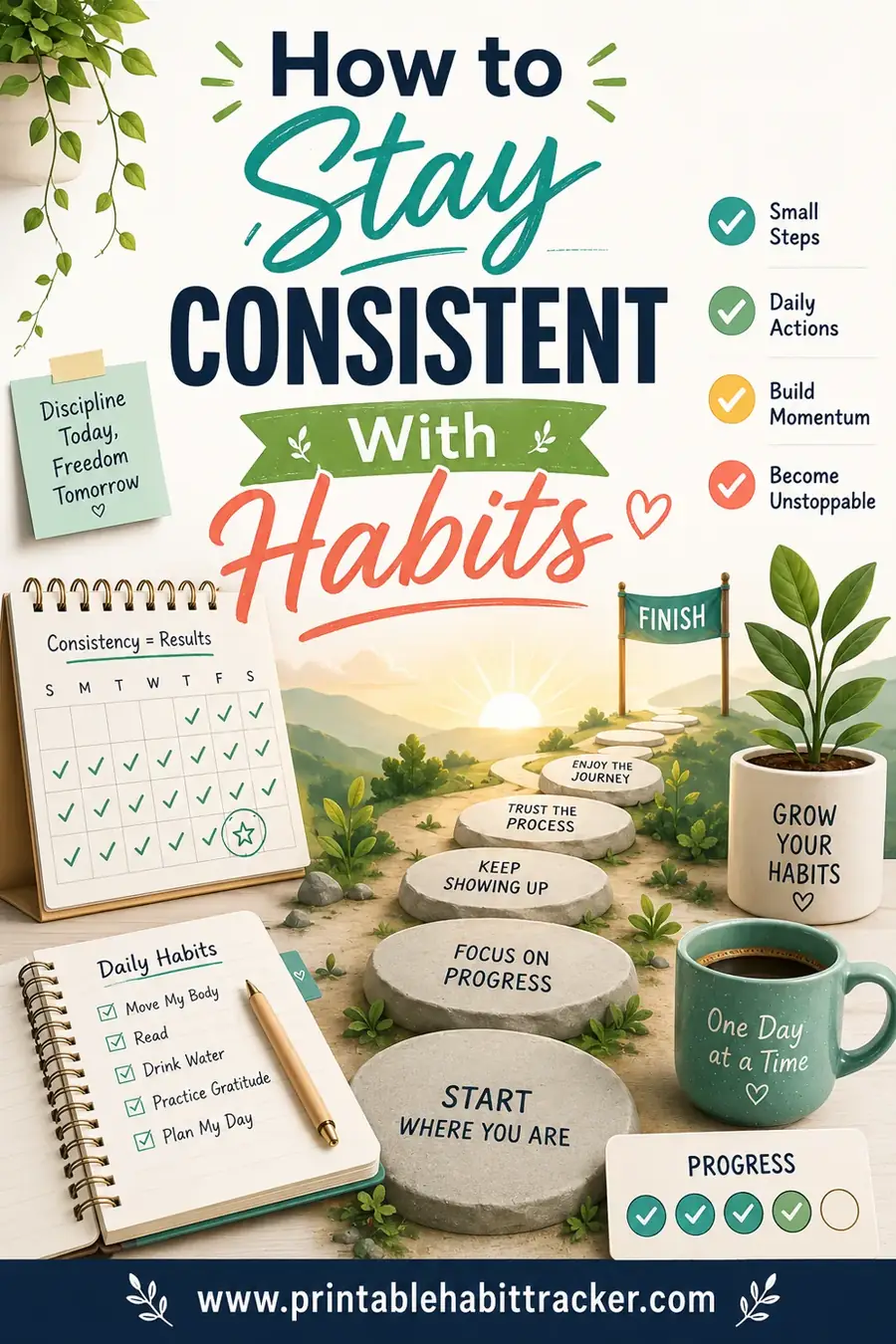
Why Consistency Is So Hard (It's Not You)
Most people blame themselves when a habit fizzles. "I just don't have the discipline." But discipline isn't the problem. The setup is.
We start too big. We rely on motivation, which always fades. We make the habit invisible, so we forget. And the first time we miss, we quietly give up because the streak feels "ruined." None of that is a character flaw. It's a design flaw, and design is fixable.
The good news: consistency is a skill, not a personality trait. The tricks below stack the deck in your favor so you don't have to white-knuckle it.
Start Absurdly Small
This is the most important rule, so it goes first. The habit you start with should be so small it feels almost silly.
- Want to read more? Read one page.
- Want to exercise? Do one push-up or a two-minute walk.
- Want to journal? Write one sentence.
The point isn't the one page. The point is showing up. A tiny habit is one you can do on your worst, busiest, most exhausted day, which means you never break the chain. Once showing up is automatic, the size grows on its own. You'll almost always read more than one page once the book is open.
People quit big habits. Nobody quits a two-minute habit.
Stack New Habits Onto Old Ones
Your brain already has dozens of automatic habits: brushing your teeth, making coffee, sitting down at your desk. Habit stacking borrows their reliability by gluing a new habit right after an existing one.
The formula is simple: "After I [current habit], I will [new habit]."
- After I pour my morning coffee, I will write one line in my journal.
- After I brush my teeth at night, I will lay out tomorrow's clothes.
- After I sit down at my desk, I will drink a glass of water.
The old habit becomes the reminder, so you're not relying on memory or motivation. This is one of the most reliable consistency tricks there is, and it costs nothing.
Make It Impossible to Forget
You can't be consistent with something you don't remember to do. Visibility solves half the battle.
| Cue type | Example |
|---|---|
| Visual | A habit tracker on the fridge or desk |
| Object | Running shoes by the door, water bottle on the table |
| Time | A daily alarm labeled with the habit |
| Stack | Tying it to an existing routine (see above) |
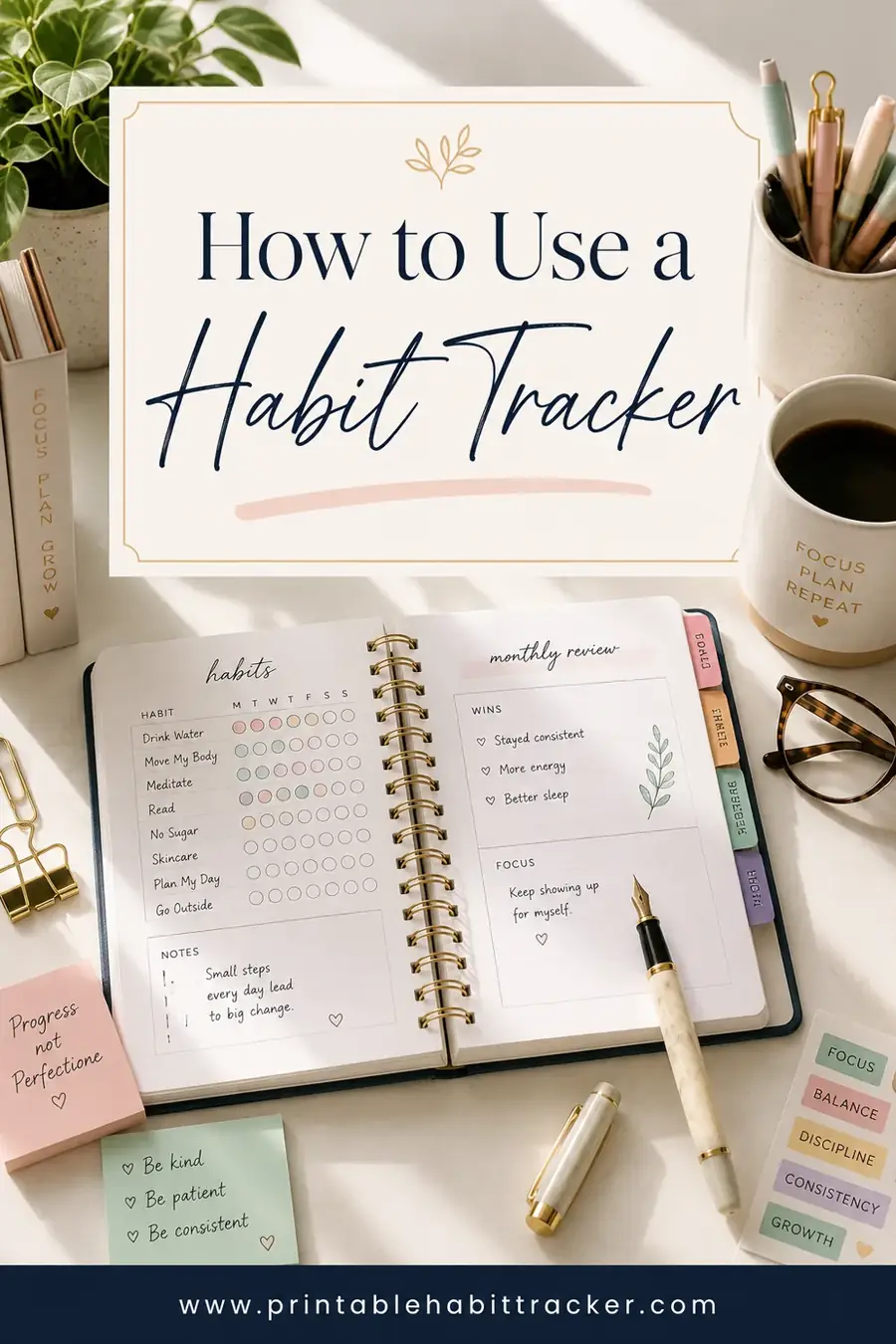
A printed habit tracker does double duty here. It's a visible cue and a record. Every time you walk past it, it reminds you to do the habit, and then it rewards you for doing it. Out of sight really is out of mind, so put your tracker somewhere you can't miss it.
Track It So You Can See the Streak
There's a real psychological pull to an unbroken chain. Once you've got five days checked in a row, that streak becomes something you don't want to ruin. The behavior almost protects itself.
This is why tracking beats just "trying." Trying lives in your head and gets fuzzy. A tracker is concrete. You either checked the box or you didn't, and a week of full boxes is genuinely motivating.
Keep it dead simple:
- List your habits down the side.
- Put the days across the top.
- Check a box each time you do a habit.
- Look at it daily.
That's the entire system. A weekly grid is the friendliest place to start because the streak is short and easy to complete.
Never Miss Twice
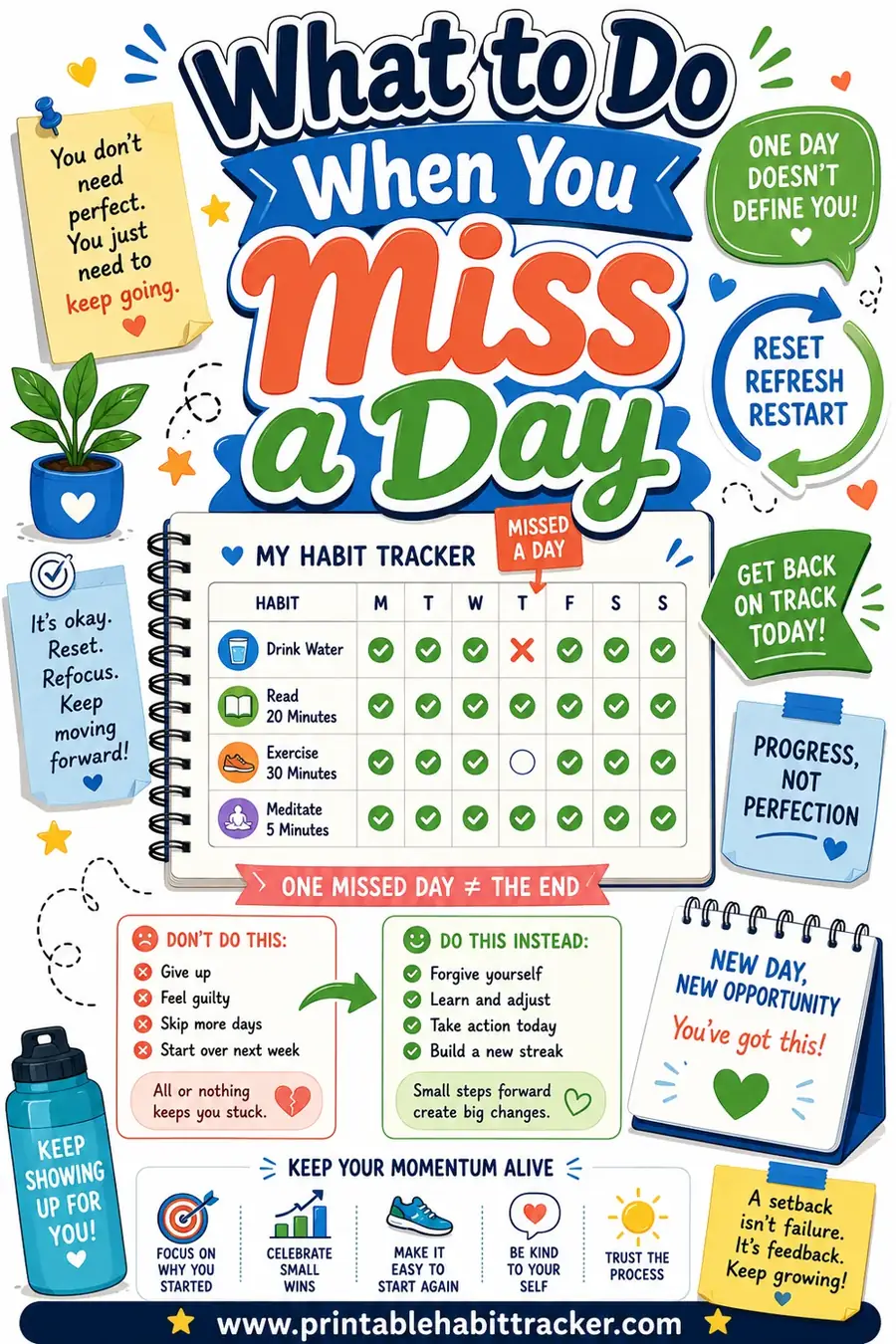
You will miss a day. Everyone does. Life happens — you get sick, travel, or just forget. The rule that protects your consistency is this: missing once is an accident, missing twice is the start of a new (bad) habit.
One blank day means nothing. The streak isn't "ruined"; it's just paused. The danger is the second miss, because that's when "I'll start again Monday" creeps in and the habit quietly dies.
So the goal isn't perfection. It's getting right back on the next day. If you want a full playbook for the inevitable off-day, we wrote one: what to do when you miss a day.
Aim for Consistent, Not Perfect
Perfectionism is the quiet killer of habits. People decide that if they can't do it perfectly, it doesn't count, and then they don't do it at all.
A "good enough" habit done four or five days a week beats a "perfect" habit you abandon after week one. Eighty percent consistency, kept up for a year, will change your life. A flawless week followed by quitting will not.
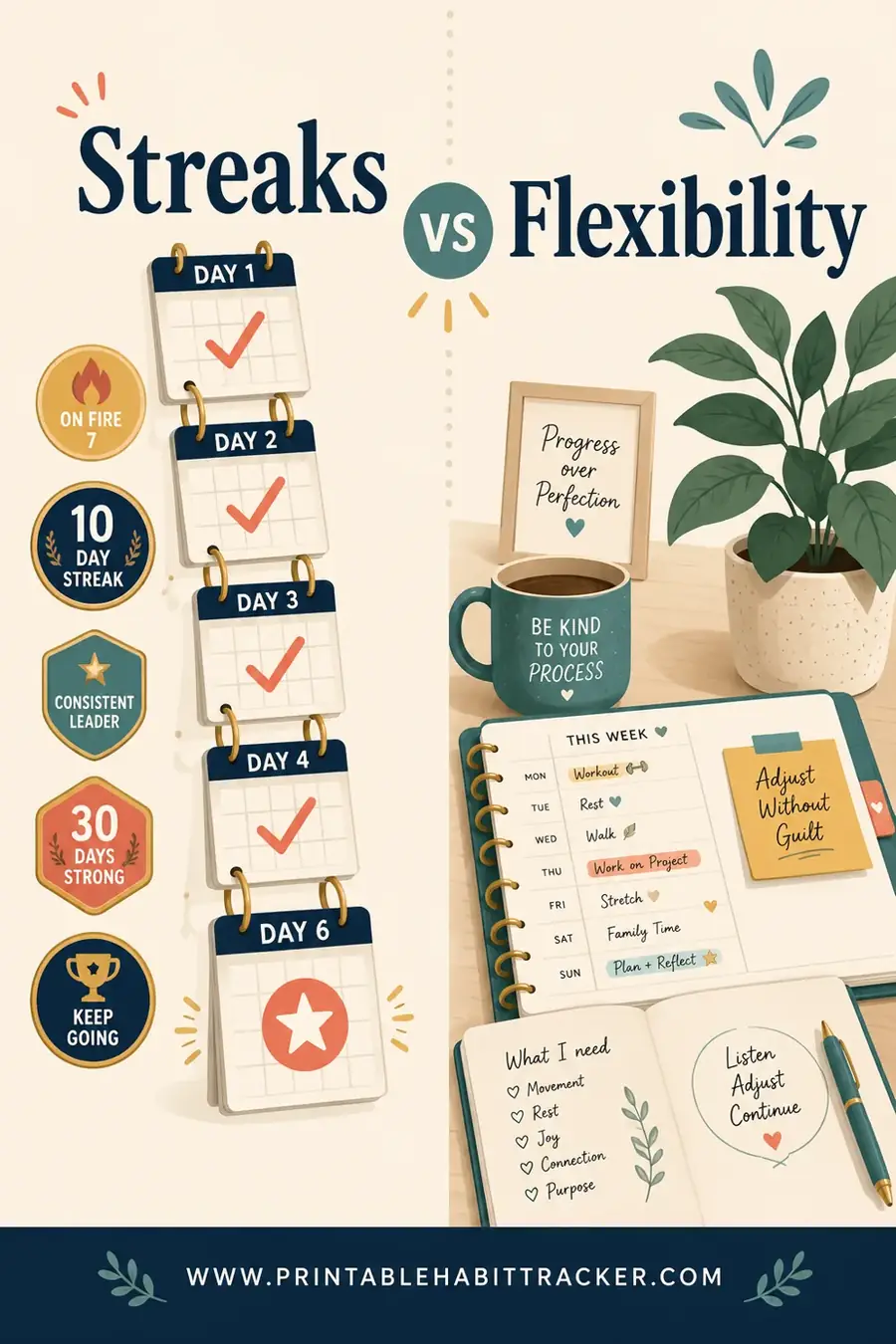
Give yourself permission to do the small version when you're tired. A two-minute walk still counts. One push-up still counts. Showing up imperfectly keeps the chain alive, and the chain is everything. If a rigid streak is stressing you out, our take on streaks vs flexibility might be exactly what you need.
Build in a Reward
Habits stick faster when they feel good. Your brain repeats what gets rewarded, so give it something.
- The check itself. Marking a box on your tracker is a small, real reward. Don't underestimate it.
- A weekly treat. Hit your habit five days? Buy the nice coffee, watch the show, take the long bath.
- Pair it with something you enjoy. Only listen to your favorite podcast while you walk. Now you look forward to the walk.
The reward doesn't have to be big. It just has to make the brain associate the habit with "good."
A 30-Day Starter Plan
If you want a concrete on-ramp, here's a four-week build that turns "I want to be consistent" into an actual routine.
| Week | Focus | What to do |
|---|---|---|
| Week 1 | Show up | Do the tiniest version daily. Just check the box. |
| Week 2 | Stack it | Attach each habit to an existing routine. |
| Week 3 | Grow it | Increase the size slightly (1 page → 5 pages). |
| Week 4 | Protect it | Focus on never missing twice. Review your tracker. |
By day 30 you won't have a "perfect" record, and that's fine. You'll have something better: proof you can show up, and a tracker that shows it.
Common Consistency Mistakes to Avoid
A few traps that quietly sabotage people:
- Tracking too many habits. Three to five is plenty at the start. Ten is a recipe for skipping.
- Going invisible. A tracker in a drawer is useless. Keep it where your eyes land.
- Treating a miss as failure. It's a pause, not a reset. Get back on tomorrow.
- Relying on motivation. Motivation comes and goes. Systems and cues stay.
- Starting too big. The bigger the habit, the easier it is to skip. Shrink it.
Avoid these five and you're already ahead of most people who try and quit.
What Consistency Actually Looks Like (Day by Day)
People imagine consistency as a perfect, gleaming streak. The real thing is messier and far more achievable. Here's an honest week from someone who's actually doing well.
| Day | What happened | Result |
|---|---|---|
| Monday | Full energy, did everything | All boxes checked |
| Tuesday | Busy, did the tiny version | Still checked |
| Wednesday | Forgot one habit until bedtime, did it anyway | Checked |
| Thursday | Sick, skipped one habit | One blank box |
| Friday | Back to normal, didn't miss twice | Checked |
| Saturday | Did the small version of everything | Checked |
| Sunday | Reviewed the tracker, planned next week | Checked |
Six out of seven days, with one slip handled gracefully. That's not a failure week — that's a great week. Nobody runs at 100%, and the people who stay consistent for years aren't the ones who never miss. They're the ones who do the tiny version on hard days and get right back after a slip.
Notice how much of the week ran on shrinking the habit, not heroic effort. Tuesday and Saturday were "tiny version" days, and they still counted. That flexibility is the secret. A habit that bends survives. A habit that demands perfection snaps the first hard week.
This is also why reviewing your tracker on Sunday matters. A quick weekly glance shows you the pattern — where you're strong, where you tend to slip — and lets you adjust before a single blank box becomes a habit of blank boxes.
Frequently Asked Questions
How long does it take to make a habit stick?
It varies a lot — research suggests anywhere from about three weeks to a few months, depending on the habit and the person. The honest answer is "longer than you'd like." That's why consistency matters more than speed. Keep showing up, track it, and let time do its work.
What's the fastest way to build consistency?
Start absurdly small and make the habit visible. A two-minute version you can do daily beats an ambitious version you skip. Pair it with a printable tracker on your fridge so you never forget and you can see the streak grow.
How do I stay consistent when I lose motivation?
Don't rely on motivation at all — it always fades. Lean on systems instead: habit stacking, visible cues, and a tracker. On low-motivation days, shrink the habit to its tiniest version and just check the box. Showing up small still keeps the chain alive.
Should I track every habit or just one?
Start with three to five habits, not one and not twenty. A single habit barely needs tracking, and too many leads to overwhelm and skipping. Once your first set feels automatic, add more.
What if I keep breaking my streak?
Then your habit is probably too big or not visible enough. Shrink it, attach it to something you already do, and put your tracker somewhere you can't ignore. And remember the rule: missing once is fine, just never miss twice in a row.
Is paper or an app better for staying consistent?
Both work, but paper has a quiet advantage: it's always visible and never buried under notifications. A printed grid on the fridge nudges you every time you walk by. You can print a free habit tracker with no app, no login, and no subscription.
Ready to Stay Consistent?
Consistency isn't about being tougher than everyone else. It's about making habits small, visible, and forgiving — and then tracking them so you can see your progress pile up. Pick two or three habits, start with the tiniest version, and put a tracker where you'll see it every day. Build your free printable habit tracker, print it tonight, and check your first box. The streak starts now.