Best Habits to Track for Productivity (Starter List)
The best habits to track for productivity are the small daily behaviors that compound: a daily plan, one block of deep focused work, a clear shutdown routine, plus the foundations that make all of it possible — good sleep, movement, and limited distractions. You don't need twenty habits. Track five or six of these consistently and your output climbs without you grinding harder.
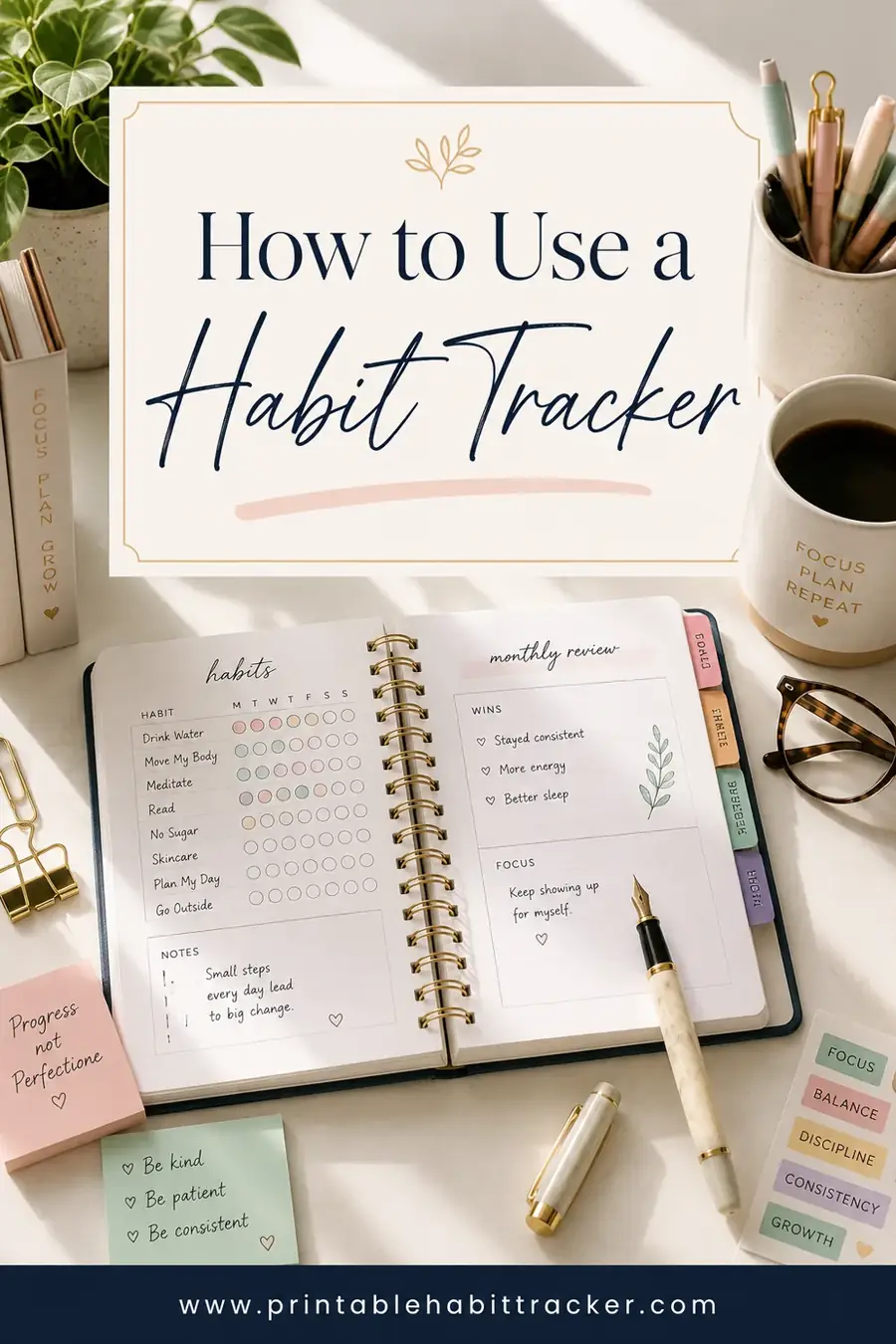
Want to set this up right now? Build a free printable habit tracker, pick the habits from the list below, and print a grid you'll actually check every day. No app, no sign-up.
Why Track Habits for Productivity at All?
Productivity isn't really about one heroic day. It's about a steady drumbeat of small behaviors repeated over weeks. The problem is those behaviors are easy to skip and easy to forget, because no single instance feels important.
That's exactly what a tracker fixes. When "plan tomorrow" or "one deep work block" lives on a visible grid, you do it more often, and you can see at a glance which habits you're actually keeping. The tracker turns vague intentions ("I should focus more") into a concrete record you can't argue with.
The trick is tracking the right habits — the ones that genuinely move the needle, not just the ones that feel busy.
The Core Productivity Habits to Track
Start here. These are the highest-leverage habits for getting meaningful work done.
1. One deep work block
A single, protected block of focused work — phone away, notifications off — is worth more than a whole day of scattered multitasking. Track "did one 60–90 minute deep work block." Even one a day, done consistently, transforms your output.
2. Plan tomorrow tonight
Spend five minutes at the end of each day choosing your top 2–3 tasks for tomorrow. You wake up knowing exactly what matters instead of reacting to whatever's loudest. Track "planned tomorrow."
3. Eat the frog (do the hardest thing first)
Track whether you tackled your most important or most dreaded task before the easy stuff. Doing it first means it actually gets done, instead of getting pushed all day.
4. A clear shutdown routine
A defined "I'm done working" ritual — review the day, set tomorrow's plan, close the laptop — protects your evenings and prevents work from bleeding into everything. Track "shut down properly."
5. Single-task, no multitasking
Track days you stuck to one thing at a time instead of juggling. Multitasking feels productive and isn't. This one habit alone sharpens everything else.
The Foundation Habits That Power Everything
Here's the part people skip: productivity collapses without a working body and brain underneath it. These foundation habits make the core habits above actually possible.
| Habit | Why it drives productivity |
|---|---|
| 7–8 hours of sleep | Tired brains can't focus or decide well |
| Move your body | Exercise boosts energy, mood, and focus |
| Drink enough water | Mild dehydration tanks concentration |
| Morning sunlight / a real start | Sets your rhythm and shakes off grogginess |
| Limit social media | Protects the attention you need for deep work |
| Eat a real meal | Steady fuel beats a sugar-and-coffee crash |
Don't underestimate these. You can have a perfect to-do system, but if you're running on five hours of sleep and zero movement, the focus just isn't there. Track the foundations and the productivity habits get easier automatically.
A Ready-Made Starter List
Don't track all of these at once — pick five or six. Here's a balanced starter set that mixes core work habits with foundations.
| Habit | Type | Goal |
|---|---|---|
| One deep work block | Core | 1 per day |
| Plan tomorrow | Core | Every evening |
| Hardest task first | Core | Daily |
| Sleep 7+ hours | Foundation | Nightly |
| Move 20+ minutes | Foundation | Daily |
| Phone-free first hour | Foundation | Each morning |
Six habits, a clean mix of "do the work" and "be able to do the work." Copy this straight onto your printable tracker and you've got a productivity system in two minutes.
How Many Productivity Habits Should You Track?
Fewer than you think. The instinct is to track everything, but a grid with fifteen habits is a grid you'll abandon by Thursday.
- Start with 3. If you're new to tracking, three core habits is plenty.
- Build to 5–7. Once those are automatic, add a few more. This is the sweet spot for most people.
- Cap it around 7–8. Past that, tracking itself becomes a chore and you start skipping boxes.
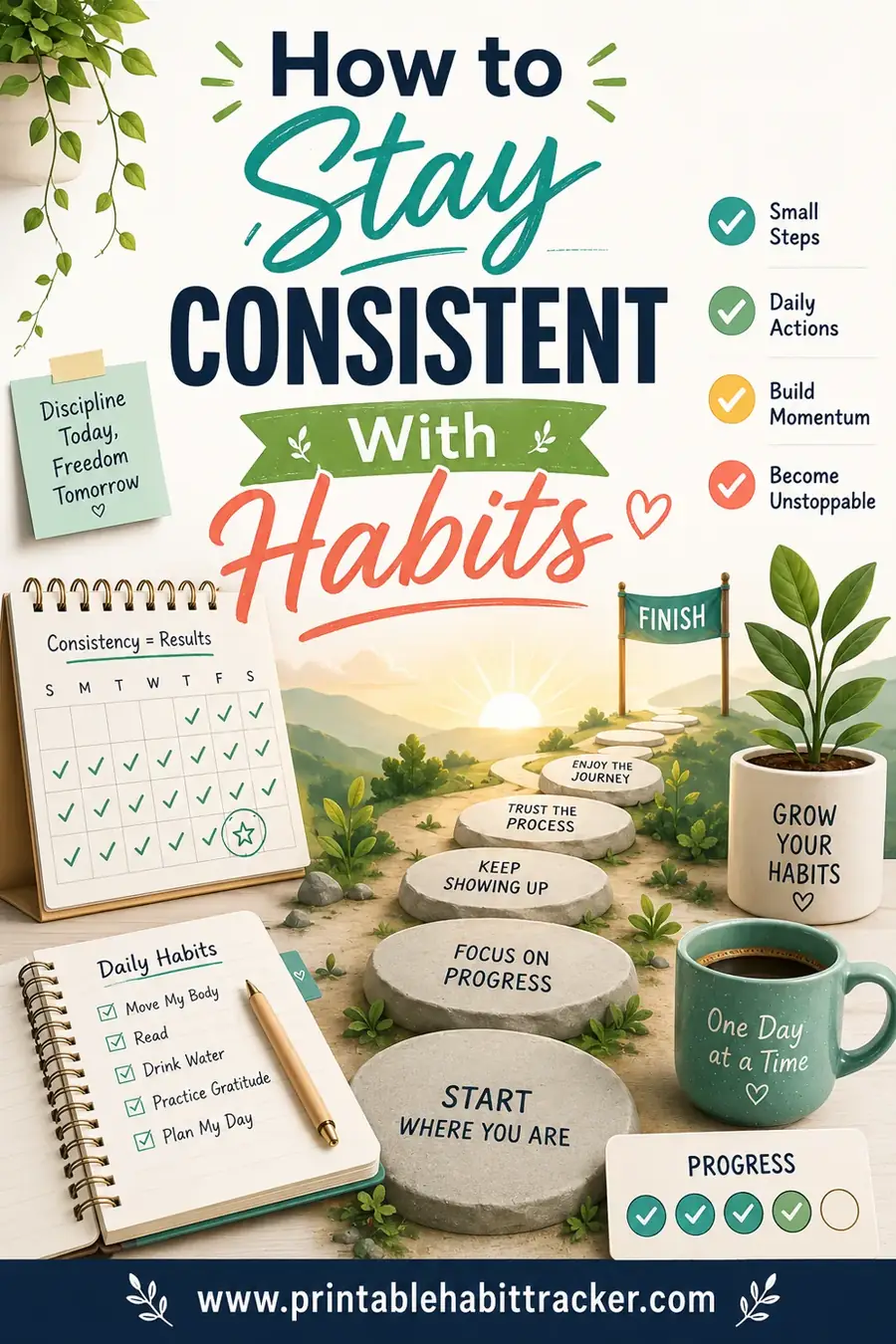
Quality of consistency beats quantity of habits every time. Three habits you actually keep will do more for your productivity than ten you check sporadically. If consistency is your sticking point, how to stay consistent with habits is worth a read.
Match the Habit to Your Bottleneck
The "best" productivity habits depend on what's actually slowing you down. Find your bottleneck, then track the matching habit.
If you can't focus
Track deep work blocks, phone-free time, and single-tasking. Your problem is attention, so protect it directly.
If you're disorganized
Track daily planning, a shutdown routine, and a weekly review. Your problem is direction, so build the habits that create clarity.
If you're always tired
Track sleep, movement, water, and screen-time cutoffs at night. Your problem is energy, and no productivity hack works without it.
If you procrastinate
Track "hardest task first" and "one block before lunch." Your problem is starting, so build habits that force an early start before the day gets away from you.
Pick the bottleneck that sounds most like you, track those three or four habits, and you'll get more leverage than tracking a random grab-bag.
Productivity Habits to Skip (or Be Careful With)
Not every popular habit deserves a spot on your tracker. A few to be wary of:
- "Inbox zero" as a daily must. For most people this is busywork dressed up as productivity. Checking email isn't the same as doing real work.
- Vague habits. "Be more productive" can't be tracked. "One deep work block" can. Keep every habit concrete and checkable.
- Habits that don't fit your goals. A 5am wake-up is great for some and pointless for others. Track what serves your work, not what's trendy.
- Too many at once. We said it already, but it's the most common mistake. Resist the urge to track everything.
A habit only belongs on your tracker if it's specific, repeatable, and genuinely tied to getting your important work done.
Habit Tracker vs To-Do List for Productivity
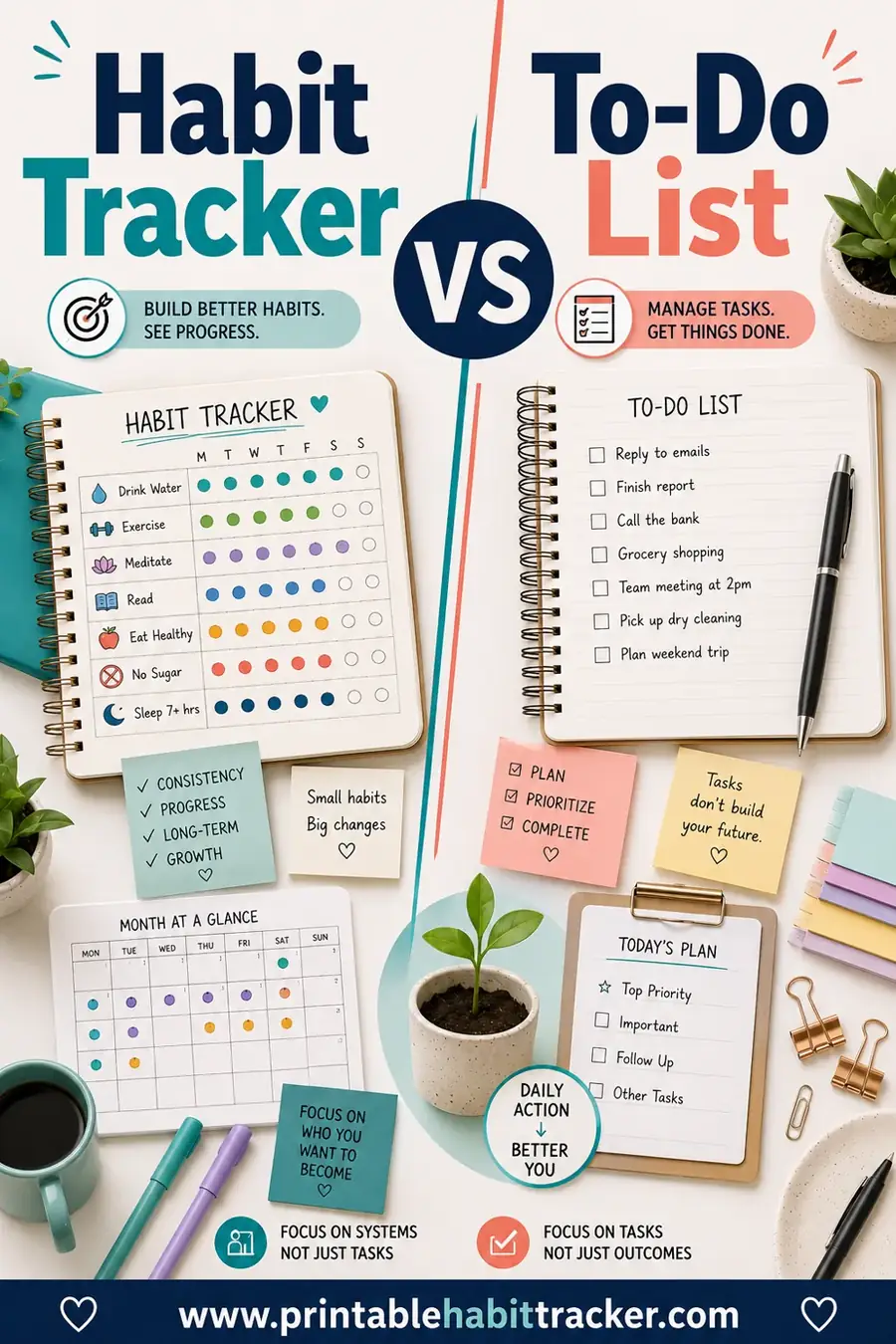
Quick clarification, because people mix these up. A to-do list handles your one-time tasks ("finish the report"). A habit tracker handles the repeated behaviors that let you finish reports ("one deep work block," "plan tomorrow"). You want both, working together.
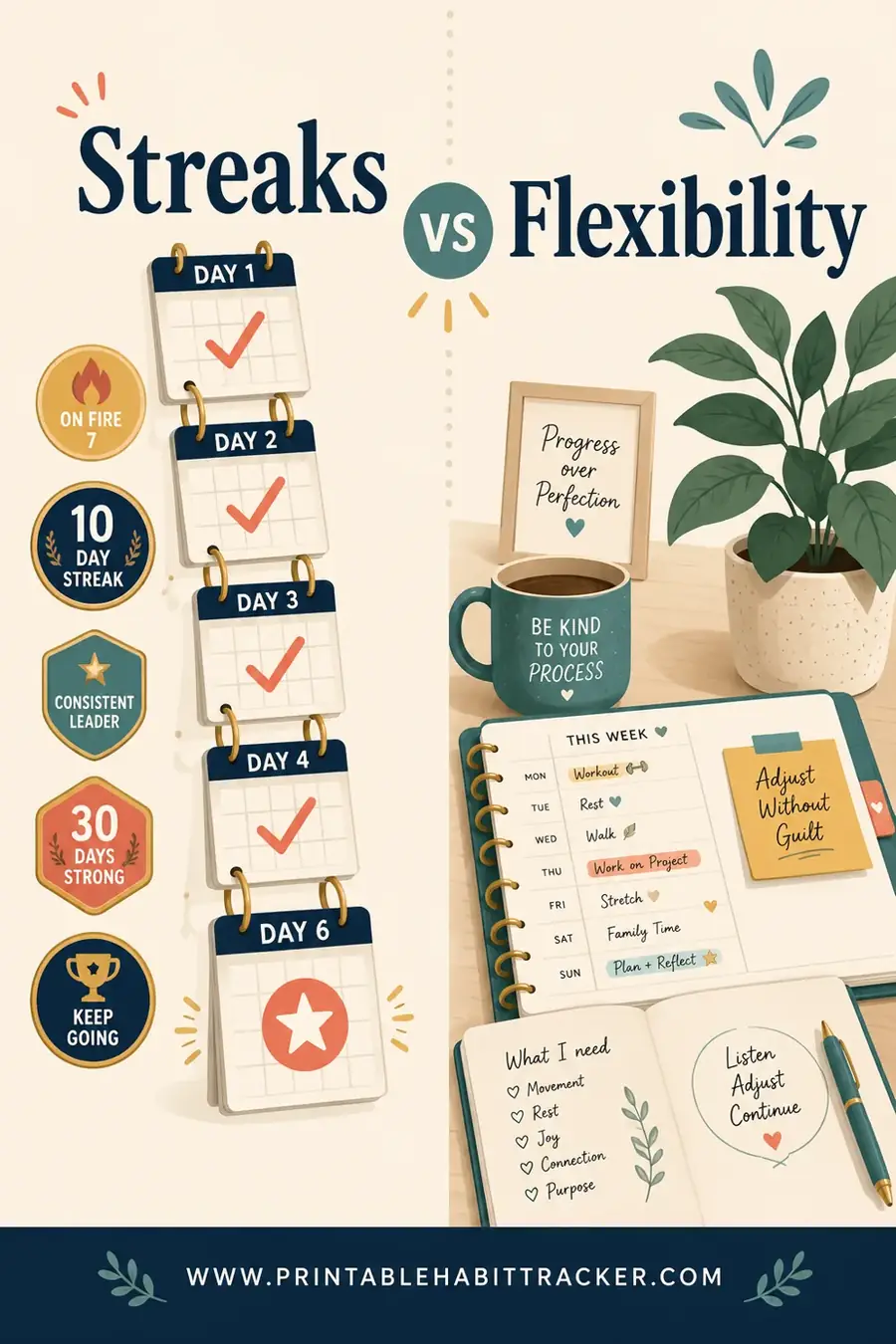
The tracker is the underrated half. Anyone can write a to-do list. Far fewer people build the daily habits that make the list get done. If you want the full breakdown, see habit tracker vs to-do list. And if a rigid daily streak stresses you out, streaks vs flexibility shows how to keep these habits without burning out.
Putting It All Together
Here's the whole approach in four steps:
- Find your bottleneck. Focus, organization, energy, or starting?
- Pick 5–6 habits. A few core work habits plus the foundations that support them.
- Print a tracker. Put it somewhere you'll see it daily.
- Check the boxes. Aim for consistency, not perfection, and watch your output climb.
You don't need to overhaul your life. You need a handful of the right small habits, tracked consistently, on a grid you can't ignore.
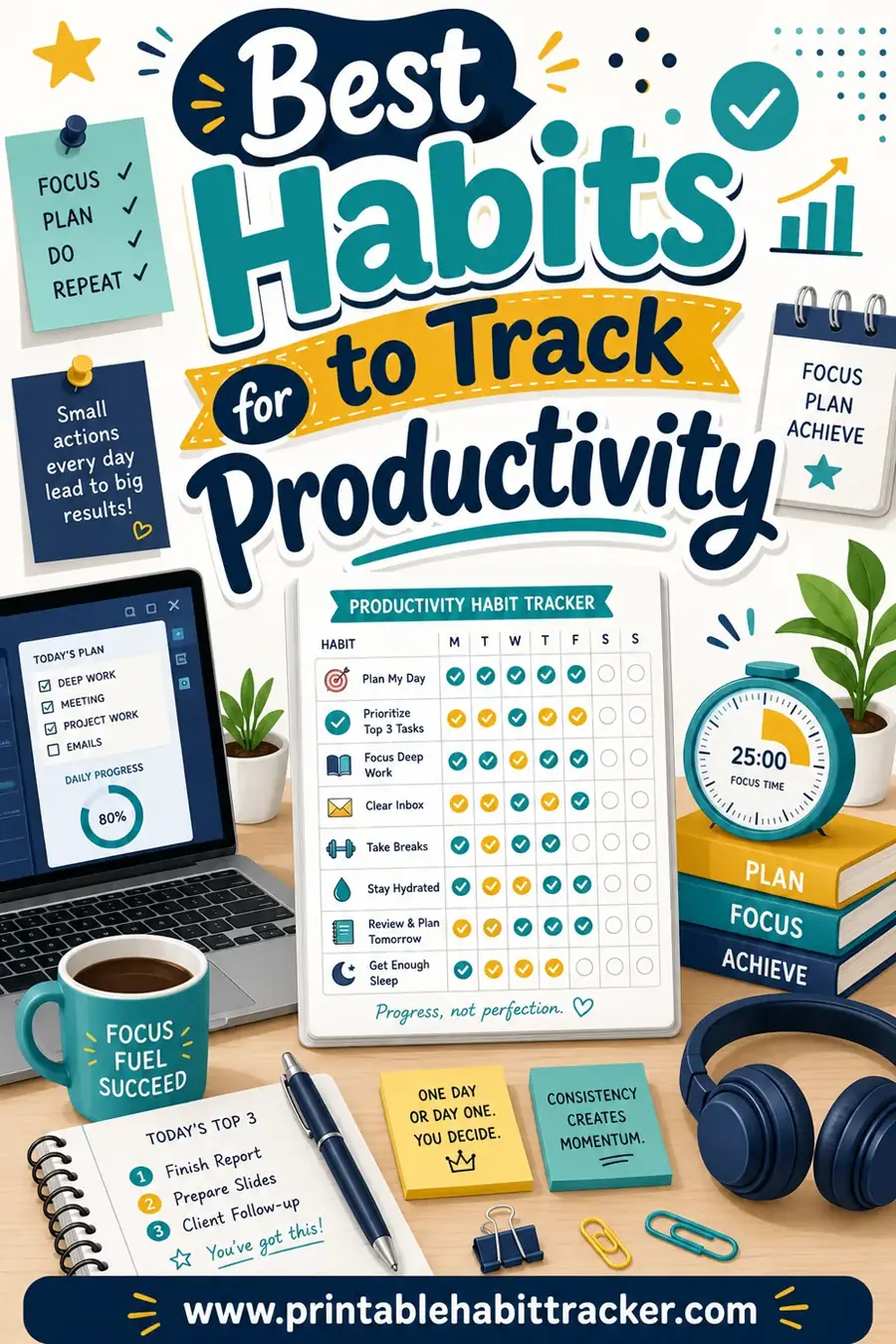
Sample Weekly Productivity Tracker
Here's what a real week might look like once your tracker is running. This is a six-habit setup with an honest, imperfect record — because perfection isn't the goal, consistency is.
| Habit | Mon | Tue | Wed | Thu | Fri |
|---|---|---|---|---|---|
| Deep work block | ✓ | ✓ | ✓ | — | ✓ |
| Plan tomorrow | ✓ | ✓ | ✓ | ✓ | ✓ |
| Hardest task first | ✓ | — | ✓ | ✓ | ✓ |
| Sleep 7+ hours | ✓ | ✓ | — | ✓ | ✓ |
| Move 20+ min | ✓ | ✓ | ✓ | ✓ | — |
| Phone-free first hour | — | ✓ | ✓ | ✓ | ✓ |
Look at the pattern. There are blanks — Thursday's deep work slipped, Wednesday's sleep was short — but every row is mostly full. That's a strong, productive week. The blanks also tell a story: if "phone-free first hour" keeps failing on Mondays, you know exactly where to focus next.
That's the quiet power of a tracker. It doesn't just keep you accountable; it shows you where your system leaks, so you can patch the right hole instead of guessing. After a few weeks, you'll spot which habits are rock-solid and which need a better cue or a smaller starting size.
Notice too that "plan tomorrow" is the most consistent row here. That's no accident — it's the cheapest, fastest habit on the list, takes five minutes, and it makes every other habit easier the next day. If you're picking just one habit to nail first, a daily plan is a fantastic anchor for the rest.
Frequently Asked Questions
What are the best habits to track for productivity?
The highest-leverage ones are: a daily deep work block, planning tomorrow each evening, doing your hardest task first, plus the foundations of sleep, movement, and limited distractions. Track five or six of these consistently rather than trying to track everything at once.
How many habits should I track for productivity?
Start with three core habits and build to five or seven once those are automatic. Cap it around seven or eight total. A short list you keep consistently beats a long list you abandon. Tracking too many habits is the most common reason people quit.
Should I track productivity habits on paper or in an app?
Paper has a real edge for productivity habits because it's always visible and never buried under the very notifications you're trying to avoid. A printed grid on your desk nudges you without adding screen time. You can print a free habit tracker with no app, login, or subscription.
What's the single most important productivity habit?
If you can only track one, track a daily deep work block — one protected stretch of focused, distraction-free work. It produces more meaningful output than any amount of scattered busywork, and most other productivity habits exist to support it.
Are sleep and exercise really productivity habits?
Absolutely. They're foundation habits, and they power everything else. A well-rested, well-moved brain focuses better, decides faster, and procrastinates less. You can have a perfect task system, but without sleep and movement the energy to use it just isn't there. Track them.
How do I keep a productivity habit tracker going?
Keep it visible, start with a small list, and aim for consistency over perfection. Check your boxes daily, never miss two days in a row, and review the grid weekly to spot patterns. A printable tracker on your desk makes the whole routine effortless to maintain.
Build Your Productivity Tracker Today
The best habits to track for productivity aren't fancy — they're the small, repeatable behaviors that compound: focused work, daily planning, and the sleep-and-movement foundation underneath them. Pick five or six from the starter list, match a couple to your biggest bottleneck, and put them on a grid you'll see every day. Build your free printable habit tracker, print it, and check your first box. Your most productive month starts with one consistent habit.