Streaks vs Flexibility: Which Builds Better Habits?
Streaks vs flexibility comes down to this: streaks give you powerful momentum but break under pressure, while flexibility keeps you going long-term but can drift into "I'll do it later" forever. The best approach borrows from both — aim for an unbroken streak for motivation, but build in flexible rules so one bad day doesn't blow up the whole habit. You want the pull of a streak without the all-or-nothing trap.
The easiest way to get both is a tracker you can actually see. A free printable habit tracker shows your streak growing and lets you see your overall consistency, so a single off-day never feels like the end.
What "Streaks" and "Flexibility" Actually Mean
These two words describe two different philosophies of habit building.
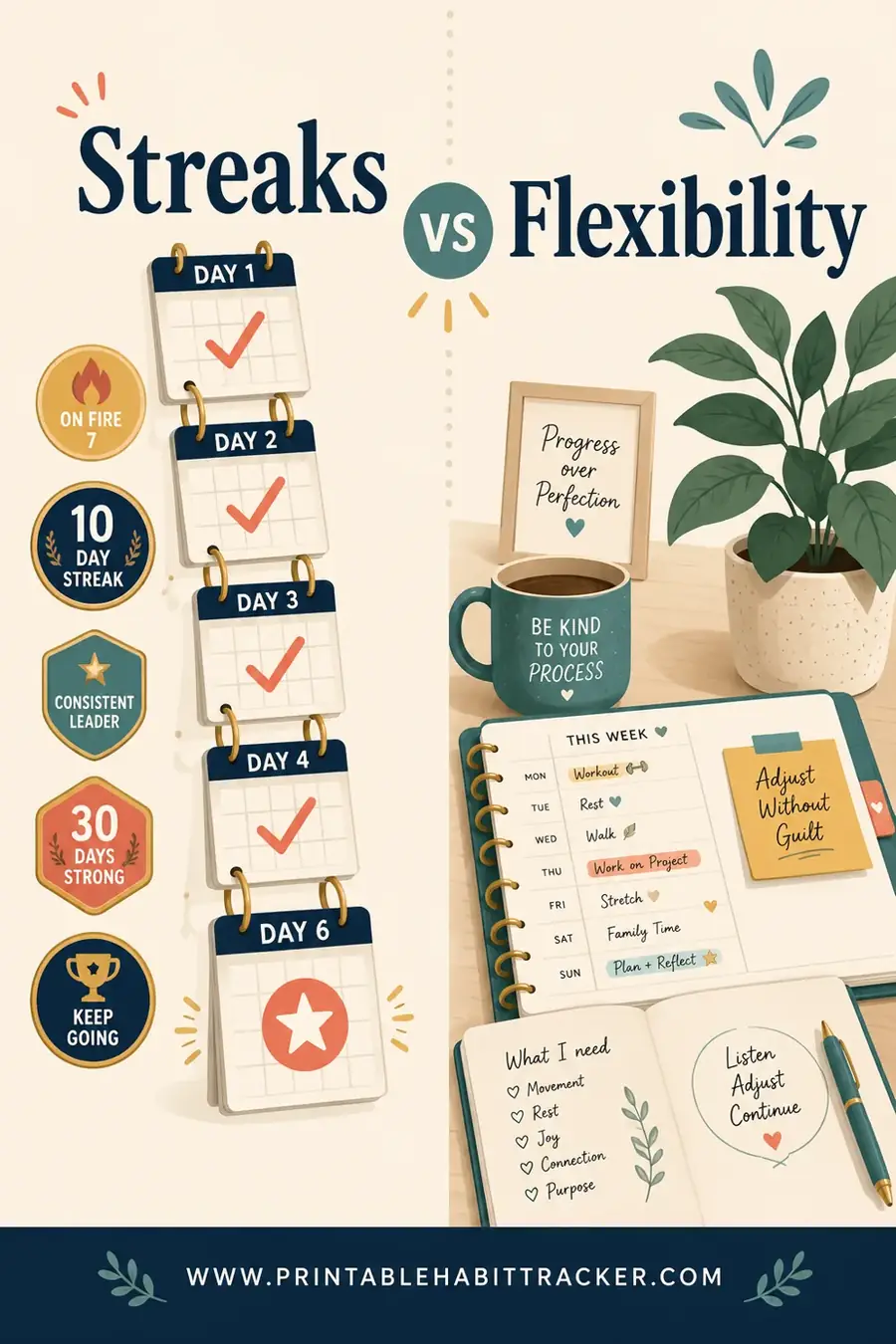
A streak is a chain of consecutive days. Do the habit every single day, and the chain grows. Miss one, and the chain breaks back to zero. The magic is in the momentum: nobody wants to break a 40-day streak, so the streak itself keeps you going.
Flexibility drops the every-single-day requirement. Instead of "don't break the chain," the rule is something like "do it most days" or "four times a week." A miss isn't a catastrophe — it's just one of your allowed off-days. The habit survives a bad week without collapsing.
Both build real habits. They just protect different weaknesses, and the right one depends on you and the habit.
The Case for Streaks
Streaks are motivating, and there's a reason every habit app shows you a flame and a number.
- Momentum. A growing streak becomes its own reward. Each unbroken day raises the stakes a little, so you show up to protect what you've built.
- Clarity. "Do it every day" is the simplest rule there is. No deciding, no negotiating with yourself. You just do it.
- No slippery slope. Daily habits don't give your brain room to bargain. "I'll skip today" is off the table, which kills the "I'll do it later" excuse.
- Faster automation. Doing something every day, without gaps, tends to make it automatic sooner than doing it sporadically.
For habits that genuinely should be daily — water, sleep routine, meds, a quick tidy — streaks are fantastic. The daily rhythm matches the habit.
The Case for Flexibility
Streaks have a famous weakness: they're brittle. Flexibility fixes that.
- No all-or-nothing crash. With a streak, one missed day can feel like total failure, and that "I blew it" feeling is what makes people quit entirely. Flexibility removes the cliff.
- Built for real life. You will get sick, travel, and have chaotic days. A flexible target ("4x a week") bends without breaking when life happens.
- Less burnout. Forcing a daily habit you don't truly need every day can lead to resentment. Rest days are allowed and even helpful for things like intense exercise.
- Sustainable long-term. A habit you keep at 80% for a year beats a perfect streak you abandon in month two.
For habits that don't need to be daily — strength training, deep-work sessions, a long walk — flexibility often wins, because the rest is part of the plan.
Streaks vs Flexibility: Side by Side
| Streaks | Flexibility | |
|---|---|---|
| Rule | Do it every day | Do it most days / X times a week |
| Biggest strength | Momentum & motivation | Survives bad days |
| Biggest weakness | One miss can feel like failure | Can drift into "later" |
| Best for | Daily habits (water, sleep, meds) | Non-daily habits (gym, deep work) |
| Failure mode | Burnout, all-or-nothing quitting | Slacking off, vague targets |
| Motivation source | Don't break the chain | Long-term average |
Read down both columns and you'll notice neither is "right." They protect against opposite failure modes: streaks against drifting, flexibility against quitting. The smart move is to use each where it fits.
The Best of Both: Flexible Streaks
You don't have to pick a side. The strongest habit systems blend the two. Here are three ways to do it.
The "never miss twice" rule
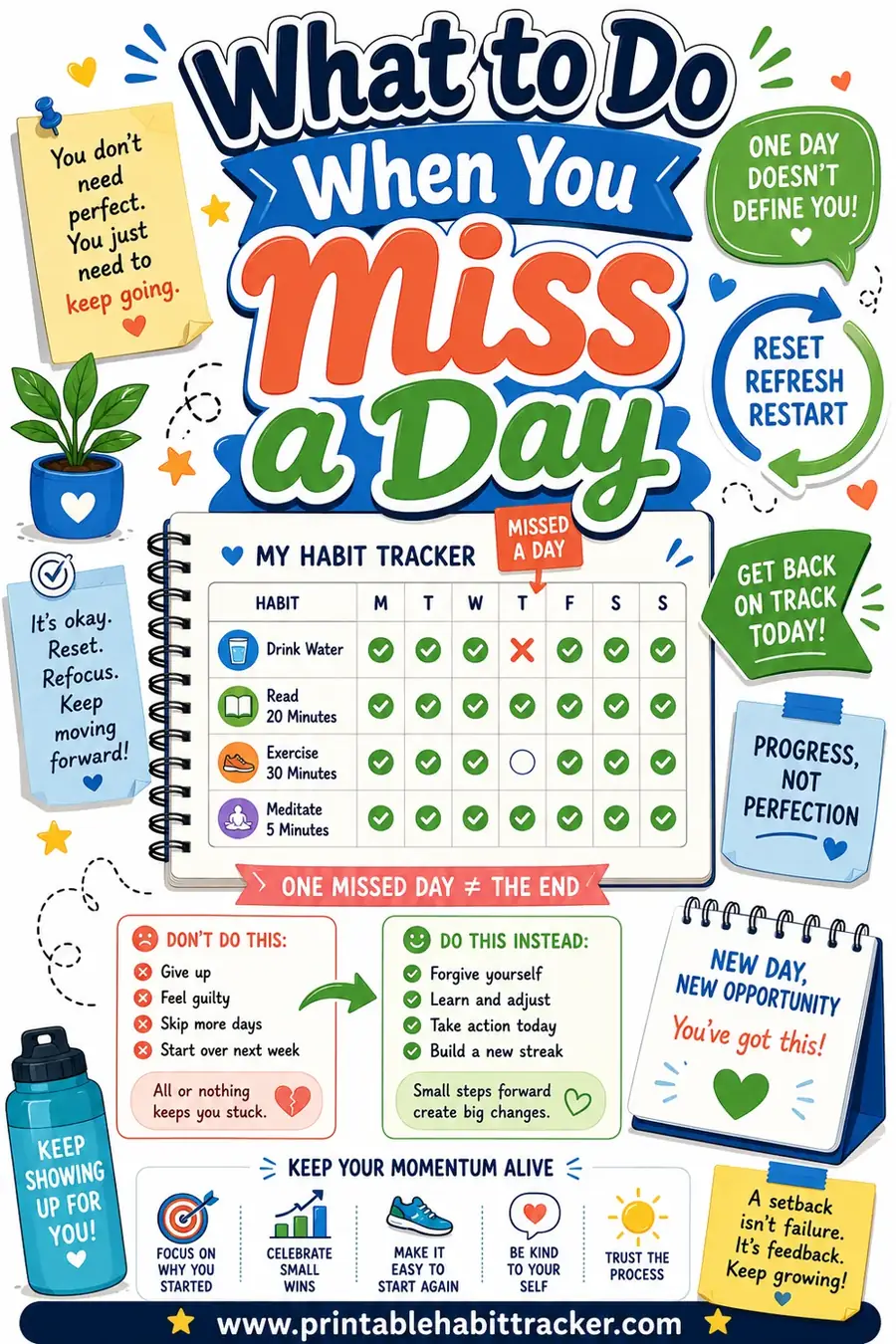
Aim for a daily streak for the motivation, but allow one miss without resetting to zero. The only hard rule: never miss two days in a row. This keeps the momentum of a streak while removing the all-or-nothing cliff. It's the single best blend for most people. (We wrote a whole guide on the recovery side: what to do when you miss a day.)
Scheduled flexibility
Decide your off-days in advance. "I exercise Monday, Wednesday, Friday, and Saturday." Now skipping Tuesday isn't a miss — it's the plan. You get a clear target and built-in rest, with no guilt.
The weekly quota
Instead of daily boxes, aim for a number per week. "Read 5 of 7 days." If you fall behind early, you can catch up later in the week. The streak you're protecting is weeks hit, not days, so a single off-day barely registers.
How to Choose for a Specific Habit
Not sure which to use? Run the habit through these quick questions.
- Does it genuinely need to happen daily? Water, sleep, meds — yes, go streak. Heavy workouts — no, rest matters, go flexible.
- Do you tend to quit after one slip? If a broken streak makes you give up entirely, flexibility will serve you better.
- Do you tend to drift and procrastinate? If "I'll do it later" is your weakness, a strict daily streak removes the wiggle room.
- How's your stress level? When life is heavy, loosen the rules. When you've got bandwidth, a streak can push you further.
Most people land on a flexible streak: aim daily, allow the occasional miss, never miss twice. It's forgiving enough to survive real life and strict enough to build real momentum.
Tracking Either Approach
Whichever you choose, you need to see it, and this is where a printable grid beats keeping it in your head.
| Approach | How to track it |
|---|---|
| Strict streak | Daily boxes; count consecutive checks |
| Never miss twice | Daily boxes; just watch for two blanks in a row |
| Scheduled flexibility | Mark only your chosen days; check them off |
| Weekly quota | Tally checks per week against your target |
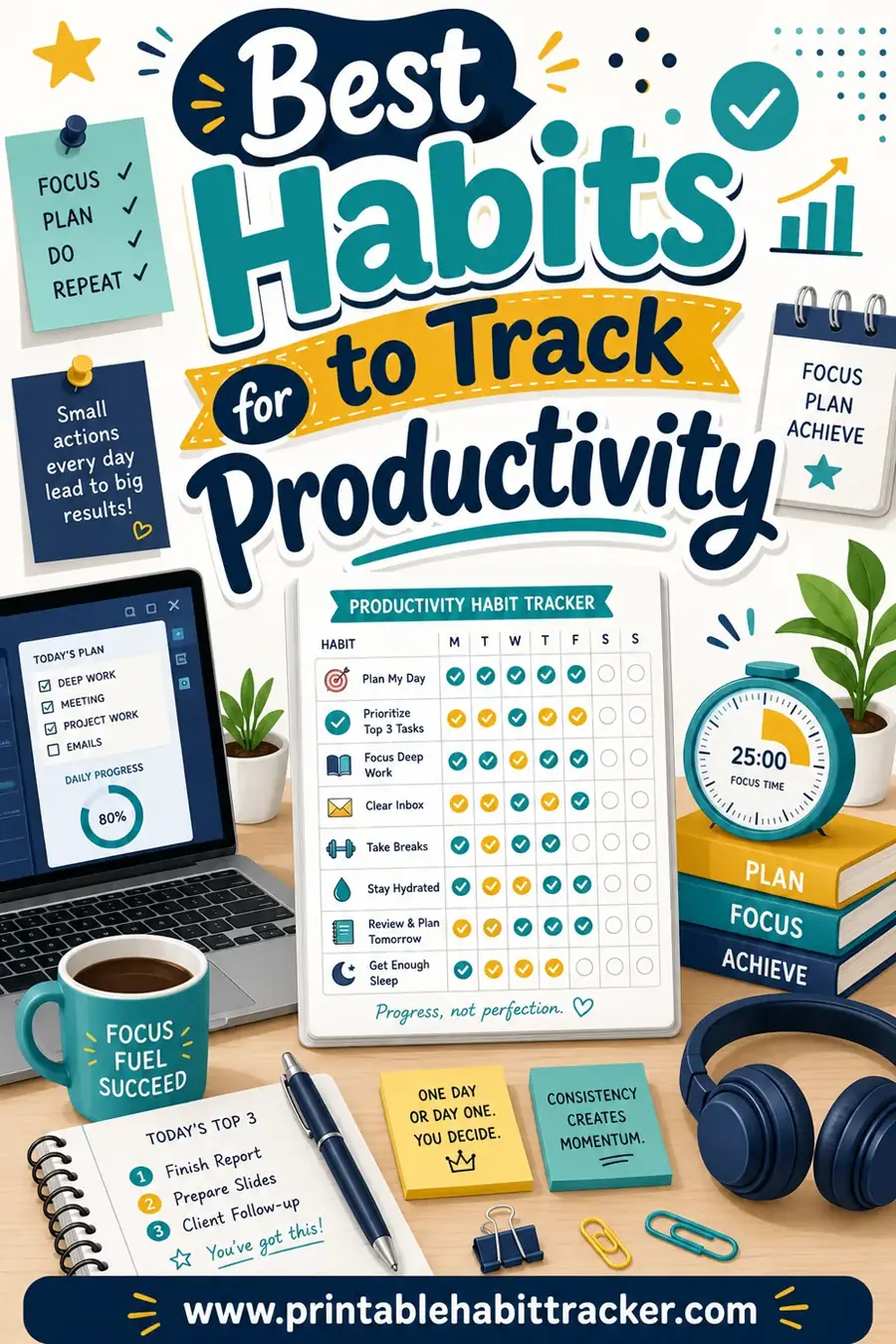
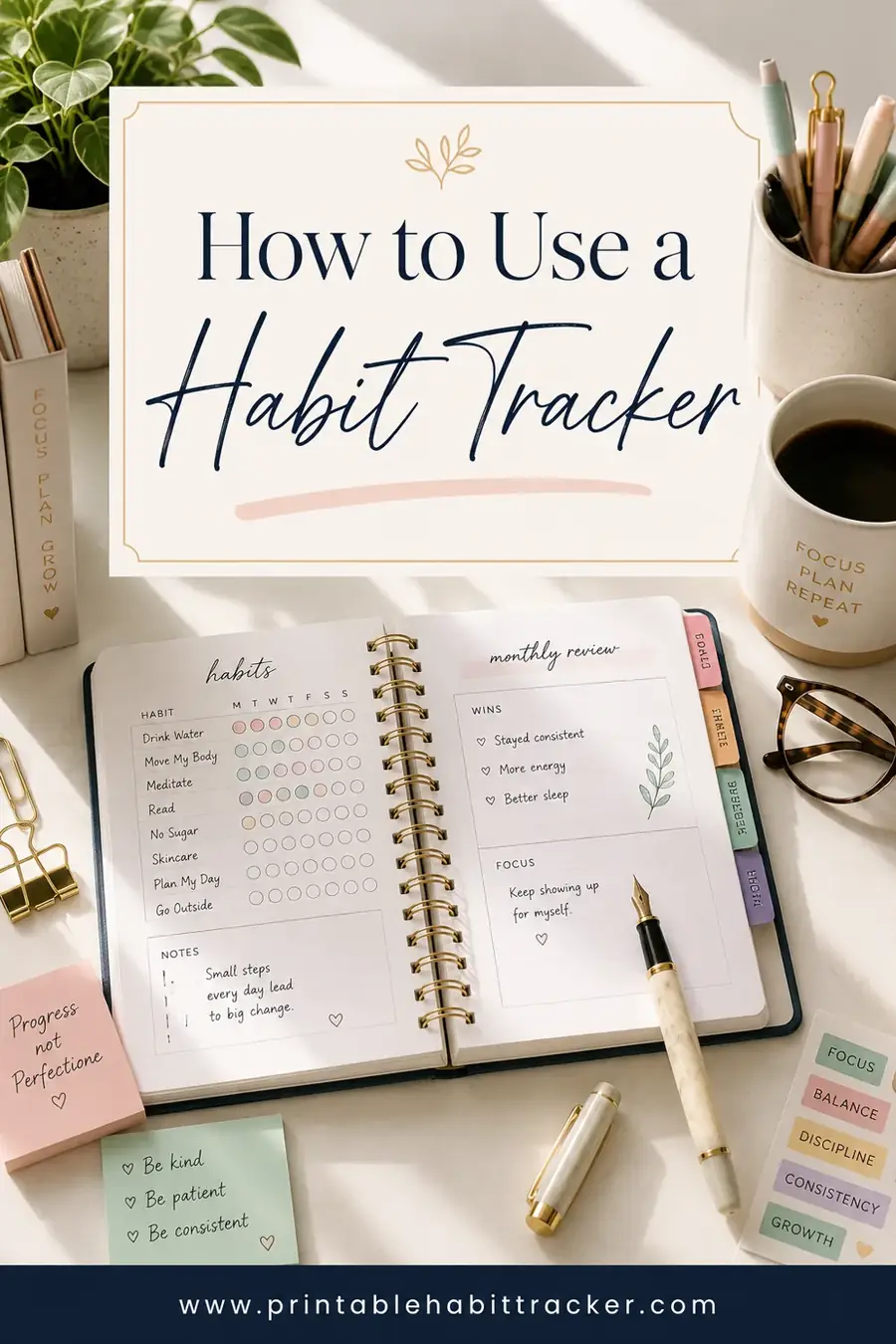
A printable habit tracker handles all four. For a strict streak, you watch the chain. For a flexible target, you glance at the week and count. Either way, the page keeps you honest in a way that vague intentions never will. And if your habit is health-related, our list of the best habits to track for productivity pairs nicely with whatever rhythm you pick.
When Streaks Backfire (and What to Do)
Streaks are great until they aren't. Watch for these warning signs:
- You're doing the habit just to protect the streak, even when it's not serving you (working out while injured, for example). The number has taken over. Loosen up.
- A single miss spirals into quitting. That's the all-or-nothing trap. Switch to "never miss twice."
- You're burning out. If the daily grind feels like dread, add scheduled rest days.
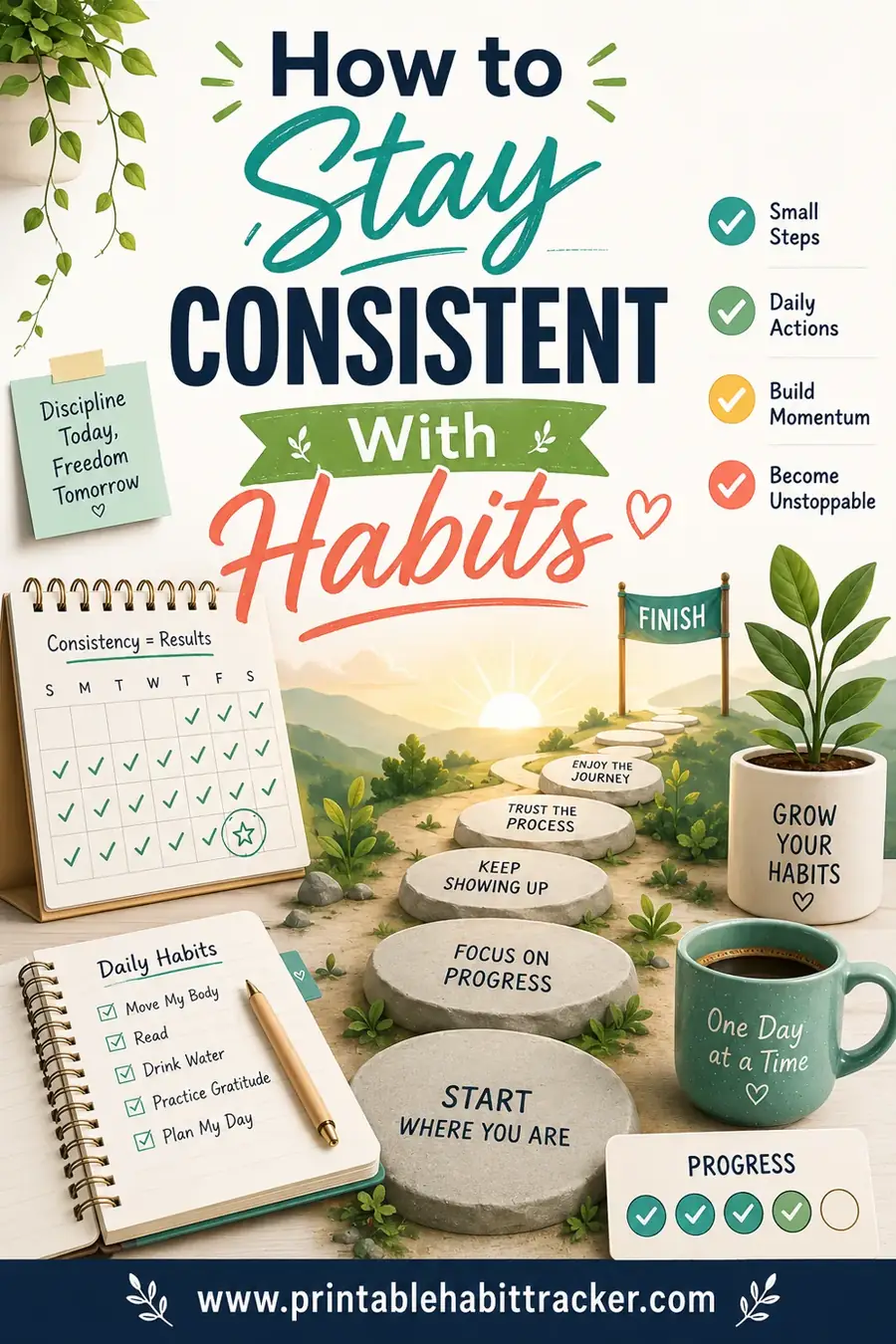
The fix is almost always the same: keep the motivation of the streak but soften the rule. You lose nothing by allowing a planned off-day, and you protect the habit from collapse. If consistency is the real struggle underneath, how to stay consistent with habits covers the fundamentals.
When Flexibility Backfires (and What to Do)
Flexibility has its own failure mode, and it's the opposite of the streak's. Where a streak can make you rigid, too much flexibility can make you vague. Watch for these:
- "Most days" keeps shrinking. It started as five days a week, slid to three, then to "whenever." Vague targets drift. Fix: pin a hard number ("4 of 7") and track it.
- You always plan to do it "later" and later never comes. Without a daily cue, the habit has no anchor. Fix: schedule specific days and times, not a fuzzy "sometime."
- You can't tell if you're succeeding. With no clear target, there's no feedback. Fix: track a weekly quota so you can see, at a glance, whether you hit it.
The cure for sloppy flexibility is structure: a concrete number, specific days, and a tracker that keeps score. Flexibility should mean "built-in rest days," not "no rules at all."
A Quick Decision Guide
Still on the fence for a particular habit? Run it through this fast chart.
| Your situation | Recommended approach |
|---|---|
| Habit must be daily (water, meds, sleep) | Strict streak |
| You quit after one missed day | Never miss twice |
| Habit needs rest days (heavy exercise) | Scheduled flexibility |
| You tend to drift and procrastinate | Daily streak for structure |
| Busy, unpredictable schedule | Weekly quota |
| You feel guilty over every slip | Track a long-term average |
For most habits and most people, the winning combo is "aim daily, allow the occasional miss, never miss twice." It's a flexible streak — strict enough to build momentum, loose enough to survive a bad week. Print it, track it, and let the grid keep you honest.
Frequently Asked Questions
Are streaks good or bad for building habits?
Streaks are great for motivation but risky for resilience. The momentum of an unbroken chain keeps you showing up, but the all-or-nothing nature means one miss can make you quit. The fix is a flexible streak: aim daily, but allow the occasional slip without resetting to zero.
Is it better to be strict or flexible with habits?
It depends on the habit and on you. Strict streaks suit daily essentials and people who tend to drift. Flexibility suits non-daily habits and people who quit after one miss. Most people do best with a blend — daily intention, occasional allowed misses, and a "never miss twice" rule.
What is the "never miss twice" rule?
It's the best blend of streaks and flexibility. You aim to do the habit every day for the momentum, but you don't reset to zero after a single miss. The only firm rule is that you never skip two days in a row, which keeps a slip from snowballing into a quit.
Should I reset my streak to zero if I miss a day?
You don't have to. Resetting to zero is the brittle, all-or-nothing mindset that makes people give up. Instead, treat your tracker as a record of overall consistency. One blank box doesn't erase the rest — just get back the next day and keep the same tracker going.
How do flexible habits avoid turning into "I'll do it later"?
By setting a concrete target instead of a vague one. "Do it sometimes" drifts; "do it 4 times this week" doesn't. Pick a specific number or specific days, then track it so you can see whether you're hitting the quota. The clear target is what keeps flexibility honest.
Can I track a streak and a flexible habit on the same sheet?
Yes. A printable habit tracker lets you mix approaches. Track your daily essentials as strict streaks and your non-daily goals as weekly quotas, all on one grid. Just glance at the daily ones for unbroken chains and tally the flexible ones against their weekly target.
Streaks, Flexibility, and the Tracker That Handles Both
So which builds better habits — streaks or flexibility? The honest answer is both, blended. Use the momentum of a streak to keep showing up, and the cushion of flexibility so a single bad day never sinks the whole thing. Aim daily, forgive the occasional miss, and never miss twice. Build your free printable habit tracker, pick the rhythm that fits each habit, and print a grid that keeps you motivated without making perfection the price of progress.