Habit Tracker for Teens
A habit tracker for teens is a simple printable grid where a teenager checks off the daily habits they're working on — things like getting off their phone by a set time, drinking water, doing homework, or just getting to bed before midnight. It works because it's theirs: no parent reminders, no app pinging them, just a sheet they fill in and own. The fastest way to make one is to use a free printable habit tracker maker, pick the habits that actually matter to them, and print a fresh sheet for the week.
Want to skip ahead and build one now? Open the free maker, drop in a handful of habits (there's a ready-made teen list further down), and print it in under a minute. No login, no cost, no subscription trap.
Why a Habit Tracker Works Differently for Teens
Teenagers aren't little kids and they're not adults, and most habit trackers ignore that. A sticker chart feels babyish. A productivity app feels like one more screen telling them what to do. What actually lands with a 13-to-18-year-old is something in between: a tool that respects their independence but still gives them a quick win they can see.
That's the magic of a printable. It sits on a desk or a wall, not inside the phone that's already the problem. A teen checks a box, feels a small hit of "I did that," and moves on. No data being collected, no streak guilt-tripping them, no parent watching a dashboard.
Here's what makes the teen years a sweet spot for habit tracking:
- They're building independence. A tracker hands them control instead of taking it. They pick the habits, they mark the boxes.
- Their brains love quick feedback. A row of checkmarks is instant proof of progress, which keeps motivation up better than a far-off goal.
- The stakes are getting real. Grades, sleep, screen time, and mood all start to matter more in these years, and small daily habits add up fast.
The trick is to let it feel like their project, not a chore assigned by a grown-up.
The Best Habits for Teens to Track
The right habits are specific, doable, and chosen by the teen — not a wish list of everything a parent wishes they'd do. Start with three to five. A tracker crammed with fifteen habits is a tracker that gets abandoned by Wednesday.
Here's a menu to pick from, sorted by what teens actually care about.
| Category | Habit ideas |
|---|---|
| Screen & phone | Phone down by 10pm, no phone at meals, screen time under 3 hrs, charge phone outside bedroom |
| School | Homework done, study 30 min, planner updated, read 20 min |
| Body & energy | Drink water, eat breakfast, move/exercise, in bed by 11 |
| Mind & mood | Rate my mood, journal one line, 5 min off all screens, gratitude note |
| Self & home | Make the bed, tidy desk, shower, take meds/vitamins |
Mix across categories so the sheet feels balanced — one screen habit, one school habit, one body habit, one mood check. That spread keeps it from feeling like a homework chart.
Habits to skip (and why)
- Vague ones like "be productive." A teen can't check off something they can't measure. "Study 30 minutes" works; "do well in school" doesn't.
- Too many at once. Three solid habits beat ten ignored ones every time.
- Parent-chosen habits the teen doesn't buy into. If they didn't pick it, they won't track it. Let them lead.
Screen Time: The One Most Teens Actually Want Help With
If there's a single habit that makes a teen tracker worth printing, it's screen time. Most teens know they're on their phone too much — they just don't have a low-pressure way to push back without it feeling like a fight at home.
A tracker turns it into a personal challenge instead of a rule. Try one of these as a single, checkable habit:
- "Phone down by 10pm." One clear cutoff. Easy to check yes or no.
- "Charged outside my room." This one quietly fixes sleep too, since the phone isn't an arm's reach away at midnight.
- "No phone at meals." Small, social, and surprisingly satisfying to keep a streak on.
- "Under 3 hours of screen time." Their phone already reports the number — they just copy a checkmark if they hit the target.
The point isn't zero screen time. It's noticing the pattern. A week of checkmarks (or missing ones) tells a teen more about their own habits than any lecture ever could.
Balancing School, Activities, and a Life
By high school, a lot of teens are juggling classes, homework, a sport or club, maybe a part-time job, and a social life — all at once. A habit tracker won't add hours to the day, but it makes the load visible, which helps them stop dropping the same balls every week.
The fix is to track the foundation habits that keep everything else from falling apart:
- Sleep. It's the first thing teens cut and the one that wrecks everything else. A simple "in bed by 11" box is the highest-value habit on most teen trackers.
- Homework done. Not "study for hours" — just a yes/no that the day's work got finished.
- One thing for me. Guitar, a run, drawing, gaming with friends — a checkbox that protects something they actually enjoy, so the week isn't all obligation.
When a teen can glance at the sheet and see "I slept, I did my work, I had some fun" three days running, they feel on top of things instead of buried.
Motivation That Actually Works for Teenagers
Sticker charts and gold stars are out by age 13. What works instead is autonomy, visible progress, and a reward they chose themselves.
Let them design it
Hand a teen control over the whole thing. They pick the habits, the layout, even the reward. When it's their system, keeping it stops feeling like obeying and starts feeling like winning. The free maker lets them swap habits and reprint in seconds, so the sheet can evolve as their goals do.
Tie it to a reward they care about
Forget the prize jar. Teen-sized rewards look more like:
- Seven checkmarks on "homework done" = a guilt-free movie night
- A full week of the sleep habit = sleeping in Saturday, no questions asked
- Hitting the screen-time goal all week = money toward something they're saving for
Keep streaks low-pressure
Streaks motivate teens, but a broken streak shouldn't feel like failure. Build in a "reset and keep going" mindset. Missing Tuesday doesn't erase the week — they just pick the habit back up Wednesday. A printable makes this easy: a blank new sheet every week is a clean slate, no guilt baggage carried over.
A Sample Week for a High Schooler
Not sure what a finished teen tracker looks like? Here's a realistic week for a 15-year-old balancing school, a sport, and a phone they're trying to put down more. ✓ means done, — means missed.
| Habit | Mon | Tue | Wed | Thu | Fri | Sat | Sun |
|---|---|---|---|---|---|---|---|
| Phone down by 10pm | ✓ | ✓ | — | ✓ | — | ✓ | ✓ |
| Homework done | ✓ | ✓ | ✓ | ✓ | ✓ | — | ✓ |
| In bed by 11 | ✓ | — | ✓ | ✓ | — | ✓ | ✓ |
| Drink water | ✓ | ✓ | ✓ | — | ✓ | ✓ | ✓ |
| Rate my mood | ✓ | ✓ | ✓ | ✓ | ✓ | ✓ | ✓ |
| One thing for me | — | ✓ | — | ✓ | ✓ | ✓ | ✓ |
See how it's not a perfect grid? That's the point. A real week has misses, and the tracker still tells a good story: mostly-kept habits, a clear pattern, and zero shame about the blanks. The goal is progress a teen can see, not a flawless scorecard.
How to Make a Teen Habit Tracker in Minutes
You don't need an app or a planner you'll buy and abandon. Here's the whole process.
- Pick 3–5 habits together. Let the teen lead. Use the table above for ideas, but the final list is theirs.
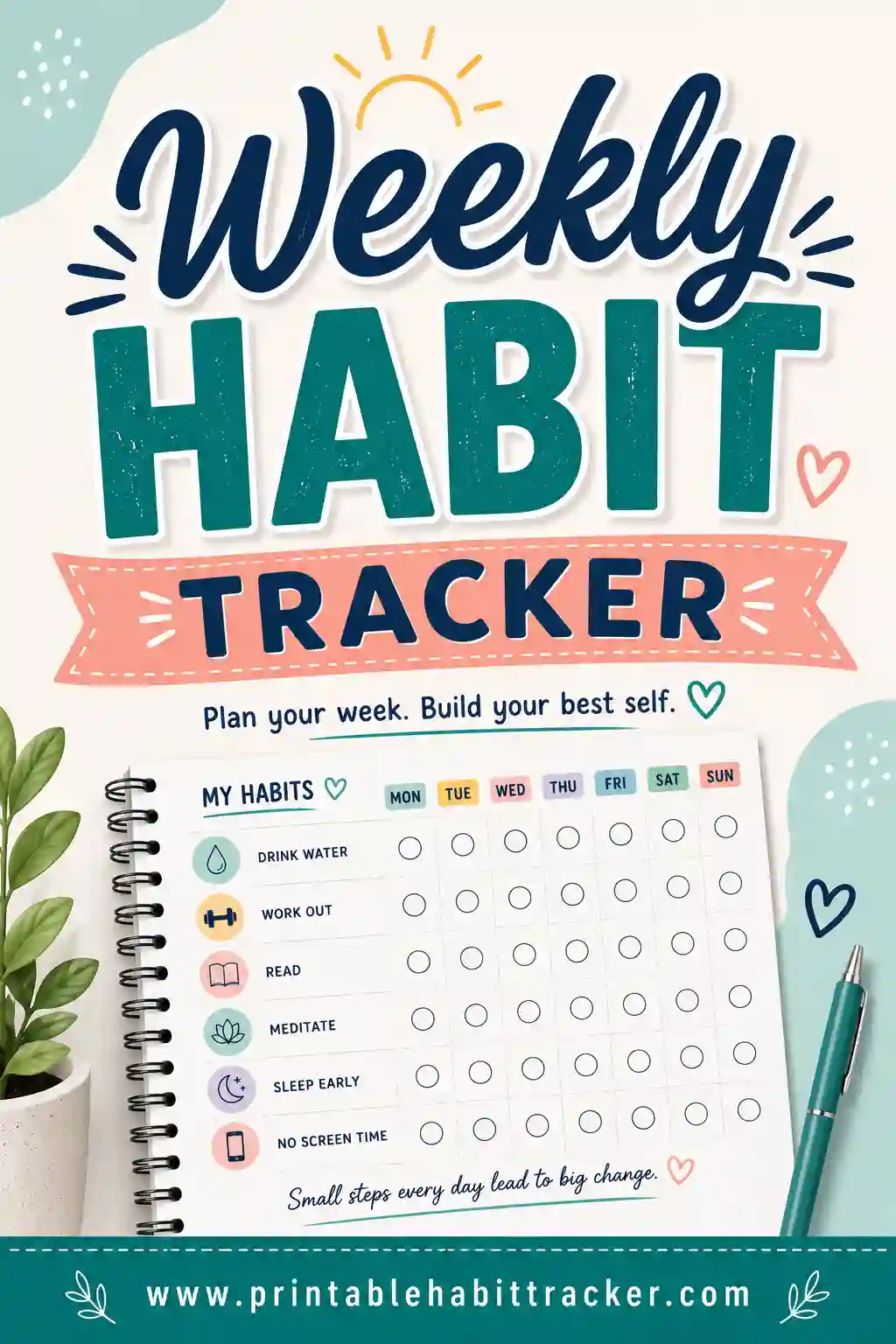
- Choose a layout. A weekly grid (habits down the side, days across the top) is perfect for teens — one glance shows the whole week.
- Open the free maker. Type in the habits, choose the week view, done.
- Print one for the week. Tape it inside a locker, on a bedroom door, or by the desk — somewhere it gets seen but isn't on the phone.
- Reset every week. Print a fresh sheet each Sunday. New week, clean slate.
That's it. No account, no fee, and the teen can tweak the habit list any time their goals change.
Where to Put It So It Actually Gets Used
A tracker only works if a teen sees it. The best spots are ones they pass daily but that aren't a screen:
- Bedroom door or wall, at eye level — the last thing they see at night.
- Desk or study spot, propped where homework happens.
- Inside a locker for the school-day habits.
- On the fridge if the teen's okay with it being semi-public (some are, some very much aren't — let them choose).
Whatever you do, keep it off the phone. The whole appeal of a printable for teens is that it's the one productivity tool that isn't competing with TikTok for attention.
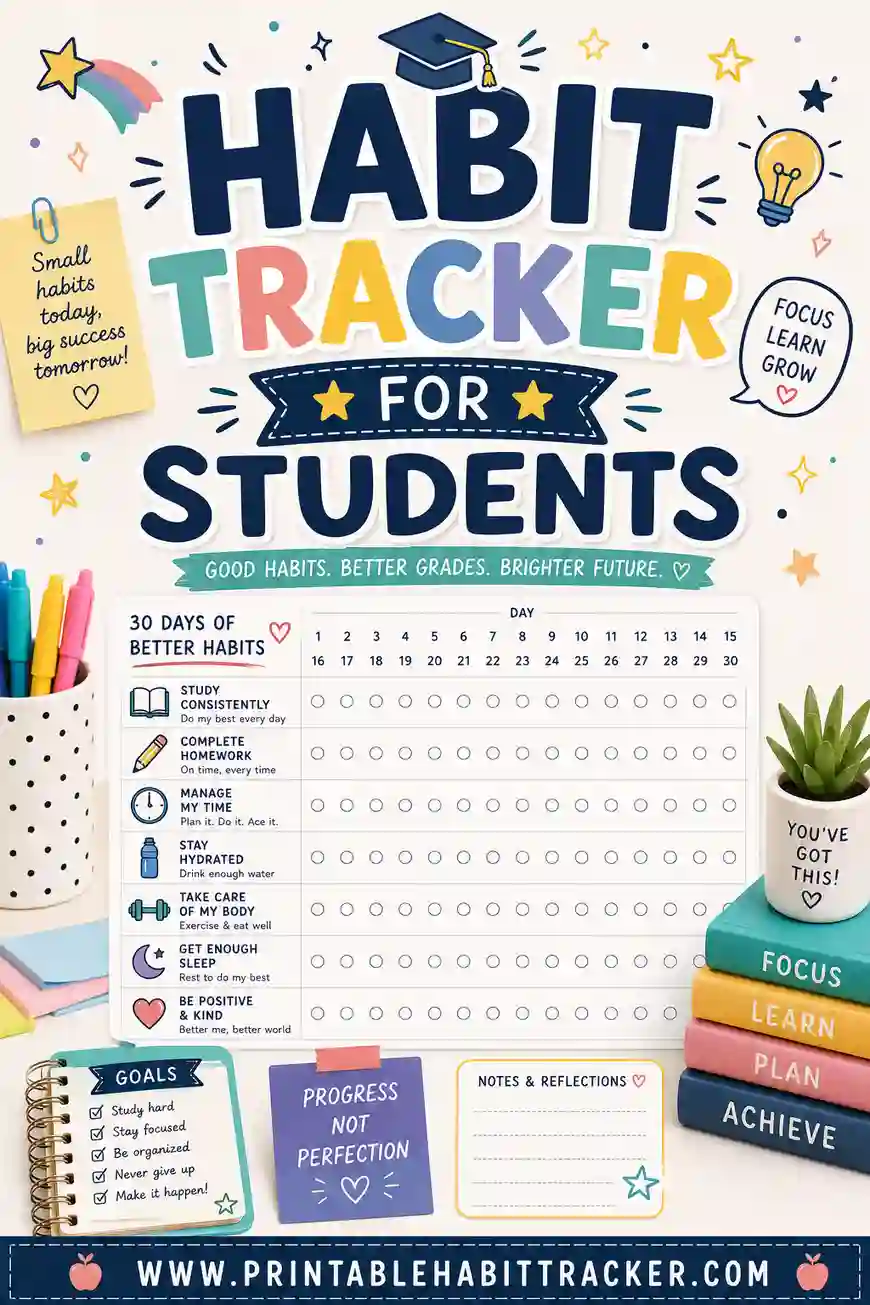
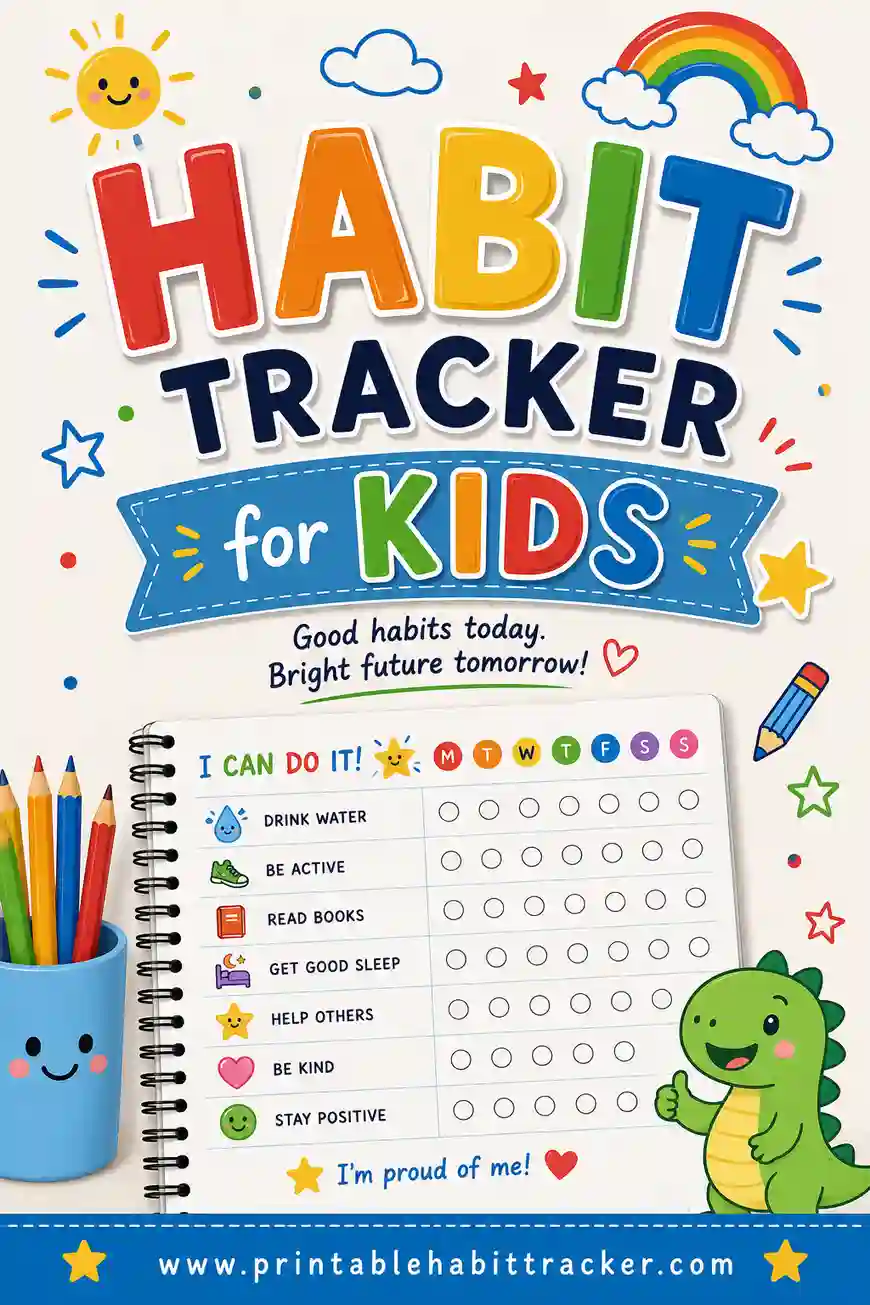
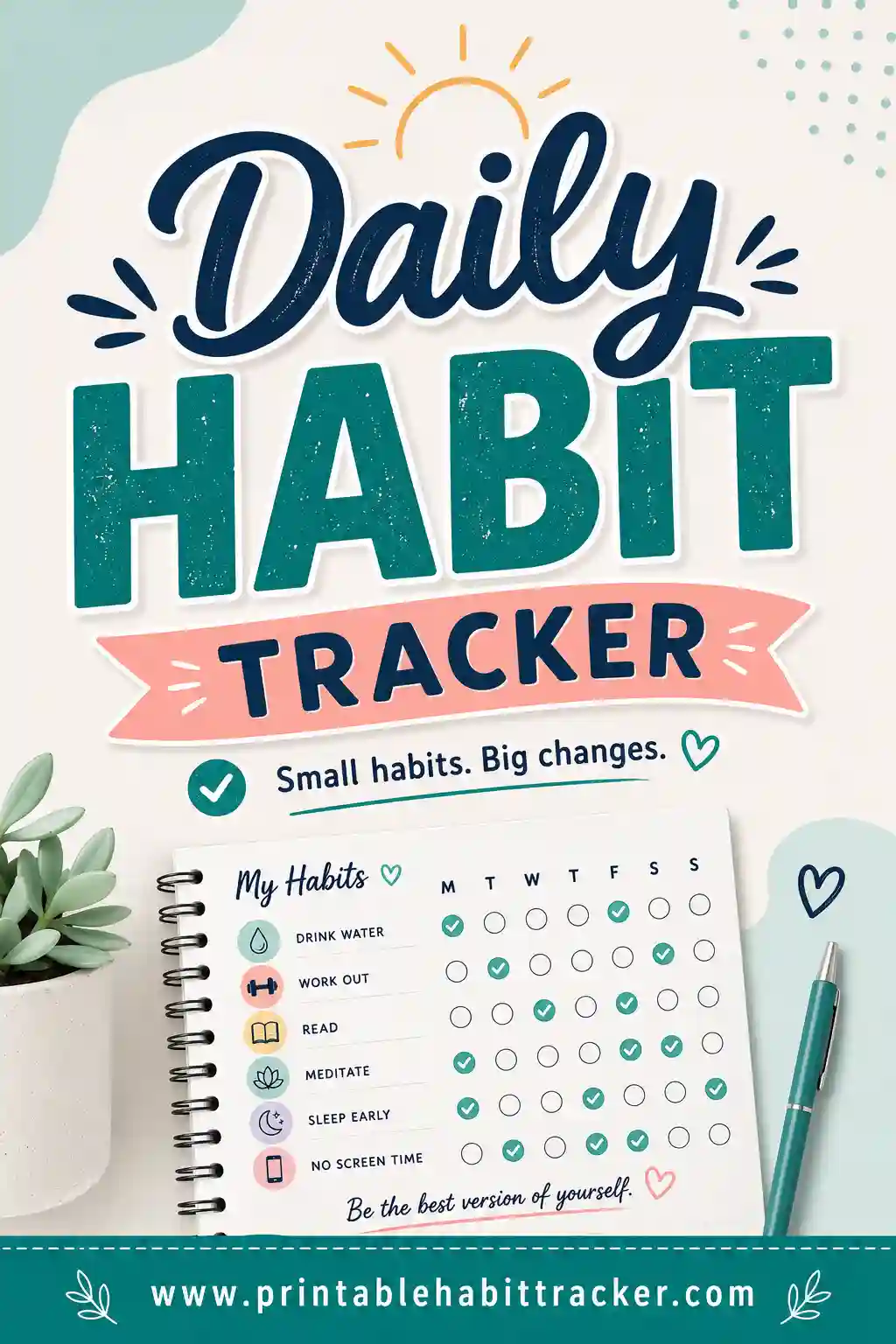
Want trackers tuned for other stages? We've also got a habit tracker for students built around classes and study sessions, a habit tracker for kids with a more playful layout, and simple daily and weekly templates you can adapt for any age.
Frequently Asked Questions
What habits should a teenager track?
Start with three to five specific, checkable habits across different areas — one for screen time (like "phone down by 10pm"), one for school ("homework done"), one for the body ("in bed by 11"), and a mood check. Let the teen choose them so they actually buy in. Vague goals like "be productive" don't work; concrete yes/no habits do.
How is a teen habit tracker different from one for kids?
A kids' tracker leans on stickers, pictures, and parent involvement. A teen tracker is built for independence — the teenager picks the habits, owns the sheet, and gets to skip the babyish reward system. The habits are also more grown-up: screen time, sleep, mood, and balancing school with activities rather than "brush teeth" and "feed the pet."
Will my teenager actually use a printable instead of an app?
Many will, precisely because it's not an app. Teens are already overwhelmed by screens, and a paper tracker doesn't nag, collect data, or guilt them over a broken streak. A sheet on the wall gives a quick, satisfying check-off without adding to screen time — which is often the very thing they're trying to cut.
How do I help my teen stay motivated without nagging?
Hand over control. Let them design the tracker, pick the habits, and choose a reward they care about — like a guilt-free Saturday sleep-in for a full week of the sleep habit. Then step back. The tracker does the reminding, not you. Visible progress and self-chosen rewards motivate teens far better than parental check-ins.
How often should a teen start a fresh tracker?
Weekly is ideal. A new sheet every Sunday gives a clean slate, so a rough week doesn't carry guilt into the next one. It also lets the teen swap habits as their goals shift — drop one they've nailed, add a new challenge. The free maker reprints in seconds, so a fresh start is always one click away.
Ready to Build a Tracker Your Teen Will Actually Use?
Pick a few habits that matter to them, open the free printable habit tracker maker, and print a clean weekly sheet in under a minute. It's free, there's no sign-up, and the whole thing stays off their phone — which, for a teenager, might be the best feature of all. Hand them the pen and let them run it.