Habit Tracker for Productivity: Free Printable Guide
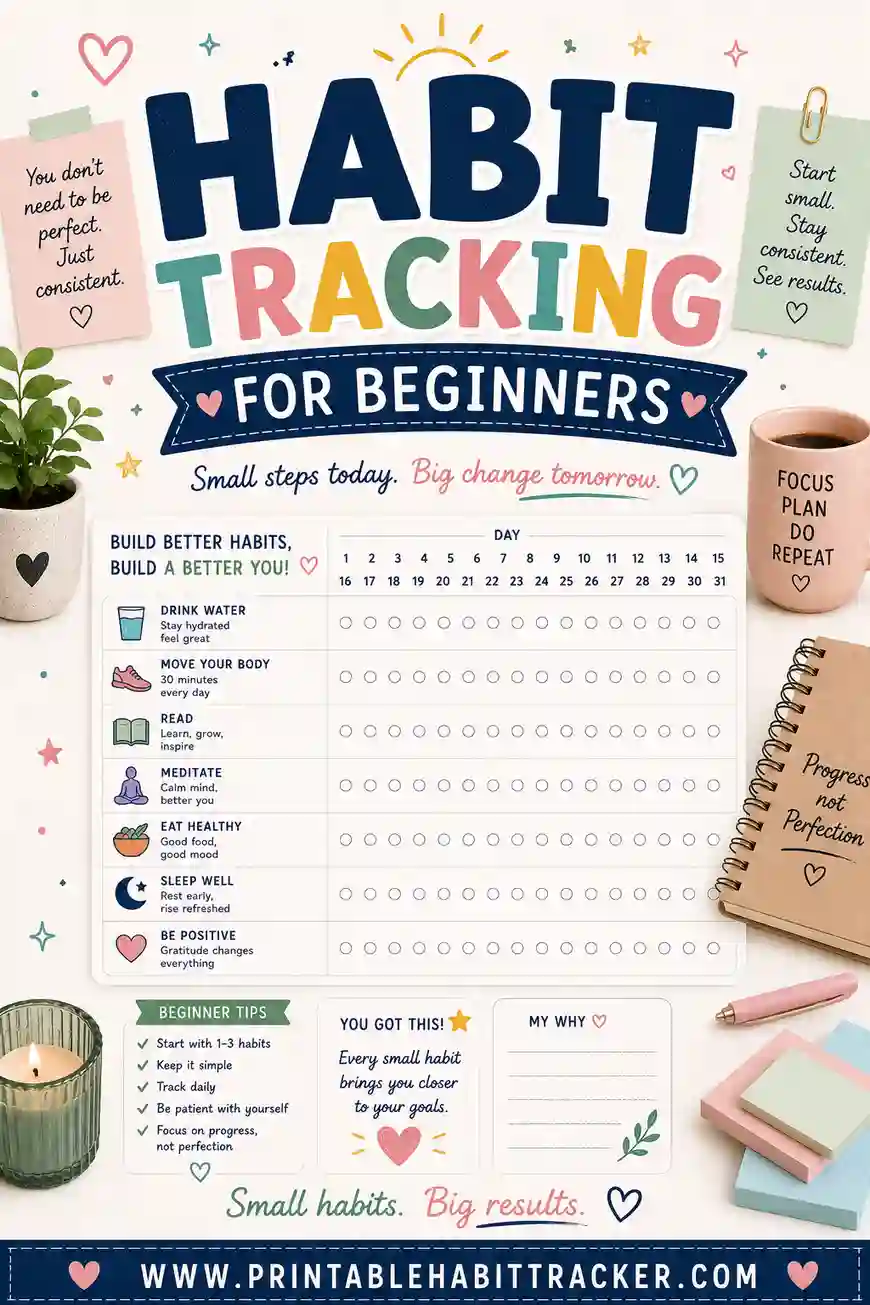
A habit tracker for productivity is a grid where you check off the small daily habits that make focused, effective days happen, things like planning your top tasks, a block of deep work, a clean inbox, or a phone-free morning. Productivity isn't about heroic bursts; it's about repeating good habits until they run on autopilot, and a tracker makes those habits visible so you actually keep them. The quickest way to start is to use a free printable habit tracker, add the focus habits you care about, and print a grid for the week or month.
Want to get going? Open the free tracker, pick a layout, add your productivity habits (a ready-made list is below), and print as many copies as you like. No app, no productivity-system overhaul, no learning curve.
Why a Tracker Makes You More Productive
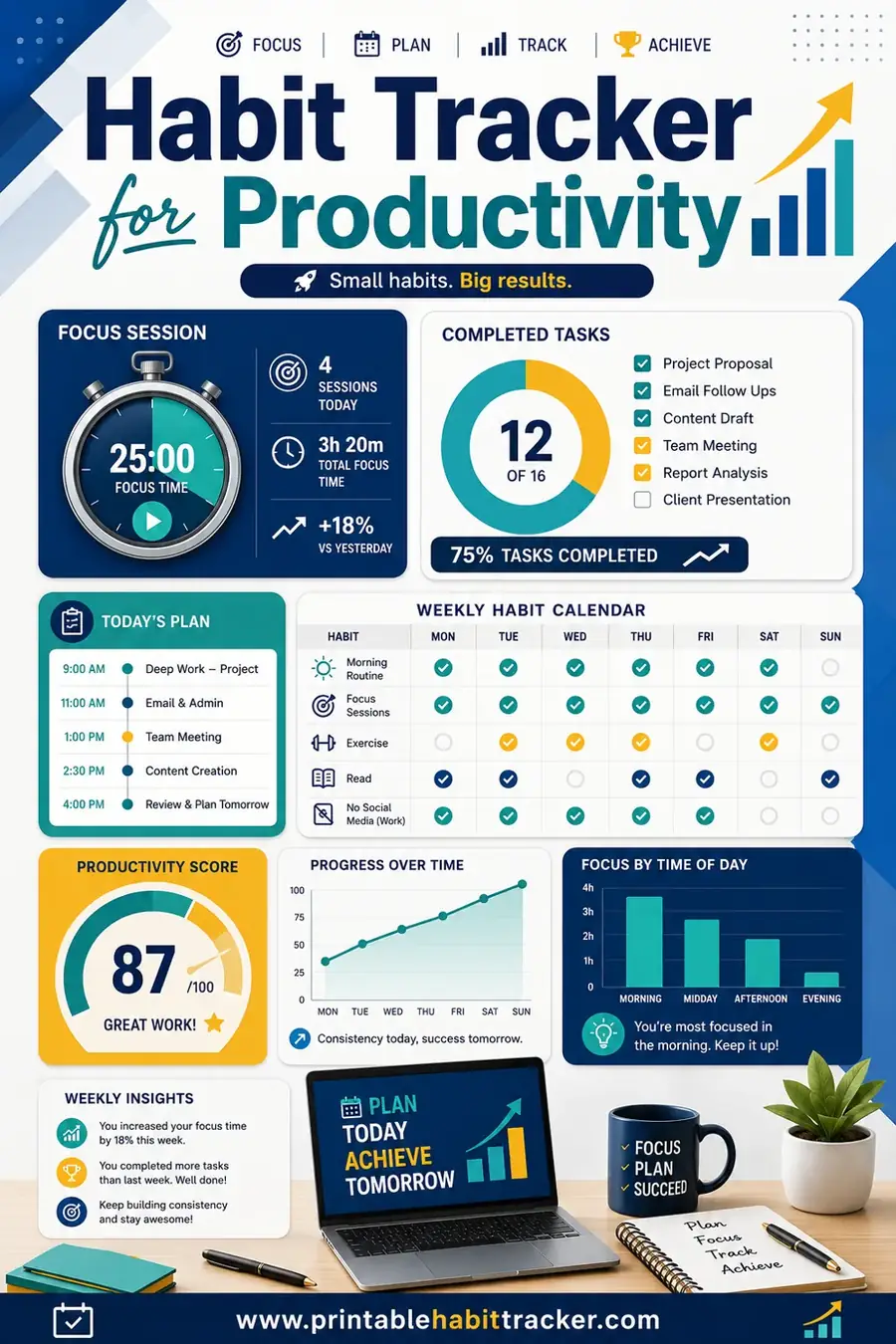
Productivity advice usually fails for one reason: it relies on motivation, and motivation comes and goes. A tracker replaces motivation with a system. You don't have to feel inspired to plan your day, you just have to keep the streak alive.
Checking a box also gives your brain a tiny reward, which makes the habit easier to repeat tomorrow. Over a couple of weeks, planning your top three tasks stops being a decision and starts being a reflex. That's the whole game, turning effortful good behaviors into automatic ones.
There's a focus benefit too. When you commit to tracking "one deep work block," you're far more likely to actually protect that time. The grid is a quiet promise to yourself, and crossing off the box is keeping it.
The Best Productivity Habits to Track
Track habits that are specific and within your control. Vague goals like "be focused" can't be checked off; concrete actions can. Here's a strong starter set.
| Habit | Why it helps | How to track |
|---|---|---|
| Plan top 3 tasks | Focuses the day on what matters | Check after you write them down |
| One deep work block | Protects time for real progress | Check after one focused session |
| Phone-free morning | Stops reactive, scattered starts | Check if you delayed the scroll |
| Inbox to zero | Clears mental clutter | Check when email is handled |
| Single-task, no multitask | Multitasking tanks quality | Check on focused days |
| Take real breaks | Prevents burnout, sustains focus | Check if you stepped away |
| Shut down ritual | Ends work cleanly, frees evenings | Check after you close out the day |
Pick three or four to start, not all seven. Choose the ones that fix your biggest leak right now. If mornings derail you, track the phone-free start. If you never finish big work, track the deep work block. Tailor it and keep it lean.
Avoid vanity habits
Skip habits that feel productive but don't move anything, like "check email constantly" or "reply instantly." Busyness isn't productivity. Track the habits that create real output and protect your focus, not the ones that just keep you reacting all day.
How to Set Up Your Productivity Tracker
Four quick steps and you're running.
- Pick a layout. A weekly page suits productivity well, you get a clear seven-day view with room for notes. A monthly grid is great for streak motivation. Try a weekly page first.
- Add your habits. Type in three to five from the list above. Keep each row short and specific.
- Add a priority spot. Leave room at the top to write your top three tasks for the day. This pairs perfectly with the habit boxes.
- Print and place it. Keep it on your desk, in your planner, or beside your laptop, wherever your workday actually happens.
The setup takes about five minutes with the free tracker. Print on plain paper first and refine after a week once you see what you actually use.
A Sample Productive Week to Copy
Here's how a realistic week looks filled in, imperfect and still effective.
| Habit | Mon | Tue | Wed | Thu | Fri |
|---|---|---|---|---|---|
| Plan top 3 | ✓ | ✓ | ✓ | ✓ | ✓ |
| Deep work block | ✓ | ✓ | ✓ | ✓ | |
| Phone-free morning | ✓ | ✓ | ✓ | ✓ | |
| Inbox to zero | ✓ | ✓ | ✓ | ✓ | |
| Shut down ritual | ✓ | ✓ | ✓ | ✓ | ✓ |
Look at Wednesday, the deep work block slipped, and it lines up with a phone-free morning win that didn't quite hold the focus through the day. The grid shows you that connection instantly. Over a month, those patterns tell you exactly which habit is your biggest lever.
Build Focus Streaks That Hold
Streaks turn good intentions into a routine. Here's how to keep yours alive through busy, messy weeks.
- Use the two-day rule. Skipping a habit once is normal. Skipping it twice in a row is how habits quietly die. Protect that line and the routine survives crunch time.
- Aim for most days, not every day. Hitting your habits four or five days a week is a genuine win. Color those and move on without guilt.
- Make the checkmark satisfying. A bold mark or a colored square is a tiny reward. Stack enough and the habit starts pulling you forward.
- Shrink the habit on hard days. Slammed? Do a five-minute version, ten focused minutes still counts as a deep work box. A small win keeps the chain intact.
Pair habits with time blocks
Habits stick faster when they have a home on your calendar. Block "deep work" from 9 to 10, "inbox" at 4, "shut down" at 5. When a habit has a set time, you stop deciding whether to do it and just do it. The tracker then confirms you followed through.
Pair Habits With a Daily Plan
A habit tracker and a simple daily plan are a power couple. The plan tells you what to do today; the tracker builds the habits that make it happen.
Each morning, write your top three tasks at the top of the page. These are the things that, if you did nothing else, would make the day a win. Then your habit boxes, deep work, single-tasking, real breaks, are the behaviors that get those three done. Tasks change daily; habits stay constant. Track both and you get focus and consistency at once.
Keep the task list short on purpose. Three real priorities beat a twenty-item list you'll never finish. A tracker that pairs a tight plan with steady habits is how ordinary days turn into productive ones.
Stack Focus Habits Onto Your Routine
The focus habits that last aren't the ones you white-knuckle through, they're the ones bolted onto something you already do. This is habit stacking, and it works because it removes the hardest step: remembering to start. You anchor each new habit to an existing trigger so it fires almost automatically.
A few that work well at a desk:
- After I sit down with my coffee, I write my top three tasks. Planning happens before email can hijack the morning.
- After my morning stand-up, I start one deep work block. Focus gets the first real slot of the day.
- After lunch, I clear my inbox to zero. A natural reset point, used on purpose.
- Before I close my laptop, I run my shut-down ritual. The workday ends cleanly instead of bleeding into the evening.
Each one follows the same shape: after an existing habit, do the focus one. You're borrowing a routine you already keep, so you don't have to find fresh discipline every day. Lock in one stack for a couple of weeks, check it off on your tracker, then add the next.
Protect your deep work like a meeting
The single highest-leverage habit on most trackers is the deep work block, and the reason it slips is that everything else feels more urgent. Fix that by treating it like an appointment you can't move. Block it on your calendar, silence notifications, and close the tabs that tempt you. When the block has a fixed home and a clear start, you stop negotiating with yourself about whether to do it. Then the only thing left is to check the box, and the streak quietly does the rest.
Weekly vs. Monthly: Which Layout Fits?
Both work; choose the view that keeps you on track.
- Weekly page. Best for productivity, you see the workweek clearly, with room for your top-three tasks and notes. Low pressure, easy to keep up.
- Monthly grid. Best for streak motivation and spotting long patterns. A month of filled focus boxes is seriously satisfying.
- Both together. A weekly page for daily planning plus a monthly grid for the streak. The tracker makes every layout free, so use whatever keeps you focused.
Make It a System That Lasts
Productivity is a long game, so build a tracker you'll actually keep.
- Keep it light. If filling in the tracker feels like a chore, you've added too many habits. Trim to the few that matter.
- Review weekly. Spend five minutes each Friday glancing at the grid. Which habit lined up with your best days? Protect that one.
- Celebrate finished work, not just busy days. Keep a "wins" box for things you actually completed, not hours spent looking busy.
- Print next week early. A ready page removes the friction that ends a lot of streaks.
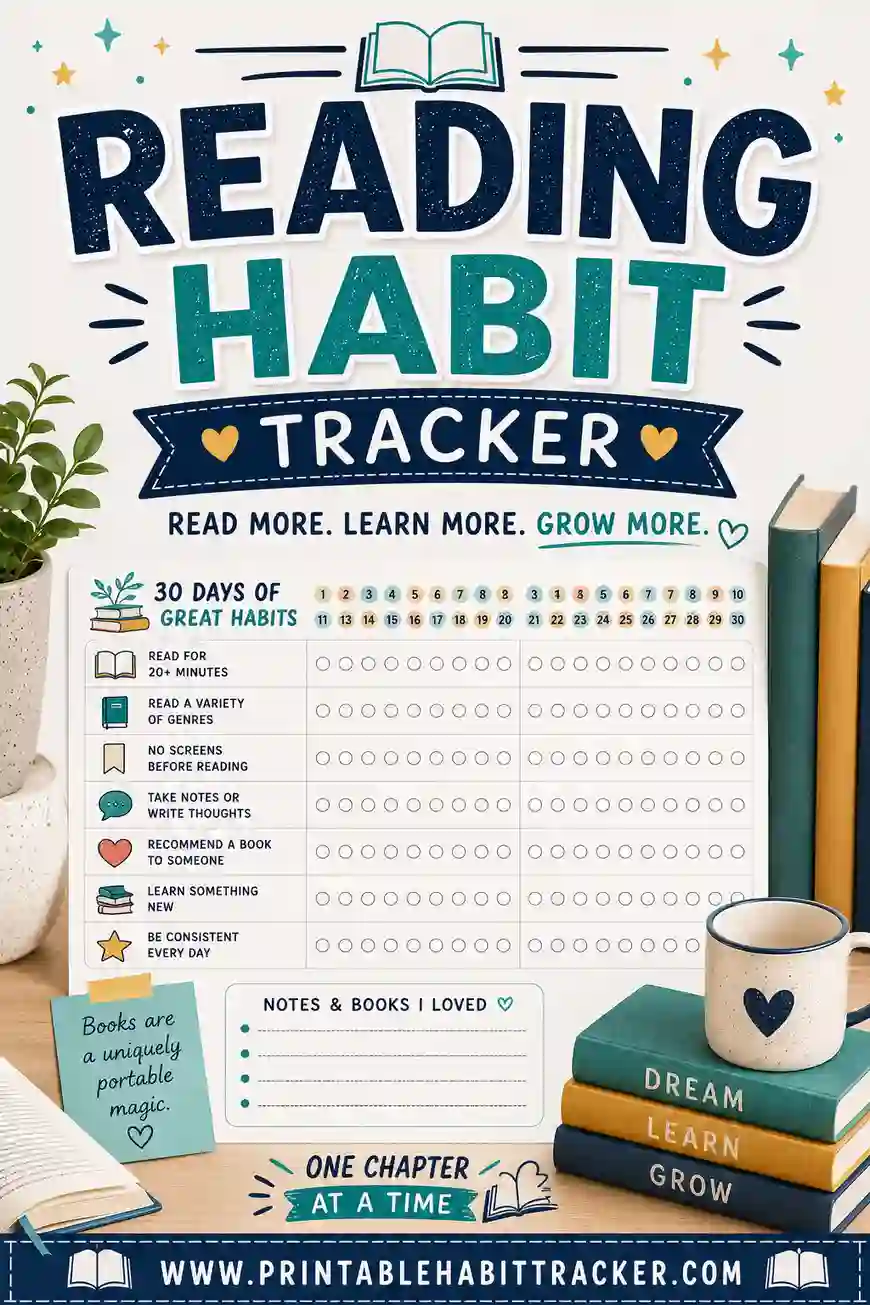
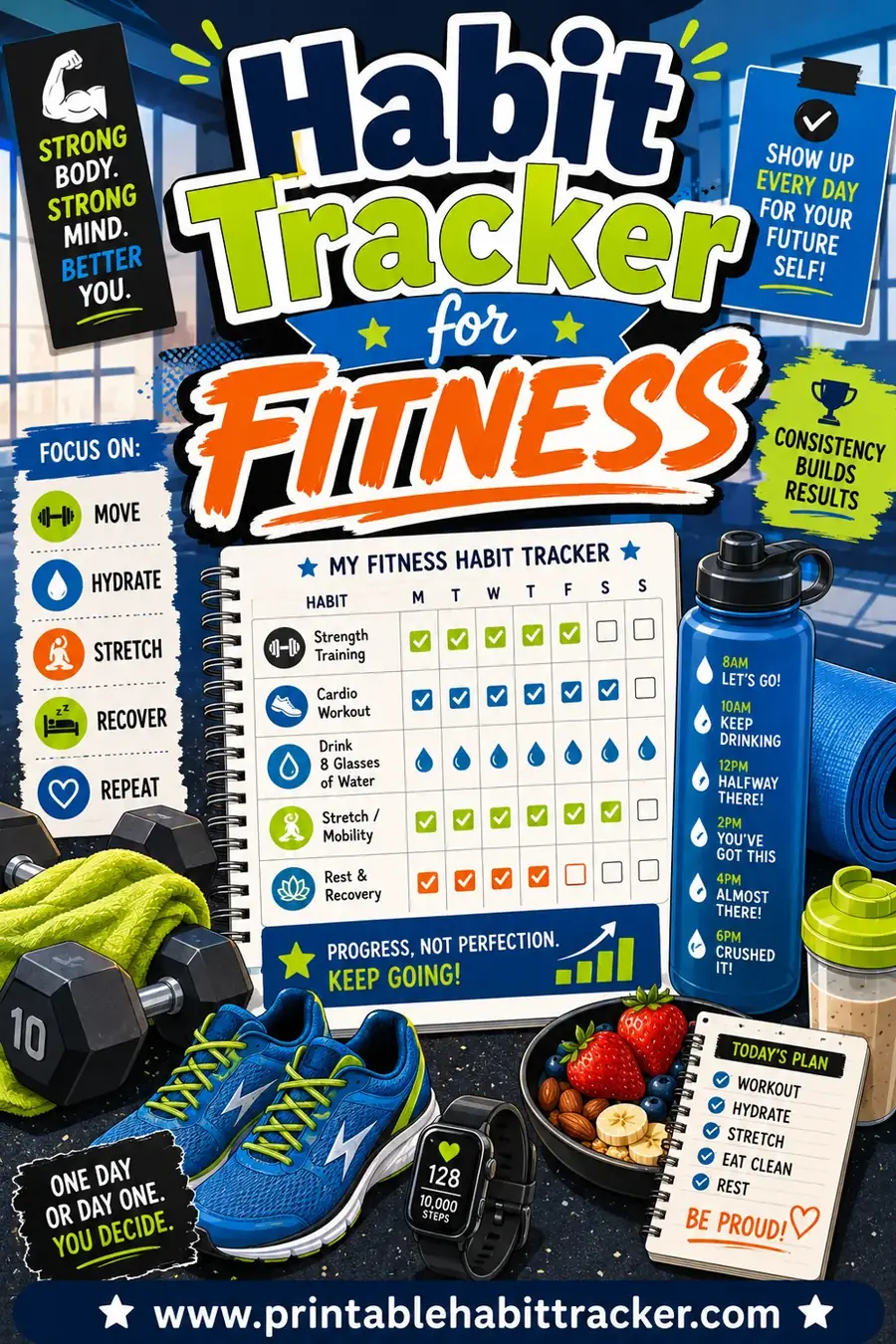
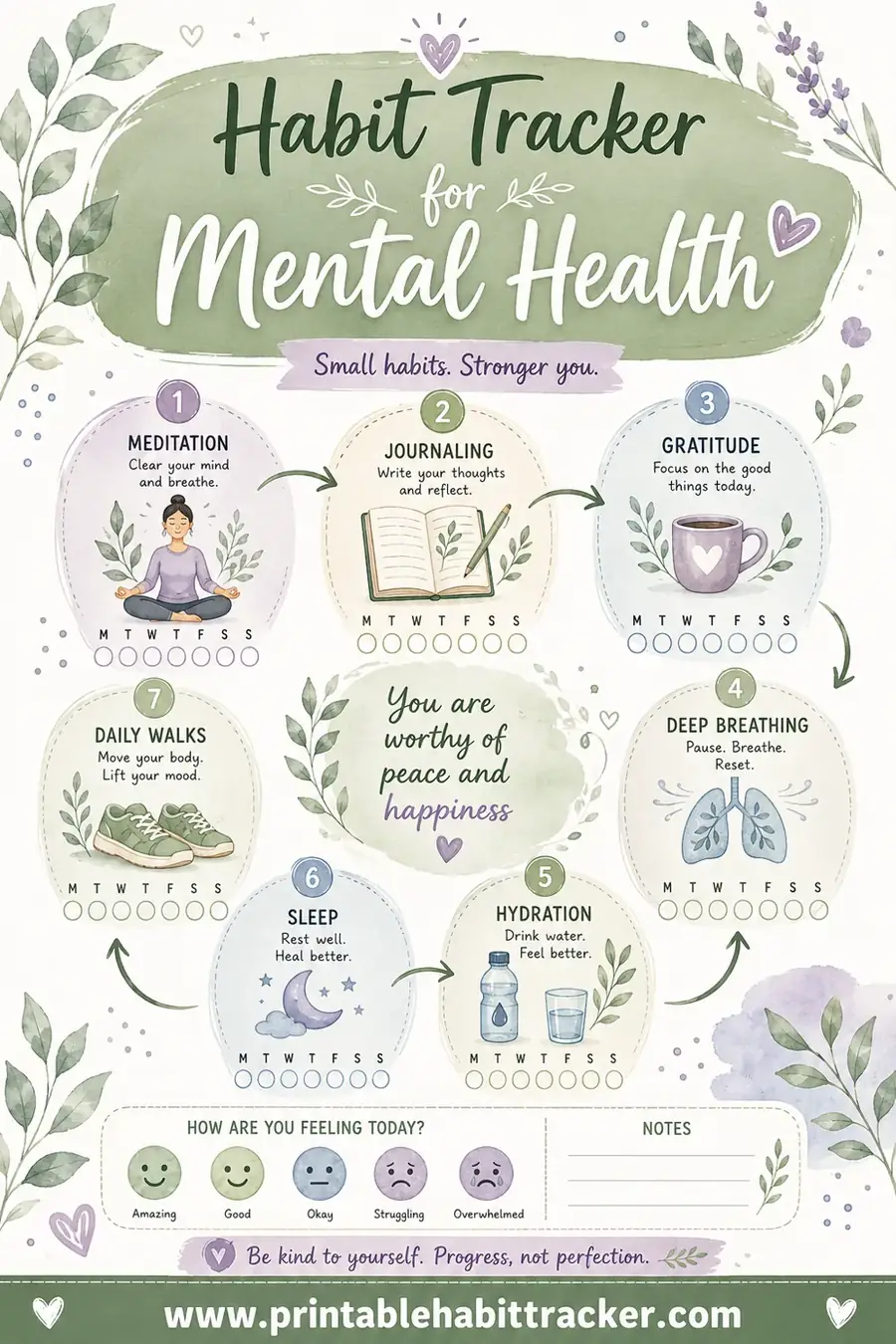
This habit-building approach works across your whole life, not just work. A reading habit tracker builds a focused wind-down routine, a fitness habit tracker keeps your energy up for sharp work, and a mental-health habit tracker protects the sleep and stress management that focus depends on.
Frequently Asked Questions
What habits make you more productive?
Track specific, controllable behaviors: plan your top three tasks, protect one deep work block, keep a phone-free morning, clear your inbox, single-task, and run a shut-down ritual. Pick three to four that fix your biggest leak. The habit list above gives ready-to-copy ideas.
How is a productivity tracker different from a to-do list?
A to-do list tracks one-off tasks that change daily. A habit tracker builds the repeatable behaviors, like deep work and planning, that get those tasks done consistently. They work best together: write your top three tasks at the top, then check off the habits underneath.
How many productivity habits should I track?
Start with three or four. A page crammed with ten habits feels overwhelming and you'll abandon it. Nail a few core focus habits first, then add more once they run on autopilot. Lean and consistent beats ambitious and abandoned every time.
What if I miss a day?
That's normal and won't undo your progress. Use the two-day rule: try not to skip the same habit two days in a row. On busy days, shrink the habit, even ten focused minutes counts as a deep work box and keeps your streak alive.
Should I use a weekly or monthly layout?
A weekly page suits productivity well, you see the workweek clearly with room for your top tasks. A monthly grid is better for streak motivation and spotting patterns. Many people use both: weekly for planning, monthly for momentum.
Is the printable productivity tracker free?
Yes. You build and print it yourself at no cost, with no sign-up and no watermark. Print a fresh page each week or month, customize the habits, and keep going as long as you want.
Start Your Productivity Habit Tracker Today
Productive days aren't about willpower, they're about habits you repeat until they're automatic. Pick a few focus habits, pair them with your top three tasks, and check the boxes daily. Open the free habit tracker, choose your layout, and print it in minutes. Protect the streak, review it weekly, and watch ordinary days turn into your most productive ones. Here's to your next checked box.