New Puppy Checklist: What to Buy, the First Week and a Printable Routine
A new puppy checklist covers three things: the supplies to have ready, the vet visit to book, and a simple daily routine for the first week. Before your puppy comes home, call your vet to set up a first checkup, then get a crate, a bed, bowls, food, a collar with an ID tag, a leash, chew toys and cleanup supplies. After that, a steady routine of meals, potty trips, naps and short play sessions does most of the work.
Here's a puppy routine chart for the first week. Tick each part of the day as you go, change the rows to fit your puppy, then print it free:
✅ Try this tracker for one week
Tap a box each day you do the habit. Your ticks stay on this device.
Before your puppy comes home
- Call your vet. Book a first checkup for the first few days. Ask what records to bring from the breeder or shelter.
- Ask what your puppy eats now. Keep the same food at first. If you want to switch, ask your vet how to change it slowly.
- Puppy-proof one room. Pick up cords, shoes, socks, small toys and anything chewable. Block off stairs.
- Pick a potty spot outside. Use the same spot every time.
- Agree on house rules. Is the puppy allowed on the couch? Who feeds breakfast? Decide now, so everyone is consistent.
New puppy supplies checklist
| Item | Why you need it |
|---|---|
| Crate | A safe den for naps and nights; it should grow with your puppy (many have a divider) |
| Bed or soft mat | Something washable for the crate |
| Food and water bowls | Heavy or non-tip bowls work best |
| Puppy food | The food your puppy already eats |
| Collar or harness and ID tag | With your phone number; ask your vet about a microchip |
| Leash | A simple 4- to 6-foot leash |
| Chew toys | Several kinds, sized for your puppy |
| Small soft treats | For training |
| Enzyme cleaner and paper towels | Accidents happen; enzyme cleaners remove the smell |
| Poop bags | For walks and the yard |
| Brush or comb | Short daily sessions get your puppy used to handling |
| Baby gate | Keeps your puppy in the safe room |
Your puppy's first week, day by day
The first week is about trust, not tricks. Keep the days quiet and the same each day.
| Day | Focus |
|---|---|
| Day 1 | Quiet arrival. Show the potty spot first, then the safe room. Short visits from family only. |
| Days 2 to 3 | Vet checkup. Start the routine: same meal times, potty trips, naps. |
| Days 4 to 5 | Start name games and "sit" in 5-minute sessions. Gentle handling of paws and ears. |
| Days 6 to 7 | Short time alone in the crate with a chew toy. Calm new sounds at home. |
A sample daily puppy routine
| Time | What happens |
|---|---|
| Wake up | Straight outside to the potty spot |
| Breakfast | Meal, then potty trip |
| Morning | Play for 10 to 15 minutes, potty, then a nap in the crate |
| Midday | Lunch (if your vet suggests three meals), potty, 5-minute training, nap |
| Afternoon | Play, chew toy time, potty, nap |
| Dinner | Meal, then potty trip |
| Evening | Calm play, brushing, last potty trip |
| Bedtime | Crate with a soft bed; expect a night potty trip at first |
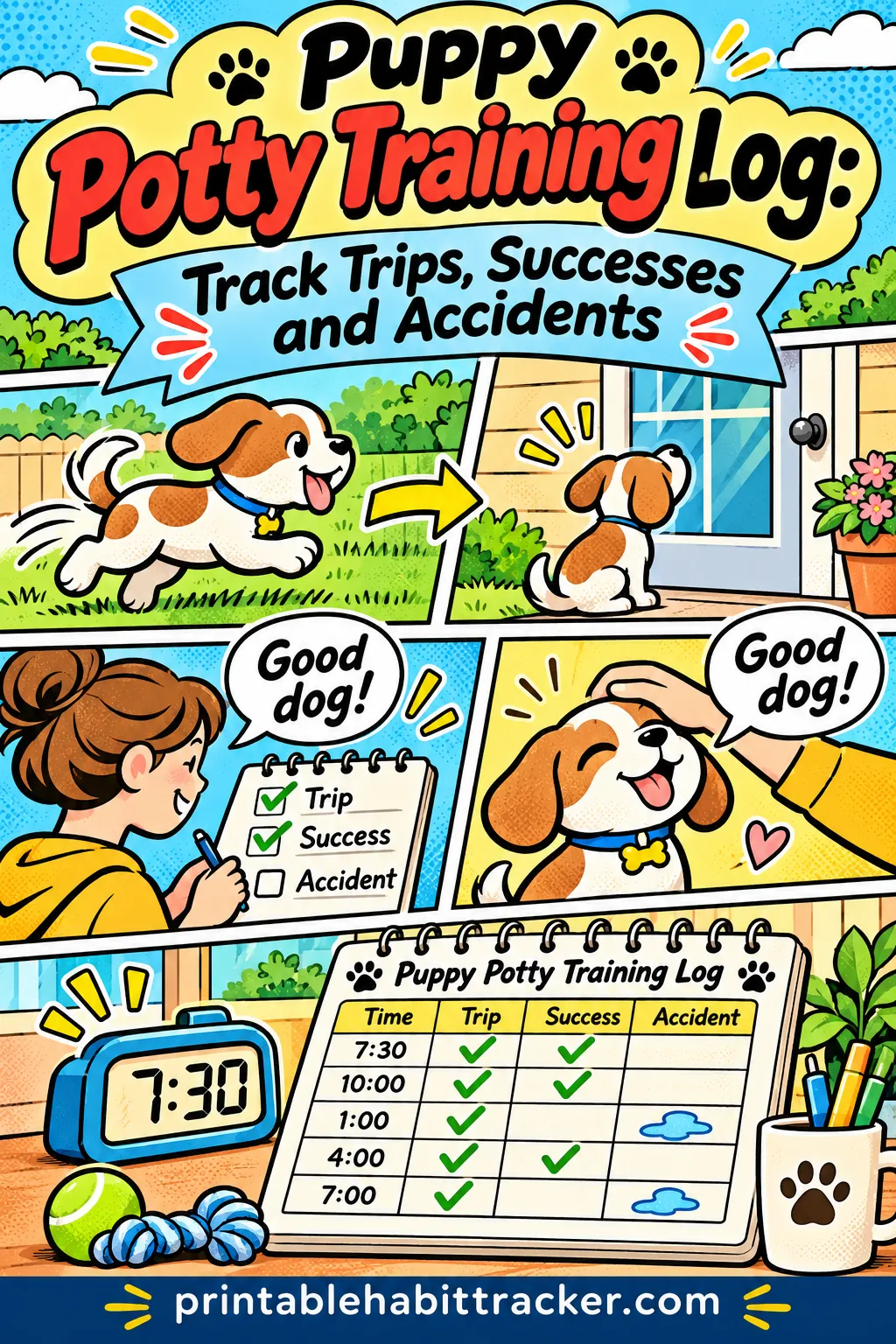
Young puppies usually need to go out after waking, eating, drinking and playing, and every hour or two in between at first. Ask your vet what's normal for your puppy's age. For a log of every trip, use our puppy potty training log.
Who does what? Sharing puppy jobs
A puppy is a family project. Put names on the jobs so nothing gets missed and nobody feeds breakfast twice:
- Breakfast and the morning potty trip
- Midday potty and play (whoever is home)
- Dinner
- Evening brushing and the last trip out
- Filling the water bowl and washing it
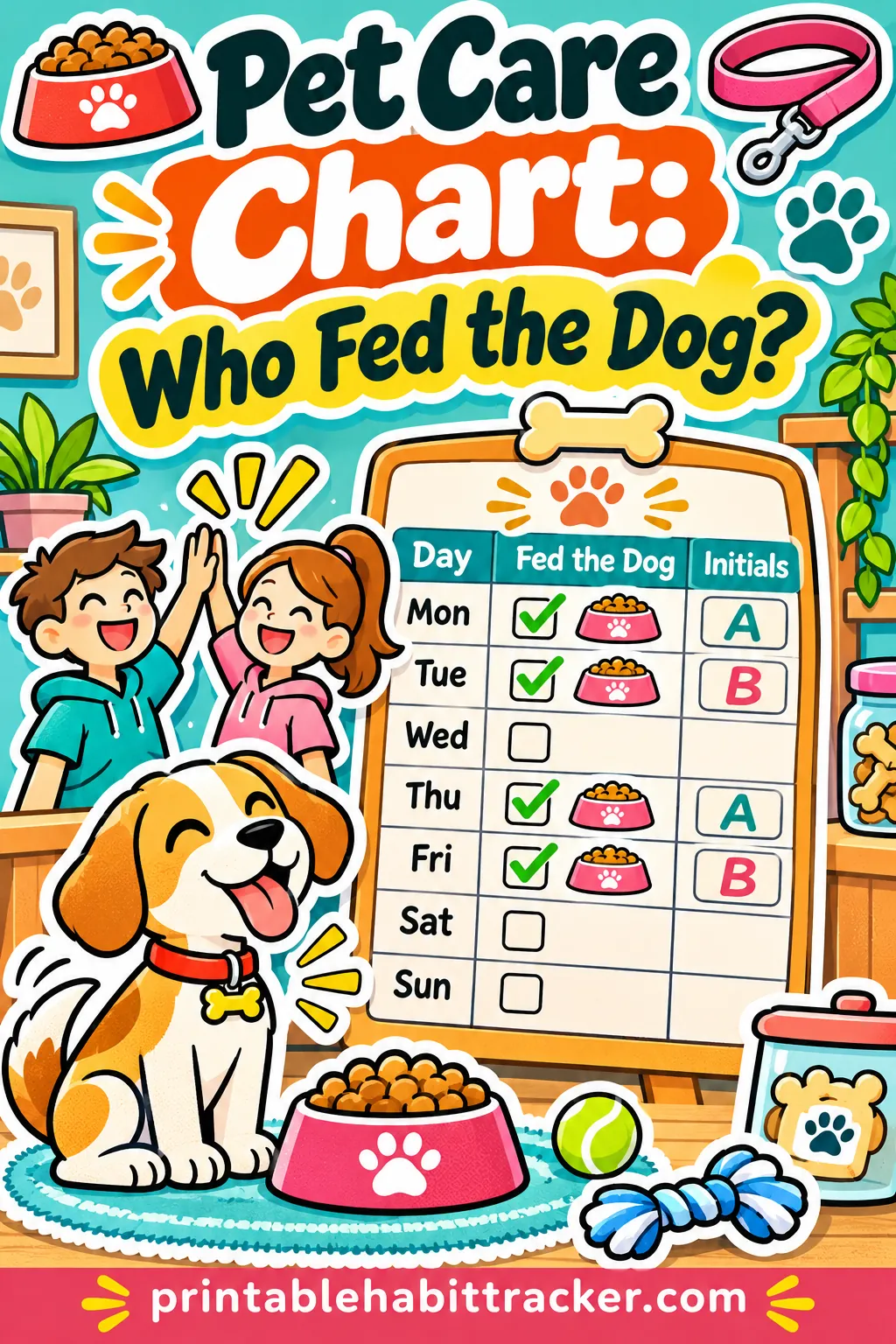
Our pet care chart has a "who fed the dog?" grid with a row for each person.
Puppy safety at home
Puppies explore with their mouths. Keep these out of reach, since they're on the ASPCA's list of foods that are toxic to dogs:
- Chocolate
- Grapes and raisins
- Xylitol, a sweetener in some gum, candy and peanut butter
- Onions and garlic
Also watch medicines, cleaning products, cords, string, ribbon and small toys. If your puppy eats something it shouldn't, call your vet or the ASPCA Animal Poison Control Center right away. Don't wait for signs.
Bringing a puppy home at Christmas
Holidays are busy and loud, which is hard on a brand-new puppy. If a puppy is joining your family in December, keep one quiet room as its space, pick up tinsel, ribbon and ornaments within reach, and keep holiday plants and treats up high. If the household is chaotic until after Christmas, many families give a leash and a photo on Christmas morning and bring the puppy home a week or two later when things are calm.
Common new puppy mistakes
- Too much freedom too soon. One safe room is plenty at first.
- Long training sessions. Five minutes, a few times a day, works better.
- Skipping the vet visit because the breeder or shelter "already did shots." Your vet still needs to see your puppy.
- Scolding accidents. Clean up with an enzyme cleaner and take your puppy out more often.
- Different rules from different people. Write the house rules on the chart.
How to print your puppy routine chart
- Open the free habit tracker maker with the button above. It opens in the weekly layout with the puppy routine.
- Change the title to your puppy's name, like "Biscuit's First Week."
- Edit the rows. Add "brush" or "crate time" if you like.
- Print it and put it on the fridge, with a pen on a string.
Make a separate to-do list for the shopping and vet calls. When you're ready, open the free maker and print week one.
Frequently Asked Questions
What do I need for a new puppy?
A crate, a bed, food and water bowls, the food your puppy already eats, a collar or harness with an ID tag, a leash, chew toys, puppy pads or a cleanup kit, an enzyme cleaner, a brush and treats. Book a vet visit too.
When should a new puppy see the vet?
Most vets like to see a new puppy within the first few days, even if the breeder or shelter already gave shots. Call your vet before the puppy comes home to book the visit and ask what records to bring.
How often does a puppy need to go potty?
Young puppies need to go out often: after waking, after eating or drinking, after playing, and every hour or two in between at first. Ask your vet what's normal for your puppy's age.
What should a puppy's first week look like?
Keep it calm and predictable: the same meal times, potty trips and naps each day, short play and training sessions, gentle handling, and plenty of sleep. Save big outings until your vet says it's safe.
How much should a new puppy sleep?
A lot. Young puppies often sleep 18 hours or more a day. Short naps after play are normal, and a quiet crate or bed spot helps them settle.