Paper vs Digital Habit Tracker: Which Works Better?
A paper habit tracker is a printed or hand-drawn sheet you mark with a pen, while a digital habit tracker is an app or spreadsheet you tap to update. Paper wins on focus, visibility, and the lack of distractions. Digital wins on reminders, automatic stats, and syncing across devices. For most people building new habits, paper keeps them more consistent because it's always in sight and takes one second to use. The quickest way to try it is a free printable habit tracker you can set up and print in under a minute.
Just want to start? Open the free printable habit tracker, add your habits, and print today's sheet. No app, no account, no setup spiral.
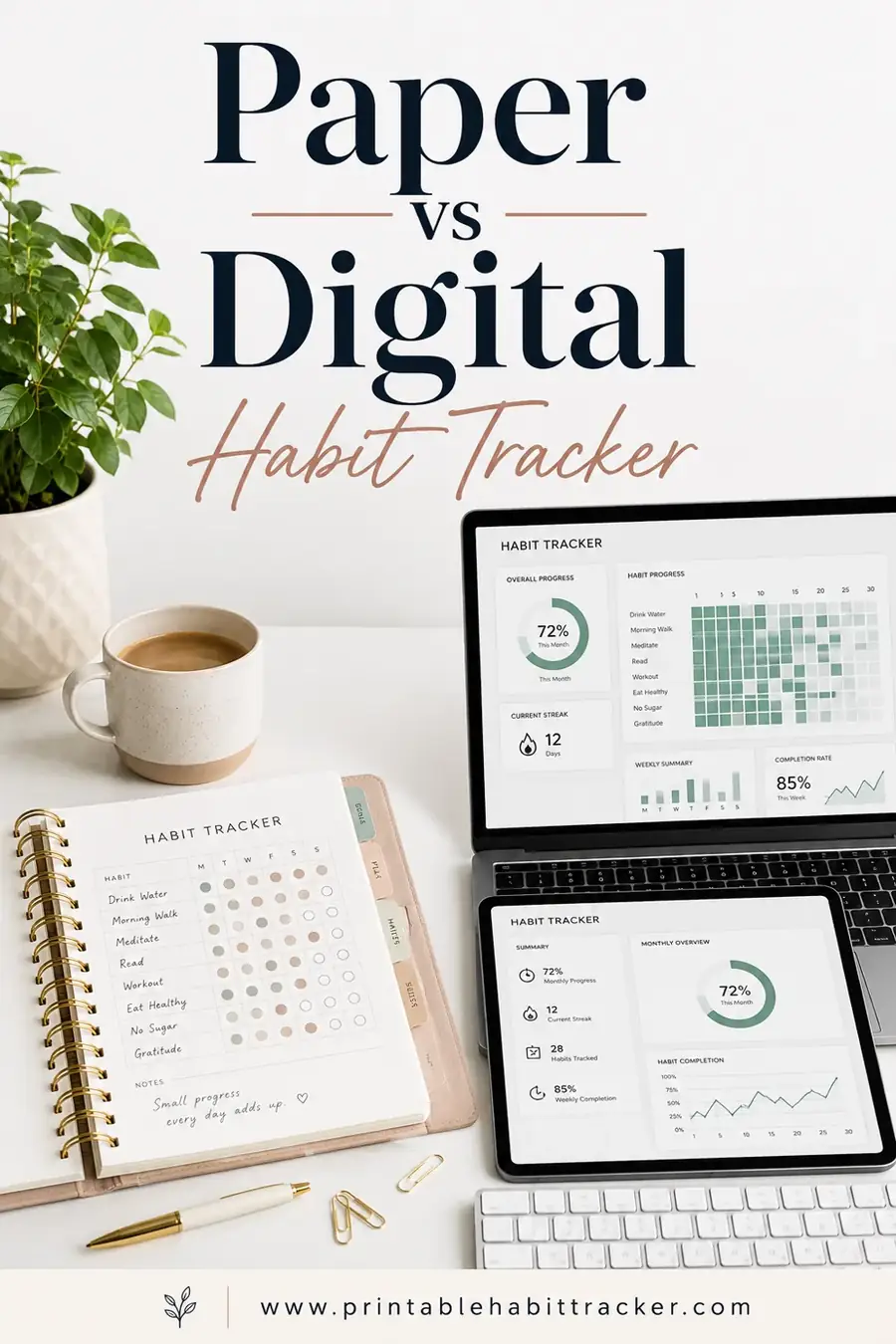
Paper vs Digital at a Glance
Both approaches do the same core job: they record whether you did a habit today. Where they split is in the feel of using them every single day. Here's the quick comparison before the details.
| Factor | Paper habit tracker | Digital habit tracker |
|---|---|---|
| Setup time | Under 1 minute | 5–30 minutes |
| Cost | Free | Free to paid |
| Reminders | You see it on the wall | Push notifications |
| Distraction risk | None | High (phone) |
| Stats & charts | You eyeball it | Automatic |
| Always visible | Yes, if you post it | No, hidden in an app |
| Works offline | Always | Sometimes |
| Best for | Focus, beginners, kids | Data fans, reminders |
There's no universal winner. The better tool is the one that fits the way you live and the way your attention works.
The Case for Paper
Paper sounds old-fashioned until you remember what habits actually need: to be easy and to be seen. Paper nails both.
- It's always visible. Tape it to the fridge or mirror, and it reminds you every time you pass. No notification required.
- Zero distraction. A sheet of paper can't show you a message, a feed, or a tempting app.
- Instant to use. Grab a pen, tick a box, done. No unlocking or loading.
- Nothing to set up. Print it and you're tracking. There's no template to perfect.
- It feels good. Physically crossing off a box gives a small, real reward that a screen tap doesn't quite match.
That visibility is the secret weapon. Out of sight is out of mind, and a tracker on the wall simply refuses to be forgotten.
Where paper falls short
To be fair, paper has limits.
- No automatic stats. You count streaks yourself, though a glance usually does the job.
- No reminders. It can't buzz your pocket. You rely on placing it where you'll see it.
- It can get lost or wet. Keep a spare or print a fresh one monthly. You can reprint instantly.
For most people these are minor. None of them stop you from showing up.
The Case for Digital
Digital trackers are genuinely useful, especially once a habit is established and you want to study the data.
- Reminders. A push notification can nudge you at the right time, which helps if you forget easily.
- Automatic stats. Streaks, percentages, and charts are calculated for you.
- Syncs everywhere. Update on your phone, see it on your laptop.
- Handles lots of habits. A database scales to fifteen habits more cleanly than paper.
- Backed up. Your history is saved and searchable.
If you love data and have the self-control to open the app without falling into a scroll, digital can be powerful.
Where digital gets in the way
The catch is the device itself.
- It lives on your phone. Logging a habit means unlocking the most distracting object you own.
- Friction adds up. A few taps daily is exactly the small resistance that breaks fragile new habits.
- It's hidden. A tracker inside an app is easy to ignore and forget.
- Setup can stall you. Some people spend hours building the perfect system and never log day one.
The Honest Answer: Consistency Beats Features
Here's what most comparisons gloss over. The best habit tracker isn't the one with the most features. It's the one you'll still use on day 20, when you're tired and the shine has worn off.
Digital is brilliant at recording habits. But it asks you to pick up your phone, the very thing most likely to derail you, and it hides your progress in an app. Paper does the reverse: it sits in the open and asks for one second of your day.
For habit formation, visibility and low friction beat features almost every time. That's why plenty of data-loving people still keep a paper tracker on the wall for their daily habits and save the apps for long-term analysis.
When Paper Is the Better Choice
Reach for a printable habit tracker if:
- You're starting a brand-new habit and want it to stick.
- Your phone is a known distraction.
- You want your progress where you'll see it.
- You're tracking with a kid, partner, or your household.
- You just want to begin today with zero fuss.
For beginners especially, paper removes every excuse between you and a checked box.
When Digital Is the Better Choice
Reach for a digital tracker if:
- You're tracking many habits and want them organized in a database.
- You genuinely need reminders to remember.
- You love charts and want long-term trend data.
- You have the discipline to open the app without scrolling.
If that's you, an app can work well. Just keep your tracker simple so logging stays a quick job.
A Sample Week With Each
To make it real, here's how a single habit, "move for 30 minutes," might feel across one week.
| Day | Paper tracker | Digital tracker |
|---|---|---|
| Mon | See it on the fridge, tick the box | Unlock phone, open app, tap box |
| Tue | Walk past, tick box | Forget; app stayed closed |
| Wed | Tick box in 2 seconds | Tap box, get pulled into a feed |
| Thu | Tick box | Forget again |
| Fri | See the streak growing, tick box | Open app, admire the chart |
| Sat | Tick box | Skip; didn't open phone to log |
| Sun | Already current, review at a glance | Backfill three days from memory |
The paper version isn't fancier. It's just much harder to skip.
You Can Use Both
You don't have to choose a side forever. A simple hybrid works great:
- Keep the printable on the wall for daily logging, where it nudges you.
- Copy results into an app weekly if you want charts and trends.
- Let paper do the nagging and digital do the analysis.
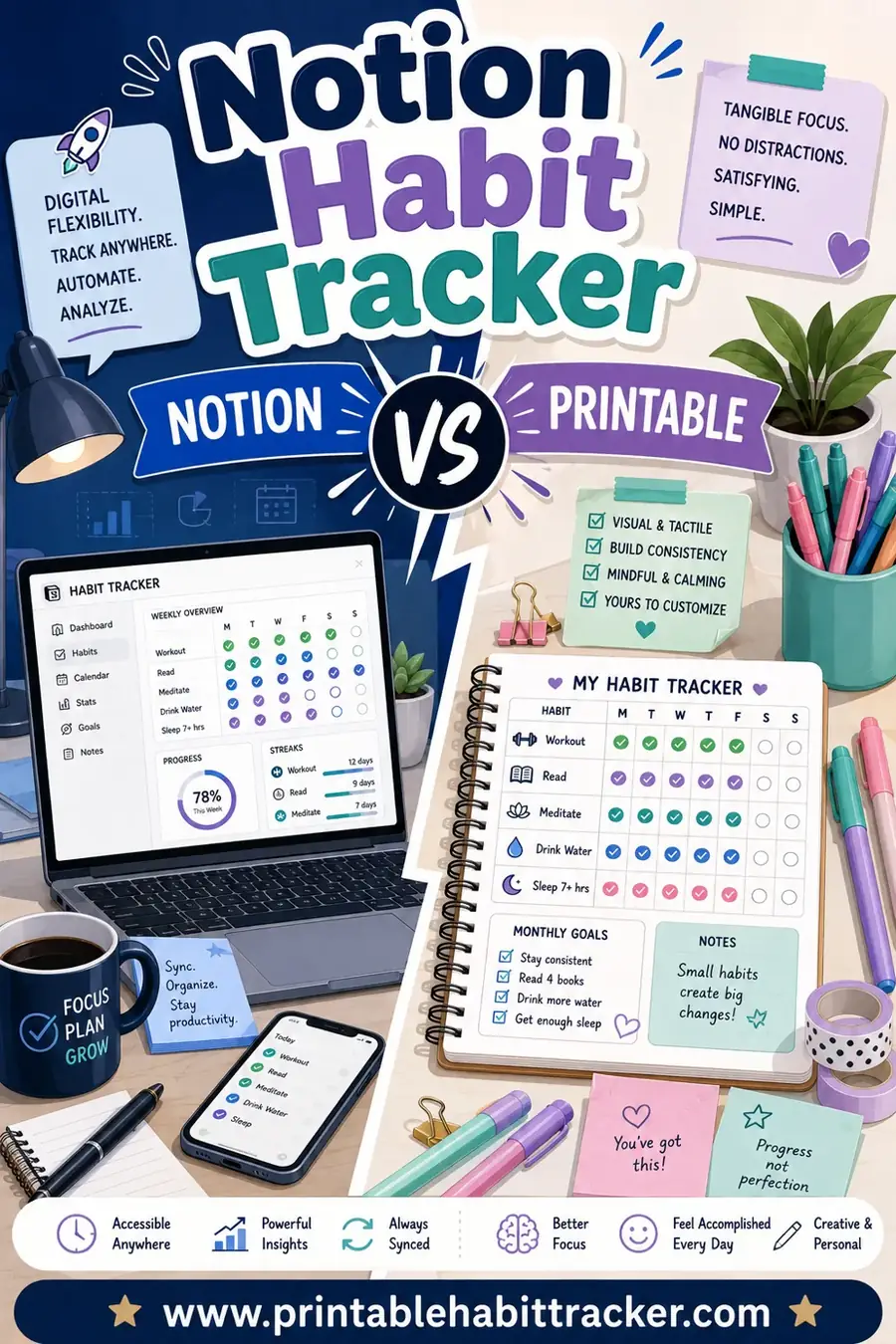
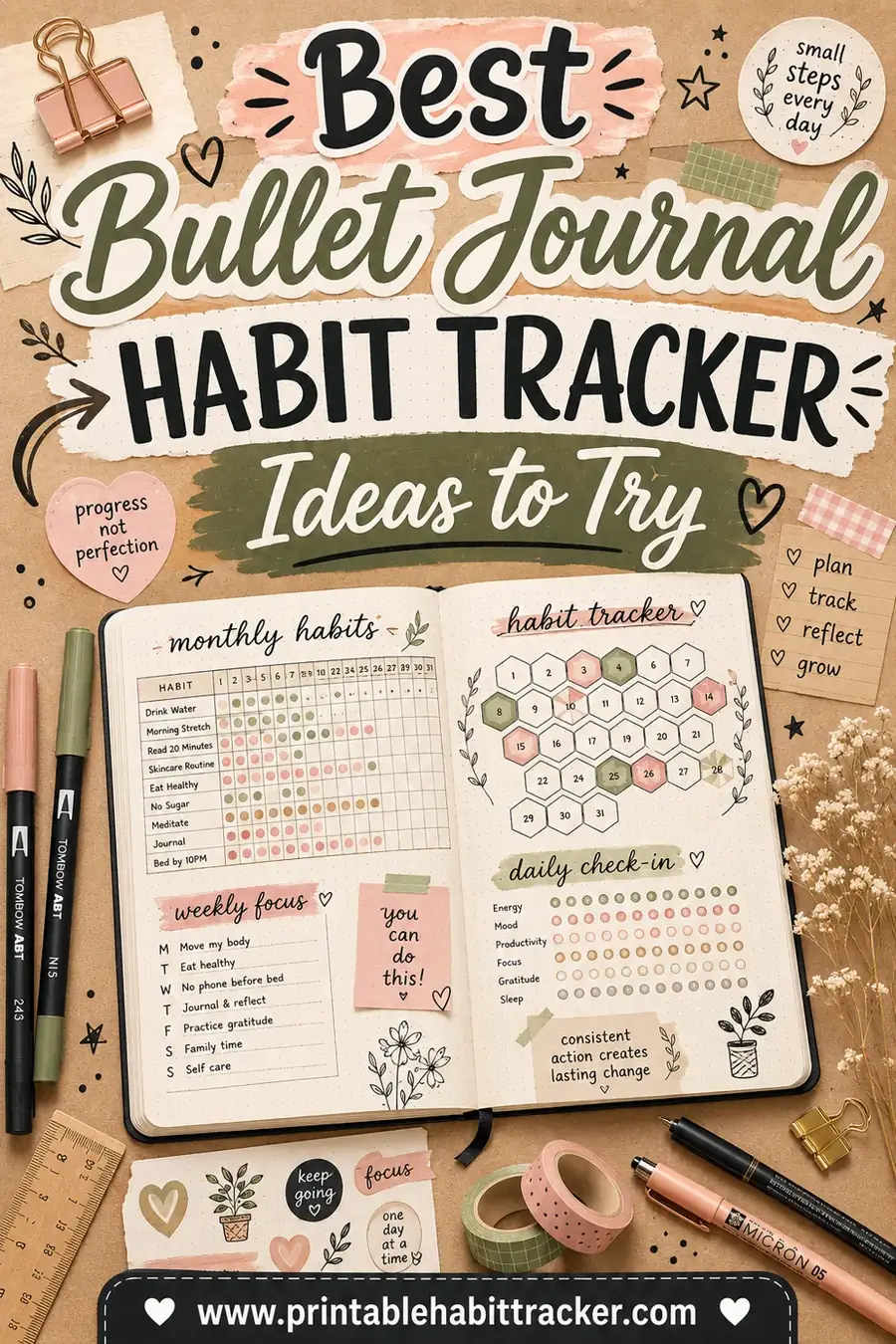
This gives you paper's consistency and digital's insights, without forcing either to do its weak job. Curious how a specific app stacks up? See Notion habit tracker vs printable. Want layout inspiration? Try our best bullet journal habit tracker ideas.
Why Friction Decides Everything
If you remember one idea from this comparison, make it this: the harder a habit is to log, the less likely you are to keep doing it. Behavior tends to follow the path of least resistance, and habit tracking is no exception.
A paper tracker on the wall has almost zero friction. The cue (seeing the sheet) and the action (ticking a box with the pen beside it) happen in the same second, in the same spot. A digital tracker stacks up friction quietly: unlock, find the app, wait for it to load, navigate to today, tap. None of those steps is hard on its own, but together they form a small wall, and on a tired day a small wall is enough to make you skip it.
This is also why the app's distraction problem is so costly. The moment your phone is in your hand "just to log a habit," you're one notification away from losing twenty minutes. Paper never opens that door. It does one job and then sits quietly until tomorrow.
How to Choose in 30 Seconds
If you're still on the fence, this quick gut-check usually settles it. Ask yourself three questions.
- Is my phone a distraction for me? If yes, lean paper. The tracker shouldn't live on the thing that derails you.
- Am I building a new habit or analyzing an old one? New habits favor paper's visibility and low friction. Long-established habits you want to study favor digital's charts.
- Will I really open an app every day? Be honest. If the answer is "probably not," paper's always-visible nature does the remembering for you.
Most people building real, daily habits land on paper for the active work and reach for digital only when they want a month-end overview. There's no shame in using the simpler tool; the goal is the habit, not the gadget.
Setting Up a Paper Tracker That Lasts
To get paper's full benefit, placement matters as much as the sheet itself. Put it somewhere you physically cannot avoid: the fridge door, the bathroom mirror, the inside of your front door, or taped to the corner of your monitor. The best spot is wherever you already stand at the moment the habit should happen.
Keep a pen attached or nearby so there's never a "where's a pen" excuse. Print a fresh sheet at the start of each week or month so a clean grid greets you, and file the old ones if you like keeping a record. These tiny choices are what turn a printable from a nice idea into a habit you actually keep.
What People Get Wrong About This Debate
A common mistake is treating this as a question of which tool is more advanced. It isn't. Digital trackers are objectively more capable, and that fact misleads a lot of people into choosing the one that looks more impressive rather than the one that fits how they behave. Capability is not the same as usefulness. A tool you forget to open has zero capability in practice, no matter how many charts it could have made.
Another mistake is assuming you have to commit forever. You don't. The smart move is to match the tool to the stage you're in. When a habit is brand new and fragile, choose whatever makes logging effortless and visible, which is almost always paper. Once the habit is rock solid and you're curious about long-term patterns, layering in a digital view costs you nothing because the habit no longer needs babysitting.
The last trap is perfectionism. People abandon both paper and apps the moment they break a streak, as if one gap erased the progress. It didn't. A tracker with a few blank boxes and a long run of filled ones is a success story, not a failure. The blanks are just the days you're human. Keep filling the next box, and the overall pattern, which is the only thing that matters, keeps climbing.
Frequently Asked Questions
Is paper or digital better for building a new habit?
Paper usually wins for brand-new habits. It's always visible and takes one second to mark, which removes the friction that breaks most early habits. Digital becomes more useful later, once the habit is established and you want trend data.
Are digital habit trackers worth it?
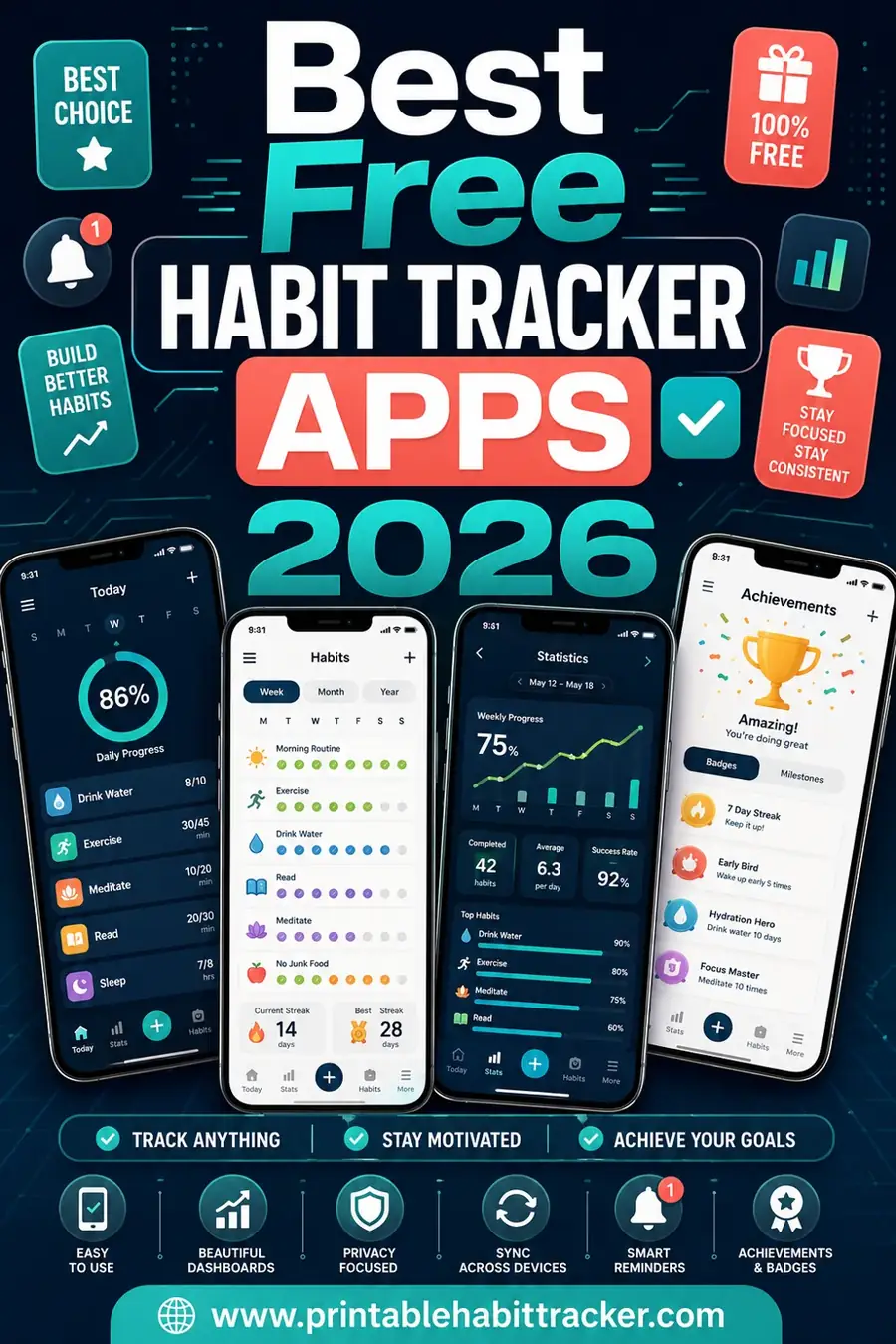
They can be, especially if you need reminders or you're tracking many habits and love data. The downside is that they live on your phone, which is the biggest distraction most of us own. If consistency is the goal, a printable is often the safer bet.
Can a paper tracker give me stats?
Not automatically, but you don't need much. A quick glance shows your streak and your gaps. If you want real charts, photograph each finished month or copy your results into a spreadsheet weekly.
Won't I lose my paper tracker?
Only if you misplace the sheet, and that's easy to guard against. Snap a photo of each completed month, or print a fresh one monthly and file the old ones. The data is as safe as you make it.
Which is better for kids?
Paper, clearly. Kids respond far better to a colorful chart on the fridge with stickers than to an app. It's visual, hands-on, and rewarding, which is exactly what builds habits early.
Can I switch from digital to paper later?
Of course. Many people start on paper to build consistency, then move to an app once the habit is locked in and they want long-term analytics. There's no rule that says you must commit to one forever.
Ready to Start the Simple Way?
Digital trackers are great if you love data and need reminders. But if your real goal is showing up every day, paper is the simpler, stickier choice. Open the free printable habit tracker, add your habits, and print today's sheet in under a minute. It's free, there's no sign-up, and the one feature that matters, getting you to check the box, is the one paper does best.