Best Habit Tracker for Students (Free & Printable)
The best habit tracker for students is a simple printable sheet that keeps study, sleep, and self-care visible without becoming one more thing to manage on a phone. Paper works especially well for students because it sits on the desk or wall as a constant nudge and can't pull you into a scroll the way an app can. The fastest way to start is a free printable habit tracker you can customize for your classes and routines in under a minute.
Want to skip ahead and just start? Open the free printable habit tracker, add your study and self-care habits, and print a sheet for your desk. No login, no fee, no distraction.
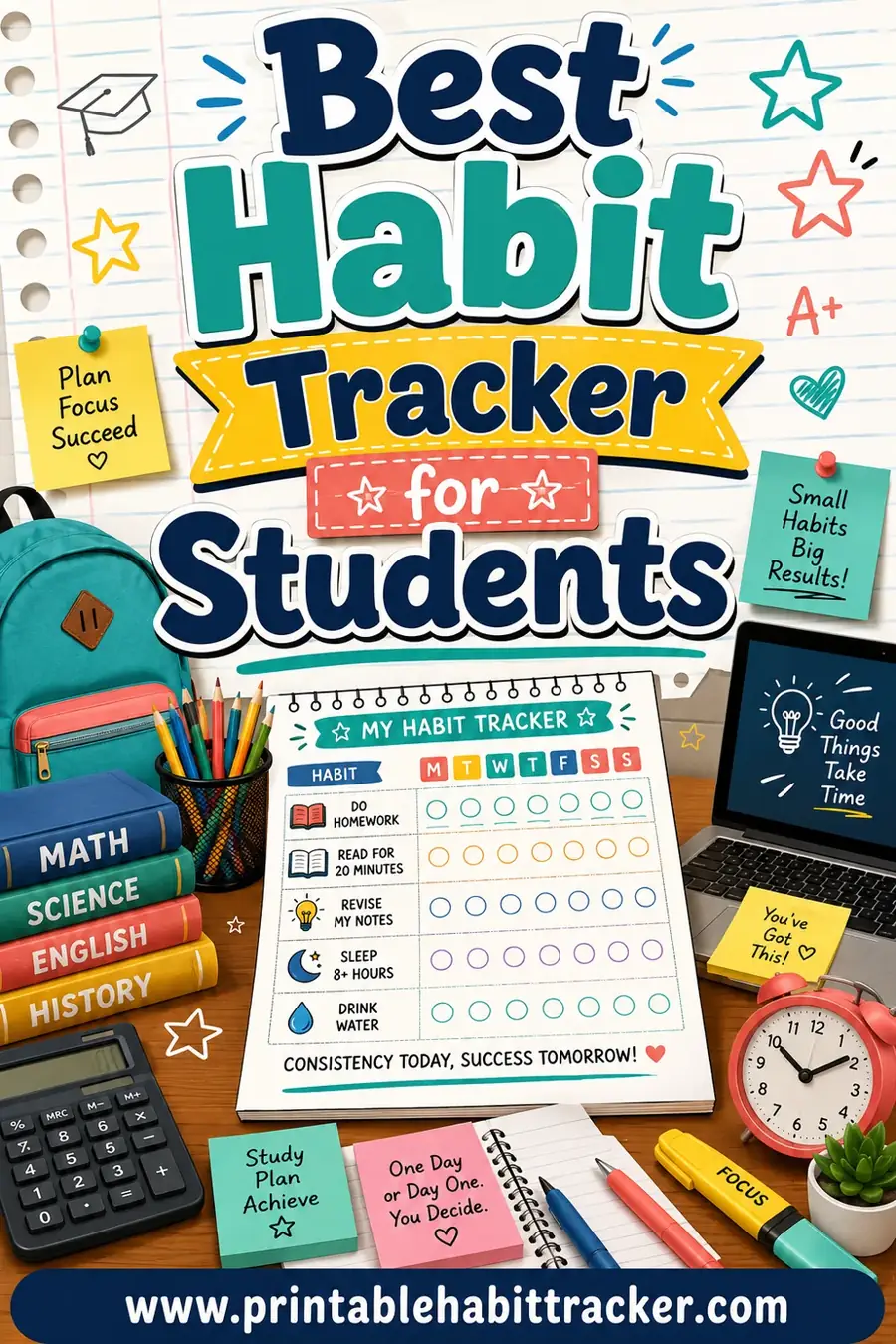
Why a Habit Tracker Helps Students
School runs on routines, and a habit tracker turns "I should study more" into a clear yes-or-no you can see. Instead of a vague guilty feeling, you get a row of boxes that either gets filled or doesn't.
For students specifically, a tracker delivers a few real benefits.
- It builds consistency. Studying a little every day beats cramming, and a tracker keeps that daily habit honest.
- It protects the basics. Sleep, water, and movement are the first things to vanish during exams. A tracker keeps them on your radar.
- It shows progress. A growing streak is genuinely motivating, especially during stretches when grades feel far away.
- It reduces decision fatigue. When your habits are on a sheet, you spend less energy deciding what to do next.
The trick is keeping it simple enough that it helps rather than becoming homework itself.
Why Paper Beats an App for Students
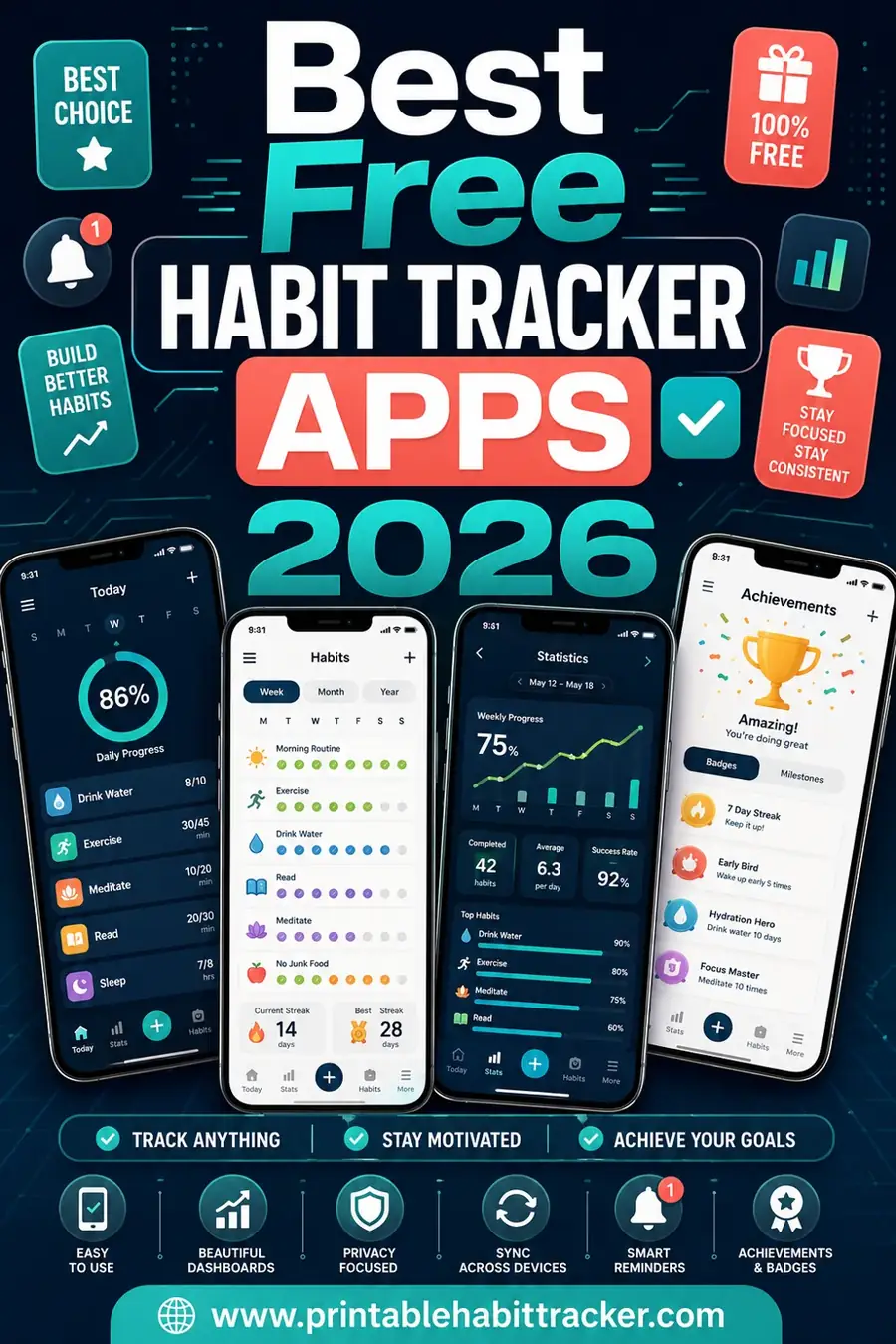
Plenty of habit apps exist, but for students they come with a built-in trap: they live on the device most likely to derail a study session. Here's the honest comparison.
| Factor | Printable tracker | Habit app |
|---|---|---|
| Distraction risk | None | High (phone, notifications) |
| Setup | Print once, under a minute | Download, sign up |
| Visibility | On your desk, always seen | Hidden in an app |
| Cost | Free | Free to paid |
| Reminders | The sheet itself | Push notifications |
| Stats | Glance at it | Automatic |
| Focus-friendly | Yes | Depends on willpower |
Apps aren't bad, and if you genuinely need reminders they can help. But for students, the printable's biggest advantage is that it doesn't require touching your phone, which means it can't pull you into a 30-minute detour. You can print a fresh sheet each week for free.
Habits Worth Tracking as a Student
The best student trackers balance schoolwork with the basics that keep you functioning. Here's a menu to choose from.
| Study | Wellbeing | Routine |
|---|---|---|
| Study 1 hour | Sleep 7+ hours | Make the bed |
| Review notes | Drink water | Pack bag tonight |
| No-phone study block | Move 30 min | Plan tomorrow |
| Read assigned pages | Eat a real breakfast | Tidy desk |
| Practice problems | Take breaks | Check the calendar |
| One hard task first | Step outside | Inbox/email check |
Pick three to six to start. It's tempting to track everything, but a shorter list is far easier to keep up during a busy term.
Best Layouts for Students
The right format depends on how your schedule works.
Weekly tracker
A 7-day grid you reset every week. It's perfect for students because the school week is your natural unit, and a fresh start each Monday keeps a bad week from dragging you down. This is the best starting layout for most students.
Monthly grid
List your habits down the side and number the days across the top. Great if you want to see a whole month of progress at once and spot patterns, like how your sleep tanks during exam weeks.
Subject-based tracker
Instead of generic habits, make each row a subject and track study time per class. Ideal during finals when you need to make sure no subject gets ignored.
If drawing any of these by hand sounds like a chore you'll skip, print a ready-made layout and tape it up.
How to Set Up Your Student Tracker
The whole thing takes a few minutes. Here's the process.
- Pick your habits. Choose three to six, mixing study goals with basics like sleep and water.
- Choose a layout. A weekly grid is the safest first choice.
- Print it. Use the free printable habit tracker to generate a clean sheet with your habits labeled.
- Put it where you study. Tape it above your desk or inside a folder you open daily.
- Tick it once a day. Make it the last thing you do before closing your books. Ten seconds, done.
Keeping it on your desk, not your phone, is the whole point. The sheet nudges you every time you sit down to work.
Habit Tips for Exam Season
Exams are exactly when good habits fall apart, so this is where a tracker earns its keep.
- Protect sleep first. A tired brain doesn't retain much. Make "sleep 7+ hours" a tracked habit and guard it.
- Track study time, not just "studied." A box for each focused hour stops you fooling yourself with five distracted minutes.
- Add a "took a break" row. Real breaks prevent burnout. Tracking them gives you permission to rest without guilt.
- Don't add new habits mid-exams. Stick to your core few. Now's not the time to overhaul your life.
The goal during exams isn't a perfect tracker. It's keeping the few habits that protect your focus and health.
Mistakes Students Make With Trackers
A few traps to dodge so your tracker actually helps.
- Tracking too much. Ten habits feels great on day one and crushing by day five. Start small.
- Using the app version mid-study. Reaching for your phone to log a habit often ends in a scroll. Paper sidesteps this entirely.
- Quitting after one bad week. A missed week isn't failure. Reset on Monday and keep going.
- Tracking vague goals. "Study more" is hard to mark. "Study 1 hour" is a clear yes or no.
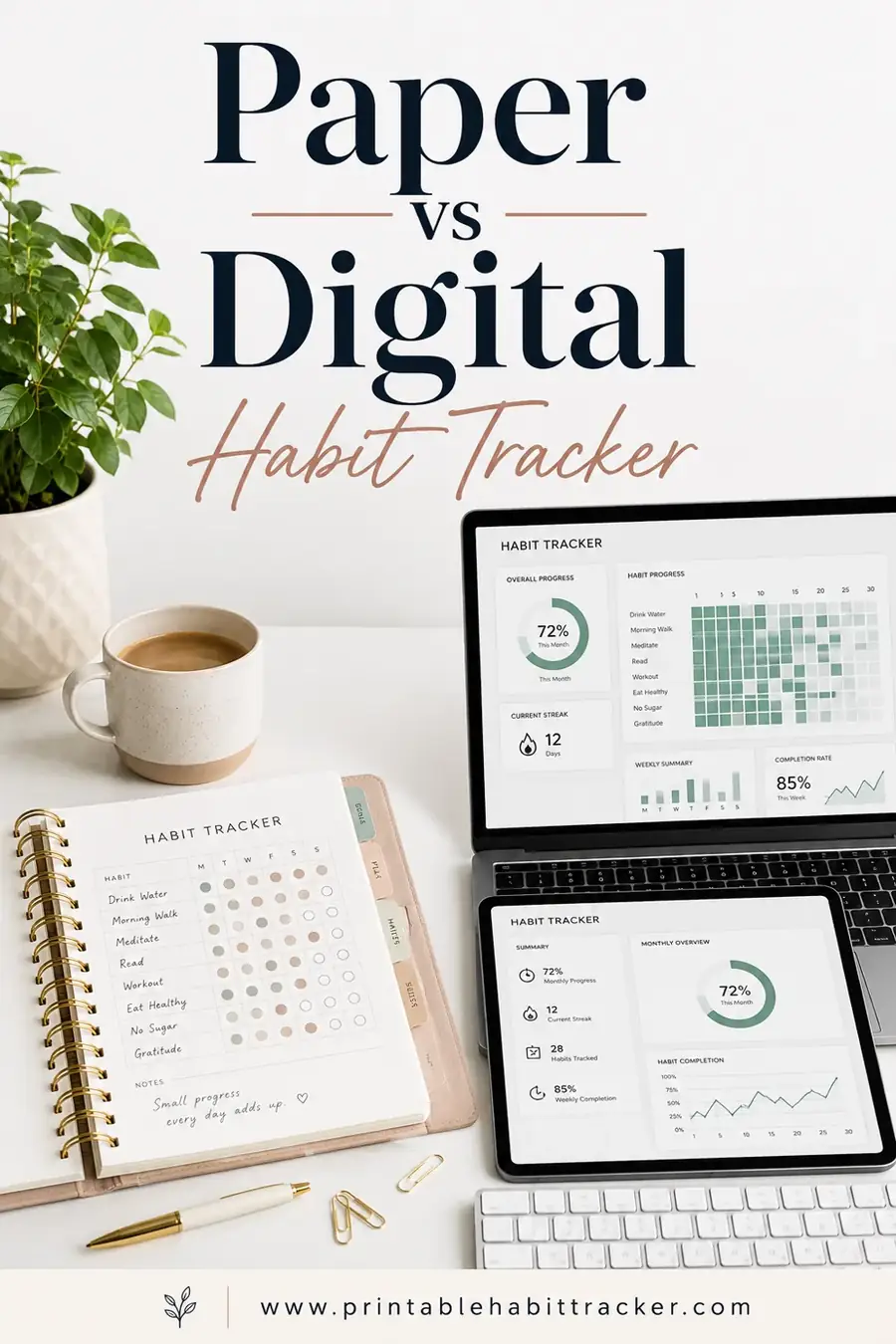
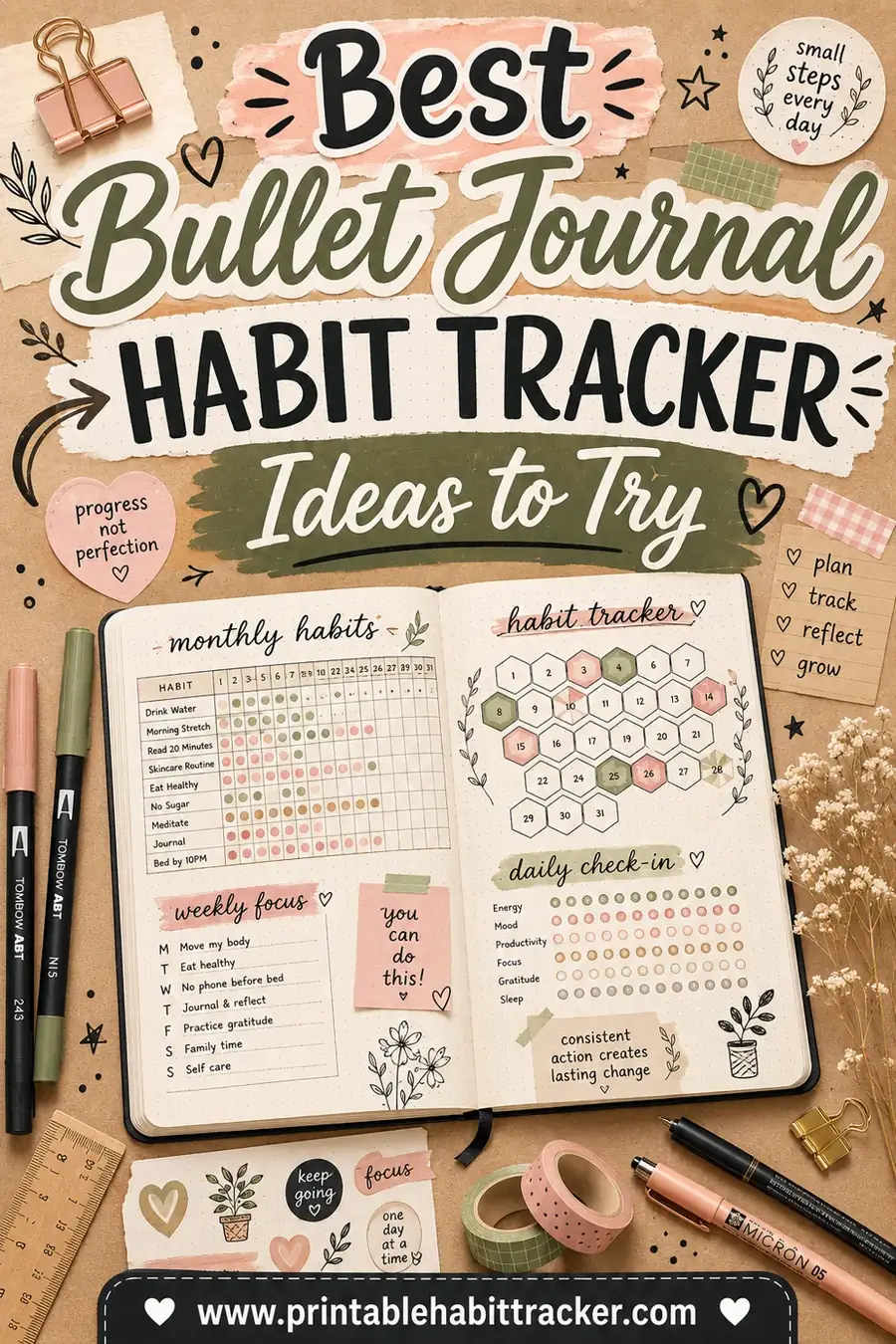
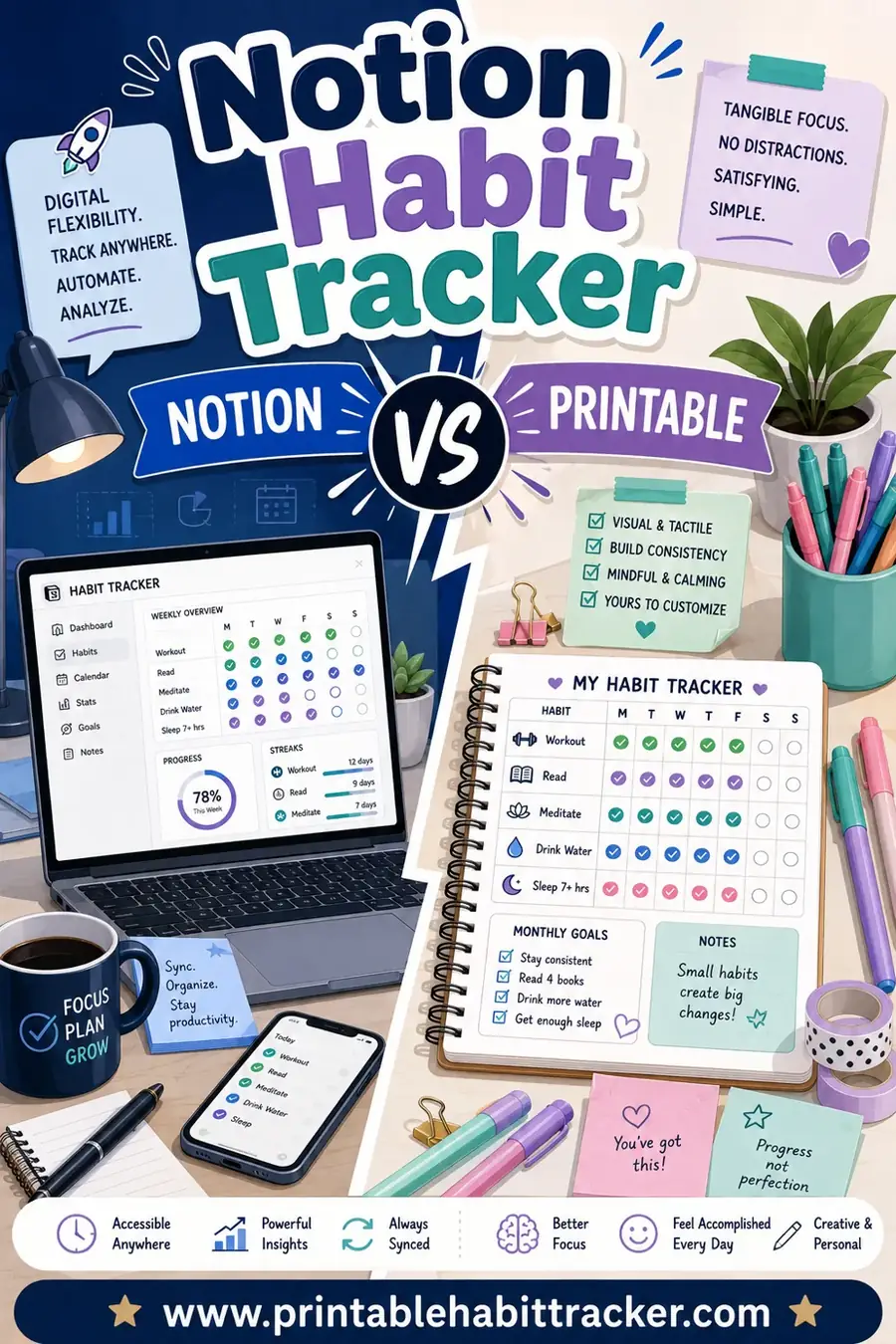
Want to dig into why paper wins for focus? See our paper vs digital habit tracker comparison. Tracking a lot of habits and wondering if an app is worth it? Read Notion habit tracker vs printable. For layout inspiration, browse our best bullet journal habit tracker ideas.
Building a Study Habit That Actually Sticks
Tracking studying is easy; the hard part is making the studying itself a habit. A tracker helps most when you pair it with a couple of simple tactics.
First, anchor your study block to something you already do every day. "After dinner, I study for one hour" is far stickier than "I'll study at some point." The existing routine becomes the cue, and the tracker confirms you followed through. Over a few weeks, the box stops being a reminder and starts being a record of something automatic.
Second, make the bar low enough that you never dread it. A habit of "open the textbook and read one page" almost always turns into more once you've started, and on a rough day it still counts. The goal early on is to keep the chain unbroken, not to study for marathon sessions. Consistency builds the habit; intensity can come later.
Third, review your tracker weekly, not just daily. On Sunday, look back at the week and ask what got in the way of your missed boxes. Maybe the timing was wrong, or you tried to track too much. Adjusting based on what you actually see beats guessing, and it keeps the tracker working for you instead of guilt-tripping you.
Helping Younger Students Use a Tracker
If you're a parent or teacher setting this up for a younger student, a few tweaks go a long way. Keep the habit list tiny, three at most, and make them concrete: "read for 15 minutes," "pack the school bag," "tidy the desk." Vague goals confuse kids the same way they confuse adults.
Lean into the visual. A colorful sheet on the wall with stickers or a bright marker turns tracking into something a kid wants to do. Celebrate streaks out loud, and treat a missed day as no big deal so the tracker never becomes a source of stress. For young students, the tracker's real job is teaching the idea that small daily actions add up, a lesson that pays off for years.
From One Term to the Next
A nice thing about a printable tracker is how easily it adapts when your schedule changes. New term, new classes, new routine? Print a fresh sheet and relabel the rows. There's no app to reconfigure and no old data cluttering the view. You get a clean start that matches your actual life right now, which is exactly what a student's ever-shifting schedule needs.
Beating Procrastination With a Tracker
Procrastination thrives on vagueness. "I'll study later" has no edges, so it slides endlessly into "later." A tracker fights this by turning a fuzzy intention into a concrete, checkable target sitting in front of you. When the box for today's study block is still empty at 8 p.m., it's a lot harder to keep pretending you'll get to it.
The trick is to make the target small enough that starting feels easy. Procrastination is usually about dread of a big task, so shrink the entry point. Instead of "study chemistry," your tracked habit becomes "open the notes and read for ten minutes." Almost always, the hardest part is starting, and once you've started you keep going well past the ten minutes. The box just gets you over the first hump.
Pairing the tracker with a visible deadline helps too. Note upcoming due dates near your habit grid so the daily boxes feel connected to real consequences. A student who can see both "essay due Friday" and a row of empty study boxes is far more likely to fill one in tonight. The tracker makes the link between today's small action and this week's real stakes impossible to ignore.
Tracking Habits Without Burning Out
It's easy to swing too hard at the start of a term, packing your tracker with ambitious habits and then collapsing under them by week three. Avoid that by treating your habits as a small, stable core rather than a wishlist. Three to five steady habits you actually keep will do more for your grades and wellbeing than ten you abandon.
Build rest into the system on purpose. A "took a real break" habit gives you permission to recharge without guilt, and a planned day off shouldn't read as a failed streak. Students who protect their downtime study better when they do sit down. The tracker should support a sustainable rhythm, not push you toward burnout, and the best one is always the modest one you'll still be using when finals arrive.
A Sample Student Week
Here's how a simple weekly tracker might look after one school week.
| Habit | Mon | Tue | Wed | Thu | Fri |
|---|---|---|---|---|---|
| Study 1 hour | ✓ | ✓ | — | ✓ | ✓ |
| Sleep 7+ hrs | ✓ | ✓ | ✓ | — | ✓ |
| Drink water | ✓ | ✓ | ✓ | ✓ | ✓ |
| Move 30 min | — | ✓ | ✓ | — | ✓ |
One look tells you everything: a strong water streak, a couple of missed workouts, and one late night. That's all the data a student needs to adjust next week.
Frequently Asked Questions
What's the best habit tracker for students?
A simple printable weekly tracker is hard to beat. It keeps study and self-care habits visible on your desk without living on your phone, which means it can't pull you into a distraction mid-study. You can set one up free in under a minute.
How many habits should a student track?
Start with three to six. Mix a couple of study habits with basics like sleep, water, and movement. A short list is far easier to keep up during a busy term, and you can always add more once the first few feel automatic.
Is a paper or app habit tracker better for students?
Paper usually wins for students because it doesn't live on the phone, the thing most likely to derail a study session. Apps can help if you genuinely need reminders, but a sheet on your desk keeps habits visible without any temptation to scroll.
What habits should students track during exams?
Protect the basics first: sleep, water, and real breaks, plus tracked study time per subject. Avoid adding brand-new habits mid-exams. The goal is keeping the few routines that guard your focus and health, not building an elaborate system.
How do I stay consistent when school gets busy?
Keep your tracker on your desk so it nudges you, log it once a day as the last step before closing your books, and use a weekly layout so a bad week resets on Monday. Small and visible beats ambitious and forgotten.
Can I track study time for each subject?
Yes. Make each row a subject and tick a box for every focused study hour. This subject-based layout is especially useful during finals, when you want to make sure no class gets neglected. A printable makes it easy to relabel rows each term.
Ready to Build Your Student Tracker?
The best habit tracker for students is the one that keeps your study and self-care on track without becoming another phone distraction. A simple printable on your desk does exactly that. Open the free printable habit tracker, add your habits, and print a sheet today. It's free, there's no sign-up, and it quietly keeps you consistent through even the busiest term.