Best Habits to Track for Health (and How to Start)
The best habits to track for health are the small, daily ones that quietly add up: drinking water, moving your body, sleeping enough, eating a vegetable or two, and taking a moment to breathe. You don't need to track all of them at once. Pick three or four, mark them off each day, and let the streak pull you forward. The easiest way to stay consistent is to print a simple habit tracker and keep it somewhere you'll see it.
Want to start right now? Open the free habit tracker, choose a handful of the habits below, and print a clean grid you can check off every morning. No app, no sign-up, no subscription.
Why Tracking Health Habits Actually Works
Here's the simple truth: you can't improve what you don't notice. Most of us think we drink enough water or move enough during the day. Then we start ticking boxes and realize the picture is messier than we assumed.
A habit tracker turns a vague intention into something you can see. Each checkmark is a tiny win. Miss a day, and the blank square nudges you to get back on track tomorrow. That visible streak is surprisingly motivating, and it costs nothing to set up.
The goal isn't perfection. It's showing up most days. A row that's checked five out of seven days is a genuine success, and it's far better than waiting until you can do something flawlessly.
The Best Health Habits to Track
You don't need a long list. The habits below cover the basics that make the biggest difference to how you feel day to day. Pick a few that fit your life right now.
| Habit | Why it matters | Easy starting point |
|---|---|---|
| Drink water | Energy, focus, digestion | One glass before each meal |
| Move your body | Heart, mood, strength | A 10-minute walk |
| Sleep on time | Recovery, mood, focus | Lights out 15 min earlier |
| Eat a vegetable | Nutrition, fullness | One veggie at lunch |
| Stretch | Flexibility, less stiffness | 5 minutes after waking |
| Step outside | Mood, vitamin D | Morning daylight walk |
| Breathe / unwind | Stress, calm | 3 slow breaths |
| Limit screen time | Sleep, focus | No phone in bed |
Start with three or four rows, not all eight. A tracker that's too crowded feels like a chore, and chores get abandoned. You can always add a row once the first ones feel automatic.
Drink more water
Water is the easiest win on this list. A simple way to track it: aim for a set number of glasses and check a box for each. Keep a bottle on your desk so the cue is always in sight.
Move every day
Movement doesn't mean a workout. A walk counts. Taking the stairs counts. The point is to make "did I move today?" a yes more often than a no. Track minutes or just a single checkmark for "got moving."
Protect your sleep
Sleep is the habit people skip first and regret most. Track a consistent bedtime rather than total hours, since the time you go to bed is the part you actually control. A row that says "lights out by 11" is easy to mark.
How Many Habits Should You Track at Once?
Fewer than you think. When people start, they want to overhaul everything at once. That almost always backfires.
- Just starting? Track 1–3 habits. Build the habit of tracking before you stack on more.
- Got a routine going? 4–6 habits is a comfortable sweet spot.
- Habit veteran? You can run more, but keep an eye out for "checkbox fatigue."
If you find yourself dreading the tracker, you've taken on too much. Cut a row or two. A short list you actually fill in beats a long one you ignore.
A Sample Week to Copy
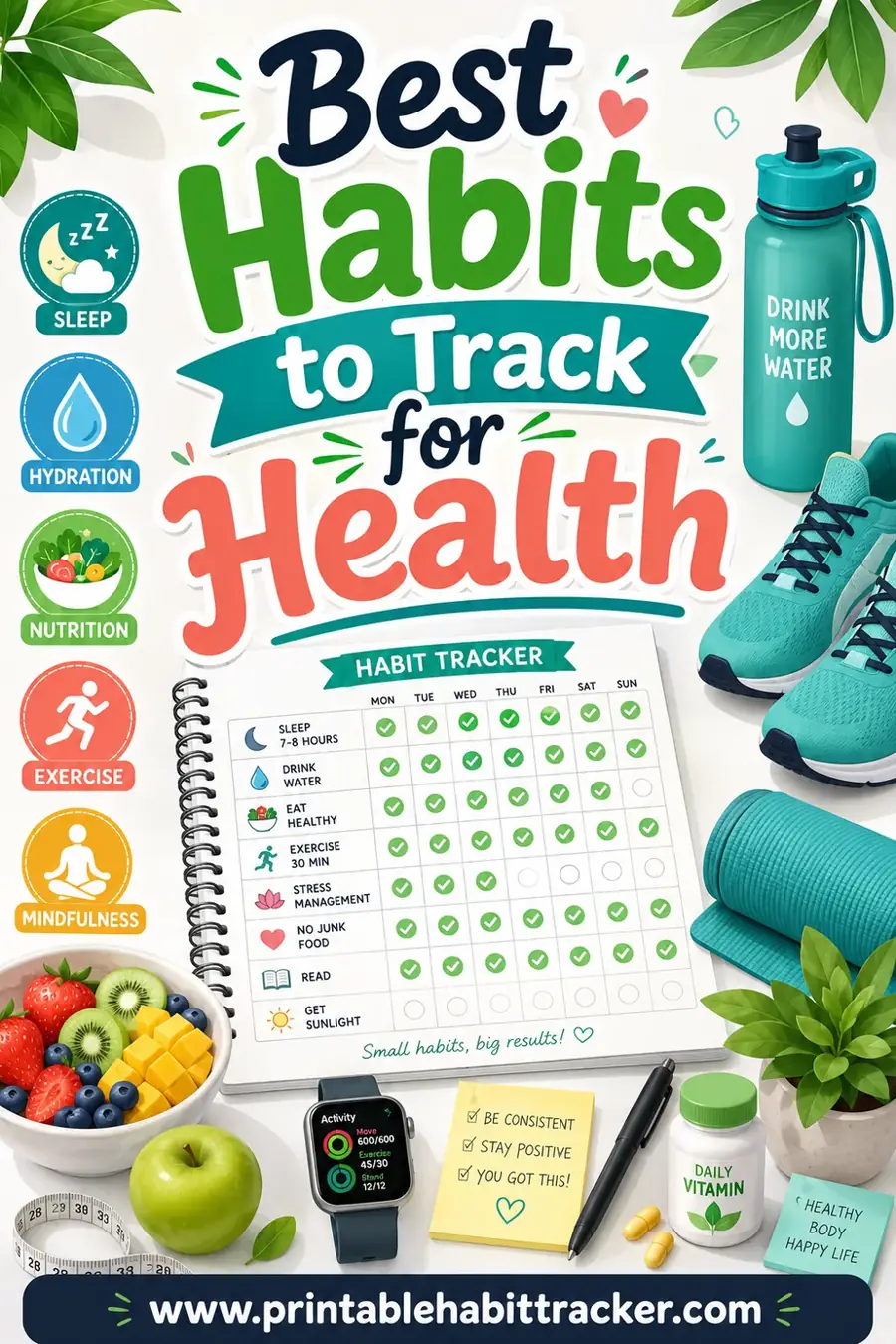
Not sure what a realistic week looks like? Here's a simple, doable layout for someone just getting started. Notice it isn't a perfect score, and that's the point.
| Habit | Mon | Tue | Wed | Thu | Fri | Sat | Sun |
|---|---|---|---|---|---|---|---|
| Drink water | ✅ | ✅ | ✅ | ⬜ | ✅ | ✅ | ✅ |
| 10-min walk | ✅ | ✅ | ⬜ | ✅ | ✅ | ⬜ | ✅ |
| Lights out by 11 | ⬜ | ✅ | ✅ | ✅ | ⬜ | ⬜ | ✅ |
| One veggie | ✅ | ✅ | ✅ | ✅ | ✅ | ✅ | ⬜ |
Five out of seven on most rows is a strong week. When you see a row slipping, that's your signal to make the habit easier, not to give up on it.
How to Build Your Own Health Tracker
You don't need anything fancy. Here's the whole process, start to finish.
- Pick your habits. Choose three or four from the list above. Write the exact action, like "walk 10 minutes," not a vague goal like "be active."
- Choose your time frame. A weekly grid is great for beginners. A monthly grid is better once your habits feel steady.
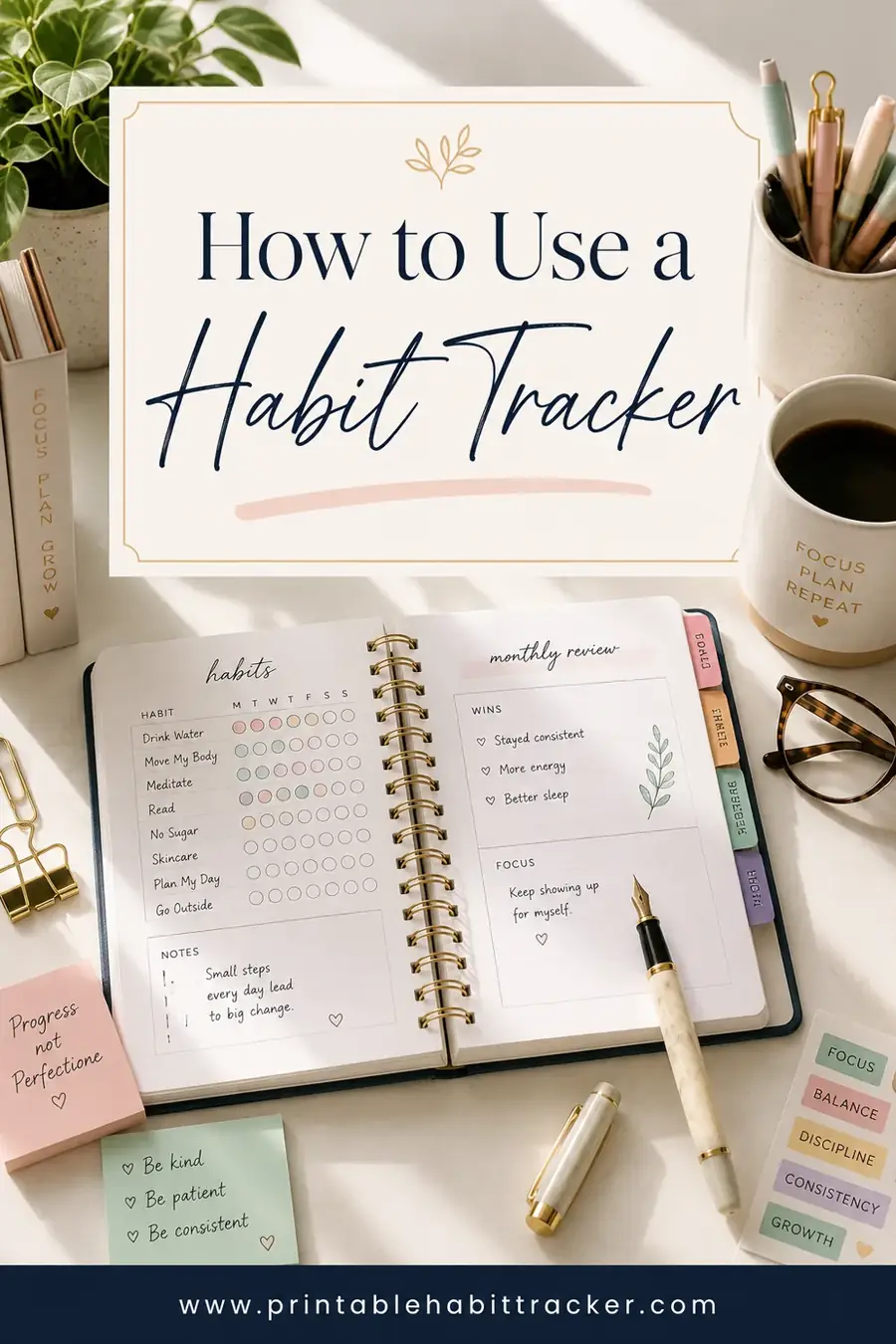
- Print your tracker. Use the free habit tracker to generate a clean grid with your habits already in the rows.
- Put it where you'll see it. The fridge, your desk, the bathroom mirror. Out of sight means out of mind.
- Check it off daily. Same time each day works best, like right after breakfast or before bed.
That's it. The whole setup takes about five minutes, and then it runs itself.
Make it stick
A few small touches help the habit hold:
- Stack it onto something you already do. Mark the tracker right after brushing your teeth, so the routine has an anchor.
- Keep a pen with the tracker. If you have to hunt for a pen, you'll skip the check.
- Don't break the chain. Seeing a run of checkmarks makes you want to keep it going.
- Forgive the misses. One blank square is not failure. Two in a row is just a nudge to reset.
Common Mistakes to Avoid
A few traps catch almost everyone the first time around.
- Tracking too many habits. It feels productive on day one and exhausting by day four. Start small.
- Picking vague habits. "Eat healthy" is hard to check off. "One vegetable at lunch" is easy.
- Aiming for perfect. Chasing a flawless month leads to quitting after the first miss. Aim for "most days."
- Hiding the tracker. If it's in a drawer, you'll forget it. Keep it visible.
- Never reviewing it. Glance at your week on Sunday. The patterns tell you what's working.
Health Habits for Different Goals
The best habits to track depend a little on what you're after. Here's a quick guide.
| Your goal | Habits worth tracking |
|---|---|
| More energy | Water, sleep on time, morning daylight |
| Less stress | Breathing, a short walk, screen-free time |
| Better fitness | Daily movement, steps, stretching |
| Healthier eating | A veggie a day, water before meals, no late snacking |
| Better sleep | Consistent bedtime, no phone in bed, dim lights at night |
Pick the row of habits that matches the change you want most, and build your tracker around those. You can always shift focus once one goal feels handled.
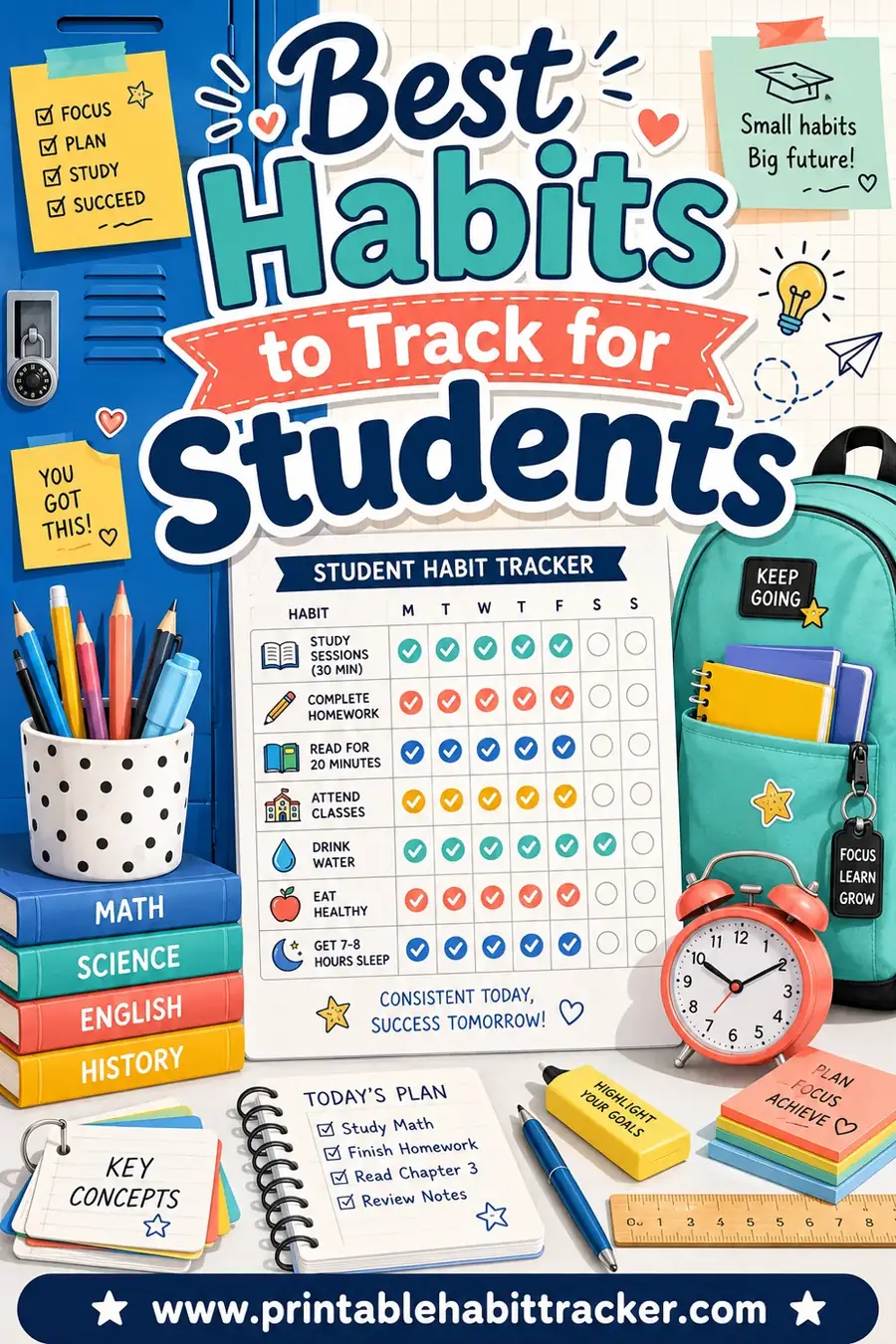
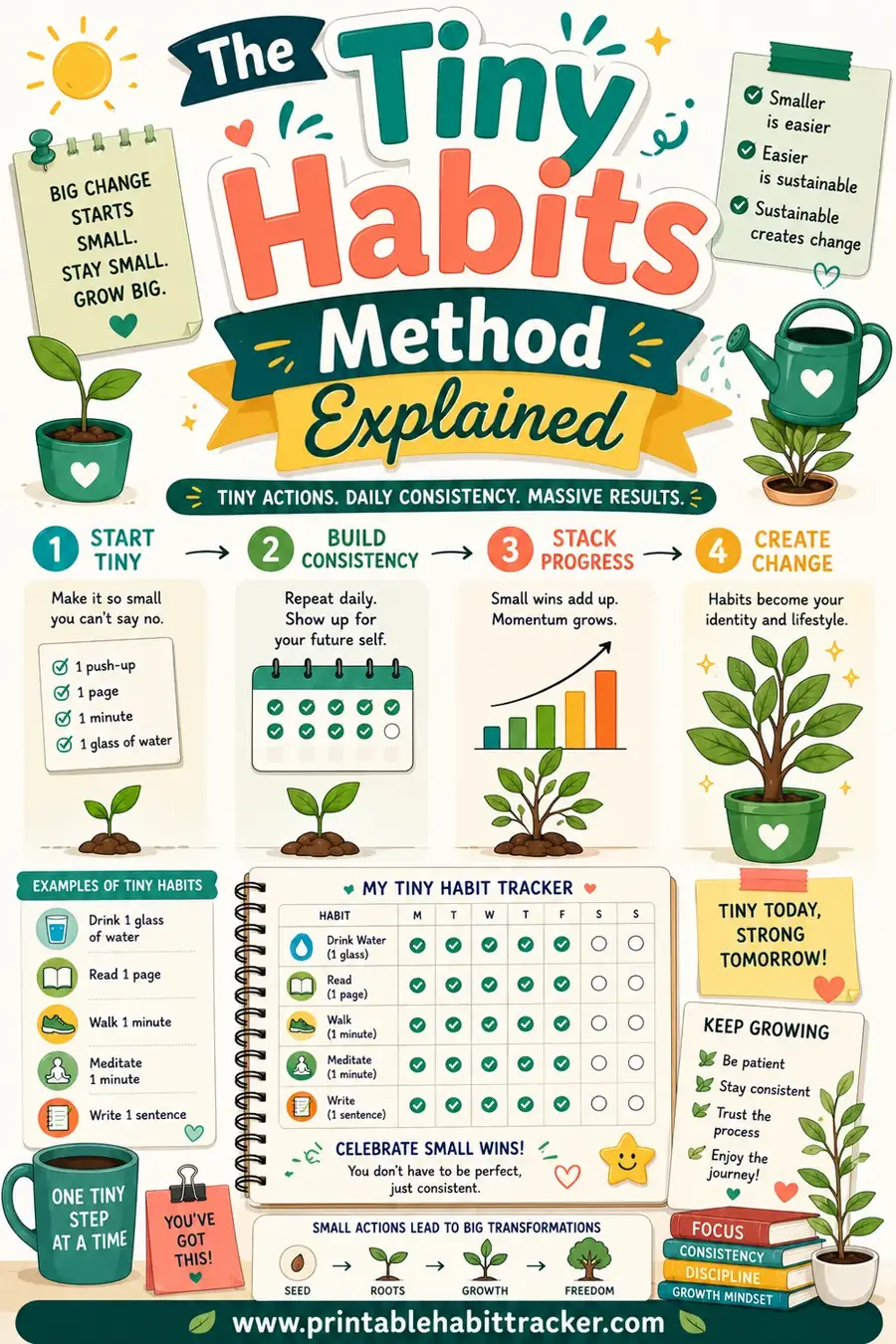
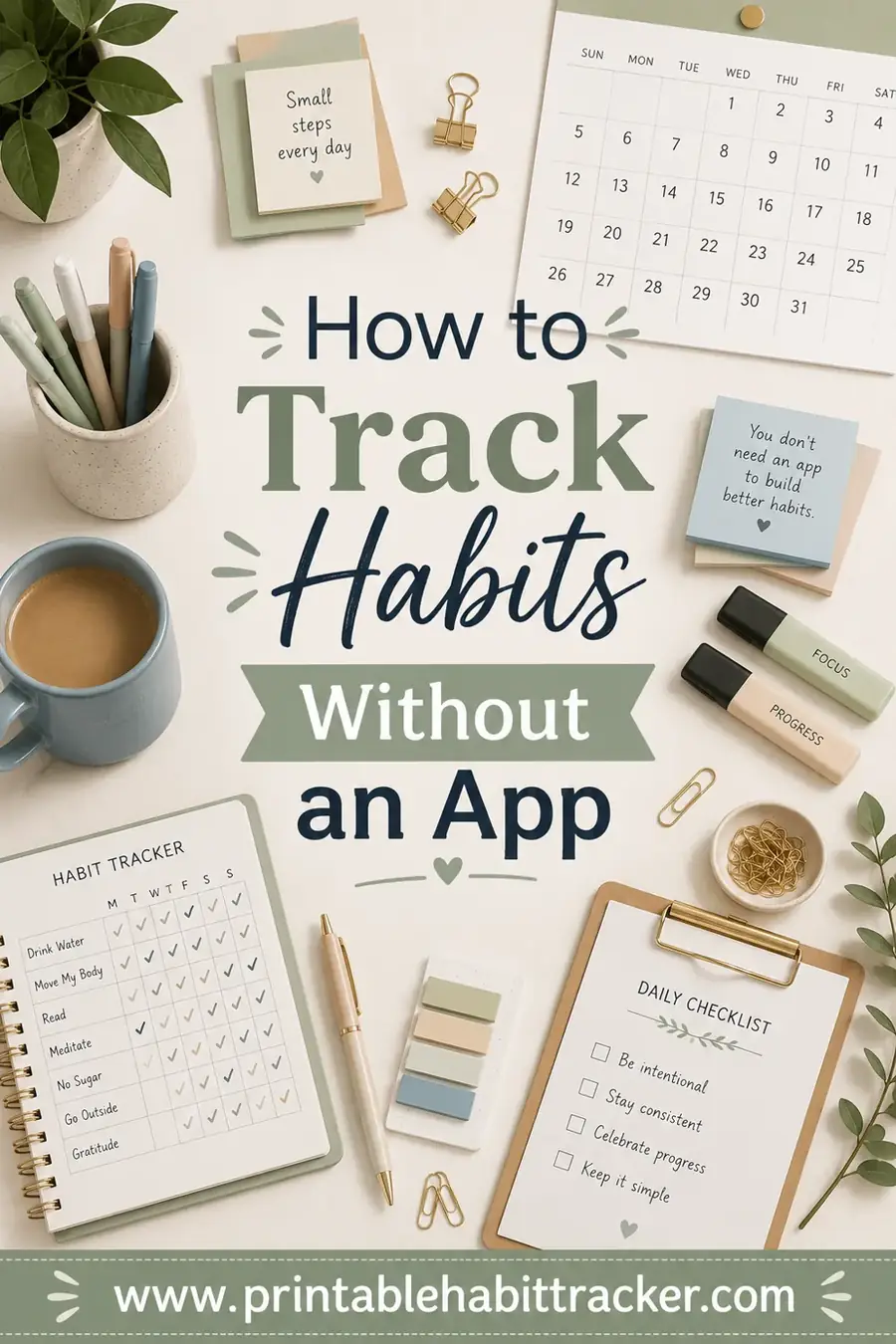
If you're tracking health alongside other parts of your life, you might like our guides on the tiny habits method and how to track habits without an app. Students balancing wellness with study can also check out the best habits to track for students.
How to Read Your Tracker and Adjust
The tracker isn't just for ticking boxes. The real value comes from glancing back over your week and noticing patterns. Take two minutes every Sunday to look at the page.
A row that's checked almost every day is a habit that's working. You can leave it alone, or even let it grow. A row with a lot of blanks is telling you something, and it's usually not "I have no willpower." More often it means the habit is too big, the timing is wrong, or there's no clear cue.
Here's how to respond to what you see:
- The habit slips on the same day every week. Look at what's different about that day. A busy Wednesday might need a smaller version of the habit, like a 5-minute walk instead of 20.
- A habit you never miss. Congratulations, it's basically automatic. Consider stacking a new habit right after it.
- A row that's mostly blank. Don't delete it in frustration. Shrink it first. A habit you can't keep at 20 minutes you can often keep at 5.
- Everything is slipping. That's a sign you took on too much at once. Cut your list back to one or two habits and rebuild.
This weekly glance is what turns a tracker from a scorecard into a coaching tool. It tells you exactly where to make the next small change, instead of leaving you guessing.
Build streaks without the all-or-nothing trap
Streaks are motivating, but they can backfire if you treat one missed day as a total failure. A healthier mindset is the "never miss twice" rule. Miss one day, fine, life happens. Just don't let it become two in a row. One blank box is a blip. Two starts to become the new pattern.
That single rule keeps a streak alive through real life, holidays, sick days, and busy weeks, without the guilt spiral that makes people quit a tracker entirely.
Frequently Asked Questions
What are the best habits to track for health?
Start with the basics: drinking water, moving your body, sleeping on a consistent schedule, eating a vegetable each day, and taking a moment to unwind. These small daily habits have the biggest impact on how you feel, and they're easy to check off on a printable tracker.
How many health habits should I track at once?
Three or four is the sweet spot when you're starting out. Tracking too many at once leads to burnout. Once those feel automatic, add another row. A short list you actually fill in beats a long one you ignore.
Do I need an app to track my health habits?
No. A printed paper tracker works just as well, and many people stick with it longer because there are no notifications to dismiss and nothing to unlock. You can make a free printable grid in a couple of minutes.
How long does it take to build a health habit?
It varies by person and by habit, but most simple habits start feeling automatic somewhere between three weeks and a couple of months. Tracking helps because it keeps the habit visible and gives you a streak worth protecting.
What if I miss a day?
Missing a day is normal and not a failure. Just check the next box tomorrow. The goal is showing up most days, not a perfect record. Two misses in a row is simply a gentle signal to make the habit a little easier.
Should I track habits weekly or monthly?
A weekly grid is friendlier when you're starting, because it feels manageable and you reset often. Switch to a monthly grid once your habits feel steady and you want to see longer streaks at a glance.
Ready to Track Your Health Habits?
Pick three or four habits from the lists above, open the free habit tracker, and print a clean grid you can start checking off today. It's free, there's no sign-up, and a few small daily checkmarks add up to real change. Your future self will thank you for the first box you tick.