Daily Habits of Successful People (and How to Track Them)
The daily habits of successful people are rarely flashy. They wake at a consistent time, move their bodies, tackle their most important task early, read or learn a little, and reflect at the end of the day. What sets these people apart isn't a secret routine, it's that they do the small things consistently. The easiest way to copy that consistency is to track a few habits each day and watch the streak build.
Want to start building your own routine? Open the free habit tracker, choose a few habits below, and print a clean grid you can check off every morning. No app, no sign-up, no cost.
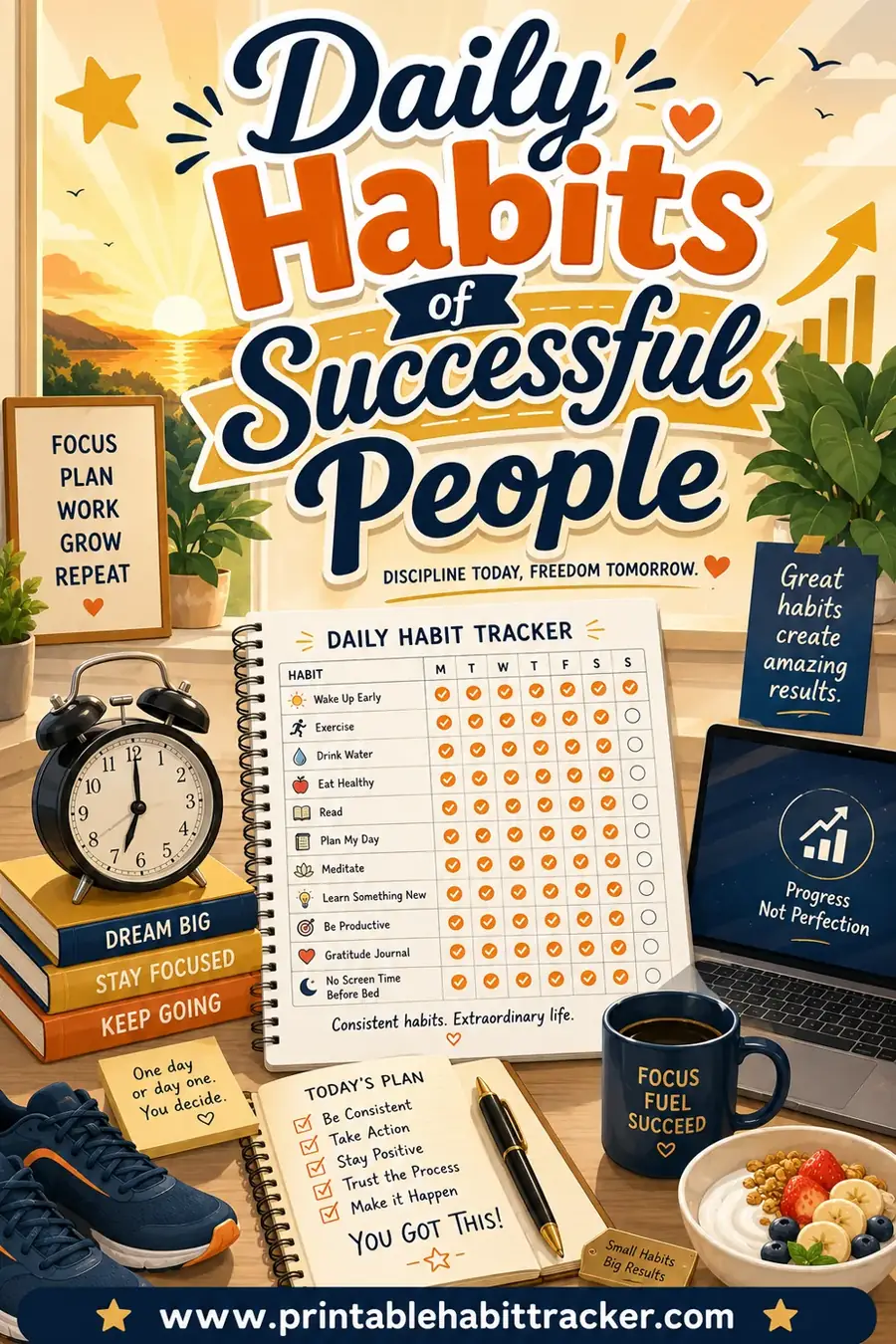
What "Successful Habits" Really Means
Forget the idea of a perfect 5 a.m. routine that looks great on social media. When you look at people who do well over time, the pattern is boring in the best way: they repeat a handful of useful actions almost every day.
The magic isn't in any single habit. It's in the repetition. A 20-minute walk does nothing on its own, but done daily for a year, it changes your fitness and your mood. The same goes for reading, planning, and reflecting.
This is exactly why a tracker matters. Successful habits live or die on consistency, and a tracker is the simplest tool for staying consistent. It keeps score so you don't have to rely on memory or motivation.
The Daily Habits Worth Copying
You don't need all of these. Pick the few that fit the life you're trying to build. Here's a solid starter set.
| Habit | Why it matters | Easy starting point |
|---|---|---|
| Consistent wake-up | Stable energy and rhythm | Same time, even weekends |
| Move your body | Health, mood, clarity | A 15-minute walk |
| Most important task first | Real progress, less drift | One key task before email |
| Read or learn | Compounding knowledge | 10 pages a day |
| Plan the day | Focus, less reacting | A short list each morning |
| Reflect at night | Learning from the day | 3 lines in a journal |
| Single-task | Better quality work | One thing at a time |
| Sleep on schedule | Recovery and focus | Same bedtime nightly |
Resist the urge to adopt all eight at once. That's the fastest way to quit. Choose two or three that target where you most want to grow, and add more once those feel automatic.
Start the day on purpose
The most-shared habit of high performers is a consistent start. It's not about waking at any particular hour, it's about waking at the same hour. A steady rhythm steadies everything that follows. Track your wake-up time as a simple checkbox.
Do the important thing first
The classic move: tackle your most important task before the day fills with noise. Email and messages can wait an hour. Track a single checkbox for "did my key task first," and protect that morning window.
Reflect before bed
A quiet end-of-day review is where learning happens. What worked, what didn't, what's the one thing for tomorrow. It takes three minutes and turns ordinary days into lessons. Track it as a single mark, no essay required.
How Many Habits Should You Track?
Fewer than you'd guess. Successful people are famous for routines, but they didn't build them all at once.
- Just starting? Track 2–3 keystone habits. Master the tracking habit itself first.
- Got momentum? 4–6 is a comfortable range.
- Seasoned? You can run more, but watch for "checkbox fatigue" where the grid feels like a chore.
If you ever dread the tracker, you've overloaded it. Trim a row. A short list you fill in beats a long one you abandon.
A Sample Week to Model
Curious what a real routine looks like on paper? Here's a week for someone building the habits, not someone who's had them for years. It isn't perfect, which is exactly the point.
| Habit | Mon | Tue | Wed | Thu | Fri | Sat | Sun |
|---|---|---|---|---|---|---|---|
| Wake by 6:30 | ✅ | ✅ | ⬜ | ✅ | ✅ | ⬜ | ⬜ |
| Move 15 min | ✅ | ⬜ | ✅ | ✅ | ✅ | ✅ | ⬜ |
| Key task first | ✅ | ✅ | ✅ | ⬜ | ✅ | n/a | n/a |
| Read 10 pages | ✅ | ✅ | ⬜ | ✅ | ✅ | ✅ | ✅ |
See how the weekend eases off and some rows have a few gaps? That's a real, sustainable week. Consistency over months matters far more than a flawless seven days.
How to Build Your Own Success Routine
You don't need a productivity system or a stack of apps. Here's the whole process.
- Pick your keystone habits. Choose two or three from the list above. Write the exact action, like "walk 15 minutes," not a vague aim like "be disciplined."
- Choose your time frame. A weekly grid is great for building. A monthly grid is satisfying once your routine is steady and you want to see long streaks.
- Print your tracker. Use the free habit tracker to generate a clean grid with your habits in the rows.
- Anchor it somewhere visible. Your desk, your nightstand, the kitchen counter. Out of sight means out of mind.
- Check it off at a set time. First thing in the morning or last thing at night both work well.
The setup takes five minutes, and then the routine starts carrying itself.
Make the routine stick
- Stack new habits onto old ones. Mark the tracker right after your morning coffee, so there's a built-in trigger.
- Protect the streak. A visible run of checkmarks makes you want to keep it alive.
- Start absurdly small. "Read one page" is easier to keep than "read a chapter," and small wins compound.
- Forgive misses fast. One blank box isn't failure. Two in a row is a nudge to make the habit easier.
Common Mistakes to Avoid
The same traps catch nearly everyone trying to build a routine:
- Copying someone else's full routine. What works for a CEO may not fit your life. Borrow ideas, build your own grid.
- Starting with too many habits. It feels ambitious on day one and crushing by day five. Start with two.
- Chasing a perfect streak. One missed day shouldn't end the whole effort. Aim for "most days."
- Vague habits. "Be productive" can't be checked off. "One key task before email" can.
- Never reviewing. Glance at your week. The patterns tell you which habit to double down on.
Habit Ideas by Goal
The right habits depend on what success means to you. Match your tracker to your aim.
| Your goal | Habits worth tracking |
|---|---|
| More productivity | Key task first, single-task, plan the day |
| More energy | Consistent wake-up, movement, sleep on schedule |
| Constant learning | Read 10 pages, one new thing, reflect at night |
| Less stress | A walk, plan tomorrow, screen-free evening |
| Better focus | Phone away, one task at a time, deep work block |
Pick the row that matches the version of yourself you're working toward, and build your tracker around it. You can shift focus as your goals evolve.
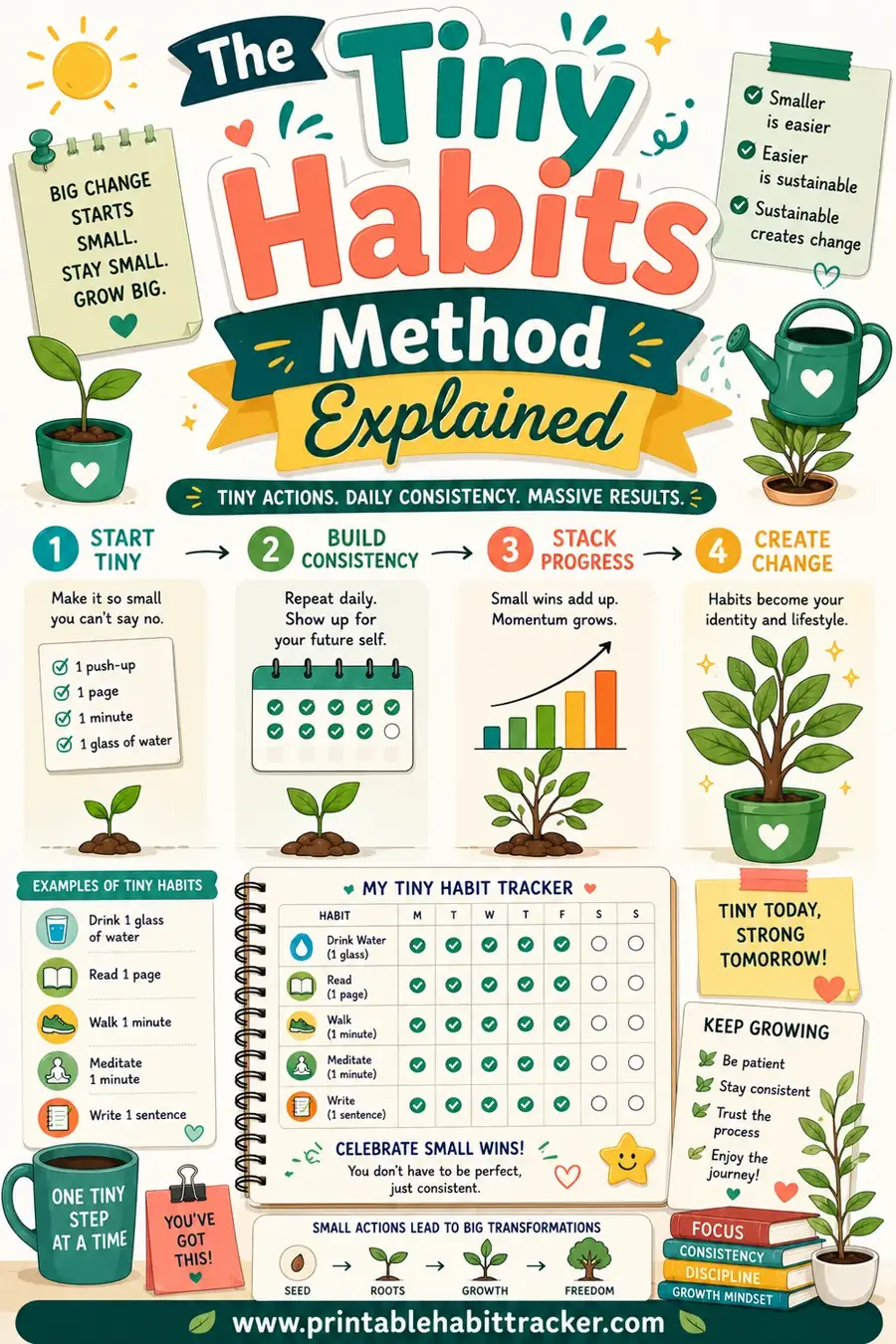
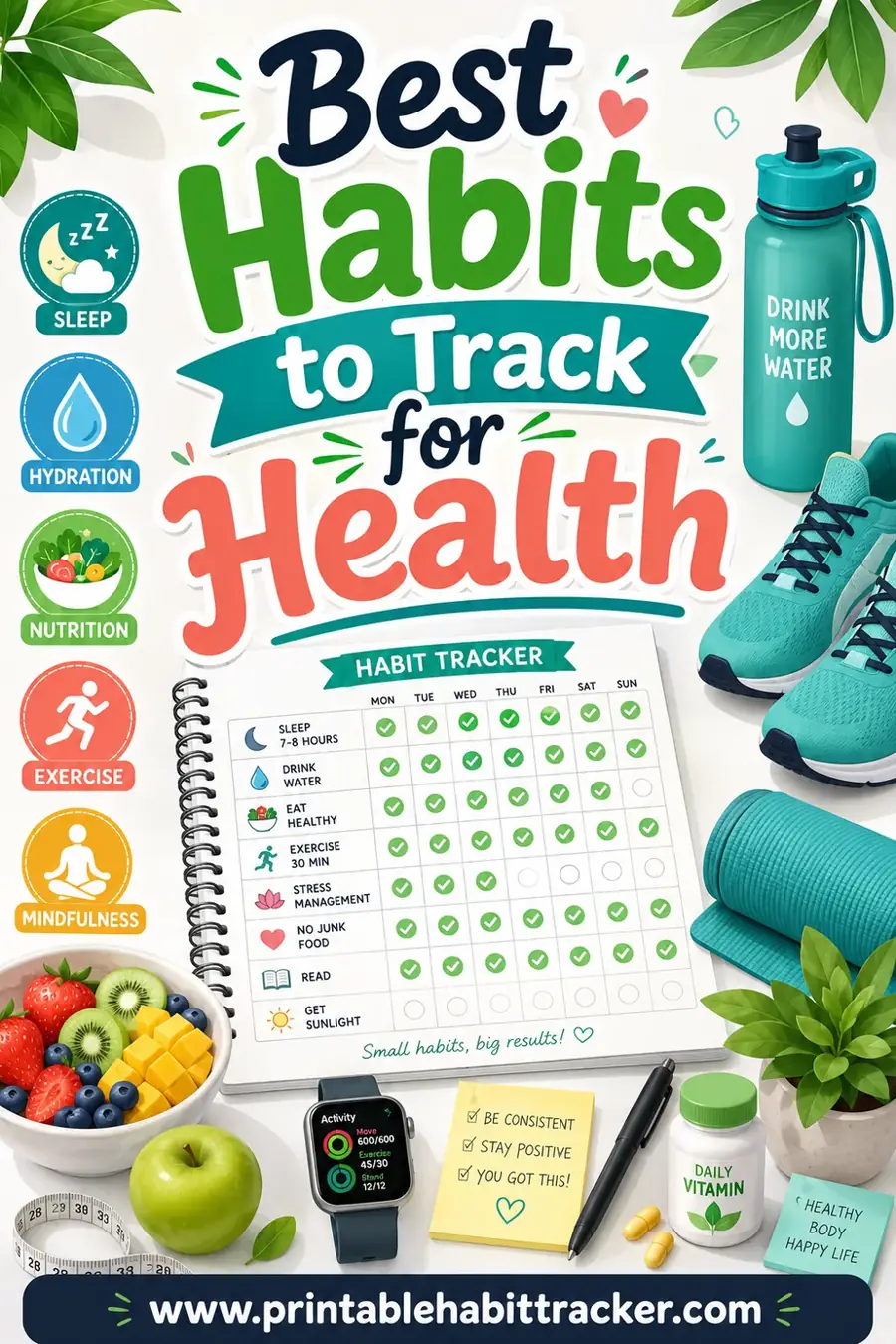
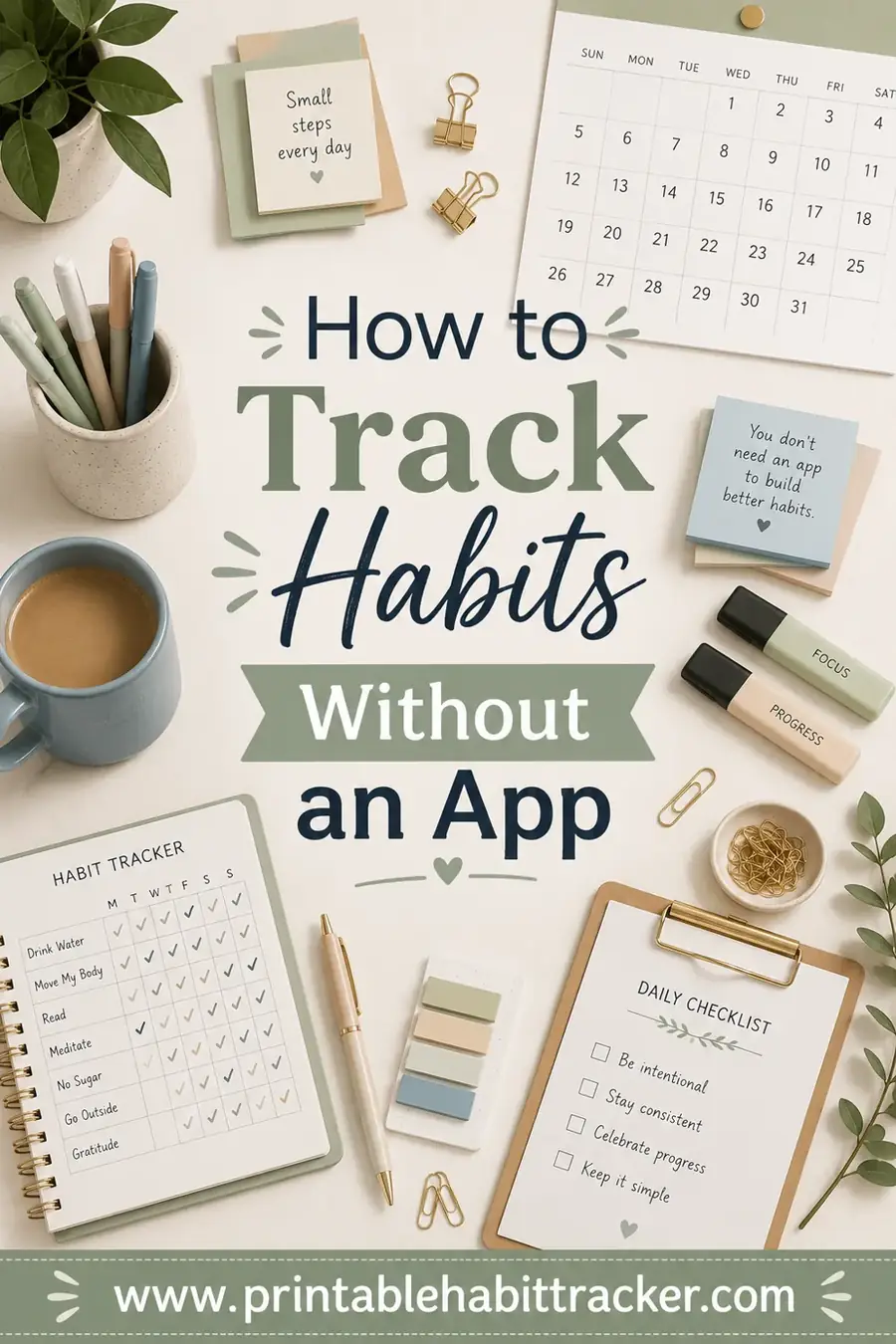
Want to go deeper on building habits that actually last? Our guide to the tiny habits method explains how to make new routines stick. You might also like the best habits to track for health and how to track habits without an app.
The Power of Keystone Habits
Not all habits are equal. Some are "keystone" habits, the ones that quietly pull other good habits along with them. Successful people tend to find their keystones and protect them fiercely.
A keystone habit is one that triggers a chain reaction. For many people, exercise is a keystone. When they work out in the morning, they tend to eat better, sleep better, and stay more focused, almost without trying. The workout wasn't the goal, but it set off a cascade of good choices.
Common keystone habits worth tracking include:
- Morning movement. Often improves diet, mood, and focus for the whole day.
- A consistent wake-up. Stabilizes sleep, meals, and energy all at once.
- Daily planning. A five-minute plan tends to make the entire day more deliberate.
- An evening shutdown. A clear end to work protects sleep and lowers stress.
When you're choosing what to track, look for your own keystone. Try one habit for a couple of weeks and watch what else shifts. If checking that one box seems to make other good things easier, you've found a keystone, and it deserves the top row on your tracker.
Consistency beats intensity
The biggest myth about successful routines is that they're intense. They're not. They're consistent. A person who walks 15 minutes every single day is healthier over a year than someone who does brutal workouts twice a month and then quits.
This is liberating, because it means you don't need heroic effort. You need a small action you can repeat. The tracker rewards exactly this, because a long, unbroken row of modest checkmarks is worth far more than a couple of spectacular days followed by a blank stretch. Aim to be the person who shows up, not the person who goes all-out and burns out.
Frequently Asked Questions
What are the daily habits of successful people?
The common ones are a consistent wake-up time, daily movement, doing the most important task early, reading or learning a little, and reflecting at the end of the day. The real pattern isn't any single habit, it's doing a few useful things consistently over months and years.
How many habits should I track to build a successful routine?
Two or three keystone habits when you're starting, growing to four to six once you have momentum. Adopting a long list at once is the fastest way to quit. Master a few, then add more.
Do successful people really track their habits?
Many do, in one form or another, whether it's a journal, a calendar, or a simple checklist. The format matters less than the act of keeping score. A visible tracker keeps the habit front of mind and makes consistency easier.
What's the single most valuable habit to track?
For most people, it's a consistent wake-up time or doing your most important task before the day gets noisy. Both create a stable rhythm that makes every other habit easier to keep.
How long before these habits feel automatic?
It depends on the habit and the person, but simple ones often feel automatic within a few weeks to a couple of months. Tracking speeds it up because it keeps the habit visible and gives you a streak worth protecting.
Should I copy a famous person's routine exactly?
Borrow the ideas, not the exact schedule. A routine that fits a billionaire's life may clash with yours. Pick the habits that make sense for your goals and build a tracker around those.
Ready to Build Your Daily Routine?
Pick two or three habits from the lists above, open the free habit tracker, and print a clean grid you can start checking off tomorrow morning. It's free, there's no sign-up, and the daily checkmarks are how ordinary routines turn into real results. Start with one box.