Habit Tracker for Entrepreneurs: Free Printable to Build Daily Discipline
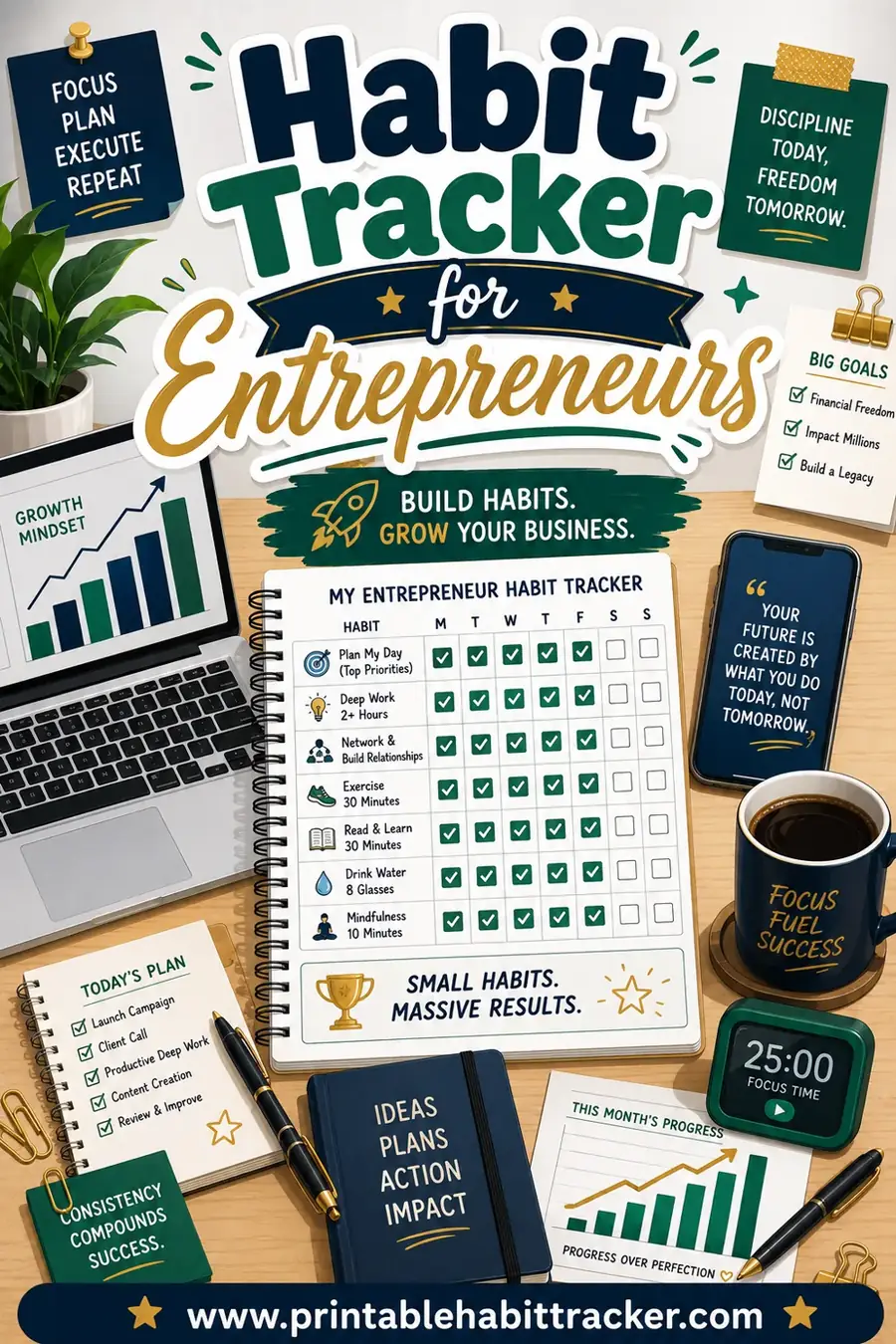
A habit tracker for entrepreneurs is a simple grid where you check off the daily high-leverage actions that actually grow a business, like reaching out to a new lead, shipping one thing, reviewing your numbers, or protecting deep-work time. When you're your own boss, nobody enforces these habits but you, so a visible tracker is how you hold the line. The fastest way to start is to open the free habit tracker maker, choose the habits that move your business forward, and print a sheet for your desk.
Want to get going? Build your printable tracker now, pick a daily or weekly layout, add your own habits, and print as many copies as you like. No sign-up, no software, no fee.
Why Entrepreneurs Live or Die by Their Habits
When you work for someone else, the structure is handed to you. Meetings, deadlines, a boss who notices if you coast. Run your own business and all of that vanishes. You decide what gets done, and you decide when nothing does. That freedom is the whole appeal, and also the biggest trap.
A habit tracker rebuilds the structure on your own terms. Instead of hoping you "stay disciplined," you put the few actions that matter onto a sheet and check them off every day. The grid becomes the boss you actually answer to.
Here's the deeper point: businesses aren't built in heroic bursts. They're built by doing the boring, high-leverage things over and over. Outreach. Shipping. Following up. Reviewing the numbers. A tracker is designed to reward exactly that kind of repeated, unglamorous consistency, which is the real engine of growth.
The High-Leverage Habits Worth Tracking
Not every task deserves a row. Track the small set of actions that, repeated daily, compound into real results. These are the ones that move the needle.
| Habit | Why it helps | How to track |
|---|---|---|
| Reach out to 1 new lead | Pipeline never goes dry | Daily checkbox |
| Ship one thing | Progress over perfection | Daily checkbox |
| 2 hours of deep work | Real work, not just busywork | Daily checkbox |
| Follow up with a contact | Most deals die from silence | Daily checkbox |
| Review key numbers | You manage what you measure | Daily or weekly |
| Plan tomorrow tonight | Start the day already aimed | Daily checkbox |
| Move your body | Energy is your real currency | Daily checkbox |
Pick three or four, not all seven. A tracker crammed with every possible task becomes a guilt machine you stop looking at. Choose the handful that map directly to growth and let the rest go.
Track inputs, not outcomes
You can't check a box for "made a sale," because you don't fully control that. You can check a box for "reached out to a lead," because that's an input you control completely. Track the inputs daily and the outcomes follow. This single shift is what makes a tracker work for a business.
Daily, Weekly, and Monthly Layouts
A business runs on layered rhythms, and the best layout depends on how often the habit repeats. Match the frequency to the action.
| Layout | Best for | Example habits |
|---|---|---|
| Daily | Core income-driving actions | Outreach, shipping, deep work |
| Weekly | Habits done a few times a week | Content batch, sales calls, planning |
| Monthly | Strategic check-ins | Review finances, set goals, audit metrics |
| Yearly | Long arcs and big targets | Revenue milestones, products launched |
Many founders keep a daily sheet on the desk for the non-negotiables and a monthly sheet for strategy. The habit tracker maker builds each one, so you can print whatever matches your workflow.
How to Set Up Your Entrepreneur Tracker
You can have a printed system running in under five minutes. Here's the whole process.
- Pick your layout. Daily for income-driving habits, weekly or monthly for strategy.
- Add 3–5 habits. Keep it to inputs you fully control.
- Choose a style. A clean minimal grid keeps your eyes on the work, not the decoration.
- Print a batch. Print a month at a time so tracking never becomes a daily chore.
Then put it where you can't avoid it. Taped to your monitor, pinned above your desk, or on the first page of your planner. Out of sight is out of mind, and that's how habits die.
Make it last
Slip the sheet into a clear sleeve and check boxes with a dry-erase marker, or print on cardstock so it survives a busy desk. Photograph each week before you wipe it, so you keep a record of your consistency over time. That record becomes its own motivation.
Building a Founder's Morning Block
The most reliable hours of an entrepreneur's day are the early ones, before the inbox and the world start making demands. A short tracked morning block sets the tone for everything after.
- Review your top 3. The three things that, if done, make today a win. Check the box once they're written.
- Protect deep work first. Track that you did your hardest, most important task before email. Mornings are where real work happens.
- Move before you sit. A walk or a quick workout. Energy is the resource your whole business runs on.
- Plan, then attack. A box for "knew my day before it started." It beats reacting to whatever lands in your inbox.
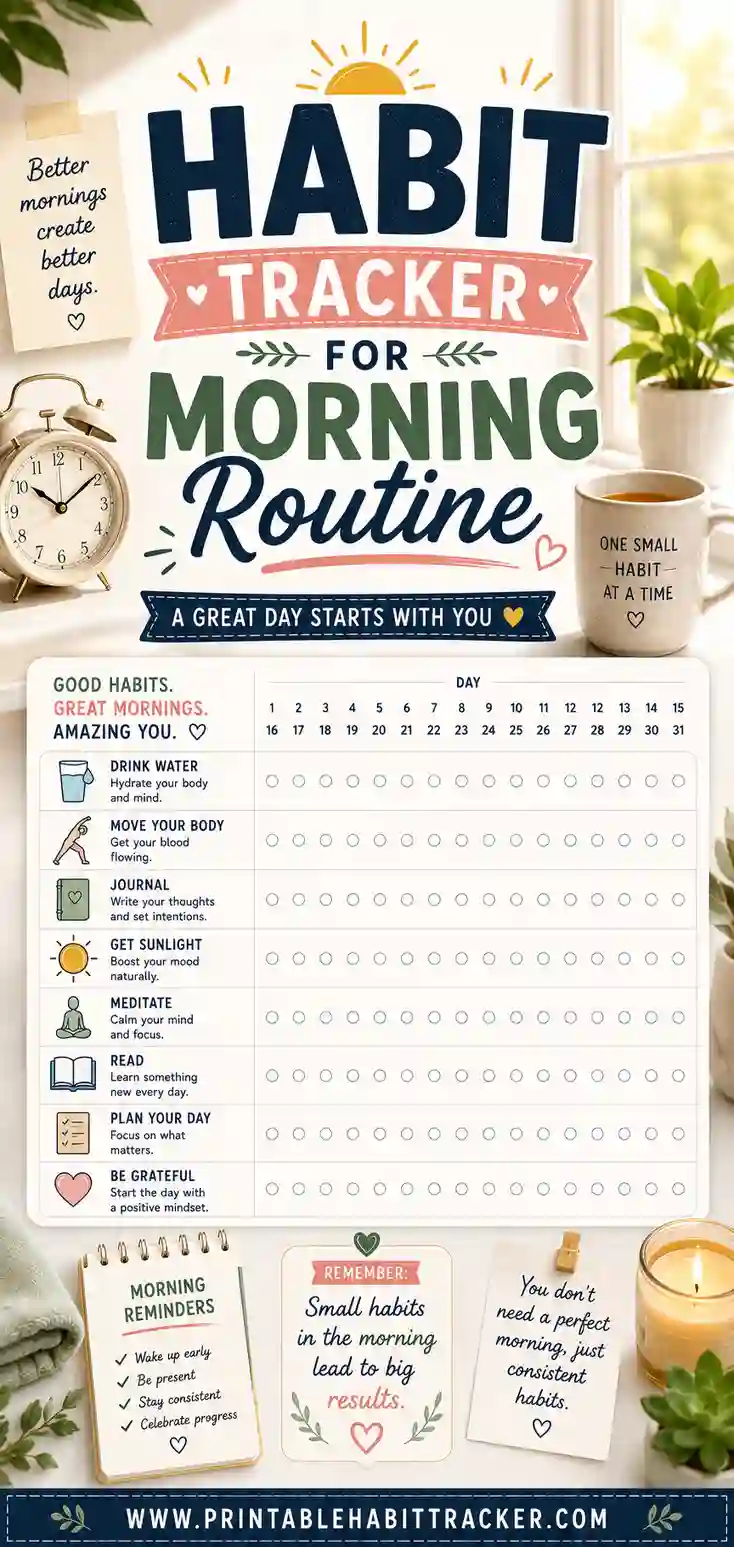
If a morning routine is where you struggle most, our dedicated morning routine tracker goes deeper on building that block.
Avoiding the Founder's Burnout Trap
Hustle culture sells the all-nighter as a badge of honor. The founders who actually last treat their energy like a business asset, because it is. A tracker should include the habits that keep you in the game, not just the ones that grind you down.
- A hard stop. Pick a time you close the laptop and track the days you keep it. A business with no off switch eats its owner.
- Sleep. Track hours, not intentions. Decision-making collapses without it, and your whole business is decisions.
- One thing that isn't work. A walk, family dinner, a hobby. Track it like it matters, because a burned-out founder ships nothing.
- Weekly review, not weekend dread. A box for a calm Friday review so Monday isn't a panic.
Putting these on the same sheet as your work habits sends a clear message to yourself: sustainability is part of the job, not a reward for finishing it.
Tracking Habits Across Different Business Stages
A business doesn't need the same habits forever. What grows an idea is different from what scales a team, so the smartest founders adjust the rows on their tracker as the company changes underneath them.
- Early days / finding traction. Track raw output and outreach. Ship one thing, talk to one customer, follow up with one lead. At this stage, momentum is everything, and the tracker should reward sheer consistency.
- Growing / repeatable revenue. Shift toward habits that build systems: documenting a process, reviewing key numbers, planning the week. You're trading hustle for repeatability.
- Scaling / leading. Track delegation and review instead of doing everything yourself. A box for "handed something off" or "checked in with the team" matters more than another solo sprint.
- Steady / protecting the win. Lean into the habits that prevent burnout and complacency, the weekly review, the hard stop, the strategic check-in.
You don't need a fresh system at every stage. You swap a few rows when the work changes. The habit tracker maker makes that quick, so your sheet always reflects the business you have now, not the one you had six months ago.
Pair the tracker with a weekly review
A daily tracker tells you what you did. A short weekly review tells you whether it worked. Every Friday, glance over the week's boxes and ask one question: did my daily inputs move the business? If outreach was full but nothing converted, that's a signal to change the input, not just do more of it. The tracker supplies the data; the review turns it into direction.
Keeping the Streak Going
You will miss days. A client emergency, a sick kid, a launch that eats your week. The tracker isn't there to shame you over a blank box. It's there to surface patterns and help you recover fast.
- Never miss twice. One blank box is a slip. Two in a row is a trend. Get back to it the next day.
- Use the gaps as data. If "deep work" is always blank on the days you take morning calls, that's a scheduling problem you can fix.
- Reset monthly. A fresh printed sheet wipes the slate. A rough week doesn't carry forward.
- Celebrate the streaks. Thirty days of outreach is a pipeline you built on purpose. Notice it.
Frequently Asked Questions
What habits should an entrepreneur track first?
Start with one income-driving input you fully control, like reaching out to a lead daily, plus one energy habit like sleep or movement. Master those before adding more. Tracking inputs you control is the whole secret to making it work.
Is this habit tracker free?
Yes. You build and print it yourself with no sign-up, no watermark, and no limit on copies. Print a fresh sheet every week of the year without paying anything.
Should I track tasks or outcomes?
Track inputs, not outcomes. You can't reliably control "made a sale," but you can control "reached out to five leads." Check off the inputs daily and the outcomes follow. This shift is what makes a tracker actually grow a business.
What's the best layout for running a business?
A daily grid works for your core income-driving actions, while a monthly sheet handles strategy like reviewing finances and setting goals. Most founders use both. You can build and print each from the free maker.
How do I stay consistent when every day is different?
Aim to never miss two days in a row, and treat blank boxes as data rather than failure. Reset with a fresh sheet each month so a chaotic week doesn't follow you. Consistency over time beats intensity for a day.
Start Your Entrepreneur Habit Tracker Today
Pick three or four high-leverage habits that would grow your business, open the free habit tracker maker, and print a sheet for your desk. It's free, there's no sign-up, and you can reprint a clean copy whenever you need a fresh start.
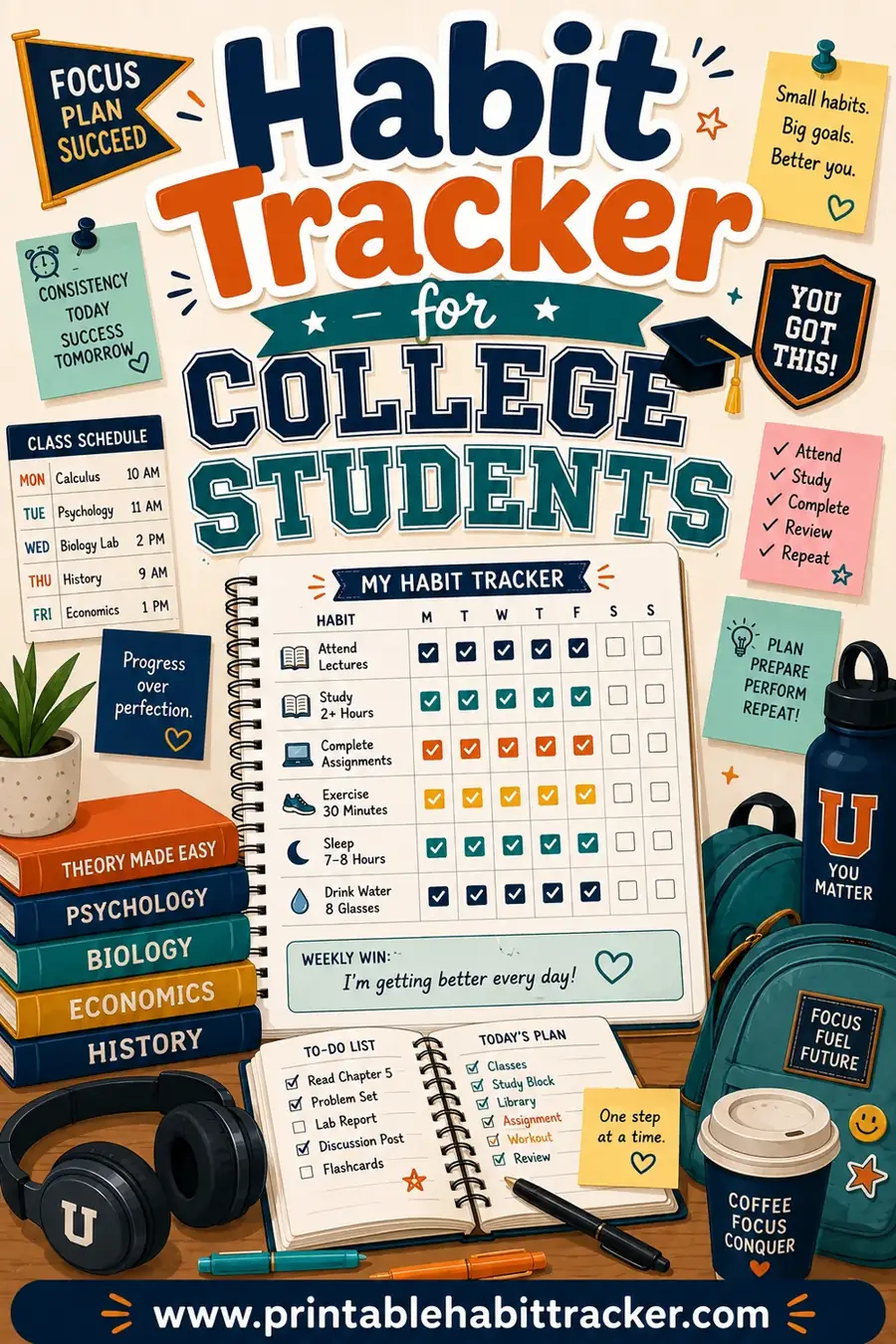
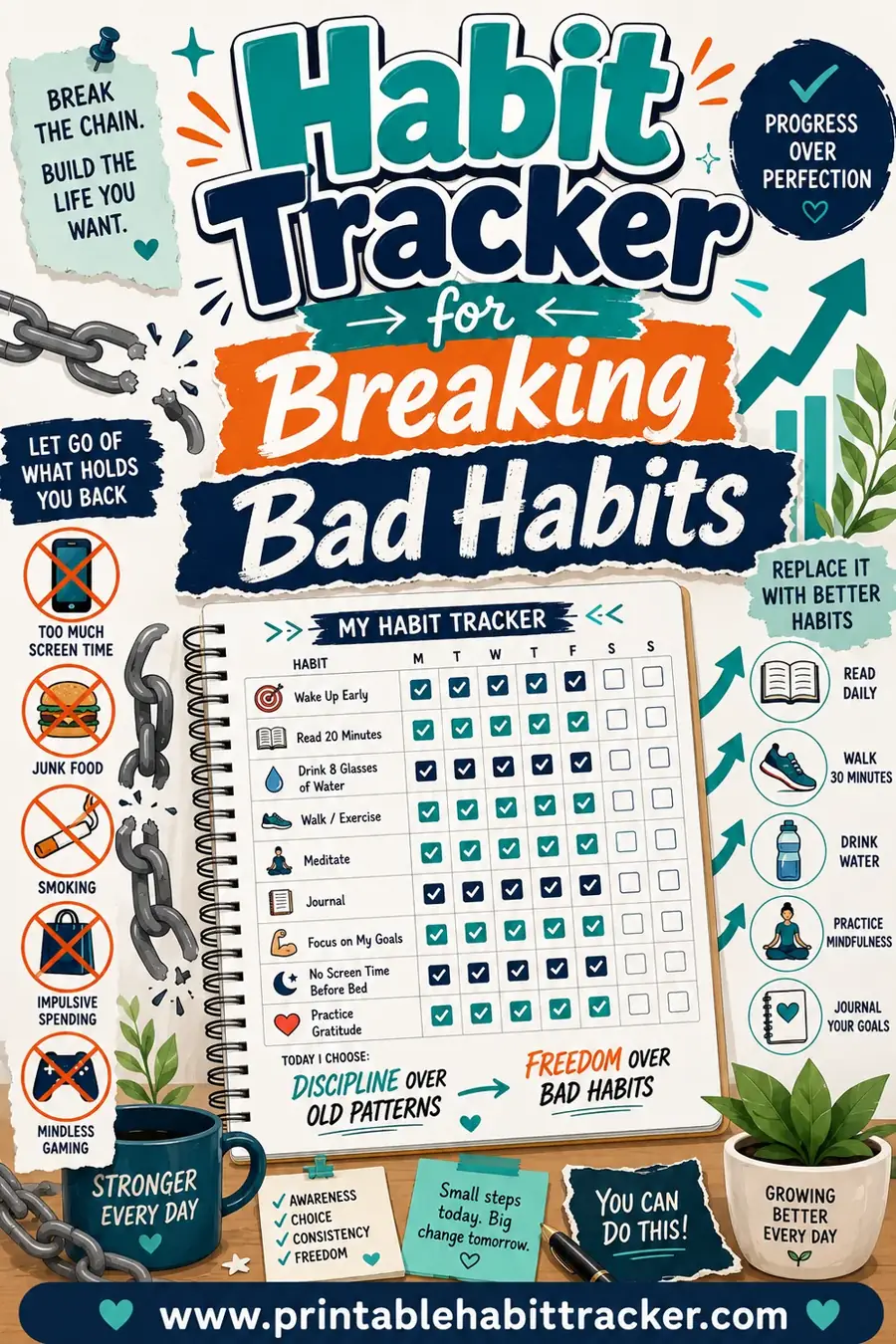
While you're building discipline, take a look at our tracker for a strong morning routine, one for breaking a bad habit that's slowing you down, or the college student version if you're building a business while still in school. Small boxes, real growth.