Habit Tracker for Saving Money: Free Printable Template
A habit tracker for saving money is a simple grid where you check off small money habits each day, like skipping a takeout coffee, packing lunch, or moving five dollars into savings. Seeing the boxes fill up keeps you motivated, turns saving into a streak you don't want to break, and quietly grows your balance without a budgeting app or spreadsheet. The fastest way to get one is to use a free printable habit tracker, pick your money habits, and print a clean sheet you can stick on the fridge.
Want to start today? Open the free tracker, add a few saving habits (there's a ready-made list below), choose daily or weekly, and print. No sign-up, no app, no fee.
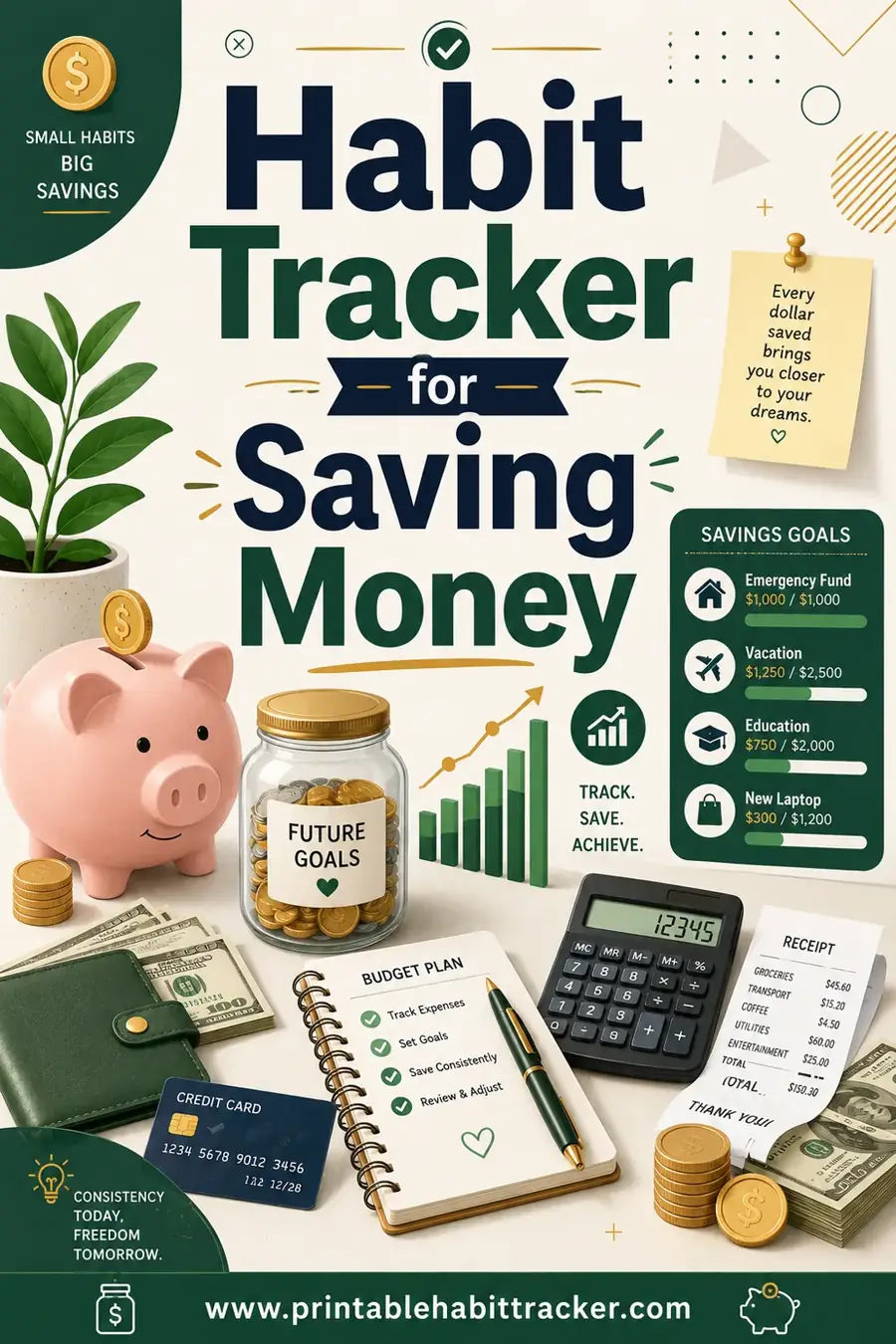
Why a Habit Tracker Beats Willpower for Saving
Most of us don't blow our budget on one big purchase. We leak money in tiny leaks: a coffee here, an impulse cart there, a subscription we forgot about. Those small choices are habits, and habits respond to attention. The moment you have to look a checkbox in the eye, you think twice.
A tracker works because it makes the invisible visible. You can't see "I didn't overspend today" the way you can see a row of checked boxes. Once you've got a five-day streak going, skipping it feels like breaking something. That little tug is exactly what keeps the savings rolling.
It also takes the guilt out of money. Instead of a vague "I should save more," you get a concrete, doable target you can actually hit each day. Hit it, check the box, feel good, repeat.
Money-Saving Habits Worth Tracking
You don't need twenty habits. Pick three to six that match where your money actually leaks. Here's a starter list with why each one helps and how to track it.
| Habit | Why it helps | How to track |
|---|---|---|
| No-spend day | Breaks the daily-purchase reflex | Check the box on any day you spend $0 on extras |
| Packed lunch | Saves $8–$15 a workday | Check it each day you bring food from home |
| Skipped takeout coffee | Small daily leak adds up fast | Check when you make coffee at home |
| Saved a set amount | Builds the balance on autopilot | Check after moving $5–$20 to savings |
| Logged every purchase | Awareness alone curbs spending | Check once you've written the day's spends down |
| Cooked dinner at home | Cuts the biggest food cost | Check on nights you skip delivery |
| Reviewed one subscription | Cancels forgotten drains | Weekly box — check after one review |
| Waited 24 hours before buying | Kills impulse purchases | Check when you sleep on a want |
Start small. Three habits you actually do beat eight you ignore by Wednesday. You can always add more once the first ones stick.
Match the habit to your leak
Be honest about where your money goes. If lunch out is your weakness, "packed lunch" earns its spot. If late-night online shopping gets you, "waited 24 hours" is your hero habit. A tracker only works when it targets your real spending, not a generic list.
Daily vs. Weekly: Which Layout Fits Saving Money
Some money habits are daily. Some make more sense once a week. Your tracker can hold both.
- Daily habits belong on a row-per-day grid: no-spend day, packed lunch, logged purchases. You want a box for every single day so the streak is obvious.
- Weekly habits like "review a subscription" or "transfer to savings" fit a once-a-week column. Checking them too often turns into noise.
- Monthly milestones such as "hit my savings target" deserve their own small box at the bottom of the page, so you end the month with a clear yes or no.
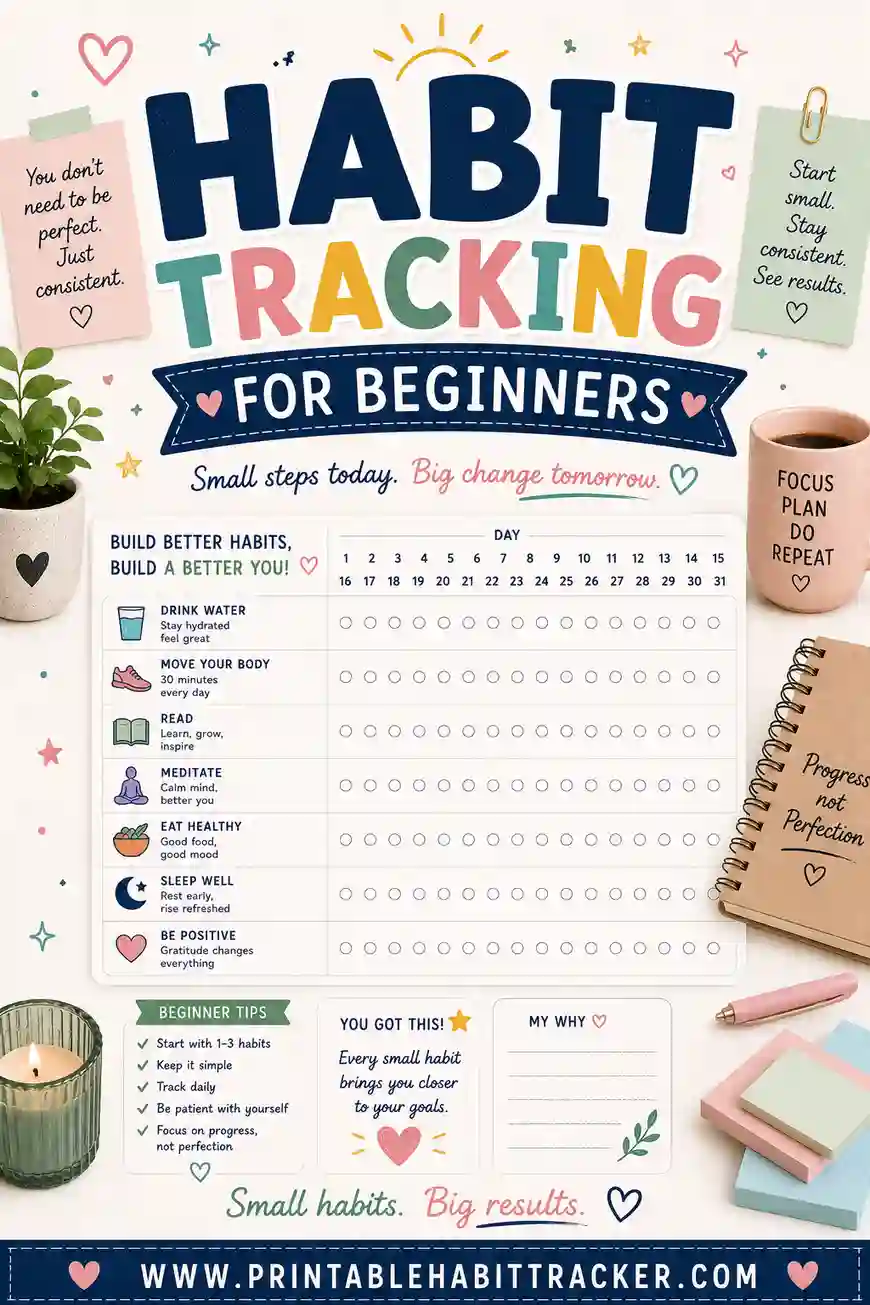
A printable tracker lets you mix all three on one sheet. Pair a daily grid for the everyday stuff with a short weekly checklist down the side.
How to Build Your Saving-Money Tracker in 4 Steps
You can have this printed in under ten minutes. Here's the whole thing.
- Pick your habits. Choose three to six from the table above, or write your own. Fewer is better at the start.
- Choose your frequency. Daily grid, weekly checklist, or both. Match it to how often each habit actually happens.
- Set a small money goal. Add a savings target at the top, like "$100 this month," so every checked box points somewhere.
- Print it. Use the free tracker to lay it out cleanly, then print and tape it where you'll see it daily.
Stick it somewhere you can't avoid: the fridge, your desk, the inside of your front door. Out of sight really does mean out of mind with money habits.
Pair Your Tracker With a Savings Challenge
Trackers get more fun when there's a game attached. A few popular savings challenges slot right into a printable grid.
The no-spend challenge
Pick a stretch of days (a week is a good first try) and mark every no-spend day green. The goal is a clean, unbroken row. It's surprisingly addictive once you've colored in a few days and don't want to ruin the streak.
The round-up habit
Every time you buy something, round it up to the next dollar and move the difference to savings. Track it with a daily "rounded up" box. Tiny amounts, but they pile up faster than you'd think.
The weekly escalator
Save a growing amount each week: $5 the first week, $10 the next, and so on. A weekly column on your tracker makes the climb visible and keeps you on pace.
| Challenge | Best frequency | What you check |
|---|---|---|
| No-spend streak | Daily | A box for every $0-extras day |
| Round-up habit | Daily | A box when you move the spare change |
| Weekly escalator | Weekly | One box per week, growing amount |
| Pantry-only week | Daily | A box for each day you cook from what you have |
Pick one challenge at a time. Stacking three at once is the fastest way to quit all three.
Tips to Actually Stick With It
A tracker only saves money if you keep using it. A few small things make a big difference.
- Keep it visible. A tracker in a drawer does nothing. Tape it somewhere you pass every day.
- Check off at the same time daily. Tie it to an existing routine, like right after dinner or before bed. The anchor makes it automatic.
- Celebrate streaks, not perfection. Miss a day? Start a new streak tomorrow. One blank box doesn't erase your progress.
- Add up your wins. At the end of the month, count the boxes and estimate the dollars saved. Seeing "$140 from packed lunches" is rocket fuel for next month.
- Reset monthly. Print a fresh sheet each month. A clean grid feels like a new chance, and you can swap habits as your goals shift.
Make the savings real
The point isn't checking boxes, it's the money. Open a separate savings account or jar and actually move the cash when you check the box. A tracker that doesn't move real money is just a coloring page.
Who a Saving-Money Tracker Helps Most
This works for almost anyone, but a few groups get the biggest lift.
- People paying off debt. Tracking no-spend days frees up cash for extra payments and keeps the goal front and center.
- Couples saving together. A shared sheet on the fridge turns saving into a team sport. (Our habit tracker for couples goes deeper on shared goals.)
- Anyone with a big goal. Saving for a trip, a deposit, or an emergency fund? A tracker breaks the scary number into daily, doable boxes.
- Resolution-setters. "Save more money" is one of the most common goals, and a tracker is how you keep it past January. See our habit tracker for new year resolutions for the full playbook.
Frequently Asked Questions
How do I use a habit tracker for saving money?
Pick a few money habits like no-spend days or packing lunch, print a tracker, and check a box each day you do them. The visible streak keeps you consistent, and moving real money when you check the box turns the habit into actual savings. Start with three habits and add more once they stick.
What habits should I put on a money-saving tracker?
Focus on your real leaks. Common winners are no-spend days, packed lunches, skipped takeout coffee, logging every purchase, and a set daily transfer to savings. Add a weekly box for reviewing subscriptions. Three to six habits is plenty.
Is a printable tracker better than a budgeting app?
It's different, not strictly better. Apps are great for tracking exact numbers. A printable tracker wins on simplicity and visibility, since a sheet on the fridge nudges you every day with zero notifications, logins, or fees. Many people use both.
How long does it take to build a saving-money habit?
Habits vary, but most people feel a routine click into place within a few weeks of daily repetition. A tracker shortens that by making each day's choice obvious. Aim for a 30-day printable sheet and don't panic over the occasional missed day.
How much money can a habit tracker actually save?
It depends on your habits, but the math adds up fast. Skipping a $5 daily coffee is over $100 a month. Packing lunch four days a week can save $200 or more. Tally your checked boxes at month's end and you'll see the real figure.
Can I track a savings challenge on the same sheet?
Yes. Add a row or column for a no-spend streak, a round-up habit, or a weekly escalator. The free tracker lets you mix daily habits, weekly goals, and a monthly target on one printable page.
Start Saving Today
Grab three money habits from the list above, open the free printable habit tracker, and print a clean sheet for the month. Stick it on the fridge, check a box each day, and move real money when you do. It's free, there's no sign-up, and in a few weeks you'll have a streak worth protecting, and a balance to match. Your future self will thank you.