Habit Tracker for Weight Loss: Free Printable Guide
A habit tracker for weight loss is a daily grid where you check off the small behaviors that actually move the needle, things like drinking water, hitting your step goal, eating protein, and sleeping enough, instead of just staring at the scale. Tracking habits beats tracking weight alone because weight bounces around day to day, while consistent habits are what truly drive long-term results. The easiest way to start is to use a free printable habit tracker, pick five or six habits you can repeat, and print a grid for the month.
Want to jump in? Open the free tracker, choose a monthly or weekly layout, add your habits (a ready-made list is below), and print as many copies as you want. No app, no subscription, no calorie-counting required.
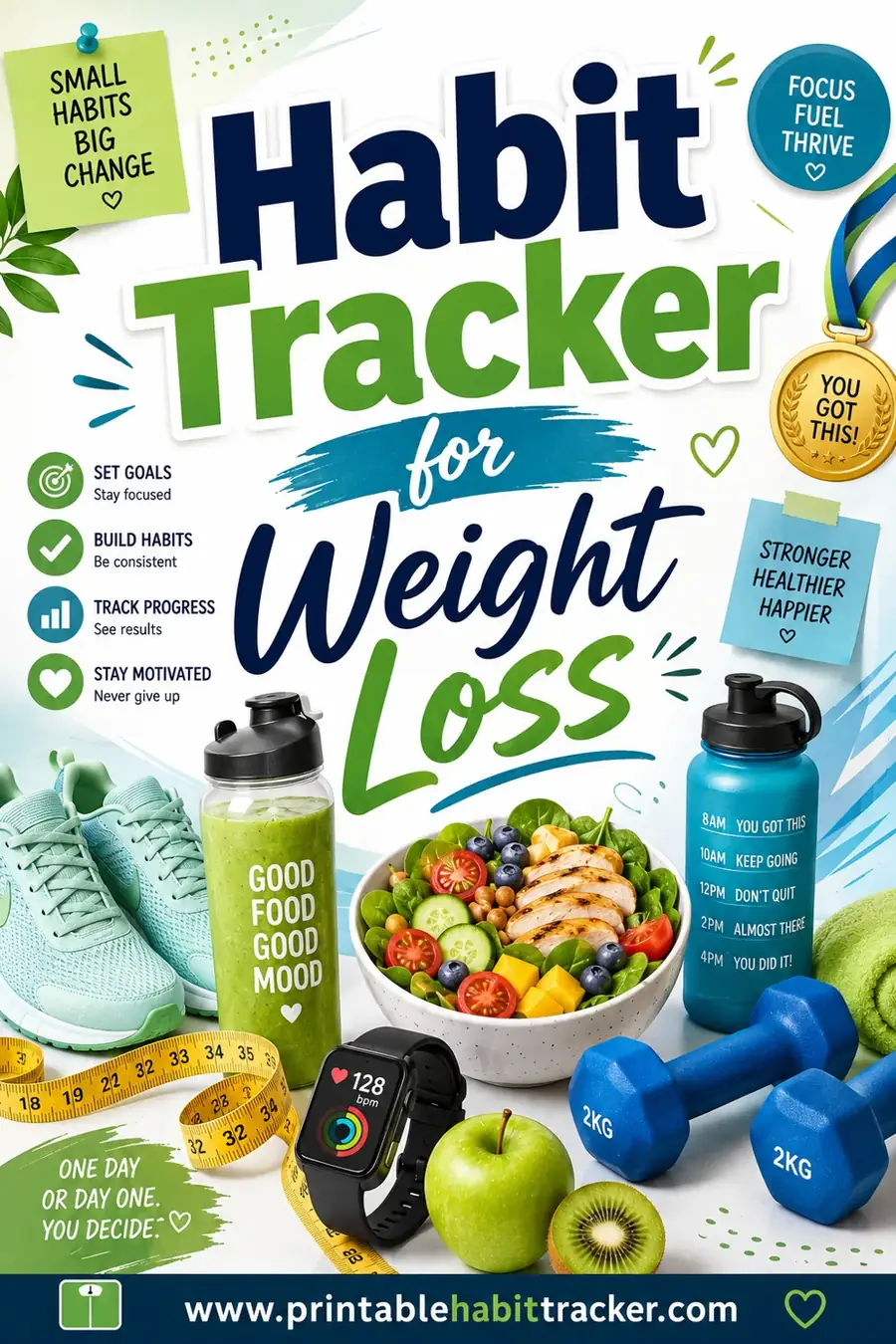
Why Track Habits Instead of Just the Scale?
The scale lies to you in the short term. Water, salt, hormones, and a big dinner can swing the number by a few pounds overnight, none of which has anything to do with fat loss. If you only watch that number, a normal up-day can wreck your motivation for no good reason.
Habits don't lie. Either you drank your water and walked your steps or you didn't. When you track the behaviors instead, you measure the things you can actually control, and those are exactly the things that lead to steady, lasting weight loss.
There's a mindset shift here too. You stop chasing a number and start building a routine. The pounds follow the habits, not the other way around. A grid full of checkmarks is proof you're doing the work, even on a week when the scale won't cooperate.
The Best Habits to Track for Weight Loss
Focus on habits that are simple, repeatable, and within your control. Here are the heavy hitters, plus why each one matters.
| Habit | Why it helps | How to track |
|---|---|---|
| Drink water | Curbs snacking, supports digestion | One box per glass, aim for 6–8 |
| Hit a step goal | Burns calories without the gym | Check when you reach your number |
| Eat protein at meals | Keeps you full, protects muscle | Check each meal with protein |
| Eat veggies/fruit | Fills you up on fewer calories | One box per serving |
| Sleep 7+ hours | Poor sleep drives cravings | Check if you got enough rest |
| No late-night snacking | Cuts mindless extra calories | Check if the kitchen closed on time |
| Move or work out | Builds the calorie burn habit | Walk, lift, anything counts |
Don't try to do all seven at once. Pick the three or four that feel hardest for you right now. Once those click, add another. A tracker works because it's realistic, not because it's crammed.
Skip the all-or-nothing habits
Avoid vague or punishing rows like "eat clean" or "no carbs." They're hard to define and easy to "fail," which makes you want to quit. "Eat a protein at lunch" is something you can clearly check off. Specific habits stick; perfect habits don't.
How to Set Up Your Weight-Loss Tracker
The setup is quick and you can tweak it as you learn what works.
- Pick a layout. A monthly grid is great for streaks and the big picture. A weekly page leaves more room for notes and meal ideas. Start with whatever feels less intimidating.
- Add your habits. Type in three to five from the list above. Keep each row short so it fits cleanly.
- Add an optional weigh-in spot. If you weigh yourself, do it once a week, same day, same time, and jot it in a corner. Resist the urge to weigh daily.
- Print and post it. The fridge is perfect, it's where a lot of weight-loss decisions happen anyway.
The whole thing takes about five minutes with the free tracker. Print on plain paper first; you'll refine your habits after a week or two.
Track Trends, Not Daily Numbers
If you do track weight, watch the trend over weeks, not the daily wobble. Here's the difference in plain numbers.
| Week | Weigh-in | What the daily scale showed |
|---|---|---|
| 1 | 182.0 | Bounced 181–184 all week |
| 2 | 181.4 | Up to 183 after a salty dinner |
| 3 | 181.6 | Felt "stuck," panicked a little |
| 4 | 180.2 | Finally dropped, habits held steady |
Week 3 looks like a stall if you only see one number. But the weekly trend is clearly heading down, and the habit grid for those weeks was full. That's why you track habits as your main signal and treat the scale as a slow-moving background check.
Build Streaks That Survive Real Life
Motivation fades; systems don't. A few rules keep your streak alive through busy weeks, vacations, and the occasional pizza night.
- Use the two-day rule. One off-day is just life. The trick is not letting it become two in a row. That single guardrail protects months of progress.
- Aim for 80%, not 100%. Hitting your habits most days is what drives results. Nobody is perfect, and you don't need to be.
- Make the checkmark feel good. A bold mark or a colored square gives your brain a little hit of "yes." Stack enough of those and the habit gets easier.
- Plan for the wobble. Eating out? Decide your one non-negotiable in advance, like getting your steps or your water. Progress, not perfection.
When the scale stalls
Plateaus happen to everyone. Before you panic, look at your habit grid. Has water slipped? Are steps down? Is sleep a mess? Nine times out of ten, a stall is a habit story, not a metabolism mystery. Tighten the habits, hold steady, and the scale usually catches up.
Stack New Habits Onto Old Ones
The fastest way to make a weight-loss habit stick is to attach it to something you already do without thinking. This is called habit stacking, and it removes the hardest part: remembering. Instead of hoping you'll drink more water, you tie it to a trigger that already happens every single day.
A few examples that work well:
- After I pour my morning coffee, I drink a full glass of water first. Now hydration starts your day automatically.
- Before I sit down to dinner, I plate my veggies first. The veggie habit happens before the urge to overfill on everything else.
- After I park at work, I take the long way to the door. Free steps with zero extra planning.
- After I brush my teeth at night, the kitchen is closed. The late-night snacking habit ends on a clear, automatic cue.
Notice how each one follows the same shape: after an existing habit, do the new one. You're not relying on willpower or memory, you're borrowing a routine you already have. Once the stack feels natural, check it off on your tracker and let the grid confirm the streak. After a few weeks, the new habit stops feeling like effort and starts feeling like just how you do things.
This is also why you should add habits slowly. Stack one new behavior onto a solid old one, lock it in for a couple of weeks, then stack the next. Trying to install five new routines at once is how good intentions collapse by Wednesday.
Weekly vs. Monthly: Which Layout Wins?
Both work; it comes down to how you like to see your progress.
- Weekly page. Best if you want space for meal notes, water tally marks, and a single weekly weigh-in. Lower pressure, easy to keep up.
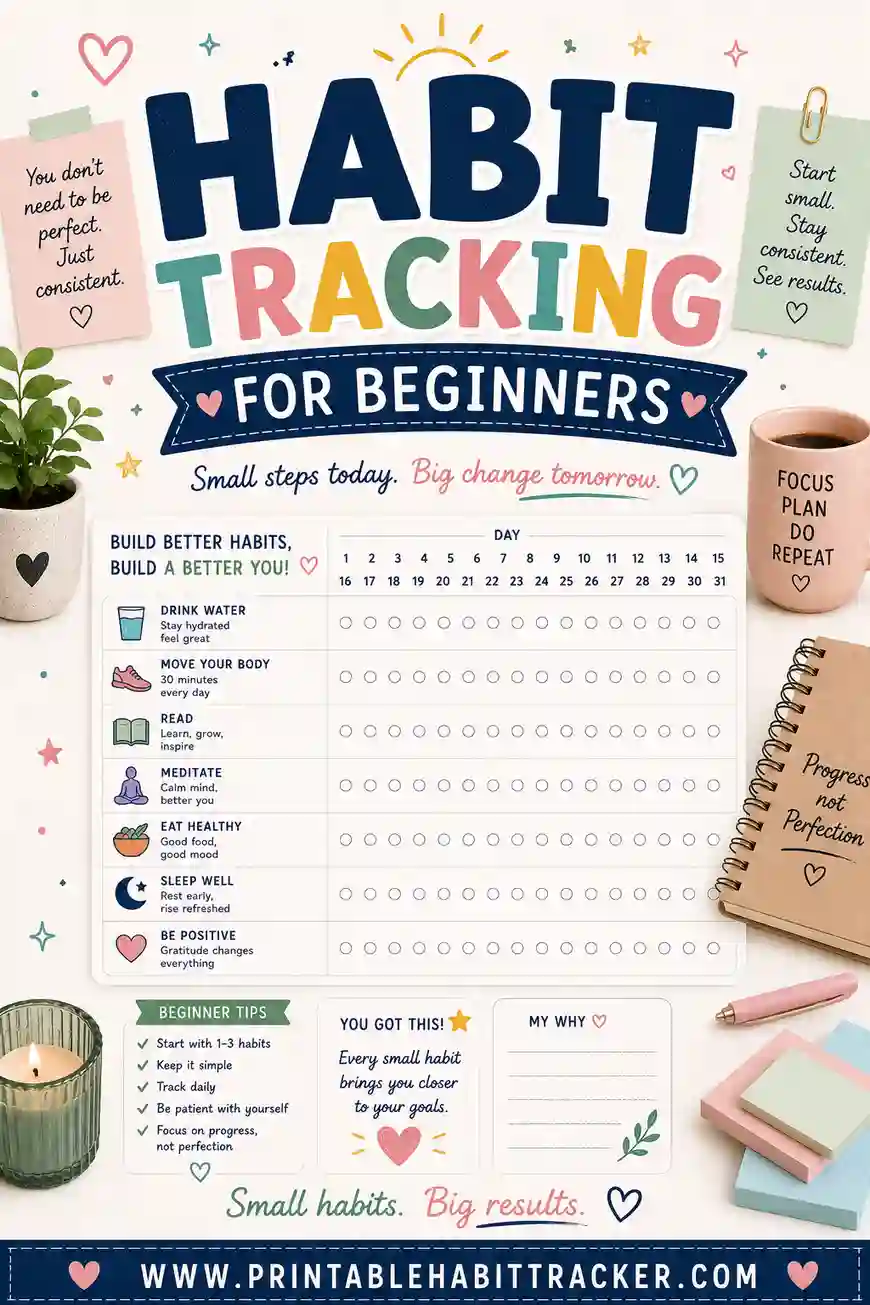
- Monthly grid. Best for the motivation of a long, growing streak. Seeing 25 green days in a row is hard to argue with.
- Both together. A monthly grid on the fridge for momentum, plus a weekly page in a planner for detail. The tracker makes every layout free, so use what keeps you going.
Make It Work for the Long Haul
Weight loss is a marathon, so set your tracker up to last.
- Keep it simple enough to do tired. If checking the boxes feels like a chore, you've added too many. Trim it down.
- Celebrate non-scale wins. Clothes fitting better, more energy, easier stairs. Leave a "wins" box at the bottom and fill it often.
- Print next month early. Having the next page ready removes the friction that ends a lot of streaks.
- Pair it with a fitness page. Tracking workouts separately keeps both clear.
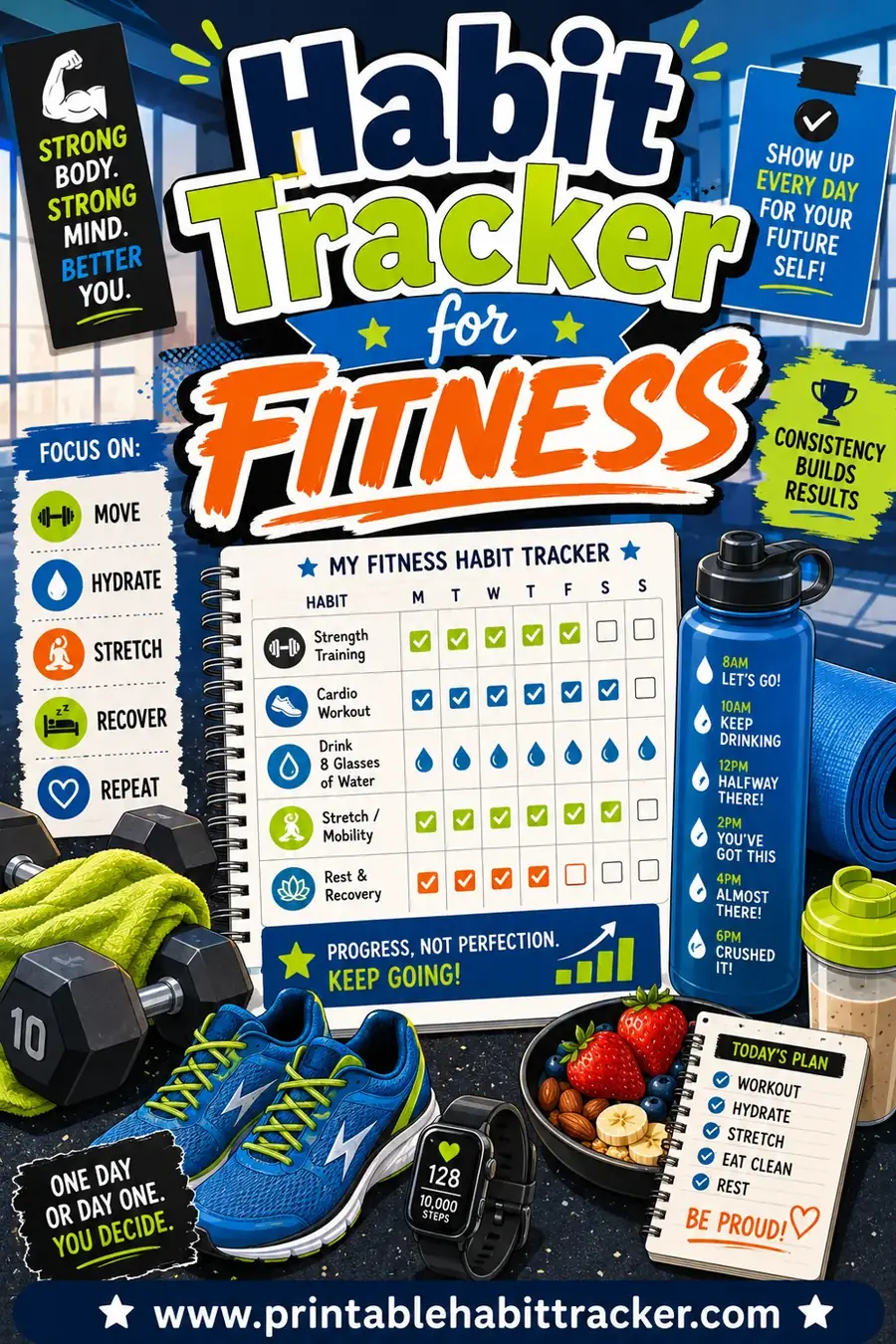
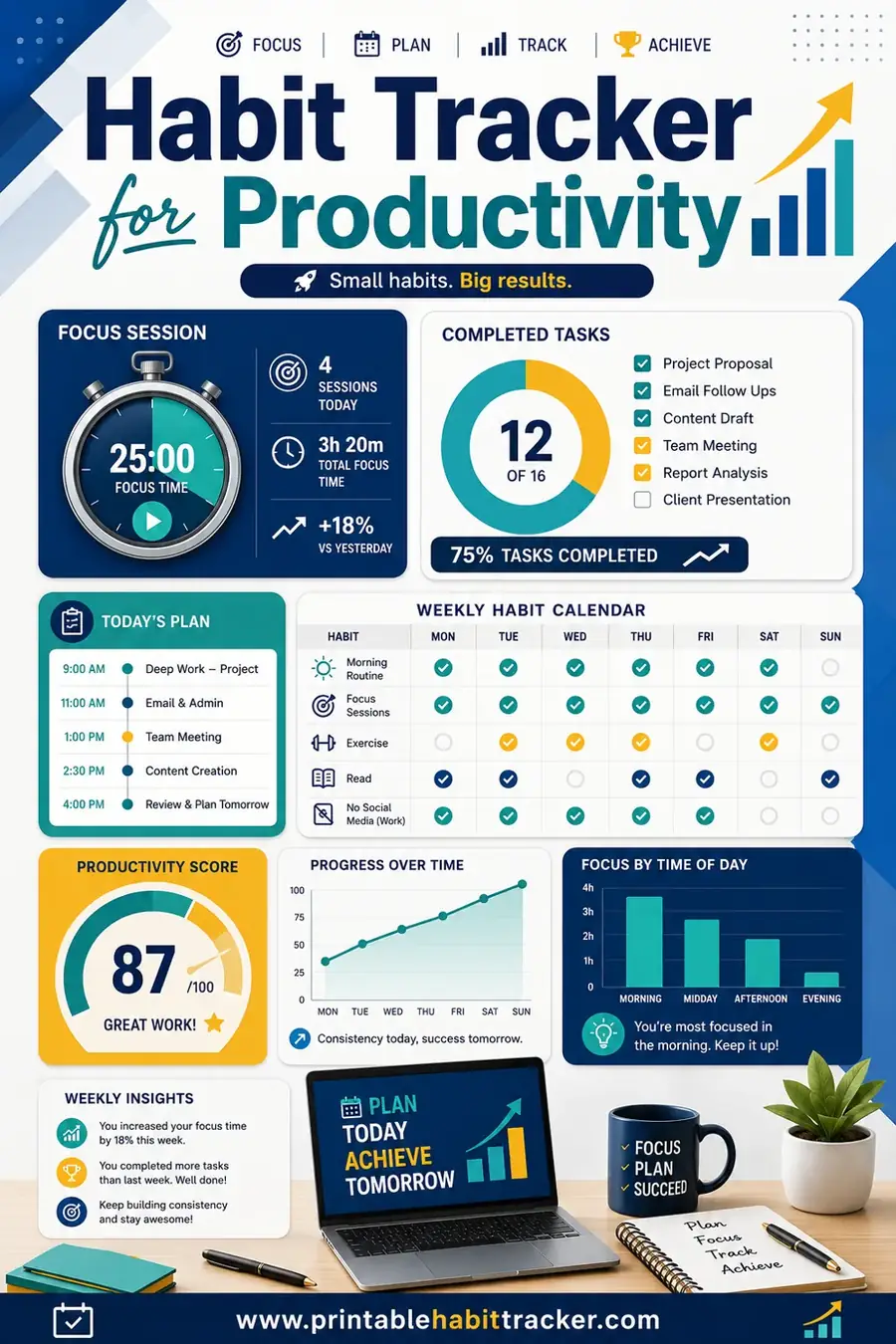
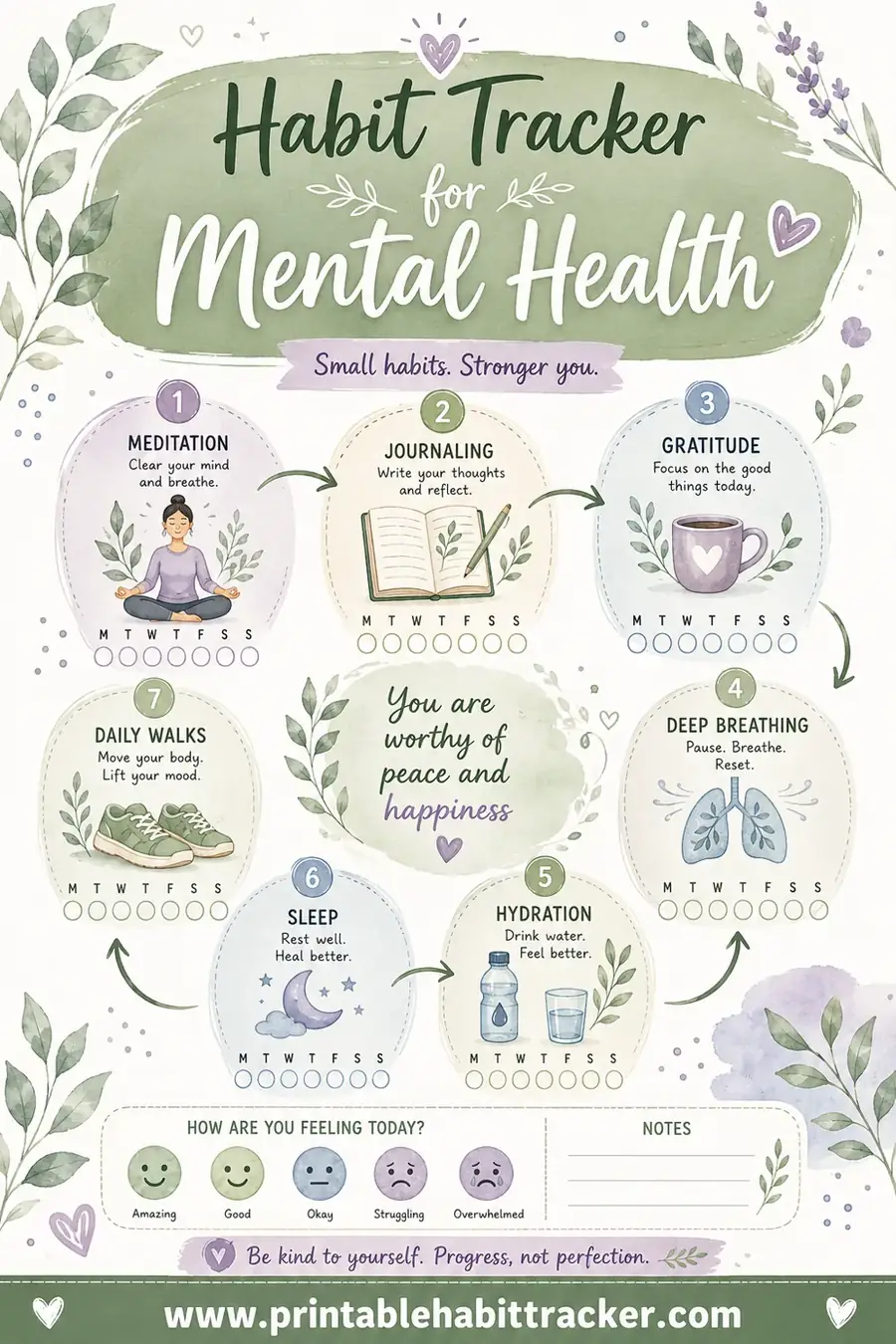
This same approach works beyond the scale. A fitness habit tracker pairs perfectly for the movement side, a productivity habit tracker keeps your days organized so healthy choices are easier, and a mental-health habit tracker helps with the sleep and stress that quietly affect cravings.
Frequently Asked Questions
What habits should I track to lose weight?
Focus on controllable daily behaviors: drink water, hit a step goal, eat protein and veggies at meals, sleep seven-plus hours, and avoid late-night snacking. Pick three to five to start. The habit list above gives you ready-to-copy ideas you can mix and match.
Should I track my weight or my habits?
Track habits as your main signal, since they're what you control and what actually drives results. If you also weigh in, do it once a week and watch the multi-week trend, not the daily number, which naturally bounces around.
How often should I weigh myself?
Once a week is plenty, same day and same time for a fair comparison. Daily weighing usually just creates stress from normal water-weight swings. Let your habit grid be the thing you check every day.
What if the scale stops moving?
Plateaus are normal. Check your habit grid first, often a stall lines up with slipping water, fewer steps, or poor sleep. Tighten those habits, stay consistent, and the scale usually starts moving again on its own.
How many habits should I put on the tracker?
Start with three to five. A page crammed with ten habits feels overwhelming and you'll quit. Nail a few core habits first, then add more once they feel automatic. Simple and consistent beats ambitious and abandoned.
Is the printable tracker really free?
Yes. You build and print it yourself at no cost, with no login and no watermark. Print a fresh grid every month, or several at once, for as long as you're working toward your goal.
Start Your Weight-Loss Habit Tracker Today
Stop letting the scale run your mood. Pick a few habits you can actually repeat, track them daily, and watch your consistency, not just your weight. Open the free habit tracker, choose your layout, and print it in minutes. The pounds follow the habits, so build the habits and let the grid keep you honest. Here's to a stack of checkmarks and steady progress.