How to Make a Habit Tracker in a Bullet Journal
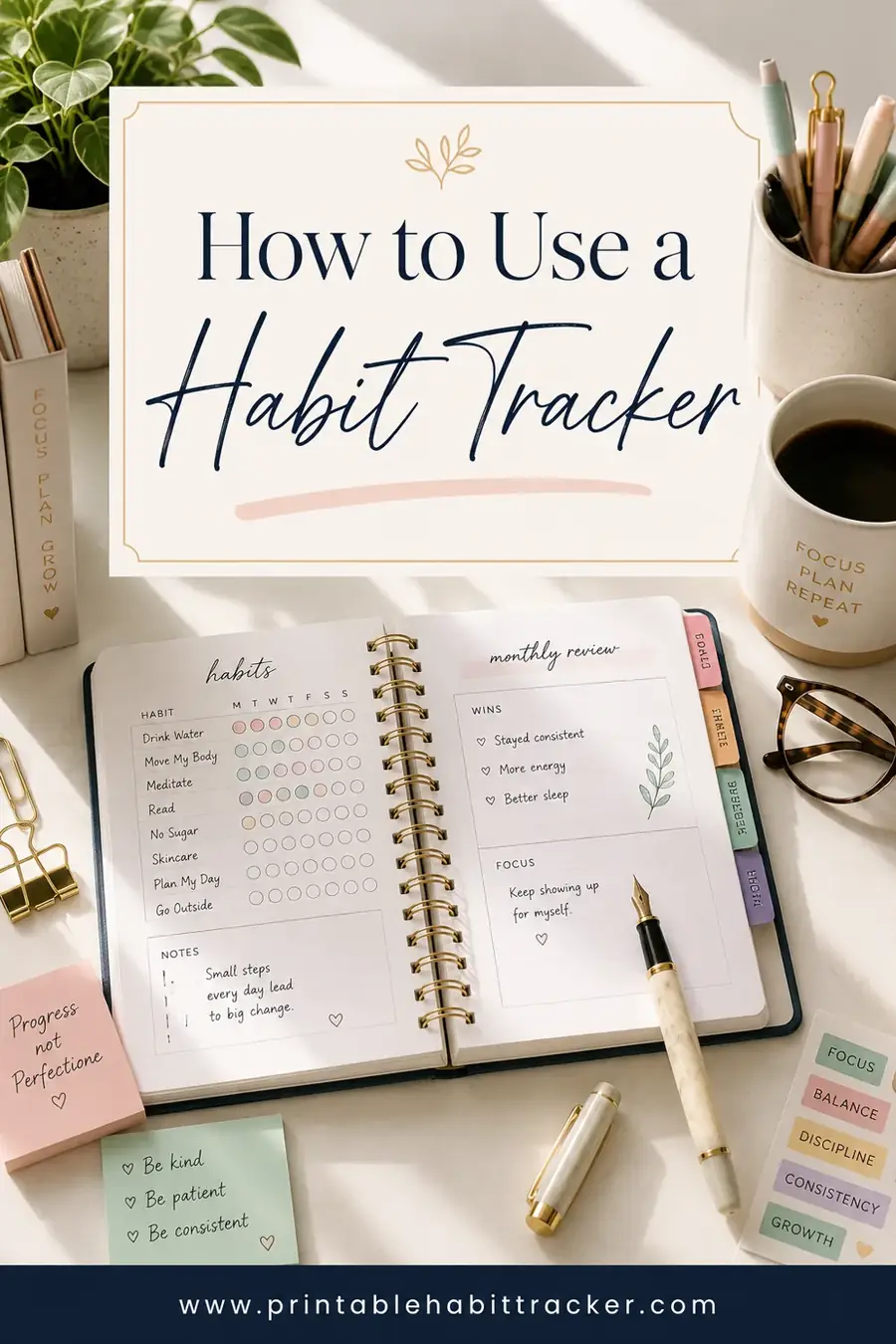
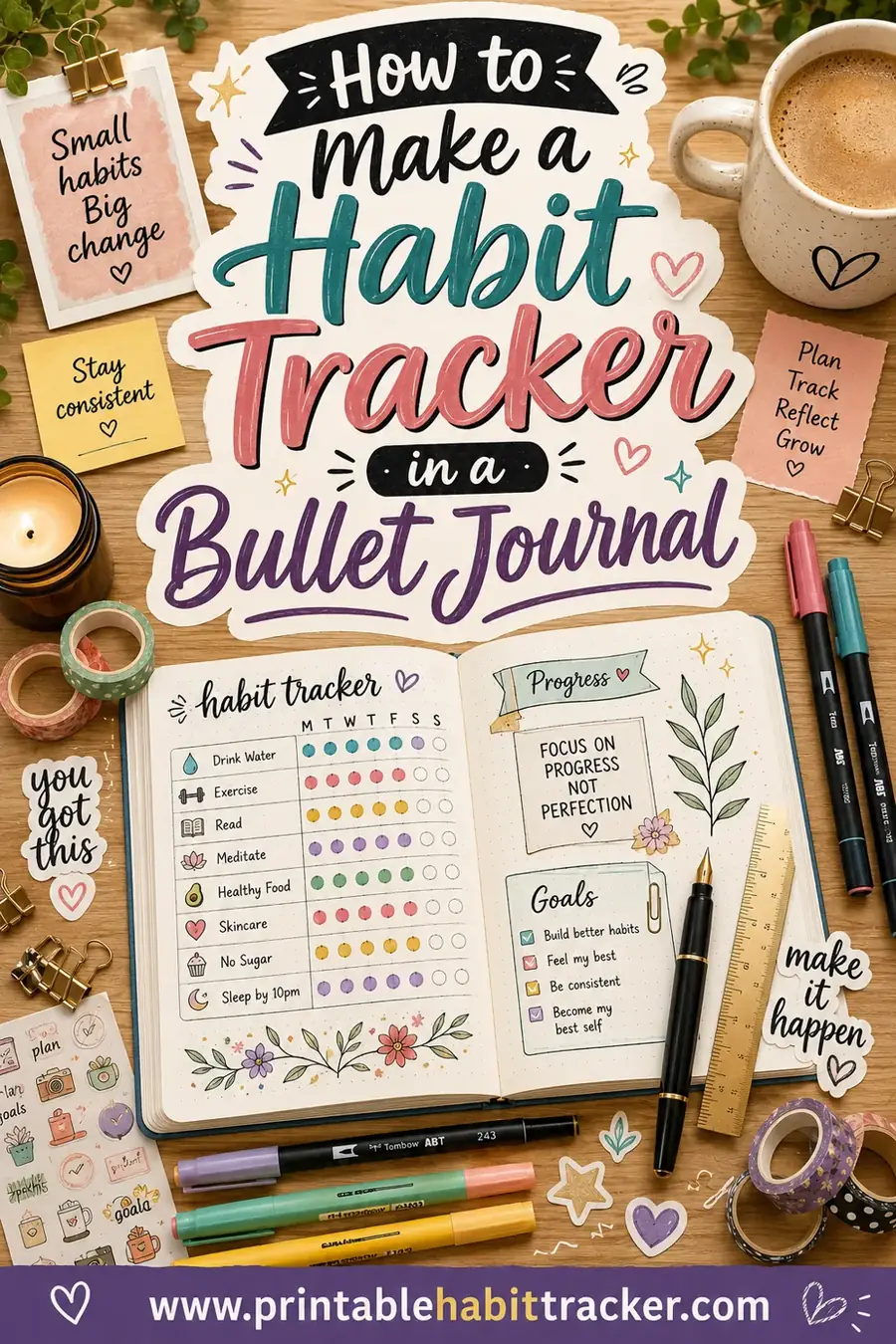
A habit tracker in a bullet journal is a simple grid you draw yourself: habits listed down one side, the days of the month across the top, and a box for each day you complete the habit. You fill in a box every time you do the thing, and the rows of filled squares show your streaks at a glance. All you need is your journal, a ruler, and a pen, and you can have one set up in about ten minutes.
Short on time or not into drawing grids? You can make a free printable habit tracker, print it, and glue or clip it straight into your journal. Same result, no ruler required.
Why Put a Habit Tracker in Your Bullet Journal
A bullet journal is already where you plan your life, so it's the natural home for a habit tracker. You don't have to remember to check a separate app or hunt for a loose sheet. It's right there, on the same page you flip to every day.
There's also the personalization. Your journal tracker can be as plain or as pretty as you want. Some people keep it bare-bones with a quick grid. Others theme it to the season with doodles and color. Both work, because the only thing that actually matters is that you fill it in.
And because you draw it yourself, you track exactly what you want. No app deciding which habits "count." If you want to track water, sleep, reading, and "no snooze button" all on one page, you just add the rows.
What You'll Need
Good news: almost nothing. Here's the basic kit.
- Your bullet journal. Any dotted, gridded, or even blank notebook works.
- A ruler. For straight lines and even boxes. A short one fits the page better.
- A pen. A fine-tip pen keeps small boxes clean.
- Optional: colored pens or highlighters. For color-coding or filling boxes.
Dot-grid journals make this easiest because the dots act as built-in spacing guides. If your notebook is blank, the ruler does more of the work, but it's still doable.
How to Set Up a Habit Tracker in Your Bullet Journal
Here's the whole process, step by step. Don't overthink it, the first one doesn't have to be perfect.
- Pick your habits. Start with three to seven. Write them down before you draw anything.
- Choose your time frame. Most people do a full month. A week works too if you want to start small.
- Draw the grid. Days across the top (1 to 30 or 31), habits down the left side. Use your ruler and count dots for even spacing.
- Label everything. Write each habit name on the left. Number the days along the top.
- Add a title and the month. A header keeps your journal organized when you flip back.
- Fill it in daily. Color, check, or X each box as you complete the habit.
The trickiest part is spacing the grid so it fits the page. Count your habits and your days first, then divide the space. On a dot-grid page, that's just counting dots.
A quick steps-at-a-glance table
| Step | What you do | Time |
|---|---|---|
| 1. Choose habits | List 3–7 habits | 2 min |
| 2. Pick time frame | Week or month | 1 min |
| 3. Draw grid | Days across, habits down | 4 min |
| 4. Label | Habit names + day numbers | 2 min |
| 5. Decorate (optional) | Color, doodles, theme | As long as you like |
Bullet Journal Habit Tracker Layouts to Try
Not every tracker has to be a plain grid. Here are popular layouts bullet journalers swear by.
The classic grid
Habits down the side, days across the top. Simple, fast, and easy to scan. If you're new, start here. It works for any number of habits.
One habit per page (the mini-grid)
Give a single big habit its own small calendar-style box. Great for one habit you really want to nail, like daily exercise or no sugar. The whole page becomes a visual streak.
The circle tracker
Draw a circle divided into 30 or 31 wedges, one per day. Color a wedge each day you succeed. By month's end you've got a colorful pie that shows your consistency in one glance. Pretty and motivating.
The mini monthly view
A small calendar grid where you dot or color the days you did a habit. Good for tracking one or two things without taking up much space.
What to Track in Your Bullet Journal
Stuck on what to put on your tracker? Here's a menu of habits that work well in a journal, sorted by goal.
| Goal | Habit ideas |
|---|---|
| Health | Drink water, take vitamins, stretch, 8k steps, no soda |
| Mind | Meditate, journal, read 10 pages, gratitude note |
| Productivity | Make the bed, inbox zero, plan tomorrow, deep-work hour |
| Self-care | Sleep by 11, skincare, no phone in bed, get outside |
| Creativity | Sketch, write 200 words, practice an instrument |
Pick a mix that fits where you are right now. Don't track twenty things at once, you'll burn out fast. Three to seven is the sweet spot for most people.
Tips to Keep Your Tracker (and Your Habits) Going
Setting up the tracker is the easy part. Keeping it alive is the real game. A few things that help:
- Keep it visible. Use a paper clip or sticky tab to mark the tracker page so you flip to it instantly.
- Fill it in at the same time daily. Right before bed is popular. Attach it to a habit you already have.
- Don't aim for perfect. A missing box isn't failure. Just don't miss twice in a row.
- Make it satisfying. A nice pen or a color you love makes the daily mark something you look forward to.
- Review weekly. Glance back every Sunday. Celebrate the wins and tweak what's not working.
What to do when you miss a day
You will miss days. Everyone does. The key is to not let one blank box turn into ten. Leave the box empty, be honest, and get right back to it the next day. The blank squares aren't there to shame you, they're data. If one habit keeps coming up blank, that's a sign to make it smaller or swap it out.
Decorating Without Wasting Your Whole Evening
Bullet journal trackers can get gorgeous, but the decorating is also where a lot of people fall into a trap. They spend two hours on a spread, feel exhausted, and never want to do it again. Pretty is nice, but consistency is the goal. Here's how to keep it tidy without it becoming a second job.
- Pick one accent color. A single highlighter or pen for filled boxes looks intentional and takes seconds. You don't need a rainbow.
- Use a header, not a mural. A simple title and the month name is enough structure. Save the elaborate doodles for the months you actually have time.
- Steal a layout, don't invent one. Reuse the same grid every month so setup is muscle memory. Creativity is optional; showing up is not.
- Decorate after, not before. Draw the functional grid first so the tracker works even if you never get to the pretty part.
The journalers who keep their trackers going for years almost always favor function over flourish. A plain grid you fill in beats a stunning spread you abandon. If the art is the fun part for you, great, lean in, just don't let it become the reason you skip a month.
Don't Want to Draw It? Use a Printable Instead
Here's an honest truth: not everyone enjoys drawing grids, and that's fine. If the setup feels like a chore, you'll skip it, and a tracker you skip doesn't help anyone.
That's where a printable comes in. You build a free printable habit tracker, pick your habits and layout, print it, and either glue it into your journal or keep it loose. You get the satisfaction of paper tracking without spending ten minutes with a ruler each month. It also looks tidy and consistent every single time, which is a relief if your hand-drawn lines tend to wander.
A lot of bullet journalers use a hybrid: hand-drawn spreads for the fun, creative months, and a clean printable when life gets busy and they just need the function. Both keep the habits going, which is the whole point.
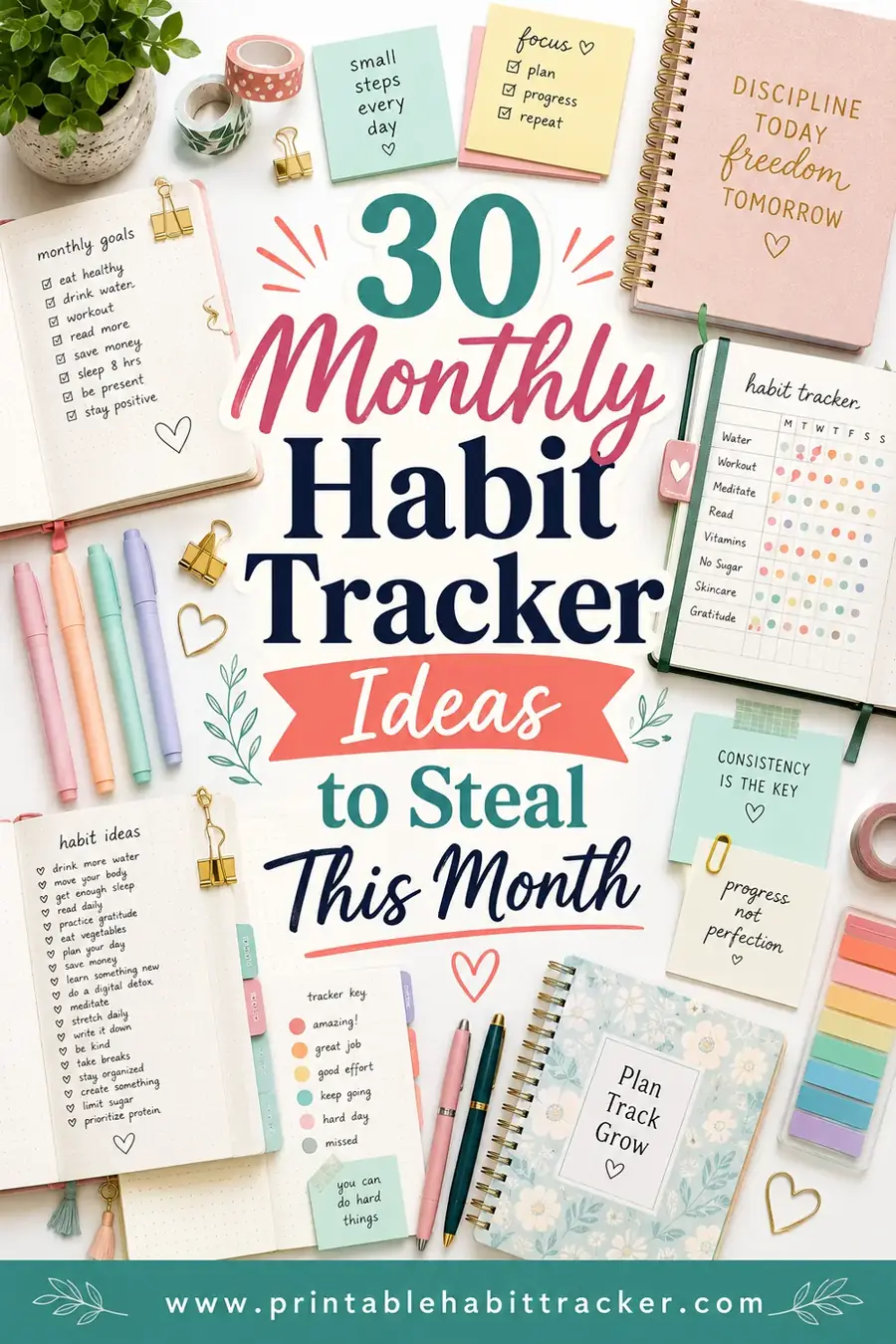
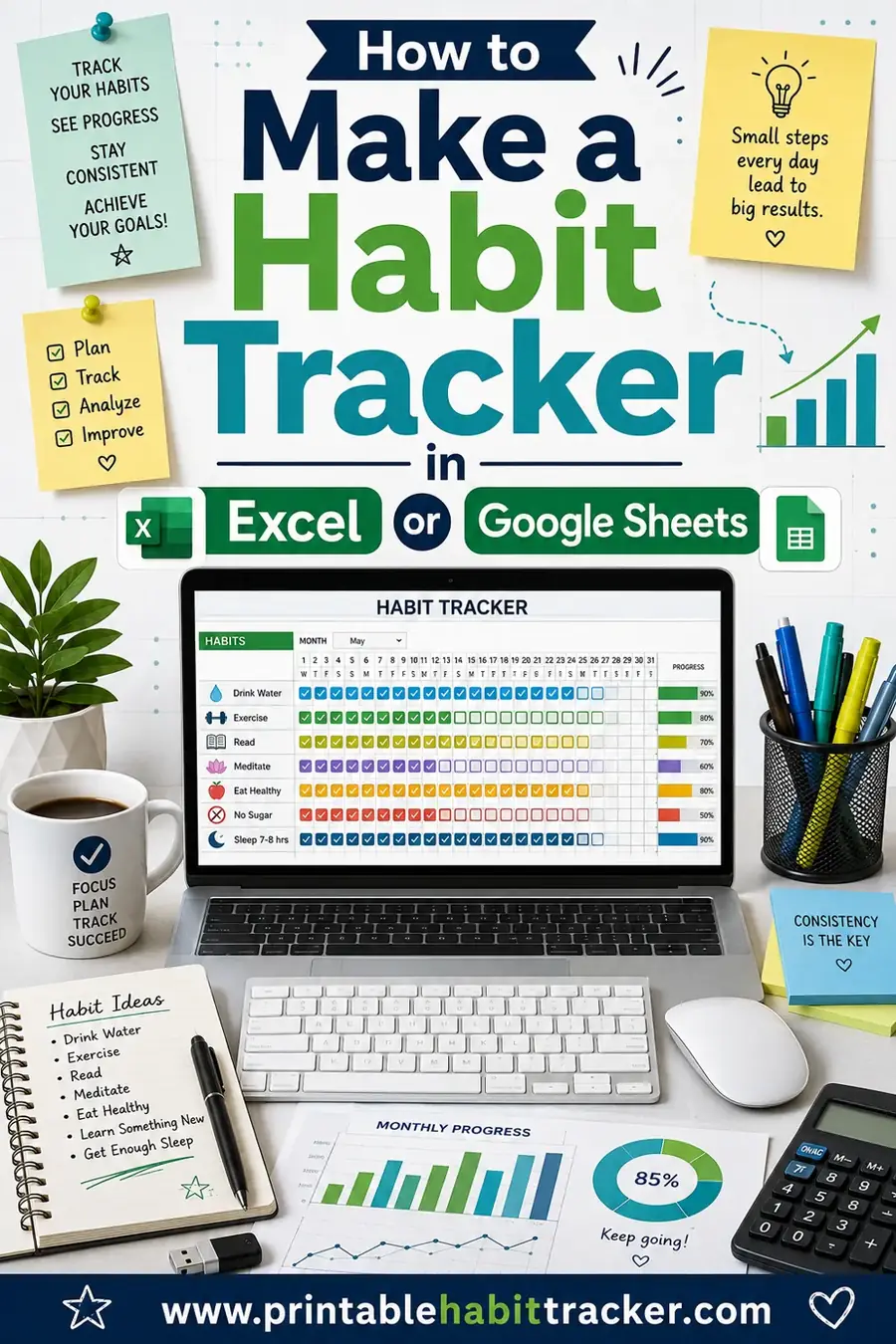
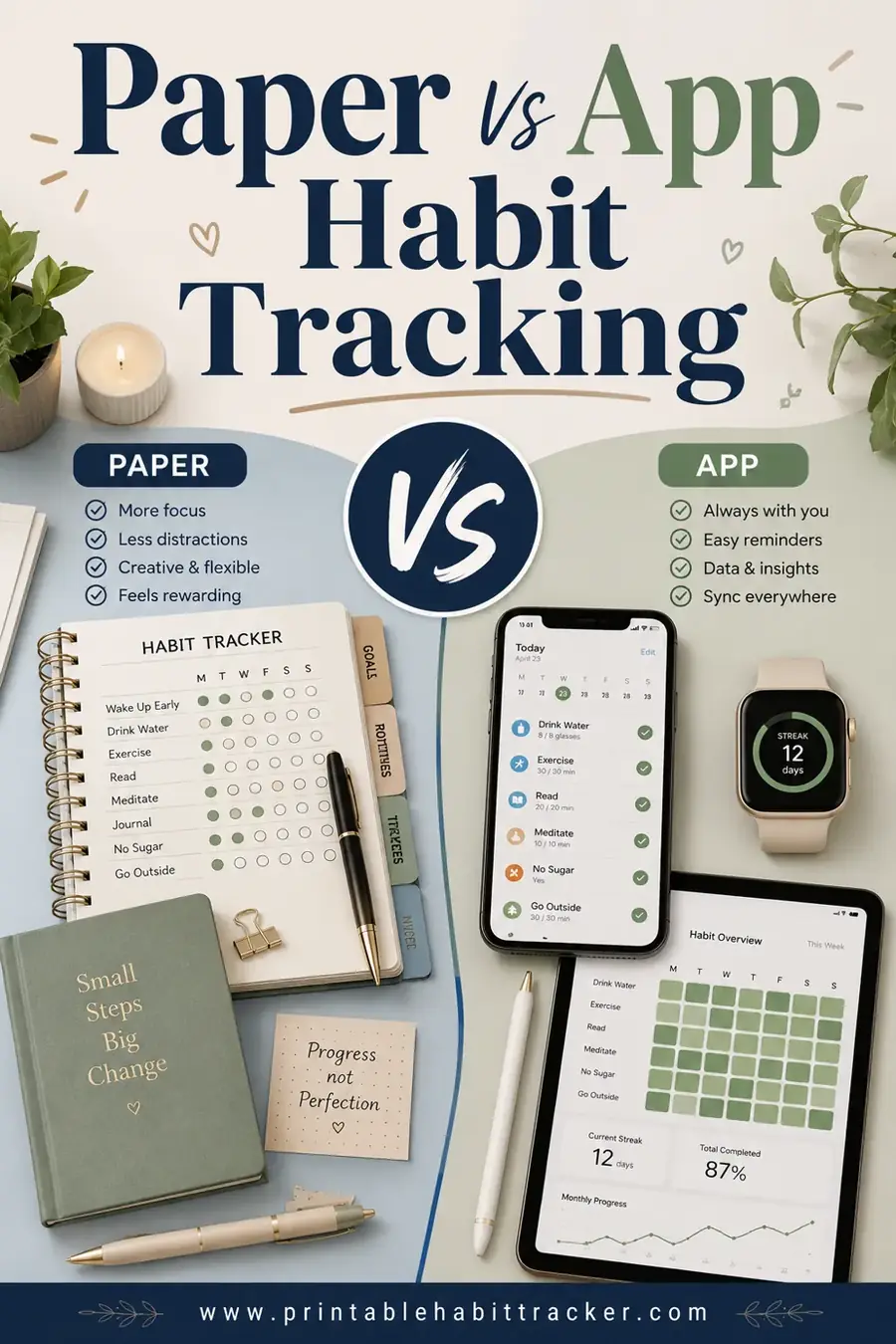
If you're weighing the look-and-feel of hand-drawn versus the speed of printing, our monthly habit tracker ideas post has layouts that work either way. Curious about digital options? Compare them in our guides to building a habit tracker in Excel or Sheets and the broader paper vs app habit tracking breakdown.
Frequently Asked Questions
How do I make a habit tracker in a bullet journal?
List your habits down the left side of a page and the days of the month across the top, then draw a grid of boxes connecting them. Each day you complete a habit, fill in the matching box. A ruler keeps the lines straight, and a dot-grid journal makes spacing easy.
How many habits should I track in my bullet journal?
Three to seven is ideal. A short list is easy to maintain and far more likely to stick. Tracking too many habits at once is the fastest way to abandon the whole spread. Start small and add more once the first few feel automatic.
What's the best bullet journal habit tracker layout?
The classic grid (habits down, days across) is the most popular because it's quick to make and easy to scan. Circle trackers and mini-grids are prettier and more motivating for single habits. Try a couple and keep whichever one you actually fill in.
Can I use a printable habit tracker in my bullet journal?
Absolutely. Many people make a free printable tracker and glue or clip it into their journal. It saves the ten minutes of drawing a grid, looks consistent every month, and still lives right in your journal where you'll see it daily.
What should I do if I miss a day on my tracker?
Leave the box blank and pick the habit back up the next day. One missed day is normal and not a failure. The rule that helps most people: never miss twice in a row. The blank boxes are just honest data, not a reason to quit.
Do I need a special journal for a habit tracker?
No. Any notebook works, though a dot-grid journal makes drawing even grids much easier because the dots guide your spacing. A ruler and a pen are all the extra tools you really need to get started.
Ready to Start Your Habit Tracker?
Whether you draw it by hand or print one out, the important thing is to begin. Grab your journal and a ruler, or skip the drawing entirely and build a free printable habit tracker in under a minute. Pick a few habits, set up your grid, and fill in your first box today. Future you will be glad you did.