Homeschool Daily Checklist: A Free Printable for Subjects and Routine
A homeschool daily checklist is a simple list of the day's subjects and tasks (read-aloud, math, reading, writing, science or history, plus chores and outside time) that your kids tick off as they finish. The weekly version below puts subjects down the side and days across the top, so you and your kids can see the whole week at a glance. It's the easiest way to keep school days moving, help kids work on their own, and see at the end of the week what you actually got done.
Here's a homeschool checklist with eight common subjects and tasks. Change them to your own, then print it free:
✅ Try this tracker for one week
Tap a box each day you do the habit. Your ticks stay on this device.
What to put on a homeschool checklist
| Type | Examples | How often |
|---|---|---|
| Core subjects | Math, reading, writing, spelling or phonics | Daily |
| Content subjects | Science, history, geography | 2 to 3 times a week each |
| Together time | Read-aloud, morning basket, Bible or poetry | Daily |
| Extras | Art, music, foreign language, typing | 1 to 2 times a week each |
| Life skills | Chores, cooking, money | Daily or weekly |
| Movement | Outside time, PE, sports | Daily |
Write the actual task for older kids: "Math: lesson 42" or "Read 20 pages of your novel." Younger kids do best with pictures or emojis, like on the sample checklist.
Sample homeschool daily schedules
Early elementary (about ages 5 to 8)
| Time | Activity |
|---|---|
| 8:30 | Morning basket: read-aloud, calendar, a song |
| 9:00 | Phonics or reading lesson (15 to 20 minutes) |
| 9:30 | Snack and movement break |
| 9:45 | Math lesson with hands-on materials |
| 10:15 | Handwriting or copywork |
| 10:30 | Outside time |
| 11:30 | Lunch and chore |
| 1:00 | Science, art or nature study (2 to 3 days a week) |
Upper elementary (about ages 9 to 11)
| Time | Activity |
|---|---|
| 8:30 | Read-aloud or morning basket |
| 9:00 | Math lesson and practice |
| 9:45 | Break |
| 10:00 | Writing or grammar |
| 10:45 | Independent reading (30 minutes) |
| 11:30 | Lunch and chores |
| 12:30 | History or science |
| 1:30 | Extras: music practice, art, language |
Middle and high school
Older students can work from a weekly list instead of a daily schedule. Put each course on its own row, with a number of lessons to finish by Friday. They choose the order and tick off each day's work. Meet with them once a day for 15 minutes to check in, review anything tricky and plan the next day.
Example: a filled-in homeschool week
| Subject | Mon | Tue | Wed | Thu | Fri |
|---|---|---|---|---|---|
| Read-aloud | ✓ | ✓ | ✓ | ✓ | ✓ |
| Math lesson | ✓ | ✓ | ✓ | ✓ | |
| Independent reading | ✓ | ✓ | ✓ | ✓ | ✓ |
| Writing or spelling | ✓ | ✓ | ✓ | ||
| Science or history | ✓ | ✓ | ✓ | ||
| Art, music or nature | ✓ | ✓ | |||
| Chore | ✓ | ✓ | ✓ | ✓ | ✓ |
| Outside time | ✓ | ✓ | ✓ | ✓ | ✓ |
Notice Friday has no math lesson. Many homeschoolers use a four-day week for core lessons and keep Friday for catch-up, field trips or a "fun Friday."
How many hours a day is homeschool?
It's usually less time than a regular school day, because there's no lining up, no waiting for a class of 25 and no bus ride. Many families find younger kids need about one to three hours of focused lessons a day, and older students more. Every state has its own homeschool rules, and some set hours, days or subjects, so check your state's requirements.
Restarting homeschool after winter break
January is a great time for a reset. Try this:
- Days 1 to 3: core subjects only: read-aloud, math, reading, writing.
- Days 4 to 5: add science or history back.
- Week 2: full schedule, plus anything new you want to try this term.
- Print a fresh checklist and let your kids pick a new color or title.
It's also a good time to look at what's working. If a subject keeps getting skipped, move it earlier in the day or shorten the lesson.
Tips for independent work
- Put everything they need in a bin or folder for each day.
- Write the task, not just the subject. "Math: page 54, odd problems" is clear.
- Let them pick the order. Choice builds ownership.
- Use a timer for younger kids so lessons don't drag.
- Check in daily. A quick review of the checklist keeps small problems small.
Common homeschool scheduling mistakes
- Copying a public school day hour for hour. Homeschool can be shorter and still thorough.
- Too many subjects at once. Rotate content subjects across the week.
- No breaks. Movement between lessons helps kids focus.
- Forgetting life skills. Chores and cooking count as learning. Our list of chores for 7 year olds has ideas.
How to print your homeschool checklist
- Open the free habit tracker maker with the button above. It opens in the weekly layout with eight subjects.
- Change the title to each child's name, like "Grace's School Week."
- Edit the rows to your subjects, up to 10.
- Print one per child, each Monday, and keep them in their binders.
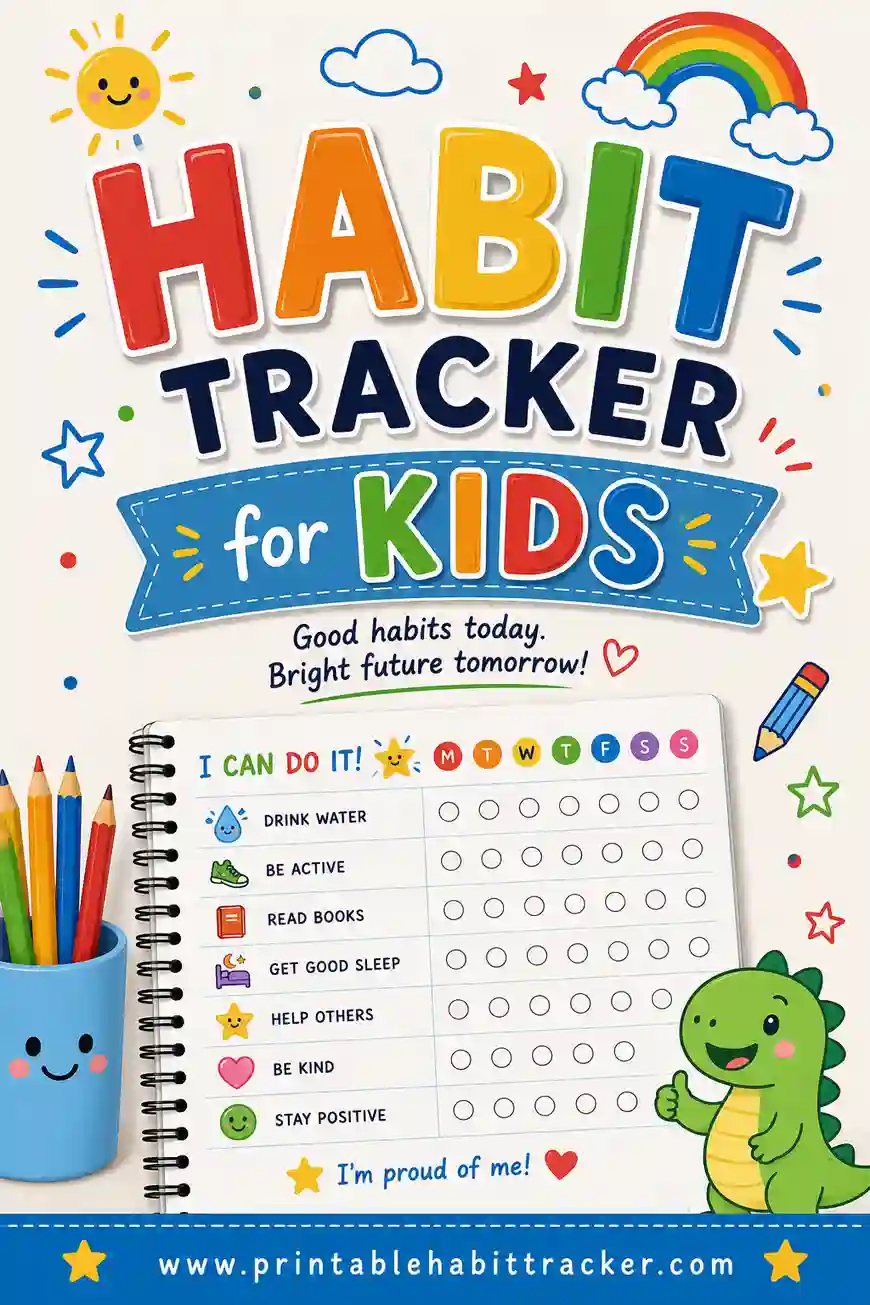
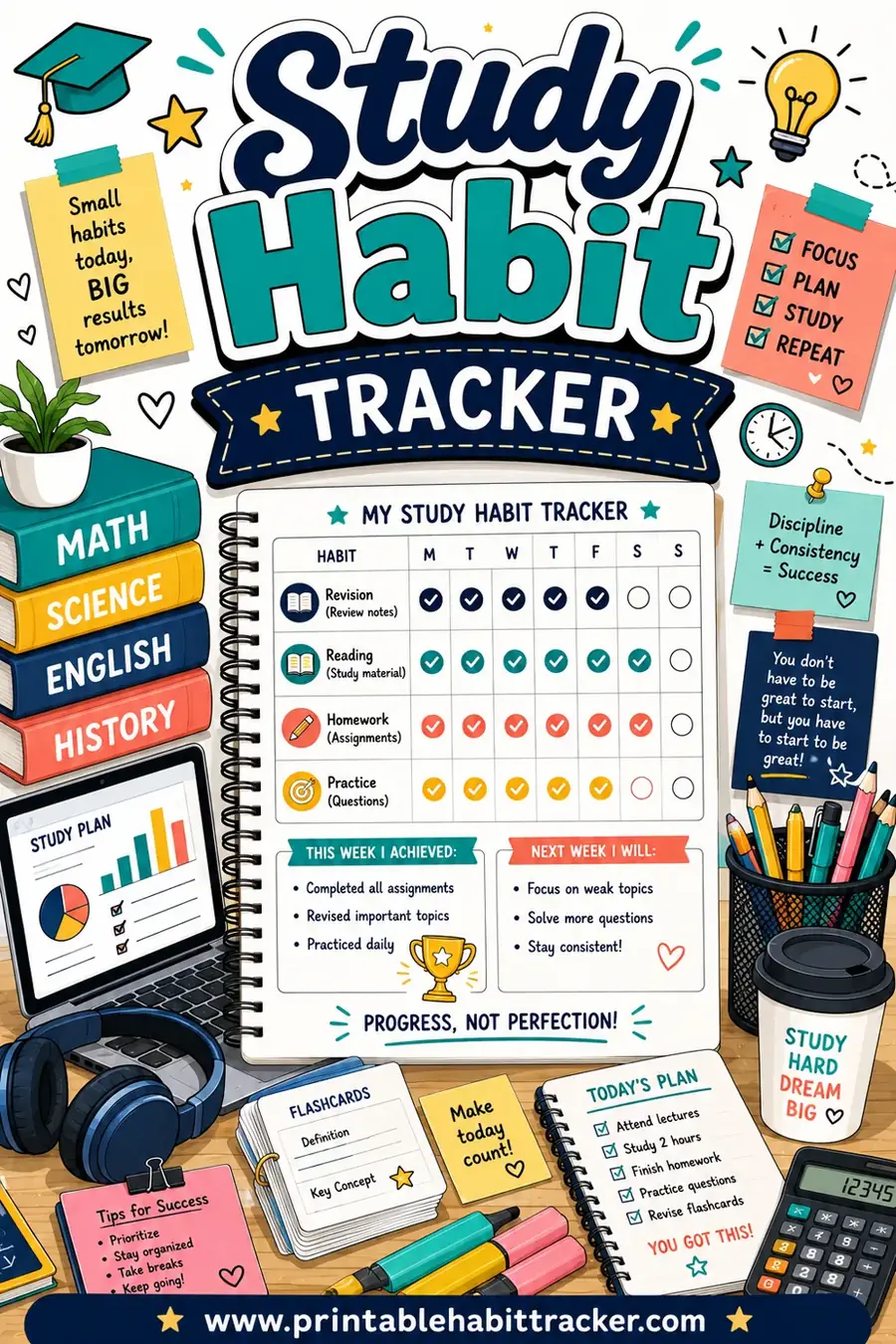
For older students, the study habit tracker is a good next step. Younger kids may like the habit tracker for kids, and for the whole family's day, see how to create a daily routine. When you're ready, open the free maker and print your checklist.
Frequently Asked Questions
What should be on a homeschool daily checklist?
List each subject or task for the day (reading, math, writing, science or history, a read-aloud) plus life skills like chores and outdoor time. Kids tick each one off as they finish.
How many hours a day should you homeschool?
It varies by age and family. Many families find younger kids need about 1 to 3 hours of focused work, and older kids more. Check your state's rules, since some states set hours or days.
Do homeschool checklists help independent learning?
Yes. A checklist shows kids exactly what's left, so they can move from one task to the next without asking. Older kids can even choose the order.
What is a good homeschool schedule?
A simple one: morning basket or read-aloud, then math and reading while minds are fresh, a break, writing or spelling, lunch, then science, history, art or nature study in the afternoon.
How do I restart homeschool after winter break?
Ease back in with a lighter first week: core subjects only (reading, math, writing) for a few days, then add science, history and extras. A fresh checklist helps everyone reset.