How to Do a 30-Day Challenge (and Actually Finish)
To do a 30-day challenge, pick one clear, daily action, commit to repeating it for 30 days straight, and track each day on a printed sheet you see every morning. The tracking is the secret, not a nice extra: marking off each day builds a streak you won't want to break, and a visible chart pulls you through the days you'd rather skip. Keep the goal small enough to do on your worst day, and you'll cross the finish line.
Ready to start? Open the free printable habit tracker, type in your one challenge habit, print the sheet, and tape it somewhere you'll see it daily. No sign-up, no app, and you can print a 30-box grid in seconds.
Why 30 Days Works So Well
Thirty days hits a sweet spot. It's long enough to feel like a real commitment and see actual change, but short enough that the finish line stays in view the whole time. You can picture day 30 from day one, and that visibility keeps you moving.
It also gives a habit room to take root. You won't be on autopilot by day 30, but the action will feel a lot less like a fight than it did on day one. A month is enough to prove to yourself that you can do the thing, which is often the real win.
And there's a psychological bonus: a 30-day challenge has a clear end. You're not signing up for "forever," which feels heavy. You're signing up for one month, which feels doable. Many people finish, like the results, and quietly keep going.
Step 1: Pick One Clear Challenge
The most common reason challenges fail is taking on too much. Pick exactly one habit. Not three. One.
Your challenge should be:
- Specific. "Exercise more" is vague. "Do 20 push-ups" is something you can check off.
- Daily. A 30-day challenge runs every day. If the habit is weekly, this isn't the right format.
- Small enough for a bad day. Choose the version you could do while tired, busy, and unmotivated. You can always do more.
Here are some 30-day challenges that work well:
| Challenge | Daily action | Why it works |
|---|---|---|
| Hydrate | Drink 8 glasses of water | Easy to measure, quick win |
| Move | 20-minute walk | Low effort, big mood payoff |
| Read | 10 pages | Builds a lasting reading habit |
| Tidy | 10-minute declutter | Visible results pile up fast |
| Calm | 5-minute meditation | Short, hard to find an excuse |
| Write | Journal 3 lines | Tiny, builds reflection |
| No-scroll | No phone first hour | Resets your whole morning |
Notice how small each daily action is. That's on purpose. A challenge you can do half-asleep is a challenge you'll finish.
Step 2: Make Your "Why" Crystal Clear
Motivation fades around day four. What carries you past it is a reason that means something to you. Before you start, write one sentence: why does this challenge matter?
"I want more energy to play with my kids." "I want to fall asleep without my phone." "I want to prove I can stick to something." Whatever it is, write it at the top of your tracker so it stares back at you every day.
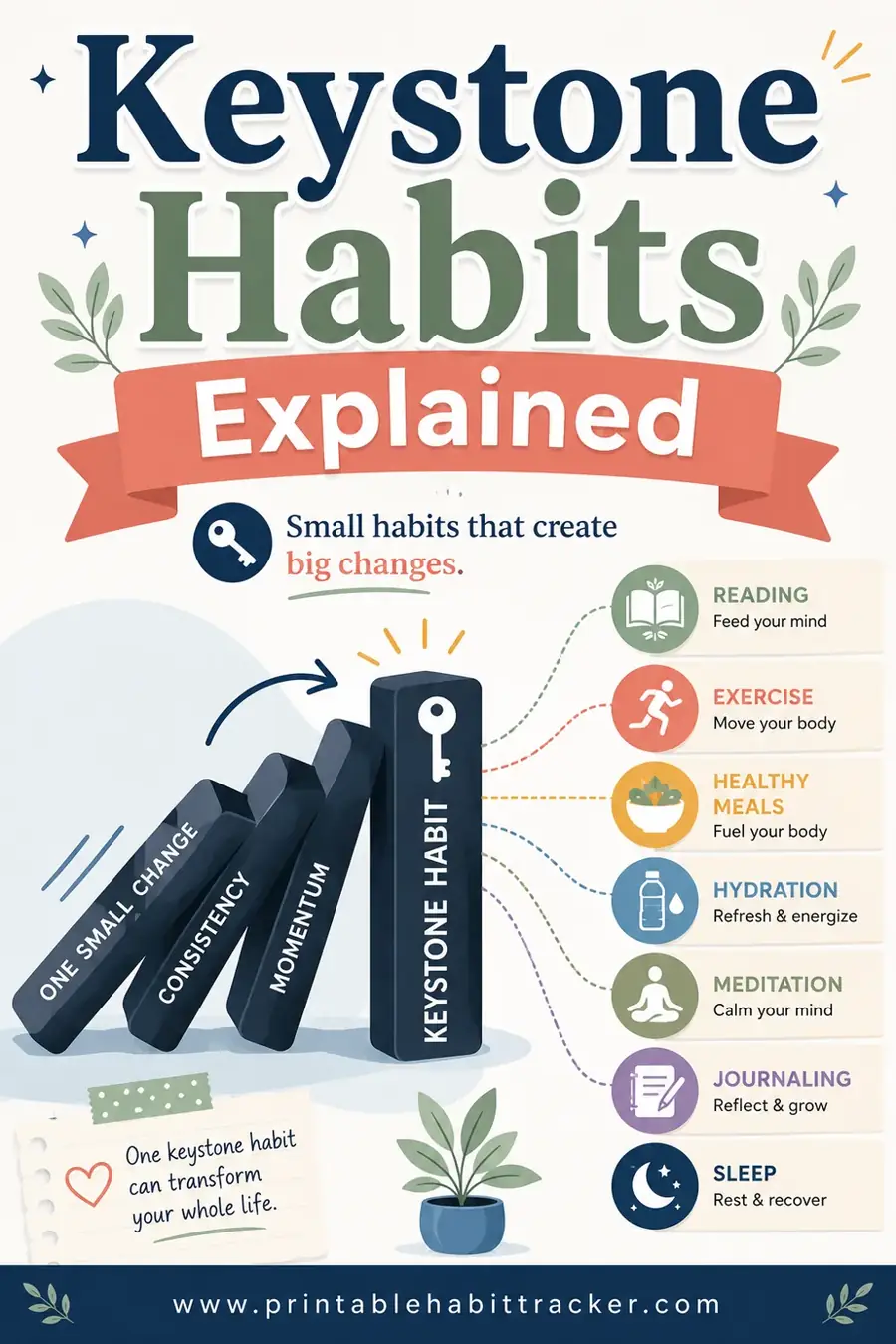
This isn't fluff. On the morning you really don't feel like it, a checkbox won't move you, but a real reason might. Pairing your challenge with a keystone habit — one that naturally improves other parts of your life — gives your "why" even more weight.
Step 3: Track Every Single Day
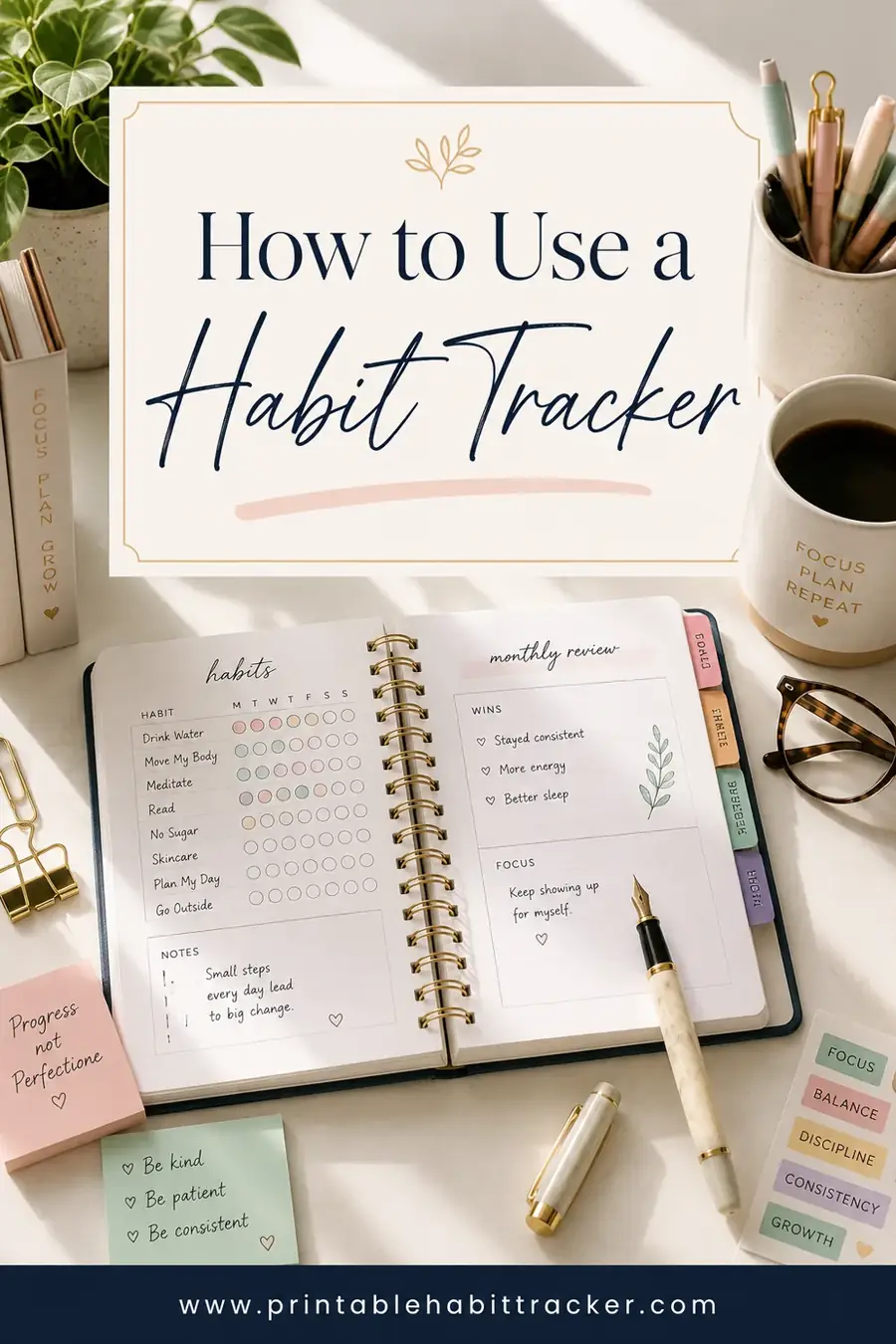
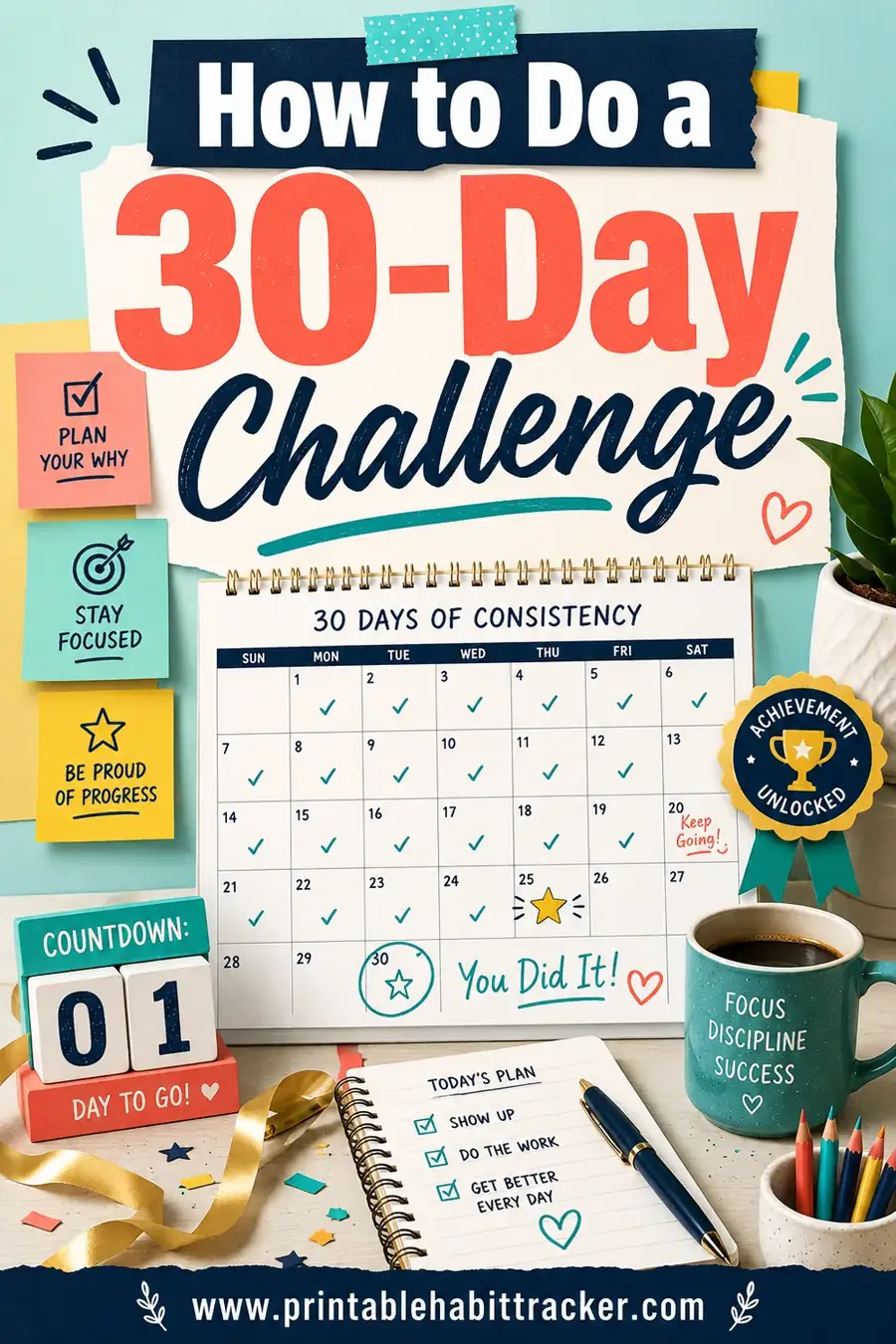
This is the step people skip, and it's the step that decides whether you finish. Get a tracker with 30 boxes, number them, and mark off each day the moment you do the habit.
Why does tracking work so well?
- It builds a streak. Once you've got a chain of checkmarks going, breaking it feels like a real loss. That feeling does a lot of heavy lifting.
- It makes progress visible. Seeing 18 boxes filled tells you you're past the halfway mark and there's no sense quitting now.
- It's a tiny reward. The act of checking a box releases a small hit of satisfaction. Small, but it adds up over 30 days.
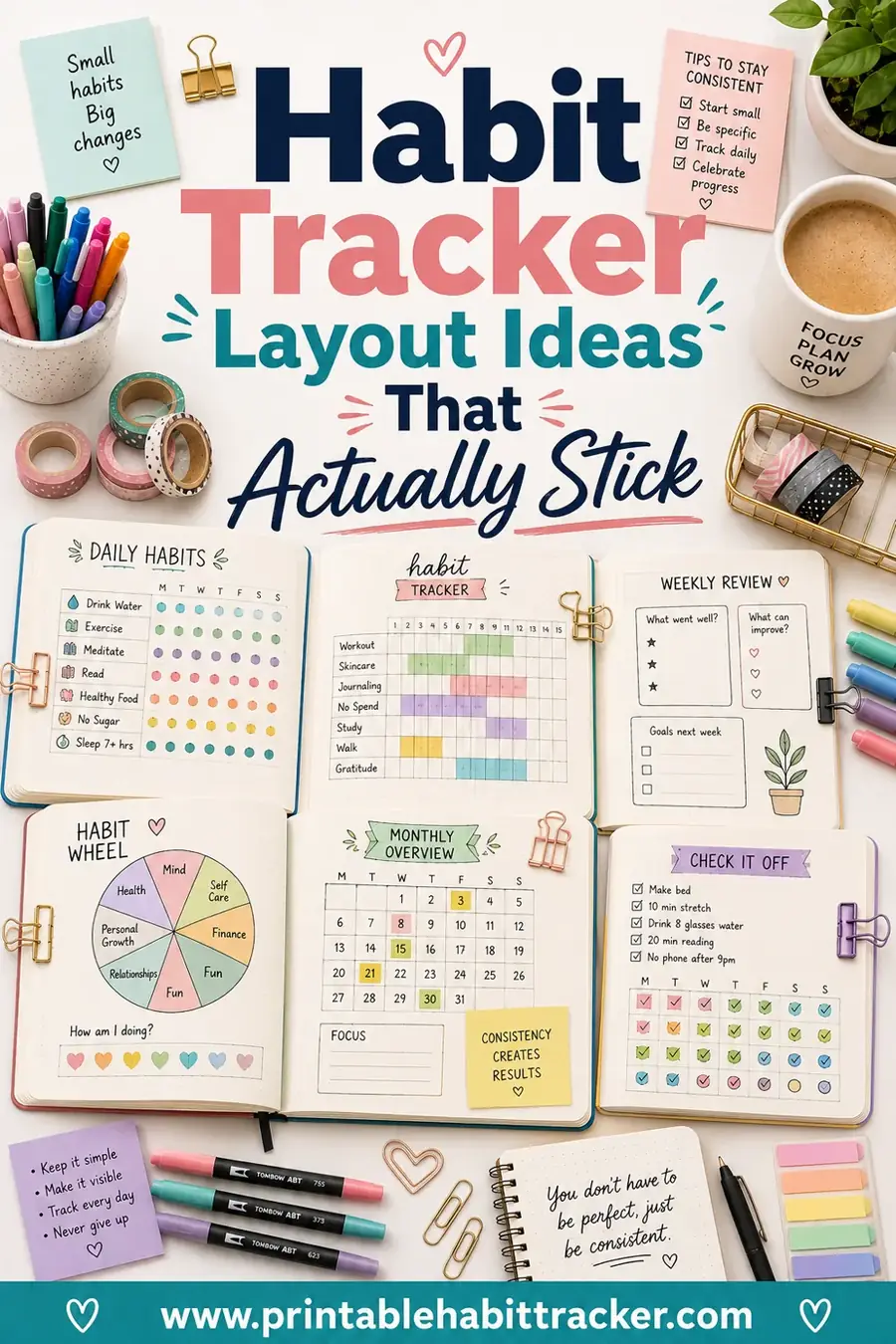
Print your tracker and put it where you can't miss it: the bathroom mirror, the fridge, your desk. A tracker in a drawer is a tracker you'll forget. Need help choosing a format? Our habit tracker layout ideas guide walks through single-habit strips perfect for a 30-day run.
Step 4: Plan for the Dip
Almost every challenge has a slump, usually somewhere between day 7 and day 15. The novelty has worn off and the finish line still feels far away. This is where most people quit, so plan for it before it arrives.
A few tactics that get you through the dip:
- Shrink the habit, don't skip it. On a brutal day, do the smallest possible version. One push-up. One page. Keeping the streak alive matters more than the size of the day.
- Never miss twice. One missed day is a slip. Two in a row is the start of quitting. If you miss, make the next day non-negotiable.
- Look back, not forward. Instead of dreading the days left, admire the days done. "I've already done 12" is fuel.
- Lean on your why. Reread that sentence at the top of your tracker. Remind yourself what this is for.
The dip is normal. Knowing it's coming robs it of its power.
Step 5: Build In Rewards
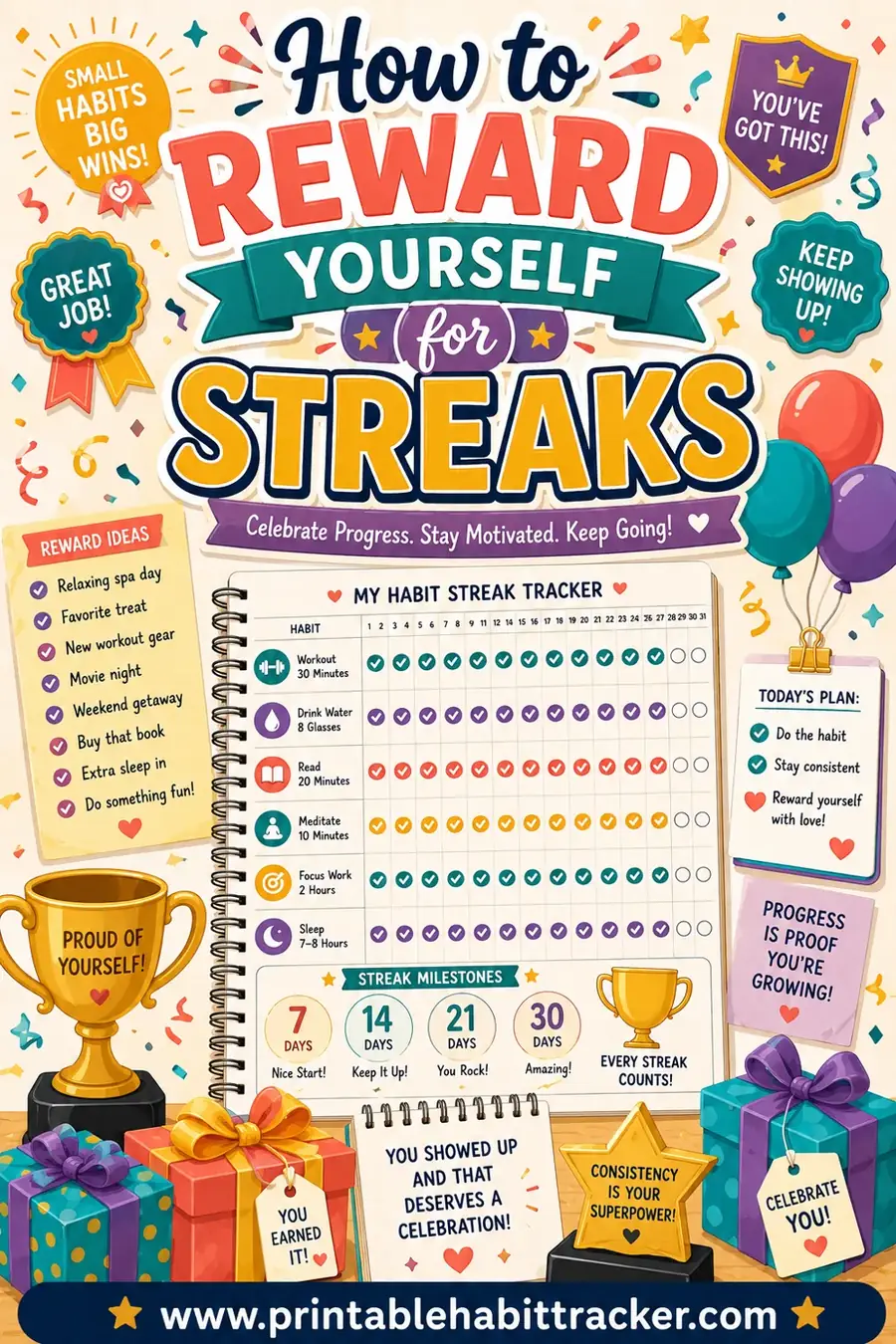
A long stretch with no payoff is hard to sustain. Set up small rewards at milestones so you've always got something to look forward to.
A simple reward schedule:
| Milestone | Reward idea |
|---|---|
| Day 7 | Favorite coffee or a good meal |
| Day 14 | A movie night or new book |
| Day 21 | A small treat you've wanted |
| Day 30 | Something meaningful to mark finishing |
Keep early rewards small and the day-30 reward bigger. The point isn't to bribe yourself, it's to celebrate showing up. We dig into the psychology of this in how to reward yourself for streaks.
What to Do When You Miss a Day
You will probably miss a day at some point, and that's okay. A 30-day challenge isn't about perfection. It's about showing up far more often than not.
Here's the rule that keeps a missed day from ending your challenge: a miss is a comma, not a period. Don't restart your count to zero and don't quit in shame. Just do the habit the next day and keep going.
If you want, mark the missed day with a small "x" instead of leaving it blank. Seeing 28 checks and 2 x's at the end is still a huge win, and an honest record beats a fake perfect one.
The only real failure is deciding that one missed day means the whole thing is ruined. It doesn't. Pick up where you left off.
Ideas for Your Next 30-Day Challenge
Finished one and want another? Stacking challenges back to back is a great way to build a whole new lifestyle, one month at a time.
- Health month: a daily walk, then a hydration month, then an early-bedtime month.
- Mind month: meditation, then journaling, then a no-news-first-thing month.
- Home month: a 10-minute tidy, then a no-spend month, then a meal-prep month.
- Creative month: write daily, then sketch daily, then learn-something-new daily.
Each month builds on the last. By the end of a few, you've quietly rebuilt a part of your routine without ever feeling overwhelmed.
Tips to Make Your Challenge Easier
A few small adjustments can make the difference between a challenge you finish and one you abandon by week two. None of these take extra time, and each removes a little friction.
- Anchor the habit to something you already do. Right after your morning coffee, do your push-ups. After brushing your teeth, write your three journal lines. Attaching the new habit to an existing one borrows its momentum and means you rarely forget.
- Lower the bar on bad days. Decide in advance what your "minimum viable" version looks like. If the full habit is a 30-minute workout, the minimum might be a 5-minute stretch. On rough days, the minimum keeps your streak alive without burning you out.
- Tell someone. Saying "I'm doing a 30-day challenge" out loud to a friend or partner adds a little accountability. You're more likely to show up when someone might ask how it's going.
- Prep the night before. Lay out your shoes, leave the book on your pillow, fill the water bottle. Removing the small obstacles makes tomorrow's habit nearly automatic.
- Track first thing. Glance at your tracker every morning so the challenge is the first thing on your mind, not an afterthought you remember at midnight.
Stack two or three of these and your challenge gets noticeably easier to keep. The goal isn't heroic willpower; it's removing reasons to skip.
Frequently Asked Questions
How do I start a 30-day challenge?
Pick one small, specific habit you can do every day, write down why it matters to you, and print a tracker with 30 boxes. Put the tracker somewhere you'll see it daily and mark off each day the moment you finish the habit. The print-and-track step is what keeps most people going.
What if I miss a day during my 30-day challenge?
Just keep going. A missed day is a slip, not a failure, and one miss doesn't ruin the challenge. The key rule is to never miss twice in a row. Do the habit the next day, mark the missed day with an x if you like, and carry on. An honest record beats quitting.
How small should my daily challenge habit be?
Small enough that you could do it on your worst, busiest, most tired day. If your goal is exercise, the daily minimum might be a 10-minute walk. You can always do more, but the floor should be tiny. A challenge you can do half-asleep is a challenge you'll actually finish.
Does tracking really make a difference in a 30-day challenge?
A big one. Tracking builds a visible streak you won't want to break, shows your progress so quitting feels wasteful, and gives a small jolt of satisfaction each time you check a box. Most people who finish a challenge credit the daily mark-off for pulling them through the hard middle.
Can I make a free 30-day challenge tracker?
Yes. The free printable habit tracker lets you create a 30-box challenge sheet, add your habit and your reason, and print it in seconds. There's no sign-up and no cost, so you can print a fresh sheet for every new challenge you take on.
Ready to Start Your 30-Day Challenge?
Pick your one habit, write down your why, and give yourself something to check off every single day. Open the free printable habit tracker, build your 30-day sheet, and tape it where you'll see it. It's free, there's no sign-up, and 30 days from now you'll be glad you started today.