Keystone Habits Explained: The Habits That Change Everything
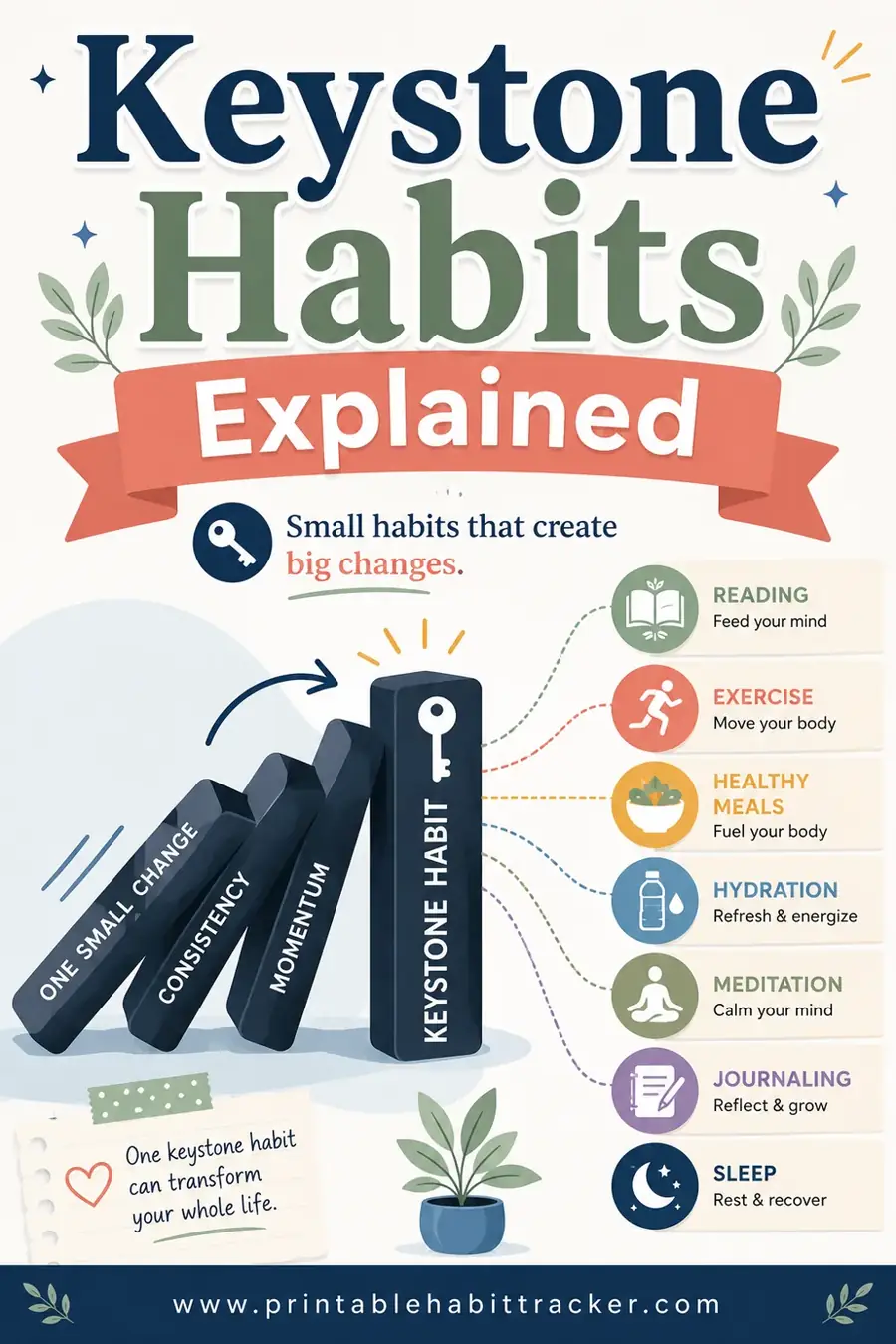
A keystone habit is a single habit that sets off a chain reaction, naturally pulling other good habits along with it. When you start exercising regularly, you often eat better, sleep more, and feel sharper at work — without consciously trying. That ripple effect is what makes a keystone habit so powerful: change one thing, and several other things quietly improve on their own. The smart move is to find your keystone habit and pour your energy there.
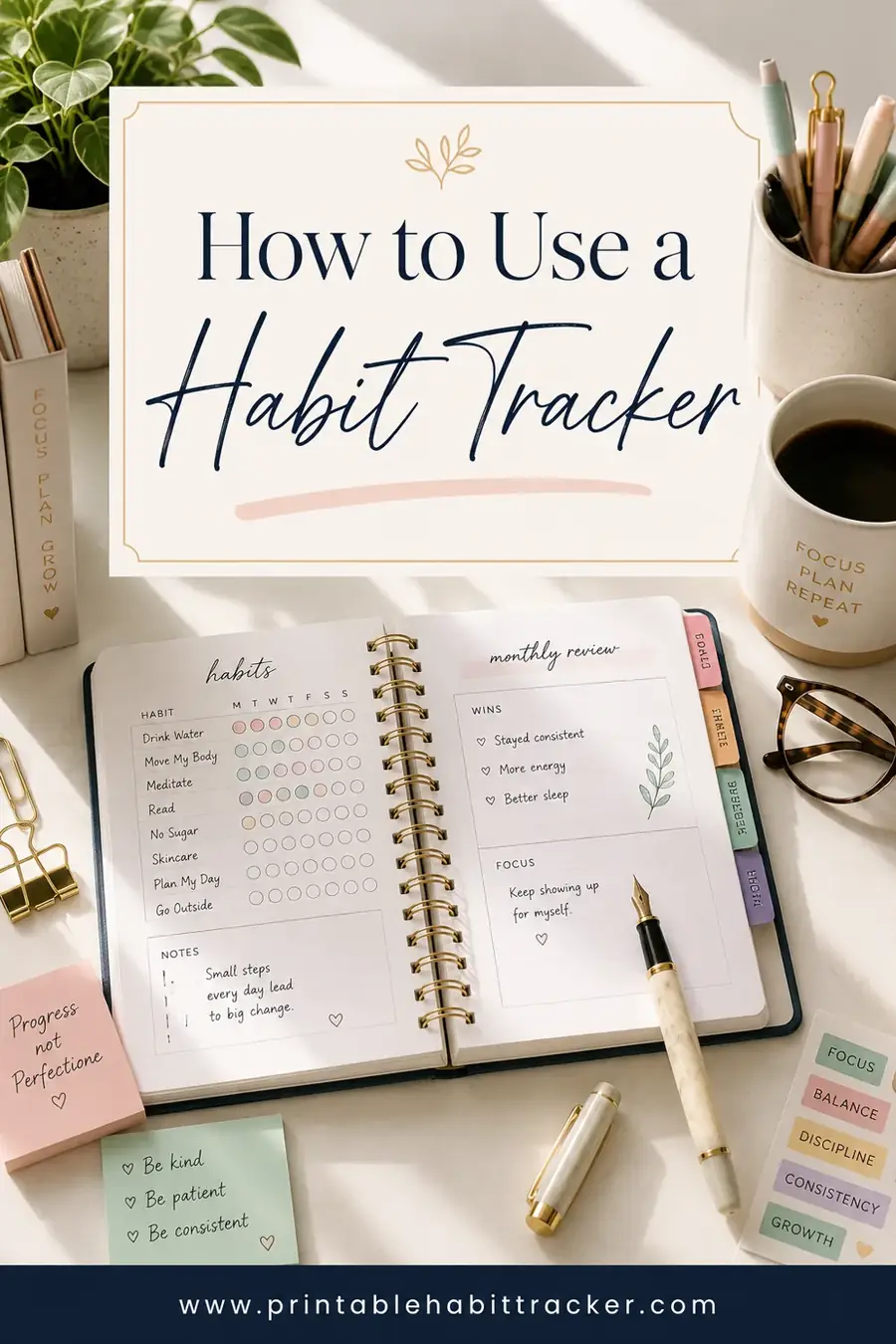
Want to start building one today? Open the free printable habit tracker, add your keystone habit, and track it daily so you can watch the ripple spread. No sign-up, no app, and you can print a fresh sheet in seconds.
What Is a Keystone Habit?
The name comes from architecture. A keystone is the single wedge-shaped stone at the top of an arch that holds all the others in place. Pull it out and the arch collapses. Set it right and the whole structure stands.
A keystone habit works the same way in your life. It's one habit that supports a whole set of others. You don't have to force the rest; they tend to follow once the keystone is in place. The term was popularized by Charles Duhigg in his book The Power of Habit, where he described how certain habits create "small wins" that cascade into much larger change.
The key idea: not all habits are equal. Some are isolated. Others are connected to dozens of behaviors. Find a connected one, and a single change pays off across your whole day.
How Keystone Habits Trigger Other Habits
Why does one habit pull others along? It comes down to a few mechanisms working together.
- They create a small win. Finishing one good habit gives you a sense of momentum, and momentum makes the next good choice easier.
- They shift your identity. Run for a week and you start to see yourself as "someone who exercises." That new self-image quietly nudges every other choice.
- They change your environment. A morning workout means an earlier bedtime, which means less late-night snacking, which means better mornings. One change reshapes the chain around it.
- They build self-trust. Each kept promise teaches you that you can keep promises, which makes the next habit feel possible.
None of this requires willpower for every single habit. You spend your effort on one keystone, and the structure around it shifts to match.
Common Examples of Keystone Habits
Some habits are far more "keystone" than others. Here are the ones that reliably trigger ripple effects, and what tends to follow.
| Keystone habit | Ripple effects it tends to trigger |
|---|---|
| Regular exercise | Better eating, deeper sleep, less stress, more focus |
| Making your bed | A tidier room, a sense of order, momentum for the day |
| Family dinners | Better communication, healthier eating, calmer evenings |
| Daily planning | Less procrastination, lower stress, more done |
| Tracking what you eat | More awareness, better choices, less mindless snacking |
| A consistent sleep time | Steadier energy, better mood, easier mornings |
| Daily reading | Calmer mind, less screen time, sharper thinking |
You'll notice these are mostly small, doable actions. That's the point. A keystone habit doesn't have to be huge. It just has to be connected to a lot of other behaviors.
How to Find Your Own Keystone Habit
Your keystone habit might not be on any list. The best one for you is personal. Here's how to spot it.
Look for habits that touch many areas
Ask yourself: if I nailed this one habit, what else would get easier? If the answer is "a lot," you've found a candidate. Exercise touches sleep, mood, eating, and focus. A daily plan touches work, stress, and time. Those wide-reaching habits are your keystones.
Notice your "if only" habit
There's often one habit you keep thinking, "if only I did this consistently, everything would be better." That nagging thought is a clue. It's usually pointing straight at a keystone.
Start where you feel resistance and reward
The best keystone is one that's a little hard but quickly rewarding. Exercise is the classic: tough to start, but you feel the payoff fast. That fast feedback is what makes the habit stick and the ripple begin.
Why You Should Focus on One, Not Twenty
It's tempting to overhaul your whole life at once. New diet, new workout, new sleep schedule, new everything, all on Monday. It almost never works, because you're spending willpower in ten directions and run dry by Wednesday.
The keystone approach flips this. Instead of fighting on twenty fronts, you pour your energy into one habit and let it do the spreading for you.
This is far more efficient:
- Less willpower needed. You only have to consciously protect one habit. The others follow.
- Faster results. You see the ripple within weeks, which keeps you motivated.
- Less burnout. One change is sustainable. Twenty changes at once is a recipe for quitting by the weekend.
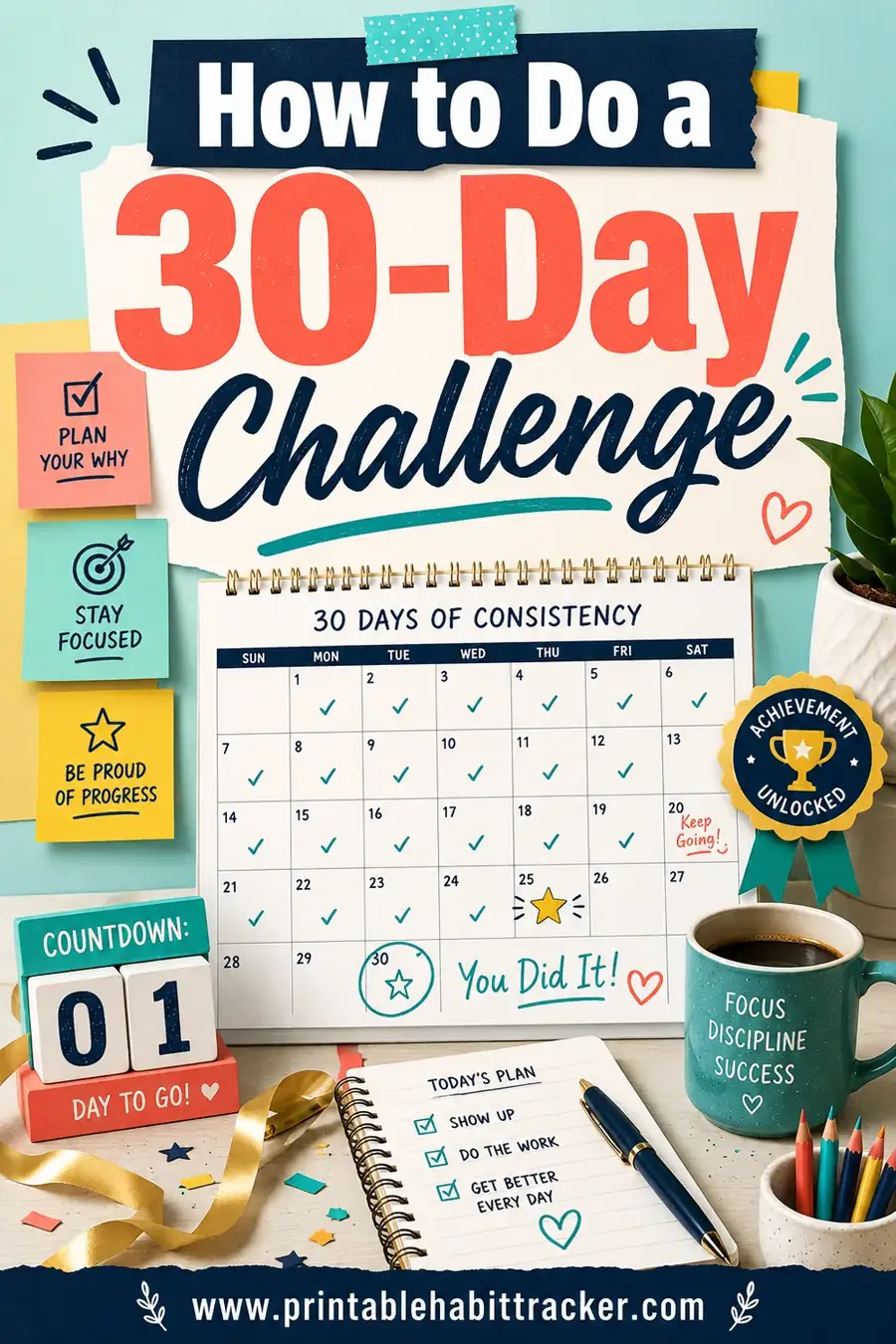
Want a structured way to lock in one keystone? A focused 30-day challenge on a single keystone habit is one of the most effective ways to make it permanent.
How to Build a Keystone Habit That Lasts
Finding your keystone is step one. Making it stick is where the tracker comes in.
- Pick one keystone habit. Just one. Choose the habit with the widest ripple for your life.
- Make the daily action small. "Work out for an hour" is fragile. "Put on my shoes and walk 10 minutes" is unbreakable. Start tiny.
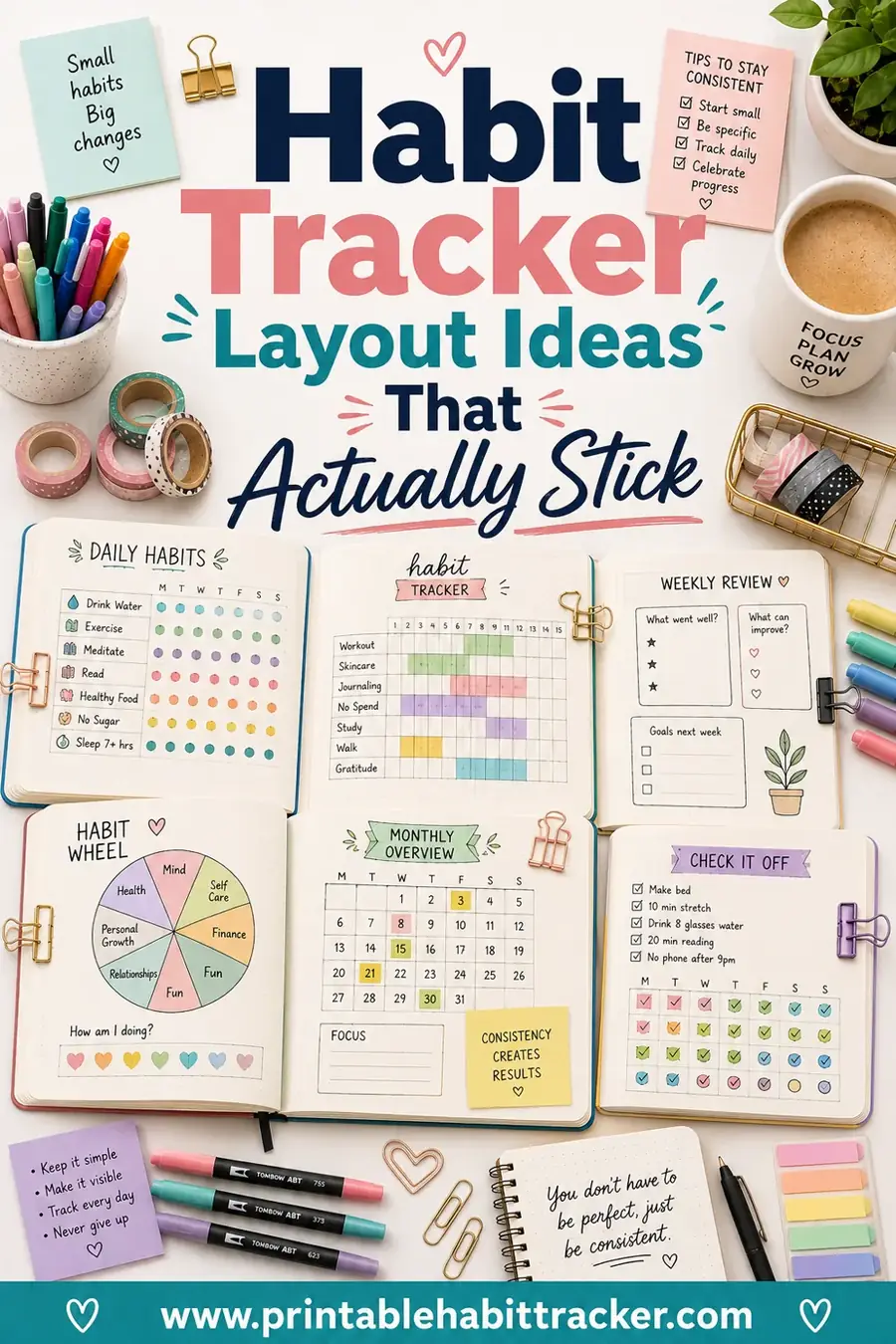
- Track it every day. Print a tracker and mark each day. A visible streak is one of the strongest forces in habit building. Need a format? Our habit tracker layout ideas guide has single-habit layouts built for this.
- Anchor it to something you already do. Right after coffee, walk. After brushing your teeth, read. Anchoring borrows the strength of an existing routine.
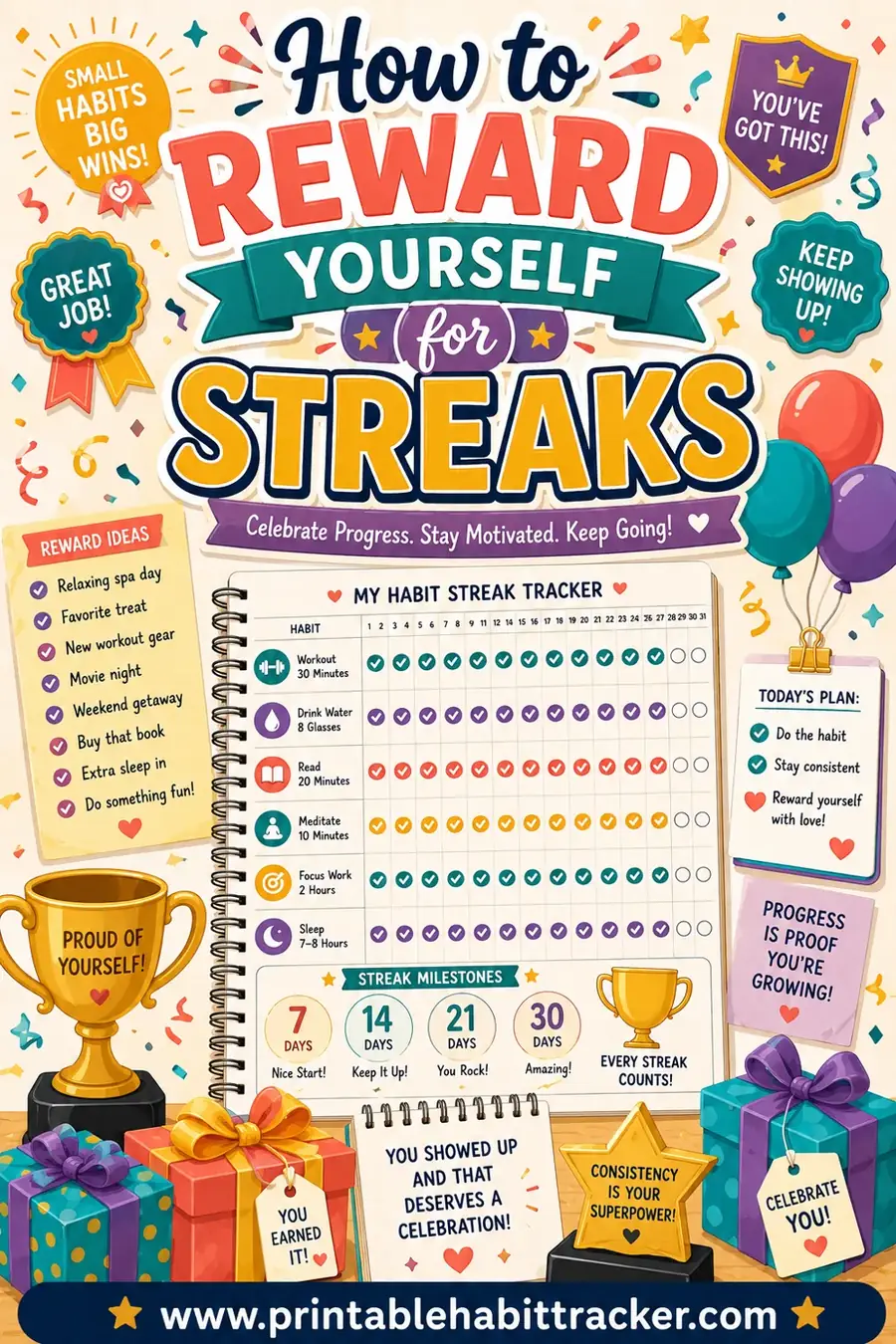
- Reward the milestones. Celebrate day 7, 14, and 30 so the habit feels worth keeping. Our reward-yourself-for-streaks guide shows how to do this without breaking the habit.
- Watch for the ripple. As your keystone settles in, notice the other habits improving on their own. Seeing the ripple is what convinces you to keep going.
Tracking the Ripple Effect
Here's a fun trick that makes keystone habits feel almost magical: track the ripple, not just the keystone.
Set up your tracker with your keystone habit as the main row, then add a small spot to note what else improved that day. Slept better. Ate cleaner. Felt calmer. Got more done.
After a few weeks, you'll have proof on paper that one habit is dragging the others up with it. That evidence is powerful. It turns a vague idea into something you can see, and seeing it makes you protect your keystone fiercely.
| Day | Keystone (walk) | Ripple I noticed |
|---|---|---|
| 1 | Done | Slept better |
| 2 | Done | Skipped the late snack |
| 3 | Done | Calmer at work |
| 4 | Done | Wanted a healthier lunch |
| 5 | Done | More energy all day |
Fill in your own version and the pattern becomes impossible to ignore.
Keystone Habits vs. Ordinary Habits
To be clear, ordinary habits are still worth building. But it helps to know the difference so you spend your energy wisely.
- Ordinary habit: improves one specific thing. Flossing makes your teeth healthier. Good, but it mostly stays in its lane.
- Keystone habit: improves one thing and triggers several others. Exercise improves fitness and your sleep, eating, mood, and focus.
When you're deciding where to put your limited willpower, start with a keystone. Get that working, let the ripple do its thing, and then add ordinary habits on top of a foundation that's already strong.
Frequently Asked Questions
What is a keystone habit in simple terms?
A keystone habit is one habit that naturally triggers other good habits without extra effort. For example, starting regular exercise often leads to better eating, more sleep, and sharper focus on its own. It's like a domino: knock over the right one and the rest fall into place. Focus on a keystone and you get more change for less effort.
What are some examples of keystone habits?
The most common ones are regular exercise, making your bed, eating meals as a family, planning your day, keeping a consistent sleep schedule, and daily reading. Each tends to set off a chain of other improvements. Exercise is the most famous example because it ripples into sleep, eating, mood, and stress all at once.
How do I find my own keystone habit?
Ask which single habit, if you did it consistently, would make the most other things easier. The habit with the widest ripple is your keystone. It's often the one you keep thinking "if only I did this." Look for something that's a little hard to start but rewards you quickly, since fast feedback helps it stick.
Should I build more than one keystone habit at a time?
No, start with just one. The whole power of a keystone habit is that it spreads to other behaviors on its own, so you don't need to force several changes at once. Trying to overhaul everything simultaneously usually leads to burnout. Lock in one keystone, let the ripple work, then add more later.
How do I make a keystone habit stick?
Keep the daily action tiny, anchor it to something you already do, and track it every day on a visible sheet. A streak you can see is one of the strongest motivators there is. Reward yourself at milestones, and watch for the ripple effects, which prove the habit is working and keep you going. The free printable habit tracker makes the daily tracking easy.
Ready to Build Your Keystone Habit?
Pick the one habit with the widest ripple in your life, start small, and track it every single day so you can watch the change spread. Open the free printable habit tracker, add your keystone habit, and print your sheet. It's free, there's no sign-up, and one well-chosen habit might be all it takes to shift everything else.