Habit Tracker Layout Ideas That Actually Stick
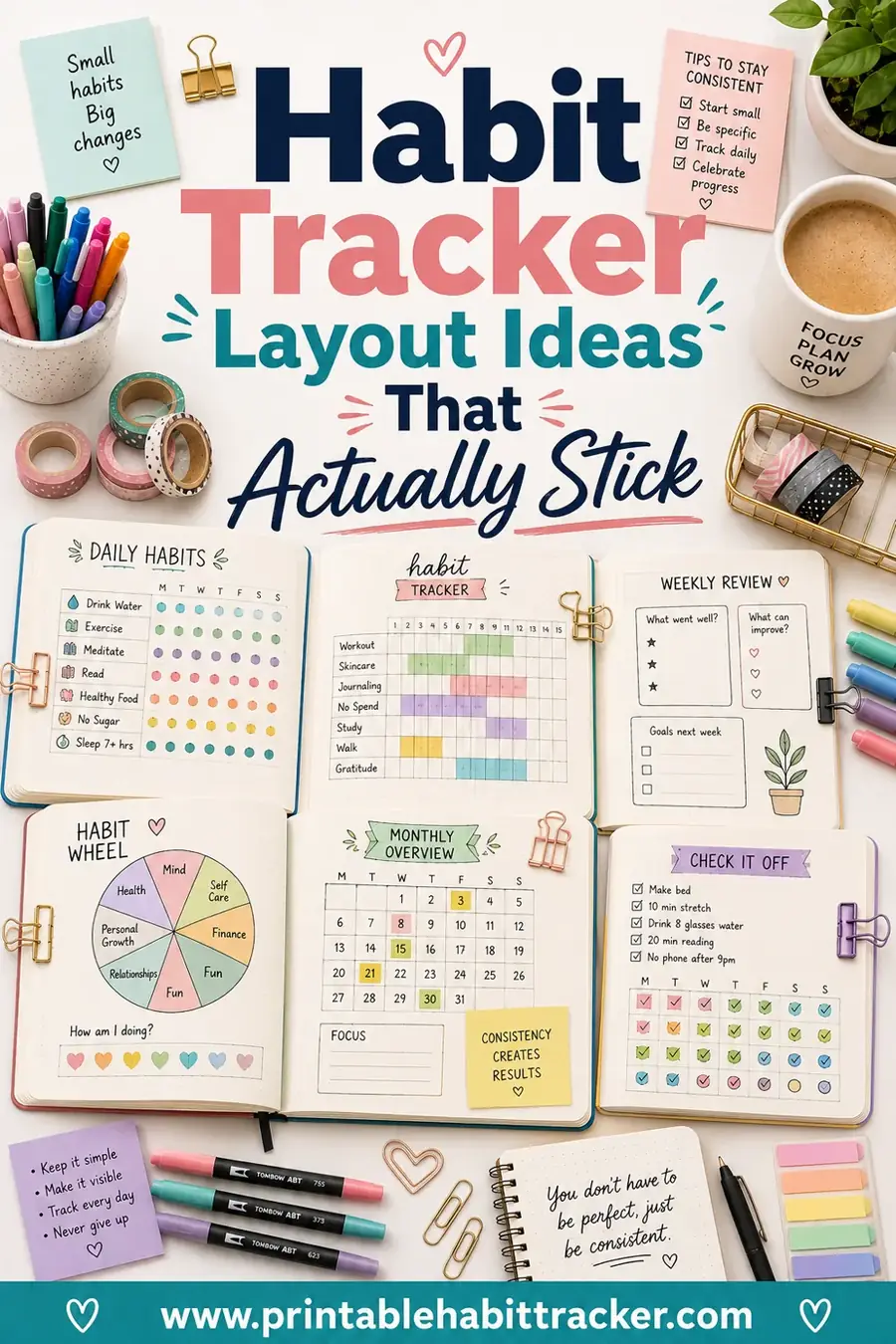
The best habit tracker layout is the one you'll actually look at every day, and for most people that's a simple grid: habits down the left, days across the top, one box per day to check off. From there you can branch into weekly rows, monthly calendars, mini cards for a single habit, or a color-coded board if you're tracking a lot at once. The trick is matching the layout to how many habits you have and how often you want to glance at it.
Want to build one right now? Open the free printable habit tracker, pick a layout, type in your habits, and print it in under a minute. No sign-up, no app to install, and you can reprint a fresh sheet whenever you start a new month.
What Makes a Habit Tracker Layout Work
A layout isn't just decoration. It decides whether tracking feels easy or like a chore, and that small difference is what keeps a streak alive past week one.
Three things separate a layout you'll stick with from one you abandon:
- It's fast to mark. If checking off a habit takes more than a second, you'll skip it on busy days. Boxes you tick beat anything you have to write.
- It's easy to read at a glance. You should see your whole week or month without flipping pages. Seeing your progress is half the motivation.
- It fits your real life. Five habits need a different layout than twenty. A morning routine needs a different one than a once-a-week goal.
Keep those three in mind and almost any style below will work. Ignore them and even the prettiest spread gathers dust.
The Classic Monthly Grid
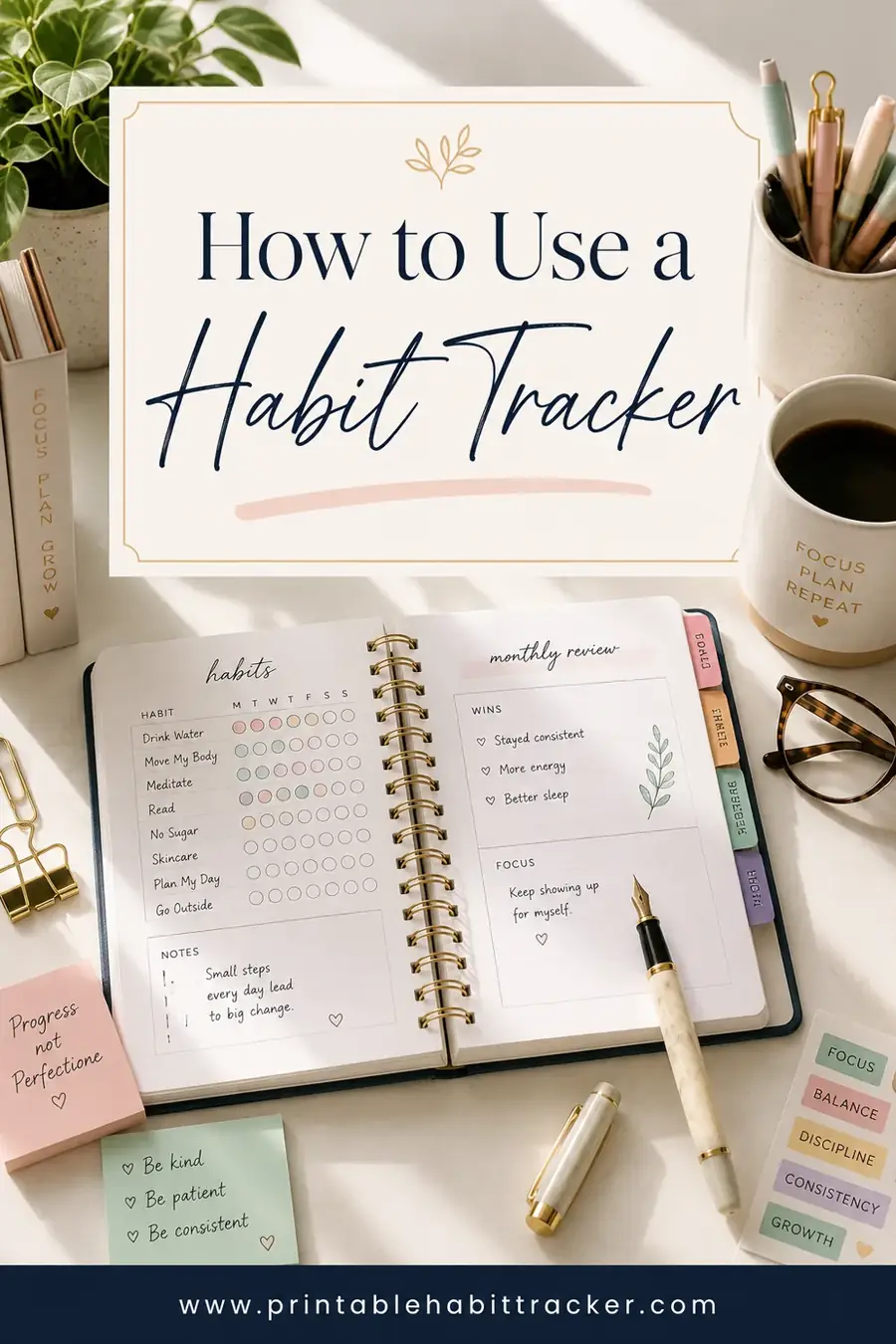
This is the layout most people picture, and for good reason. You list your habits down the left edge and run the days of the month across the top, giving you one row per habit and one box per day.
It shines when you're tracking a handful of daily habits, say three to eight, and want the whole month on a single page. At a glance you can spot a perfect week or a Wednesday you keep missing.
Best for: daily habits, monthly streaks, anyone who likes seeing the big picture.
A few tweaks make it even better:
- Bold the weekends so you can see if your routine falls apart on Saturdays.
- Add a small "goal" column on the right (like "20/30 days") so you have a target to chase.
- Leave one blank row at the bottom for a habit you add mid-month.
The Weekly Row Layout
If a full month feels overwhelming, shrink the window. A weekly layout shows just seven days, which means bigger boxes, more room to write, and a fresh start every Sunday.
This works beautifully for people who feel discouraged by a long grid. A blank month can look like a mountain. A blank week looks like something you can finish.
Best for: beginners, people rebuilding a habit after a slip, or anyone tracking habits with notes attached.
You can run the week vertically (days down the side, habits across the top) or horizontally. Vertical tends to feel more like a planner, which is nice if you're already journaling.
The Single-Habit Tracker
Sometimes you only care about one thing: drink more water, read every night, no phone after 9pm. For that, a whole grid is overkill. A single-habit layout gives one goal the entire page.
These usually take the shape of a long strip of boxes (one per day for 30, 60, or 100 days) or a small calendar dedicated to just that habit. Because there's so much space, you can make the boxes big and satisfying to fill in.
Best for: a focused challenge, breaking one stubborn habit, or building one keystone habit before stacking more on top.
The Habit Board (Color-Coded)
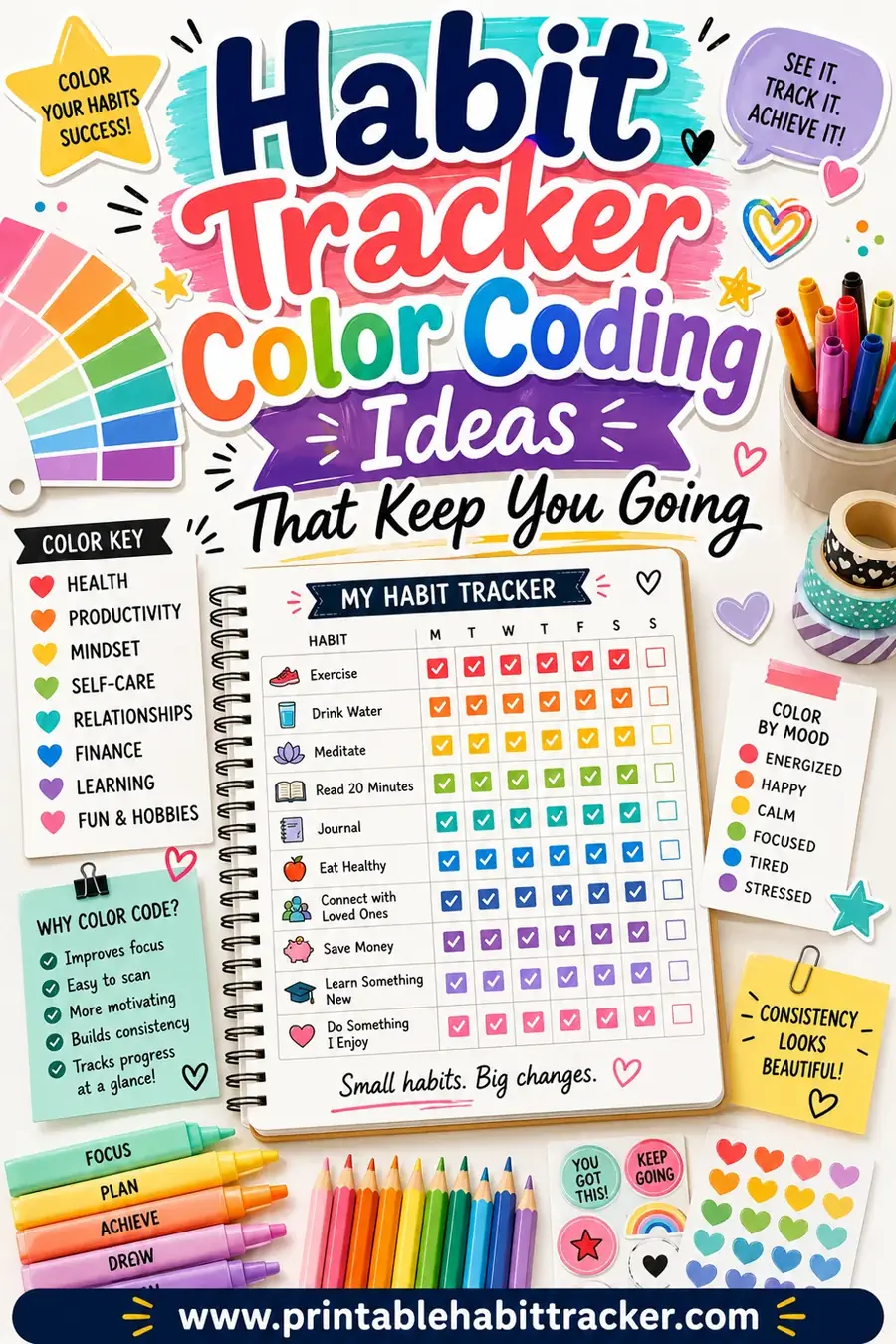
When you're juggling a lot of habits, a plain grid turns into a wall of identical checkmarks. A color-coded board fixes that by giving each habit or each category its own color.
Health habits in green, work habits in blue, rest and fun in orange. Now your tracker reads like a heatmap. A glance tells you whether you've been all work and no rest, even before you count a single box.
Best for: people tracking eight or more habits, visual thinkers, and anyone who wants their tracker to double as a dashboard.
If color coding sounds like your thing, we go deep on palettes and systems in our guide to habit tracker color coding ideas.
Quick Comparison: Which Layout Fits You?
Here's a side-by-side to help you pick fast.
| Layout | Habits it handles | Time window | Best for |
|---|---|---|---|
| Monthly grid | 3–8 | One month | Seeing the big picture |
| Weekly rows | 3–10 | One week | Beginners, fresh starts |
| Single-habit strip | 1 | 30–100 days | Focused challenges |
| Color-coded board | 8+ | Week or month | Many habits at once |
| Mini card | 1–4 | Any | Pockets, fridges, desks |
There's no wrong answer here. Pick the row that matches your situation today, and remember you can switch next month if it isn't clicking.
Smart Add-Ons for Any Layout
Whatever base you choose, a few extra elements make a tracker more useful. Add the ones that fit your goals and ignore the rest.
A streak counter
A little box where you write your current streak ("Day 12") turns tracking into a game. Seeing the number climb is oddly motivating, and you'll think twice before breaking it.
A "why" line
One blank line at the top for your reason. "I want more energy for my kids." "I want to finish that book." On hard days, that sentence does more work than any checkbox.
A notes column
A skinny column on the right for a word or two: "tired," "rest day," "felt great." Over a month, patterns jump out. You'll learn which habits drain you and which ones lift you.
A reward marker
Mark milestone days, like day 7, 14, and 30, with a star. When you hit one, you cash in a small reward. We cover this whole idea in how to reward yourself for streaks.
Sample Layout for a Simple Week
If you're not sure where to start, copy this. It's a clean weekly layout with five everyday habits, the kind that builds momentum without overwhelming you.
| Habit | Mon | Tue | Wed | Thu | Fri | Sat | Sun |
|---|---|---|---|---|---|---|---|
| Drink water | ☐ | ☐ | ☐ | ☐ | ☐ | ☐ | ☐ |
| Move my body | ☐ | ☐ | ☐ | ☐ | ☐ | ☐ | ☐ |
| Read 10 min | ☐ | ☐ | ☐ | ☐ | ☐ | ☐ | ☐ |
| No phone in bed | ☐ | ☐ | ☐ | ☐ | ☐ | ☐ | ☐ |
| Lights out by 11 | ☐ | ☐ | ☐ | ☐ | ☐ | ☐ | ☐ |
Five habits, seven days, one page. You can recreate this exact grid in the free habit tracker maker and print a fresh copy every week.
Printing Tips That Keep Your Tracker Usable
A great layout still needs to survive daily life. A few small choices make all the difference.
- Print on slightly heavier paper if you have it. A tracker you keep on the fridge for a month holds up better on cardstock than thin printer paper.
- Tape it where you'll see it. Bathroom mirror, fridge, the inside of your front door. Out of sight is out of mind.
- Use a pen you like. A satisfying check encourages the next one. Sounds silly, works anyway.
- Print two months at once. When the new month rolls around, you won't lose a single day hunting for a fresh sheet.
- Laminate a reusable one. For a single-habit tracker you'll repeat, laminate it and mark with a dry-erase marker so you can wipe and restart.
Common Layout Mistakes to Avoid
A few easy missteps trip people up. Sidestep these and your tracker has a much better shot at sticking.
- Too many habits at once. Cramming fifteen habits onto day one almost guarantees burnout. Start with two or three, then add more once they're automatic.
- Boxes too small to mark. If you can barely fit a checkmark, you'll resent the tracker. Give yourself room.
- No place for your reason. Without a "why," a tracker is just chores. Leave space for motivation.
- Picking a layout you find ugly. You're going to stare at this thing every day. If you don't like looking at it, choose another style. There's no prize for suffering.
Frequently Asked Questions
What is the best habit tracker layout for beginners?
A weekly row layout with three to five habits is the easiest place to start. Seven days feels manageable, the boxes are big, and a fresh sheet every Sunday gives you a clean restart whenever you slip. Once it feels automatic, graduate to a monthly grid.
How many habits should one tracker hold?
For most people, three to eight is the sweet spot. Fewer than three and the page feels empty; more than eight and the daily marking starts to feel like work. If you genuinely have many habits, switch to a color-coded board so they don't blur together.
Should I use a weekly or monthly habit tracker layout?
Use weekly if a long grid discourages you or your habits change often. Use monthly if you like seeing the big picture and your habits are steady. Many people run both: a monthly grid for the overview and a weekly sheet for the details.
Can I make a custom habit tracker layout for free?
Yes. The free printable habit tracker lets you choose a layout, type in your own habits, and print as many copies as you want at no cost. There's no sign-up and no watermark, so you can reprint a fresh sheet every week or month.
What goes in a habit tracker besides the boxes?
The most useful extras are a streak counter, a one-line "why," a small notes column, and milestone markers for rewards. None are required, but each one nudges you to keep going. Add the ones that fit your goals and skip the rest.
Ready to Build Your Own Tracker?
Now that you've seen the layouts, pick the one that fits your week and make it real. Open the free printable habit tracker, choose your style, add your habits, and print. It's free, there's no sign-up, and you can reprint whenever you start fresh. Your next streak is one printed page away.