New Year's Resolutions for Kids: A Free Printable Goal Chart
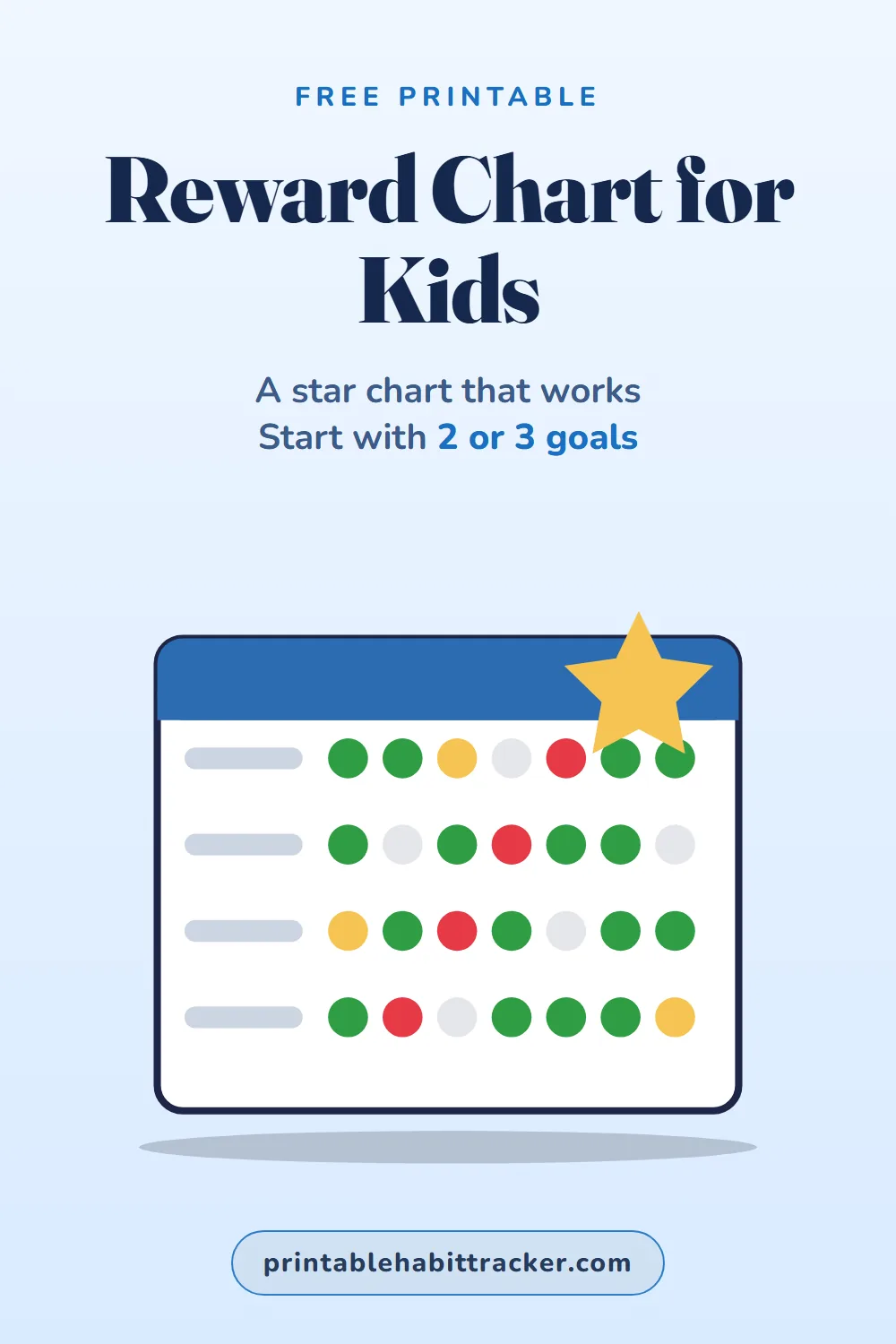
The best New Year's resolutions for kids are small, specific and positive: "read for 15 minutes a day," "make my bed every morning," "do one kind thing for someone." Pick one to three, write them on a chart, and let your child color in a box every day they do it, from Friday, January 1 to the end of the month. Stars only get added, never taken away, so January becomes a month of small wins instead of broken promises.
Here's a resolution chart to try. Tap a box for each goal your child does this week, change the goals to your own, then print the full January chart free:
✅ Try this tracker for one week
Tap a box each day you do the habit. Your ticks stay on this device.
How to help kids pick New Year's resolutions
Kids hear grown-ups talk about big resolutions and think theirs have to be big, too. They don't. The goals that last are the ones a child can actually do today. Here's a simple way to choose:
- Ask, don't assign. "What's one thing you'd like to get better at this year?" Kids stick with goals they picked themselves.
- Make it something you can see. "Be nicer" is hard to check off. "Say one kind thing to my sister" is easy.
- Make it daily (or almost). A daily goal gets a box every day, and lots of boxes means lots of chances to feel proud.
- Say what to do, not what to stop. "Use my calm voice" works better than "Stop yelling."
- Keep it to three. One for little kids, up to three for older ones. Fewer goals, more stars.
60 New Year's resolution ideas for kids
Let your child read through these (or read them aloud) and pick their favorites. Any of them can go straight onto the chart.
For little kids (ages 3 to 5)
- Put my shoes away when I come inside
- Brush my teeth in the morning and at night
- Put my toys back in the bin
- Say please and thank you
- Get dressed by myself
- Look at a book every day
- Put my dirty clothes in the hamper
- Help feed our pet
- Use my words when I feel upset
- Help set the table
- Try one new food each week
- Give a hug or a high five every morning
For kids ages 6 to 8
- Read for 15 minutes a day
- Make my bed every morning
- Pack my backpack the night before
- Practice my spelling words
- Learn to tie my shoes or ride a bike
- Write or draw in a journal three times a week
- Play outside every day
- Practice my instrument for 10 minutes
- Put my dishes by the sink after meals
- Learn a new joke every week
- Draw something every day
- Get ready for bed without reminders
For kids ages 9 to 12
- Finish homework before screen time
- Read 20 books this year
- Learn to make one simple meal with a grown-up
- Save part of my allowance
- Practice a sport skill for 15 minutes
- Keep my room tidy
- Learn five new words a week
- Do something active for 20 minutes a day
- Write one thank-you note a month
- Learn to type
- Learn a few words in a new language
- Take care of a houseplant
Helping at home (any age)
- Help clear the table after dinner
- Water the plants
- Fold the towels
- Sort the recycling
- Help put away groceries
- Wipe the bathroom sink
- Help make lunch
- Empty the small trash cans
- Walk the dog with a grown-up
- Match the clean socks
- Help wash the car
- Line up the shoes by the door
Kindness and family
- Say something kind to my brother or sister every day
- Call or video chat my grandparents every week
- Invite someone new to play at recess
- Give one compliment a day
- Help a classmate who's stuck
- Share my toys without being asked
- Give away toys I've outgrown
- Make a card for someone each month
- Say sorry and help fix it when I make a mistake
- Help a neighbor, with a grown-up
- Thank a community helper, like our mail carrier
- Plan a family fun night once a month
A little note on health goals: keep them about trying and doing, like "try a new vegetable" or "play outside," not about eating less or weight. If you have questions about your child's eating or growth, that's a great one for your child's doctor.
How the resolution chart works
The chart has your child's goals down the side and the days of January across the top. Each day they do a goal, they color the box or add a sticker. That's it.
- Hang it low. At your child's eye level on the fridge or their bedroom door.
- Check in at the same time daily. Right after dinner or at bedtime. It takes 30 seconds.
- Let your child do the coloring. That's the best part for them.
- Celebrate every 10 stars. Something small and free: pick the game for family game night, choose dinner, an extra bedtime story.
- Never take stars away. A tough day just stays blank. The chart is a record of wins, not a scorecard.
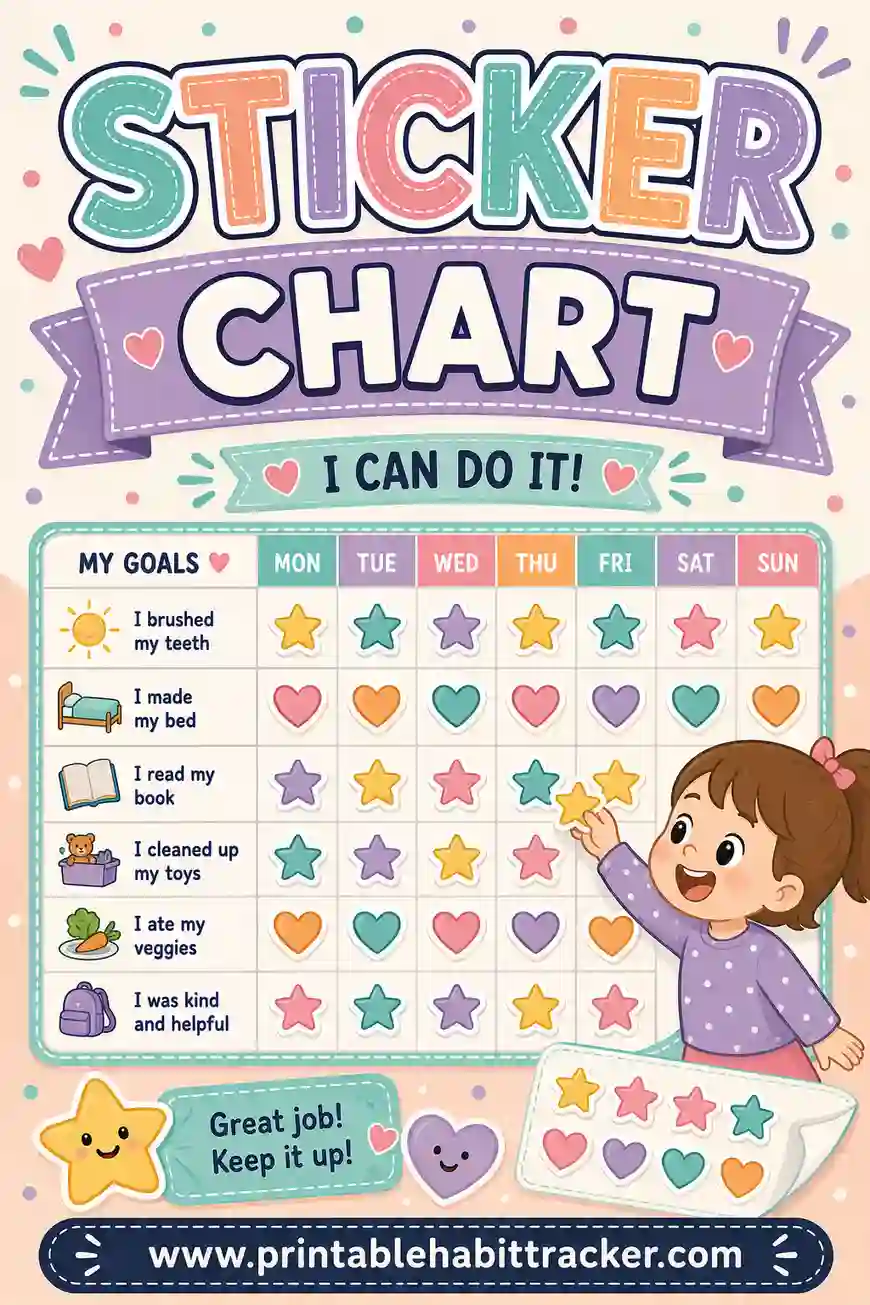
Want to add bigger rewards? Our reward chart page has ideas for every age, and a sticker chart works great for preschoolers who love peeling and sticking.
A January check-in plan
Kids (and grown-ups) usually lose steam in the second or third week. A quick family check-in every Sunday keeps everyone going. Here's how January 2027 lines up:
| Date | What to do |
|---|---|
| Thu, Dec 31 | New Year's Eve: pick resolutions as a family (a fun noon or after-dinner activity). |
| Fri, Jan 1 | Hang the chart and color the very first box. |
| Sun, Jan 3 | First check-in: is the goal too big? Make it smaller if it is. |
| Mon, Jan 4 | Many schools are back this week (check yours). Expect a few blank boxes while routines settle. |
| Sun, Jan 10 | Count the stars so far and celebrate. |
| Sun, Jan 17 | Halfway check-in. Swap a goal if it isn't working. |
| Mon, Jan 18 | Martin Luther King Jr. Day: a nice day to try one of the kindness goals together. |
| Sun, Jan 24 | Ask: "What's been easiest? What's been hardest?" |
| Sun, Jan 31 | Last day of the chart. Count every star and decide: keep going in February, or pick a new goal? |
Common mistakes with kids' resolutions
- Too many goals. Five goals means five chances to feel behind. Start with one to three.
- Goals that are too vague. "Be better at school" can't be colored in. "Read for 15 minutes" can.
- Grown-up goals in kid clothes. If you picked it, it's your goal, not theirs. Let them choose, even if it's "learn to whistle."
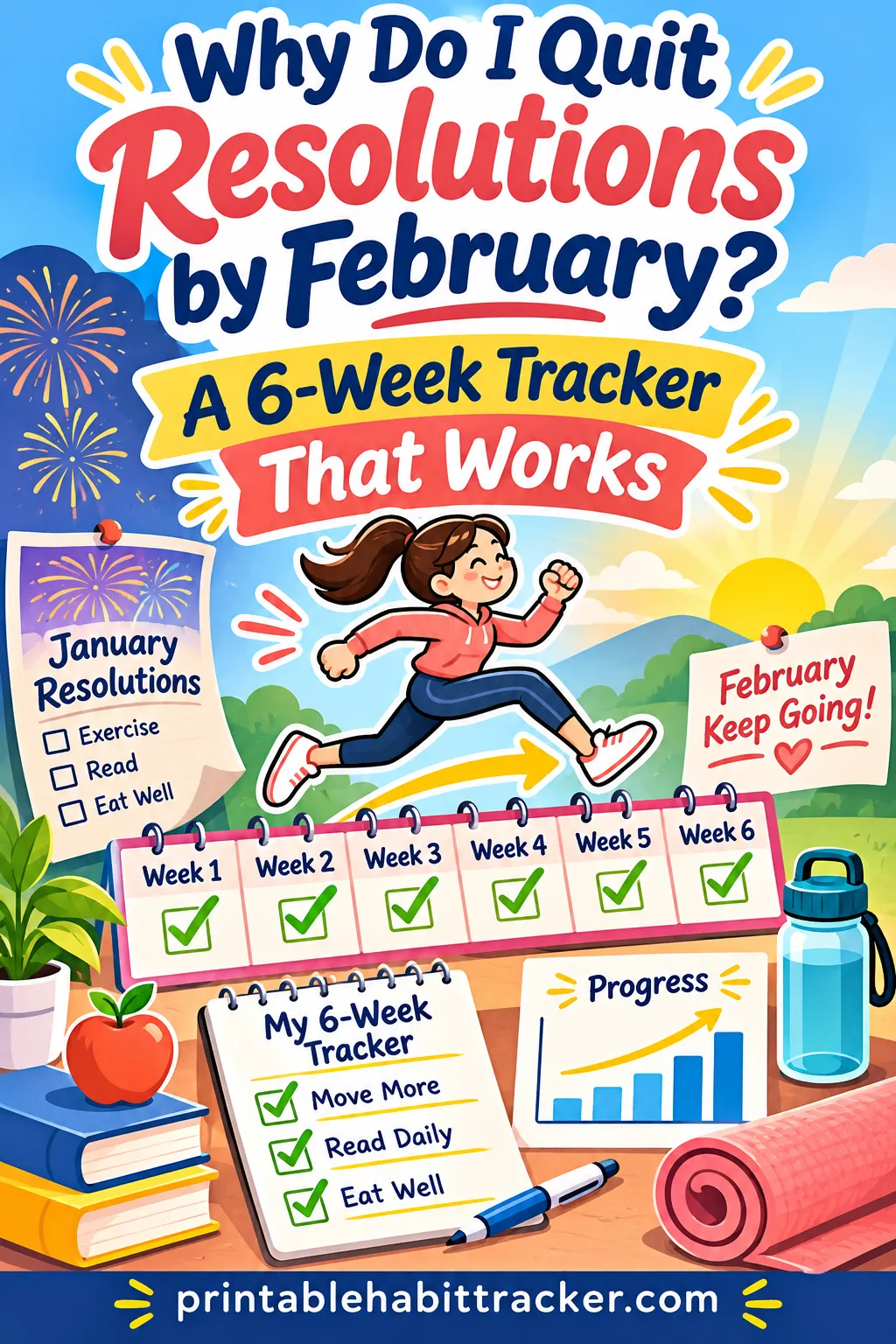
- Treating a miss like a failure. A blank box just means "start again tomorrow." Our article on why resolutions fail by February explains why that mindset matters so much, for kids and adults.
Make it a family resolution chart
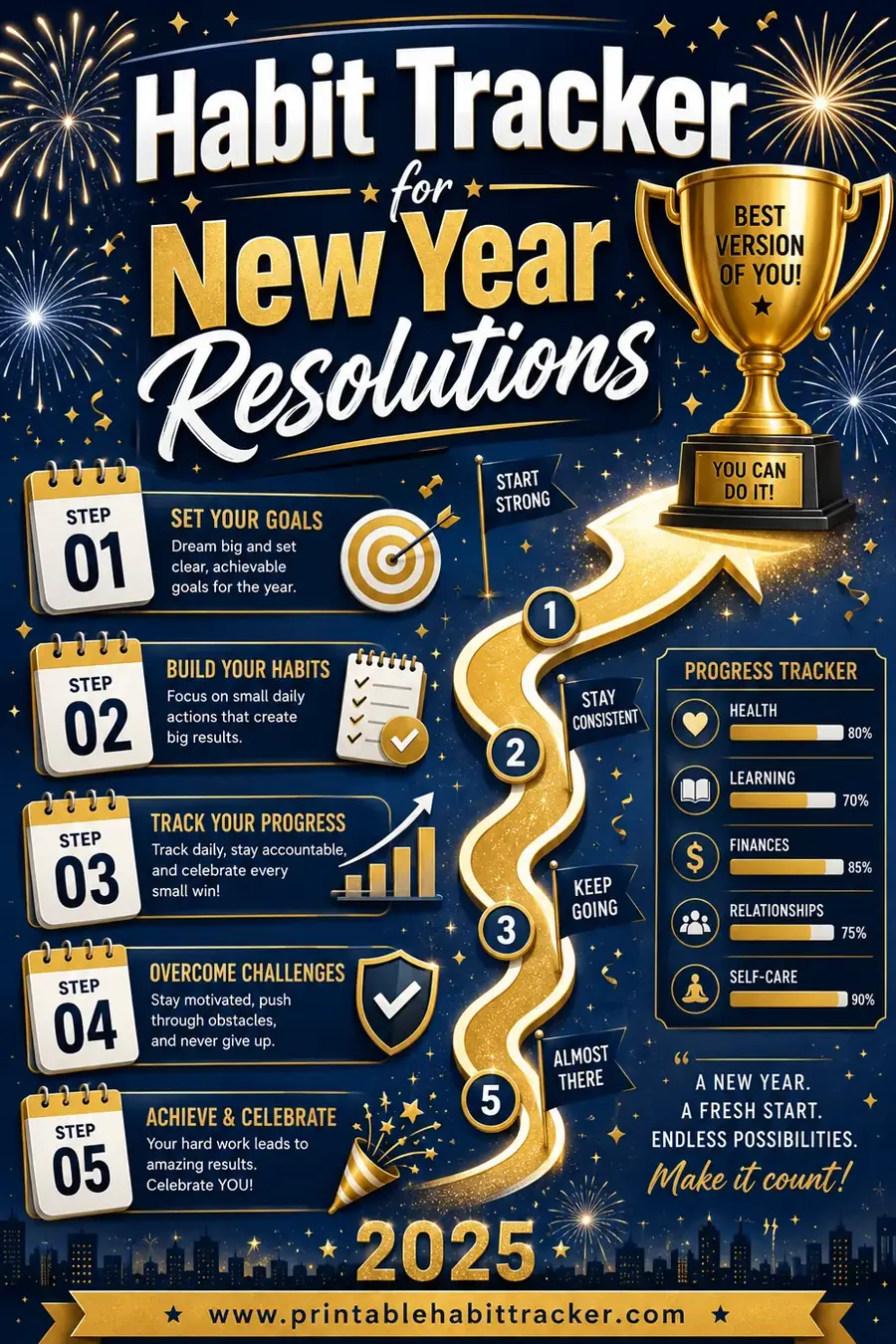
Kids are much more likely to stick with a goal when they see you doing one too. Put one goal for each person on the same chart: "Mom: walk 15 minutes," "Dad: read before bed," "Maya: make my bed," "Leo: feed the fish." Everyone colors their own row at dinner. Grown-ups who want a separate chart of their own can use our habit tracker for New Year's resolutions.
Then open the free habit tracker maker, type in your child's goals, and print a January chart they'll be proud to fill.
Frequently Asked Questions
What are good New Year's resolutions for kids?
Small, specific and positive ones work best: read for 15 minutes a day, make my bed every morning, help clear the table after dinner, try one new food a week, or say something kind to a sibling every day.
How many resolutions should a child have?
One to three. Little kids do best with one, and older kids can handle three. Fewer goals means more stars, and more stars means more motivation.
What age can kids start making New Year's resolutions?
Around age 4 or 5, kids can pick one simple goal with your help, like put my shoes away. By about 7 or 8, most can choose and track their own goals on a chart.
How do I help my child keep their resolution?
Make it tiny and daily, put the chart where they'll see it, check in at the same time every day, celebrate every star, and do a quick family check-in each Sunday. Never take stars away.
What should my child do if they miss a day?
Leave the box blank and start again tomorrow. Missing a day doesn't undo the other days. Kids who learn that early are the ones who keep their goals going into February.
Can the whole family track resolutions together?
Yes, and kids love it. Put one goal for each family member on the same chart, or print one chart each and hang them side by side on the fridge.