Reward Chart for Kids: Free Printable Star Chart That Works
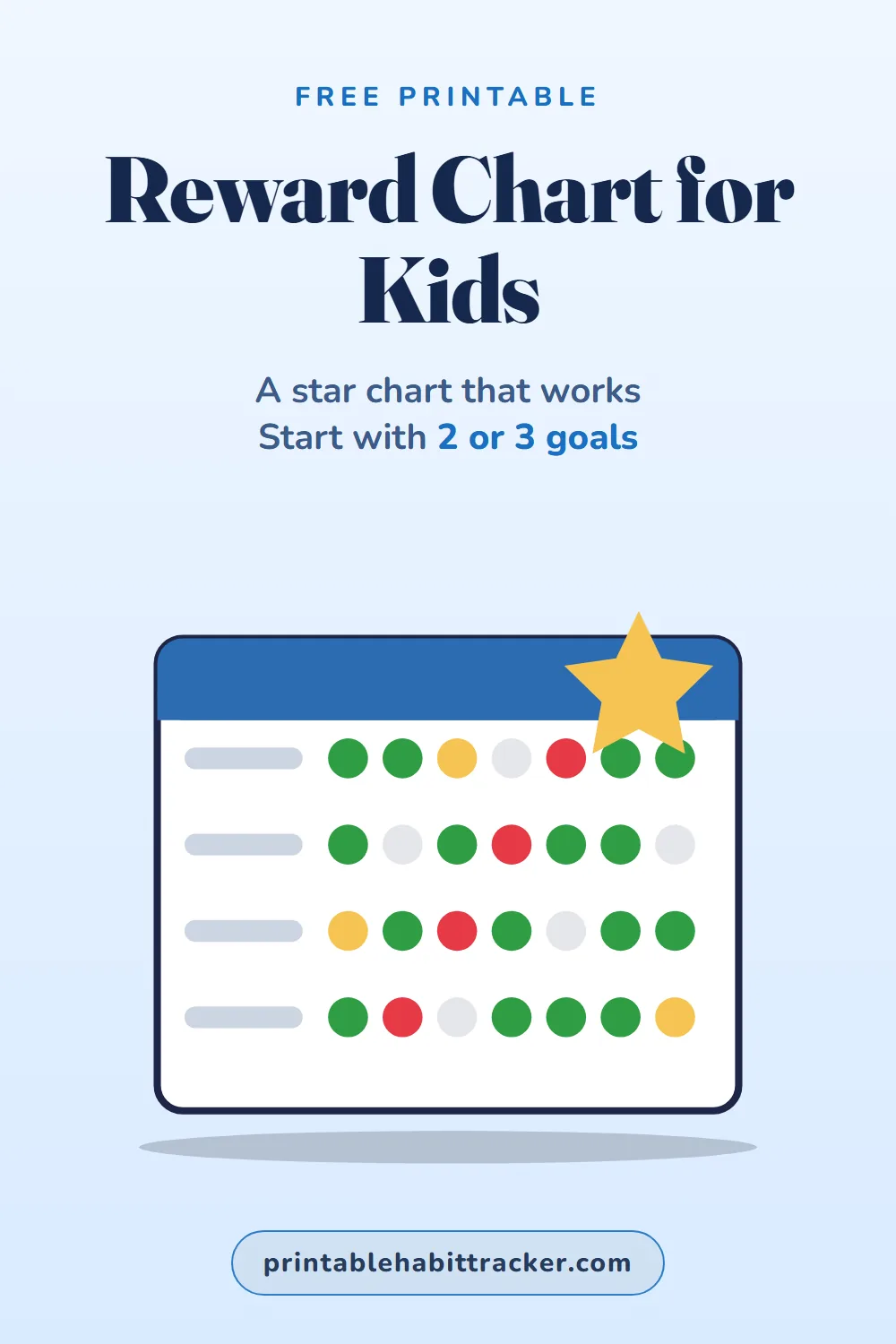
A reward chart works best with two or three clear goals, one star for each time your child does it, and a small reward they can reach within a week. Write the goals in kid words ("Brush teeth morning and night"), put the chart where they'll see it every day, and celebrate every star out loud. That's honestly most of the secret.
You can make a free printable reward chart in under a minute. Try a week of it right here, then print:
✅ Try this tracker for one week
Tap a box each day you do the habit. Your ticks stay on this device.
What is a reward chart (or star chart)?
A reward chart is a simple grid: goals down the side, days across the top. Each time your child does one of the goals, they get a star, a sticker or a colored-in box. Once they collect enough, they earn a reward you agreed on together.
You'll hear a few names for the same idea:
- Star chart: stars drawn or stuck on. Great for preschoolers who love the ritual.
- Sticker reward chart: the same thing with stickers. Our sticker chart page has more on that version.
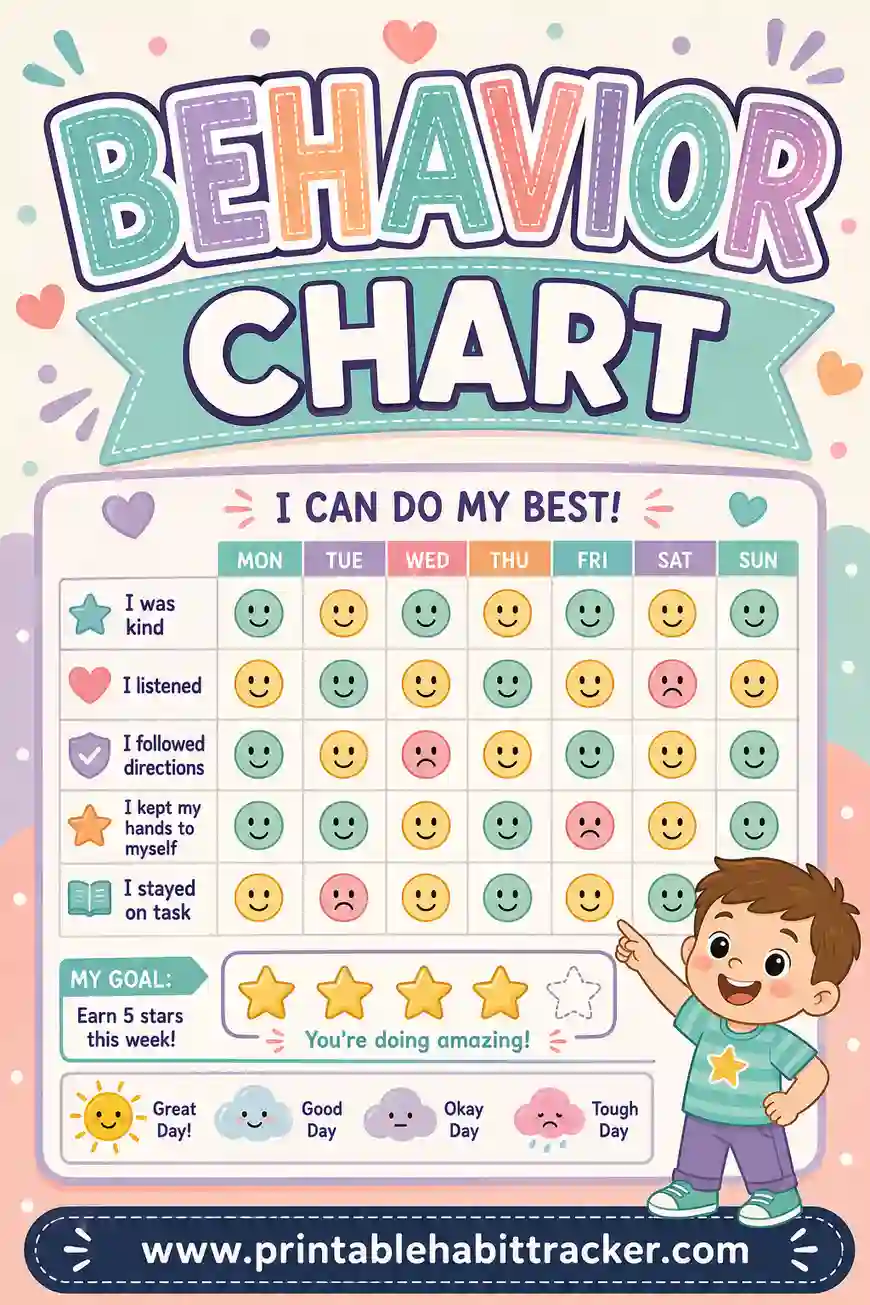
- Behavior chart: often used for one specific behavior, like calm hands or listening the first time. See our behavior chart guide.
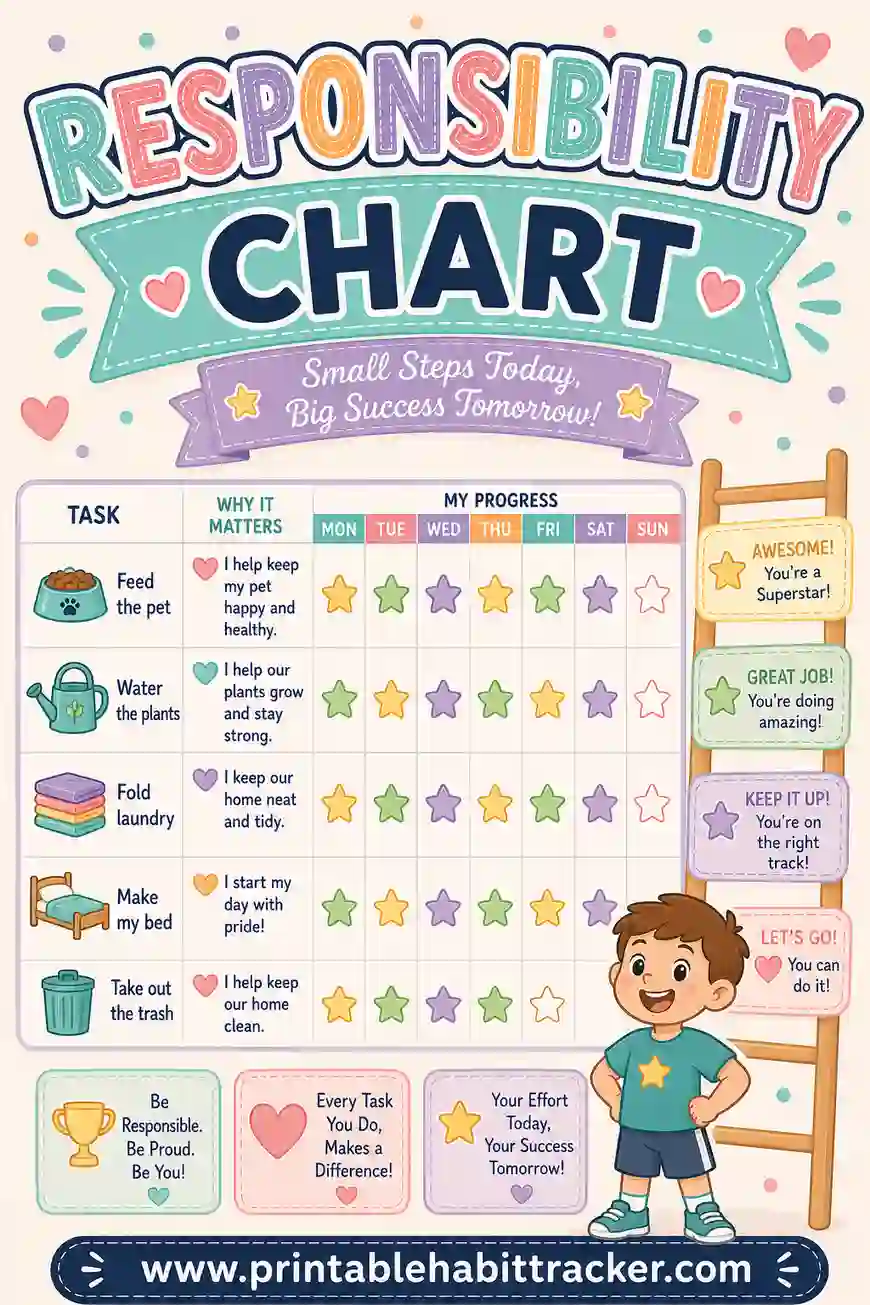
- Responsibility chart: aimed at jobs and independence for older kids, like packing their own bag. Here's our responsibility chart.
They all work the same way. Pick the name your kid thinks sounds the most fun.
How do you set up a reward chart that actually works?
- Pick two or three goals. More than that gets confusing for young kids. Choose things they can do but sometimes forget.
- Make each goal clear and positive. "Put toys back in the bin before dinner," not "Don't be messy." Your child should know exactly what earns a star.
- Agree on the reward together. Kids care much more about a reward they helped choose.
- Set a target they can hit. If there are 21 boxes in a week, start with something like 12 or 15 stars for the reward. Early wins build the habit.
- Give the star right away. The magic is in that instant "You did it!" moment.
- Celebrate, then raise the bar slowly. Once a goal is easy, swap it for a new one.
Reward chart goals by age
Every child is different, so treat this as a starting point.
| Age | How many goals | Example goals | Reward timing |
|---|---|---|---|
| 2 to 3 | 1 to 2 | Wash hands before meals, help put toys away | Same day, or every few stars |
| 4 to 5 | 2 to 3 | Brush teeth morning and night, get dressed by myself, use gentle hands | Every 2 to 3 days |
| 6 to 8 | 3 to 4 | Pack my school bag, feed the pet, read for 15 minutes, make my bed | Weekly |
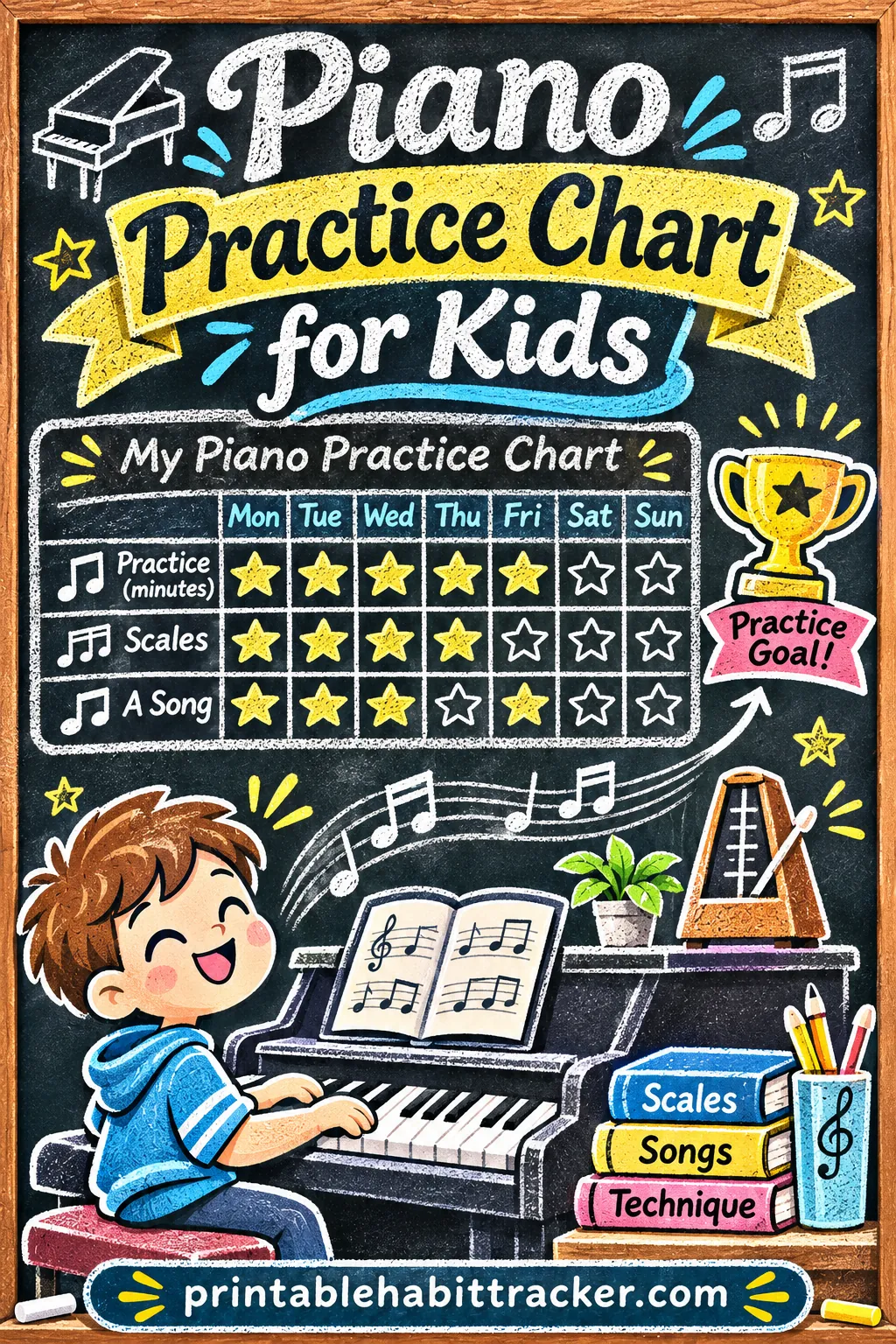
| 9 to 12 | 3 to 5 | Homework before screens, clear my dishes, practice piano, bedtime on time | Weekly, or bigger monthly goal |
Little ones need rewards to come quickly. A week feels like forever when you're four. Older kids can save up for something bigger.
Reward ideas that don't cost much
The best rewards are often time and attention, not stuff. Some favorites:
- Pick the family movie on Friday night
- An extra bedtime story or ten more minutes of reading together
- Choose what's for dinner one night
- A trip to the park, library or playground with just Mom or Dad
- Have a friend over to play
- A blanket fort in the living room for an evening
- Stay up 15 minutes later on the weekend
- Pick the music in the car for a whole day
- Help bake something together and decorate it
- A small item from a dollar-store "treasure box" you keep in a cupboard
- Choose a board game and everyone plays
- A pajama breakfast picnic on Saturday
Try to avoid using candy or treats as the main reward. It can turn food into a prize, and the chart works just as well with a fun outing or extra time together.
Weekly reward chart vs a blank reward chart
A weekly reward chart (Monday to Sunday) is the most common, because kids can see a fresh start every week. It's perfect for daily goals like brushing teeth or getting ready on time.
A blank reward chart printable is better when goals aren't daily, like "try a new food" or "practice swimming." You can let your child decorate it, add their name, and fill in goals together. In our maker you just type your own goals, one per line, and pick the layout you want.
How to print your reward chart
- Open the habit tracker maker and tap the Reward Chart preset, or start from the box above.
- Change the title to something your child loves, like "Mia's Star Chart" or "Super Helper Chart."
- Type two or three goals, one per line.
- Choose Weekly and the Color-in style, so your child can color a box or stick a star in each one.
- Write the reward in the Notes / goals box, like "15 stars = pick Friday's movie!"
- Print a few copies, so next week is ready to go.
Common reward chart mistakes
- Taking stars away. Once a star is earned, it stays. Taking stars back turns a happy chart into a stressful one.
- Too many goals. Six goals on a toddler's chart means lots of empty boxes and a discouraged kid.
- Vague goals. "Be good" isn't something a child can check off. "Use a kind voice with my sister" is.
- Rewards that are too far away. If the reward takes a month, young kids lose interest by day five.
- Forgetting the chart exists. Make stars part of the routine, like right after brushing teeth or at dinner.
- Comparing siblings. Give each child their own chart with their own goals.
When should you stop using a reward chart?
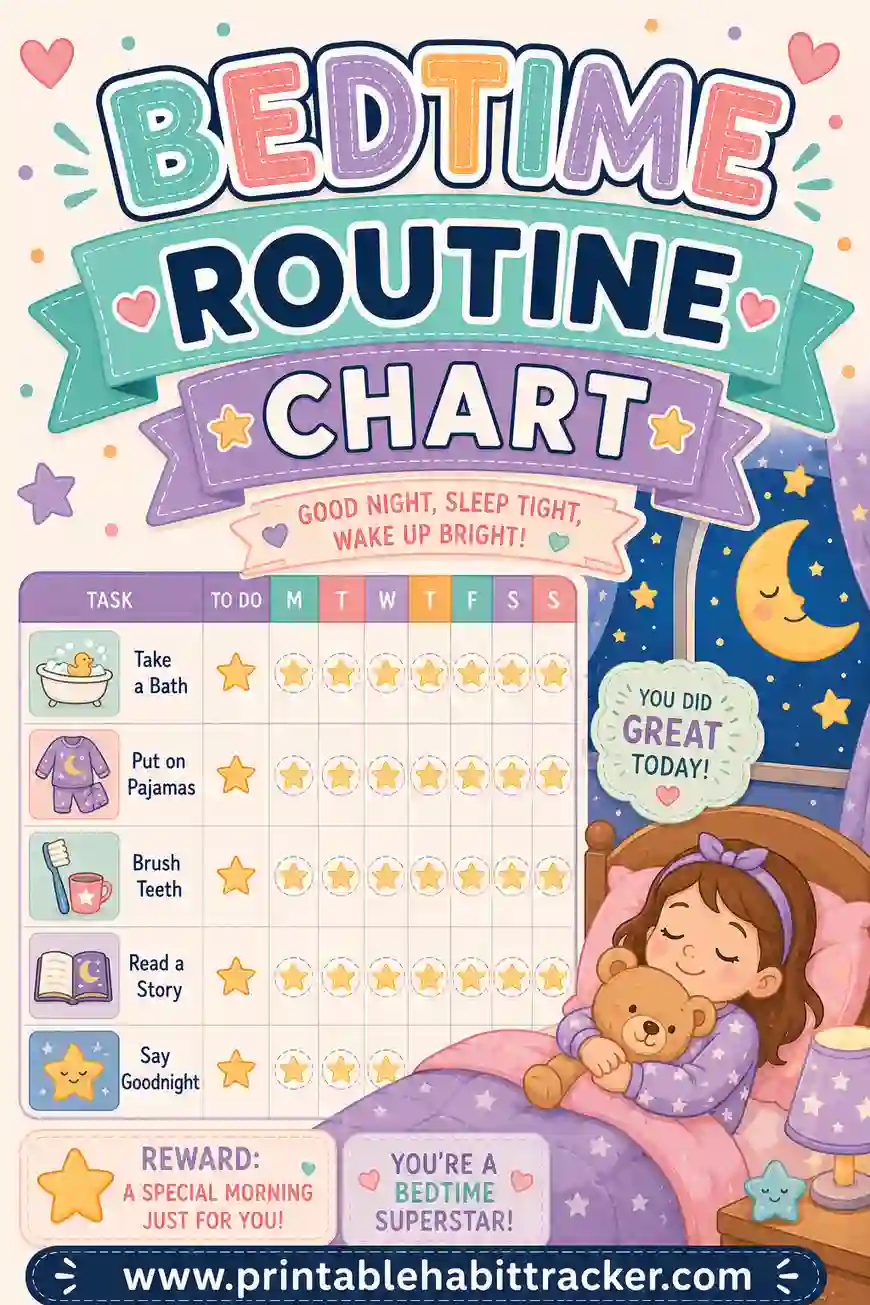
When the goals happen without reminders, it's time to celebrate and move on. You can phase it out gently: switch to a bigger reward for a whole week, then a "graduation" treat, then a new chart for a new goal if you need one. Many families use charts on and off for years, and that's completely fine. For bedtime struggles specifically, a bedtime routine chart with pictures can work even better.
Ready to start? Make your star chart in the free maker, let your child pick the reward, and stick it on the fridge tonight.
Frequently Asked Questions
How many goals should a reward chart have?
Two or three goals is the sweet spot for most young kids. Toddlers do best with one or two, and older kids can handle three to five.
What is the difference between a star chart and a sticker reward chart?
Nothing important. Both track goals with a mark each time your child does them. A star chart uses drawn or stuck-on stars, and a sticker chart uses stickers. Pick whichever your child finds more fun.
What are good rewards for a reward chart?
Time and attention work great: picking the family movie, an extra bedtime story, a park trip with a parent, a blanket fort night or choosing dinner. Small items from a treasure box work too.
Should you take away stars for bad behavior?
No. Once a star is earned, it stays. Taking stars away tends to make kids give up on the chart. Handle misbehavior separately.
How often should a child get a reward?
Ages 2 to 3 need rewards the same day or every few stars. Ages 4 to 5 do well every 2 to 3 days. School-age kids can usually wait a week.
Is this reward chart printable free?
Yes. Type your child's goals into our habit tracker maker, choose a weekly layout and print as many copies as you want. No sign-up needed.